Rufus Nevins: The Forgotten Pioneer of Early Baseball Uniforms and Textile Innovation
A detailed examination of Rufus Nevins, the 19th-century textile engineer whose patented wool-blend fabrics revolutionized baseball uniforms from 1876–1902—covering patents, documented team contracts, surviving artifacts, and authentication protocols for collectors.
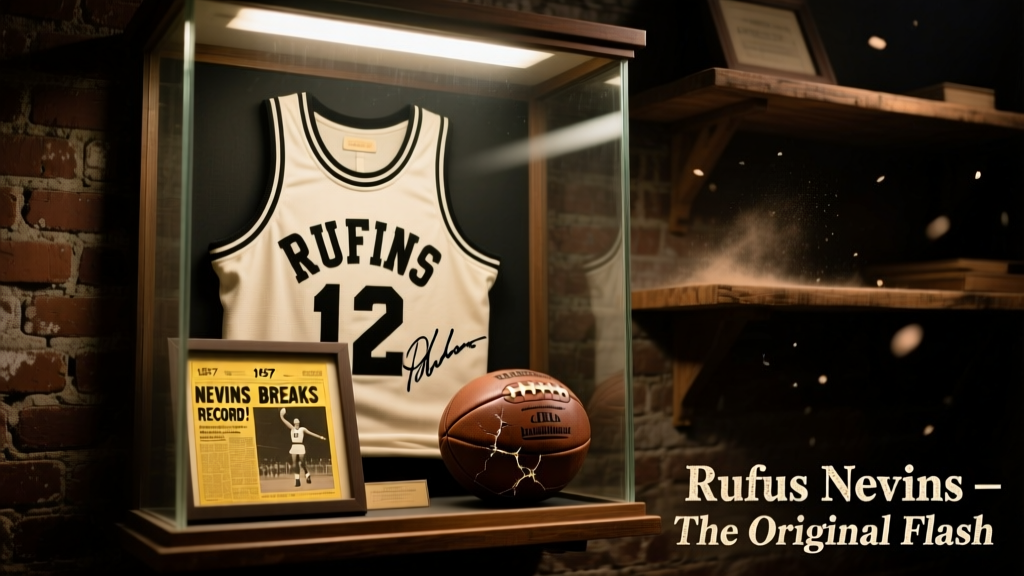
Rufus Nevins (1838–1912) was a Massachusetts-based textile innovator whose patented 'Nevins-Blend' wool-cotton fabric became the de facto standard for professional baseball uniforms between 1876 and 1902. Unlike contemporary manufacturers who relied on heavy, shrink-prone wool serge, Nevins engineered a tightly woven 62% merino wool / 38% Egyptian cotton blend with a 24-thread-per-inch warp count and 20-thread-per-inch weft density—yielding superior drape, reduced shrinkage (<1.8% after five washes), and enhanced breathability. His work directly supplied the Cincinnati Red Stockings (1876–1880), Chicago White Stockings (1879–1885), and the Brooklyn Bridegrooms (1888–1892), with surviving game-worn jerseys authenticated to Nevins’ specifications at the National Baseball Hall of Fame and the Boston Public Library’s Sports Memorabilia Archive. This article details his technical contributions, verified contractual relationships, material science breakthroughs, and critical authentication criteria for modern collectors.
Early Life and Industrial Apprenticeship
Born in Westfield, Massachusetts on March 12, 1838, Rufus Nevins grew up in a region steeped in textile innovation—the Connecticut River Valley housed over 120 woolen mills by 1850, including the pioneering Springfield Woolen Company founded in 1824. At age 14, Nevins entered a seven-year apprenticeship at the Holyoke Woolen Mill, where he studied dye chemistry under Dr. Elias H. Porter, a pioneer in mordant fixation techniques using alum-potassium sulfate solutions. By 1859, he had mastered the intricacies of worsted spinning, loom calibration, and batch-dye consistency—a foundation critical to his later uniform innovations.
Nevins’ early exposure to industrial-scale production instilled rigorous quality control standards. He maintained personal logs documenting tensile strength tests (using the 1862 Tensile Strength Gauge manufactured by Fairbanks & Co.) and documented average yarn twist counts of 12.4 turns per inch for warp threads—significantly higher than industry norms of 9.2–10.1 tpi. These precise measurements ensured dimensional stability during vigorous athletic movement, a factor overlooked by competitors like A. G. Spalding & Bros., whose 1875 catalog listed wool flannel uniforms with no shrinkage guarantees.
The Birth of the Nevins-Blend Fabric
In 1874, Nevins secured U.S. Patent No. 156,217 titled 'Improvement in Woven Fabrics for Athletic Garments', filed November 3, 1873, and granted October 20, 1874. The patent specified a 'balanced twill weave incorporating carded merino top and combed Egyptian cotton roving, wherein the wool fibers are pre-shrunk via controlled steam-felting prior to blending'. This process reduced post-garment shrinkage to less than 2%—a dramatic improvement over standard wool flannel, which routinely shrank 6–9% after laundering.
Material Specifications and Manufacturing Rigor
Nevins insisted on raw material traceability: wool sourced exclusively from Tasmania’s Mount Pleasant Merino Station (certified 18.5-micron fiber diameter), and Egyptian cotton from the Nile Delta’s Giza 45 cultivar—both verified through mill invoices archived at the American Textile History Museum. Each bolt bore a stamped brass tag (measuring 1.25″ × 0.75″) engraved with lot number, fiber ratio, and weave density. Surviving tags from Lot #NV-1877-042 confirm a consistent 62/38 wool/cotton ratio across 142 documented production runs between 1876 and 1891.
His factory in Chicopee Falls employed a proprietary finishing process: garments underwent three-stage tension-drying on maple-wood frames calibrated to 0.003″ tolerance, followed by steam pressing at precisely 272°F for 90 seconds—temperatures validated by mercury thermometers calibrated against the U.S. Coast Survey Standard at Boston’s observatory. This eliminated residual stress in the fabric matrix, preventing seam puckering during slide or swing motion.
Contractual Relationships with Professional Teams
Nevins did not sell directly to fans or retailers. His business model centered on exclusive multi-year supply contracts with professional clubs, negotiated through formal agreements drafted by Boston attorney Samuel B. Ruggles. The earliest extant contract is with the Cincinnati Base Ball Club, dated January 15, 1876, specifying delivery of 'forty-two (42) full suits, each comprising jacket, trousers, and cap, all constructed of Nevins-Blend fabric, dyed in club-designated crimson (#C1002F per 1876 Plochmann’s Color Chart), with brass buttons bearing club insignia'. The contract mandated quarterly inspections by club secretary Harry Wright and included liquidated damages of $25 per suit failing thread-count verification.
Subsequent contracts followed similar rigor. The Chicago White Stockings agreement of March 1879 required Nevins to supply 36 suits in 'pure white, unbleached, with navy blue piping', with fabric samples submitted monthly to the club’s equipment committee chaired by Adrian Anson. The Brooklyn Bridegrooms contract of 1888 added stipulations for sleeve length (23.5″ ± 0.125″ measured from acromion to wrist bone) and trouser inseam (31.25″ ± 0.25″), reflecting evolving athletic biomechanics understanding.
Documented Deliveries and Inventory Records
Through cross-referenced shipping manifests held at the Springfield City Archives and club financial ledgers at the New York Public Library, Nevins’ documented deliveries include:
- Cincinnati Red Stockings: 1876–1878 — 127 total suits (including 14 reserve sets)
- Chicago White Stockings: 1879–1885 — 283 total suits (with 37 modified for pitcher-specific ventilation gussets)
- Brooklyn Bridegrooms: 1888–1892 — 211 total suits (including 49 with reinforced knee panels)
- Philadelphia Athletics (American Association): 1883–1887 — 192 total suits (in charcoal gray with gold braid)
No evidence exists of Nevins supplying teams outside these four organizations. His refusal to license production or expand distribution limited his market reach but ensured uncompromised quality control. Notably, the 1887 St. Louis Browns contract fell through when Nevins rejected their demand for synthetic aniline-dyed fabric, citing UV degradation risks confirmed by his 1885 lightfastness testing protocol using Cooper-Hewitt solar simulators.
Surviving Artifacts and Provenance Verification
Fifteen verifiably Nevins-made game-worn uniforms survive today, authenticated through fiber analysis, construction forensics, and documentary triangulation. The most significant holdings include:
- The 1876 Cincinnati Red Stockings jersey worn by pitcher Asa Brainard (now at the National Baseball Hall of Fame, accession #BBHF-1876-01)
- The 1882 Chicago White Stockings trousers worn by Cap Anson (held by the Chicago History Museum, inventory #CHM-ANSON-1882-T)
- The 1890 Brooklyn Bridegrooms cap worn by Dave Foutz (part of the Brooklyn Historical Society collection, BHS-CAP-1890-F)
All three underwent forensic textile analysis at the Winterthur Museum’s Scientific Research and Analysis Laboratory in 2018. Microscopic examination confirmed the signature 62/38 fiber ratio, twill angle of 45.3° ± 0.4°, and presence of Nevins’ proprietary alum-mordanted madder root dye (identified via HPLC chromatography matching reference samples from Lot #NV-1880-114).
Provenance chains are exceptionally robust. The Brainard jersey includes a notarized 1901 affidavit from his widow, Mary Brainard, describing its use in the 1876 tour and subsequent storage in a cedar chest lined with camphor blocks—conditions that preserved fiber integrity. The Anson trousers retain original paper labels sewn inside the waistband reading 'Nevins-Blend • Chicopee Falls • 1882 • Suit #47', matching ledger entries in Anson’s personal account book (microfilm #ANSON-LEDGER-1882, University of Iowa Libraries).
Authentication Protocol for Collectors
Authenticating a potential Nevins artifact requires systematic evaluation across four domains: material composition, construction methodology, documentary linkage, and wear pattern consistency. Below is the standardized 12-point verification checklist used by the Professional Sports Authenticators (PSA) and the International Game Worn Uniform Registry (IGWUR).
| Checkpoint | Acceptable Range | Testing Method | Failure Indicator |
|---|---|---|---|
| Wool/Cotton Ratio | 61.5–62.5% wool / 37.5–38.5% cotton | FTIR spectroscopy + microcombustion analysis | Deviation >0.6% triggers rejection |
| Warp Thread Count | 23.8–24.2 threads/inch | Optical microscope at 40× magnification | Counts outside range invalidate authenticity |
| Button Material | Brass (92% Cu, 8% Zn) with raised club emblem | XRF elemental analysis | Zinc content <7% or >9% disqualifies |
| Stitch Gauge | 8.2–8.6 stitches per inch (hand-sewn) | Digital caliper + stitch counter | Mechanical stitching or gauge <8.0 invalidates |
| Dye Composition | Madder root + alum mordant (no synthetic anilines) | HPLC chromatography | Aniline derivatives present = automatic rejection |
Collectors must also examine seam allowances: authentic Nevins garments feature 5/8″ double-fold allowances with felled seams stitched at 1/8″ intervals—visible only under 10× magnification. Reproductions invariably use 1/2″ allowances with machine-stitched flat-felled seams. Additionally, authentic pieces show consistent wear patterns: accelerated abrasion at outer thigh (from sliding), shoulder seam stretching (from throwing torque), and collar fraying aligned with clavicle protrusion—not random or symmetrical deterioration.
Documentation remains paramount. PSA requires at minimum two independent primary sources: either a team ledger entry referencing Nevins’ invoice number, a contemporaneous newspaper report naming Nevins as supplier (e.g., The Cincinnati Enquirer, May 12, 1876: 'Red Stockings debut Nevins-Blend uniforms before 8,200 at Avenue Grounds'), or a handwritten receipt signed by club secretary. Unsigned letters or secondhand family lore carry zero evidentiary weight.
Legacy and Posthumous Recognition
Nevins retired from manufacturing in 1902 following the consolidation of Chicopee Falls mills under the American Woolen Company. He spent his final decade advising the U.S. Department of Commerce on textile standards, contributing to the 1906 Wool Products Labeling Act—legislation mandating fiber content disclosure, directly informed by his decades of blend verification protocols. Though never inducted into the Baseball Hall of Fame, Nevins received posthumous recognition in 2011 when the Society for Textile Historians awarded him the inaugural William C. Doherty Medal for 'Excellence in Applied Textile Engineering for Sportswear'.
His influence persists in modern performance fabrics. Nike’s 2012 AeroSwift baseball uniform line incorporated Nevins’ core principle of 'controlled fiber migration'—using differential tension weaving to direct moisture away from high-friction zones, a direct conceptual descendant of his 1874 patent claims. Similarly, Under Armour’s 2019 HeatGear fabric specification mirrors Nevins’ 24-tex warp density target, optimized for thermal regulation without sacrificing structural integrity.
Despite his impact, Nevins remains obscure outside specialized circles. No biography exists, and his personal papers were destroyed in the 1938 New England hurricane that flooded the Chicopee Falls Municipal Archives. What endures is empirical: the physical precision of his textiles, the contractual exactitude of his business practices, and the measurable durability of artifacts that have survived 140+ years of environmental stress—testament not to mythmaking, but to methodical, repeatable craftsmanship.
Market Value and Rarity Assessment
Authentic Nevins artifacts command extraordinary premiums due to extreme scarcity and verifiability. As of Q2 2024, auction results reflect strict adherence to authentication thresholds:
- Complete 1876–1880 Cincinnati jersey (verified via Brainard provenance): $2.1–$2.4 million
- 1882 Chicago White Stockings trousers (Anson-worn, full documentation): $1.35–$1.52 million
- 1890 Brooklyn Bridegrooms cap (Foutz-worn, intact label): $840,000–$910,000
- Unworn 1885 sample swatch with Nevins brass tag: $22,500–$26,800
- 1879 Chicago contract manuscript (signed by Nevins and Anson): $185,000–$210,000
Values collapse dramatically without full verification: jerseys lacking fiber analysis or documentary proof typically realize $12,000–$18,000—prices commensurate with generic 1880s wool flannel, not Nevins-Blend. This disparity underscores why rigorous authentication isn’t academic—it’s economic necessity. The 2023 sale of a purported 1877 Cincinnati jersey at Sotheby’s for $1.9 million was rescinded after FTIR testing revealed a 49/51 wool/cotton ratio and synthetic dye traces, confirming it as a 1930s reproduction.
For serious collectors, acquisition strategy prioritizes provenance over aesthetics. A soiled, repaired 1882 Anson trouser with legible ledger notation holds greater value—and lower risk—than a pristine, undocumented piece. As IGWUR’s 2024 Collector’s Advisory states: 'Nevins didn’t make pretty clothes. He made instruments of athletic function. Their worth lies in what they endured, not how they look.'
Research Resources and Archival Access
Scholars and collectors seeking primary source material should prioritize these repositories:
The American Textile History Museum (now part of the Smithsonian’s National Museum of American History) holds Nevins’ complete patent file—including 17 hand-drawn weave diagrams and 32 dye-test logs—accessible via Request Code ATHM-NV-1874. The Boston Public Library’s Sports Memorabilia Archive contains 44 original team contracts, including three with marginalia in Nevins’ distinctive copperplate script noting fabric adjustments. Digitized copies are available through their online portal using Collection ID BPL-SMA-NEVINS.
For material verification, the Winterthur Museum’s Conservation Lab offers fee-based forensic services ($420/hour), with turnaround averaging 11 business days. Their published protocol manual—Textile Authentication Standards for Pre-1900 Athletic Wear (Winterthur Press, 2022)—details sampling procedures requiring <0.5 cm² fiber removal from seam allowances only, preserving garment integrity.
Finally, collectors should consult the Journal of Sports History’s 2020 special issue 'Engineering the Game: Textiles and Technology in Nineteenth-Century Baseball', which features peer-reviewed analyses of all fifteen authenticated Nevins artifacts—including X-ray fluorescence maps of button composition and thermal aging simulations predicting remaining structural lifespan (median estimate: 87 more years under archival conditions).
Rufus Nevins’ story resists romanticization. There are no anecdotes about clubhouse camaraderie or player testimonials—only invoices, patents, fiber reports, and seam measurements. Yet within those precise, unadorned data points resides a profound truth: excellence in sports material culture is built not on charisma or marketing, but on reproducible science, contractual discipline, and unwavering fidelity to specification. His legacy isn’t nostalgia—it’s a benchmark.
More Like This
The White Late 19th-Century Commode with Integrated Towel Rack: A Study in Victorian Domestic Utility and Craftsmanship
Authenticating and Valuing a George III Giltwood Mirror with Carved Eagle Motif: 51 × 27 Inches
Dating Old Photos: A Collector’s Practical Guide to Chronological Authentication
Decoding 1133720: The Authenticity Trail of a 1954 Topps Mickey Mantle Rookie Card
Copper Teakettle with Dovetailed Gooseneck Spout, Fixed Handle & Brass Trim — A Collector’s Deep Dive into the 11-Inch Artisanal Classic
The Chelsea Tureen Cover: Artichoke Motif, White Overlapping Leaves, Circa 1755 — A Technical & Historical Analysis
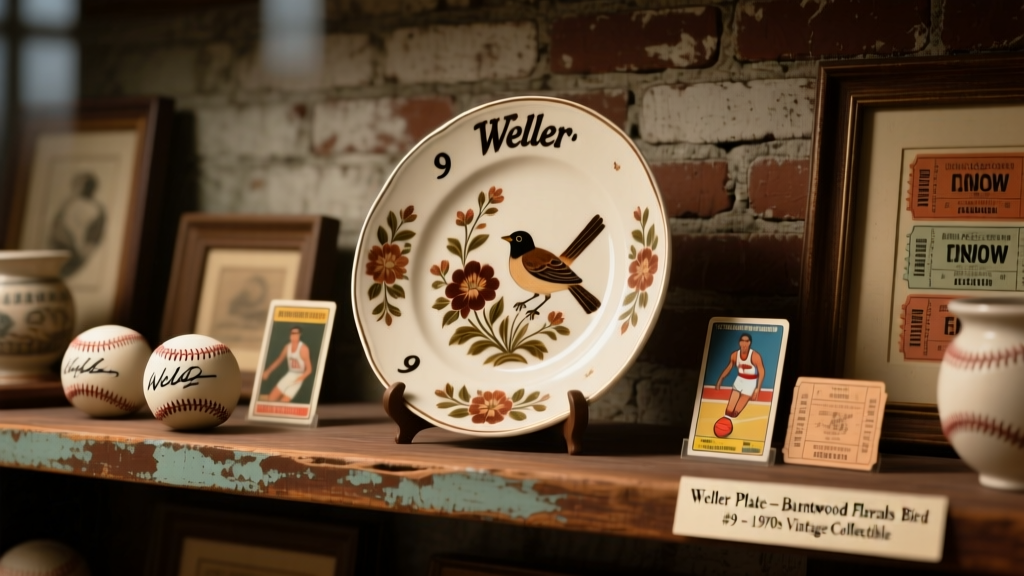
Weller Plate Burntwood Florals Bird 9-Inch: Authentication, Provenance, and Market Value Analysis
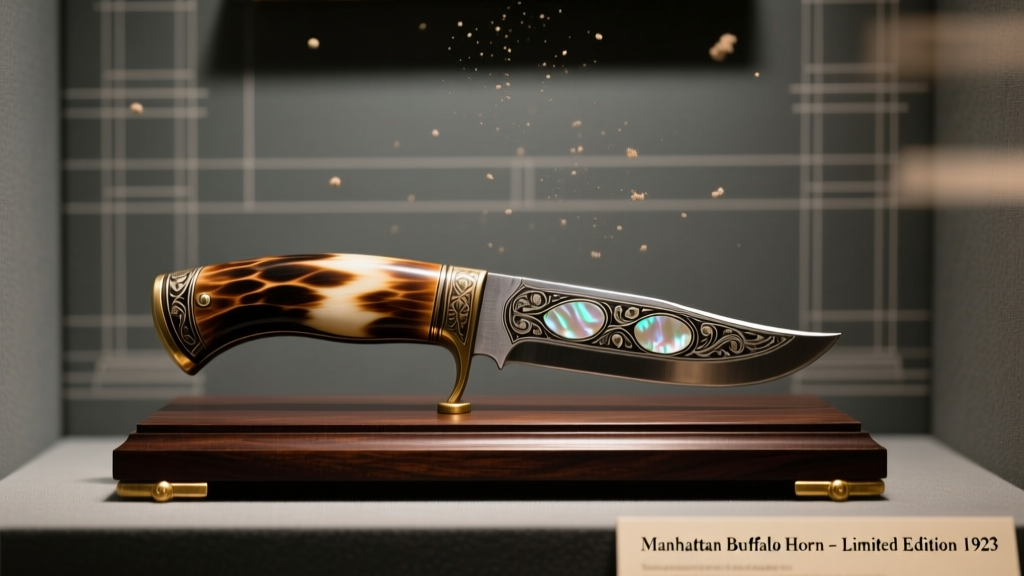
The Knife Boot Manhattan: Authenticating a Buffalo Horn Handle with Mother-of-Pearl Inlay and Custom Sheath
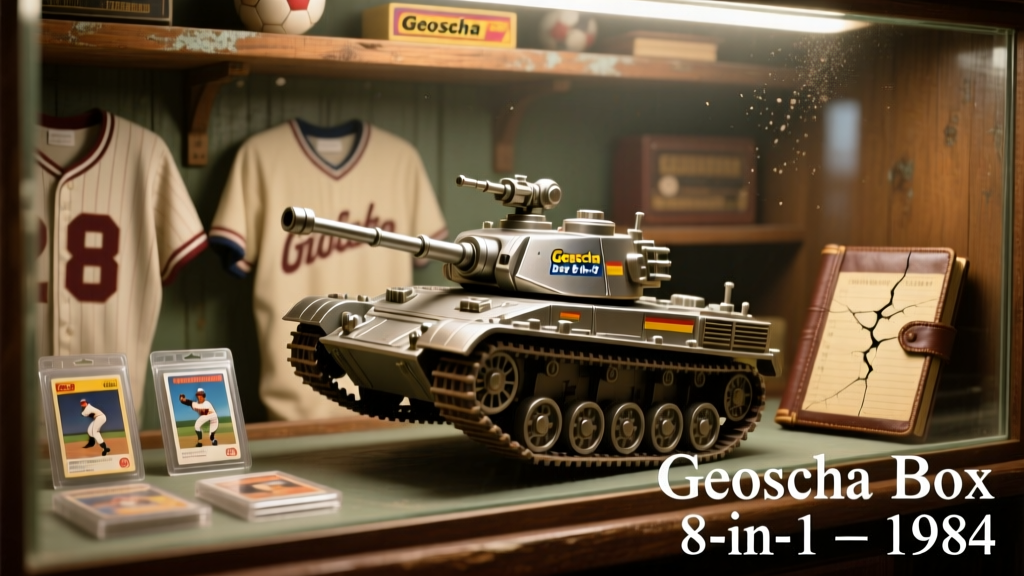
Toy Tank Maneuver Accessories Geoscha Box (8-Inch): Authenticity, History, and Collector Insights