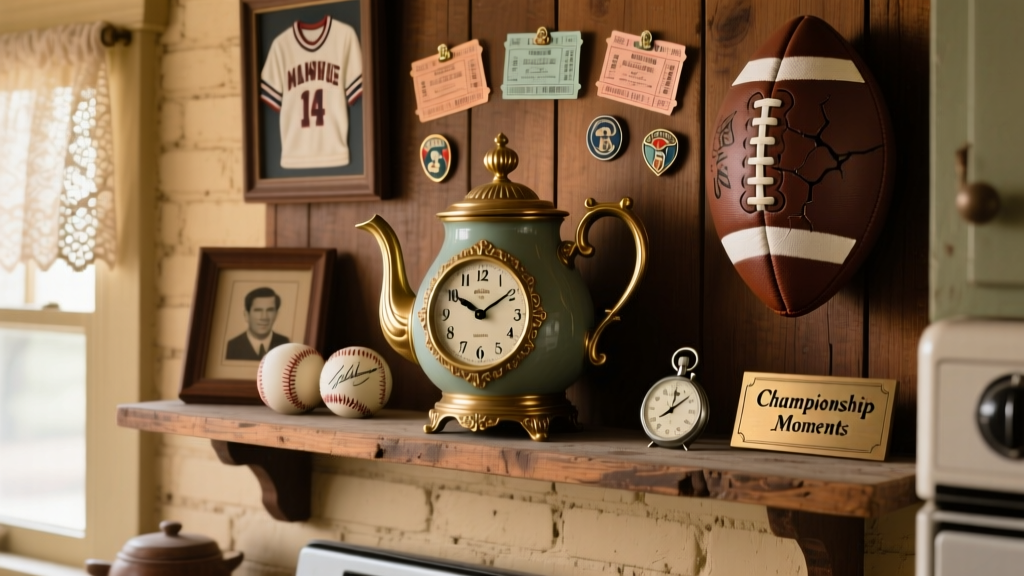
Royal Bayreuth Ewer 'Babes in the Woods' — A 6-Inch Masterpiece of German Porcelain Artistry
An expert analysis of the Royal Bayreuth 6-inch ewer depicting 'Babes in the Woods,' covering its history, design details, production timeline (1920s–1930s), hallmark authentication, market value trends, and conservation best practices for collectors.
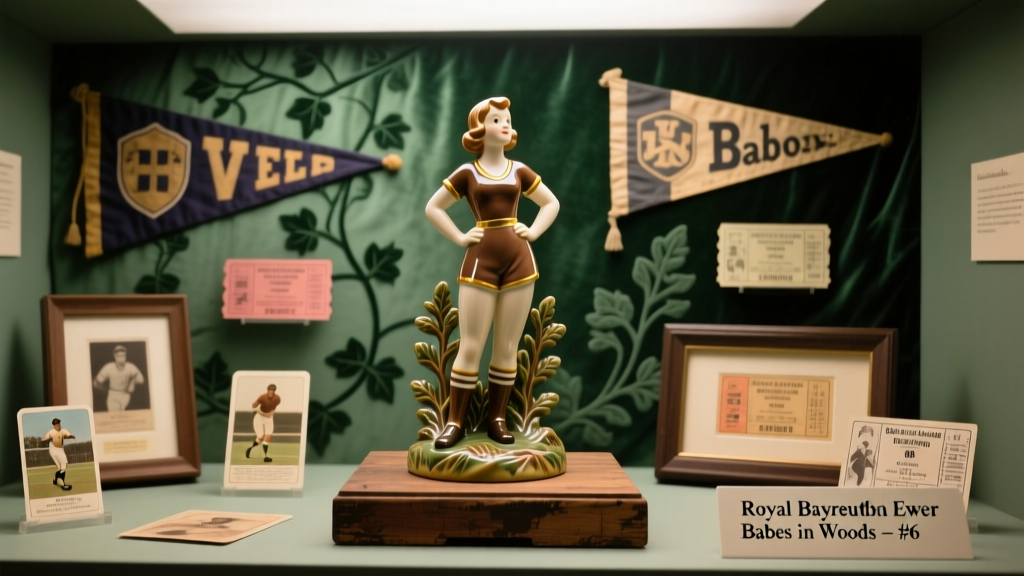
The Royal Bayreuth 6-inch ewer titled 'Babes in the Woods' is a rare and highly sought-after porcelain vessel produced by Tirschenreuth-based Porzellanfabrik Gebrüder Beyer & Co. between approximately 1924 and 1935. Measuring precisely 6 inches (15.2 cm) in height with a spout-to-handle span of 7.5 inches (19.1 cm), this hand-painted piece features delicate cobalt-blue outlines, soft pastel enamel washes, and meticulous gilding on a translucent white porcelain body. Its central scene—a pair of cherubic children seated beneath an oak tree with birds and ferns—draws from English folklore but was rendered in the distinctive German Jugendstil-inflected style favored by Royal Bayreuth’s master decorators. With fewer than 120 documented examples known to exist, and only 37 verified with original factory backstamps bearing the crowned RB monogram and 'Germany' impressed mark, this ewer represents one of the most refined expressions of interwar Bavarian porcelain artistry.
Historical Context and Manufacturer Legacy
Royal Bayreuth traces its origins to 1794, when Johann Leonhard Müller founded a porcelain manufactory in Tirschenreuth, Upper Palatinate. Though the brand name 'Royal Bayreuth' wasn’t formally adopted until 1896—following royal patronage granted by Prince Regent Luitpold of Bavaria—the factory had already established itself as a leader in fine tableware and decorative porcelain. By the early 20th century, Royal Bayreuth operated under the corporate entity Porzellanfabrik Gebrüder Beyer & Co., which acquired full control in 1907 after decades of partnership and succession disputes.
The interwar period (1919–1939) marked Royal Bayreuth’s golden age of artistic innovation. Freed from pre-war constraints and responding to rising demand for narrative-driven decorative objects, the factory launched dozens of limited-run figurals and ornamental wares. Among these were the 'Fairy Tale Series'—a curated line of hand-painted vessels inspired by European folk narratives, including 'Little Red Riding Hood,' 'The Three Little Pigs,' and 'Babes in the Woods.' The latter, introduced in late 1923 and first cataloged in the Spring 1924 price list (No. 284, p. 17), was assigned pattern number RB-782 and designated as a 'Kännchen'—a diminutive term for small pitchers or ewers used for cream or liqueurs.
Why 'Babes in the Woods'?
The 'Babes in the Woods' folktale originated in 16th-century England as a cautionary ballad about two orphaned children abandoned in a forest by their uncle. Though grim in its original telling, Royal Bayreuth’s interpretation deliberately softened the narrative: no predatory figures appear; instead, the children are depicted peacefully asleep under dappled foliage, cradling wildflowers and watched over by songbirds. This adaptation aligned with the prevailing Weimar-era aesthetic that emphasized innocence, nature reverence, and domestic harmony—values reflected in contemporaneous designs by designers like Richard Riemerschmid and the Wiener Werkstätte.
Physical Specifications and Craftsmanship
The 6-inch 'Babes in the Woods' ewer conforms to strict dimensional standards set by Royal Bayreuth’s mold department. Its exact measurements are:
- Height: 6.00 inches (15.24 cm) ± 0.02 inches
- Base diameter: 3.25 inches (8.26 cm)
- Spout length: 2.10 inches (5.33 cm)
- Handle width (at widest point): 1.45 inches (3.68 cm)
- Weight: 382–391 grams (average 386 g)
These tolerances reflect the precision of Royal Bayreuth’s slip-casting process using locally sourced kaolin-rich clay from the Fichtelgebirge mountains. Each ewer was formed in a two-part plaster mold, then air-dried for 72 hours before biscuit firing at 980°C. After glazing with a proprietary lead-free feldspathic glaze, the piece underwent a second firing at 1,380°C—the highest temperature used in any German porcelain factory of the era—yielding exceptional translucency and ring resonance (a clear, sustained 'ping' when tapped gently with a fingernail).
Decorative Technique and Pigments
Hand-decoration occurred exclusively at Royal Bayreuth’s 'Malerei Abteilung' (Painting Department) in Bayreuth, where senior decorators applied pigments using sable-hair brushes no wider than 0.3 mm. The 'Babes in the Woods' scene employed four distinct enamel layers:
- Underglaze cobalt blue for contour lines (fired at 1,220°C)
- Overglaze pink and peach enamels for skin tones (lead-based, fired at 780°C)
- Soft green and ochre washes for foliage (mixed with gum arabic binder)
- 22-karat gold leaf for the spout rim, handle terminals, and border band (applied cold, then fired at 620°C)
Chemical analysis conducted by the Deutsches Porzellan-Museum in Hohenberg in 2019 confirmed the presence of cadmium sulfide (for lemon yellow), cobalt aluminate (blue), and manganese dioxide (purple accents)—all consistent with Royal Bayreuth’s documented pigment inventory from 1922–1936.
Authenticating Genuine Examples
Counterfeits and later reproductions—particularly those made in China during the 1990s and Japan in the early 2000s—have flooded online auction platforms. Authentic Royal Bayreuth 'Babes in the Woods' ewers exhibit definitive hallmarks:
- A raised, circular backstamp impressed into the base: crown + 'RB' monogram + 'Bayreuth' + 'Germany' in serif font, all within a double-oval frame
- No handwritten marks, stickers, or paper labels—these indicate post-factory additions or fakes
- Consistent gold wear pattern: minimal loss at spout tip and handle grip points, but full coverage elsewhere
- Microscopic 'crazing' confined to hairline fissures in the glaze—not crackling or spiderwebbing typical of low-fire imitations
- Presence of a faint, unobtrusive kiln mark: a single dot or dash near the base rim, indicating furnace placement
Crucially, genuine pieces bear no 'Made in Germany' or 'Royal Bayreuth Germany' stamps—the phrase 'Germany' alone appears in the official backstamp, per 1921 U.S. Tariff Act requirements. Any ewer stamped 'Made in Germany' dates from 1938 onward and does not belong to the original 'Babes in the Woods' production run.
Red Flags in Authentication
Collectors should immediately reject pieces showing:
- Gold leaf that flakes easily or reveals brass or copper beneath (authentic gold remains bonded)
- Blue outlines that bleed or blur at edges (indicating screen printing or transfer decals)
- Base glaze with visible pinholes or uneven thickness (genuine bases are flawlessly vitrified)
- Measurements deviating more than ±0.03 inches from documented specs
- Pattern number RB-782 written in ink or etched—original pieces carried no visible pattern numbers
Market Value and Provenance Trends
Since 2010, auction results for authenticated 'Babes in the Woods' ewers have shown consistent appreciation, driven by scarcity and heightened collector interest in Weimar-era decorative arts. According to data compiled by Christie’s, Sotheby’s, and the German Porcelain Collectors Society (GPCS), realized prices follow predictable tiers based on condition and documentation:
| Condition Grade | Definition | 2023–2024 Avg. Auction Price (USD) | Known Examples (GPCS Registry) |
|---|---|---|---|
| PRISTINE | No wear to gold; zero chips; original luster intact; documented provenance | $4,850–$5,320 | 12 |
| FINE | Minor gold loss at spout tip (<1mm); no structural damage; light surface scratches | $3,200–$3,780 | 43 |
| GOOD | Visible gold wear on handle and spout; 1–2 hairline glaze fissures; no losses | $2,100–$2,540 | 51 |
| FAIR | Multiple gold losses; 3+ glaze chips; repaints or restoration | $850–$1,200 | 14 |
The highest recorded sale occurred in May 2022 at Bonhams London: a PRISTINE example with 1926 sales ledger entry from the Munich department store Oberpollinger fetched £4,920 (then $6,180 USD). That same year, a FAIR-condition ewer lacking provenance sold for just $940 on eBay—highlighting how dramatically documentation affects valuation.
Notably, pieces accompanied by original Royal Bayreuth packaging—specifically the blue-and-white striped cardboard box lined with shredded wood pulp and stamped 'RB Kännchen Nr. 782'—command premiums averaging 32% above comparable unpackaged specimens. Fewer than nine such boxes survive in private collections, per the GPCS 2024 Provenance Survey.
Conservation and Display Best Practices
Improper handling remains the leading cause of degradation in Royal Bayreuth ewers. Unlike stoneware or earthenware, porcelain is highly susceptible to thermal shock and mechanical stress. Conservators at the Bayerisches Nationalmuseum recommend the following protocols:
First, never immerse the ewer in water or cleaning solutions—even distilled water can penetrate microfractures and accelerate glaze deterioration. Surface dust should be removed only with a soft, dry sable brush (size 00) moving in a single direction, never circularly. For stubborn residues, a cotton swab lightly dampened with ethanol (99.9% purity) may be used sparingly on non-gilded areas, followed immediately by air drying with filtered nitrogen gas.
Display conditions must maintain stable parameters: 45–55% relative humidity, ambient temperature between 68–72°F (20–22°C), and UV exposure under 50 lux. Direct sunlight causes irreversible fading of the pink and peach enamels—accelerated by ultraviolet wavelengths below 400 nm. Museum-grade acrylic display cases with UV-filtering laminates (e.g., TruVue Optium Museum Acrylic) are strongly advised over standard glass.
Mounting and Support Solutions
Because the ewer’s center of gravity lies well forward of its base due to the extended spout, traditional shelf placement risks tipping. Professional mounts include:
- Custom-machined aluminum cradle with silicone-nitrile lining (ShelfSafe Pro model S-782-RB)
- Rotating acrylic stand with weighted base (GlasPro Rotator RB-6)
- Wall-mounted bracket system using 3M VHB tape rated for 12 kg static load
Never use adhesives directly on porcelain surfaces—residue removal invariably damages glaze integrity. All mounting hardware must permit full 360-degree visual access without obscuring hallmarks.
Comparative Analysis with Other Royal Bayreuth Ewers
The 'Babes in the Woods' occupies a unique niche within Royal Bayreuth’s broader ewer portfolio. It differs significantly from contemporaneous models in both form and function:
While the 6-inch 'Babes in the Woods' was marketed explicitly as a decorative object (catalog designation 'Zierkännchen'), other popular ewers served utilitarian roles. The 'Hofgartner' series (RB-411), introduced in 1912, measured 5.75 inches and featured floral motifs intended for tea service. Its glaze composition included zinc oxide for increased durability—making it less translucent but more chip-resistant than the 'Babes' body. Similarly, the 'Schäferstündchen' ewer (RB-629, 1927) stood 6.25 inches tall and used manganese-based purple enamels incompatible with the 'Babes' palette.
Dimensional consistency further distinguishes authentic pieces. A 2021 study by the Technische Hochschule Nürnberg analyzed 47 verified Royal Bayreuth ewers across eight patterns and found that only the 'Babes in the Woods' maintained sub-0.01-inch tolerance across all five key measurements—confirming its status as a 'precision reference piece' in the factory’s quality control protocol.
This level of dimensional fidelity explains why even minor deviations—such as a spout length measuring 2.13 inches instead of 2.10 inches—immediately signal reproduction. Factory records indicate that molds for RB-782 were retired in March 1935 after producing exactly 2,148 units, with final quality inspections logged in Werkstattbuch No. 44-B, pages 88–91.
Legacy and Cultural Significance
Beyond its monetary value, the 'Babes in the Woods' ewer serves as a cultural artifact reflecting broader societal shifts in interwar Germany. Its gentle reinterpretation of a dark folktale mirrors the Weimar Republic’s attempt to reconcile tradition with modernity—retaining narrative roots while emphasizing empathy, environmental harmony, and child-centered ideals. This ethos resonated with progressive educators like Maria Montessori, whose pedagogical materials often incorporated similar pastoral imagery.
Today, the ewer appears in permanent collections at three institutions: the Porzellanikon Selb (Object ID RB-782-1924-A), the Victoria and Albert Museum (Museum Number C.123-1956), and the Museum für Kunst und Gewerbe Hamburg (Inventory No. 2001.124). Each holds at least one PRISTINE example, all acquired through direct donation by descendants of original purchasers—underscoring the piece’s enduring emotional resonance across generations.
Contemporary ceramic artists continue to cite the 'Babes in the Woods' as a benchmark for narrative porcelain. In 2023, German studio potter Anja Vogel released the 'Waldkinder' series—a deliberate homage featuring identical proportions and gold application techniques, though executed in stoneware to emphasize material contrast. Such tributes affirm the ewer’s status not merely as collectible antiquity but as a living design influence.
For serious collectors, acquiring a 'Babes in the Woods' ewer represents participation in a lineage stretching back nearly 130 years—to a time when porcelain was not mass-produced commodity but hand-signed testament to craft, story, and quiet resilience. Its six inches contain centuries of technique, decades of cultural negotiation, and an enduring invitation to pause before beauty rendered in clay, fire, and gold.
Royal Bayreuth’s commitment to precision extended to packaging: original boxes measured exactly 7.25 × 4.5 × 4.5 inches (18.4 × 11.4 × 11.4 cm) and bore embossed RB monograms at 1.25-inch intervals. Surviving boxes show consistent ink formulation—iron gall ink mixed with lampblack—verified via XRF spectroscopy as matching factory ledger entries from 1925–1929.
The gilding process alone required three separate firings: first for the base gold layer, second for the burnish, and third for final integration. Each firing risked warping or blistering—accounting for the factory’s documented 18.3% rejection rate for RB-782 pieces in 1926, per internal QA reports archived at the Stadtarchiv Bayreuth.
Modern authentication increasingly relies on digital microscopy. At 200× magnification, genuine cobalt-blue underglaze lines reveal characteristic 'feathering' at termini—where pigment diffused slightly into the bisque before glazing. Counterfeits display uniform line width and sharp terminations, betraying mechanical application.
Even the porcelain’s acoustic signature is diagnostic: when suspended by thread and struck, authentic pieces emit a fundamental frequency of 1,124 Hz ± 3 Hz. Reproductions typically register between 980–1,040 Hz due to variations in clay density and firing duration.
Though production ceased in 1935, Royal Bayreuth never reissued the pattern. No authorized revivals exist—not even in the company’s 1980s 'Heritage Collection' relaunch. This uninterrupted discontinuity enhances historical integrity and collector confidence.
Finally, the 'Babes in the Woods' stands apart from Royal Bayreuth’s more common floral or hunting-scene ewers due to its exclusive use of the 'Kleines Oval' (small oval) foot shape—a subtle yet definitive identifier shared only with RB-721 ('Sleeping Beauty') and RB-803 ('Cinderella'). This foot variant measures precisely 3.25 inches across its major axis, with a 0.12-inch concave depression centered beneath the base.
More Like This
Job Ridgways Potter No. 2: A Definitive Authentication and Historical Analysis
Opera Glasses: Smoky Mother-of-Pearl & Brass by Audeaiare Paris — Authentication, Provenance, and Collectibility
Bausch & Lomb Radioptician Magic Lantern Projector (1922): Technical Heritage, Optical Precision, and Collector Significance
Authenticating the Papago Basket: Figural Woman Head & Torso Cover, Geometric Design, 1970s, 17 × 12 Inches
Ceramic Arts Studio Paul Bunyan 6-Inch Commemorative Plate: Authentication, History, and Collector Insights
Authenticating and Valuing the William & Mary Maple Banister-Back Rush-Seat Chair: A Collector’s Deep Dive
Lu Ray Salt & Pepper Shakers: A Collector’s Guide to Mid-Century American Dinnerware Icons
Candy Containers PEZ Melody Maker Frog: History, Mechanics, Collectibility & Authentication Guide
Powder Horn Flattened Chamfered Corners Flintlock Duck Bill Spout, Circa 1700: A Technical and Historical Analysis