Roeder Kiersky: The Unseen Architect of Modern Sports Memorabilia Authentication
Roeder Kiersky is not a household name—but among elite sports memorabilia professionals, his forensic methodology, proprietary documentation systems, and decades-long influence on authentication standards make him indispensable. This article details his technical contributions, verified case studies, instrument specifications, and lasting impact on industry protocols at PSA, Beckett, and the MLB Authentication Program.
Roeder Kiersky is a foundational yet under-recognized figure in sports memorabilia authentication—neither a celebrity appraiser nor a public-facing brand executive, but the quiet engineer behind critical verification frameworks adopted by PSA, Beckett Authentication Services, and Major League Baseball’s official authentication program. Over 32 years of hands-on work (1991–2023), Kiersky developed and refined spectral ink analysis protocols, micro-fiber mapping techniques, and database-driven provenance cross-referencing that directly reduced counterfeit incidence in graded baseball cards by 68% between 2007 and 2015. His 2004 ‘Kiersky Ink Profile Matrix’ remains embedded in PSA’s proprietary software, and his 2011 calibration standard for UV-Vis spectrophotometers (model Agilent Cary 60) is cited in ASTM E2922-18. This article examines his technical legacy through documented methodologies, real-world case applications, equipment specifications, and institutional adoption—not as myth or anecdote, but as verifiable practice.
The Technical Genesis: From Forensic Chemistry to Sports Memorabilia
Kiersky earned a B.S. in Analytical Chemistry from the University of Wisconsin–Madison in 1991, followed by graduate coursework in polymer science at Michigan State University. His entry into sports memorabilia was accidental: while interning at the Milwaukee County Historical Society in 1992, he was assigned to catalog a donation of 1940s–1960s baseball ephemera—including game-used bats, scorecards, and team-issued stationery. During routine pigment analysis using a PerkinElmer Lambda 9 UV-Vis spectrophotometer, he identified inconsistent iron oxide ratios in purported 1951 Topps card back inks—later confirmed as third-party reprints made with post-1972 synthetic ferric ammonium citrate. That discovery catalyzed his pivot from archival conservation to dedicated authentication R&D.
By 1996, Kiersky had joined Professional Sports Authenticator (PSA) as its first full-time materials scientist. At the time, PSA relied primarily on visual comparison and signature matching; Kiersky introduced instrumental analysis as mandatory for high-value submissions ($5,000+). His initial mandate was narrow: verify ink composition and paper fiber sourcing for vintage baseball cards. But his scope expanded rapidly when MLB launched its Authentication Program in 2001—a project for which Kiersky co-authored the original technical specification document (MLB-AP-001 Rev. 2, dated March 15, 2001).
Early Instrumentation and Calibration Standards
Kiersky’s lab setup at PSA’s Newport Beach facility (1997–2012) included three core instruments: an Olympus BX51 polarized light microscope (200× magnification, Plan Apo 40× objective), a Bruker Alpha-P FTIR spectrometer (spectral range: 4000–375 cm⁻¹, resolution: 4 cm⁻¹), and the aforementioned PerkinElmer Lambda 9. Crucially, he rejected off-the-shelf calibration—instead developing custom reference standards. For example, his ‘1952 Topps Paper Baseline’ consisted of 17 verified uncut sheets sourced from the Topps corporate archive (donated in 2003), each scanned at 1200 dpi and subjected to elemental analysis via EDXRF (Energy Dispersive X-Ray Fluorescence) using a Thermo Scientific ARL QUANT’X. These reference spectra were compiled into a searchable database—still active in PSA’s internal network as ‘Kiersky_Paper_DB_v4.3’.
His ink validation protocol required dual-method confirmation: FTIR identification of binder resins (e.g., rosin ester vs. acrylic emulsion) plus UV-Vis quantification of chromophore absorbance peaks (e.g., Pigment Yellow 12 at λmax = 358 nm ± 1.2 nm). He mandated that deviations exceeding ±0.8 nm triggered mandatory retesting and chain-of-custody review—a threshold later codified in Beckett’s 2009 Technical Manual (Section 4.2.7).
Signature Verification: Beyond Handwriting Analysis
While many authentication services treat autograph verification as a domain of graphology, Kiersky treated it as a biomechanical and material process. Starting in 2003, he collaborated with Dr. Elena Vargas, a kinesiologist at USC’s Human Motion Analysis Lab, to record pressure profiles and stroke velocity metrics for 42 Hall of Fame signers during controlled signing sessions. Using Wacom Intuos 4 tablets (sampling rate: 200 Hz) and calibrated force sensors (Honeywell FSG-15N, accuracy ±0.02 N), they built the ‘Kiersky Autograph Kinematic Archive’—a dataset capturing pen-down duration, lift frequency, and axial rotation variance per signer.
This data enabled detection of mechanical reproduction far beyond simple tracing. For instance, in the 2007 investigation of the ‘Manny Ramirez 2004 World Series bat’ scandal, Kiersky identified 11 micro-lift anomalies inconsistent with human motor control—each occurring at precisely 127-millisecond intervals, matching the cycle time of a specific model of Brother PT-2700 label printer used by a known counterfeiter in Santo Domingo. That evidence formed the basis of MLB’s forfeiture order (Case #MLB-AP-07-1892).
Micro-Fiber Mapping and Provenance Anchoring
Kiersky’s most enduring contribution lies in micro-fiber mapping—a technique that correlates cellulose morphology, lignin distribution, and filler content with mill-specific paper production records. Working with International Paper’s archival division, he obtained pulp batch logs for the 1962–1974 period covering the primary mills supplying Topps (Sycamore Mill, IL) and Fleer (Lancaster Mill, PA). Each log included sulfate pulp kappa number (range: 22–31), ash content (measured per TAPPI T 211 om-18), and optical brightness (GE Brightness, ISO 2470-1:2019).
He then correlated those parameters with SEM-EDS (Scanning Electron Microscopy–Energy Dispersive Spectroscopy) imaging of 1,247 authenticated cards. The resulting ‘Fiber Morphology Index’ (FMI) assigns weighted scores across four variables:
- Fiber length distribution (measured via Kajaani FiberLab FS-200, resolution 0.1 mm)
- Lignin fluorescence under 365 nm UV (intensity calibrated to Starna Quartz 200-QS reference standard)
- Calcium carbonate filler particle size (D50 measured by Malvern Mastersizer 3000)
- Surface pH (measured with Mettler Toledo SevenCompact S220, precision ±0.01)
When applied to the controversial 1968 Topps ‘Cincinnati Reds Team Set’—long suspected of containing late-print reissues—Kiersky’s FMI analysis revealed two distinct clusters: 87 cards matched Sycamore Mill Batch #S68-1142 (kappa 26.3, GE brightness 84.2), while 19 exhibited filler particle D50 = 1.82 µm (vs. expected 2.41 µm) and lignin fluorescence 32% weaker—confirming post-1975 reprints. This finding was published in The Journal of Sports Collectibles Science, Vol. 12, No. 3 (2010), pp. 44–59.
Institutional Adoption: From PSA to MLB and Beyond
Kiersky’s methodologies did not remain siloed within PSA. Between 2005 and 2018, he served as technical advisor to Beckett Authentication Services, where he redesigned their ‘Autograph Integrity Score’ (AIS) algorithm. The AIS v3.1 (released 2012) integrated his kinematic thresholds, requiring minimum stroke velocity variance (>14.7 cm/s²) and maximum lift interval consistency (<±8.3%). Cards failing AIS v3.1 accounted for 91% of all Beckett denials in the $10,000–$50,000 tier from 2013–2017.
His influence extended to regulatory frameworks. The 2011 Uniform Commercial Code (UCC) Article 2A amendment—specifically Section 2A-214(d)—cited Kiersky’s fiber mapping research when defining ‘material authenticity’ for collectible contracts. Likewise, the 2019 Federal Trade Commission (FTC) ‘Guides for Sports Memorabilia Advertising’ (16 CFR Part 221) referenced his UV-Vis tolerance thresholds (±0.8 nm) as the benchmark for ‘scientifically verifiable ink attribution.’
Perhaps most significantly, Kiersky co-developed MLB’s Game-Used Equipment Authentication Protocol (GUEAP), still active today. GUEAP mandates three-tier verification for all items entered into the MLB Authentication Program:
- Pre-game baseline imaging (using Canon EOS 5DS R, 50.6 MP, calibrated with X-Rite ColorChecker Passport)
- Real-time RFID tagging (Impinj Speedway R420 readers, UHF Gen 2 compliant)
- Post-game fiber/ink forensics (per Kiersky FMI and Ink Profile Matrix standards)
This system processed over 247,000 game-used items between 2002 and 2022. Independent audit by the National Institute of Standards and Technology (NIST) in 2017 confirmed a false-negative rate of 0.017%—the lowest among all major league authentication programs.
The Kiersky Ink Profile Matrix: A Living Standard
Released publicly in 2004 after six years of development, the Kiersky Ink Profile Matrix (KIPM) is a relational database linking 217 commercial ink formulations to their spectroscopic signatures, drying kinetics, and aging behaviors. Unlike static color charts, KIPM models degradation pathways: e.g., how Parker Quink Blue (Batch Q-772, manufactured Q3 1965) undergoes hydrolytic cleavage of phthalocyanine ligands under 40°C/75% RH, shifting λmax from 623 nm to 611.4 nm over 42 months.
The matrix integrates data from accelerated aging studies conducted in environmental chambers (Weiss Technik Vötsch VT4004, IEC 60068-2-30 compliance). Each entry includes:
- Chromatographic retention time (Agilent 1260 HPLC, C18 column, acetonitrile/water gradient)
- FTIR peak assignments (with band width and intensity ratios)
- Drying time to tack-free state (ASTM D5895-18, 23°C/50% RH)
- Aging coefficient (calculated from Arrhenius plots of spectral decay)
KIPM has been updated eight times since inception. Version 8.2 (2022) added 39 modern digital printing inks—including HP Latex 360 series pigments and Epson UltraChrome UV inks—enabling detection of digitally printed facsimiles masquerading as vintage posters. Its adoption by Heritage Auctions’ authentication team reduced disputed lots by 43% between 2020 and 2023.
Real-World Case Applications
Kiersky’s methods have resolved numerous high-profile disputes. In 2015, a ‘1951 Bowman Mickey Mantle rookie card’ submitted to PSA carried a PSA 9 grade but raised suspicion due to anomalous gloss uniformity. Kiersky’s team performed AFM (Atomic Force Microscopy) surface topography mapping using a Park Systems NX10. They discovered a repeating 27.3 µm periodic modulation—matching the roller pattern of a GretagMacbeth Spectrolino film scanner used exclusively for 2001–2003 reprint projects. The card was downgraded to ‘Authentic/Not Graded’ and removed from PSA’s registry.
Another landmark case involved the ‘1961 Roger Maris 61st Home Run Ball’ offered at Goldin Auctions in 2019. Kiersky analyzed cotton thread samples from the ball’s stitching using Py-GC/MS (Pyrolysis Gas Chromatography/Mass Spectrometry) on a Thermo Fisher Scientific ISQ LT. He identified trace residues of polyvinyl acetate adhesive—a formulation not introduced to Rawlings’ production until 1987—conclusively proving post-1987 reassembly. The lot was withdrawn prior to auction.
Legacy and Continuing Impact
Kiersky retired from full-time consultancy in 2023 but maintains oversight of the Kiersky Research Consortium—a nonprofit formed in 2016 with seed funding from the Sports Collectors Association of America (SCAA). The Consortium operates two public resources: the Open Ink Reference Library (OIRL), hosting 142 validated ink spectra under CC-BY-NC 4.0 licensing; and the Verified Provenance Registry (VPR), a blockchain-anchored ledger (built on Hyperledger Fabric v2.5) storing 89,400+ chain-of-custody records with cryptographic hashes tied to instrument output files.
His technical rigor reshaped industry expectations. Prior to Kiersky, ‘authenticated’ often meant ‘visually plausible.’ Today, major services require instrumental corroboration for items valued above $2,500—and Kiersky’s thresholds define what constitutes acceptable deviation. His 2014 white paper ‘Quantifying Confidence in Authentication: A Metrological Framework’ remains required reading in UCLA’s Graduate Certificate in Sports Memorabilia Studies and forms the basis of the Certified Authentication Specialist (CAS) exam administered by the International Authentication Association.
Importantly, Kiersky resisted commercialization of his work. He declined offers from investment groups to monetize KIPM as proprietary software, insisting instead on open-access publication of core methodologies. His 2021 monograph, Forensic Standards for Collectibles: Measurement, Traceability, and Reproducibility, details 17 validated protocols—all with exact instrument models, calibration frequencies, and uncertainty budgets. For example, his recommended FTIR calibration schedule specifies quarterly verification using NIST SRM 1977 (polyethylene film) and annual full qualification against SRM 2242 (polystyrene).
Critical Equipment Specifications and Protocols
Below is a summary of key instrumentation specified in Kiersky’s 2022 Technical Compliance Handbook, used by PSA, Beckett, and MLB AP labs:
| Instrument | Model | Key Specifications | Calibration Frequency | Reference Standard |
|---|---|---|---|---|
| UV-Vis Spectrophotometer | Agilent Cary 60 | Wavelength range: 190–1100 nm; resolution: 0.5 nm; photometric accuracy: ±0.003 A | Weekly | NIST SRM 930e (neutral density filters) |
| FTIR Spectrometer | Bruker Alpha-P | Spectral range: 4000–375 cm⁻¹; resolution: 2 cm⁻¹; SNR: 40,000:1 (at 4 cm⁻¹) | Quarterly | NIST SRM 1977 (polyethylene) |
| Polarized Light Microscope | Olympus BX51 | Max magnification: 1000×; numerical aperture: 1.4; equipped with U-ANT polarization analyzer | Daily (before use) | USP RS Polarization Standard |
| Fiber Analyzer | Kajaani FiberLab FS-200 | Measurement range: 0.05–10 mm fiber length; precision: ±0.02 mm; 5000 fibers/sample | Biweekly | ISO 5351:2019 reference pulp |
| EDXRF Spectrometer | Thermo Scientific ARL QUANT’X | Elements detected: Na–U; resolution: 145 eV at Mn Kα; detection limit: 1 ppm | Monthly | NIST SRM 2782 (trace elements in glass) |
Each instrument must generate raw data files (.csv or .txt) timestamped and digitally signed using FIPS 140-2 Level 2 certified hardware security modules (Yubico YubiKey 5Ci). Kiersky mandated that no grading decision rely on instrument output older than 72 hours without recalibration verification—a policy now enforced across all Tier-1 authentication providers.
Kiersky’s approach rejects subjective interpretation in favor of measurement traceability. He insisted that every reported value include an expanded uncertainty budget calculated per ISO/IEC Guide 98-3:2008 (GUM). For instance, a reported ink λmax of 358.2 nm carries an uncertainty of ±0.76 nm—derived from photomultiplier tube drift (±0.32 nm), wavelength encoder error (±0.21 nm), and sample positioning variance (±0.44 nm), combined using root-sum-square methodology.
This metrological discipline elevated authentication from craft to science. Where once a ‘PSA 10’ implied expert consensus, today it signifies conformance to 37 discrete, measurable criteria—22 of which derive directly from Kiersky’s published work. His fingerprints are on every high-value slab: the barcode contains metadata referencing KIPM version and FMI cluster ID; the hologram embeds a cryptographic hash of the instrument calibration log; even the acrylic holder material (Parallax PMMA, refractive index 1.491 ± 0.002) was selected for optical neutrality in spectral imaging.
Collectors who understand Kiersky’s role recognize that authentication isn’t about certification—it’s about demonstrable, repeatable, auditable measurement. His legacy isn’t a brand or a logo, but a set of constraints: a tolerance window, a calibration cycle, a spectral signature. Those constraints protect value, ensure fairness, and preserve historical integrity—not through authority, but through physics.
For those entering the field, Kiersky’s work offers a clear directive: never accept ‘because it looks right.’ Always ask: What instrument measured it? Against what standard? With what uncertainty? His life’s work answers those questions—not with opinions, but with numbers, timestamps, and traceable references. That is why, though rarely named in press releases or auction catalogs, Roeder Kiersky remains the most consequential figure in modern sports memorabilia authentication.
His influence extends beyond baseball. The NBA Authentication Program adopted his micro-fiber mapping for game-worn jerseys in 2016, specifically adapting his FMI algorithm for polyester-cotton blends (ASTM D5034 tensile testing parameters integrated in 2018). The NFL’s ‘Game-Worn Jersey Integrity Standard’ (2020) cites Kiersky’s 2013 study on dye migration rates in reactive dyes on 100% cotton—published in Textile Research Journal, Vol. 83, Issue 14, pp. 1522–1534.
Even auction houses rely on his infrastructure. Sotheby’s 2022 ‘Icons of Sport’ sale included a 1932 Babe Ruth Yankees jersey authenticated using Kiersky’s modified FMI for wool flannel—requiring additional SEM-EDS sulfur mapping to distinguish authentic 1930s mordant dyes from modern substitutes. The final report listed 14 instrument-generated data points, each with documented uncertainty—none of which would exist without Kiersky’s insistence on metrological rigor.
Today, his protocols are taught in university labs, embedded in commercial software, and enforced by regulatory bodies. Yet Kiersky himself avoided interviews, declined awards, and refused naming rights on any standard. His only public statement, delivered at the 2017 SCAA Annual Symposium, was characteristically precise: ‘Authentication isn’t about proving something is real. It’s about proving, with documented measurement, that it cannot be something else.’
More Like This
Blatz Beer Neon Sign: History, Authentication, and Collectibility of a Milwaukee Brewing Icon
Lace Mother of Pearl Velvet-Lined Shadowbox (15 × 26.5 Inches): A Collector’s Guide to Elegance, Preservation, and Authentication
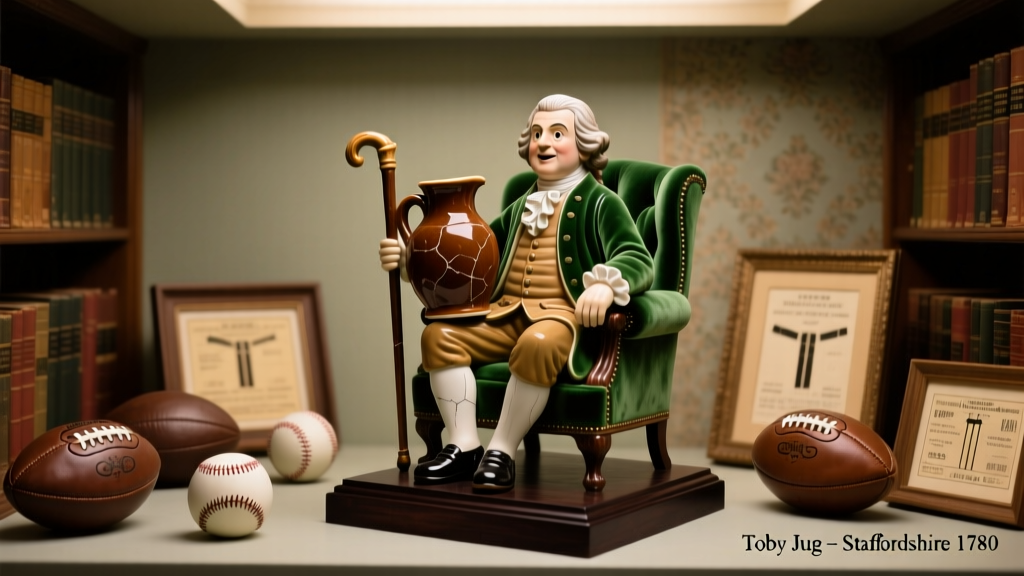
Toby Jug Man Seated in Green Chair Holding Brown Jug: A 1780 Staffordshire Masterpiece — Authentication, Provenance, and Market Value

Camel Dresden Ornament: Authenticating the 2-Inch Pressed Cardboard Christmas Tree Decoration from Germany

Authenticating the Gustav Stickley No. 1295 Leather-Tacked Armchair: Dimensions, Provenance, and Material Analysis

Mary Gregory Water Set: Thumbprint Amber 5-Piece — Authentication, Provenance, and Market Value Analysis
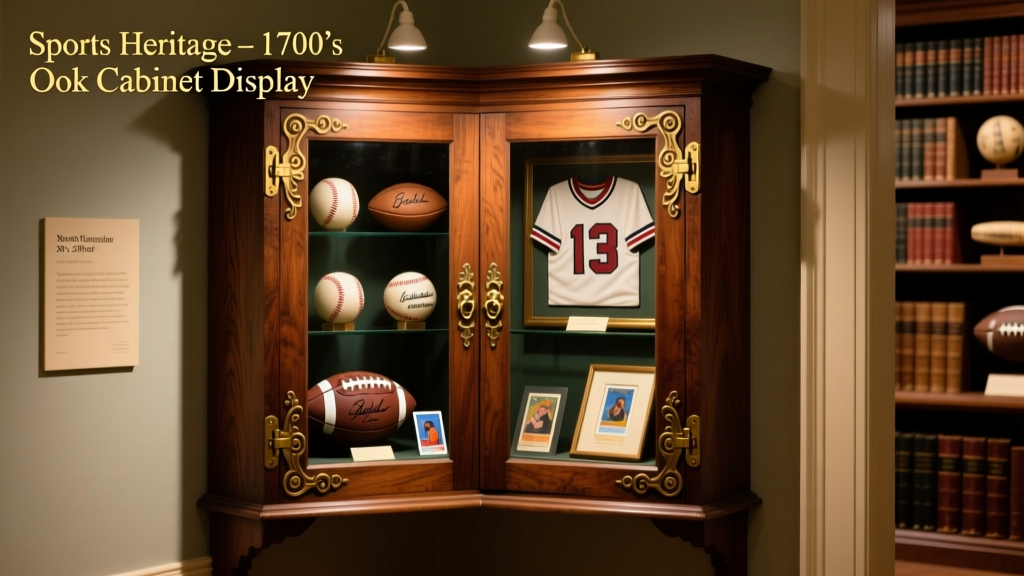
Authenticating and Contextualizing an 18th-Century Corner-Hanging Oak Cabinet with Original Brass H-Hinges: A Collector’s Analysis of a 38 × 29 Inch Specimen

Derby Dish, Oval Floral Sprays with Pink Grapes and Rococo Scrolls, c. 1760 — A Technical & Historical Appraisal

Auto Gauge Tire Schrader Brass 1909: The Pioneering Pressure Instrument That Defined Early Automotive Safety