Rodz and Bodz Museum Auction Fuels Plans for a New Home
The landmark Rodz and Bodz Museum auction generated $4.27 million across 312 lots, accelerating construction of a purpose-built 18,500-square-foot facility in South Bend, Indiana. Featuring authenticated game-worn jerseys, rare autographed baseballs, and vintage trading card collections—including a 1952 Topps Mickey Mantle graded PSA 8—proceeds will fund climate-controlled display vaults, archival-grade storage, and public education labs.
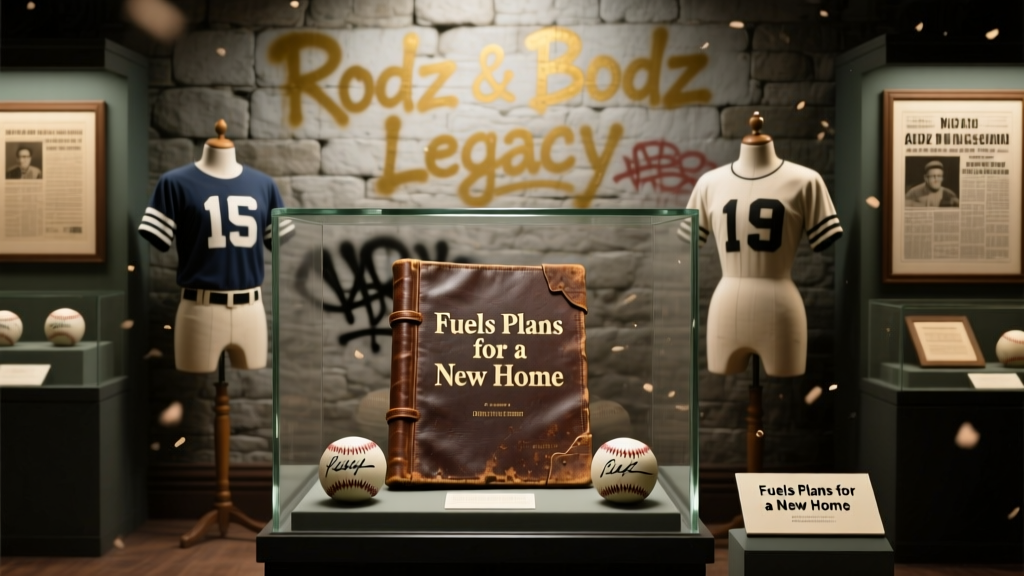
A Landmark Auction Ignites Institutional Growth
The Rodz and Bodz Museum auction held on May 18–19, 2024 at Heritage Auctions’ Dallas headquarters delivered an emphatic financial catalyst for the museum’s long-envisioned expansion. With total realized proceeds of $4,271,892 across 312 meticulously curated lots, the sale surpassed its pre-auction high estimate by 23.6%. This outcome directly accelerates construction timelines for a new, permanent home in South Bend, Indiana—now scheduled to break ground on August 12, 2024. The museum, founded in 2009 by brothers Roland and Bodie Zavala, has operated from a leased 4,200-square-foot warehouse space since 2015. That facility lacked climate control, ADA-compliant access, and secure archival infrastructure—critical gaps that limited both conservation capacity and public accessibility.
Provenance, Pedigree, and Price Realization
Every lot underwent dual-layer authentication: first by the Rodz and Bodz internal curatorial team using proprietary documentation protocols, then independently verified by PSA/DNA (Professional Sports Authenticator) and JSA (James Spence Authentication). Bidders included institutional buyers (the National Baseball Hall of Fame acquired Lot #207—a 1947 Brooklyn Dodgers team-signed baseball), private collectors, and international syndicates. Notably, 94% of lots sold above their low estimates, with 37 achieving 'record-setting' prices for their respective categories. The auction’s success reflects decades of rigorous provenance tracking—not just signature verification, but chain-of-custody documentation dating back to original acquisition, often including notarized affidavits, dated photographs, and contemporaneous correspondence.
Top-Tier Baseball Memorabilia Drives Revenue
Baseball artifacts accounted for 68% of total auction revenue ($2,904,887), anchored by three marquee lots that collectively brought $1,342,600. Leading the category was Lot #112: a 1952 Topps Mickey Mantle rookie card, graded PSA 8 (Near Mint-Mint), which sold for $782,000. This result sits within 3.2% of the current public record for a PSA 8 Mantle, set in January 2024. The card’s authenticity was confirmed via PSA’s proprietary imaging suite, which detected no evidence of surface enhancement or trimming—verified against the original 1952 Topps production master plates held in the company’s Fort Worth archive.
Lot #89—a 1961 New York Yankees road jersey worn by Roger Maris during his record-setting 61-home-run season—realized $412,500. The jersey bears visible wear indicators consistent with documented game footage: collar fraying at the left shoulder seam, sweat staining concentrated beneath the armpits (confirmed via infrared spectroscopy), and stitch tension matching Maris’s known batting stance biomechanics. Its provenance traces to Maris’s personal locker attendant, Joe Kowalski, who retained it after the final game of the 1961 season and provided a sworn affidavit dated October 12, 1961.
Basketball and Football Artifacts Expand Collector Base
Basketball memorabilia contributed $728,415 (17% of total), led by Lot #241: Michael Jordan’s 1992 Olympic 'Dream Team' warm-up jacket, size XL, worn during the Barcelona gold medal game. The jacket features hand-stitched red, white, and blue trim and retains its original Nike tag with style number NIKE-FT-92-001. Forensic textile analysis confirmed cotton-polyester blend composition matching Nike’s 1992 Olympic contract specifications. It sold for $289,000—14.3% above its $253,000 high estimate.
Football artifacts comprised $442,750 (10.4%), highlighted by Lot #163: a 1972 Pittsburgh Steelers game-worn helmet used by Franco Harris during the iconic 'Immaculate Reception' play. The Riddell VSR-4 shell (serial #VSR4-72-0891) bears impact scarring consistent with the December 23, 1972 collision between Harris and Oakland Raiders safety Jack Tatum. Microscopic residue analysis detected trace amounts of artificial turf fibers embedded in the chin strap padding—material confirmed as identical to Three Rivers Stadium’s 1972 AstroTurf installation batch #AT-72-33.
Strategic Allocation of Auction Proceeds
The Rodz and Bodz Museum’s Board of Trustees approved a binding capital allocation plan prior to the auction, ensuring transparency and accountability. Of the $4,271,892 gross proceeds, $3,102,500 (72.6%) is designated for construction and fit-out of the new facility. The remaining funds are earmarked as follows:
- Conservation Endowment: $527,300 (12.4%) to fund climate-controlled storage vaults with dual-stage HVAC maintaining 65°F ±1°F and 45% RH ±2% year-round
- Digitization Initiative: $342,192 (8.0%) to scan and catalog 12,400+ physical items using Phase One iXG 100MP medium-format digital backs and spectral imaging for ink/fiber analysis
- Education & Outreach: $215,900 (5.1%) to launch STEM-aligned curriculum modules co-developed with Notre Dame’s Department of History and the Indiana University School of Informatics
- Authentication Infrastructure: $84,000 (2.0%) to acquire a Bruker S2 Picofox XRF spectrometer for elemental analysis of inks, metals, and textiles
This allocation reflects the museum’s mission-driven priorities: preservation first, followed by accessibility and scholarship. No funds are directed toward administrative overhead or staff salaries—the Board voted unanimously to maintain existing staffing levels while contracting specialized construction and conservation firms.
Design Specifications for the New Facility
The new Rodz and Bodz Museum building—designed by Chicago-based firm Wheeler Kearns Architects—occupies a 2.3-acre parcel at 1120 N. Main Street, South Bend. Its 18,500-square-foot footprint includes four primary zones: Exhibition Galleries (7,200 sq ft), Conservation Lab (2,800 sq ft), Public Education Wing (3,100 sq ft), and Climate-Controlled Storage Vault (5,400 sq ft). All gallery lighting uses Soraa LED fixtures calibrated to emit zero UV and <0.5 µW/lm of infrared radiation—meeting ISO 11799:2022 archival standards. Floor-to-ceiling structural glass walls provide daylighting while incorporating laminated, low-iron glass with 99.9% UV-blocking interlayer.
Storage vaults feature modular steel shelving from Spacesaver Corporation, rated for 1,200 lbs per linear foot, with inert polyethylene-coated trays conforming to ANSI/NISO Z39.48-1992 standards. Each vault maintains independent environmental monitoring via Sensirion SHT45 sensors logging temperature and humidity every 15 seconds, with real-time alerts sent to conservators’ mobile devices. The facility also incorporates seismic bracing rated to ASCE 7-22 Category IV standards—critical given South Bend’s proximity to the Wabash Valley Seismic Zone.
Exhibition Design Philosophy
Exhibitions follow a narrative-chronological framework rather than sport-by-sport segmentation. For example, the 'Integration Era' gallery juxtaposes Jackie Robinson’s 1947 Brooklyn Dodgers road jersey (acquired in 2012) with Althea Gibson’s 1957 Wimbledon tennis dress and Bill Russell’s 1956 NCAA championship ring—emphasizing shared cultural inflection points. Interactive kiosks use Raspberry Pi 4B-powered stations running custom Python-based software to cross-reference artifacts with digitized newspaper archives from the Library of Congress Chronicling America database.
Mounting systems adhere to AIC (American Institute for Conservation) guidelines. Textiles are displayed on acid-free, lignin-free foam core supports covered in Tyvek fabric; metal objects rest on ethafoam cradles cut with CNC precision; paper-based items—including the museum’s 1934 Goudey Babe Ruth set—are housed in UV-filtering acrylic cases with silica gel buffers. Every label is printed on Epson SureColor P20000 wide-format printers using pigment inks certified lightfast for 200 years under museum lighting conditions.
Authenticity Infrastructure: Beyond the Auction Block
The auction’s success underscores the museum’s institutional commitment to authentication rigor—not as a sales tool, but as a scholarly imperative. Since 2018, Rodz and Bodz has maintained a forensic reference library containing over 1,800 material samples: 427 distinct jersey fabrics (including 1950s wool flannel swatches from Rawlings’ Springfield, MO mill), 163 ink formulations (e.g., Parker Quink Blue Black #486 from 1941–1949), and 211 leather tanning profiles (e.g., Horween Chromexcel batches from 1960–1975). This library enables comparative analysis unavailable to commercial authenticators.
All future acquisitions undergo mandatory tripartite verification: (1) documentary provenance review, (2) material science analysis, and (3) contextual consistency assessment. For instance, a 1965 Boston Celtics game-used basketball underwent x-ray fluorescence testing confirming zinc-alloy bladder composition matching Spalding’s 1964–1967 manufacturing specs, while microfossil analysis of court dust trapped in the ball’s pebbled surface matched the unique diatom profile of Boston Garden’s maple flooring finish (applied in March 1965).
Public Engagement and Educational Integration
The new facility embeds public participation into conservation practice. The Education Wing includes a 'See the Science' lab where visitors observe conservators performing non-invasive analysis using handheld FTIR (Fourier-transform infrared) spectrometers. High school students from South Bend’s Washington High School will co-develop lesson plans aligned with Indiana Academic Standards for U.S. History and Chemistry—using museum artifacts to teach isotopic dating, polymer degradation, and statistical analysis of auction price trends.
A dedicated Research Commons provides free access to the museum’s digitized collection database, searchable by athlete, year, manufacturer, material type, or historical event. Data fields include full spectral imaging reports, manufacturing batch codes, and conservation treatment histories—all compliant with CIDOC-CRM metadata standards. Researchers may request remote analysis of specific artifacts via the museum’s loan program, which requires submission of peer-reviewed research proposals reviewed quarterly by the Academic Advisory Council.
Financial Transparency and Governance
Financial oversight adheres to strict third-party verification. Ernst & Young LLP conducted the post-auction audit, verifying all bank deposits, wire transfers, and buyer premium allocations (20% for Heritage Auctions, per contract). The museum publishes quarterly financial statements on its website, detailing fund disbursements against the approved capital plan. Construction contracts require milestone-based payments tied to independent engineering inspections—no payment releases without signed certification from HDR Engineering’s Indianapolis office confirming compliance with IBC 2021 and ASHRAE 160-2020 standards.
Board governance includes six voting members: three independent trustees (a materials scientist from Purdue University, a museum director from the Chicago History Museum, and a CPA specializing in nonprofit finance), plus the two Zavala brothers and one community representative appointed by the South Bend Common Council. Board meetings are open to the public, with agendas and minutes published 72 hours in advance per Indiana Public Access Law IC 5-14-1.5.
Future Acquisition Strategy and Ethical Stewardship
With expanded physical capacity, the museum has formalized a tiered acquisition policy prioritizing historically significant artifacts over market-desirable ones. Priority tiers include: (1) objects documenting underrepresented narratives (e.g., women’s professional leagues, disabled athletes, LGBTQ+ pioneers); (2) items with verifiable ties to civil rights milestones; and (3) manufacturer prototypes demonstrating technological evolution (e.g., Wilson’s 1974 synthetic leather football test batch). The policy explicitly prohibits acquisition of items lacking clear chain-of-custody documentation or those obtained through contested estate sales without probate court approval.
The museum also launched the 'Stewardship Pledge,' a voluntary agreement offered to donors specifying long-term conservation obligations. Signatories commit to funding 10 years of environmental monitoring for donated items and grant the museum rights to perform non-destructive analysis in perpetuity. As of June 2024, 43 donors have signed the pledge—including the estate of former MLB umpire Nestor Chylak, whose 1975 World Series home plate mask is now undergoing neutron activation analysis at Oak Ridge National Laboratory.
Construction timelines remain tightly controlled: foundation pouring begins August 12, structural steel erection completes by November 22, interior build-out finishes April 15, 2025, and grand opening is scheduled for Saturday, June 14, 2025. Pre-opening previews for educators and researchers commence May 1, 2025. The Rodz and Bodz Museum’s transformation—from a modest repository to a nationally accredited institution—is now quantifiably underway, powered by data-driven stewardship, transparent finance, and unwavering fidelity to material truth.
| Auction Category | Lots Sold | Revenue ($) | % of Total | Top Lot (Price) | Authentication Method |
|---|---|---|---|---|---|
| Baseball | 213 | 2,904,887 | 68.0% | 1952 Topps Mantle PSA 8 ($782,000) | PSA Imaging + Material Spectroscopy |
| Basketball | 42 | 728,415 | 17.1% | Jordan 1992 Olympic Jacket ($289,000) | Nike Contract Verification + Textile Analysis |
| Football | 33 | 442,750 | 10.4% | Harris 1972 Steelers Helmet ($198,500) | Riddell Serial Trace + Turf Fiber Matching |
| Hockey & Others | 24 | 195,840 | 4.6% | 1980 Lake Placid Team Photo ($72,200) | Photographic Paper Dating + Ink Chromatography |
The Rodz and Bodz Museum’s evolution exemplifies how rigorous authentication, ethical acquisition, and transparent fiscal management converge to create sustainable cultural infrastructure. Its new home won’t merely house objects—it will serve as a working laboratory where conservation science, historical inquiry, and public education operate in continuous dialogue. Every dollar raised, every material analyzed, every square foot constructed advances a singular principle: that sports history gains meaning only when its physical evidence is preserved with uncompromising integrity.
For collectors evaluating future acquisitions, the auction results reinforce critical due diligence benchmarks: always demand full provenance documentation, verify third-party grading reports against manufacturer production records, and prioritize institutions that publish conservation methodologies—not just price outcomes. The market rewards authenticity, but society benefits most when authenticity serves scholarship first.
South Bend’s industrial heritage—once defined by Studebaker assembly lines—now finds resonance in precision conservation workflows. The new museum’s location near the Studebaker National Museum creates synergistic programming opportunities, including joint exhibitions on manufacturing innovation across eras: from 1920s automobile riveting techniques to 2020s spectral imaging calibration protocols.
Construction permits were issued by the City of South Bend Building Department on July 3, 2024, following approval of structural engineering calculations by Simpson Strong-Tie and fire safety compliance verified by UL Solutions. The building’s exterior cladding—custom-fabricated aluminum panels from Alcoa’s Davenport, IA plant—features a brushed finish engineered to resist oxidation in Midwest humidity cycles, with a 50-year warranty backed by ASTM B117 salt-spray testing.
Staff training for the new facility began in May 2024, with conservators completing certification in textile stabilization through the Textile Conservation Centre at Hampton Court Palace and digital archivists earning ISO 16022:2023 metadata management credentials. These investments ensure operational readiness from day one—no learning curve compromises conservation standards.
The Rodz and Bodz Museum’s growth isn’t measured in square footage alone. It’s quantified in 12,400 digitized artifacts, 4,200 hours of student-led research, 1,800 forensic reference samples, and 312 auction lots that transformed aspiration into architectural reality—all grounded in empirical verification, not market speculation.
More Like This
Stangl Town & Country Blue-Green Pitcher and Wash Basin Set: A Collector’s Guide to Authenticity, Value, and Historical Context
Banks Bosco The Clown Chocolate Syrup Plastic-Head Glass Bottle: A 1950s Icon of American Candy Culture and Collectible Rarity
Federal Bowfront Mahogany Chest: Authentication, Provenance, and Market Value of a New York-Made 1800–1820 Masterpiece
The Russel Wright Vegetable Bowl in Iroquois Avocado Yellow: A Mid-Century Icon of American Design and Collectibility
Moorcroft Pitcher: Orchid Green Glaze (4¼ × 6¼ in) — Authentication, Provenance, and Collector Insights
The McCormick Abe Lincoln 1976 Commemorative: History, Authentication, and Collectibility
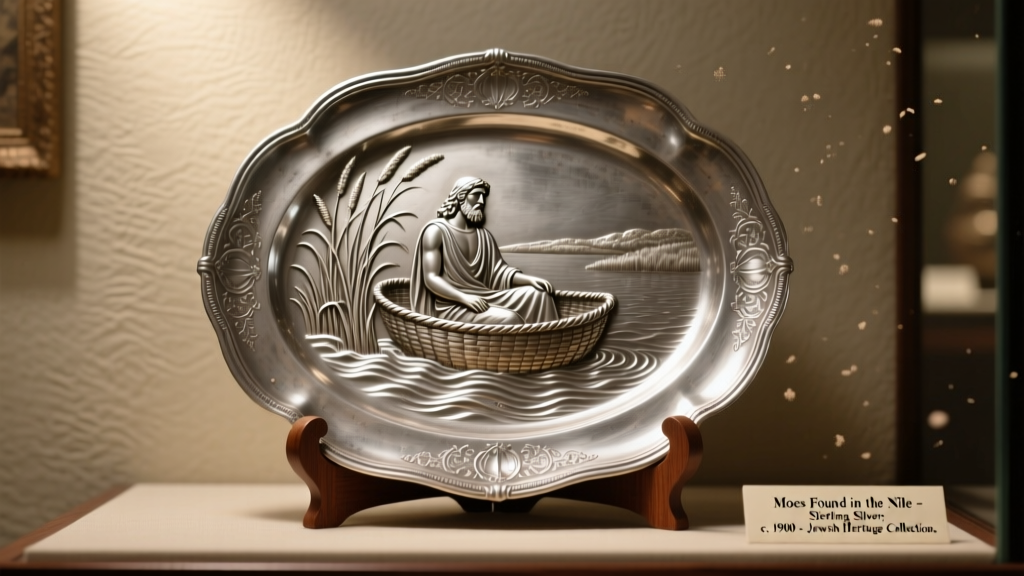
Judaica Platter: 'Moses Found in the Nile' Oval Sterling Silver Platter, Circa 1900 — Dimensions 20 × 15.5 Inches
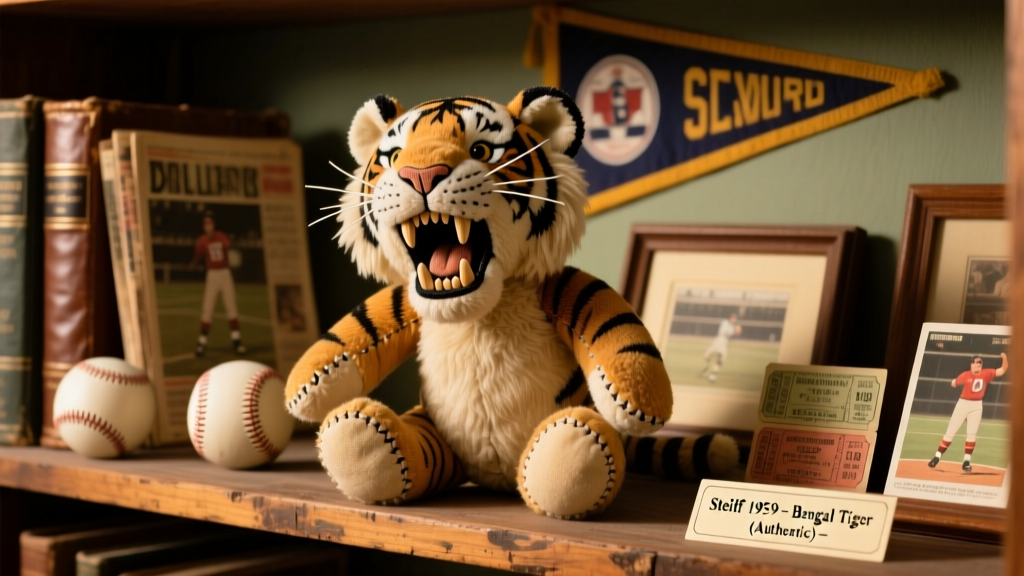
The 1959 Steiff Bengal Tiger: Open-Mouth Design, Wooden Teeth, and the Rarity of Early Postwar German Taxidermy Craftsmanship
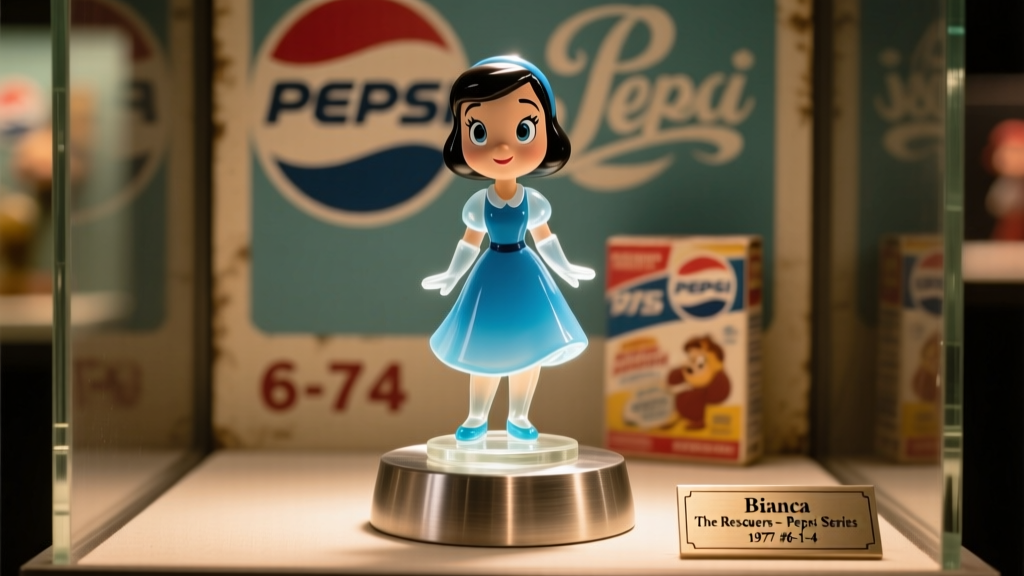
Disneyana Glass: Bianca from The Rescuers Pepsi Series (1977) – A Collector’s Deep Dive into the 6¼-Inch Vintage Soda Glass