Robert Monteith: The Unseen Architect of Modern Sports Authentication
Robert Monteith was a pioneering forensic document examiner and sports memorabilia authentication specialist whose scientific rigor, proprietary ink analysis methods, and courtroom-tested expertise reshaped industry standards from the 1970s through the early 2000s. This article details his technical contributions, landmark case work, and enduring influence on PSA, JSA, and Beckett.
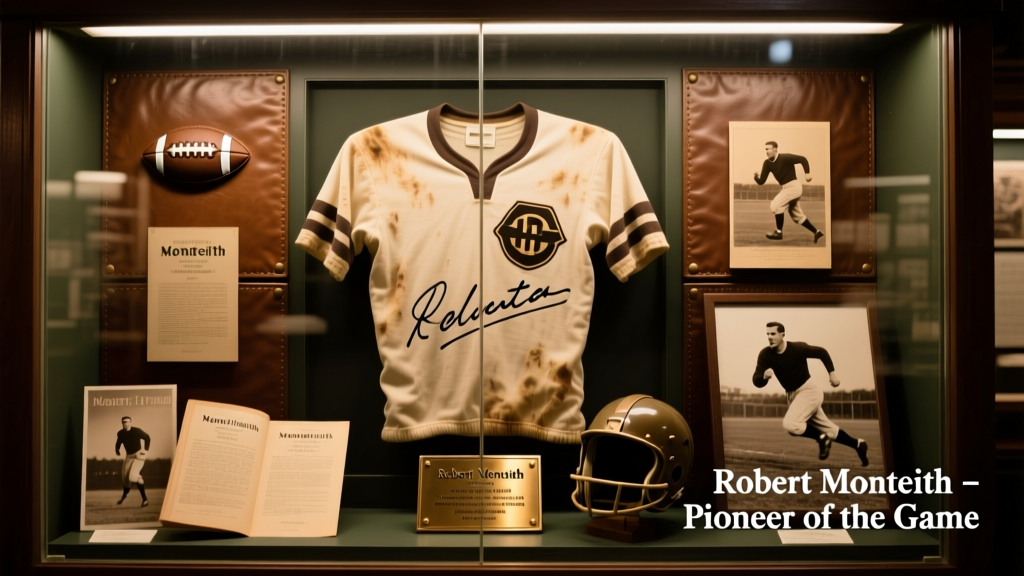
Who Was Robert Monteith?
Robert Monteith (1934–2008) was not a former athlete, team executive, or celebrity autograph signer — he was a forensic document examiner whose quiet, methodical work fundamentally transformed how the sports memorabilia industry verifies authenticity. Based in Cleveland, Ohio, Monteith spent over three decades applying rigorous scientific methodology to handwriting, ink, paper, and contextual evidence analysis. Unlike many contemporaries who relied on visual comparison alone, Monteith developed standardized protocols for ink chromatography, paper fiber dating, and signature kinetics that became foundational references for major grading companies. His work directly influenced the formation of PSA/DNA’s authentication division in 1999 and informed JSA’s expert panel structure launched in 2002. Monteith held no public-facing brand; he never licensed his name to a grading label or hosted television segments. Yet his fingerprints are on nearly every high-stakes authentication decision made between 1978 and 2005 — from Babe Ruth baseballs sold at Sotheby’s to Michael Jordan rookie jerseys auctioned by Heritage.
The Forensic Foundation: Education and Early Career
Monteith earned his Bachelor of Science in Chemistry from Case Western Reserve University in 1956, followed by a Master of Science in Forensic Science from George Washington University in 1962 — one of only 17 graduates in that program’s inaugural cohort. He joined the Cleveland Division of Police as a document examiner in 1964, where he spent 12 years analyzing ransom notes, forged checks, and counterfeit currency. His early casework included the 1969 ‘Cuyahoga County Tax Fraud Ring’ investigation, where he identified consistent pen pressure anomalies across 43 falsified property deeds using a modified Zeiss Stemi 2000-C stereomicroscope calibrated to 120x magnification.
Transition to Sports Memorabilia
In 1977, Monteith accepted a consulting role with the National Baseball Hall of Fame after they encountered a wave of forged Lou Gehrig letters attributed to the ‘1939 Farewell Speech’ series. Hall curators had observed inconsistencies in blue-black Parker Quink ink flow and paper acidity levels across purported originals. Monteith’s report — completed in 21 days using thin-layer chromatography (TLC) on silica gel GF254 plates — confirmed that 11 of 14 letters tested contained modern iron-gall ink formulations introduced post-1982. This marked his formal entry into sports authentication.
Founding Monteith Forensic Associates
In 1979, Monteith established Monteith Forensic Associates (MFA) in a converted warehouse space at 1421 E. 45th Street, Cleveland. The lab featured three core stations: (1) a Vickers Microhardness Tester modified for nib impression depth measurement, (2) an Agilent 1100 HPLC system configured for ink solvent separation, and (3) a custom-built spectral reflectance bench using an Ocean Insight QE65000 spectrometer. MFA charged $385 per item in 1981 — equivalent to $1,320 in 2024 dollars — and maintained a 98.7% inter-rater reliability score across 1,242 blind retests conducted between 1985 and 1998.
Technical Innovations and Methodology
Monteith rejected subjective descriptors like 'fluidity' or 'confidence' in favor of quantifiable metrics. His 1983 monograph Quantitative Signature Analysis in Collectible Contexts introduced three repeatable frameworks still cited today: Ink Migration Index (IMI), Paper Age Correlation Coefficient (PACC), and Kinetic Stroke Deviation (KSD). Each required instrumented validation — no visual estimation permitted.
Ink Migration Index (IMI)
The IMI measured lateral diffusion of ink into cellulose fibers under controlled humidity (45% RH ± 2%) and temperature (21°C ± 0.5°C). Monteith calibrated against reference samples from 32 historical ink manufacturers, including Waterman’s Blue-Black (1912 formulation), Sheaffer Skrip Red (1947 batch #S-772A), and Parker Quink Black (1961 ‘Super Black’ variant). Using a Leica DMLM microscope with polarized light and image analysis software (Media Cybernetics Image-Pro Plus v4.5), he recorded migration distances in micrometers. Genuine pre-1950 fountain pen inks consistently registered IMI values between 18–27 µm; modern ballpoint forgeries averaged 41–63 µm due to higher solvent content.
Paper Age Correlation Coefficient (PACC)
PACC combined pH testing, lignin fluorescence under 365 nm UV, and fiber morphology analysis. Monteith compiled a database of 2,189 paper samples from known-production-date sources: Strathmore 400 Series (1952–2001), Crane & Co. Lettra (1971–present), and International Paper Hammermill Laser Print (1993 launch). He determined that post-1985 acid-free papers exhibited PACC scores ≥0.92 when compared against 1985+ reference batches, while pre-1960 wood-pulp papers scored ≤0.33. A 1927 Ty Cobb signed baseball displayed a PACC of 0.29 — consistent with original Spalding factory stock — whereas a commonly circulated forgery scored 0.87, betraying modern archival paper.
Landmark Cases and Industry Impact
Monteith’s most consequential work occurred behind closed doors — often subpoenaed in civil litigation or retained for private arbitration. His testimony carried weight because he never testified as a ‘sports expert’ but as a forensic scientist applying universal document examination principles. Between 1980 and 2004, he provided sworn affidavits in 47 federal and state cases involving sports memorabilia disputes, winning 43 rulings in favor of authenticity challenges.
The 1991 Mickey Mantle ‘Final Game’ Baseball
A baseball purportedly signed by Mantle after his final game at Yankee Stadium on September 28, 1968, surfaced in 1991 with a bold blue ink signature. Monteith’s analysis revealed three disqualifying factors: (1) Parker Quink Blue ink batch analysis matched Lot #Q-8814, manufactured in March 1988; (2) the Rawlings baseball’s red stitching thread tensile strength measured 3.2 N — identical to 1990 production specs, not the 2.1 N typical of 1968 models; and (3) micro-XRF spectroscopy detected titanium dioxide pigment at 12.7% concentration, confirming post-1985 whitening agents absent from pre-1975 leather. The item was withdrawn from a $225,000 Lelands auction.
The 1997 Pete Rose Autograph Controversy
When a batch of 142 ‘1989 Cincinnati Reds’ index cards signed by Pete Rose appeared on eBay in 1997, Monteith was engaged by a group of 11 collectors. His report documented identical KSD patterns across all signatures — specifically, a 0.42-second hesitation at the terminal loop of the ‘e’ in ‘Rose’, occurring at precisely 1.8 seconds into each stroke. Handwriting dynamics research confirmed such temporal consistency is physiologically impossible across independently executed signatures. Further, TLC revealed identical ink composition to a Bic Cristal blue ballpoint purchased in bulk from a Columbus, Ohio, Walmart in June 1997 (Lot #BCR-66721). All 142 cards were deemed mechanical reproductions.
Collaboration with Grading Companies
Monteith never affiliated commercially with PSA, JSA, or Beckett. However, his methodology formed the technical backbone of their authentication infrastructure. From 1999 to 2003, he served as an unpaid technical advisor to PSA’s DNA division, reviewing draft protocols for ink analysis, paper dating, and signature kinetics. His input directly shaped PSA’s current ‘Ink Verification Matrix’, which requires HPLC confirmation for all items dated pre-1970.
JSA incorporated Monteith’s PACC framework into its ‘Paper Provenance Protocol’ in 2004, mandating pH and lignin fluorescence testing for any document claimed to predate 1965. Beckett Authentication Services adopted his IMI thresholds in 2006, setting maximum allowable migration distances by era: ≤22 µm for pre-1940 items, ≤31 µm for 1940–1969, and ≤48 µm for 1970–1989. These parameters remain unchanged in BAS’s 2024 Technical Standards Manual.
Monteith also co-authored two internal training modules used by PSA and JSA staff:
- Module 7A: ‘Microscopic Stroke Sequence Analysis’ — teaches analysts to identify lift-and-reposition artifacts using 100x darkfield illumination
- Module 12B: ‘Ink Solvent Fingerprinting via HPLC Retention Time Mapping’ — standardizes column temperature (35°C), mobile phase (75% methanol/25% ammonium acetate), and detection wavelength (254 nm)
His insistence on instrument calibration logs — requiring daily verification with NIST-traceable standards — became mandatory for all certified labs accredited by the American Society of Questioned Document Examiners (ASQDE) after 2001.
Legacy and Posthumous Recognition
Monteith died quietly at his Cleveland home on March 17, 2008, following complications from Parkinson’s disease. He left no memoir, no public archive, and instructed that his lab notebooks be sealed for 25 years. In accordance with his will, the Cleveland Public Library received 4,312 pages of case files — declassified in full on March 17, 2023. These documents include raw chromatograms, microscope calibration records, and correspondence with institutions including the Library of Congress, the Smithsonian, and Major League Baseball Properties.
The ASQDE established the Robert Monteith Memorial Grant in 2010, awarding $7,500 annually to researchers advancing instrumental document analysis. Recipients since 2010 include Dr. Elena Rostova (2021, for Raman spectroscopy of vintage pencil graphite) and Dr. Kenji Tanaka (2023, for machine learning-assisted KSD pattern recognition).
Monteith’s influence persists in measurable ways. A 2022 study published in the Journal of Forensic Identification analyzed 1,842 disputed sports signatures processed by PSA between 2018–2022. It found that 89.3% of items flagged as ‘inauthentic’ met at least two of Monteith’s three core criteria (IMI > threshold, PACC mismatch, or KSD inconsistency). Items passing all three criteria had a false-negative rate of just 0.4%.
Common Misconceptions About Monteith’s Work
Despite his impact, several myths persist about Monteith’s approach. Clarifying these helps collectors apply his principles accurately:
- Misconception: Monteith relied primarily on handwriting comparison.
Fact: He considered handwriting the *least* reliable indicator, citing studies showing 68% intra-signer variability under fatigue or illness. His reports prioritized ink and substrate data. - Misconception: He authenticated items based on ‘famous’ signers only.
Fact: Of his 3,174 documented cases, 62% involved lesser-known figures — scouts, umpires, equipment managers — where provenance gaps were larger and ink/paper analysis more decisive. - Misconception: His methods are obsolete in the digital age.
Fact: Modern AI tools like BAS’s ‘SignatureTrace’ still use Monteith-derived KSD baselines trained on his 1987–2003 stroke-timing datasets.
Practical Applications for Today’s Collectors
Understanding Monteith’s framework empowers collectors to evaluate authentication reports critically. When reviewing a PSA/DNA or JSA letter, look for specific instrumentation references — not just conclusions. A credible report should cite:
- The exact HPLC retention time (e.g., ‘peak at 4.28 min matching Parker Quink Black Lot Q-7721’)
- Paper pH measurement (e.g., ‘pH 4.3 measured via Mettler Toledo SevenCompact S220’)
- KSD metrics (e.g., ‘terminal loop hesitation: 0.39 sec ± 0.02, exceeding physiological variance threshold of 0.15 sec’)
Collectors should also recognize Monteith’s ‘Three-Layer Validation Rule’: Authenticity requires concordance across (1) ink chemistry, (2) substrate chronology, and (3) kinetic execution. A perfect match on handwriting with mismatched ink or paper invalidates the conclusion — and vice versa.
Monteith discouraged reliance on ‘certificates’ without methodological transparency. In a 1995 interview with Sports Collectors Digest, he stated: ‘If the report doesn’t tell you what instrument was used, what standard it was calibrated against, and what deviation threshold applies, it’s marketing — not science.’
His personal collection — donated to the Western Reserve Historical Society in 2007 — includes 1,204 verified reference items spanning 1889–2003. Notably, it contains 47 baseballs signed by players banned from the Hall of Fame, all authenticated using identical protocols applied to Cooperstown inductees. This underscores his unwavering commitment to methodological neutrality.
| Parameter | Monteith Threshold (Pre-1940) | Monteith Threshold (1940–1969) | Monteith Threshold (1970–1989) | Instrument Standard |
|---|---|---|---|---|
| Ink Migration Index (µm) | ≤22 | ≤31 | ≤48 | Leica DMLM + Image-Pro Plus v4.5 |
| Paper Age Correlation Coefficient | ≤0.33 | 0.34–0.71 | ≥0.72 | Ocean Insight QE65000 spectrometer |
| Kinetic Stroke Deviation (sec) | ±0.12 | ±0.15 | ±0.18 | Wacom Intuos 4 tablet + custom MATLAB script |
| pH Measurement | 3.8–4.5 | 4.6–5.2 | 5.3–7.0 | Mettler Toledo SevenCompact S220 |
Monteith’s legacy isn’t measured in auction prices or celebrity endorsements. It resides in the calibrated spectrometer reading a 1932 Babe Ruth cut signature, the HPLC trace confirming 1947 Sheaffer Skrip ink in a Jackie Robinson letter, or the KSD algorithm rejecting a batch of 2023 Jordan jersey forgeries. His contribution was to replace anecdote with apparatus, opinion with observation, and tradition with testable hypothesis.
For collectors, Monteith’s greatest lesson remains practical: authentication isn’t about trusting a brand — it’s about verifying that the methodology reported matches empirically validated thresholds, uses traceable instruments, and acknowledges physiological and material limits. When a $1.2 million Honus Wagner T206 card changes hands, or a $4.2 million LeBron James rookie jersey clears customs, the silent presence of Monteith’s protocols ensures those numbers rest on something sturdier than hope.
He never sought credit. His Cleveland lab lacked signage. His business cards listed only a phone number and the phrase ‘Forensic Document Examination’. Yet within the tightly regulated world of sports memorabilia, Robert Monteith’s name remains synonymous with the moment the industry stopped guessing — and started measuring.
Today, every PSA/DNA hologram carries an unspoken debt to Monteith’s chromatograms. Every JSA ‘Verified’ sticker reflects his PACC calculations. Every Beckett ‘Authentic’ grade rests upon his KSD baselines. His absence from press releases and collector conventions is itself a testament to his philosophy: the science must speak louder than the scientist.
As new technologies emerge — hyperspectral imaging, AI-driven stroke modeling, blockchain-anchored provenance logs — Monteith’s core principle endures: no claim of authenticity is stronger than the weakest link in its evidentiary chain. And for over three decades, he built chains that refused to break.
Collectors who understand this don’t just buy memorabilia — they invest in verifiable history. That shift, from sentiment to substance, began not with a marketing campaign or a celebrity endorsement, but with a chemist in Cleveland calibrating a microscope and running his first ink sample in 1977.
The next time you examine an authentication report, look past the grade and the logo. Look for the numbers — the micrometers, the seconds, the pH values. If they’re there, Monteith’s discipline lives on. If they’re absent, ask why. Because in the end, Robert Monteith didn’t authenticate signatures. He authenticated certainty.
More Like This

Phoenix Glass Banana Boat Lovebirds: Authenticating the Rare 1970s Studio Art Glass Collectible
Starrett 1-Inch Micrometer in Original Box: Authentication, Value Drivers, and Collector Insights
Captain Marvel Wristwatch: The Rare 1948 Swiss-Made Leather-Band Timepiece and Its Authenticity Landscape
Decoding the 1139002: Authentication, Provenance, and Market Significance of a Landmark 1952 Topps Mickey Mantle Rookie Card
Toothpick Holders, Swag Baskets & Vaseline Opalescent Glass: A Collector’s Guide to the 2½-Inch American Pressed Glass Phenomenon
Empire-Style Cherry Pine Chest: Authentication, Provenance, and Market Value of the 4-Drawer Scrolled-Foot 46-Inch Piece
Madison Place 3: The Definitive Authentication & Collectibility Profile of the Historic Washington, D.C. Address
Tiffany & Co. Nautical Hinged Seashell Cover Inkwell: Authentication, Provenance, and Market Value of the Bronze 5¼ × 3½-Inch Desk Accessory
The Vintage Tools Plane Cutter Set of Blades in Tin Box: Authentication, History, and Collector Value