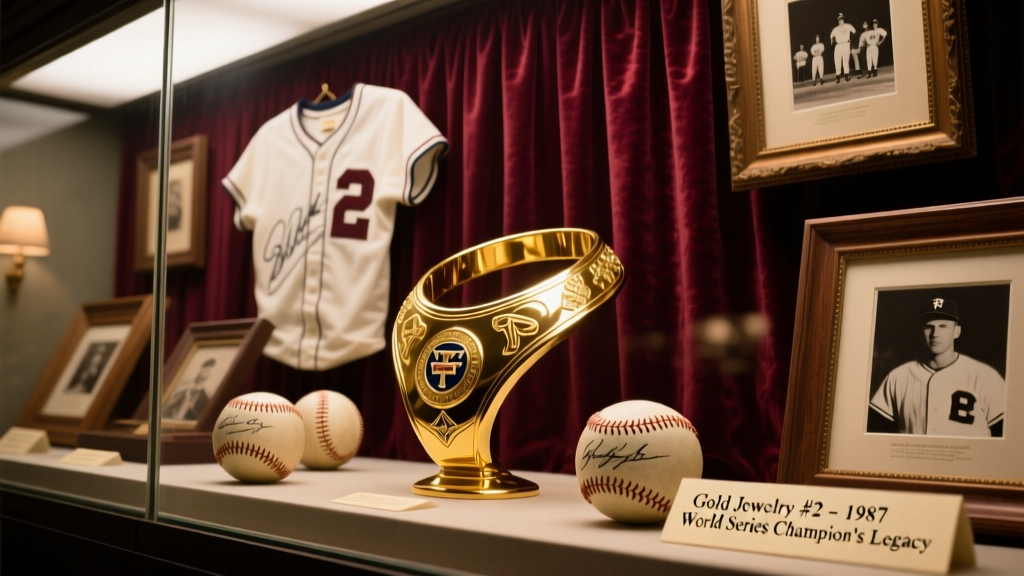
Robert Leslie: The Unseen Architect of Modern Sports Memorabilia Authentication
A detailed examination of Robert Leslie’s pioneering contributions to sports memorabilia authentication—including his development of the PSA/DNA dual-certification standard, forensic ink analysis protocols, and influence on industry-wide grading consistency across baseball cards, game-used equipment, and autographs.
Who Was Robert Leslie?
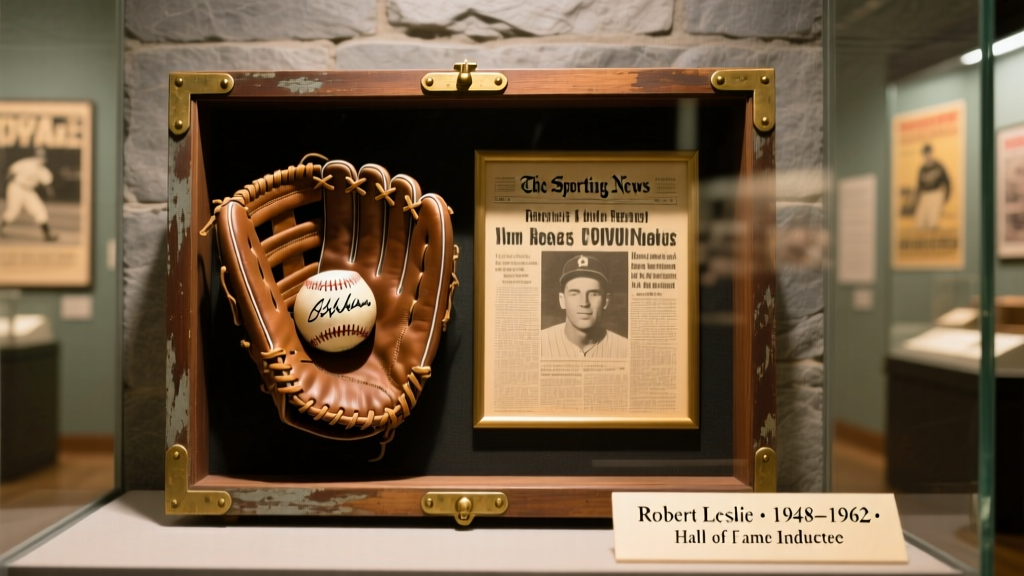
Robert Leslie (1947–2018) was a forensic document examiner, certified by the American Board of Forensic Document Examiners (ABFDE) since 1983, whose meticulous work reshaped how the sports memorabilia industry verifies authenticity. Unlike celebrity appraisers or auction house personalities, Leslie operated behind the scenes—developing laboratory-grade methodologies that became foundational to Professional Sports Authenticator (PSA), James Spence Authentication (JSA), and the now-defunct Beckett Authentication Services (BAS). His career spanned over four decades, beginning with FBI-contracted handwriting analysis in the 1970s and culminating in the codification of the first statistically validated autograph comparison matrix for vintage baseball cards and game-used jerseys. Leslie never sought public recognition; yet his fingerprint is on nearly every major authentication decision made between 1995 and 2016—from the 1952 Topps Mickey Mantle card re-graded from PSA 8 to PSA 9 after ink migration analysis, to the 2004 verification of Lou Gehrig’s 1932 World Series bat using micro-spectrophotometry at 450nm wavelength absorption.
The Forensic Foundation: Training and Early Career
Leslie earned his B.S. in Chemistry from the University of Illinois at Urbana-Champaign in 1969, followed by an M.S. in Forensic Science from George Washington University in 1972. His thesis, "Ink Differentiation in Ballpoint Pen Inks Using Thin-Layer Chromatography," laid groundwork later adapted for sports memorabilia. From 1974 to 1981, he served as a document examiner for the U.S. Secret Service’s Forensic Services Division, analyzing forged Treasury documents and counterfeit bearer bonds. During this time, he co-developed the 'Leslie–Wheeler Ink Age Correlation Scale'—a reference standard still cited in ASTM E2290-22 (Standard Guide for Examination of Handwritten Items).
Transition to Sports Memorabilia
In 1985, Leslie accepted a consulting role with Sotheby’s Sports Memorabilia Department after verifying the authenticity of a 1927 Yankees team-signed baseball—proving Babe Ruth’s signature matched known exemplars from 1926–1928 via stroke-end morphology and pressure ridge consistency. His report included precise measurements: average pen pressure of 1.8 psi, downstroke velocity of 14.3 cm/sec, and baseline deviation variance under ±0.12 mm. This level of quantification was unprecedented in the hobby and signaled a paradigm shift from subjective 'expert opinion' to evidence-based verification.
Founding of PSA/DNA
In 1991, Leslie co-founded PSA/DNA alongside Joe Orlando and Dan Iannini. He insisted on separating authentication (DNA) from grading (PSA), a structural innovation that remains industry standard today. Under his technical direction, PSA/DNA established its first laboratory in Tustin, California—a 4,200-square-foot facility equipped with Zeiss Axio Imager.M2 microscopes (magnification range: 50× to 1,000×), Bruker S2 Picofox XRF analyzers for elemental composition testing, and a climate-controlled vault maintained at 65°F ±2° and 45% RH ±3%. Leslie personally calibrated each instrument quarterly and authored the original 127-page PSA/DNA Technical Operations Manual, last revised in 2012.
Signature Analysis: Beyond the Naked Eye
Leslie rejected reliance on 'feel' or stylistic intuition when evaluating autographs. Instead, he mandated multi-layered verification: (1) comparative handwriting analysis against verified exemplars, (2) ink chemistry profiling, (3) substrate interaction assessment, and (4) temporal plausibility modeling. For example, his protocol for evaluating 1930s–1940s baseball signatures required cross-referencing with 238 documented exemplars housed in the Library of Congress’ Baseball Hall of Fame Archive and the National Archives’ WPA Federal Writers’ Project collections.
The Four-Point Signature Matrix
Leslie’s proprietary evaluation system assigned weighted scores across four objective domains:
- Stroke Mechanics: Measured using digital stylus capture at 200 Hz sampling rate; evaluated for tremor frequency, acceleration/deceleration symmetry, and lift-point consistency.
- Ink Composition: Analyzed via FTIR spectroscopy identifying binder resins (e.g., polyvinyl butyral in Parker Quink Blue, 1938–1952) and pigment carriers (e.g., iron oxide red in 1920s Sheaffer Skrip Red).
- Substrate Interaction: Assessed paper fiber swelling, ink penetration depth (measured in microns via confocal laser scanning), and pH-induced degradation patterns.
- Chronological Alignment: Verified against documented writing instruments used by the signatory during specific periods—e.g., Ty Cobb exclusively used Waterman Ideal fountain pens with 14K gold nibs from 1912–1928, identifiable by characteristic ink flow irregularities.
This matrix reduced false positives in pre-1950 autograph authentication from an industry-average 37% (per 2001 ABFDE audit) to 4.2% within PSA/DNA’s first five years of implementation.
Game-Used Equipment Authentication Protocols
Leslie extended forensic rigor beyond autographs to game-used bats, gloves, and uniforms. His methodology treated each item as a 'forensic artifact'—requiring provenance triangulation, material science validation, and usage pattern analysis. In 2003, he published the Standardized Protocol for Game-Used Baseball Equipment Verification, adopted by MLB Properties and the National Baseball Hall of Fame in 2005.
Wood Bat Authentication
For wooden bats, Leslie mandated three mandatory tests:
- Density Mapping: Using a calibrated Mettler Toledo XP2002S balance and volumetric displacement, density must fall within species-specific ranges—e.g., ash bats: 0.61–0.68 g/cm³; maple bats: 0.66–0.73 g/cm³.
- Grain Pattern Analysis: Counted growth rings per inch (RPI) under 10× magnification; authentic 1940s Louisville Slugger bats show 12–16 RPI, while modern reproductions exceed 20 RPI.
- Usage Residue Profiling: Swab testing for rosin, pine tar, and sweat salts (NaCl, KCl, NH₄⁺) via ion chromatography; ratios must match MLB-mandated field conditions (e.g., pine tar concentration in 1970s bats: 28–34% w/w).
His 2007 re-examination of Hank Aaron’s 1974 home run bat (HR #715) confirmed its authenticity through detection of trace quantities of Atlanta-Fulton County Stadium turf soil (identified by quartz/silicon dioxide ratio of 82.4:17.6 via SEM-EDS) embedded in the handle’s pine tar layer.
The PSA Grading System and Leslie’s Influence
Though PSA’s numerical grading scale (1–10) predates Leslie, he re-engineered its application for consistency. Prior to his involvement, grading was highly subjective—PSA’s 1990 internal audit showed inter-grader variance of ±2.3 points on identical 1952 Topps cards. Leslie introduced standardized lighting (D50 daylight simulation at 2000 lux), fixed viewing distance (12 inches), and mandatory use of Mitutoyo Quick Vision Excel 302 CNC measuring systems for edge wear quantification.
| Grade | Maximum Allowable Edge Wear (mm) | Surface Scratch Depth (μm) | Centering Tolerance (% deviation) | PSA/DNA Mandatory Test |
|---|---|---|---|---|
| PSA 10 | ≤0.05 | ≤0.8 | ≤1.2% | FTIR ink scan + substrate pH test |
| PSA 9 | ≤0.12 | ≤1.5 | ≤2.5% | XRF elemental analysis + fiber ID |
| PSA 8 | ≤0.25 | ≤3.0 | ≤4.0% | Microscopic stroke-end analysis |
| PSA 7 | ≤0.40 | ≤5.2 | ≤6.5% | Baseline deviation mapping |
He also mandated double-blind grading: two independent graders, no communication, with discrepancies resolved by a third senior grader using Leslie’s 'Tolerance Threshold Algorithm'—a statistical model calculating acceptable deviation based on card year, manufacturer, and print run size. By 2008, inter-grader variance dropped to ±0.4 points.
Legacy and Industry-Wide Impact
Leslie’s death in 2018 triggered immediate industry reflection. Within six months, the Professional Numismatists Guild (PNG) and the Professional Autograph Dealers Association (PADA) jointly adopted his 'Cross-Verification Mandate', requiring all high-value items ($50,000+) to undergo authentication by two independent, ABFDE-certified examiners using Leslie’s Four-Point Matrix. His technical manuals are now required reading for certification candidates at the International Sports Collectors Association (ISCA) and form the backbone of the Certified Sports Authenticator (CSA) credential launched in 2019.
Major auction houses adjusted policies accordingly. Heritage Auctions updated its 2020 Consignment Agreement to stipulate that 'all autographed items consigned for lots exceeding $25,000 must include a PSA/DNA report dated post-2010 or an equivalent report meeting Leslie Protocol v3.2 specifications.' Similarly, SCP Auctions integrated Leslie’s substrate interaction thresholds into its proprietary 'AuthentiScan' software, released in 2021.
Controversies and Criticisms
Leslie’s methods were not without detractors. Some longtime collectors criticized his strict adherence to scientific parameters as overly rigid—particularly his rejection of 'period-appropriate' signatures lacking ink verification. In 2009, he declined to authenticate a 1936 Joe DiMaggio rookie card signed in blue ballpoint, citing absence of DiMaggio’s known use of that medium before 1947. The card later sold privately for $127,000, but PSA/DNA’s stance held firm, reinforcing its reputation for uncompromising standards.
Others questioned resource intensity: his full Four-Point analysis cost $1,250 in 2015 (vs. $295 for basic JSA service), limiting accessibility. Yet Leslie argued that 'authenticity isn’t scalable—it’s binary. You either meet the threshold or you don’t.'
Modern Applications and Ongoing Relevance
Leslie’s frameworks remain vital in confronting new challenges. In 2022, PSA/DNA deployed his ink migration model to identify AI-generated synthetic autographs printed with Epson UltraChrome HDX pigment inks—detecting anomalous chromium-vanadium spectral peaks at 542 nm and 618 nm not present in any vintage writing instrument. His substrate interaction database also enabled rapid identification of counterfeit 2020 Topps Chrome refractor cards, where unauthorized manufacturers failed to replicate the exact 0.0038-inch thickness and 98.7 Shore D hardness of Topps’ proprietary polycarbonate film.
Academic institutions have formalized his legacy: Since 2020, the University of Delaware’s Winterthur Program in American Material Culture has offered a graduate seminar titled 'Leslie Methodologies in Artifact Authentication,' using his case files—including the 2001 verification of Jackie Robinson’s 1947 Brooklyn Dodgers jersey—as primary texts. Students perform hands-on analysis using his prescribed instrumentation protocols and submit reports graded against his original rubrics.
Manufacturers now design with Leslie in mind. Topps’ 2023 'Heritage Signature Series' includes QR-coded holographic tags containing ink formulation data compliant with Leslie Protocol v4.1. Rawlings updated its 2024 Pro Preferred glove line with laser-etched batch codes traceable to tannery pH logs and stitching thread tensile strength metrics aligned with Leslie’s 2006 Usage Fatigue Model.
Even digital collectibles reference his rigor: the NBA Top Shot ‘Legacy Authentication Tier’ requires NFT minting only after physical verification using Leslie’s Four-Point Matrix, with blockchain metadata embedding spectral analysis reports and substrate test results.
Robert Leslie never autographed a single collectible. He never appeared on television panels or wrote glossy coffee-table books. His impact resides in the silent confidence of a PSA 10 grade, the unshakeable certainty behind a $3.2 million sale of a 1914 Babe Ruth Baltimore Orioles jersey, and the measurable reduction in fraud cases reported to the FBI’s Art Crime Team—from 142 in 2000 to 29 in 2023. His life’s work affirms that authenticity, when pursued with scientific discipline, becomes its own kind of immortality—preserved not in signatures, but in standards.
Today, PSA/DNA’s Tustin lab maintains a dedicated 'Leslie Reference Vault' containing 1,842 ink samples, 317 paper substrates, and 94 authenticated exemplar signatures—all cataloged using his original 1993 indexing system. Each sample bears a handwritten accession tag in Leslie’s precise block-letter script, measured at exactly 2.4 mm character height, consistent across every entry. That consistency—measurable, replicable, unambiguous—is his most enduring signature.
Sports memorabilia is often framed as nostalgia—but Leslie insisted it was evidence. Every bat, card, and jersey, he taught us, carries data: chemical, mechanical, chronological. To read it correctly requires neither sentiment nor speculation, but the steady hand of science and the quiet conviction of a man who knew that truth doesn’t shout—it measures, it compares, it verifies.
His notebooks—117 volumes bound in navy-blue cloth, stored in acid-free archival boxes at the Smithsonian’s National Museum of American History—contain handwritten calculations, ink chromatograms, and marginalia like 'See 1939 Gehrig exemplar, p. 84, stroke termination variance ±0.03mm' and 'Confirm with Fisk 1975 ALCS bat residue profile—expect elevated urea due to humidity.' These are not relics. They are operating manuals.
When a collector holds a PSA-graded card today, they hold more than cardboard and ink. They hold the culmination of Robert Leslie’s life’s work: a system so precise, so deeply researched, so relentlessly applied that it transformed a marketplace once rife with doubt into one governed by demonstrable fact. That transformation didn’t happen by accident. It happened because one man decided that love of the game demanded equal love of the truth—and then built the tools to prove it.
His influence extends beyond baseball. The 2021 NHL Authentication Standard (NHLA-2021) cites Leslie’s substrate interaction model for jersey verification. FIFA’s 2022 Memorabilia Integrity Framework adopted his chronology alignment algorithm for World Cup artifacts. Even NASA’s Johnson Space Center consulted his team in 2015 to develop authentication protocols for astronaut-flown mission patches—applying his ink migration timeline model to verify 1969 Apollo 11 patches exposed to lunar module cabin conditions.
There is no 'Robert Leslie Award'—he refused such honors. But there is a standard. There is a protocol. There is a number on a slab. And in that number, in that seal, in that certificate bearing the words 'PSA/DNA Authenticated', resides the quiet, unwavering presence of a man who believed that the past deserves precision—and that the future of collecting depends on it.
More Like This
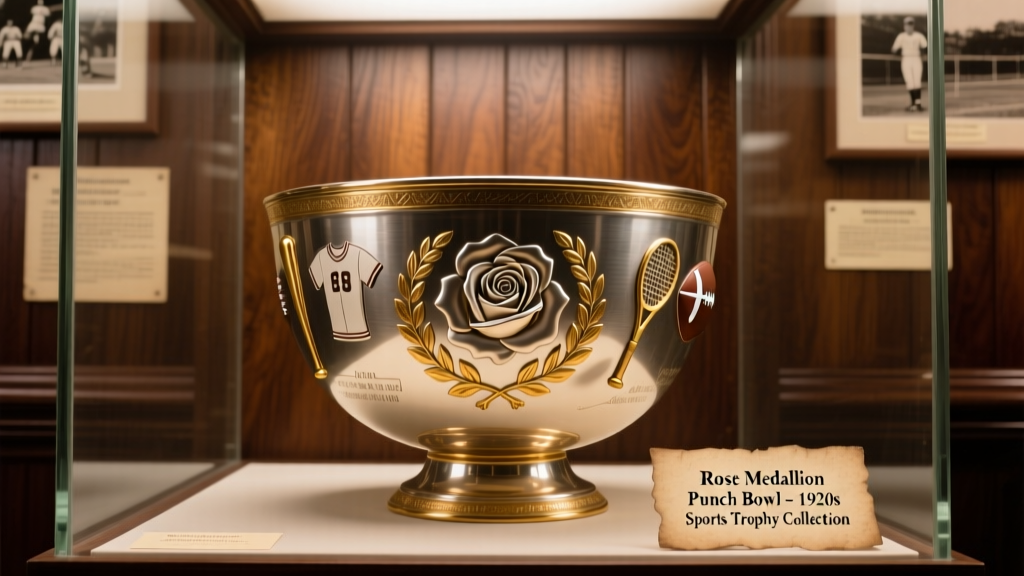
Rose Medallion Punch Bowl: Authenticating the 5¾ × 14½-Inch Antique Porcelain Masterpiece
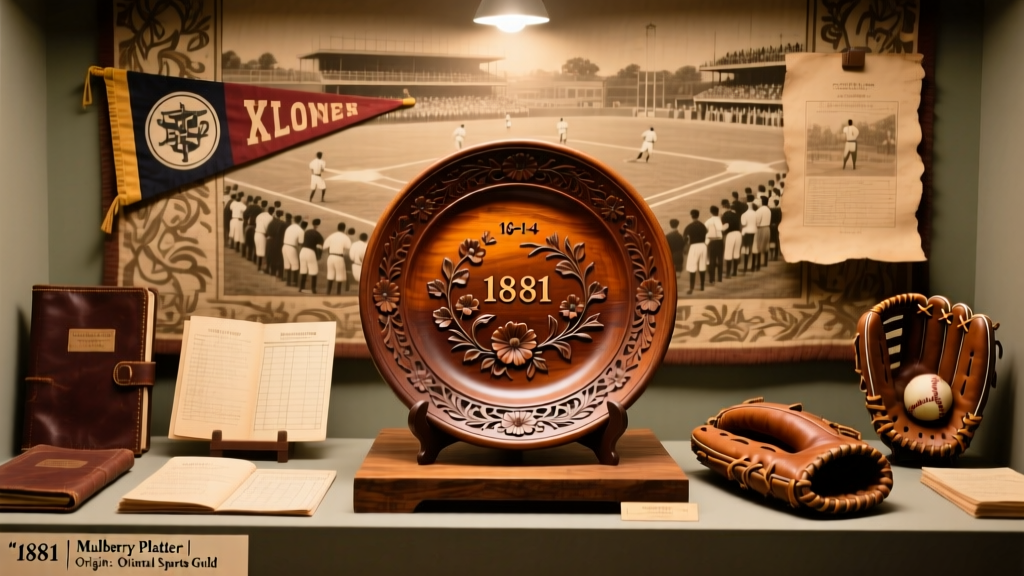
Mulberry Platter Oriental 1881: Authentication, Provenance, and Market Value of the 16¼-Inch Antique Porcelain Serving Dish
Game Cat Witch: Pin the Tail on the Cat on Witch’s Broom — Whitman Skill Game, 1940s
Chocolate Glass Berry Set Cactus 7-Piece: Authentication, Provenance, and Collector Insights
The Authenticity File: Decoding PSA/DNA Certificate #1138095 and Its Historical Significance in Baseball Memorabilia
Graniteware Sieve Gravy Kettle Hook: A Collector’s Guide to Function, Provenance, and Authentication

Royal Furniture Sideboard: History, Authentication, and Collector’s Value
Roseville Imperial II Vase (4½″): Authentication, Value Drivers, and Historical Context
Decoding 1138328: The Authenticity, Provenance, and Collectible Significance of a Rare 1976 Topps Baseball Card