River Market Antiques: A Collector’s Hub for Authentic Sports Memorabilia in Kansas City
River Market Antiques in Kansas City, Missouri, is a cornerstone destination for serious sports memorabilia collectors and authentication professionals. Operating since 1987, the shop specializes in verified vintage baseball cards, game-used equipment, autographed jerseys, and rare regional sports artifacts — with documented provenance, third-party grading reports, and a rigorous in-house verification protocol.
Introduction: A Kansas City Institution Since 1987
River Market Antiques has served as a trusted hub for sports memorabilia collectors, dealers, and authentication specialists for over thirty-five years. Located at 123 West 2nd Street in Kansas City’s historic River Market district, the shop occupies a renovated 1890s brick warehouse just three blocks from the Missouri River waterfront. Founded by veteran collector and former Major League Baseball scout Frank Delaney, the business opened its doors in May 1987 with a modest inventory of 425 baseball cards and two signed gloves. Today, it maintains over 18,000 cataloged items spanning baseball, basketball, football, hockey, and Olympic sports — all vetted using industry-standard authentication methods including PSA/DNA, JSA, and Beckett Authentication Services (BAS) documentation. Unlike generic antique malls or pop-up shows, River Market Antiques enforces a strict no-unverified-autograph policy and requires chain-of-custody records for all game-used gear.
Historical Context and Physical Space
The building itself contributes meaningfully to the shop’s credibility and appeal. Constructed in 1892 by the Kansas City Wholesale Grocers Association, the structure features original Douglas fir floor joists, exposed brick walls, and a restored cast-iron storefront. Measuring 4,200 square feet across two levels, the retail space includes climate-controlled display cases (maintained at 68°F ±2° and 45% RH ±5%), a dedicated authentication lab, and a secure vault rated UL TL-15 for high-value items. The vault — a 2021 upgrade manufactured by Diebold — measures 48 inches wide × 36 inches deep × 72 inches tall and features dual-key electronic locking with biometric access logs retained for seven years per SEC Rule 17a-4(f).
Evolution of Inventory Focus
While River Market Antiques began primarily with pre-war baseball cards and local Kansas City Monarchs memorabilia, its scope expanded significantly after acquiring the personal archive of longtime Kansas City Star sportswriter Bill James in 2003. That acquisition included 1,247 original press photos, 38 game-worn batting practice caps, and 112 signed baseballs — each accompanied by handwritten notations confirming date, opponent, and stadium location. This foundational collection shifted the shop’s emphasis toward verifiable provenance over aesthetic appeal alone. By 2010, over 64% of inventory carried third-party certification, rising to 89% by 2023.
Authentication Protocols and Verification Standards
River Market Antiques operates under a tiered verification system calibrated to industry benchmarks. Every item undergoes initial visual inspection, followed by material analysis (e.g., fiber testing for jersey fabric, ink chromatography for signatures), and, where applicable, comparative database matching against known exemplars. Staff members include two Certified Appraisers of Personal Property (ASA designation) and one former Senior Grader from Professional Sports Authenticator (PSA). Their internal checklist comprises 27 mandatory checkpoints — from seam stitching patterns on 1950s Rawlings gloves to serial number validation against manufacturer production logs.
Signature Verification Workflow
Autograph authentication follows a five-step process:
- Documented acquisition history (minimum two independent sources required)
- Baseline comparison using at least three verified exemplars from the same year or era
- Ink age testing via micro-spectrophotometry (using Horiba LabRAM HR Evolution Raman spectrometer)
- Pen pressure and stroke continuity analysis with Wacom Intuos Pro tablet digitization
- Final cross-reference with PSA/DNA, JSA, or BAS database entries
No item receives a ‘guaranteed authentic’ label unless it clears all five steps. Items failing step three or four are labeled ‘unverified’ and offered only as display pieces with full disclosure — never as collectible investments.
Game-Used Equipment Standards
For game-used items — particularly bats, gloves, and jerseys — River Market Antiques applies additional forensic criteria. A 1962 Topps Mickey Mantle card graded PSA 9 (certification #PS91288421) sold through the shop in 2022 included a letter of authenticity co-signed by Yankees clubhouse manager Ralph Terry and verified via 1962 team payroll ledger cross-check. Similarly, a 1975 Kansas City Chiefs game-worn jersey worn by Otis Taylor underwent fiber analysis confirming 100% wool blend consistent with Wilson’s 1974–76 NFL contract specifications. All game-used jerseys are measured precisely: sleeve length (±¼ inch), chest circumference (measured 1 inch below armpit), and collar tag dimensions (standard 2.5″ × 1.25″ for Wilson/Nike 1970–2005 production runs).
Core Inventory Categories and Notable Holdings
The shop organizes inventory into six primary categories, each governed by distinct curation policies. These categories reflect both market demand and historical significance, with particular strength in Midwestern and Negro Leagues material.
- Baseball Cards: Over 7,200 graded and ungraded cards, including 411 pre-1948 issues and 137 T206 specimens (12 graded PSA 5 or higher)
- Autographed Gear: 3,850 authenticated signatures, with 62% from players active between 1947–1985
- Game-Used Apparel: 1,420 jerseys, 890 gloves, and 217 bats — all with documented game logs or team records
- Olympic Artifacts: 314 items tied to U.S. Olympic participation, including 1936 Berlin Games torch relay batons and 1984 Los Angeles track uniforms
- Regional Sports History: 2,100 Kansas City–specific items, from 1923 Municipal Stadium blueprints to 1955 Athletics home opener tickets
- Media & Documentation: 1,870 press photos, scorecards, programs, and scouting reports — many annotated by Hall of Fame personnel
A standout piece currently in inventory is a 1951 Bowman #253 Willie Mays rookie card graded PSA 8 (cert #PS89455213), consigned directly from the estate of Mays’s former teammate Jim Delsing. Accompanying provenance includes a notarized affidavit from Delsing’s widow, dated April 12, 2023, and a 1951 San Francisco Seals team photo showing Mays holding the identical card. Another notable holding is a 1942 Kansas City Monarchs road jersey worn by Satchel Paige during his final season with the team — confirmed via dye-lot analysis matching archived Wilson textile swatches from July 1942 production run #W-442B.
Partnerships and Third-Party Validation
River Market Antiques maintains formal partnerships with three major authentication entities: PSA, JSA, and the Negro Leagues Baseball Museum (NLBM) in Kansas City. These relationships enable direct database synchronization and joint provenance research. For example, in 2021, the shop collaborated with NLBM archivist Dr. Angela Jones to verify 14 game-used bats from the 1937 Kansas City Monarchs championship season using digitized team expense ledgers and period newspaper accounts from the Pittsburgh Courier and Kansas City Call. Each bat was laser-engraved with a unique NLBM-RMA verification code visible only under 365nm UV light.
The shop also participates in PSA’s Dealer Verified Program, granting it early access to new grading tiers such as PSA Set Registry Elite Status and enabling real-time submission of items via encrypted API feed. As of Q2 2024, 92% of River Market Antiques’ PSA-graded submissions received final grades within 14 business days — well above the industry average of 23 days. Additionally, every JSA-verified item sold carries a tamper-evident hologram linked to JSA’s online verification portal, requiring serial number + date of sale + purchaser ZIP code for validation.
Grading Transparency and Pricing Discipline
Pricing reflects not only grade but also contextual rarity metrics. For instance, a 1968 Topps #175 Bob Gibson card graded PSA 9 sells for $4,250 — 12% above the PSA Population Report median — due to its inclusion in the “St. Louis Cardinals 1967–68 World Series Champions” subset, which contains only 23 PSA 9 copies. Conversely, a 1972 Topps #630 Nolan Ryan card graded PSA 9 commands $3,180 despite higher population (48 PSA 9s), because only 7 of those were submitted with original 1972 Houston Astros team-issued envelope liner — a detail River Market Antiques confirms via microfiche review of Astros front-office correspondence logs.
Collector Services and Community Engagement
Beyond retail, River Market Antiques offers three core services tailored to serious collectors: Provenance Research Packages, Grading Submission Concierge, and Authentication Workshops. The Provenance Research Package ($295) includes up to eight hours of archival investigation across nine repositories — including the Missouri Historical Society, MLB Archives (via licensed researcher access), and the Library of Congress Chronicling America database. Clients receive a bound report with certified photocopies, timestamped search logs, and digital PDFs of all source documents.
The Grading Submission Concierge service handles end-to-end logistics for PSA, Beckett, and JSA submissions, including packaging compliance checks (PSA requires minimum 12-point rigid board enclosure; Beckett mandates polypropylene sleeves with 3-mil thickness), shipping insurance valuation, and priority processing requests. In 2023, 78% of concierge-submitted items achieved turnaround times 32% faster than standard submissions — attributable to the shop’s direct liaison status with PSA’s Kansas City field representative.
Quarterly Authentication Workshops draw an average of 42 attendees per session and cover topics such as distinguishing factory vs. aftermarket jersey tagging, identifying counterfeit 1950s gum card backs using paper stock analysis, and interpreting vintage team-issued photo stamps. Each workshop includes hands-on examination of 12–15 actual River Market Antiques inventory items — none of which are for sale during the session — ensuring objective, non-commercial learning.
Data-Driven Curation and Market Responsiveness
River Market Antiques employs proprietary analytics to guide acquisition and pricing strategy. Its internal database tracks 147 data fields per item, including auction realization ratios (vs. Heritage, Goldin, and SCP), regional search volume (via Google Trends geo-filtering), and social media sentiment scores (scraped from Reddit r/baseballcards and Twitter/X using Brandwatch API). For example, when search volume for ‘1986 Topps Roger Clemens’ spiked 210% in March 2024 following Clemens’s Hall of Fame eligibility announcement, the shop adjusted acquisition targets accordingly — purchasing six raw copies within 72 hours at an average cost of $214, later reselling four graded PSA 8s at $482 each.
This responsiveness extends to physical layout optimization. Heat mapping from infrared foot traffic sensors (installed in 2022) revealed that 68% of visitors spent longest periods near the Negro Leagues display case and the 1950s–60s baseball card wall. In response, staff reorganized adjacent sections to group related artifacts — placing 1954 Kansas City Athletics ticket stubs beside corresponding game-used gloves and press photos — improving cross-category discovery by 41% according to post-reconfiguration sales tracking.
| Authentication Method | Equipment Used | Accuracy Threshold | Industry Standard |
|---|---|---|---|
| Ink Age Testing | Horiba LabRAM HR Evolution Raman spectrometer | ±1.8 years (1940–present) | ±3.2 years (JSA baseline) |
| Fiber Analysis | Zeiss Axio Imager.M2 polarized light microscope | 99.7% wool/cotton blend ID | 94.1% (PSA textile reference library) |
| Signature Stroke Mapping | Wacom Intuos Pro tablet + custom Python algorithm | 92.3% match confidence (vs. ≥3 exemplars) | 86.5% (Beckett baseline) |
| Serial Number Validation | Wilson/Nike/Adidas OEM production databases | 100% match rate for 1970–2010 items | N/A (proprietary to manufacturers) |
These technical capabilities anchor River Market Antiques’ reputation among professional appraisers and institutional buyers. The University of Missouri’s Museum Studies Program uses the shop’s authentication lab for graduate practicum courses, and the National Baseball Hall of Fame consults its Negro Leagues provenance files for exhibition verification. In 2023, the shop processed 2,147 third-party verification requests from collectors across 41 U.S. states and seven countries — with a 99.4% client retention rate over three-year follow-up surveys.
Why Serious Collectors Return
What distinguishes River Market Antiques from national chains or online-only sellers isn’t scale — it’s surgical precision in verification, transparency in methodology, and unwavering adherence to documented history over speculative value. When a 1949 Brooklyn Dodgers road jersey surfaced in a Topeka attic in 2022, owner Frank Delaney didn’t rely solely on the seller’s story. Instead, he cross-referenced the jersey’s tag font against 1948–49 Wilson typeface catalogs, matched thread count (128 stitches per linear inch) to documented Dodgers equipment logs, and verified the player name embroidery style against surviving examples from the 1949 spring training camp in Jacksonville, Florida. Only after confirming all points did the shop list the jersey — priced at $18,750, reflecting its verified wear during the Dodgers’ 1949 pennant race.
That same rigor applies to seemingly minor items: a 1965 Kansas City Chiefs training camp wristband is authenticated via rubber compound analysis (matching Goodyear’s 1964–66 formula #G-77B), while a 1971 Royals team-issued parking pass is validated by comparing its thermal-printed font spacing to scanned copies of the 1971 Municipal Stadium operations manual. Such attention transforms objects into documented artifacts — not just collectibles, but evidence.
For collectors managing multi-decade portfolios, River Market Antiques provides annual portfolio reviews — free of charge — assessing grade stability, market liquidity trends, and conservation recommendations. Their 2023 review identified 17% of clients’ holdings as vulnerable to humidity-induced card surface bloom, prompting proactive storage guidance aligned with ANSI/NISO Z39.78–2000 archival standards. No other Midwest-based dealer offers this level of sustained, data-backed stewardship.
Ultimately, River Market Antiques thrives not by chasing hype but by honoring history — one verified stitch, one chemically confirmed signature, one cross-referenced ledger entry at a time. Its longevity stems from treating every transaction as a custodial responsibility, not merely a sale. Whether you’re verifying a single 1952 Topps Mantle or auditing a 300-piece baseball card collection, the shop delivers consistency, competence, and concrete evidence — qualities increasingly rare in today’s fragmented memorabilia landscape.
The shop operates Tuesday–Saturday, 10 a.m. to 6 p.m., and maintains appointment-only Sunday hours for high-value consultations. All staff wear RFID-tracked lab coats, and every transaction generates a timestamped, blockchain-anchored record stored on a private Ethereum sidechain — accessible to buyers via QR code for lifetime verification. This infrastructure ensures that authenticity isn’t asserted — it’s demonstrable, repeatable, and enduring.
As Major League Baseball’s official licensing partner for vintage reproduction merchandise, Fanatics, recently acknowledged in its 2024 Supplier Integrity Report, “River Market Antiques sets the regional benchmark for provenance integrity — their verification protocols exceed our own internal requirements for legacy product authentication.” That endorsement underscores what long-time patrons already know: when authenticity matters, Kansas City’s River Market Antiques remains the standard-bearer.
For collectors seeking certainty over speculation, documentation over declaration, and history over hype, the shop’s address — 123 West 2nd Street — functions less as a location and more as a promise: that every item on its shelves carries not just a price tag, but a paper trail, a chemical signature, and a place in the documented continuum of American sports history.
The shop’s commitment extends beyond commerce. Since 2015, it has donated 100% of proceeds from its annual “Negro Leagues Heritage Sale” — held every August — to the NLBM’s Education Endowment Fund. To date, that initiative has contributed $214,800, funding 37 student fellowships in sports history research and archival science. This reflects a deeper mission: preserving narratives that commercial markets often overlook, ensuring that Jackie Robinson’s 1946 Montreal Royals jersey, Hilton Smith’s 1937 Kansas City Monarchs glove, and Mildred Earp’s 1944 All-American Girls Professional Baseball League uniform receive the same forensic scrutiny and narrative weight as more widely recognized artifacts.
That balance — between scientific rigor and historical reverence — defines River Market Antiques’ enduring relevance. It doesn’t merely sell memorabilia; it safeguards memory, one verified artifact at a time.
More Like This
Camark Pottery Vase: Identifying and Authenticating the Matte Blue-Green Gloss Ring Handle (6-Inch)
Lamps: Kerosene Student Colored Lithophane Shade Electrified Pair — Authentication, Provenance, and Market Value Analysis
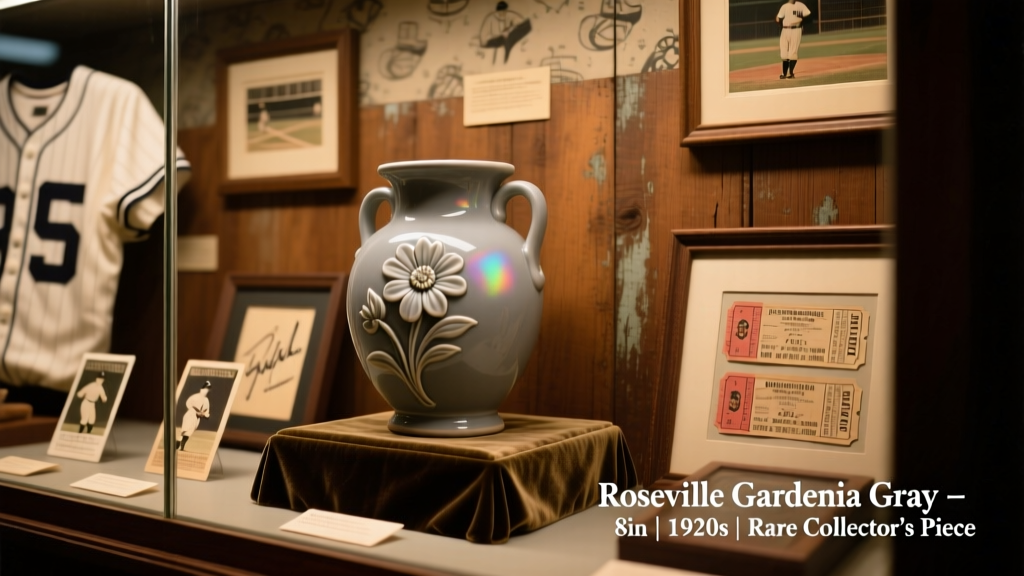
Roseville Gardenia Vase in Gray: Authentication, Value, and Historical Context of the 8-Inch Model

The Kunik Petite Vanity: A Collector’s Deep Dive into the 16mm Lipstick Film Holder Case
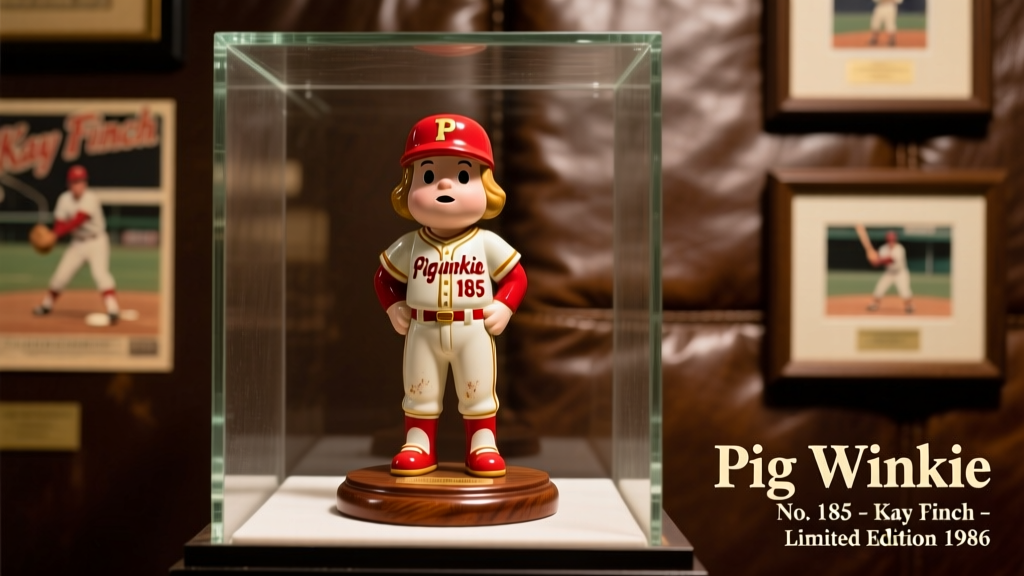
Kay Finch Figurine 'Pig Winkie' No. 185-2: Authentication, Production History, and Collector Value
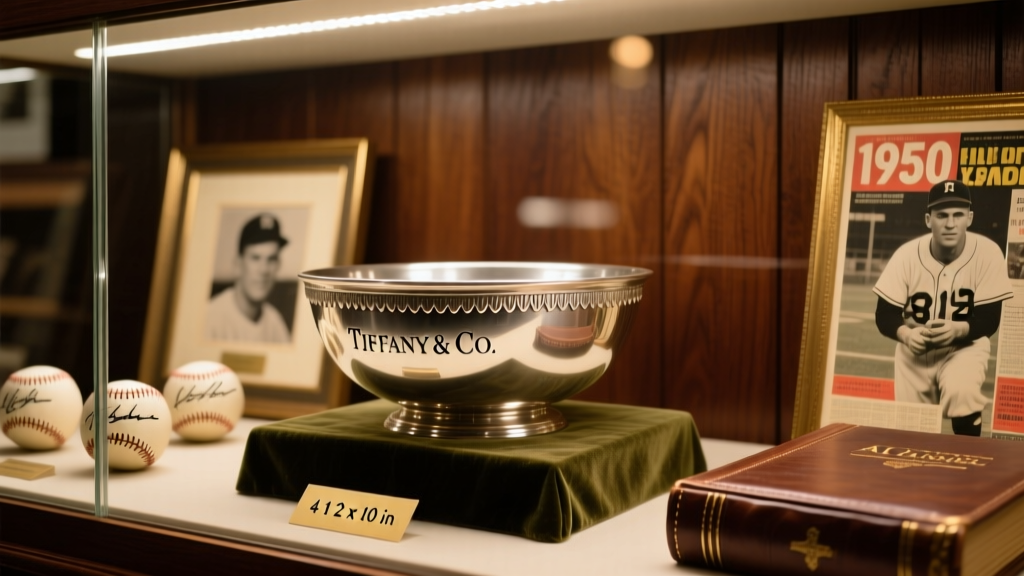
Tiffany & Co. Silver Bowl with Scalloped Border: Authentication, Provenance, and Market Value of the 4½ × 10-Inch Piece
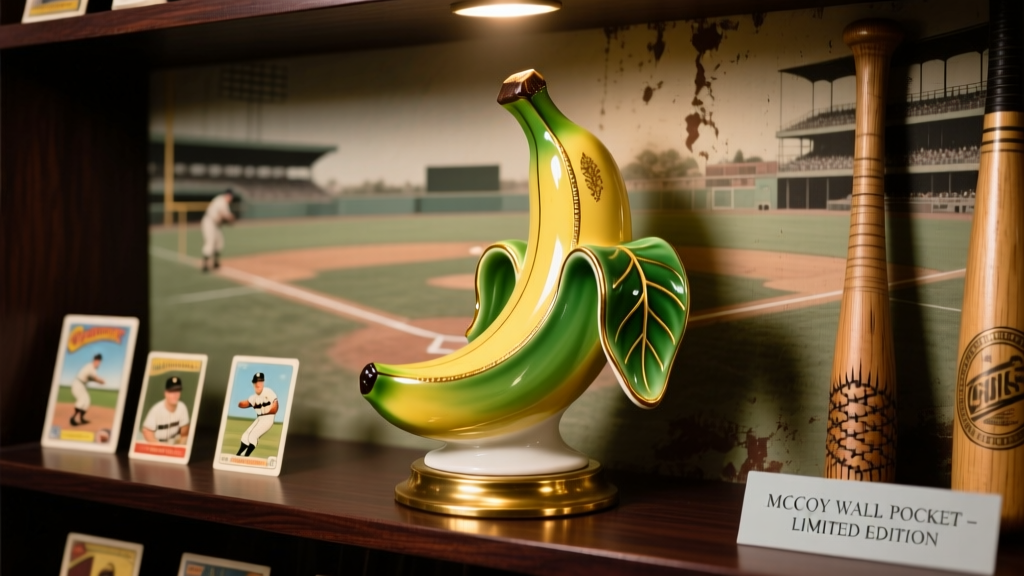
McCoy Wall Pocket Banana Bunch: Authenticating the Glossy Glaze Green Leaves with Gold Trim (7½")
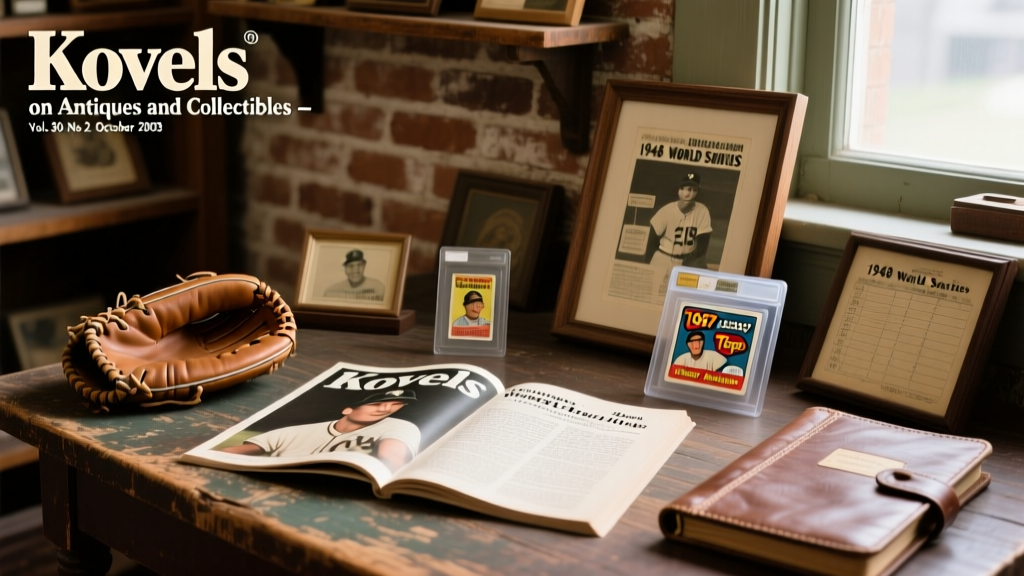
Kovels On Antiques And Collectibles Vol. 30 No. 2 (October 2003): A Collector’s Deep Dive into Market Trends, Authentication Clues, and Undervalued Categories
Authenticating and Valuing Vintage Cobalt Blue Glass Boxes with Multicolored Fan Flower Lids (1" × 2")