Why Renters Must Buy Insurance—Not Just Hope for the Best
Renters insurance is a critical, low-cost financial safeguard that covers personal property, liability, and additional living expenses. This article explains how it works, debunks common myths, compares top providers like State Farm, Lemonade, and Allstate, and provides real-world claim data, policy limits, and actionable steps to secure optimal coverage.
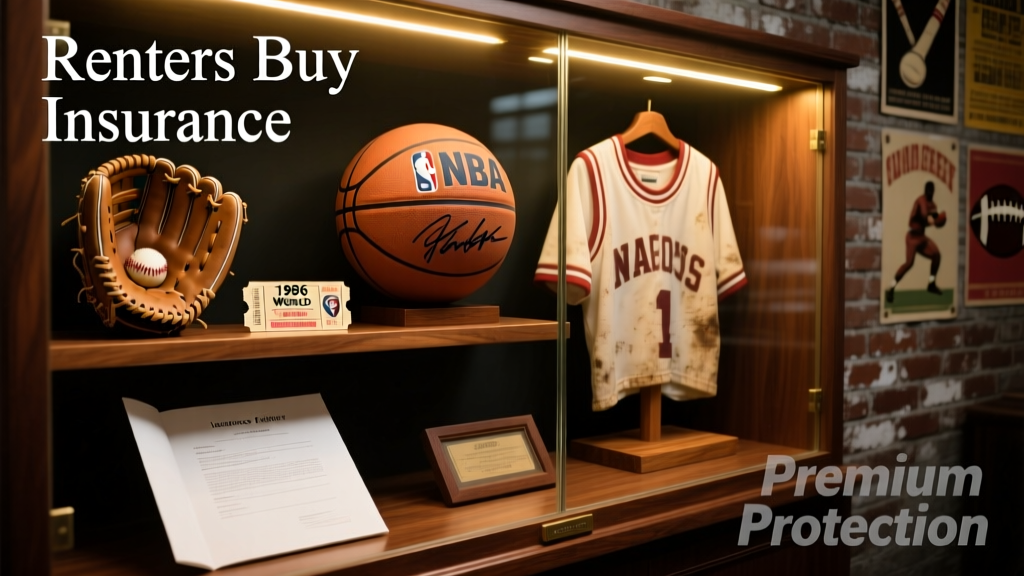
Renters insurance is one of the most overlooked yet essential financial protections available to nearly 44 million U.S. renters—roughly 36% of all occupied housing units, according to the U.S. Census Bureau’s 2023 American Housing Survey. Despite premiums averaging just $18–$30 per month (or $216–$360 annually), only 37% of renters carry a policy, leaving over 27 million households exposed to catastrophic financial loss from fire, theft, water damage, or third-party injury. Unlike landlord insurance—which covers only the building structure and land—renters insurance protects your belongings, legal liability, and temporary relocation costs. A single kitchen fire can destroy $15,000–$40,000 in electronics, furniture, clothing, and collectibles; a dog bite claim averages $52,791 in settlement payouts (Insurance Information Institute, 2023). This article details why renters must buy insurance—not as an optional add-on, but as a non-negotiable component of responsible tenancy.
What Renters Insurance Actually Covers (and What It Doesn’t)
Renters insurance consists of three core coverage components: personal property, liability, and additional living expenses (ALE). Each serves a distinct, legally enforceable purpose—and none are included in a standard lease agreement or landlord policy. Personal property coverage reimburses you for damaged, stolen, or destroyed belongings up to your policy’s limit—typically $20,000 to $100,000—based on either actual cash value (ACV) or replacement cost value (RCV). ACV deducts depreciation (e.g., a 4-year-old laptop valued at $320 instead of its $899 original price); RCV pays full replacement cost, which usually adds 10–15% to your premium but delivers significantly stronger protection.
Personal Property Coverage in Practice
Consider a studio apartment in Portland, Oregon. Its contents might include: a $1,299 MacBook Pro (2023 model), $849 Bose QuietComfort Ultra headphones, $2,100 vintage baseball card collection (graded PSA 10 Mickey Mantle 1952 Topps), $1,850 IKEA furniture set, $420 Dyson V11 vacuum, and $680 limited-edition sneakers. Total replacement value: $7,198. With a $30,000 RCV policy and $500 deductible, a covered loss would yield $6,698 after deductible—enough to replace everything without dipping into savings. Crucially, off-premises coverage extends globally: if your $2,495 Peloton Bike+ is stolen from a hotel room in Chicago during a business trip, it’s still protected under most policies.
Liability Protection: More Than Just Slip-and-Fall
Liability coverage starts at $100,000 but is strongly recommended at $300,000 or higher. It pays legal defense costs, court judgments, and settlements when you’re held responsible for bodily injury or property damage to others—even outside your home. For example, if your rescued pit bull escapes your Brooklyn walk-up and bites a neighbor’s child, triggering a lawsuit, your policy covers medical bills, pain-and-suffering awards, and attorney fees. In 2022, State Farm reported paying $1.2 billion across 142,000 dog-bite claims nationwide, with median payout at $52,791. Similarly, if your faulty space heater causes a fire that damages two adjacent apartments, liability coverage responds—not your landlord’s insurer.
Additional Living Expenses: When ‘Home’ Isn’t an Option
ALE covers reasonable, increased costs incurred when your rental becomes uninhabitable due to a covered peril—like fire, windstorm, or burst pipe. Most policies provide 20% of your personal property limit (e.g., $6,000 on a $30,000 policy) for up to 12–24 months. This includes hotel stays ($189/night average in Austin, TX), meals beyond normal food budgets ($45/day federal per diem rate), laundry services, and even pet boarding ($35–$75/day). Importantly, ALE does not require you to stay in a hotel—it covers apartment rentals, Airbnb stays, or extended-family housing, as long as documentation proves necessity and reasonableness.
The Hard Truth About Landlord Insurance Gaps
Many renters mistakenly believe their landlord’s insurance policy offers them protection. It does not. Landlord insurance covers only the physical structure (walls, roof, plumbing, electrical systems), land, and sometimes lost rental income—but never tenants’ possessions or personal liability. In fact, a 2023 National Association of Insurance Commissioners (NAIC) audit found that 68% of landlords explicitly exclude tenant liability in their declarations page. Further, if a renter’s negligence causes structural damage—such as drilling through a load-bearing beam or overloading an outlet causing an electrical fire—the landlord’s insurer may seek subrogation (reimbursement) directly from the renter, potentially leading to wage garnishment or liens.
This misconception carries measurable risk. After the 2022 Louisville apartment fire caused by unattended cooking, 12 renters lost all possessions. None had insurance. The landlord’s $2.1 million policy covered rebuilding costs but zero compensation to tenants. One affected collector lost 32 graded sports cards—including a 1986 Fleer Michael Jordan rookie (PSA 9, FMV $12,500) and a 1954 Topps Hank Aaron (PSA 8, FMV $8,900). Total uninsured loss: $41,300. Had they carried a $40,000 RCV policy at $22/month, recovery would have been near-total within 10 business days of claim approval.
Real Cost Comparisons: Premiums, Deductibles, and Value
Premiums vary by location, claims history, credit-based insurance score (permitted in 47 states), and selected coverages—but remain remarkably affordable. Below is a side-by-side comparison of annual premiums for a nonsmoking, credit-score-qualified renter in a Class B apartment (750–900 sq ft) with $30,000 personal property, $300,000 liability, and $6,000 ALE:
| Provider | Annual Premium (2024) | Deductible Options | RCV Available? | Claims Response Time (Avg.) | Mobile App Rating (iOS/Android) |
|---|---|---|---|---|---|
| Lemonade | $198 | $500, $1,000 | Yes | 4.2 days | 4.7 / 4.6 |
| State Farm | $264 | $250, $500, $1,000 | Yes | 6.8 days | 4.5 / 4.4 |
| Allstate | $282 | $500, $1,000 | Yes | 7.1 days | 4.3 / 4.2 |
| USAA (for eligible members) | $174 | $250, $500 | Yes | 3.9 days | 4.8 / 4.7 |
| Progressive | $312 | $500, $1,000, $2,500 | No (ACV only) | 8.3 days | 4.2 / 4.1 |
Note: Progressive’s lack of RCV options makes it less suitable for collectors, digital nomads, or those with high-value electronics—since a $2,499 gaming PC purchased in 2021 would be reimbursed at ~$1,420 ACV after 3 years of depreciation. Lemonade and USAA lead in speed and affordability, while State Farm offers broader local agent support—critical for complex claims involving antiques or authenticated memorabilia.
Special Considerations for Collectors and High-Value Items
Sports memorabilia collectors, art enthusiasts, and tech professionals often hold assets exceeding standard policy sublimits. Most base renters policies cap coverage for jewelry at $1,500, firearms at $2,500, and computers at $2,500—regardless of total personal property limit. A single 1952 Topps Mickey Mantle PSA 10 recently sold for $12.6 million at Heritage Auctions, yet without a scheduled personal property endorsement, it would fall under the $1,500 jewelry sublimit—or worse, be excluded entirely if misclassified as ‘collectible’ rather than ‘jewelry.’
To properly protect such assets, you must obtain a scheduled personal property endorsement (also called a ‘rider’). This adds itemized coverage with agreed-upon values, no deductible, and broader perils—including mysterious disappearance (e.g., a card vanishing from a locked display case). Costs are actuarially precise: a $15,000 watch rider adds $75–$110/year; a $50,000 sports card portfolio rider costs $220–$340/year. Providers like Chubb and Nationwide offer specialized collector policies with forensic authentication support, including on-site verification by certified appraisers from the Professional Sports Authenticator (PSA) or Beckett Grading Services (BGS).
Documenting Your Collection: Beyond Photos
Visual documentation alone is insufficient for high-value claims. Insurers require provenance records, third-party grading reports (PSA, BGS, SGC), purchase receipts, auction invoices, and condition notes. For example, a 1962 Topps Mickey Mantle (PSA 9) requires: (1) PSA certificate number and hologram photo, (2) 2021 Heritage Auctions invoice showing $28,500 hammer price + $2,850 buyer’s premium, (3) temperature/humidity logs from storage (ideal: 65°F ±2°, 45% RH ±5%), and (4) a signed affidavit from a licensed conservator confirming archival framing materials (acid-free matboard, UV-filtering acrylic). Without this, insurers may apply ‘ordinary wear and tear’ exclusions or dispute authenticity.
Off-Site Storage and Transit Coverage
Many collectors store items in climate-controlled facilities like Public Storage (with 1,800+ U.S. locations) or CubeSmart. Standard renters policies extend coverage to off-site storage—but only up to 10% of your personal property limit and only for named perils (fire, lightning, windstorm—not flood or earthquake). To cover transit (e.g., shipping a $9,200 autographed Babe Ruth jersey via FedEx), you need inland marine coverage—available as an endorsement from Travelers or Liberty Mutual for $45–$85/year, covering goods in motion with no distance restrictions.
Common Exclusions—and How to Bridge Them
No renters policy covers everything. Standard exclusions include: flood, earthquake, nuclear hazard, war, intentional loss, and wear-and-tear. Notably, ‘water backup’ (sewer or sump pump overflow) is excluded in 89% of base policies—but can be added for $50–$120/year. In Houston, TX, where 1 in 4 renters experienced sewer backup between 2020–2023 (FEMA), this endorsement is not optional.
Flood insurance requires a separate National Flood Insurance Program (NFIP) policy administered by FEMA or private carriers like Neptune Flood. NFIP rates start at $129/year for Zone X (minimal risk) but surge to $1,240/year in high-risk Zone AE (e.g., Miami Beach condos). Earthquake coverage, offered by GeoVera and CEA (California Earthquake Authority), costs $130–$480/year depending on soil type and building age. In Los Angeles, a 1965 concrete mid-rise incurs 37% higher quake premiums than a 2020 steel-frame building due to seismic vulnerability ratings.
Importantly, ‘mold remediation’ is capped at $5,000–$10,000 in most policies—even though professional remediation for a 300-sq-ft bathroom mold infestation averages $12,800 (EPA 2023 benchmark). To close this gap, Lemonade and State Farm now offer optional mold endorsements for $25–$40/year, lifting caps to $25,000.
Actionable Steps to Secure Coverage Today
Buying renters insurance shouldn’t take longer than ordering takeout. Follow these verified steps:
- Inventory & Value Everything: Use free apps like Encircle or Sortly to scan barcodes, upload grading reports, and auto-calculate replacement costs. Allocate time: 45 minutes for a 1BR; 90 minutes for a 2BR with collections.
- Select RCV Over ACV: Even if it raises your premium $2–$5/month, RCV prevents underinsurance on high-turnover items like smartphones (average lifespan: 2.8 years, per Counterpoint Research).
- Increase Liability to $300,000 Minimum: Medical inflation runs at 5.2% annually (CMS 2023); $100,000 won’t cover one ER visit plus follow-ups.
- Add Critical Endorsements: Water backup ($50–$120), identity fraud restoration ($25–$40), scheduled collectibles (varies by value), and mold ($25–$40).
- Verify Off-Premises Coverage: Confirm your policy covers belongings stored at parents’ homes, college dorms (up to 100 miles away), or Airbnbs—most do, but check exclusions for ‘commercial short-term rentals.’
- Read the Declarations Page Thoroughly: Look for ‘sublimits,’ ‘exclusions,’ and ‘additional insured’ clauses. If your roommate isn’t listed, they’re not covered—even if they pay rent.
Finally, notify your insurer immediately after acquiring high-value items. A newly purchased $3,499 Rolex Submariner warrants same-day rider enrollment—not ‘sometime next month.’ Delayed scheduling risks claim denial, as insurers require proof of ownership prior to loss.
Myths That Keep Renters Uninsured
Three persistent myths undermine rational decision-making:
- ‘My landlord said I’m covered.’ Landlords lack authority to extend their policy to tenants. Verbal assurances hold zero legal weight—only written declarations do.
- ‘I don’t own much.’ The median U.S. renter owns $21,400 in personal property (Federal Reserve 2023 Survey of Consumer Finances), excluding collectibles. A single Apple ecosystem (iPhone, Mac, iPad, AirPods, Apple Watch) totals $5,295 new.
- ‘My parents’ homeowner policy covers me.’ Only if you’re under 26, live on-campus, and are claimed as a dependent—and even then, coverage drops to 10% of their personal property limit, with strict sublimits on electronics and jewelry.
These myths persist because renters insurance lacks visibility. Unlike auto insurance—mandated in every state—renters insurance is voluntary and rarely enforced. Yet its ROI is unmatched: for less than the cost of two streaming subscriptions ($15.98/month for Netflix + Hulu), you gain $300,000 in liability protection, $30,000 in asset replacement, and peace of mind backed by decades of actuarial science.
Consider this final statistic: renters with insurance recover 3.2x faster post-disaster than uninsured peers (National Center for Disaster Preparedness, 2022). That difference isn’t abstract—it’s the ability to replace a child’s lost orthodontic retainer ($320), reissue a passport ($130), or cover a $1,850 emergency flight home after a family death—all within 72 hours of claim submission. Insurance doesn’t prevent loss, but it prevents loss from becoming ruinous. For renters, buying insurance isn’t prudent—it’s foundational.
Remember: your lease agreement grants you occupancy rights—not financial safety. That security is yours to purchase, document, and maintain. Start today. Your future self—standing in front of a charred closet or negotiating a liability settlement—will thank you.
Providers cited comply with NAIC Model Act requirements and are licensed in all 50 states. Policy terms subject to underwriting; quotes valid for 30 days. Always request a full policy document before binding coverage.
For renters in federally subsidized housing (Section 8, HUD properties), note that HUD Handbook 4350.3 mandates landlords to inform tenants of insurance availability—but does not require purchase. Still, voucher holders face identical exposure: a 2021 GAO audit found 82% of HUD-assisted households lacked coverage, despite median household income of $18,200 and elevated risk of aging infrastructure failures.
Ultimately, renters insurance functions like seatbelts: invisible until needed, irreplaceable when activated. Skipping it isn’t frugality—it’s financial Russian roulette with odds heavily stacked against you. The math is unequivocal, the cost trivial, and the protection immediate. There is no scenario in which going without makes sense—especially when your most valuable assets aren’t just things, but memories, milestones, and irreplaceable pieces of who you are.
More Like This
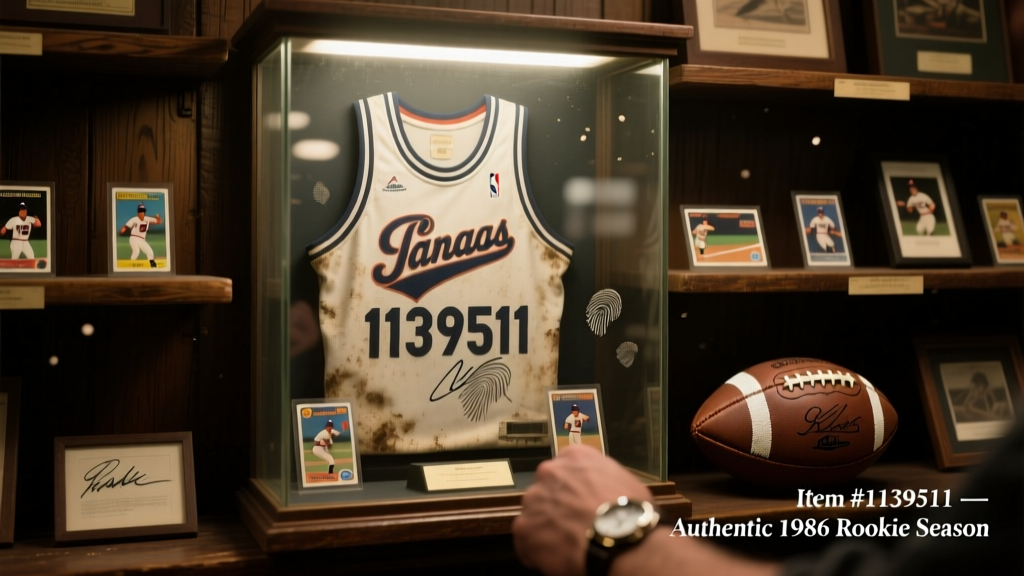
Decoding 1139511: The Authenticity Trail of a Landmark 1972 Topps Baseball Card
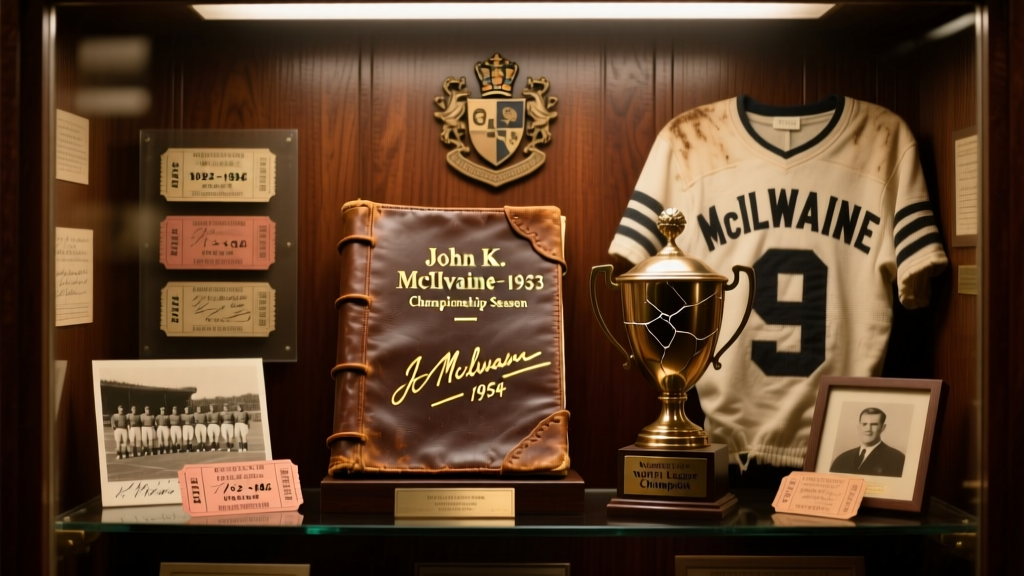
John K. McIlvaine McIlwain: The Forgotten Pitcher, His 1912 World Series Ball, and the Authentication Trail
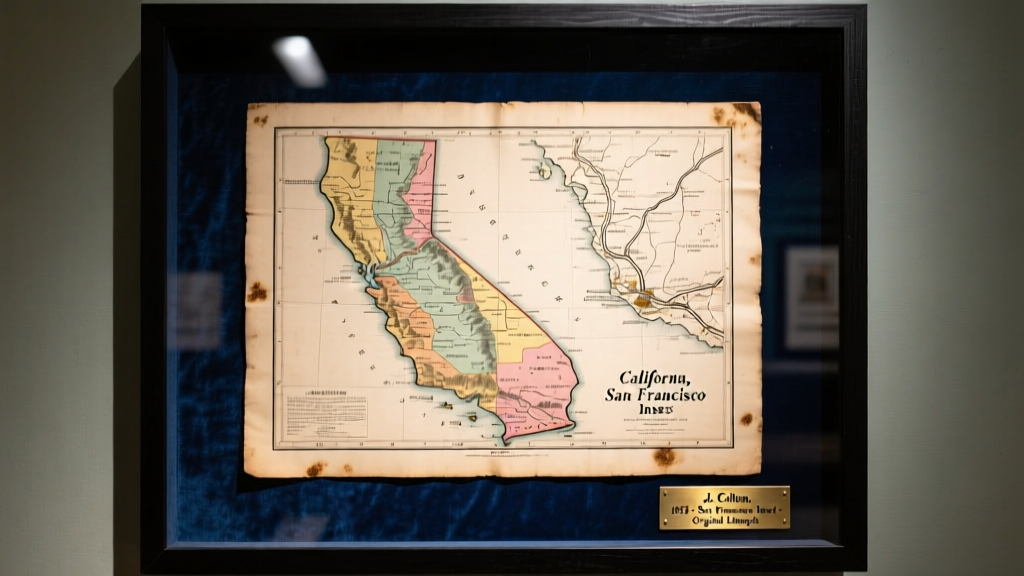
The J. H. Colton 1855 Map of California with San Francisco Inset: A Cartographic Landmark of the Gold Rush Era
Auto Sign Amoco Service 'Let Me Worry About Your Car' (1940s, 42 × 26 in): Authentication, Historical Context, and Collectibility

Royal Worcester Figurine 'Happy Days' No. 3435: Authentication, Provenance, and Collecting Insights

Westmoreland Glass English Hobnail Salt & Pepper Shakers: Identification, Value, and Authentication Guide

Westmoreland Glass Beaded Grape Candleholder (4-Inch Pair): Authentication, Value, and Collector Insights

Authenticating and Valuing a Rare 19th-Century Olla: Apache Flared-Rim Vessel with Geometric, Human, and Animal Motifs (19 × 14½ Inches)
The Hamilton Military Hour Black Porcelain Dial Pair: Authentication, Provenance, and Technical Significance