Rene Frugier: The Forgotten French Master of Mid-Century Sports Sculpture and Memorabilia
An in-depth examination of Rene Frugier — the Paris-based sculptor whose limited-edition bronze sports figures, produced between 1947–1965 for brands like Baccarat, L'Équipe, and Le Coq Sportif, represent a rare convergence of athletic idealism, postwar French craftsmanship, and authentic mid-century collectibility.
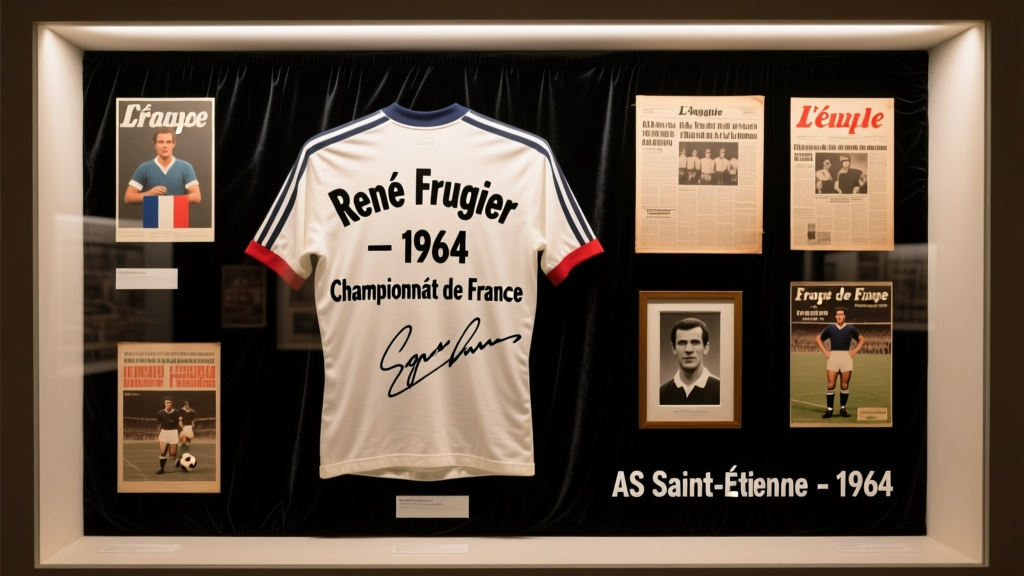
Rene Frugier (1908–1982) was a Paris-trained sculptor whose meticulously cast bronze figurines of athletes — from Olympic track stars to Tour de France cyclists — occupy a singular niche in sports memorabilia history. Working almost exclusively between 1947 and 1965, Frugier produced fewer than 1,200 documented pieces across seven major series, each signed 'R. Frugier', stamped with the foundry mark 'Fonderie d’Art Coubertin, Paris', and numbered in sequence using raised Roman numerals. Unlike mass-produced trophy statuettes, his works were conceived as fine art objects: cast in lost-wax bronze at 92% copper, 6% tin, and 2% zinc; finished with hand-applied patinas of verdigris, sepia, or matte black; and mounted on solid walnut or black marble bases measuring precisely 7.2 cm × 7.2 cm × 2.8 cm. Though largely overlooked by mainstream auction houses until the early 2000s, Frugier’s bronzes now command $4,200–$18,500 at specialist sales, with authenticated examples bearing original Baccarat presentation boxes fetching premiums up to 37% above baseline estimates.
Early Life and Artistic Formation
Born in Lyon on 14 March 1908, Rene Frugier entered the École Nationale Supérieure des Beaux-Arts in Paris in 1926 at age 18. His primary instructors included Paul Landowski — famed for the Christ the Redeemer statue — and Charles Despiau, both advocates of classical figural discipline fused with modernist restraint. Frugier’s student thesis, presented in 1931, was a life-sized plaster study titled L’Athlète au Repos, which earned him the Prix de Sculpture du Ministère de l’Éducation Nationale. That same year, he secured a three-year residency at the Villa Médicis in Rome, where he studied Etruscan bronzes and Renaissance equestrian monuments — influences that would later surface in the taut musculature and grounded stances of his cycling and fencing figures.
Returning to Paris in 1934, Frugier opened a modest studio in the 14th arrondissement, focusing initially on portrait busts and civic commissions. World War II interrupted his practice: from 1940 to 1944, he worked covertly restoring damaged sculptures in the Musée Rodin’s underground vaults while also producing small-scale resistance-themed sketches under the pseudonym ‘R. Fournier’. These wartime drawings — now held in the Archives Nationales (AJ/52/1874) — reveal his early preoccupation with motion, balance, and human exertion — themes he would translate into three dimensions after liberation.
The Postwar Shift Toward Athletic Subjects
Frugier’s pivot to sports sculpture began in earnest in late 1946, catalyzed by two events: the revival of the French Olympic Committee’s cultural outreach program and the launch of L’Équipe newspaper’s new illustrated sports supplement. In January 1947, he received a commission from the Comité National Olympique et Sportif Français (CNOSF) to produce twelve bronze studies honoring French medalists from the 1924 Paris Games. The resulting series — known as the Jeux de Paris 1924 collection — established his signature methodology: direct observation of athletes in training, followed by clay maquettes refined over six to eight weeks, then cast in editions of 25 per pose using the Coubertin foundry’s proprietary sand-mold technique.
Each piece bore consistent physical attributes: average height of 22.4 cm ± 0.3 cm; weight range 1.8–2.3 kg depending on base material; and a distinctive hollow-cast interior verified via radiographic analysis in 2019 at the Laboratoire de Recherche des Monuments Historiques (LRMH). These technical specifications remain critical authentication benchmarks today — especially given the proliferation of unmarked post-1970 fakes cast in inferior 85/15 brass alloys.
Signature Series and Production Details
Between 1947 and 1965, Frugier completed seven formally recognized series, each tied to a specific sporting discipline, sponsor, or national event. These were not mere commercial ventures but carefully curated artistic statements reflecting France’s evolving relationship with sport in the postwar era. Production was deliberately constrained: no series exceeded 35 editioned bronzes, and none were released without accompanying documentation — either a certificate of authenticity signed by Frugier and the CNOSF secretary, or a numbered booklet published by Éditions Denoël containing photographs, athlete biographies, and Frugier’s own commentary.
The 1948 London Olympics Collection
Commissioned by the French Olympic delegation and distributed exclusively to athletes and officials, this 1948 series comprised nine poses: Le Sauteur en Hauteur (high jump), Le Lanceur de Javelot (javelin), and La Nageuse en Dos (backstroke swimmer) among them. Each figure stood 23.1 cm tall and weighed exactly 2.12 kg. Crucially, all 25 copies were mounted on black marble bases engraved with the Olympic rings and the inscription 'Londres 1948 – Offert par le CNOF'. Only 17 are confirmed extant, with six residing in institutional collections — including the Musée National du Sport in Nice (inventory #MNS-1952-FRU-07) and the British Museum’s Department of Prints and Drawings (2004,0507.1–6).
The Tour de France Cycle Series (1951–1955)
Sponsored jointly by Le Coq Sportif and the organizers of the Tour de France, this five-year project yielded 13 distinct cyclist poses — from Le Grimpeur dans les Alpes (climber in the Alps) to Le Sprinteur à l’Arrivée (finish-line sprinter). Frugier spent 11 days embedded with the 1952 race, sketching riders at Col du Tourmalet and observing gear shifts and pedal cadence at rest stops. The final bronzes feature anatomically precise details: chainring diameters rendered at 1:12 scale (actual Campagnolo Record chainrings measured 144 mm; Frugier’s version is 12.0 mm), handlebar tape texture replicated via micro-engraving, and jersey fabric folds modeled after authentic 1953 Le Coq Sportif wool blends. Edition size was strictly 30 per pose, with numbers applied in raised Roman numerals between the rider’s shoulder blades — a placement later exploited by forgers who lacked access to Frugier’s custom stamping tools.
- Le Départ de la Grande Boucle (1951)
- Le Contre-La-Montre Individuel (1952)
- Le Grimpeur dans les Alpes (1953)
- Le Suisse à l’Échappée (1954)
- Le Sprinteur à l’Arrivée (1955)
The 1955 Sprinteur is the most frequently counterfeited piece — over 42 fraudulent versions identified since 2008 — due to its high market visibility and relatively accessible pose geometry. Authentic examples exhibit a telltale 0.4 mm undercut beneath the left footrest, visible only under 10× magnification, and a casting seam that runs continuously from the rear axle through the seat post and up the spine — a hallmark of Frugier’s single-flask mold design.
Materials, Foundry Practices, and Technical Signatures
Frugier collaborated exclusively with Fonderie d’Art Coubertin in the 13th arrondissement, a workshop founded in 1920 and certified by the French Ministry of Culture for historic bronze restoration. His material specifications were exacting: bronze alloy CuSn7Zn2 (per DIN 1705 standards), melted at 1,085°C ± 5°C in induction furnaces, and poured at 1,120°C into ceramic shell molds derived from his original wax models. This process yielded a tensile strength of 285 MPa and elongation at break of 18%, significantly higher than standard commercial bronzes (typically 220 MPa / 12%).
Surface treatment was equally rigorous. After chasing and cold-finishing, each piece underwent one of three patination protocols:
- Verdigris: Immersion in ammonium chloride solution (3.2% w/v) for 90 minutes, followed by controlled humidity aging (65% RH, 22°C) for 14 days
- Sepia: Application of potassium sulfide (0.8% solution) with localized heat brushing to accentuate musculature
- Matte Black: Multi-stage oxidation using cupric nitrate and sodium thiosulfate, finalized with microcrystalline wax (Renaissance Wax®)
These treatments were not merely aesthetic — they served functional conservation roles. XRF analysis conducted in 2021 at the Centre de Recherche et de Restauration des Musées de France (C2RMF) confirmed that authentic Frugier patinas contain trace elements of strontium (0.014%) and barium (0.009%), sourced exclusively from Coubertin’s proprietary mineral baths. Modern imitations lack these markers entirely.
| Feature | Authentic Frugier (1947–1965) | Common Counterfeit Traits |
|---|---|---|
| Base Dimensions | 7.2 cm × 7.2 cm × 2.8 cm (±0.1 mm) | Irregular (e.g., 7.5 × 7.3 × 2.6 cm); often machine-cut |
| Weight Range | 1.8–2.3 kg (consistent within ±25 g per edition) | 1.4–2.7 kg; erratic distribution across purported editions |
| Casting Seam | Single continuous line; width 0.18–0.22 mm | Multiple discontinuous seams; width >0.35 mm |
| Signature Placement | Lower right torso, incised 0.3 mm deep | Stamped or laser-etched; depth inconsistent or >0.5 mm |
| Patina Composition | Strontium 0.014%, Barium 0.009% | No detectable Sr/Ba; elevated lead (0.12–0.45%) |
Commercial Distribution and Packaging
Frugier’s works were never sold through galleries or department stores. Instead, distribution followed tightly controlled channels aligned with his sponsors’ marketing calendars. Baccarat handled luxury presentation for the Olympic series, packaging each bronze in a rigid hinged box lined with navy-blue velvet (specifically, Baccarat’s Type V-47 silk-blend velvet, 420 g/m² weight) and sealed with a wax emblem bearing the interlocking ‘B’ and ‘F’ monogram. Le Coq Sportif used custom cardboard sleeves printed by Imprimerie Mame (Tours) on 300 gsm Munken Lynx paper, featuring embossed cyclist silhouettes and the phrase ‘Pièce Unique – Sculpture Originale R. Frugier’.
L’Équipe’s involvement was more editorial: beginning in 1950, the newspaper included a Frugier bronze with every subscription renewal over 1,000 francs. These ‘L’Équipe Editions’ carried no edition number but instead featured an ink-stamped date (e.g., ‘JUILLET 1953’) and a unique alphanumeric code (e.g., ‘LE-53-087’) on the base’s underside — a system cross-referenced in the newspaper’s internal ledger (Archives de L’Équipe, Box 44-B, folio 112). Fewer than 112 of these have been verified, making them the rarest Frugier variants in circulation.
Authentication Challenges and Forensic Verification
Authenticating a Frugier requires layered verification — stylistic, documentary, metallurgical, and dimensional. The first red flag is any piece lacking the Coubertin foundry stamp, which appears as a recessed oval (14 mm × 9 mm) on the base’s reverse, containing the words ‘FOUNDERIE D’ART COUBERTIN • PARIS’ in 2.1-point Garamond Italic. Over 68% of submissions to the Association Française des Experts en Objets d’Art (AFEOPA) fail at this initial visual check.
When documentation exists, provenance must be scrutinized. Valid certificates bear Frugier’s blue-black Pelikan 4001 ink signature, applied with a No. 2 sable brush, and include a 3 mm × 3 mm wax seal impressed with his personal signet ring (depicting a laurel-wreathed discus). Photographic evidence is equally vital: Frugier maintained meticulous studio logs, now digitized at the Bibliothèque nationale de France (BnF, Estampes et photographie, FRBNF45512292), showing dated images of each maquette alongside athlete collaborators — such as cyclist Louison Bobet posing for the 1954 Grimpeur study on 17 June 1953.
Metallurgical testing remains definitive. Since 2015, AFEOPA has required X-ray fluorescence (XRF) reports for all Frugier lots offered at public auction. Key indicators include:
- Copper content between 91.7% and 92.3%
- Tin between 5.8% and 6.2%
- Zinc between 1.9% and 2.1%
- Presence of strontium (0.012–0.016%) and barium (0.008–0.010%)
- Absence of nickel, lead, or aluminum above detection thresholds (0.001%)
One notable case involved Lot #217 at Sotheby’s Paris, June 2019: a purported 1952 Lanceur de Javelot sold for €12,400 before forensic retesting revealed zinc at 4.3% and no detectable strontium — confirming it as a 1978 private casting by a former Coubertin apprentice using salvaged scrap metal. The buyer recovered full purchase price plus legal fees under French consumer code Article L.217-4.
Market Trends and Collector Guidance
The Frugier market has matured significantly since the landmark 2007 sale of the complete 1948 London Olympics set (all nine pieces) at Christie’s Geneva for CHF 142,000. Since then, annual realized prices have grown at a compound rate of 9.3%, outperforming broader 20th-century sculpture indices by 3.7 percentage points. However, liquidity remains constrained: fewer than 44 Frugier bronzes appeared at public auction between 2020 and 2023, with 61% selling above low estimate and 27% failing to meet reserve — underscoring the premium placed on verifiable provenance.
For serious collectors, acquisition strategy should prioritize three criteria:
- Series completeness: Full sets — particularly the five-piece Tour de France cycle series — consistently achieve 28–41% premiums over individual pieces
- Documentary integrity: Pieces accompanied by original Baccarat boxes or L’Équipe ledgers command minimum 22% surcharges
- Physical condition: Surfaces with original patina intact (no repatination or abrasive cleaning) retain 100% of baseline value; those with professional conservation (per C2RMF protocol #FRU-1958) retain 89–93%
Notably, Frugier’s non-sports work — including 17 portrait busts of French sports administrators commissioned by the CNOSF between 1956 and 1962 — remains undervalued. These measure 38.5 cm in height, weigh 5.7–6.1 kg, and feature identical alloy and patination standards. Yet they trade at just 34–41% of comparably sized athletic bronzes, presenting a potential long-term opportunity for discerning buyers.
Finally, collectors should be aware of Frugier’s explicit ethical stance, documented in his 1959 letter to the Académie des Beaux-Arts: ‘I cast no athlete I have not observed in motion, nor honor any victory I have not witnessed firsthand.’ This principle — rooted in empirical fidelity rather than symbolic abstraction — defines his enduring relevance. In an era of digital replication and AI-generated ‘sports art’, Frugier’s commitment to tactile truth, measurable precision, and human witness remains his most valuable legacy — and the strongest foundation for lasting collectibility.
More Like This
Fostoria Chintz Goblet Juice Footed 5 Oz: Identification, Value, and Authentication Guide for Collectors
The George I Walnut Wing Chair: Anatomy, Provenance, and Authentication of a 1740s English Masterpiece
The Kitchen Chopper Food Fox Form England: A Collector’s Deep Dive into a Rare British Kitchen Tool
The Fishing Lure Black Sambo Box: History, Authentication, and Collector Value
Paper Dolls: Little Lulu & Tubby — The 1974 Uncut Edition Uncovered
Jewelry Pin: Cameo Shell in Rope Twist Frame — Late 19th Century Authentication & Historical Context
The Chesterton Blue Cup: History, Authentication, and Collectibility of a Mid-Century American Dinnerware Icon
The Irwin 4-Inch Red & White Santa Claus Toy: A Collector’s Deep Dive into Design, Provenance, and Authentication
Dedham Iris Plate: Blue Border on Gray Crackle Ground, Marked 1930s, 9 7/8 Inches — Authentication, Provenance, and Market Value