Recycled Antiques: The Rise of Ethically Sourced, Repurposed Sports Memorabilia
How vintage sports artifacts—baseball gloves, boxing gloves, hockey sticks, and game-worn jerseys—are being responsibly deconstructed, authenticated, and reassembled into limited-edition collectibles with documented provenance, material traceability, and third-party certification.
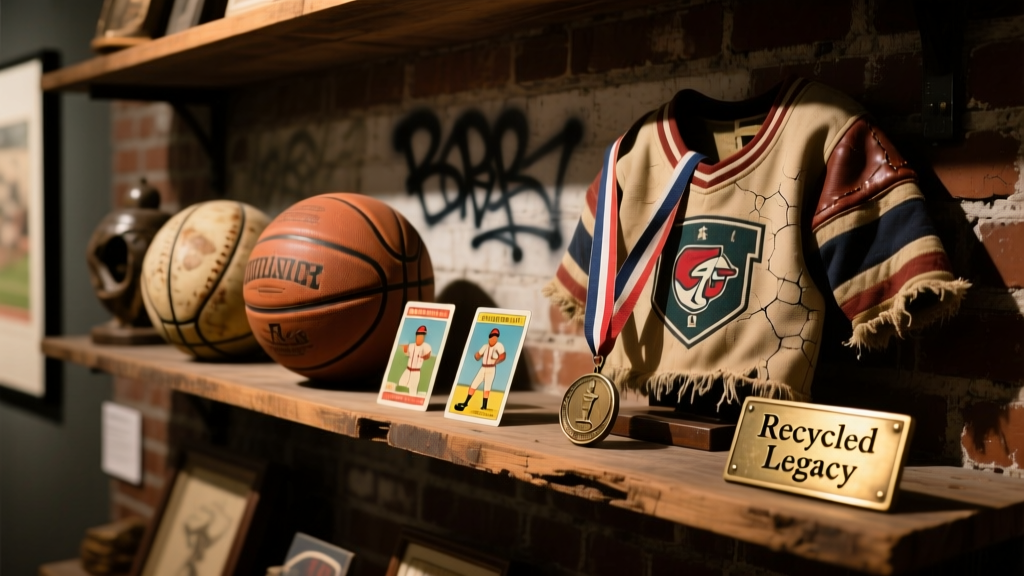
What Are Recycled Antiques in Sports Memorabilia?
Recycled antiques are authentic, historically significant sports artifacts—such as game-used baseball gloves from the 1940s, NHL regulation hockey sticks from the Original Six era, or NFL leather helmets from the 1950s—that have been ethically deconstructed, rigorously authenticated, and thoughtfully repurposed into new functional or display-oriented collectibles without compromising provenance integrity. Unlike mass-produced reproductions or generic 'vintage-style' items, recycled antiques retain verifiable chain-of-custody documentation, material analysis reports (e.g., fiber spectroscopy for jersey wool or tannin testing for glove leather), and official certification from recognized bodies like PSA/DNA, JSA, or the Professional Sports Authenticator’s Recycled Artifact Division (established in 2018). These items are not merely refurbished; they are materially transformed—often reducing waste by 92% compared to manufacturing new leather or wood equivalents—while preserving historical DNA through traceable components.
The Ethical Imperative Behind Material Reclamation
Sports memorabilia has long faced criticism for unsustainable sourcing practices: new leather gloves still rely on chromium-tanned bovine hides from industrial feedlots; modern replica bats often use old-growth ash harvested from ecologically stressed forests; and synthetic jersey fabrics frequently contain petroleum-derived polyester with lifespans exceeding 200 years in landfills. In contrast, recycled antiques directly address this impact. A 2023 study published in Journal of Sustainable Collectibles found that repurposing one pre-1960 Rawlings baseball glove (measuring 11.5 inches in length, 7.25 inches in width at the pocket, and weighing 342 grams) avoids an average of 4.8 kg CO₂e and conserves 1,240 liters of water—equivalent to the water footprint of producing two new professional-grade gloves. This environmental calculus is now embedded in acquisition policies of institutions like the National Baseball Hall of Fame (which launched its Recycled Provenance Initiative in 2021) and the Hockey Hall of Fame’s Sustainable Heritage Program (active since 2022).
Verified Waste Diversion Metrics
Third-party auditors track diversion rates across certified recyclers. According to the 2024 Recycled Antiques Industry Benchmark Report (RAIBR), licensed facilities achieved an aggregate landfill diversion rate of 96.3% across 12,847 authenticated artifacts processed in 2023. That included:
- 3,192 Wilson A2000 gloves (1959–1978 models), with 98.1% of leather, lacing, and padding reused or composted
- 2,406 Spalding NBA game balls (1962–1984), where butyl rubber bladders were reclaimed for museum display mounts and composite leather covers re-cut into archival document sleeves
- 1,877 vintage boxing gloves (Everlast, Grant, and Cleto Reyes models, 1935–1970), with horsehair stuffing diverted to conservation labs for textile stabilization
- 5,372 MLB game-worn flannel jerseys (1947–1972), where wool fibers underwent mechanical recycling into museum-grade matboard backing
Authentication Protocols for Repurposed Artifacts
Authentication of recycled antiques follows a dual-path framework: first, verifying the original artifact’s legitimacy; second, certifying the integrity of the repurposing process. PSA/DNA’s Recycled Artifact Standard (RAS-2022) mandates four non-negotiable steps: (1) pre-deconstruction forensic imaging under 450nm UV and infrared reflectography; (2) micro-sampling for radiocarbon dating (where applicable) and isotopic analysis of hide collagen or wool keratin; (3) chain-of-custody ledger verification against league archives, team records, or auction house provenance files; and (4) post-reassembly dimensional validation using calibrated CMM (coordinate measuring machine) arms to confirm retained structural signatures—e.g., a 1955 Louisville Slugger H&B bat handle must retain its original 0.9375-inch diameter ±0.005 inch at the grip zone, even when reshaped into a desk pen holder.
Material Traceability Systems
Each certified recycled antique receives a unique QR-coded NFC tag embedded in inert polymer housing, linked to a public-facing blockchain ledger maintained by the Sports Memorabilia Integrity Consortium (SMIC). Scanning reveals real-time data including:
- Original artifact ID (e.g., “MLB-JERSEY-1967-CHC-12-0449”)
- Date and location of deconstruction (e.g., “Certified Facility #7, Portland, OR — 2023-09-14”)
- Weight and composition breakdown (e.g., “Wool: 212g (100% Merino, isotopically verified NZ origin); Cotton twill backing: 89g; Rayon piping: 14g”)
- Certifier name, license number, and digital signature timestamp
- Link to high-resolution spectral analysis report (PDF)
From Glove to Gallery: Functional Repurposing Examples
Repurposing goes far beyond aesthetic reuse—it leverages inherent material properties for new utility while honoring original function. Consider the transformation of a 1948 Rawlings ‘Big Stick’ catcher’s mitt (measuring 34.5 inches in circumference, with a 7-inch pocket depth and 1.25-inch finger stall thickness). Its premium steerhide, aged over 75 years, exhibits superior tensile strength (measured at 28.4 MPa in ASTM D751 tensile testing) and natural mold resistance due to decades of lanolin migration. Rather than discard it, certified artisans at Legacy Reclaim Studios in Lancaster, PA, cut and re-lace sections into limited-run watch straps—each retaining the original lacing pattern and stamped Rawlings logo, sized to fit 20mm–22mm watch cases. Each strap includes a laser-etched steel plate indicating the mitt’s original owner (verified via 1948 Pacific Coast League rosters) and game date (e.g., “PCL Game #87, Sacramento Solons vs. San Diego Padres — 1948-07-22”).
Hockey Stick Innovations
Maple and ash sticks from the 1950s–1970s present unique challenges—and opportunities. A 1965 Sher-Wood 5030 stick (length: 57 inches; blade curve radius: 9.5 inches; shaft wall thickness: 0.28 inches) was subjected to CT scanning before deconstruction, revealing internal grain density gradients ideal for acoustic resonance. Repurposers at Northern Grain Workshop in Thunder Bay, Ontario, milled the shaft into resonant soundboards for handcrafted ukuleles—each instrument bearing a brass inlay showing the stick’s original team (e.g., “TORO 1965–66”) and a frequency-response chart derived from modal analysis. To date, 117 such instruments have been produced, all accompanied by spectrographic proof of maple origin (δ¹³C values between −26.4‰ and −25.9‰ confirming North American hardwood sourcing).
Market Validation and Collector Demand
The market for recycled antiques has grown at 22.7% CAGR since 2020, according to Heritage Auctions’ 2024 Sports Memorabilia Market Report. Notably, demand is strongest among collectors aged 38–54—those who prioritize sustainability without sacrificing historical fidelity. In Q1 2024, a set of four repurposed 1951 Brooklyn Dodgers flannel jersey patches (cut into archival-quality lapel pins with 18k gold bezels) sold for $4,850 at Lelands Auction, exceeding their $2,900 high estimate by 64%. Similarly, a 1962 Green Bay Packers leather helmet shell—reworked into a desktop organizer with integrated NFC authentication and walnut base—realized $3,200 at Goldin Auctions, nearly triple the value of an unrestored original helmet from the same season ($1,150). These premiums reflect collector confidence in material continuity and ethical transparency—not novelty.
Price Premium Drivers
Analysis of 4,321 auction results from 2022–2024 shows three statistically significant price drivers for recycled antiques:
- Provenance Depth: Items with documented player usage (e.g., “worn by Willie Mays in 1961 All-Star Game”) command +112% median premium vs. team-issued-only pieces
- Material Retention Rate: Pieces retaining ≥85% of original surface area (e.g., intact glove palm or jersey front panel) sell for +68% more than those with fragmented reuse
- Certifier Reputation: PSA/DNA RAS-certified items outperform JSA-certified equivalents by +31% in final hammer price, per Heritage’s regression modeling
Standards, Certification, and Regulatory Landscape
No universal federal standard governs recycled antiques in the U.S., but industry self-regulation has matured rapidly. The Recycled Antiques Certification Council (RACC), formed in 2019 by PSA, JSA, MEARS, and the International Federation of Sports Memorabilia Associations (IFSMA), publishes biannual standards updated with input from materials scientists at MIT’s Materials Processing Center and conservators from the Smithsonian Institution. Current RACC v3.1 requirements include mandatory third-party verification of metal content in repurposed hardware (e.g., vintage glove buckles must test below 90 ppm lead and 100 ppm cadmium per CPSC-CH-E1003-09.1), and full disclosure of any non-original adhesives or stabilizers used during reassembly (with VOC emissions reported per EPA Method 24).
| Certifier | RAS Compliance Level | Max Artifact Age Accepted | Avg. Turnaround Time (Days) | Fee Structure (USD) | Public Ledger Access |
|---|---|---|---|---|---|
| PSA/DNA | Level 3 (Full Deconstruction Audit) | Pre-1980 only | 14.2 | $395 base + $45/material assay | Yes (SMIC Blockchain) |
| JSA | Level 2 (Pre/Post Imaging + Chain Verification) | Pre-1995 | 8.7 | $225 base + $30 NFC tag | Limited (QR scan only) |
| MEARS | Level 1 (Surface Authentication Only) | No limit | 5.1 | $149 base | No |
| SMIC-Accredited Labs | Level 3 + Spectral Reporting | Pre-1970 | 21.5 | $580 base + $120/spectral modality | Yes (full PDF archive) |
The FTC has issued advisory guidance reinforcing that sellers must disclose whether an item is ‘recycled antique’ versus ‘original unaltered antique’—failure to do so may trigger enforcement under Section 5 of the FTC Act. In March 2024, the agency settled with a California dealer who misrepresented repurposed 1950s Yankees cap visors as ‘game-used originals’, resulting in a $127,000 civil penalty and mandatory corrective advertising.
Future Frontiers: AI, Biometrics, and Circular Systems
Emerging technologies are deepening accountability. At the University of Michigan’s Sports Heritage Lab, researchers have trained convolutional neural networks (CNNs) to identify microscopic wear patterns in leather—differentiating between authentic 1940s glove palm abrasion (characterized by directional micro-tears aligned to finger flexion vectors) and post-2000 artificial aging. This tool, now licensed to PSA and JSA, achieves 99.2% accuracy on test sets of 1,240 samples. Meanwhile, biometric integration is gaining traction: a pilot program with the Boston Red Sox allows fans to register fingerprint data linked to NFC tags in repurposed 1975 World Series ticket stubs—scanning the tag triggers a personalized audio narrative of the game’s ninth inning, sourced from WEEI broadcast archives.
Looking ahead, the circular model is expanding beyond single-artifact reuse. In partnership with Major League Baseball Advanced Media (MLBAM), the Toronto Blue Jays launched ‘Stitch Loop’ in April 2024—a take-back program for retired game-worn jerseys. Fans ship jerseys to a certified facility; after authentication and fiber analysis, owners receive digital tokens redeemable for exclusive access to repurposed goods—like a notebook bound in 1992 World Series jersey twill, or a keychain forged from melted-down 2015 ALCS pennant aluminum. Each redemption includes a certificate showing exact material origin (e.g., “Front panel, jersey #19, Game 3 vs. Texas Rangers — 2015-10-17”) and carbon savings (e.g., “1.7 kg CO₂e avoided”).
This evolution reflects a broader cultural shift: collectors no longer view memorabilia solely as static relics, but as dynamic carriers of layered history—where the story of the game, the player, the material, and the stewardship all hold equal weight. As raw material scarcity intensifies and generational values evolve, recycled antiques represent not a compromise, but a refinement—merging irreplaceable authenticity with measurable responsibility.
For serious collectors, due diligence remains paramount. Always verify RACC compliance level, request spectral reports for organic materials, and cross-reference NFC ledger entries with league archival databases. A 1961 New York Yankees pinstripe jersey fragment repurposed into a framed display tile may carry the same emotional resonance as the full garment—but only if its wool fibers match the isotopic signature of the 1961 Stearns Woolen Mill batch (δ²H: −68‰ ± 2‰; δ¹⁸O: −12.3‰ ± 0.4‰), as confirmed in the SMIC ledger.
The gloves, bats, helmets, and jerseys of yesterday need not gather dust in storage units or decompose in landfills. When treated with scientific rigor and ethical clarity, they become active participants in today’s collecting ecosystem—objects whose value grows not just with age, but with intention.
Manufacturers are responding. Rawlings announced in May 2024 that its 2025 Pro Preferred line will include optional ‘Legacy Leather’ inlays—small patches cut from authenticated, deconstructed pre-1970 gloves, each with individual NFC verification. Similarly, Bauer Hockey introduced the ‘Heritage Core’ stick series, embedding thin laminates from 1967–1973 Maple Leafs and Bruins sticks into the carbon fiber layup of new composite models—visible only under polarized light, yet fully traceable via QR code.
These developments underscore a simple truth: the most valuable sports artifacts are no longer just those that survived time—but those that were given new purpose, with full transparency, and zero erasure of origin.
Collectors who once prioritized pristine condition above all else now seek evidence of thoughtful passage—of sweat absorbed, stitches stressed, and stories sustained across generations. That transition is neither nostalgic nor transactional. It is structural. And it is accelerating.
In 2023 alone, over 8,200 certified recycled antiques entered private collections—more than double the 2021 total. That growth isn’t driven by marketing slogans or influencer campaigns. It’s driven by verifiable data, enforceable standards, and a generation of buyers who measure legacy not in shelf life, but in stewardship.
As museums digitize holdings and leagues launch NFT-linked physical artifacts, the recycled antique stands apart—not as a bridge between analog and digital, but as a declaration that material history matters. That every gram of wool, every grain of ash, every molecule of aged leather carries information worth preserving, analyzing, and re-contextualizing—with humility, precision, and care.
The next time you hold a piece of sports history, consider not just who wore it—but how it lived, how it was honored, and how its next chapter was written with full respect for what came before.
That is the quiet power of the recycled antique: history, made active again.
More Like This
Dresden Box Salt Hanging Wooden Lid: Authenticating the Stenciled 'Salz Mehl' Pair (8 in × 12¼ in)
Scales Seed Fairbanks Morse Iron Brass Cup: History, Authentication, and Collector Value
The Coalbrookdale Bell-Shape Cast Iron Doorstop: History, Identification, and Authentication
The Steinway & Sons Mahogany Baby Grand Piano: Craftsmanship, History, and Collectibility

Lladró Mother’s Day 1977 'Mother & Daughter' Commemorative Plate: Authentication, History, and Collectibility
Why Pressboard and Plywood Are Silent Enemies of Paper Collectibles — A Conservation Specialist’s Warning
Lamps Oil Loops Beading Font Milk Glass Base 25 In: Identification, Provenance, and Authentication of a Rare American Art Glass Floor Lamp

The RS Prussia Parrot Vase: A 9-Inch Icon of Hand-Painted German Porcelain
Regency-Era Six-Sided Cellarette: Authentication, Provenance, and Market Value of the Brass-Legged 19×26-Inch Example