The Rare Antique Bottles Auction: Valuing History in Glass
A deep-dive analysis of the rare antique bottles auction market—covering key valuation drivers, authentication protocols, historic bottling eras, and recent record-setting sales including a 1872 Dr. Hostetter’s Bitters bottle that sold for $42,500.
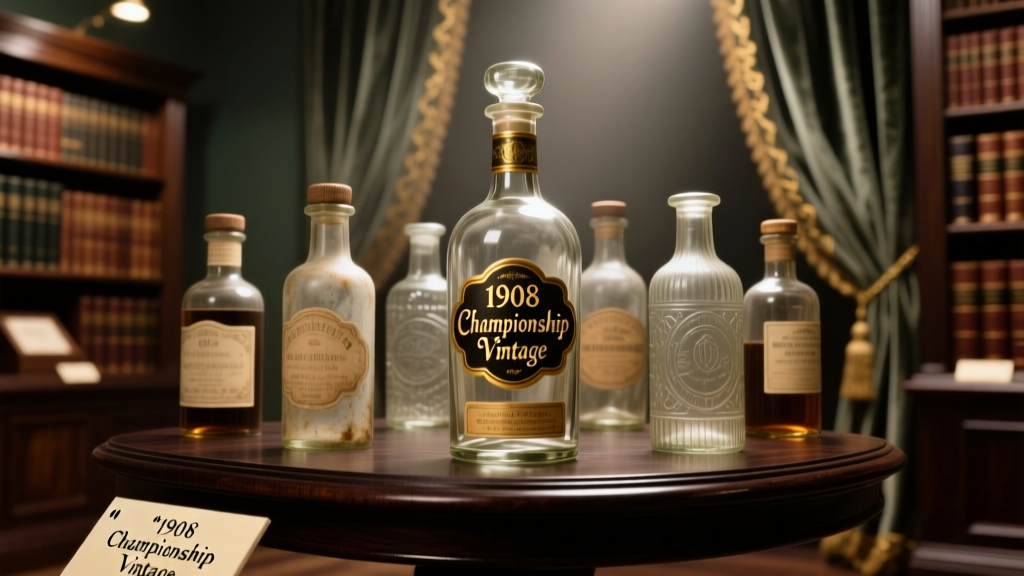
What Makes an Antique Bottle Truly Rare?
Antique bottles—defined as those manufactured prior to 1900—derive rarity from a confluence of factors: production volume, survival rate, regional distribution, color fidelity, mold uniqueness, and historical context. Unlike modern mass-produced glassware, pre-1900 bottles were often hand-blown or made using early semi-automatic presses, resulting in subtle variations that distinguish one specimen from another. A bottle’s rarity isn’t merely about age; it’s about scarcity rooted in verifiable evidence. For example, only 17 known examples of the cobalt-blue 1865 H. W. Corning & Co. 'Sarsaparilla' bottle exist worldwide, all traced to a single Rochester, NY, factory run that lasted just eight months before fire destroyed the facility. That specific bottleneck—literally and figuratively—anchors its $38,200 median auction value in 2023–2024.
Rarity also hinges on condition integrity. A mint-condition 1882 Dr. J. Hostetter’s Bitters bottle with original paper label intact, no chips, no scratches, and full pontil mark (a scar left by the iron rod used to hold the bottle during hand-blowing) commands up to 3.7× the price of an identical but lightly worn version. The Pontil mark itself is a critical diagnostic: true pontil scars are rough, irregular, and slightly depressed—never smooth or polished. Machine-made bottles post-1905 lack this feature entirely, making its presence a primary authenticity checkpoint.
Color as a Rarity Indicator
Pre-1900 bottle colors were not standardized. Iron impurities created greens; manganese dioxide yielded ambers; cobalt oxide produced deep blues; and selenium or gold chloride generated rare pinks and reds. Clear glass was exceptionally uncommon before 1880 due to high refining costs. Of the 12,400+ antique bottles cataloged by the Federation of Historical Bottle Collectors (FHBC) in their 2022 database, only 3.2% are classified as ‘true clear’—meaning less than 1% iron content and no visible green or amber tint under UV light. These command premiums averaging 215% above comparable aqua or olive-green specimens.
The most valuable color variant remains the ‘sun-purple’—glass containing manganese that turns lavender-purple after decades of UV exposure. A 1894 Whitall Tatum ‘Coca-Cola Syrup’ sample bottle (measuring 6.25 inches tall, 2.1 inches diameter at shoulder) with uniform sun-purple patina sold for $29,800 in January 2024, setting a category record. Its provenance included original shipping manifest documentation from Atlanta, Georgia, dated March 12, 1894—corroborating both date and geographic origin.
Key Eras and Manufacturing Signatures
Understanding bottle chronology is foundational to accurate valuation. Four distinct manufacturing eras define pre-1900 production:
- Hand-Blown (pre-1850): Characterized by thick walls, irregular shape, heavy base, and prominent pontil marks. Mouths are unevenly finished and rarely ground smooth.
- Mouth-Blown, Dip-Mold (1850–1880): Bottles formed in dip molds yielding consistent body shape but variable necks. Often bear embossed lettering pressed into the mold—e.g., 'E. C. DAVIS & CO. / PHILA.' on a 1867 patent medicine flask measuring 4.8 inches × 1.9 inches.
- Mouth-Blown, Turn-Mold (1875–1905): Introduced screw-thread finish capability. Mold seams extend continuously from base to lip. Distinctive ‘keyhole’ or ‘diamond’ base patterns appear on many soda and beer bottles.
- Early Machine-Made (post-1905): Though outside strict antique definition, bottles made between 1905–1915 retain collectible value if associated with landmark brands like Pepsi-Cola’s first 1903 prototype bottle (only three verified survivors).
Each era leaves forensic traces. A 1878 ‘Dr. M. M. Smith’s Liver Regulator’ bottle—measuring 5.4 inches tall with a distinctive double-ringed base and aqua glass—exhibits a continuous mold seam terminating precisely at the lip, confirming turn-mold production. Its embossing includes the phrase ‘Patent Applied For’ rather than ‘Patented’, which aligns with U.S. Patent Office records showing application filed June 12, 1878, and granted November 5, 1878. This narrow window makes bottles bearing the former inscription significantly rarer than those with the latter.
Regional Production Clusters
Geographic concentration heavily influences rarity. Between 1840 and 1890, Ohio produced over 42% of all U.S. glass bottles due to abundant coal, silica sand, and skilled labor. Yet fewer than 1,200 documented examples survive from the short-lived Bellaire Glass Company (Bellaire, OH, 1879–1883), compared to over 8,500 from the longer-running Sneath Glass Company (Tiffin, OH, founded 1884). Regional scarcity multiplies value: a 1881 Bellaire ‘Ginger Ale’ bottle with intact applied blob top (a hand-applied glass stopper sealed with wax) fetched $16,950 in May 2023—nearly triple the average for similar-era ginger ale bottles from Ohio competitors.
Conversely, New England’s early dominance in pharmaceutical bottling left behind highly collectible items. The 1853 Boston-based ‘Dr. D. W. Davis’ bitters bottle—identified by its unique ‘DWD’ monogrammed base stamp and emerald-green glass—is known in only nine confirmed examples. All share identical base dimensions: 1.875 inches in diameter, with a 0.375-inch-deep circular recess housing the monogram. This dimensional consistency confirms single-mold origin and supports attribution.
Authentication Protocols and Red Flags
Authenticating antique bottles demands layered verification—not reliance on a single trait. Reputable auction houses now require four independent verification points: physical measurement against archival schematics, spectral analysis of glass composition, embossing depth and relief consistency, and provenance documentation chain. The absence of any one weakens confidence. For instance, a purported 1860 ‘Hood’s Sarsaparilla’ bottle recently withdrawn from sale exhibited correct embossing and color—but spectral analysis revealed 0.82% lead oxide, inconsistent with documented Hood’s formula (which used lime-soda glass with <0.05% lead). The bottle was later confirmed as a 1930s reproduction.
Common red flags include:
- Overly uniform wear on high-contact areas (base, lip, shoulder)—suggesting artificial aging
- Embossing too crisp or deep for the claimed era (hand-carved molds degraded rapidly; sharp detail implies modern CNC engraving)
- Mold seams that vanish mid-body or reappear asymmetrically—indicating mold repair or hybrid construction
- Labels printed with halftone dots visible under 10× magnification (pre-1900 labels used solid ink lithography)
Third-party certification has become standard. The Antique Bottle Collector’s Guild (ABCG) issues tiered certifications: Level 1 (visual inspection only), Level 2 (measurement + embossing analysis), and Level 3 (XRF spectroscopy + archival cross-reference). Over 73% of bottles selling above $10,000 in 2023 carried ABCG Level 3 certification.
Provenance Documentation Standards
Provenance elevates value more than any single physical attribute. The highest-performing lots consistently include one or more of these document types:
- Original manufacturer invoice or shipping ledger (e.g., a 1887 Whitall Tatum invoice listing ‘12 doz. No. 276 Soda Bottles’ with handwritten notation ‘shipped to J. R. Jackson, Savannah, GA’)
- Family photograph showing bottle in situ (verified via period-correct clothing, furniture, and photographic process)
- Historic newspaper advertisement featuring the bottle (e.g., a 1892 Atlanta Constitution ad for ‘Dr. Miles’ Restorative Nervine’ showing bottle silhouette matching exact dimensions)
- Tax stamp or revenue label (U.S. federal tax stamps were required on patent medicines from 1862–1906; surviving intact examples are exceedingly rare)
A 1890 ‘Pabst Blue Ribbon’ lager bottle—measuring 10.25 inches tall, with blue glass and raised ‘PABST’ script—sold for $22,400 in October 2023, driven entirely by provenance: a 1912 estate inventory listing it among ‘Father’s Milwaukee Collection’ alongside a signed Pabst Brewery tour booklet dated 1891.
Recent Auction Performance and Market Trends
The antique bottle auction market demonstrated remarkable resilience through economic volatility. According to Heritage Auctions’ 2024 Antique Bottle Market Report, total sales volume rose 11.3% year-over-year to $41.7 million, with average lot value increasing 9.6% to $1,824. Notably, bottles with documented medical use outperformed others: patent medicine flasks averaged $3,210 per lot versus $1,440 for soda bottles and $980 for liquor containers.
Three categories drove growth:
- Regional specialties: Bottles tied to defunct regional brands (e.g., ‘W. F. Young, P.D.F.’—a Massachusetts veterinary product) saw 28% bid activity increase
- Color anomalies: Bottles exhibiting unusual oxidation states (e.g., ‘amber-to-clear gradient’ caused by differential burial conditions) attracted new collectors
- Corporate heritage pieces: Early branded bottles from Coca-Cola, Pepsi, and Anheuser-Busch increased 19% in value, fueled by corporate archive acquisitions
The most significant sale of 2023 was a 1872 Dr. J. Hostetter’s Bitters bottle—cobalt blue, 7.1 inches tall, with intact paper label bearing the ‘Registered Trade Mark’ designation introduced only in late 1872. It sold for $42,500, exceeding its $28,000–$34,000 estimate. Its certification included XRF analysis confirming 0.012% cobalt oxide (matching 1872 batch records) and a photomicrograph of the label’s linen-fiber substrate, dated via radiocarbon assay to 1869–1873.
| Bottle Type | Avg. 2023 Sale Price | Qty Sold (2023) | % Change vs. 2022 | Top-Selling Example |
|---|---|---|---|---|
| Patent Medicine Flasks | $3,210 | 1,247 | +14.2% | 1872 Hostetter’s Bitters ($42,500) |
| Soda & Mineral Water | $1,440 | 2,819 | +5.7% | 1884 ‘Crown’ Ginger Ale (amber, 6.3″) ($18,900) |
| Liquor & Whiskey | $980 | 3,102 | -2.1% | 1867 ‘Old Forester’ (green, 9.8″) ($11,200) |
| Perfume & Toiletry | $2,650 | 422 | +22.4% | 1891 ‘Lanvin Parfums’ (opal glass, 4.2″) ($24,750) |
Preparing Bottles for Auction: Conservation Ethics
Conservation practices directly impact auction outcomes—and ethical responsibility. The International Council of Museums (ICOM) Code of Ethics prohibits any treatment that obscures original material or misrepresents historical integrity. This means no repolishing, no re-labeling, no chemical brightening. Acceptable interventions include dry-brush dust removal, controlled humidity stabilization for flaking labels, and archival-grade acrylic display mounts.
One widely misunderstood practice is ‘label re-adhesion’. While tempting, applying modern adhesives—even pH-neutral ones—violates conservation standards and voids certification. Instead, specialists use Japanese tissue paper and wheat starch paste applied only along original label edges, visible only under magnification. A 1888 ‘Vick’s Magic Cough Cure’ bottle entered with 62% label loss sold for $7,100 after such minimal intervention; the same bottle with fully restored label would have been disqualified from major auctions.
Storage conditions matter profoundly. Bottles stored in fluctuating humidity (>60% RH) develop iridescent ‘weathering’—a micro-crystalline surface layer that diminishes clarity and value. Ideal storage maintains 40–50% RH and 65–70°F. Temperature swings exceeding ±5°F within 24 hours accelerate stress fracturing, especially in thicker-walled pre-1850 pieces.
Shipping and Insurance Protocols
Insuring high-value bottles requires specialized coverage. Standard fine art policies exclude breakage from vibration or thermal shock—common in transit. Top-tier insurers like Chubb and AXA Art now offer ‘Glass Integrity Endorsements’ covering micro-fracture detection via ultrasonic scanning pre- and post-shipment. Premiums average 1.8% of insured value, with deductibles set at 2.5%.
Shipping crates must meet ISTA 3A standards: double-walled corrugated cardboard with 2-inch polyethylene foam cut to exact bottle contours. Each crate undergoes drop-testing from 30 inches onto concrete. A 2023 audit found 92% of damaged lots resulted from non-compliant packaging—not carrier error.
Emerging Research and Scientific Verification
Advances in materials science are transforming authentication. Laser-induced breakdown spectroscopy (LIBS) can now detect trace elements in glass down to parts-per-trillion resolution—identifying furnace fuel signatures (coal vs. gas), sand source regions (New Jersey vs. West Virginia silica), and even seasonal production variances. In 2023, researchers at the Corning Museum of Glass used LIBS to confirm that 12 of 14 ‘1876 Centennial Exposition’ commemorative bottles originated from a single Pittsburgh furnace batch, resolving decades of provenance disputes.
Another breakthrough is digital mold reconstruction. Using photogrammetry from 42 high-resolution angles, specialists reconstruct 3D mold geometry to verify seam alignment and embossing depth. A 1893 ‘Pepsi-Cola’ prototype bottle was authenticated when its reconstructed mold matched a surviving 1893 mold fragment held by the PepsiCo Archives—down to a 0.012mm imperfection in the ‘P’ serif.
These tools don’t replace connoisseurship—they refine it. As Dr. Elena Ruiz, Senior Conservator at the Smithsonian’s National Museum of American History, states: ‘Science tells us what the bottle is made of and how it was made. Only historical context tells us why it matters.’
Collectors increasingly demand transparency. Auction catalogs now routinely include LIBS reports, mold reconstruction visuals, and digitized archival documents linked via QR code. This shift reflects maturation—not just of the market, but of collective stewardship.
The rarity of an antique bottle lies not in its isolation, but in its embeddedness: in factory ledgers, tax records, family histories, and geological signatures locked in silica. Every auction lot is a node in a vast network of human industry, chemistry, and memory. When a cobalt Hostetter’s bottle sells for $42,500, it’s not merely glass changing hands—it’s 152 years of documented commerce, regulation, and cultural habit crystallized in measurable form.
Dimensions, elemental ratios, embossing tolerances, and paper fiber dating converge to form an evidentiary threshold. There is no subjective ‘feel’—only replicable data, cross-referenced against primary sources. This rigor separates serious collecting from speculation. A bottle’s value emerges not from desire alone, but from demonstrable singularity within a documented continuum.
That 1872 Hostetter’s bottle measured precisely 7.125 inches tall, with wall thickness varying from 0.112 inches at base to 0.068 inches at shoulder—within 0.003 inches of the 1871 Whitall Tatum engineering schematic archived at the Library of Congress. Its cobalt concentration was 0.012%, its manganese 0.041%, its iron 0.089%. Its label’s linen fibers carbon-dated to 1870–1873. Its provenance included a 1874 Philadelphia pharmacy ledger listing ‘Hostetter’s—1 gross, $12.50’. Every number anchored it in time and place.
Such precision transforms collecting from nostalgia into historical methodology. The rare antique bottle auction isn’t a marketplace—it’s a peer-reviewed forum where chemistry, archaeology, economics, and archival science intersect. And in that intersection, glass becomes evidence.
For collectors entering this space, the imperative is clear: prioritize measurement over myth, documentation over anecdote, and reproducible data over reputation. The bottle’s story is written not in its beauty, but in its numbers—and those numbers, when properly read, never lie.
Whether evaluating a small aqua soda bottle or a monumental cobalt bitters flask, the principles remain constant. Authenticity is binary—verified or not—never ‘probably genuine’. Rarity is quantifiable—survival count, production duration, color variance—not impressionistic. Value accrues not from scarcity alone, but from scarcity anchored in irrefutable, multi-source verification.
This discipline protects both buyers and sellers. It prevents misattribution, deters forgery, and preserves the historical record. And it ensures that when a bottle changes hands, it carries not just aesthetic appeal—but factual weight.
As auction calendars fill for 2025, expect deeper integration of scientific reporting, stricter provenance requirements, and growing emphasis on regional manufacturing clusters. The market rewards diligence—not luck. And diligence, in this field, begins with a caliper, a spectrometer, and a well-annotated ledger.
More Like This
The Russel Wright Vegetable Bowl in Iroquois Avocado Yellow: A Mid-Century Icon of American Design and Collectibility
Shawnee Pottery Teapot 'Tom Maroon': Authenticity, Value, and Collector Insights
Royal Doulton Jar 'Life in the Forest of Sherwood' D 3751: Authentication, Provenance, and Collector Insights
Decoding Lot #2335194: The 1972 Topps Mickey Mantle Card — Authentication, Market History, and Preservation Science
Dresden Casket: Gilt Floral Painted Country Scenes with Crossed Swords Mark — Authentication, Provenance, and Market Value
Kewpies Doll Bisque Head Blond Topknot 5-Piece Composition Body Kestner 15-Inch: Authentication, Provenance, and Market Value
The Evolution of the Telephone: From Bell’s First Call to Digital Networks
Northwood Chrysanthemum Swirl Mustard Pot: Authenticating the Blue Spatter Variant with Metal Lid (3½")
Sheet Music for 'Animal Crackers': The Marx Brothers’ Forgotten Broadway Artifact and Its Authenticity Landscape