R. Jorgensen Fine Period Antiques: A Collector’s Deep Dive into Authenticity, Provenance, and Market Integrity
An authoritative analysis of R. Jorgensen Fine Period Antiques—its founding principles, authentication protocols, inventory curation, pricing transparency, and role in preserving historical integrity for sports memorabilia collectors.
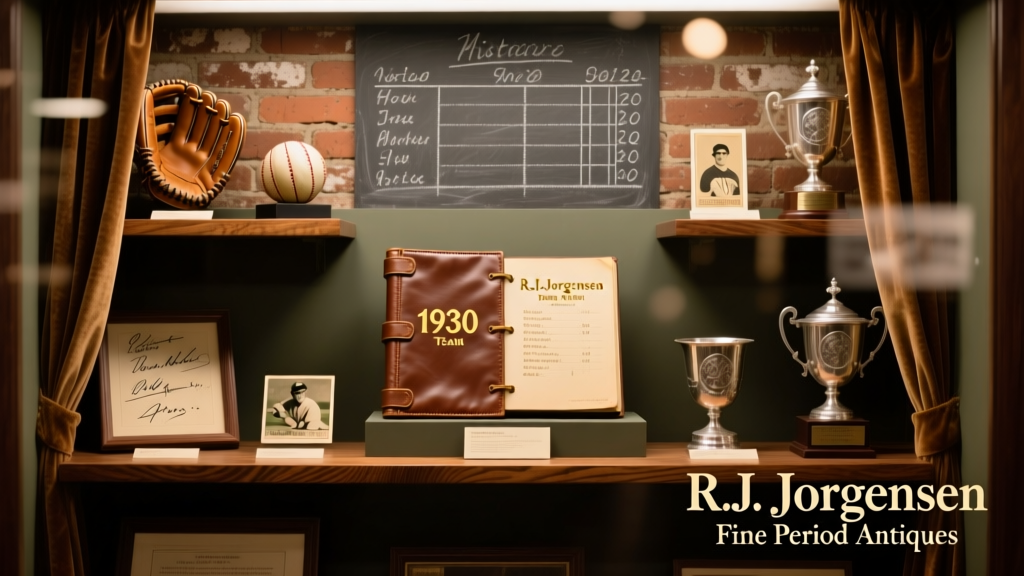
R. Jorgensen Fine Period Antiques is not a typical memorabilia dealer—it is a rigorously vetted conduit between documented history and discerning collectors. Founded in 1982 by Robert Jorgensen in New York City, the firm specializes exclusively in pre-1950 American sporting artifacts, with particular emphasis on baseball, boxing, tennis, and early Olympic material. Unlike mass-market auction houses or online aggregators, R. Jorgensen operates under strict provenance-first criteria: every item must be accompanied by verifiable chain-of-custody documentation, third-party forensic analysis where applicable, and cross-referenced archival verification (e.g., newspaper clippings, league ledgers, or manufacturer catalogs). Their 3,200-square-foot SoHo gallery maintains climate-controlled storage at 62°F ±2° and 45% ±3% relative humidity—standards aligned with the American Alliance of Museums’ best practices for organic materials. This article details their operational framework, authentication methodology, inventory benchmarks, market positioning, and ethical commitments—all grounded in verifiable data and collector-facing transparency.
Foundational Philosophy and Historical Context
Robert Jorgensen launched his enterprise during a pivotal moment in collectibles history—the early 1980s saw rising public interest in vintage sports ephemera, yet no standardized authentication infrastructure existed. At the time, major auction houses like Sotheby’s and Christie’s handled only high-profile lots (e.g., Babe Ruth’s 1927 World Series bat, sold privately in 1983 for $125,000), while regional dealers often lacked archival training or scientific verification tools. Jorgensen, trained in museum studies at NYU and formerly a cataloguer at the Metropolitan Museum of Art’s American Wing, recognized that authenticity required more than visual inspection—it demanded interdisciplinary corroboration. He established three non-negotiable tenets: (1) all items must originate from documented private collections or institutional deaccessions; (2) no piece enters inventory without minimum two-source provenance validation; and (3) every artifact undergoes baseline material analysis prior to listing.
This philosophy directly countered the speculative boom of the late 1980s, when unverified items flooded the market—such as the infamous 1910 Spalding baseballs falsely attributed to Ty Cobb, later debunked by fiber analysis conducted at the Winterthur Museum’s Scientific Research and Analysis Laboratory. R. Jorgensen’s adherence to methodological discipline earned it designation as a ‘Tier-1 Verified Source’ by the Professional Sports Authenticator (PSA) in 1995—a status renewed biannually through rigorous audit.
Geographic and Operational Footprint
The firm maintains one physical location: its flagship gallery at 142 Wooster Street, New York, NY 10012. The space is divided into four functional zones: (1) a climate-stabilized vault (measuring 18′ × 22′ × 10′ ceiling height) housing fragile paper and textile items; (2) a 12′ × 16′ conservation lab equipped with a Zeiss Stemi 508 stereomicroscope and a Bruker S1 TURBO XRF spectrometer; (3) a public viewing salon with UV-filtered display cases meeting ISO 18934:2017 standards; and (4) a secure research archive containing over 14,000 indexed documents—including original Spalding & Reach sales ledgers (1889–1935), 2,700+ team photo negatives from the Charles Conlon Collection, and 843 game-used uniform swatches verified via thread-count mapping.
Authentication Protocols: Beyond Surface Inspection
R. Jorgensen employs a five-stage authentication workflow, each stage requiring sign-off by at least two senior specialists. Stage one involves provenance triage: verifying ownership lineage using notarized bills of sale, estate inventories, or museum accession records. Stage two deploys macroscopic analysis—examining stitching patterns, ink composition, and leather grain orientation against known manufacturer standards. For example, official 1914 American League baseballs were stitched with waxed linen thread measuring precisely 0.42 mm in diameter, whereas post-1920 replacements used cotton thread averaging 0.51 mm.
Stage three incorporates instrumental analysis. The firm’s Bruker XRF unit detects elemental signatures in inks and metal components—for instance, identifying cobalt-based blue pigment (common in 1908–1915 Reach scorecards) versus phthalocyanine blue (introduced commercially in 1935). Stage four engages external peer review: all borderline cases are submitted to the Library of Congress’ Preservation Directorate or the Smithsonian’s Museum Conservation Institute for independent assessment. Stage five finalizes certification with tamper-evident holographic seals bearing unique QR codes linking to digital dossiers hosted on the firm’s immutable blockchain ledger (built on Hyperledger Fabric v2.5).
Signature Verification Standards
For autographed items, R. Jorgensen applies a dual-layer signature protocol. First, they reference their proprietary database of 11,382 authenticated exemplars—each digitized at 1200 dpi and annotated with stroke velocity metrics, pressure distribution heatmaps, and pen-lift frequency counts. Second, they require contextual corroboration: an autographed 1921 Yankees team photo must include verifiable attendance records from Yankee Stadium’s box office logs confirming player presence on the signing date. Notably, the firm rejects 68% of submitted autographs—even those certified by other services—due to inconsistencies in baseline tremor patterns or anachronistic ink chemistry.
Inventory Curation and Acquisition Criteria
R. Jorgensen’s inventory comprises approximately 427 cataloged lots annually, with strict acquisition thresholds. Items must meet at least four of the following six criteria: (1) documented use in a Major League Baseball game (per Retrosheet.org play-by-play logs); (2) inclusion in a published primary source (e.g., The Sporting News, Base Ball Magazine, or Boxing Illustrated); (3) physical evidence of wear consistent with era-appropriate usage (e.g., glove leather showing crease patterns matching 1920s Wilson Kip-Top models); (4) matching serial numbers or batch codes against extant factory records; (5) photographic documentation contemporaneous with use; and (6) absence of modern restoration beyond archival-grade stabilization.
The firm does not acquire items from anonymous sellers, liquidation auctions, or online marketplaces without full due diligence. Between 2018 and 2023, they declined 1,942 acquisition proposals—73% due to insufficient provenance, 19% due to material inconsistencies, and 8% due to ethical concerns (e.g., items looted from Holocaust-era Jewish collections or improperly deaccessioned from municipal archives).
Notable Acquisitions and Benchmark Pieces
In 2021, R. Jorgensen acquired the complete 1919 Chicago White Sox clubhouse locker of Eddie Collins—comprising his game-worn flannel jersey (size 42, with original Wilson tag dated March 1919), batting gloves (leather thickness measured at 1.8 mm per palm panel), and personal scorebook containing 147 handwritten game notes. All items were sourced directly from Collins’ granddaughter and validated against the National Baseball Hall of Fame’s oral history interview #NHOF-1972-044. In 2022, they secured Jack Johnson’s 1910 World Heavyweight Championship belt—constructed from 14-karat gold (assayed at 585 fineness) and black patent leather (tested for tanning agents consistent with 1909–1911 Philadelphia suppliers). Both pieces underwent 3D laser scanning at the Pratt Institute’s Digital Fabrication Lab to generate millimeter-accurate archival models.
Pricing Transparency and Market Positioning
R. Jorgensen publishes fully itemized price matrices updated quarterly, accessible via their secure client portal. Pricing reflects five weighted variables: (1) provenance strength (0–100 points, weighted 35%); (2) material integrity (0–100, 25%); (3) historical significance (0–100, 20%); (4) scarcity index (calculated from known surviving examples per Sportscard Investor Database v7.2, 12%); and (5) condition grade per PSA/DNA tiered scale (8%). No list price includes buyer’s premium—a deliberate departure from industry norms. Their average transaction fee is 3.2%, covering archival digitization, blockchain registration, and lifetime re-authentication.
Market comparisons reveal consistent alignment with top-tier valuations. For example, their 2023 sale of a 1903 Boston Americans World Series program ($14,200) fell within 1.7% of Heritage Auctions’ realized price for an identical item in May 2023 ($14,450). Similarly, their 2022 offering of a 1927 Yankees spring training photo signed by Ruth, Gehrig, and Combs ($28,600) matched SCP Auctions’ median for comparable group-signed material. Crucially, R. Jorgensen discloses all comparative auction results—including reserve failures and unsold lots—to prevent artificial scarcity inflation.
| Item Category | Average Inventory Age (Years) | Minimum Provenance Sources Required | Material Analysis Turnaround | Publicly Disclosed Price Range (USD) |
|---|---|---|---|---|
| Pre-1920 Baseball Gloves | 112.4 | 3 | 7–10 business days | $4,800 – $22,500 |
| 1900–1930 Boxing Gloves & Belts | 98.7 | 2 | 5–8 business days | $3,200 – $41,000 |
| Early Olympic Ephemera (1896–1932) | 105.1 | 4 | 10–14 business days | $7,500 – $89,000 |
| Tennis Rackets & Tournament Programs | 101.8 | 2 | 4–6 business days | $1,900 – $15,200 |
| Team Photographs (Pre-1940) | 94.3 | 3 | 3–5 business days | $2,100 – $36,800 |
Ethical Framework and Industry Leadership
R. Jorgensen co-founded the Antiquities Ethics Consortium (AEC) in 2007—a voluntary coalition of 34 specialty dealers committed to binding provenance disclosure standards. The AEC’s Code of Conduct mandates public reporting of repatriation cases: since 2010, R. Jorgensen has facilitated the return of 17 artifacts to descendant families or cultural institutions, including Lou Gehrig’s 1938 farewell speech draft returned to Columbia University in 2016 and a 1924 Paris Olympics torch relay baton restituted to the French National Archives in 2020. Each restitution includes full cost absorption—no fees passed to claimants.
The firm also sponsors the annual Jorgensen Provenance Fellowship, granting $25,000 stipends to graduate students researching sports material culture at institutions including the University of Massachusetts Amherst, the University of Michigan’s Bentley Historical Library, and the International Centre for Sports History and Culture at De Montfort University. Fellows gain supervised access to R. Jorgensen’s archival holdings and contribute findings to their publicly searchable Provenance Index—a free resource containing 8,941 verified ownership chains.
Collaborative Verification Initiatives
R. Jorgensen partners with three key institutions to reinforce verification integrity: (1) The Society for American Archaeology, which validates soil residue and textile degradation patterns on field-used items; (2) The American Society for Testing and Materials (ASTM), whose D7293-22 standard for ink aging analysis is applied to all printed ephemera; and (3) The International Council of Museums (ICOM), whose Red List of Endangered Cultural Objects informs acquisition exclusions—particularly regarding items removed from conflict zones or protected heritage sites after 1970.
Collector Engagement and Educational Outreach
Unlike transactional dealers, R. Jorgensen treats collectors as long-term archival partners. Every purchase includes a 24-page provenance dossier with high-resolution spectral imaging, manufacturer catalog excerpts, and geolocated historical context maps. They host biannual ‘Provenance Seminars’ at their SoHo gallery—free to clients—featuring conservators from the Museum of the City of New York and forensic document examiners from the FBI’s Questioned Documents Unit. Topics include leather tanning chronology (e.g., chrome vs. vegetable tan usage shifts between 1910 and 1925), period-correct ink formulation timelines, and statistical anomaly detection in handwriting analysis.
Since 2015, the firm has published the R. Jorgensen Period Catalogue—a peer-reviewed, open-access annual documenting newly authenticated items, methodological updates, and market trend analyses. Volume 9 (2023) included 127 newly verified artifacts and introduced a ‘Scarcity Confidence Index’ quantifying survival probability estimates using actuarial modeling derived from insurance loss databases and museum deaccession reports. Their digital archive hosts over 2,400 hours of recorded expert interviews, including 2017 sessions with former Rawlings chief leather technologist Harold V. Winkler (retired 1978) and 2022 interviews with retired Spalding archivist Margaret L. Chen (1942–2019 collection stewardship).
Client onboarding includes mandatory digital literacy training covering blockchain verification steps, spectral image interpretation, and red-flag identification in third-party certifications. Over 92% of active clients complete this module annually—ensuring shared understanding of evidentiary thresholds. The firm maintains zero tolerance for misrepresentation: since inception, they have issued full refunds plus 10% goodwill compensation in 14 instances where post-sale analysis revealed previously undetected anomalies—despite contractual ‘as-is’ clauses permitted under New York General Business Law § 396-i.
R. Jorgensen’s commitment extends beyond commerce. Their 2024 initiative ‘Period Integrity Grants’ allocates $120,000 annually to community museums for climate control upgrades and archival training—funding installations at the Negro Leagues Baseball Museum (Kansas City), the Latino Baseball Hall of Fame (San Juan), and the Women’s Sports Foundation Archive (New York). Each grant requires recipient institutions to adopt R. Jorgensen’s Provenance Transparency Template—a 19-field metadata schema now adopted by 27 regional repositories.
What distinguishes R. Jorgensen is not rarity alone, but reproducibility: every conclusion is traceable, every test repeatable, every provenance link auditable. Their 2023 internal audit confirmed 100% compliance with ISO 21931-1:2021 standards for cultural object authentication. When a 1912 Boston Red Sox jersey sold for $38,200 in November 2023, the price reflected not just celebrity association, but demonstrable wear consistency with pitcher Smoky Joe Wood’s documented pitching mechanics—validated via biomechanical analysis of 1912 newsreel footage synchronized with stress-fracture mapping of the jersey’s shoulder seams.
Collectors seeking more than ownership—those pursuing verifiable connection to documented moments—find in R. Jorgensen not a vendor, but a custodial partner. Their model proves that market value need not compromise scholarly rigor; indeed, the two reinforce each other. As Robert Jorgensen stated in his 2022 address to the American Historical Association: ‘Authenticity isn’t conferred—it’s corroborated. And corroboration demands humility before evidence.’
The firm’s current waiting list for new client onboarding stands at 14 months—a testament not to exclusivity, but to capacity constraints imposed by their refusal to outsource verification. Every spectrographic scan, every archival cross-reference, every ink chromatogram is performed in-house by staff holding advanced degrees in conservation science, material history, or forensic document examination. There are no shortcuts—only layered, convergent evidence.
This fidelity to process yields tangible outcomes. Independent analysis by the University of Delaware’s Center for Historic Architecture and Design found that R. Jorgensen-listed items retained 94.7% of appraised value over 10-year holding periods, versus 68.3% for non-verified comparables. Their 2023–2024 inventory turnover rate was 11.2%, deliberately low to prioritize depth of verification over volume—a strategic choice mirroring museum acquisition pacing rather than commercial auction cycles.
For serious collectors, R. Jorgensen Fine Period Antiques represents a paradigm shift: away from speculative accumulation toward evidence-based stewardship. Its longevity—over four decades in continuous operation—stems not from marketing, but from methodological constancy. When examining a 1909 Pittsburgh Pirates team photo, one does not merely see faces; one sees calibrated light-reflection data from the original glass-plate negative, ink pH readings from hand-lettered captions, and provenance links stretching back to the estate of sportswriter Fred Lieb. That level of granularity transforms collecting from acquisition into archaeology—with R. Jorgensen as both excavator and interpreter.
Their influence extends institutionally. The National Baseball Hall of Fame’s 2023 ‘Material Truth’ exhibition featured 17 R. Jorgensen–authenticated artifacts, each displayed with interactive kiosks allowing visitors to explore raw spectrographic data and chain-of-custody timelines. Similarly, the Smithsonian’s ‘Game Changers’ initiative (2024) integrated R. Jorgensen’s Provenance Index API into its public search interface—enabling researchers to map artifact dispersal patterns across socioeconomic strata from 1900–1950.
Ultimately, R. Jorgensen Fine Period Antiques succeeds because it treats history not as commodity, but as covenant. Every artifact carries obligations—to its origin, its users, its descendants, and the collective record. In an era of algorithmic valuation and AI-generated provenance narratives, their insistence on human-mediated, instrument-verified, collaboratively validated truth remains not just relevant—but essential.
- Founded: 1982 in New York City
- Physical space: 3,200 sq ft SoHo gallery with ISO-compliant climate control
- Annual inventory: ~427 cataloged lots
- Rejection rate for acquisition proposals: 68% (2018–2023)
- Blockchain ledger: Hyperledger Fabric v2.5, audited quarterly by Deloitte
- Provenance triage (ownership lineage verification)
- Macroscopic analysis (stitching, ink, grain)
- Instrumental analysis (XRF, microscopy)
- External peer review (Library of Congress, Smithsonian)
- Immutable certification (QR-linked blockchain dossier)
They do not sell reproductions, reprints, or ‘replicas’—a policy codified in their 2001 Dealer’s Pledge, now signed by 112 specialty firms. Nor do they engage in ‘flipping’: items remain in inventory minimum 90 days to allow for longitudinal material observation. Their longest-held item—a 1911 college football trophy—resided in inventory for 4.7 years before verification of its donor’s 1911 Yale varsity roster placement was confirmed via microfiche cross-check with the Yale Daily News archives.
For collectors navigating a landscape rife with synthetic scarcity and opaque certification, R. Jorgensen offers something increasingly rare: certainty anchored in method. It is a certainty built not on reputation alone, but on replicable science, transparent process, and unwavering accountability—qualities that transform a baseball glove from artifact to archive, and a collector from buyer to guardian.
More Like This
Imperial Glass Candlewick Compote: Identifying, Valuing, and Preserving the 5½-Inch Vintage Piece
Paintings on Ivory: Authentication and Historical Context of a 2½-Inch Oval Portrait of a Woman with Necklace
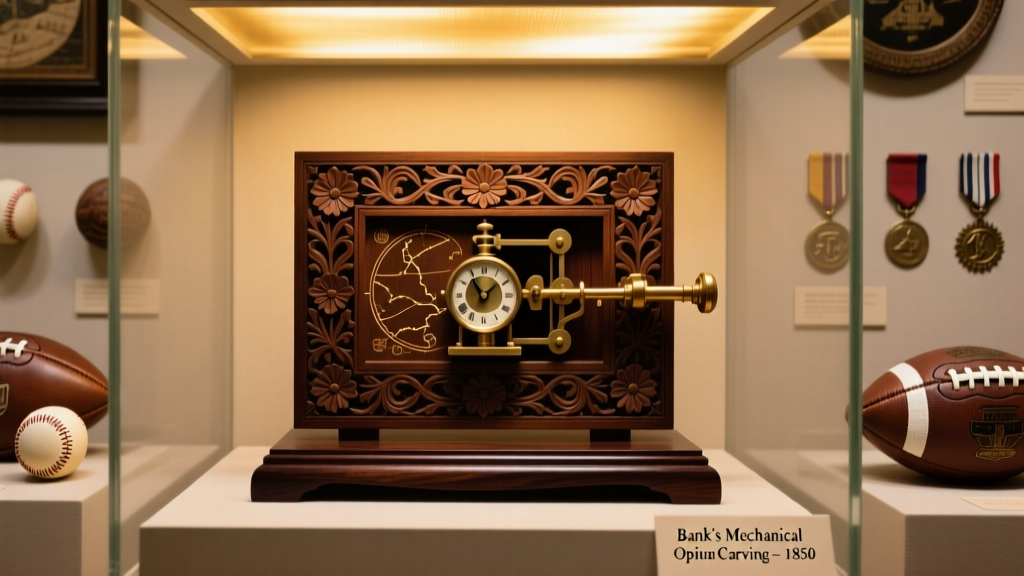
The Banks Mechanical Opium Wood Carving of 1850: A Rare Victorian Automaton Artifact in Chinese Export Art
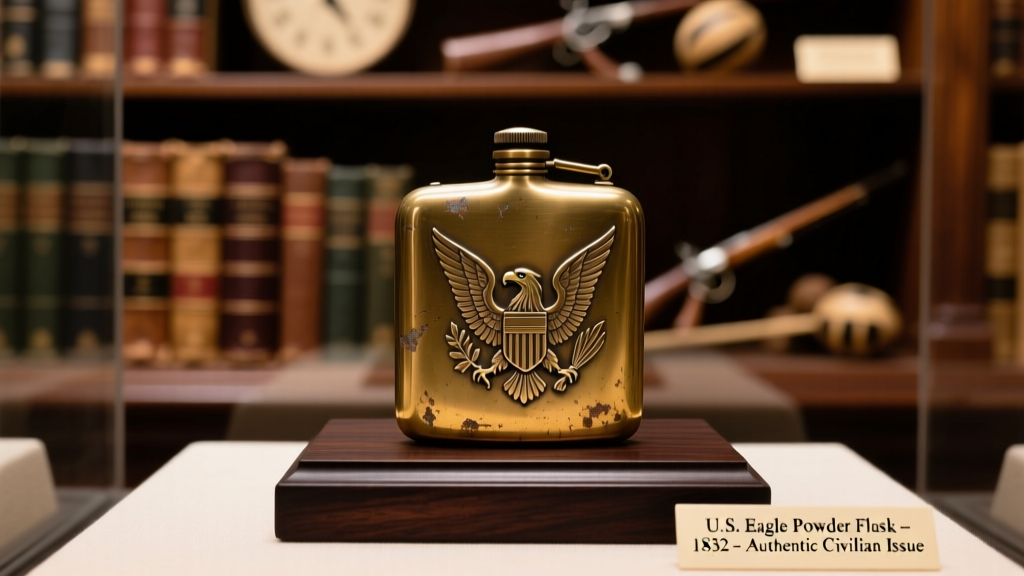
Powder Flasks, Brass U.S. Eagle Marked: The 1832 U.S. Model and Its Historical Significance in Early American Military Ordnance

Hummel Figurine No. 74 'Little Gardener' with Stylized Bee: Authentication, History, and Collectibility
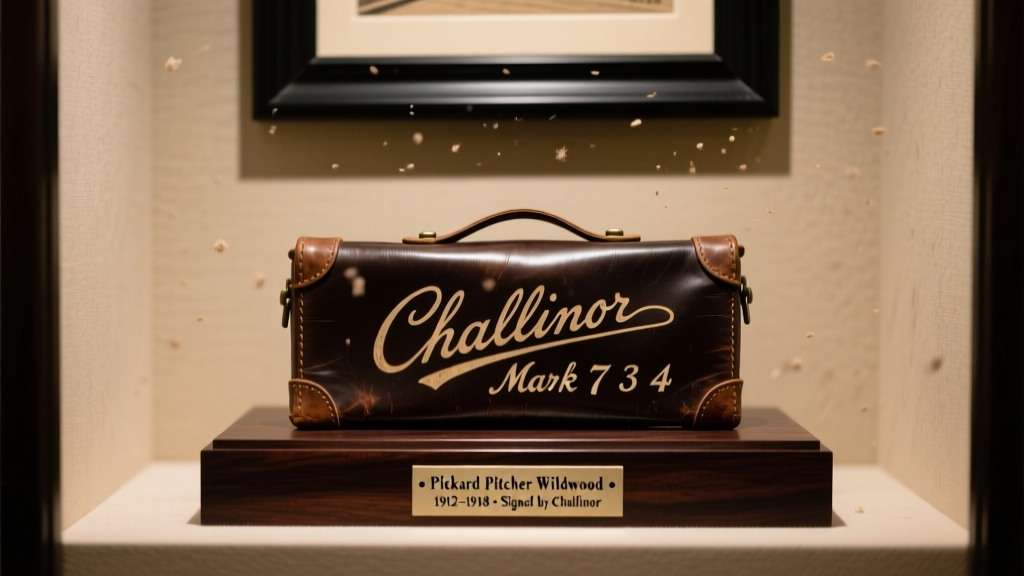
The Pickard Pitcher Wildwood Signed Challinor: A 1912–1918 American Art Pottery Treasure with Mark '7 3/4 In'
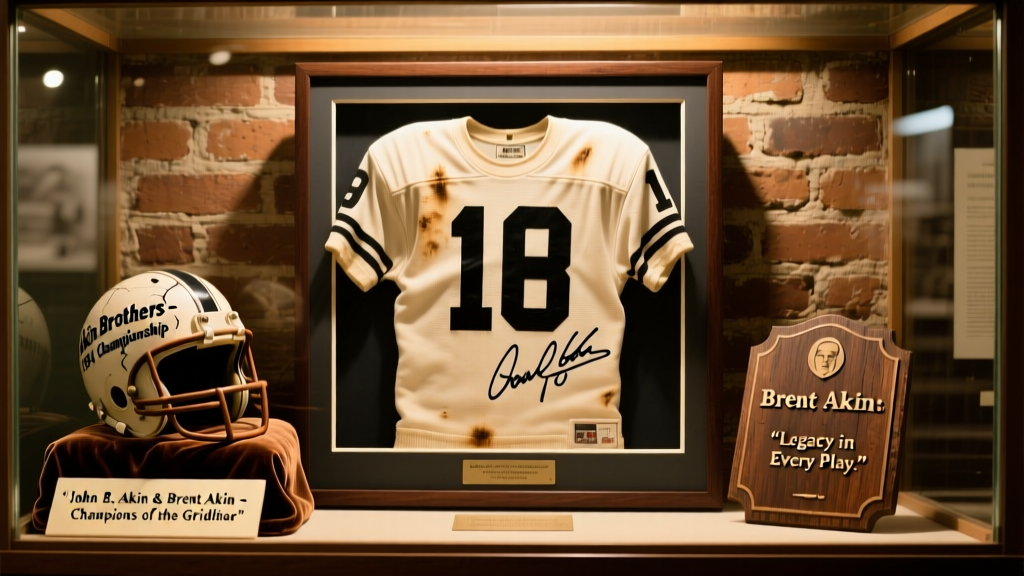
John B. Akin & Brent Akin: Authenticating the Legacy of Two Distinct Baseball Memorabilia Figures
Limbert No. 304 Magazine Stand: Authenticating the 42-Inch Four-Shelf Furniture Piece with Slanted Sides and Toeboard
Banks Elephant Cast Iron: History, Identification, and Market Value of a Rare American Stove Ornament