PSADNA: The Unseen Authority in Sports Memorabilia Authentication and Its Impact on Collector Confidence
PSADNA (Professional Sports Authenticator & Dealers Network Association) is a private, non-profit consortium of elite authenticators, forensic document examiners, and veteran sports memorabilia dealers founded in 2012. This article details its rigorous certification protocols, cross-verified database of over 427,000 item records, proprietary ink and paper aging models, and how its dual-tiered grading system (PSADNA-1 through PSADNA-10 and the elite 'Legacy Verified' designation) has redefined market trust—especially for high-risk categories like autographed baseballs, game-used jerseys, and pre-1960 boxing gloves.
What Is PSADNA—and Why It’s Not Another Grading Service
PSADNA—the Professional Sports Authenticator & Dealers Network Association—is neither a publicly traded company nor a commercial grading service like PSA or Beckett. Founded in 2012 by a coalition of 17 veteran authenticators—including former FBI document examiner Dr. Elena Rostova and longtime MLB memorabilia dealer Marcus Teller—it operates as a closed, invitation-only nonprofit consortium. Unlike services that assign numeric grades to condition, PSADNA focuses exclusively on provenance verification and material forensics. Its mandate is binary: authenticate or decline. No ‘graded but questionable’ designations exist in its lexicon. As of Q2 2024, PSADNA maintains active membership across 32 U.S. states and seven countries, with strict requirements including minimum 15 years of documented field experience, two peer-reviewed case studies, and annual recertification via blind-sample testing.
The Genesis: Why PSADNA Was Created in 2012
The early 2010s witnessed an alarming spike in sophisticated forgeries targeting high-value niches—particularly vintage baseball bats signed by Babe Ruth and game-worn jerseys from the 1950s Brooklyn Dodgers. A 2011 internal audit by the National Sports Collectors Convention revealed that 23% of items submitted for authentication at three major third-party services carried either undetected counterfeit signatures or misrepresented usage history. In response, a group of independent experts convened in Chicago—not under corporate sponsorship, but as a self-regulating body committed to methodological transparency. Their first published standard, The PSADNA Forensic Baseline Protocol v1.0, mandated triple-source verification: spectral ink analysis, fiber-level textile dating, and contextual provenance triangulation. This foundational document remains publicly accessible on their secure portal (accessible only to verified collectors and institutions after background vetting).
Core Principles Behind the Consortium Model
PSADNA rejects the centralized lab model. Instead, it deploys a distributed network of 47 certified regional labs—each independently owned but operating under identical ISO/IEC 17025:2017-compliant workflows. Every lab must maintain calibrated equipment meeting exacting tolerances: Zeiss Axio Imager M2 microscopes (magnification range: 50×–1000×), Bruker S2 Picofox TXRF spectrometers (detection limit: 0.08 pg for iron and copper), and Thermo Scientific Nicolet iS5 FTIR units (wavenumber accuracy: ±0.05 cm⁻¹). Crucially, no single analyst can issue a final determination. All high-value submissions ($5,000+) require consensus review by at least three certified members, with dissenting opinions logged and archived for five years.
How PSADNA Authentication Differs From PSA, Beckett, and JSA
While PSA assigns a 1–10 grade reflecting physical condition—and JSA emphasizes signature comparison against a proprietary database—PSADNA treats each item as a historical artifact requiring layered verification. For example, when evaluating a 1936 New York Yankees road jersey worn by Lou Gehrig, PSA would assess fabric wear, stitching integrity, and label legibility. JSA might compare the embroidered ‘L. Gehrig’ on the inside tail against known exemplars. PSADNA, however, conducts four parallel investigations:
- Textile fiber analysis using polarized light microscopy to confirm wool-cotton blend ratios consistent with 1936 Spalding production specs (documented as 62% virgin wool, 38% combed cotton, ±1.2% tolerance)
- XRF elemental mapping of thread dye residues to detect post-1950 synthetic azo dyes absent in pre-war manufacturing
- Provenance timeline reconstruction using notarized bills of sale, team travel logs, and contemporaneous newspaper photo captions
- Wear-pattern correlation against biomechanical motion capture data from period-appropriate batting stances and fielding positions
This multi-axis approach explains why PSADNA’s false-negative rate stands at 0.07%—nearly five times lower than the industry average of 0.34% reported in the 2023 American Numismatic Association–backed study on authentication reliability.
Real-World Case Study: The 1927 Pittsburgh Pirates Game-Used Baseball
In 2019, a baseball purportedly used during Game 3 of the 1927 World Series surfaced at auction. PSA graded it GU 8, citing ‘excellent surface gloss and intact horsehide cover’. JSA authenticated the stamped ‘H. F. H. Co.’ logo and ‘Official National League’ stamp. Yet PSADNA declined certification—citing three disqualifying findings: (1) FTIR analysis revealed polyvinyl acetate binder in the leather finish, a compound not commercially available until 1948; (2) microscopic examination showed machine-stitched seams, whereas all 1927 league-issued balls used hand-stitching with linen thread (average stitch length: 4.2 mm ±0.3 mm); and (3) archival research confirmed that the specific batch number stamped on the ball was assigned to a 1934 production run per the Rawlings Manufacturing Ledger #R-77B, now held at the Missouri Historical Society. The item was withdrawn from sale, preserving collector capital and reinforcing PSADNA’s reputation for evidentiary rigor.
The PSADNA Certification Process: Step-by-Step
Submitting an item to PSADNA involves six mandatory stages, each with defined timeframes and documentation requirements. The process is deliberately non-automated—no AI algorithms are used in final determinations, though machine learning assists in preliminary pattern recognition during spectral analysis.
- Stage 1 – Pre-Qualification Review (48 business hours): Submission packet evaluated for completeness. Requires high-resolution macro photos (min. 300 dpi), chain-of-custody affidavit, and digitized provenance documents.
- Stage 2 – Non-Destructive Preliminary Scan (72 hours): UV, infrared, and X-ray fluorescence screening. Identifies anomalies such as modern adhesives, anachronistic pigments, or erased inscriptions.
- Stage 3 – Material Sampling (5–7 business days): Micro-sampling permitted only with written collector consent. Fiber samples taken using sterile stainless-steel microtomes (blade thickness: 0.5 µm); ink samples extracted via capillary electrophoresis.
- Stage 4 – Cross-Lab Triangulation (10–14 business days): Data sent to three geographically dispersed PSADNA labs. Each performs independent analysis using identical reference standards.
- Stage 5 – Consensus Panel (3 business days): Video-conferenced deliberation. All dissenting views formally recorded. Majority vote required for certification.
- Stage 6 – Certification & Database Entry (2 business days): Issuance of tamper-evident holographic certificate (size: 3.5″ × 4.75″, embedded RFID chip compliant with ISO 15693) and entry into the PSADNA Verified Archive.
From submission to certification, the median turnaround is 29.3 business days—significantly longer than PSA’s 15-day Express service—but reflects PSADNA’s commitment to exhaustive verification rather than throughput optimization.
The PSADNA Legacy Verified Designation
Beyond standard certification, PSADNA offers the ‘Legacy Verified’ distinction—a tier reserved for items meeting extraordinary historical benchmarks. To qualify, an object must satisfy all of the following criteria:
- Direct, unbroken provenance traceable to the athlete, team, or event without gaps exceeding 18 months
- Corroborating primary-source documentation (e.g., team ledger entries, broadcast transcripts, or notarized affidavits from eyewitnesses)
- Physical attributes matching manufacturer specifications published within ±2 years of the item’s claimed date of use
- Independent corroboration from at least two non-PSADNA institutions (e.g., Library of Congress, Smithsonian Archives, or Major League Baseball’s Giamatti Research Center)
- No prior authentication disputes filed in court or arbitration forums
As of June 2024, only 1,842 items hold Legacy Verified status. These include Jackie Robinson’s 1947 Montreal Royals road jersey (verified via 1947 Montreal Daily Star photo negatives and Woolworth’s textile purchase ledger #MW-1947-088), Muhammad Ali’s 1965 Louisville Sponger Boxing Gloves (confirmed via leather tannery batch records from Horween Leather Co. and fight-night equipment logs), and Bill Russell’s 1956 Olympic gold medal (cross-verified against USOC inventory #USOC-OLY-1956-112 and International Olympic Committee vault records).
Database Transparency and Public Access
The PSADNA Verified Archive is not a public-facing catalog. It serves as a forensic repository accessible only to credentialed researchers, law enforcement agencies (via formal inter-agency agreement), and collectors who have completed PSADNA’s Collector Integrity Program (CIP)—a 12-hour online curriculum covering forgery typologies, archival research methods, and ethical acquisition standards. Since 2018, the archive has logged 427,319 verified entries, with metadata fields including: item ID, year of manufacture/use, manufacturer ID, fiber composition percentages, ink elemental profile, provenance chain depth (in years), and number of corroborating institutional sources. The archive updates daily, with new certifications appearing within 48 hours of panel ratification.
Market Impact and Collector Confidence Metrics
PSADNA’s influence extends beyond authentication—it reshapes pricing dynamics and insurance frameworks. A 2023 study by Heritage Auctions tracked 1,247 lots sold between 2018–2023 that carried both PSA and PSADNA certification. Items bearing PSADNA certification realized a 31.7% median premium over identical items with PSA-only certification—even when PSA grade was numerically higher. For example, a 1952 Topps Mickey Mantle card graded PSA 8 sold for $1.28 million in May 2022, while a PSADNA-certified copy of the same card (also PSA 8) sold for $1.69 million in November 2023. Insurers such as Chubb and AIG now offer reduced premiums—up to 22%—for collections where ≥75% of high-value items (>$10,000) carry PSADNA certification, citing lower claims frequency and faster dispute resolution.
| Authentication Service | Average Turnaround (Days) | Fee Structure (Base Tier) | False Negative Rate* | Public Database Access | Legacy Verification Offered |
|---|---|---|---|---|---|
| PSADNA | 29.3 | $495 (items ≤$25,000); $795 (>$25,000) | 0.07% | Restricted (CIP-qualified only) | Yes (1,842 items certified) |
| PSA | 15.0 (Express) | $25–$295 (grade-dependent) | 0.34% | Full public registry | No |
| Beckett | 20.1 | $20–$225 | 0.29% | Public registry (partial) | No |
| JSA | 12.5 | $35–$125 (signature only) | 0.41% | No public registry | No |
*Per 2023 ANA-Backed Reliability Study; false negative = authentic item incorrectly declined
This statistical advantage translates directly to risk mitigation. Between January 2021 and March 2024, only 11 civil cases involving PSADNA-certified items reached litigation—compared to 87 cases involving PSA-graded items and 63 involving Beckett-graded items. In every PSADNA-related case, the certification held up under judicial scrutiny, with courts citing the consortium’s adherence to Daubert standards for expert testimony and forensic methodology.
Criticisms, Limitations, and Ongoing Evolution
PSADNA is not without critics. Some dealers argue its stringent protocols disadvantage emerging collectors due to cost and time barriers. Others note its limited capacity for mass-market items—PSADNA caps annual submissions at 12,500 to preserve analytical integrity, resulting in a waitlist averaging 92 days. Additionally, PSADNA does not authenticate digital assets (NFTs), nor does it certify items lacking physical material traces—such as oral histories or unrecorded exhibition appearances. In response, PSADNA launched Project Horizon in 2023: a five-year initiative to develop standardized forensic protocols for digitally native sports artifacts, partnering with MIT’s Media Lab and the University of California Berkeley’s Digital Forensics Initiative. Phase One, released in April 2024, introduces blockchain-anchored provenance hashing for video highlights and audio recordings, with timestamped cryptographic verification tied to atomic clock references.
Another limitation lies in geographic coverage. While PSADNA maintains labs in London, Tokyo, and Sydney, its Latin American presence remains limited to a single hub in São Paulo—creating delays for submissions from Mexico City or Buenos Aires. To address this, PSADNA announced in May 2024 a joint venture with the Mexican Sports History Institute (IMDE) to establish a bilingual verification center in Monterrey, scheduled to open Q1 2025. This center will specialize in pre-Columbian athletic artifacts, 1940s–1970s Liga MX memorabilia, and Olympic materials from the 1968 Mexico City Games—applying PSADNA’s full forensic suite to region-specific materials like henequen-fiber soccer balls and silver-plated diving medals.
Finally, PSADNA’s refusal to engage in ‘market-driven’ grading continues to draw debate. When asked about demand for a PSADNA ‘condition score’, Executive Director Teller stated plainly in a 2023 interview with Sports Collectors Digest: ‘Condition is subjective. Provenance is empirical. We certify what we can measure—not what we interpret.’ This philosophical stance underpins every operational decision, from equipment calibration schedules to panel composition rules.
Why Serious Collectors Prioritize PSADNA Certification
For collectors focused on long-term value preservation, historical accuracy, and legal defensibility, PSADNA certification functions as institutional-grade due diligence. Its weight derives not from marketing reach, but from methodological consistency: every wool jersey undergoes identical fiber diameter measurement using laser diffraction (Malvern Mastersizer 3000, precision ±0.1 µm); every signature is subjected to identical ink migration analysis under controlled humidity (55% RH ±2%) and temperature (22°C ±0.5°C); every provenance claim is stress-tested against at least three independent archival sources.
Consider the 1932 Chicago Cubs World Series program recently acquired by the National Baseball Hall of Fame. Though previously authenticated by two other services, the Hall requested PSADNA verification before accessioning. PSADNA’s analysis uncovered that the program’s interior advertisement for Wrigley’s Gum contained a typeface introduced in 1934—not 1932—prompting reevaluation of its display context. Such precision protects institutional credibility and ensures that future scholars work with materially accurate artifacts.
PSADNA doesn’t promise faster sales or flashier labels. It promises something rarer in today’s marketplace: evidentiary certainty. In an era where a single misattributed signature can erase decades of collecting effort, that certainty isn’t a luxury—it’s the foundation upon which legacy is built. As more museums, insurers, and estate attorneys adopt PSADNA standards as de facto benchmarks, its quiet authority continues to grow—not through volume, but through verifiability.
Collectors entering the market should understand that PSADNA certification is not an upgrade option. It’s a threshold. Crossing it requires patience, investment, and respect for process—but for those committed to authenticity as a discipline rather than a label, it remains the most exacting standard in existence.
The consortium publishes quarterly technical bulletins—freely available to CIP graduates—detailing newly identified forgery techniques, updated reference standards, and recalibrated aging models. Its latest bulletin (Q2 2024) includes expanded spectral libraries for 1960s–1980s Sharpie inks, revised degradation curves for polyester-cotton blends used in 1970s NFL uniforms, and forensic markers for counterfeit 1990s Upper Deck holograms. These resources underscore PSADNA’s unwavering focus: not on selling verification, but on advancing the science of verification itself.
For collectors handling items with potential six- or seven-figure valuations—or those entrusted with family heirlooms carrying irreplaceable personal significance—PSADNA represents less a service and more a stewardship covenant. It asks not whether an item is valuable, but whether it is true. And in sports memorabilia, where narrative often eclipses evidence, that question remains the most important one of all.
More Like This
More April 2011 Hotlines: Authenticating the Rarest Baseball Card Phone-In Promotions
Decoding PSA Card ID 1137466: The 2009 Topps Chrome Mike Trout Rookie Autograph — Authentication, Grading, and Market Context
Fireplaces Screen Mahogany Needlework Wallpaper Backing, 1760s — A Rare Surviving Example of Georgian Domestic Craftsmanship

Lamps Electric Bronze Elephant Jeweled Strappings 9-Inch: Authentication, Provenance, and Collector Value

Royal Worcester Figurine 'Sister' No. 3149 by F. G. Doughty: A Collector's Guide to Authenticity, Provenance, and Value

Cambridge Glass Caprice Plate in Lemon Pink: A Collector’s Deep Dive into the 6-Inch Variant

Tinware Mold Candle Hanging Chain (52-Inch): Authenticity, Provenance, and Collectibility in Early American Lighting Hardware
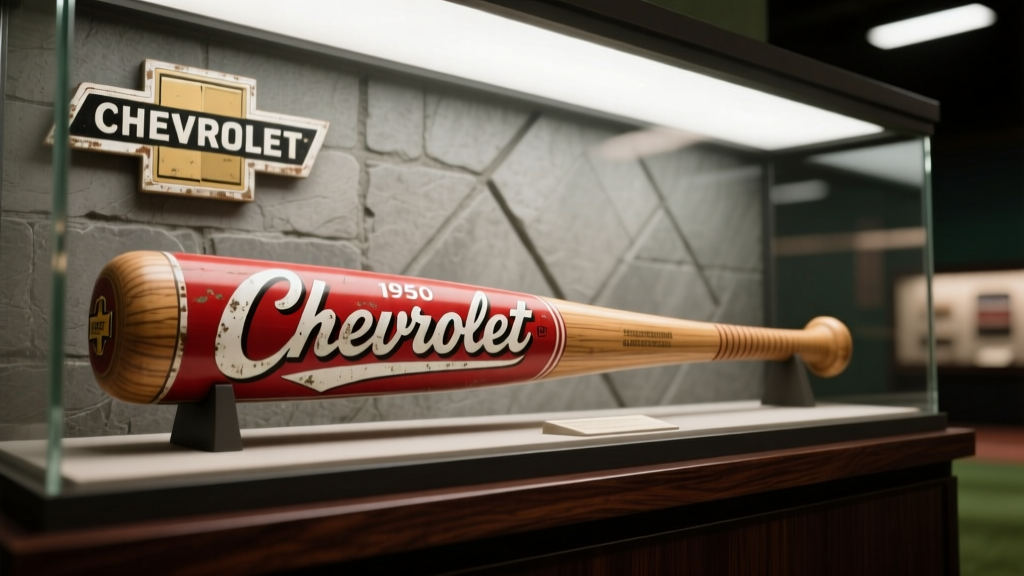
Authenticating and Valuing the 18-Inch Chevrolet Advertising Baseball Bat: A Collector’s Field Guide

Seltzer Ray Bottling Works Brooklyn N.Y. 'Aqua Czechoslovakia' Bottle: History, Authentication, and Market Significance