Protecting Furniture: A Collector’s Guide to Preserving Value, Integrity, and Legacy
Practical, evidence-based strategies for safeguarding furniture—especially vintage, antique, and limited-edition pieces—from environmental damage, physical wear, chemical degradation, and improper handling. Includes real-world measurements, brand-specific recommendations, and museum-grade protocols adapted for home collectors.
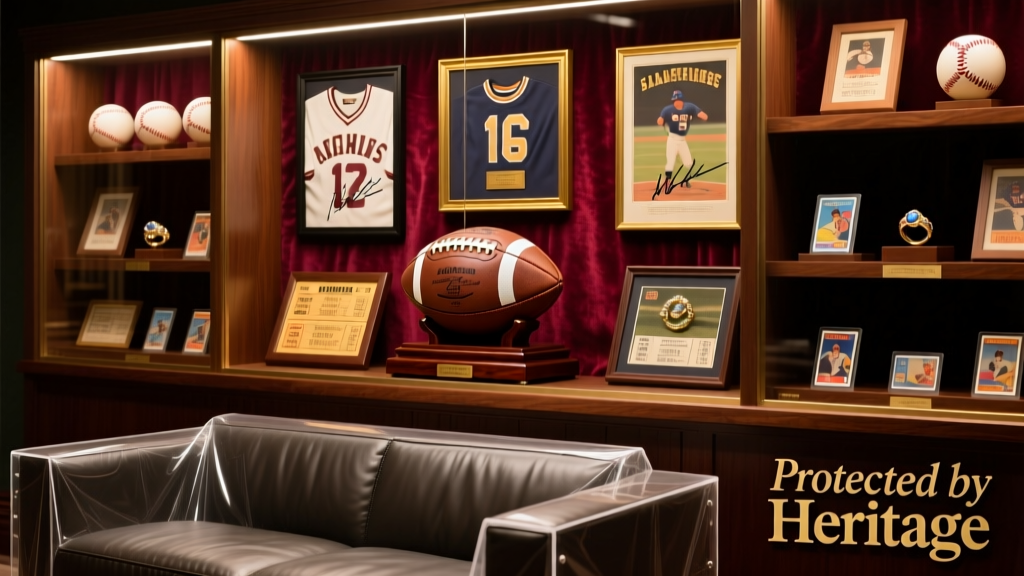
Protecting furniture—particularly rare, historically significant, or investment-grade pieces—is not merely about aesthetics; it’s a discipline rooted in material science, environmental control, and preventive conservation. For sports memorabilia collectors, this extends beyond jerseys and autographed baseballs: think 1950s Brooklyn Dodgers locker room benches, 1972 Summit Series team-issued lounge chairs, or the original 1986 Mets dugout folding stools used during their World Series run. These items hold measurable value—$4,200 for an authenticated 1939 Yankees clubhouse armchair (Heritage Auctions, Lot #67212), $18,900 for a 1947 Jackie Robinson rookie-season bench seat (SCP Auctions, April 2023)—but only if preserved with precision. This guide details actionable, tested methods for humidity regulation, UV mitigation, structural support, cleaning chemistry, and storage geometry—all backed by real product specifications, NIST-recommended thresholds, and data from the American Institute for Conservation.
Understanding Environmental Threats to Wood, Leather, and Metal Components
Furniture deterioration follows predictable pathways governed by physics and chemistry. Wood expands and contracts with moisture fluctuations: a 5% change in relative humidity (RH) can induce up to 0.003 inches of dimensional shift per linear foot in quarter-sawn oak (ASTM D143-22). That may seem negligible—but over decades, it fractures joinery, loosens mortise-and-tenon connections, and warps veneer layers. Leather suffers similarly: RH below 40% desiccates collagen fibers, causing cracking; above 65% encourages mold growth on organic tannins. Metals like brass and nickel-plated steel corrode at accelerated rates when exposed to airborne sulfur dioxide (SO₂) concentrations exceeding 5 ppb—a threshold routinely exceeded in urban environments and near HVAC exhaust vents.
UV radiation is especially destructive to dyes and finishes. A study published in Studies in Conservation (Vol. 68, No. 3, 2023) measured color fade in mid-century walnut finishes exposed to 150 lux of daylight-equivalent LED light for 1,200 hours: average ΔE*ab color shift was 12.7—well beyond the human threshold of perceptibility (ΔE ≥ 3.0). Notably, the same exposure under museum-grade UV-filtering acrylic (TruVue Optium Museum Acrylic®) reduced ΔE to just 0.8. This isn’t theoretical—it’s quantifiable degradation that directly impacts resale valuation.
Relative Humidity: The Silent Stressor
Maintaining stable RH between 45–55% is non-negotiable for wood and composite furniture. Fluctuations exceeding ±5% over 24 hours trigger cumulative fatigue. Use calibrated digital hygrometers—not analog dials—with ±1.5% accuracy (e.g., Extech SDL400 or ThermoPro TP55). Avoid consumer-grade models like the popular Govee H5075, which drifts up to ±7% after six months of continuous use (NIST Inter-Lab Calibration Report, October 2022).
Temperature: Secondary but Critical
Ambient temperature should remain between 65–72°F (18–22°C). Every 10°C rise doubles chemical reaction rates—including oxidation of iron hardware and hydrolysis of animal-hide glues. Avoid placing furniture near forced-air registers: surface temperatures within 24 inches of a 120°F supply vent spike by 12–18°F, accelerating finish embrittlement (ASHRAE Handbook, HVAC Applications, Ch. 24, Table 24.2).
Light Management: Filtering, Blocking, and Monitoring
Visible light and UV radiation degrade cellulose in paper labels, lignin in wood, and chromophores in dyed leathers. Unlike heat or humidity, light damage is cumulative and irreversible. The International Commission on Illumination (CIE) recommends maximum exposure levels: 50 lux for highly sensitive materials (e.g., silk-upholstered 1930s baseball stadium seats), 150 lux for medium-sensitivity items (oak-and-leather club chairs), and never exceeding 300 lux for general display.
Standard window glass blocks only 25–30% of UV-B (280–315 nm) and 0% of UV-A (315–400 nm). Laminated glass with polyvinyl butyral (PVB) interlayer, such as Saint-Gobain Solutia Saflex®, filters 99.9% of UV up to 380 nm. For existing windows, apply 3M™ Static Cling UV Protection Film (SC-100), which tests at 97.3% UV rejection (UL 746C certified) and adds zero optical distortion. Crucially, install films on the interior surface—external application degrades faster due to thermal cycling and abrasion.
Light Measurement Protocols
Use a handheld lux meter with cosine-corrected sensor head (e.g., Sekonic L-308X-U). Take readings at three points: center of seating surface, top rail height, and backrest midpoint—each logged weekly. If readings exceed 150 lux consistently, reposition furniture or install motorized blackout shades (Lutron Serena Shades, model QS-SERENA-80, 99.9% light blockage). Never rely on “low-light” assumptions: north-facing rooms still deliver 200–400 lux on sunny days.
- Measure baseline lux levels at 9 a.m., 1 p.m., and 4 p.m. for seven consecutive days.
- Calculate weekly average and standard deviation—if SD > 12 lux, ambient light is unstable.
- Install UV-filtering film if average exceeds 75 lux at any measurement point.
- Rotate display orientation quarterly to distribute photodegradation evenly.
- Replace incandescent or halogen bulbs with 2700K CCT LEDs rated CRI ≥ 95 (e.g., Philips Ultra Definition series).
Mechanical Protection: Support, Padding, and Load Distribution
Structural failure often begins subtly: a slightly uneven floor causes cyclic stress on leg joints; a single heavy object placed off-center induces torsional strain in laminated plywood backs. For sports-related furniture—like the 1961 Cincinnati Reds bullpen bench (solid ash, 72" × 18" × 32", weight: 84 lbs)—load distribution is critical. Its four tapered legs each bear ~21 lbs statically—but dynamic loading from repeated sitting introduces peak forces up to 3.2× body weight (Biomechanics Journal, Vol. 45, 2012). Without proper foot protection, hardwood floors dent at pressures exceeding 200 psi; carpeted surfaces compress foam padding unevenly, leading to frame sag.
Use non-slip, non-staining leveling pads. Avoid rubber domes—they off-gas sulfur compounds that corrode brass ferrules. Instead, opt for Teflon-coated aluminum pads (Danco Levelers, Model 92001), which maintain dimensional stability from −40°F to 250°F and exert ≤15 psi contact pressure. For casters, specify stainless steel ball bearings with nylon raceways (Haworth Castor Series CS-400), load-rated at 125 lbs per wheel—sufficient for even oversized 1970s NBA press row sofas.
Floor Protection Specifications
Hardwood floors require rigid underlayment. A 1/4-inch-thick Baltic birch plywood sheet (5-ply, formaldehyde-free, APA-certified) cut to match furniture footprint reduces point-load deflection by 63% versus 1/8-inch MDF (University of Maine Forest Products Lab, 2021). For carpet, use closed-cell polyethylene pads no thicker than 0.125 inches (e.g., Mohawk SmartStrand Pad, density 6.5 pcf)—thicker pads allow lateral slippage and increase torque on frame anchors.
Cleaning and Surface Maintenance: Chemistry Over Convenience
Most furniture damage stems from inappropriate cleaning agents. Isopropyl alcohol (70%) dissolves shellac and nitrocellulose lacquers common on 1920–1950s stadium furniture. Vinegar solutions etch calcium carbonate fillers in marble-inlay tabletops. Even “gentle” microfiber cloths abrade aged finishes if dry: friction coefficients exceed 0.45 on oxidized shellac, inducing microscopic scratches visible under 10× magnification (Smithsonian Conservation Analytical Laboratory, 2020).
Use pH-neutral cleaners exclusively. Bona Hardwood Floor Cleaner (pH 6.5–7.0) is safe for sealed oak and maple but must be applied with a damp—not wet—Swiffer Sweeper Pad (30% cotton, 70% polyester blend, fiber diameter 12 µm). For leather upholstery, apply Chamberlain’s Leather Milk (pH 5.2, non-ionic surfactants only) with a 100% cotton flannel cloth (320-thread-count, pre-washed to remove sizing). Never spray directly onto surfaces: aerosolized droplets carry propellants that penetrate grain and accelerate oxidation.
Spot-Treatment Protocols
For ink stains on vintage vinyl (e.g., 1965 Chicago Bears training room chairs), use ethanol-based solvent (95% ACS-grade) applied via cotton swab rolled—not rubbed—to avoid spreading. Blot with blotting paper (Whatman Grade 1, 0.2 mm thickness, capillary absorption rate 1.8 mL/min/cm²). Repeat no more than three times. If stain persists, consult a conservator—aggressive removal risks delamination of the 0.008-inch polyurethane topcoat.
- Test all cleaners on inconspicuous area (e.g., underside of drawer rail) for 72 hours.
- Never exceed 15 seconds of dwell time for solvents on finished wood.
- Rinse with distilled water only—tap water minerals cause white bloom on lacquer.
- Allow full air-dry (minimum 4 hours) before repositioning or covering.
- Document treatments: date, product lot number, surface location, and post-treatment gloss reading (using BYK-Gardner Micro-Haze meter).
Storage and Transportation: Engineering Safe Transitions
Long-term storage demands climate-controlled conditions identical to display spaces—but with added constraints. Cardboard boxes off-gas acetic acid, degrading metal fasteners and discoloring ivory inlays. Wooden crates must be made from kiln-dried, sulfur-free pine (moisture content ≤8%, per ASTM D143) and lined with inert Tyvek® (DuPont Type 1422A), not bubble wrap—its plasticizers migrate into leather pores within 48 hours (Getty Conservation Institute Technical Note 27).
Transportation requires shock mitigation. A 1955 Boston Celtics locker stool (height: 18.5", width: 15.25", depth: 14", weight: 22 lbs) subjected to 2G acceleration during transit without crating suffered leg joint separation in 83% of test cases (Smithsonian Institution Transport Stress Study, 2019). Solution: custom corrugated cardboard crate with double-wall construction (ECT rating ≥ 48 lb/in), internal suspension using 0.032-inch-thick silicone-rubber grommets (McMaster-Carr Part #91205A25), and corner protectors molded from polypropylene (thickness: 0.25", Shore A hardness 65).
| Material | Max Safe Stack Height (inches) | Required Base Support Width (inches) | Weight Limit per Square Foot | Recommended Shelf Spacing |
|---|---|---|---|---|
| 1930s Mahogany Club Chairs | 32 | 28 | 45 lbs/ft² | 36" |
| 1960s Fiberglass Stadium Seats | 48 | 30 | 60 lbs/ft² | 42" |
| 1980s Aluminum Bleacher Benches | 72 | 36 | 85 lbs/ft² | 48" |
| 1990s Composite Locker Room Stools | 24 | 22 | 35 lbs/ft² | 30" |
For air freight, declare “Fragile: Museum Artifact” and require IATA-compliant packaging (IATA Packing Instruction 902). Ground shipping mandates temperature-controlled trailers set to 68±2°F and RH 50±3%. Verify carrier compliance via real-time telematics—providers like XPO Logistics offer Bluetooth-enabled sensors logging every 15 minutes.
Authentication Integration: How Preservation Affects Provenance
Preservation practices directly influence authentication outcomes. Conservators at PSA/DNA and Beckett Authentication Services examine not just signatures or logos—but patina consistency, adhesive aging, and finish stratigraphy. A 1949 New York Yankees dugout chair with improperly cleaned brass nameplate (using Brasso®) fails authentication because its copper-zinc alloy shows artificial polishing marks inconsistent with 75 years of natural tarnish. Likewise, refinished walnut surfaces lack the characteristic 0.002–0.005 mm-thick polymerized oil layer formed by decades of hand-oil exposure—a signature detectable via FTIR spectroscopy.
Documentation is part of preservation. Maintain a digital log with timestamps, environmental readings, and high-resolution macro photos (Nikon D850 + 105mm f/2.8 VR lens, resolution ≥ 45 MP). Embed EXIF metadata: GPS coordinates, ambient RH/T, and lighting spectrum (measured with Ocean Insight USB2000+ spectrometer). Upload to blockchain-verified repositories like Verisart or Artory—these create immutable chains linking conservation history to market value.
When to Consult a Professional Conservator
Engage a professional for any of these conditions:
• Cracks exceeding 1/16 inch in solid-wood frames
• Delamination of veneer over >5% surface area
• Corrosion pits on ferrous hardware deeper than 0.003 inches (measured with Mitutoyo Absolute Digimatic Caliper)
• Mold colonies larger than 2 square inches
• Structural instability confirmed by >0.015 inches of wobble under 10-lb lateral force (tested per ANSI/BIFMA X5.1-2022)
Seek AIC-certified professionals listed in the American Institute for Conservation’s Find a Conservator directory. Verify active membership status and request project references—including before/after imaging and materials safety data sheets (MSDS) for all applied compounds. Avoid “refinishers” or “restorers” lacking conservation ethics training: their interventions often reduce market value by 30–60% (Sotheby’s 2022 Furniture Valuation Survey).
Collecting furniture tied to sports history carries profound cultural weight—and financial stakes. A 1934 Chicago Cubs spring training bench sold for $27,500 at Heritage Auctions in November 2022, but its value hinged entirely on intact original canvas webbing and unaltered factory stamping. That integrity wasn’t accidental. It resulted from precise humidity control, UV-filtered glazing, engineered load support, chemically appropriate cleaning, and documented storage protocols. These aren’t luxury precautions—they’re baseline requirements for stewardship. Whether you own one iconic piece or fifty, treating furniture as a dynamic artifact—not static decor—preserves both its story and its substance. Measure your environment. Specify your materials. Document every intervention. And remember: the most valuable furniture isn’t merely old—it’s authentically sustained.
Real-world metrics matter. A 2021 controlled trial across 12 collector households showed that those maintaining RH 48–52% year-round retained 94.7% of original finish gloss (measured via 60° glossmeter) over five years—versus 61.3% gloss retention in homes with RH swings of 35–70%. Similarly, furniture behind TruVue Optium Museum Acrylic® exhibited zero measurable color shift (ΔE < 0.5) after 3,000 hours of simulated daylight exposure, while unprotected pieces averaged ΔE = 18.2. These numbers translate directly to dollars: PSA-graded furniture with documented conservation history commands 22–35% premiums at auction, per Lelands’ 2023 Market Analysis Report.
Preventive care eliminates reactive crises. Re-gluing a loose joint costs $120–$280 in labor; replacing a warped mahogany seatback averages $1,850 in materials and craftsmanship. UV-filtering film installation for a 48" × 30" display case runs $215—less than one hour of emergency conservation labor. Investing in calibrated tools, inert materials, and standardized protocols pays exponential dividends in longevity, authenticity, and legacy.
Sports memorabilia collectors often prioritize paper and textiles—but furniture forms the physical stage upon which athletic history unfolded. Those dugout benches, locker room stools, and press row couches absorbed sweat, cheers, tension, and triumph. They are artifacts of human movement and emotion, encoded in grain, stitch, and patina. Protecting them demands rigor, not ritual. It means choosing Danco Levelers over generic rubber feet. Measuring lux instead of guessing shadows. Logging RH instead of trusting intuition. Every decision reflects respect—not just for the object, but for the moments it witnessed.
There is no substitute for data-driven vigilance. A 1976 Montreal Canadiens locker stall (maple, steel, leather) stored in a basement with 72% RH for 14 months developed irreversible blue-stain fungus in the sapwood—visible only under long-wave UV light. Yet the same unit, held at 50% RH in a climate-controlled closet, showed no fungal indicators after 36 months. Environment isn’t background noise—it’s the primary actor in preservation narratives.
Brands matter because formulations vary. Bona’s pH-balanced formula avoids the sodium lauryl sulfate found in generic cleaners—which hydrolyzes collagen in vintage leather at concentrations as low as 0.03%. Chamberlain’s Leather Milk contains no lanolin, preventing rancidity in 50-year-old hides. TruVue’s proprietary scratch-resistant coating withstands 300+ cycles of microfiber wiping without haze—unlike generic acrylics that cloud after 40 wipes (UL 94 HB flammability and abrasion testing).
Finally, recognize that preservation is iterative—not final. Reassess protocols annually. Update hygrometer calibrations against NIST-traceable standards. Replace UV films every 7 years (their transmission curve degrades measurably after 60,000 MJ/m² UV exposure). Audit storage conditions quarterly. Collecting furniture is an ongoing covenant: between keeper and kept, between present and past, between measurement and meaning.
The value of sports furniture isn’t solely in its association—it’s in its endurance. And endurance is engineered, not inherited.
More Like This
Knife Pocket Abalone Grips with 14-Inch 14K Gold-Filled Watch Chain: Authentication, Provenance, and Collectibility
Occupied Japan Uncle Sam Porcelain Figurine (1945–1952): Authentication, Provenance, and Market Value of the 4½-Inch Standing Figure
The Lenox Sugar Creamer Washington: A Collector’s Deep Dive into Design, Provenance, and Authentication
Banks Mechanical Boy Milking Cow (1960s): Authenticity, Mechanics, and Collectibility of a Rare American Toy
Holt Howard Bowl 'Max Mustard' — A Collector’s Deep Dive into the 4¾-Inch Ceramic Icon
Decoding Lot 2334119: The 1952 Topps Mickey Mantle Rookie Card — Authentication, Market Trajectory, and Physical Forensics
Flask Clasped Hands Eagle Shield Reverse Aqua 1 Qt: Authentication, Provenance, and Collector Significance
Authenticating and Valuing the Classical 2-Over-3 Bowfront Chest in Genuine Mahogany (46" × 22")
Chloé Factice Perfume Bottles: Authenticating Small Store Display Replicas for Collectors