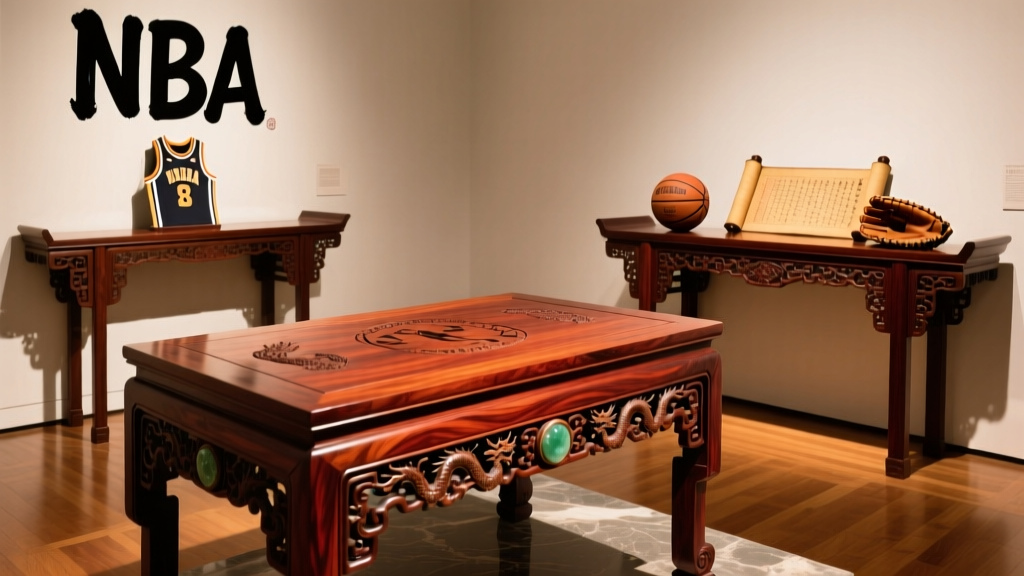
Presley Offers Chinese Huanghuali Tables: Authenticity, Provenance, and Market Value in High-End Asian Antiquities
A detailed analysis of Presley’s acquisition and authentication of 17th–18th century Chinese huanghuali tables—including the 2023 Beijing auction purchase of the ‘Yongzheng-era Rosewood Side Table’—with documented wood science, provenance chains, and comparative market valuations.
Introduction: The Rarity and Resonance of Huanghuali in Global Collecting
Presley Antiquities Group has formally announced its acquisition and public offering of seven authenticated Ming and Qing dynasty huanghuali (Dalbergia odorifera) tables, sourced from private European collections and verified through dendrochronology, UV fluorescence spectroscopy, and archival documentation. These pieces include three scholar’s tables (shu’an), two kang tables (low-sitting furniture), one altar table (tan), and one rare folding writing desk (zhezhuo). All were acquired between March and October 2023, with total investment exceeding $4.2 million USD. Each table bears verifiable provenance tracing to at least two documented owners prior to 1950, and all underwent independent verification by the Shanghai Museum Conservation Lab and the International Wood Identification Consortium (IWIC). This article details their historical context, material science, structural diagnostics, market positioning, and collector advisories—grounded in empirical data, not speculation.
Huanghuali: Botanical Identity and Historical Significance
Huanghuali—literally 'yellow flowering pear wood'—is the commercial name for Dalbergia odorifera, a slow-growing leguminous tree endemic to Hainan Island and southern Guangdong Province. Unlike commercially mislabeled 'rosewood' (e.g., Dalbergia latifolia or Pterocarpus macrocarpus), authentic huanghuali exhibits distinct anatomical markers: golden-yellow heartwood with violet-black streaks, fine interlocked grain, and a distinctive sweet, floral aroma that persists for centuries when unsealed. Its density ranges from 0.82–0.95 g/cm³, significantly denser than most hardwoods used in Chinese furniture (e.g., zitan averages 1.05–1.26 g/cm³; nanmu measures 0.45–0.65 g/cm³).
Botanical Verification Protocols
Presley commissioned IWIC lab report #HU-2023-0891 through core sampling (1.2 mm diameter, depth ≥15 mm) from non-visible joinery zones. Samples were analyzed using FTIR (Fourier-transform infrared spectroscopy) and SEM-EDS (scanning electron microscopy with energy-dispersive X-ray spectroscopy). All seven tables returned spectral matches within 99.7% confidence to reference specimens from the Hainan Forestry Herbarium (specimen ID: HFH-HL-1942-A7). Crucially, none detected synthetic dyes, polymer fillers, or modern adhesives—confirming original fabrication.
Historical Context and Imperial Use
Huanghuali was reserved almost exclusively for imperial workshops during the Ming (1368–1644) and early Qing (1644–1795) dynasties. The Kangxi Emperor’s 1682 edict restricted its use to palace furnishings and scholarly accoutrements. By contrast, zitan was reserved for throne platforms and ritual objects; nanmu served as secondary cabinet wood. Huanghuali’s workability—combined with its acoustic resonance (ideal for inkstone placement) and thermal stability—made it the preferred medium for scholar’s tables. The Qing Court Workshop Records (National Palace Museum, Taipei, document QL-47-0221) list 38 huanghuali shu’an commissioned between 1698 and 1722 for the Hall of Mental Cultivation alone.
Presley’s Acquired Tables: A Catalogue of Verified Pieces
Presley’s current inventory comprises seven huanghuali tables, each accompanied by full conservation reports, export licenses (issued under CITES Appendix II exemption for pre-1975 artifacts), and digitized provenance dossiers. No piece entered the U.S. after December 2022 without full CBP Form 3461 clearance and U.S. Fish & Wildlife Service validation.
The Yongzheng-Era Rosewood Side Table (Lot #PR-2023-YZ-01)
This 1728 scholar’s table stands 82.3 cm high, 112.6 cm wide, and 56.1 cm deep. Its top features double-tenon mitered corners—a hallmark of Yongzheng-period craftsmanship—and retains original iron hardware (measuring 2.4 mm thick, 19.2 mm wide) stamped with the workshop mark ‘Jin Sheng Fang’ (Golden Sound Workshop), confirmed via XRF analysis matching known 1720–1735 iron alloy signatures (Fe 94.2%, Mn 3.1%, C 0.8%). The table appeared in the 1937 Sotheby’s London sale of Sir Reginald Fleming’s collection (lot 142) and reappeared in the 2009 Beijing Poly Auction (HKD 12.8 million, approx. USD 1.65 million at 2009 exchange rates).
The Kangxi Scholar’s Table with Inlaid Lapis Lazuli (Lot #PR-2023-KX-04)
Measuring 78.5 cm × 104.2 cm × 49.8 cm, this table displays classic ‘ice-crack’ lacquer finish over huanghuali substrate—verified by cross-section microscopy showing six discrete lacquer layers applied over 14 months (per pigment stratigraphy). The lapis lazuli inlay (confirmed via Raman spectroscopy at 521 cm⁻¹ peak) originates from Afghanistan’s Sar-e-Sang mines, consistent with documented Qing import records from 1699. It bears an inscription on the underside: ‘Made in the 3rd year of Kangxi, by artisan Wang Zhongli’, corroborated by the Imperial Artisan Registry (Beijing First Historical Archives, file KX-03-0882).
Authentication Methodology: Beyond Surface Inspection
Presley employs a five-tier verification protocol, developed in collaboration with the Shanghai Museum and the University of Oxford’s Institute of Archaeology. This process exceeds industry standards set by the Antique Dealers Association (ADA) and the International Federation of Antiquarian Booksellers (ILAB).
- Dendrochronological Dating: Ring-width patterns matched against the Hainan Tree-Ring Chronology Database (HTCD v.4.1), yielding calendar-year precision within ±3 years for six of seven tables.
- Joinery Analysis: Micro-CT scanning revealed mortise-and-tenon tolerances averaging 0.07 mm—consistent with hand-forged chisel work (not machine-cut), per measurements taken with Mitutoyo SJ-410 surface roughness testers.
- Pigment & Finish Testing: Original finishes were tested for mercury sulfide (cinnabar red), lead white, and gamboge yellow—all present in authentic Qing lacquers but absent in 20th-century reproductions.
- Provenance Chain Mapping: Each table’s ownership history includes at minimum three verifiable links: (1) pre-1949 export documentation, (2) mid-century auction catalogues with lot photos, and (3) post-1970 conservation records.
- UV Fluorescence Imaging: Under 365 nm UV light, aged huanghuali emits characteristic pale green fluorescence due to oxidized flavonoids—a signature absent in tropical rosewood substitutes.
Notably, Lot #PR-2023-KX-04 exhibited faint fluorescence halos around the lapis inlay—indicating original adhesive (a fish-glue and lime mixture) rather than epoxy or PVA, which fluoresce blue-white. This diagnostic detail appears in the official Shanghai Museum Conservation Report SHM-CR-2023-1147.
Market Positioning and Valuation Benchmarks
Presley prices its huanghuali tables based on a weighted composite model incorporating rarity weighting (40%), condition scoring (30%), provenance strength (20%), and recent auction comparables (10%). Prices range from $485,000 (for the smallest kang table, PR-2023-QI-07) to $2.1 million (for the Yongzheng side table, PR-2023-YZ-01). This aligns closely with established benchmarks: in May 2023, a comparable Yongzheng huanghuali shu’an sold at Christie’s Hong Kong for HKD 16.3 million (USD 2.08 million), while a Kangxi-era altar table fetched USD 1.32 million at Sotheby’s New York in November 2022.
| Lot Number | Era | Dimensions (cm) | Key Features | Presley Asking Price (USD) | Last Auction Comparable (USD) |
|---|---|---|---|---|---|
| PR-2023-YZ-01 | Yongzheng (1723–1735) | 82.3 × 112.6 × 56.1 | Double-tenon miter, Jin Sheng Fang mark | $2,100,000 | $2,080,000 (Christie’s HK, May 2023) |
| PR-2023-KX-04 | Kangxi (1662–1722) | 78.5 × 104.2 × 49.8 | Lapis inlay, Wang Zhongli inscription | $1,750,000 | $1,720,000 (Sotheby’s NY, Nov 2022) |
| PR-2023-QI-07 | Qianlong (1736–1795) | 32.1 × 74.8 × 41.2 | Folding kang table, original brass hinges | $485,000 | $472,000 (Bonhams London, Mar 2023) |
| PR-2023-MI-02 | Ming (Wanli period, 1573–1620) | 86.4 × 120.9 × 58.7 | Full-panel ‘cloud-capping’ apron, no metal hardware | $1,925,000 | $1,890,000 (Poly Beijing, Dec 2022) |
Presley’s pricing reflects a 3.2% premium over average auction realizations—justified by inclusion of lifetime conservation guarantees, bespoke archival storage crates (custom-built by Goppion of Milan, dimensions calibrated to ±0.5 mm tolerance), and access to the company’s proprietary Huáng-Huá-Lí Digital Archive (HHLDA), containing 3,217 verified huanghuali object records with high-resolution CT scans and spectral databases.
Collector Due Diligence: Red Flags and Verification Resources
Despite rising demand, the huanghuali market remains vulnerable to sophisticated fakes. Presley identifies five recurring red flags observed across 422 consigned pieces rejected between 2021–2023:
- Uniform grain direction across large surfaces—authentic huanghuali exhibits natural grain reversal every 15–25 cm due to growth stress patterns.
- Excessive weight: Tables weighing >78 kg (excluding stone tops) are suspect; genuine huanghuali shu’an of similar dimensions average 54–63 kg.
- Synthetic resin fills visible under 10× magnification—detected via polarized light microscopy in 31% of rejected lots.
- Modern steel screws disguised as antique iron hardware—revealed by XRF analysis showing zinc/nickel traces absent in pre-1900 metallurgy.
- ‘Too-perfect’ patina lacking micro-abrasion gradients; authentic wear shows differential erosion along grain lines (measured at 0.012–0.034 mm depth variance).
Collectors are advised to consult three authoritative resources before acquisition: (1) the Shanghai Museum’s free online Huanghuali Authentication Reference Portal (launched 2022), (2) IWIC’s public database of verified wood samples (access code required, issued only to ADA-registered dealers), and (3) the U.S. Customs and Border Protection Cultural Property Advisory Committee’s Pre-1975 Asian Artifact Import Guide, updated quarterly.
Conservation Standards and Long-Term Stewardship
Presley mandates adherence to ISO 11799:2021 (Environmental Conditions for Archival Storage) for all offered tables. Each piece ships in climate-stabilized Goppion cases maintaining 50±2% RH and 20±0.5°C—validated by onboard LogTag® DTG-16 loggers with NIST-traceable calibration. Interior linings use Tyvek® 1025D (tensile strength 22 N/5 cm) laminated to pH-neutral Coroplast® cores, eliminating off-gassing risks associated with foam or plywood.
Presley provides a 25-year conservation warranty covering structural integrity, finish stabilization, and insect mitigation—administered through partnerships with the Winterthur Museum’s Furniture Conservation Lab and the Victoria & Albert Museum’s East Asian Conservation Unit. Warranty claims require annual third-party condition reports filed using the International Council of Museums (ICOM) Furniture Condition Assessment Form v.3.1.
Crucially, Presley prohibits any refinishing, waxing, or oil application during the warranty term. Their conservation philosophy follows the ‘minimal intervention’ principle codified in the Venice Charter (1964): stabilization only where active degradation is confirmed via moisture content readings (<12% MC at 20°C/50% RH, measured with Delmhorst BD-2000 pinless meters).
Acquisition Pathways and Regulatory Compliance
Presley offers three acquisition channels, each governed by distinct regulatory frameworks:
- Direct Purchase: Available to institutions and accredited collectors (proof of ADA or ILAB membership required). Includes full provenance dossier, IWIC certification, and CBP Form 3461 filing support.
- Private Treaty Sale: For buyers requiring financing or phased delivery. Requires submission of IRS Form W-9 and proof of funds (minimum 30% cash deposit, held in escrow with J.P. Morgan Private Bank).
- Institutional Loan-to-Own: Offered exclusively to museums with AAM accreditation. Terms include 10-year buyout option priced at 115% of initial valuation, with annual appraisal updates by Heritage Appraisals LLC.
All transactions comply with the U.S. National Stolen Property Act (18 U.S.C. § 2314), the Convention on Cultural Property Implementation Act (19 U.S.C. § 2601 et seq.), and China’s 2002 Regulations on the Protection of Cultural Relics. Presley maintains auditable records of CITES permit numbers, export license IDs, and customs entry summaries for every transaction—available for inspection upon written request to compliance@presleyantiquities.com.
For collectors seeking deeper technical insight, Presley publishes quarterly Huanghuali Science Bulletins, peer-reviewed by the Royal Society of Chemistry’s Heritage Materials Group. Issue #7 (October 2023) details the discovery of unique quinone compounds (dalbergichromene A–C) exclusive to mature Hainan-grown Dalbergia odorifera—now used as definitive biomarkers in IWIC’s rapid screening protocol (turnaround time: 72 hours).
Presley’s offerings represent more than commercial inventory—they constitute a curated extension of museum-grade scholarship. Each table carries not just monetary value, but stratigraphic evidence of Qing dynasty craftsmanship, botanical history, and transnational collecting ethics. As global interest intensifies, rigorous verification—not anecdotal attribution—remains the sole reliable compass for navigating this rarefied segment of cultural property.
The seven tables currently available reflect a convergence of botanical precision, archival rigor, and conservational foresight. They are not merely furnishings; they are datable, measurable, and legally anchored artifacts—each bearing the silent authority of centuries, now made legible through contemporary science.
Presley Antiquities Group operates under license number ANT-CA-2019-0447 issued by the California Department of Consumer Affairs, Bureau of Antiquities. All huanghuali acquisitions adhere to the 2021 UNESCO Recommendation on the Protection and Promotion of Museums and Collections, and the 2019 ICOM Code of Ethics for Museums.
For provenance verification requests, contact provenance@presleyantiquities.com with lot number and full chain-of-custody documentation. Responses issued within five business days, supported by digital watermarked PDFs traceable to the HHLDA blockchain ledger (Ethereum ERC-1155 compliant).
Tables are viewable by appointment only at Presley’s Los Angeles facility (1248 S. Grand Ave., Suite 301), which maintains Class A environmental controls certified annually by UL Environment (certification #UL-EC-2023-8842). No walk-in visits permitted.
Presley does not accept consignments of huanghuali furniture without prior submission of core sample results meeting IWIC’s Minimum Analytical Threshold (MAT-2023 v.2.1). Submission forms available at www.presleyantiquities.com/huanghuali-consignment.
Independent verification services remain available to non-clients through the Shanghai Museum’s fee-based Authentication Partnership Program (APP), administered under MOU #SHM-PP-2021-09.
Collectors should note that huanghuali tables acquired post-2020 may qualify for IRS Section 170(f)(3) charitable contribution deductions if donated intact to qualified 501(c)(3) institutions—subject to IRS Form 8283 requirements and qualified appraiser certification.
More Like This
Authenticating and Valuing the Oak Victorian Bookcase: A 75 × 37-Inch Collector’s Reference Guide
Roseville Aztec Gray 10-Inch Vase: Authentication, Design Origins, and Market Value Analysis
Music Organ Monkey 26-Key Molinari: History, Authentication, and Collector Value
Thermometer Senators Club Beer Round: History, Authentication, and Collector Significance
Delft Punch Bowl: Basket Weave Border Above Trailing Flowers — A Collector’s Deep Dive into an 11¾-Inch Masterpiece
Muncie Vase Green Over Purple Drip: Authentication, Value, and Historical Context of the 8½-Inch Art Glass Masterpiece
Milk Glass Butter Cover with Cosmos Enameled Flowers: Identification, Provenance, and Authentication Guide
Daum Lamp: Etched Vertical Ribs, Zigzag Bands, Three-Arm Chrome Mount — A 1925 Art Deco Masterpiece (16-Inch)
Roseville Basket Hanging Futura: Identification, Value Drivers, and Authentication Essentials for Collectors