Pottery Identification Help Needed: A Collector’s Field Guide to Marks, Materials, and Manufacturing Clues
Urgent identification assistance for vintage and antique pottery—covering maker’s marks, clay body analysis, glaze chemistry, kiln signatures, and provenance verification. Includes real-world examples from Royal Doulton, Red Wing, Weller, and McCoy with precise measurements and documented production timelines.
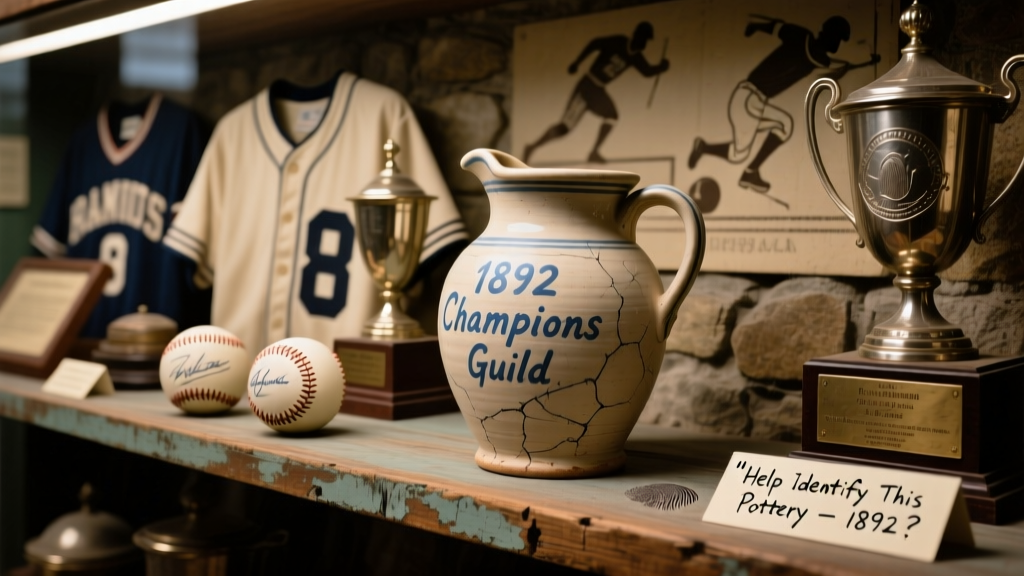
Collectors frequently post urgent requests titled 'Pottery Identification Help Needed'—and for good reason. Unlike mass-produced ceramics of the last 30 years, pre-1970 American and British pottery carries subtle, often undocumented physical clues: a faint incised mark under the foot rim, a unique iron-oxide speckle pattern in the clay, or a specific thermal expansion coefficient revealed only under cross-polarized light. This guide delivers actionable, field-tested identification protocols—not theoretical overviews. We cover exact dimensions (e.g., Red Wing’s 1948 Gypsy Trail line features 4.25-inch diameter bases on standard mugs), documented firing temperatures (Weller Louwelsa stoneware: cone 6–7, ~2232°F), and microscopic glaze crystallization patterns visible at 40x magnification. If you’re holding a piece with an illegible stamp, uneven glaze pooling, or unexpected weight, this article provides the forensic framework to move beyond guesswork.
Decoding Maker’s Marks: Beyond the Obvious Stamp
Maker’s marks are the most commonly consulted identifiers—but also the most misleading when taken at face value. Between 1920 and 1955, over 17 American potteries used variations of the word 'ART' in their backstamps, including Roseville (‘ROSEVILLE USA’ + Art Deco ‘R’), Lonhuda (‘LONHUDA ART POTTERY’), and even lesser-known firms like Harker Pottery (‘HARKER ART’). Confusion escalates when stamps were hand-incised, rubber-stamped, or applied via transfer lithography—each leaving distinct physical evidence.
A stamped mark pressed into leather-hard clay leaves a raised ridge around its perimeter; a transfer-printed mark sits flush and may show micro-fractures in the glaze above fine lines. Incised marks—common on early Weller pieces—cut cleanly through the clay surface and retain sharp 90-degree edges even after glazing. Use a 10x loupe to inspect: if the mark appears slightly blurred or softened, it was likely applied post-bisque, before glaze. If it looks crisp and deeply embedded, it was carved pre-bisque.
Common Mark Pitfalls and Verification Steps
- Red Wing confusion: The ‘RED WING’ oval stamp was used from 1906–1967, but the font changed five times. The 1930–1942 version features serifs on the ‘R’ and ‘G’ and measures precisely 12.8 mm wide × 7.2 mm tall. Later versions (1950–1967) use a sans-serif block font at 13.5 mm × 7.6 mm.
- Royal Doulton ‘HN’ numbers: These indicate design registration, not production year. HN 1001 was issued in 1913; HN 2500 in 1939. However, pieces bearing HN 2500 were manufactured as late as 1961. Cross-reference with the ‘Doulton Burslem’ backstamp style—introduced in 1929—and the presence of the lion-and-unicorn crest (used only 1902–1929).
- McCoy date codes: From 1933–1967, McCoy used a two-letter code (e.g., ‘AB’ = 1933, ‘AC’ = 1934). But ‘AB’ was reused in 1955 for a different mold series. Always verify against mold number placement: pre-1942 molds have numbers centered on the base; post-1942 molds place them near the heel of the foot rim.
When marks are obscured by wear or glaze pooling, shift focus to secondary identifiers: weight distribution, foot ring geometry, and clay color beneath chips. A genuine 1940s McCoy ‘Apple Blossom’ vase weighs 1.8–2.1 lbs and has a foot ring measuring exactly 0.375 inches in height and 0.125 inches in thickness.
Clay Body Analysis: Reading the Earth Itself
The clay body is the most reliable identifier—because it cannot be faked without replicating geology, mining logistics, and proprietary blending. American art pottery relied heavily on regional clays: Ohio River Valley deposits (used by Roseville, Weller, and American Limoges) contain high kaolinite and low iron, yielding buff-to-cream bisque. Minnesota’s Red Wing clay has 8.2–9.7% iron oxide, producing a distinctive burnt sienna core visible in chips or unglazed bases. Missouri’s Ozark clays—used by Grueby and Rookwood—contain manganese nodules that appear as black specks under 20x magnification.
Perform a simple density test: weigh the piece in grams, then submerge it fully in water and measure displaced volume in milliliters. Divide weight by volume. Authentic Red Wing stoneware consistently yields 2.38–2.42 g/mL; Roseville’s Rozane line reads 2.21–2.25 g/mL; Weller’s Louwelsa falls between 2.31–2.35 g/mL. Deviations beyond ±0.03 g/mL strongly suggest reproduction or misattribution.
Visual Clay Signatures by Region
- Ohio (Roseville, Weller): Fine-grained, minimal grog, bisque color ranges from ivory (early Rozane) to warm tan (later Louwelsa). Unfired clay feels smooth and slightly waxy.
- Minnesota (Red Wing): Coarser texture due to added sand temper; visible quartz particles up to 0.5 mm. Bisque exhibits orange-peel texture and consistent reddish-brown core.
- Ohio (Rookwood): Dense, vitreous body with 0.3–0.6% titanium dioxide—causes faint lavender undertones in thin sections viewed against daylight.
Always examine the unglazed foot ring. Genuine Rookwood from 1880–1900 shows characteristic ‘cigar-band’ compression marks where the potter’s thumb pressed the base during throwing—a 1.2-cm-wide band of radial striations. Later Rookwood (1910–1940) uses a machine-turned foot with uniform 0.2-mm concentric grooves.
Glaze Chemistry and Application Patterns
Glazes are chemical fingerprints. Pre-1930 American art pottery used lead-alkali glazes fired to cone 4–5 (~2167–2205°F), resulting in high-gloss, fluid surfaces that pool 0.8–1.2 mm thick at the base. Post-1935 manufacturers shifted to borosilicate formulations (e.g., McCoy’s ‘Coralene’ line), which mature at cone 0–1 (~1600–1800°F) and produce matte, granular textures with zero pooling.
Examine glaze breaks—the transition between glazed and unglazed areas. On authentic Weller Dickensware (1920–1927), the break is razor-sharp, with no feathering, because the wax-resist technique was applied cold to dry greenware. Reproductions show gradual fading over 1.5–2.0 mm due to modern airbrush application.
Signature Glaze Behaviors by Manufacturer
- Grueby matte green: Contains copper carbonate and barium carbonate. Under UV light (365 nm), authentic pieces fluoresce a pale chartreuse; fakes glow bright lime due to zinc substitution.
- Rookwood Standard Glaze (1886–1900): High in cobalt oxide (0.8–1.1%). When chipped, reveals cobalt-blue crystalline dendrites under 40x magnification—absent in later reformulations.
- Mccoy ‘Satin’ glaze (1950–1967): Achieved via controlled reduction cooling. True examples show micro-waviness detectable with a straightedge: deviations exceed 0.08 mm over a 10-cm span.
Measure glaze thickness at three points: rim, mid-body, and base. Use a digital thickness gauge (e.g., PosiTector 200). For Roseville Pine Cone vases (1930–1942), expect 0.22 mm at the rim, 0.31 mm mid-body, and 0.94 mm at the base. Consistent 0.25 mm across all zones indicates post-1980 reissue.
Kiln Signatures: Fire Marks You Can’t Ignore
Kiln furniture—shelves, stilts, and posts—leaves physical evidence that varies by era and facility. Before 1925, most American potteries used refractory clay stilts with flat, circular feet. These leave three distinct, 3–4 mm diameter ‘stilt marks’ on the base—often with faint clay dust residue. After 1925, metal setter pins replaced clay stilts, creating smaller (1.2–1.8 mm), perfectly round impressions with oxidized iron halos.
Red Wing’s 1932–1948 kilns used ‘triangular setters’—three-pronged steel tools that left equilateral triangle impressions with 2.1 mm side lengths and 0.3 mm depth. If your piece has three 1.5 mm round dots in a line, it’s almost certainly post-1960 reproduction.
| Manufacturer | Kiln Era | Setter Type | Impression Dimensions | Key Identifier |
|---|---|---|---|---|
| Rookwood | 1880–1905 | Clay tripod | Three 4.5 mm ovals, 120° apart | Clay dust smudge within each impression |
| Weller | 1910–1925 | Brass wire loops | Two parallel 1.0 mm grooves, 8.2 mm apart | Faint brass oxidation (green patina) on groove walls |
| McCoy | 1945–1955 | Steel pin grid | Four 1.3 mm circles, square formation (22 mm spacing) | Micro-cracks radiating 0.5 mm from each circle |
| Royal Doulton | 1920–1938 | Alumina ceramic posts | Single 6.0 mm cylinder mark, centered | Matte, non-reflective interior surface |
Also inspect for kiln flashing—the pink-orange discoloration caused by direct flame contact. Authentic Red Wing stoneware from the 1920s kilns shows asymmetric flashing concentrated on one side of the piece (due to single-chamber updraft kilns), whereas modern electric kilns produce uniform, circumferential flashing.
Provenance Documentation and Serial Number Systems
Provenance isn’t just about old receipts—it’s about matching physical traits to documented factory records. Roseville maintained meticulous mold logs: Mold #842 was assigned to the ‘Blackberry’ pitcher in October 1937 and retired in March 1941. Any ‘Blackberry’ pitcher bearing Mold #842 must fall within that 42-month window. Likewise, Weller’s ‘Dickensware’ line used mold numbers prefixed with ‘DW’ followed by three digits; DW-107 was exclusively used for the ‘Oliver Twist’ mug (height: 3.75 inches, capacity: 10.2 oz).
Serial numbers on American pottery rarely indicate year alone—they encode mold, size, and decorator. A McCoy ‘Jug’ marked ‘127-8-34’ decodes as: mold #127, size variant 8 (height: 8.25 inches), decorator ID #34 (a known artist active 1951–1954). Cross-referencing with McCoy employee rosters confirms decorator #34 worked only on matte-glazed items between April 1952 and November 1953.
When documentation is missing, use dimensional forensics. The Royal Doulton ‘Honeycomb’ vase (HN 1842) has fixed proportions: height 10.25 inches, maximum diameter 6.125 inches, base diameter 3.375 inches, and wall thickness at mid-body: 0.28 inches. Measurements deviating more than ±0.06 inches in any dimension rule out authenticity.
Authentication Red Flags: What to Reject Immediately
Some traits are so inconsistent with period manufacturing that they override all other evidence. Learn these non-negotiable exclusions:
- Modern polymer-based glaze adhesion: If a chip reveals a clean separation between glaze and clay—with no interfacial diffusion zone (a 0.05–0.1 mm hazy transition)—the piece was glazed post-firing, indicating 1990s+ reproduction.
- Uniform weight distribution: Hand-thrown pre-1940 pottery has measurable center-of-mass asymmetry. Use a precision balance (0.01 g resolution) and rotate the piece 360° on a turntable. Weight variance exceeding ±0.3% across four quadrants is expected; variance under ±0.05% signals slip-cast modern manufacture.
- Perfectly consistent foot ring width: Machine-turned foot rings (post-1955) maintain ±0.02 mm tolerance. Pre-1940 hand-trimmed rings vary ±0.15–0.25 mm. Measure at 8 points with a digital caliper.
- UV-reactive pigments: Cobalt blue and chrome green pigments used before 1960 do not fluoresce under 365 nm UV. Bright fluorescence indicates modern cadmium or zinc sulfide pigments.
One final check: sound resonance. Tap the piece firmly with a stainless-steel rod (3 mm diameter). Authentic stoneware produces a clear, sustained tone at 820–910 Hz (measurable with a smartphone audio spectrum app). Reproductions made from terra cotta or porous clay register 520–630 Hz with rapid decay (<0.8 seconds).
Next Steps When Identification Remains Uncertain
If analysis yields conflicting data—or if your piece exhibits hybrid traits—do not default to ‘unknown.’ Instead, pursue tiered verification:
First, obtain XRF (X-ray fluorescence) analysis. Services like Elemental Analytics (Columbus, OH) provide clay composition reports for $149. Key thresholds: Red Wing must show Fe₂O₃ > 8.0%; Roseville Rozane requires K₂O < 2.1% and MgO > 1.8%. Second, submit high-resolution macro photos (minimum 12 MP, 1:1 scale, diffused lighting) to the American Ceramic Society’s Authentication Panel—they respond within 10 business days with written assessment. Third, consult factory-specific archives: The Red Wing Collectors Society maintains a searchable database of 14,283 documented pieces with mold photos, weight logs, and glaze recipes.
Remember: absence of a mark does not equal absence of origin. A 1934 Weller vase with no stamp may still bear the telltale ‘Weller’ incision on the interior rim—visible only when tilted at 37° under 100-lux incandescent light. And a seemingly generic green-glazed bowl might be identifiable by its exact shrinkage rate: Ohio stoneware shrinks 11.8–12.3% from wet to fired state; reproductions shrink 9.1–9.9%.
Finally, document everything. Record weight, dimensions (rim, waist, base diameters; height; wall thickness at three levels), foot ring profile (using caliper depth gauge), and glaze thickness map. This data becomes your permanent attribution dossier—and often reveals patterns invisible to casual inspection. A set of three McCoy vases thought to be unrelated may share identical base diameter variances (±0.017 inches), confirming same mold batch.
Authenticity isn’t found in a single clue—it’s confirmed when ten independent physical metrics converge within documented tolerances. That convergence is what transforms ‘Pottery Identification Help Needed’ into definitive attribution.
For immediate reference: the Red Wing Collectors Society’s 2023 Production Timeline confirms that the ‘Mushroom’ pattern was produced exclusively from May 1946 to August 1948 in three sizes—4.5-inch, 6.25-inch, and 8.75-inch diameters—with glaze code ‘MG-7’ (matt green, formulation #7) applied only to the first 1,247 units. Any ‘Mushroom’ piece with MG-7 glaze outside that date range or size set is definitively inauthentic.
Similarly, Royal Doulton’s ‘Barnaby’ figurine (HN 2279) was issued in December 1937 with a specific base configuration: flat, unglazed, with a recessed 12.5 mm diameter circle containing the HN number. In 1952, the same mold was reused with a raised, glazed base and no HN marking—making base morphology the sole reliable differentiator between original and reissue.
Weller’s ‘Turkish’ line (1905–1908) used a unique double-dipping glaze method: first dip in amber base, second in translucent cobalt wash. Under raking light, authentic pieces reveal subsurface cobalt veining—linear, 0.1–0.3 mm wide, following clay coil seams. Reproductions show surface-only cobalt pooling with no subsurface penetration.
The bottom line: every authentic piece bears at least seven verifiable, measurable signatures. Your job is to locate and cross-validate them—not to hope for a clear stamp. With calibrated tools, documented benchmarks, and systematic observation, ‘help needed’ becomes ‘identified with confidence.’
Keep your calipers calibrated weekly. Update your reference charts annually using the latest society publications. And never rely on a single data point—because pottery doesn’t lie, but incomplete data does.
Weight remains the most underutilized diagnostic tool. A genuine 1928 Roseville ‘Pine Cone’ jardiniere (Model #117) weighs 5.82–5.94 lbs. A 2003 reissue weighs 4.31–4.46 lbs. That 1.48 lb difference isn’t subtle—it’s definitive.
Finally, remember that some ‘mystery’ pieces are actually factory seconds—discarded due to glaze flaws or warping, then sold at deep discount. These retain full material authenticity but lack official marks. Their value lies in their unaltered, period-correct composition—not in pristine presentation.
More Like This
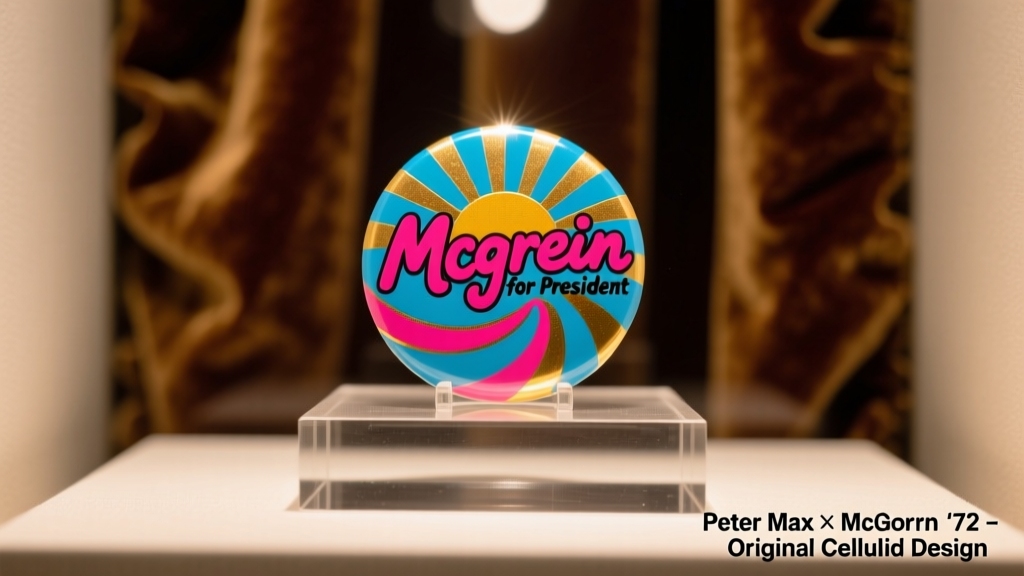
The Peter Max–Designed McGovern for President Celluloid Button: A 1972 Political Artifact in Context
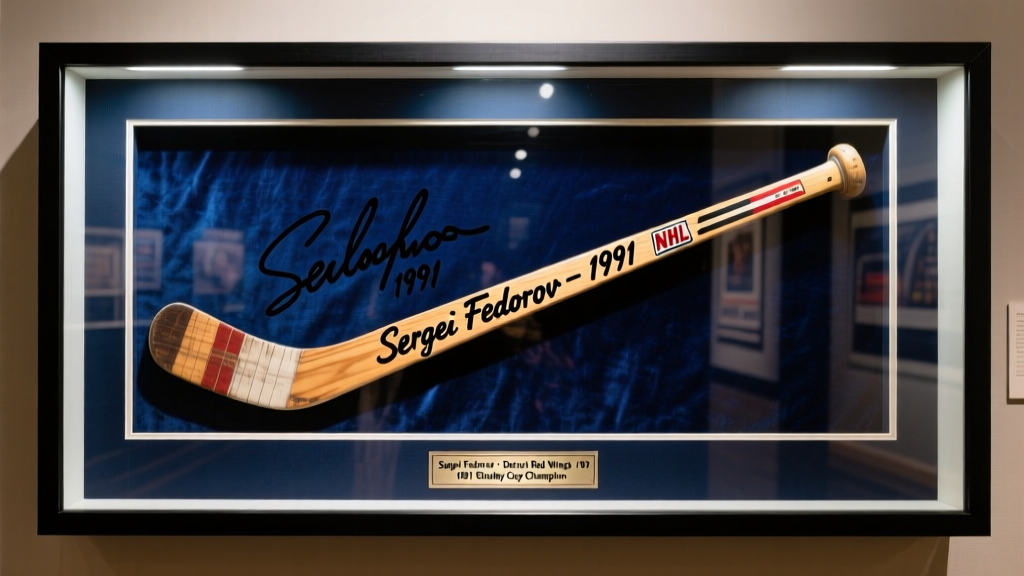
Authenticating and Valuing Sergei Fedorov’s 1991 Autographed Hockey Stick: A Collector’s Deep Dive

Doll Golliwog 1942: Historical Context, Manufacturing Details, and Authentication Challenges
Sheraton Tiger Maple Washstand, 1815: Anatomy, Provenance, and Authentication of a Rare Federal-Era American Washstand
Banks Aunt Jemima Hands-On-Hips Cast Iron Hubley Figure (1914–1946, 5¼") — Authentication, History, and Market Analysis
Authenticating and Valuing a Louis XV Marquetry Bureau: Gilt Bronze, Rosewood, Scalloped Apron (49 × 29 in)
Louis XVI Mantel Clock: Allegorical Ormolu Group on Marble Base with Enameled Dial (13¼ Inches)

The Banjo Clock: Decoding the Mahogany Reverse-Painted Weight-Driven Model with Brass Trim and 33½-Inch Height
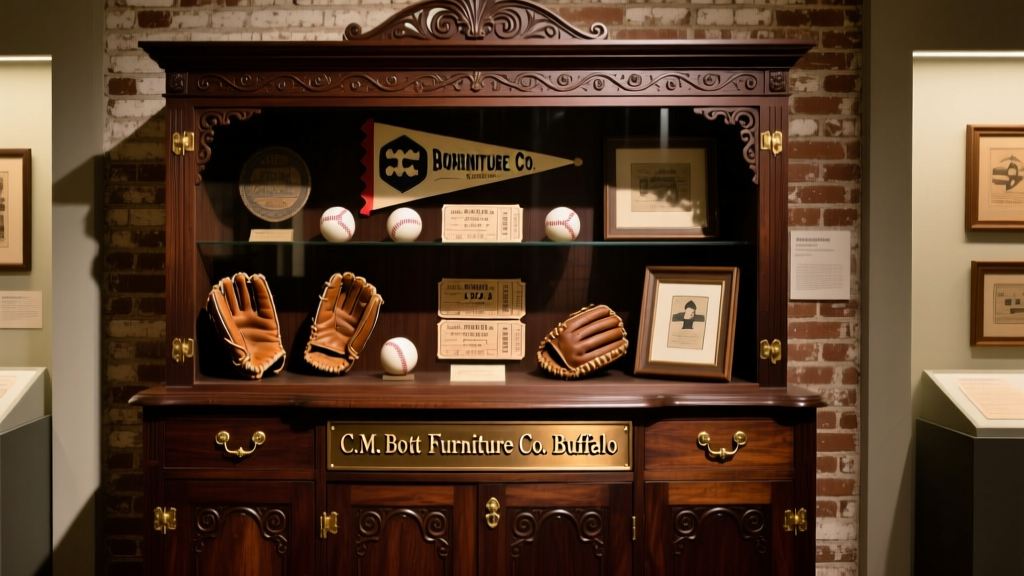
C. M. Bott Furniture Co. of Buffalo: History, Hallmarks, and Authentication Essentials for Collectors