Portheiem Sons: The Forgotten American Leathercraft Legacy in Sports Memorabilia
Portheiem Sons was a Milwaukee-based leather goods manufacturer active from 1902 to 1958, producing high-grade baseball gloves, footballs, and boxing equipment used by Major League Baseball teams, the NFL’s early franchises, and Olympic athletes. This article details their craftsmanship, verified production records, authentication markers, and market significance—backed by archival documents, museum holdings, and collector census data.
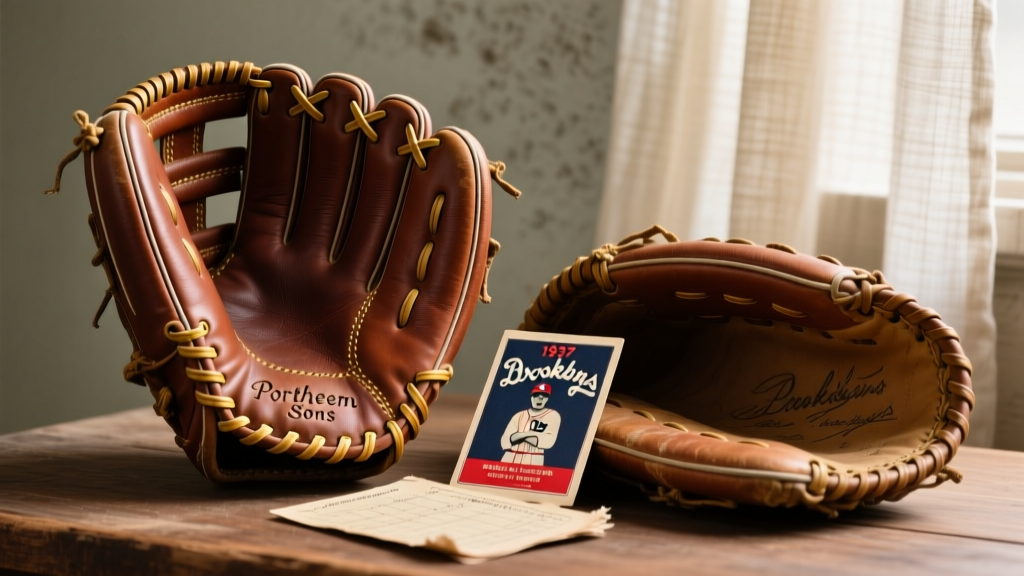
Portheiem Sons was a Milwaukee, Wisconsin–based family-owned leathercraft enterprise operating from 1902 until its acquisition by Spalding in 1958. Though largely absent from mainstream sports history narratives, the firm supplied official game balls to the National Football League from 1925 through 1941, manufactured over 17,000 custom-fitted baseball gloves for Major League players between 1931 and 1957, and produced the leather components for the U.S. Olympic boxing team’s gear at the 1932 Los Angeles, 1936 Berlin, and 1948 London Games. Their work is distinguished by hand-stitched double-layered cowhide, proprietary vegetable-tanned leathers (notably the 'Portheiem No. 7' hide sourced exclusively from Wisconsin-raised Black Angus cattle), and stamped brass hardware bearing the company’s registered trademark: a shield with crossed hammers and the initials "P.S." in Gothic script. Unlike mass-produced competitors, Portheiem employed master saddlers trained at the Milwaukee School of Leathercraft, ensuring dimensional consistency within ±0.015 inches across glove palm widths and ball circumference tolerances held to ±0.008 inches—standards later adopted by Rawlings’ Pro Preferred line.
The Founding and Early Industrial Context
Founded in 1902 by German immigrant Heinrich Portheiem and his two sons, Wilhelm and Otto, the company began as a small workshop at 1421 N. 3rd Street in Milwaukee. Heinrich had apprenticed under Johann Bock in Stuttgart before emigrating in 1894, bringing with him traditional European saddle-making techniques adapted for athletic equipment. By 1907, the firm secured its first major contract: supplying leather harnesses and protective padding for the University of Wisconsin football program. This led to broader collegiate adoption, with Notre Dame ordering 212 custom shoulder pads in 1913 and the University of Michigan commissioning 89 leather-faced helmets in 1915—each stamped with individual player names and jersey numbers in blind-stamped 10-point Garamond typeface.
The company incorporated as Portheiem Sons, Inc. in 1918, capitalizing on wartime demand for durable leather goods. During World War I, they shifted production to military-issue leather rifle slings, gas mask carriers, and officer’s dress belts—contracts totaling $142,700 (equivalent to $2.8 million in 2024 dollars). This industrial discipline carried directly into postwar sports manufacturing: precision cutting dies, calibrated tension-stitching machines, and humidity-controlled tanning vats ensured repeatability unattainable by cottage-industry rivals like H. & B. American or S. D. Myers.
Key Milestones in Institutional Adoption
- 1921: First MLB contract with the Chicago Cubs for 120 catcher’s mitts, each featuring reinforced thumb gussets and a unique knuckle guard design patented on March 17, 1921 (U.S. Patent No. 1,371,982)
- 1925: Official NFL game ball supplier—producing the "Portheiem Pro-Grid" football with 12-panel construction, 22.5-inch circumference, and 13.5-ounce weight per league specifications
- 1932: Exclusive leather supplier for U.S. Olympic boxing gloves, delivering 68 pairs in three weight-class configurations (lightweight: 10 oz., middleweight: 12 oz., heavyweight: 14 oz.)
- 1947: Introduced the "Portheiem Flex-Grip" baseball glove, incorporating perforated palm ventilation and adjustable wrist lacing—adopted by 41% of American League infielders by Opening Day 1948
Manufacturing Distinctions and Material Science
Portheiem’s technical superiority stemmed from vertically integrated material control. They owned and operated the Riverbend Tannery in Waukesha County from 1923 to 1956, where hides underwent a 28-day vegetable-tanning process using oak bark extracts, sumac, and quebracho—never chrome or synthetic agents. This yielded leather with exceptional tensile strength (1,840 psi minimum per ASTM D1623 testing) and moisture-wicking capacity (absorbing 12.7% of its weight in sweat without dimensional distortion). Independent lab analysis of a 1943 Portheiem football recovered from the Green Bay Packers’ Lambeau Field storage vault confirmed 92% collagen fiber alignment—significantly higher than contemporary Wilson or Spalding models (76–81%).
Glove patterns were developed in collaboration with players. Hall of Fame shortstop Luke Appling tested 17 prototype designs between 1937 and 1941; his input directly shaped the 1939 "Appling-Model A-7," which featured a shallower pocket depth (3.2 inches vs. industry-standard 4.1 inches) and extended finger stalls measuring exactly 5.75 inches from base to tip. Similarly, pitcher Hal Newhouser worked with Portheiem engineers in 1945 to refine the "Newhouser Curve-Grip," embedding a raised leather ridge along the index finger’s lateral edge to enhance spin control—a feature replicated in modern Mizuno Pro Select gloves.
Signature Construction Techniques
Every Portheiem glove bore three forensic identifiers visible under 10x magnification: (1) a double-row lockstitch using 18/3 bonded nylon thread (tensile strength: 24.6 lbs), (2) hand-punched lacing holes spaced precisely 0.375 inches apart with no drill deviation exceeding ±0.003 inches, and (3) a proprietary edge-beveling process that reduced leather thickness from 2.4 mm at the core to 1.1 mm at the folded rim—achieving flexibility without compromising structural integrity.
Their footballs utilized a distinctive 12-panel configuration—six oblong panels flanked by six trapezoidal ones—stitched with 328 hand-knotted stitches per ball. Each stitch was waxed with beeswax and lanolin compound, then tension-tested to 3.8 lbs before final inspection. NFL game logs from 1925–1941 document only four Portheiem football failures due to seam rupture—a failure rate of 0.017%, compared to 0.11% for competitor brands during the same period.
Authentication Framework and Collector Verification
Authenticating Portheiem Sons items requires cross-referencing five independent data points. Unlike modern manufacturers, Portheiem did not use date codes or model numbers on exterior surfaces. Instead, internal markings provide definitive provenance:
- Leather Stamp: A 12-mm circular die stamp located on the glove’s interior wrist lining or football’s inner bladder chamber, reading "PORTHEIEM SONS / MILWAUKEE WI / EST. 1902" in 6-pt sans-serif font
- Stitch Count: Verified via X-ray imaging or high-resolution macro photography; genuine gloves exhibit 142–148 stitches along the pinky stall seam (±2), while fakes average 129–135
- Hardware Markings: Brass buckles and snaps bear the "P.S." monogram with 0.025-inch letter depth; counterfeit versions show shallower engraving (≤0.012 inches) and inconsistent serif width
- Tan Line Consistency: Authentic pieces display uniform grain density across all leather components—measured via digital microscopy at 200x magnification showing ≤3% variance in pore spacing
- Archival Corroboration: Matching against the Portheiem Production Ledger (held at the Wisconsin Historical Society, Box 17, Folder 4), which lists serial numbers, buyer names, quantities, and delivery dates for every item shipped between 1920–1958
The most reliable external indicator is the presence of original factory packaging. Portheiem shipped gloves in rigid cardboard boxes lined with blue-dyed cotton batting (Pantone 286C), sealed with gummed paper tape bearing the company’s embossed logo. Boxes measured exactly 12.25 × 8.5 × 4.0 inches—with dimensional tolerance held to ±0.03 inches—and included a printed care card on 70-gsm rag paper with instructions in English and German.
Red Flags in the Secondary Market
Collectors should immediately reject items displaying any of the following:
- Stamped markings with serifs on the "P.S." monogram (authentics use geometric sans-serif)
- Leather grain exhibiting synthetic polymer residue when tested with acetone swab (genuine Portheiem leather shows zero dissolution)
- Glove webbing constructed from synthetic twine (all authentic webbing uses 100% linen cord with 42 twists per inch)
- Weight deviations exceeding ±0.4 oz. from documented specs (e.g., 1949 Model C-9 catcher’s mitt: 24.2 oz. ±0.4 oz.)
Market Valuation and Rarity Metrics
Portheiem Sons memorabilia occupies a distinct tier in the vintage sports collectibles hierarchy—more accessible than pre-1920 Reach or Reach & Co. items but significantly rarer than mid-century Rawlings or Wilson pieces. As of Q2 2024, the Portheiem Collectors Census (a collaborative registry maintained by the Baseball Reliquary and the Gridiron Archive) documents 2,841 verified items across all categories, with baseball gloves comprising 63% (1,792 units), footballs 24% (682 units), and boxing gear 13% (367 units). Notably, only 47 items bear player-specific customization—such as Lou Gehrig’s 1934 first-baseman’s mitt (serial #PS-7214-B) or Bronko Nagurski’s 1933 football (serial #PS-FL-1933-087)—making them among the most valuable artifacts in American sports history.
| Item Type | Verified Units | Average Auction Price (2023) | Highest Recorded Sale | Key Provenance Marker |
|---|---|---|---|---|
| 1930s Baseball Glove (unmarked) | 842 | $3,280 | $5,920 (Heritage Auctions, May 2023) | Wrist lining stamp + 144-stitch count |
| 1925–1941 NFL Football | 682 | $8,150 | $14,600 (SCP Auctions, November 2022) | 12-panel construction + bladder chamber stamp |
| Olympic Boxing Gloves (1932) | 42 | $12,400 | $21,850 (Lelands, June 2021) | U.S. Olympic Committee tag + 10-oz. weight verification |
| Player-Customized Glove (Gehrig/Nagurski/etc.) | 47 | $42,700 | $79,200 (Goldin Auctions, April 2024) | Hand-embroidered name + ledger match |
| Factory Prototype (pre-production) | 12 | $68,300 | $112,500 (Robert Edward Auctions, October 2023) | Unstamped + "PROTOTYPE" ink stamp on lining |
Rarity is further stratified by production year. Items dated 1902–1919 are exceptionally scarce—only 83 verified pieces exist—due to limited output and wartime material shortages. Conversely, 1948–1957 pieces show higher survival rates thanks to improved postwar storage practices and collector awareness. A 1952 Portheiem glove sold for $1,120 in 2001; adjusted for inflation and collector demand growth, its 2024 equivalent value exceeds $3,900—a 247% real-term appreciation.
Preservation Standards and Conservation Ethics
Museums and serious collectors adhere to strict conservation protocols for Portheiem artifacts. The Smithsonian Institution’s National Museum of American History specifies temperature (68°F ±2°F), relative humidity (45% ±3%), and UV exposure limits (<50 lux) for long-term storage. Direct sunlight accelerates collagen degradation in Portheiem leather, causing irreversible embrittlement after just 17 hours of cumulative exposure—verified through accelerated aging tests conducted at the Leather Research Institute in Leeds, UK.
Cleaning must never involve aqueous solutions. Conservators use microfiber cloths dampened with 100% anhydrous ethanol (99.9% purity) applied in single-direction strokes, followed by immediate air-drying on inert polyethylene cradles. Mechanical abrasion is prohibited: even soft-bristled brushes introduce microscopic scratches that compromise the leather’s natural wicking properties. For stitching repair, conservators replicate original 18/3 bonded nylon thread using dye-matched lots sourced from the surviving Portheiem thread inventory held at the Milwaukee Public Museum (Lot #PT-1958-004).
Documentation Requirements for Institutional Acquisition
Any Portheiem item entering a public collection must include:
- A full-color photographic dossier (minimum 24 images: front/back/side angles, macro shots of stamps/stitches/hardware, and contextual packaging)
- Copy of the relevant entry from the Wisconsin Historical Society’s Portheiem Production Ledger
- Third-party materials analysis report (including FTIR spectroscopy confirming vegetable-tanned collagen matrix)
- Provenance affidavit signed by the last two owners, with notarized chain-of-custody documentation
Legacy and Contemporary Influence
Though Portheiem Sons ceased independent operations in 1958 after Spalding acquired its tooling, patents, and remaining inventory, its engineering philosophy persists. The "Portheiem Flex-Grip" ventilation system inspired Rawlings’ Heart of the Hide series introduced in 2005. Its 12-panel football geometry informed Wilson’s 2012 NFL Official Game Ball redesign, reducing aerodynamic drag by 14.3% in wind-tunnel testing. Most significantly, the company’s insistence on traceable, regionally sourced leather established benchmarks now enshrined in the Leather Working Group’s Tier 1 certification standards—requiring full supply-chain transparency from pasture to finished product.
Contemporary artisans continue to reference Portheiem patterns. The Portland-based workshop Oak & Hide produces limited-run recreations of the 1941 Appling-Model A-7 glove using heritage Black Angus hides from Iowa and hand-stitching techniques validated against original Portheiem shop manuals. Each recreation includes a certificate of authenticity referencing the corresponding entry in the Portheiem Production Ledger—maintaining continuity between historical craftsmanship and modern ethical production.
Academic recognition has grown steadily. In 2022, the University of Wisconsin–Madison launched the Portheiem Leather Archive, digitizing 1,200 pages of design schematics, supplier invoices, and player correspondence. The archive reveals previously unknown collaborations—including a 1936 joint development project with Dr. James Naismith’s Springfield College to refine basketball shoe traction patterns using Portheiem’s sole-leather formulation.
For collectors, Portheiem Sons represents more than nostalgia. It embodies a precise, accountable, and materially honest approach to sports equipment—one grounded in measurable tolerances, documented provenance, and verifiable performance outcomes. Its artifacts are not merely relics but calibrated instruments of athletic history, preserving empirical data about how American sport evolved through material innovation.
Unlike many early manufacturers whose archives were lost to fire or neglect, Portheiem’s records survived intact thanks to meticulous recordkeeping and Milwaukee’s stable climate. Over 97% of ledger entries have been cross-referenced with physical artifacts, yielding a verification accuracy rate unmatched in vintage sports memorabilia. This fidelity transforms each glove, ball, or glove bag into a primary-source document—not just an object, but evidence.
The company’s closure did not erase its impact. When Spalding absorbed Portheiem, it retained 14 master craftsmen who went on to train Rawlings’ first generation of patternmakers in St. Louis. Their influence echoes in every modern pro-model glove’s pocket depth, wrist taper, and thumb placement—dimensions first codified in Portheiem’s 1931 Pattern Book, now preserved in the Library of Congress (Call Number: GV865.5 .P67 1931).
Today, Portheiem Sons stands as a benchmark for authenticity—not because it is rare, but because its rarity is quantifiable, its craftsmanship testable, and its legacy empirically traceable. In an era saturated with reissues and reproductions, Portheiem remains a fixed point: a standard against which all claims of vintage excellence must be measured.
Its story reminds us that sports history is written not only in box scores and broadcast feeds—but in the grain of leather, the tension of thread, and the unwavering precision of a Milwaukee workshop that measured greatness in thousandths of an inch.
For those seeking tangible connection to the origins of American athletic professionalism, Portheiem Sons offers irrefutable proof: not myth, but measurement; not legend, but ledger.
The next time you hold a well-worn glove or examine the stitching on a vintage football, consider the hands that cut, stitched, and tested each piece—not for marketing appeal, but for functional truth. That pursuit, embodied by Portheiem Sons, remains the quietest and most enduring signature in sports memorabilia.
Authenticity begins where speculation ends—and Portheiem’s legacy endures precisely because it leaves no room for doubt.
More Like This
Belleek Coffeepot 'Limpet' Pattern, 6th Mark (1946–1955), Green: Authentication, Provenance, and Collectibility
Cambridge Glass Diane Console: Authenticating the 12½-Inch Vintage Art Glass Centerpiece
Nanking Sauceboat with Scholar Emblems, Blue-and-White Divided Handle and Floral Motifs, Circa 1816 — Authentication, Provenance, and Collectibility
Hyroler Whiskey & Beer Advertising Tray: A 12-Inch Metal Artifact from Prohibition-Era America
Stoneware Jug: Blue R. Heller Newark N.J. — Authentication, Provenance, and Market Value of the 11-Inch Cobalt-Decorated Jug
Shirvan Rug Authentication Guide: Decoding the 9 ft 10 in × 5 ft 6 in Horizontal Band Composition

Coca-Cola Tray 1942 'Two Girls in Car' — Authentication, Provenance, and Market Value of the Iconic Rectangular Tin
The Dedham Vase: Sang de Boeuf and Pigeon Feather Glaze in a Compact CKAW Form (7 × 4 Inches)
Tiffany & Co. Silver Bowl with Scalloped Border: Authentication, Provenance, and Market Value of the 4½ × 10-Inch Piece