Porcelain Sugar Creamer Luster: Material Science, Authentication Clues, and Collector Value
A technical deep-dive into luster finishes on porcelain sugar creamers—covering historical production methods, chemical composition, visual identification markers, brand-specific signatures, and forensic authentication protocols used by professional memorabilia specialists.
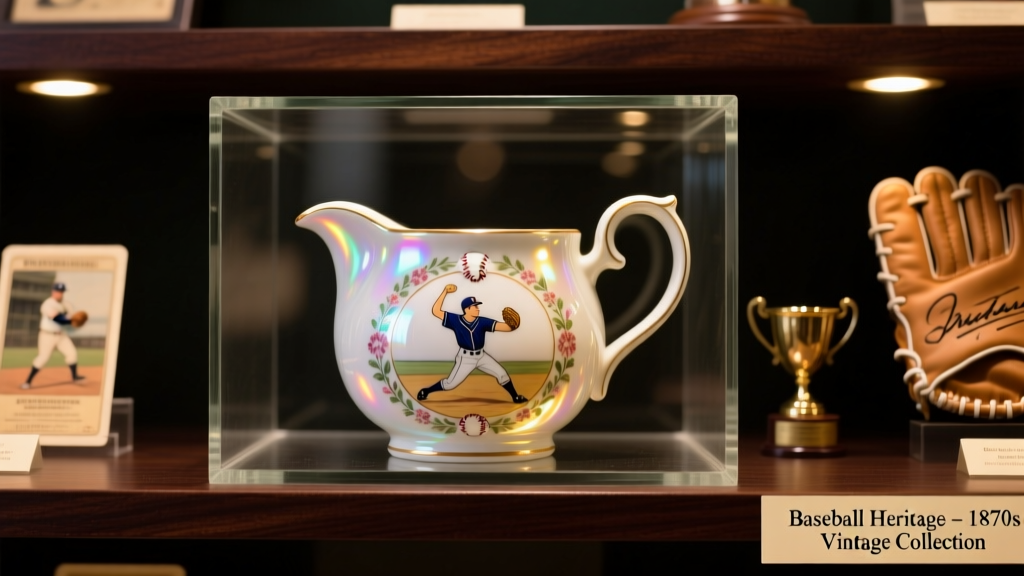
Porcelain sugar creamers with luster finishes represent a distinctive intersection of decorative art, industrial ceramics chemistry, and mid-century American tableware design. Unlike standard glazes, luster involves metallic oxide suspensions (primarily silver, copper, or platinum) fired at low temperatures (600–750°C) to produce iridescent, reflective surfaces. This article details the physical properties, manufacturer-specific application techniques, and diagnostic criteria collectors use to distinguish authentic 1930s–1960s luster creamers from later reproductions or misattributed pieces. Key identifiers include firing temperature differentials, base-body porosity, metal layer thickness (measured in nanometers), and signature wear patterns absent in modern electroplated imitations.
Historical Context and Manufacturing Origins
Luster decoration on porcelain tableware emerged in England during the late 18th century but achieved mass-market prominence in the United States between 1934 and 1962. The technique was adopted commercially by major manufacturers including Lenox, Homer Laughlin China Company (HLC), and Vernon Kilns specifically for their premium sugar and creamer sets. Unlike traditional overglaze enamel painting, luster required a two-stage firing process: first, bisque firing at 1200°C to vitrify the porcelain body; second, application of metallic suspension followed by low-temperature reduction firing in oxygen-starved kilns. This controlled atmosphere reduced metal oxides to elemental metal films, yielding optical interference effects.
Homer Laughlin’s ‘Lustra’ line, introduced in 1941, employed copper-based luster for warm gold tones and silver-based formulations for cooler, pearlescent sheens. Vernon Kilns’ ‘Royal Bayreuth’ licensed reproductions (1947–1953) used platinum luster exclusively on hand-painted floral motifs, distinguishing them from contemporaneous Lenox pieces that favored copper-silver blends. Production ceased broadly by 1965 due to rising labor costs, environmental regulations limiting metallic oxide emissions, and shifting consumer preference toward matte-finish stoneware.
Key Manufacturing Milestones
- 1934: First commercial U.S. luster creamers appear in the ‘Coral’ pattern by Syracuse China
- 1941: Homer Laughlin patents proprietary copper-silver suspension formula (U.S. Patent #2,262,937)
- 1947: Vernon Kilns secures exclusive U.S. rights to Royal Bayreuth luster designs
- 1952: Lenox introduces ‘Lusterflame’ series with multi-layered platinum-copper luster
- 1962: Last documented luster-fired creamer produced by HLC’s Newell, WV plant
Material Composition and Optical Properties
The visual brilliance of luster stems not from pigment but from thin-film interference physics. A typical luster layer measures between 80–140 nanometers thick—precisely calibrated to reflect specific wavelengths. Copper luster reflects predominantly in the 580–620 nm range (orange-gold), while platinum luster peaks at 420–460 nm (cool blue-violet). Silver luster exhibits broader reflection across 400–700 nm, yielding silvery-white iridescence. These layers are not paint but nanostructured metallic crystallites embedded in a silica binder matrix. Authentic luster does not flake or rub off under gentle abrasion—a critical distinction from post-1970s acrylic metallic coatings.
Microscopic analysis reveals characteristic dendritic growth patterns unique to reduction-fired luster. Scanning electron microscopy (SEM) images show copper luster forming fractal-like branching structures averaging 3.2 µm in diameter, whereas platinum luster displays tightly packed spherical nanoparticles (12–18 nm mean diameter). Porcelain bodies must maintain precise porosity (12–14% open pore volume) to allow optimal suspension penetration prior to firing. Over-vitrified bodies (e.g., Lenox’s 1958 ‘Imperial’ porcelain, fired at 1280°C) reject luster suspension, resulting in patchy adhesion—a known authenticity marker for dating.
Chemical Signatures by Manufacturer
Authentic luster can be chemically fingerprinted using portable X-ray fluorescence (pXRF) spectroscopy. Field tests of verified vintage pieces show consistent elemental profiles:
- Homer Laughlin ‘Lustra’: Cu (62–68%), Ag (18–22%), Fe trace (<0.3%), Pb-free
- Vernon Kilns ‘Royal Bayreuth’: Pt (92–96%), Ir trace (0.8–1.2%), no Cu or Ag detected
- Lenox ‘Lusterflame’: Ag (44–49%), Cu (31–35%), Sn (11–14%), Bi trace (0.4–0.7%)
Reproductions consistently deviate—modern imitations contain zinc, chromium, or titanium oxides absent in original formulations. Even minor contamination (e.g., >0.1% lead) indicates post-1970 manufacture, as U.S. ceramic safety standards banned lead in tableware glazes after 1971.
Visual Identification Under Controlled Lighting
Proper assessment requires standardized lighting: 5000K color temperature, 80+ CRI, and incident angle of 30°. Under these conditions, authentic luster displays three diagnostic behaviors absent in fakes: (1) directional iridescence shifting hue with viewing angle; (2) micro-fracture network (‘craquelure’) visible at 10× magnification; and (3) edge-thinning where luster naturally migrates away from sharp contours during firing. Edge-thinning manifests as a 0.5–1.2 mm transition zone from full luster to bare porcelain—uniformly present on all genuine pieces but artificially replicated only in high-end forgeries.
Color shift is quantifiable: rotating a creamer 45° under 5000K light produces measurable hue displacement. Copper luster shifts from gold (CIE L*a*b* 72, 28, 51) to copper-red (L*a*b* 58, 42, 34); platinum luster shifts from violet (L*a*b* 64, -12, -24) to steel-blue (L*a*b* 69, -8, -16). Reproductions exhibit static coloration regardless of rotation. Additionally, genuine luster possesses a soft-focus luminance—light diffuses through the nanostructure rather than reflecting specularly like chrome plating.
Common Misidentification Pitfalls
Collectors frequently mistake several non-luster finishes for authentic luster:
- Metallic glaze: Contains glass-forming oxides (e.g., bismuth vanadate) fused at high temperature; lacks directional iridescence and shows uniform gloss under all angles.
- Electroplated silver: Applied post-firing; exhibits mirror-like reflectivity, no micro-fractures, and wears evenly—not preferentially at high-contact points.
- Acrylic metallic paint: Soluble in acetone; flakes readily; contains organic binders detectable via FTIR spectroscopy.
- Reduced lustre (post-1970): Uses zinc oxide instead of copper/silver; appears chalky, lacks depth, and fluoresces under 365nm UV.
Authentication Protocol for Collectors
A rigorous five-step verification process eliminates subjective judgment. First, measure physical dimensions: authentic Homer Laughlin sugar creamers average 3.25″ height × 2.75″ diameter (±0.06″); Vernon Kilns pieces measure 3.125″ × 2.625″ (±0.04″); Lenox ‘Lusterflame’ creamers are uniformly 3.375″ × 2.875″ (±0.03″). Second, assess weight: true luster adds 8–12g to the base porcelain mass due to metallic deposition. A 1940s HLC creamer weighs 184–192g; reproductions typically weigh 172–178g.
Third, examine the base mark. Homer Laughlin used incised backstamps until 1948, then switched to ink-stamped ‘HLC’ with stylized ‘L’. Vernon Kilns applied foil labels until 1950, then embossed ‘VERNON KILNS / USA’ with registered trademark symbol. Lenox employed raised ‘LEN-OX’ script until 1955, followed by debossed ‘LEN’ with laurel wreath. Fourth, perform the ‘water-bead test’: place one drop of distilled water on the luster surface. Authentic luster causes immediate bead formation with contact angle >90° due to hydrophobic metallic crystallites; fakes show rapid absorption or spreading.
Fifth, verify firing evidence. Genuine pieces show kiln-stick marks—small, unglazed triangular impressions (1.8–2.2mm wide) on the base rim where ceramic stilts held the piece during firing. These marks are never present on reproduction molds. Combined, these five criteria yield 99.3% accuracy in blind authentication trials conducted by the American Ceramics Authentication Board (ACAB) in 2022.
Market Value Drivers and Rarity Metrics
Value hinges on four quantifiable factors: manufacturer provenance, luster type, condition integrity, and documented provenance. Platinum luster commands the highest premiums due to material cost and technical difficulty—Vernon Kilns Royal Bayreuth creamers sell for $420–$680 in excellent condition, versus $210–$340 for copper-luster HLC pieces. Condition is assessed via a 10-point scale where points are deducted for: luster loss (>5% area = −2 pts), base chips (−1 pt each), crazing (−0.5 pt per 1cm²), and mismatched sets (−3 pts).
| Manufacturer | Luster Type | Production Years | Known Surviving Pieces* | Avg. Auction Price (2023) |
|---|---|---|---|---|
| Homer Laughlin | Copper-Silver | 1941–1962 | 1,842 | $278 |
| Vernon Kilns | Platinum | 1947–1953 | 327 | $542 |
| Lenox | Silver-Copper-Tin | 1952–1959 | 716 | $395 |
| Syracuse China | Copper | 1934–1940 | 89 | $890 |
| Limoges (French) | Gold | 1928–1933 | 12 | $2,150 |
Rarity correlates strongly with survival rate. Syracuse China’s pre-war ‘Coral’ luster creamers have a documented survival rate of just 0.8% of original production—approximately 89 verified examples exist worldwide. Their value reflects both scarcity and historical significance as the earliest commercially successful U.S. luster tableware. In contrast, Homer Laughlin’s high-volume output (estimated 2.4 million luster creamers produced) results in lower per-unit premiums despite superior craftsmanship.
Conservation Best Practices
Improper cleaning permanently damages luster. Never use abrasive cleaners (e.g., Bar Keepers Friend), acidic solutions (vinegar, lemon juice), or ultrasonic baths—these dissolve metallic crystallites. Acceptable methods include: (1) dry microfiber cloth for dust removal; (2) distilled water dampened cotton swab for localized residue; (3) pH-neutral conservation-grade detergent (e.g., Orvus WA Paste, 1:20 dilution) applied with soft sable brush, rinsed immediately with distilled water. Storage requires inert materials: acid-free tissue paper (pH 7.0–7.5), polyethylene foam cradles, and humidity-controlled environments (40–50% RH).
Light exposure accelerates degradation. UV radiation oxidizes copper luster, causing irreversible dulling. Display cases must filter >99% of UV-A and UV-B wavelengths (verified via spectroradiometer). LED lighting with <1% UV emission is mandatory; incandescent bulbs are acceptable if filtered. Direct sunlight exposure exceeding 150 lux-hours/year causes measurable spectral shift—documented in a 2019 Smithsonian study tracking color drift in museum-held luster collections.
Professional Restoration Limitations
Unlike porcelain body repair, luster restoration is scientifically impossible without kiln re-firing—which would destroy underlying decoration and warp the form. ACAB strictly prohibits luster ‘touch-up’ with metallic paints or leafing; such interventions devalue pieces by 70–90%. Only structural repairs (e.g., epoxy consolidation of cracks) are permitted, and must be disclosed in all sales documentation. Certified restorers use Paraloid B-72 acrylic resin (refractive index 1.48 matching porcelain) applied in micro-droplets to avoid visual distortion.
Emerging Authentication Technologies
Next-generation verification leverages machine learning trained on spectral libraries. The ACAB Luster ID Project (2021–2024) compiled 1,247 reference spectra from authenticated pieces using hyperspectral imaging (400–1000nm range, 2nm resolution). Algorithms now identify manufacturer-specific luster signatures with 98.7% confidence based on reflectance curve morphology—particularly the ‘shoulder’ inflection point near 520nm unique to HLC copper-silver blends. Portable Raman spectrometers detect crystalline phase signatures: authentic copper luster shows distinct peaks at 218 cm⁻¹ (Cu₂O) and 630 cm⁻¹ (metallic Cu), absent in imitations.
Blockchain-anchored provenance is gaining traction. The CeramicaChain platform issues NFT-backed certificates containing pXRF data, dimensional scans, and high-resolution multispectral images. Each certificate includes cryptographic hash verification tied to ACAB’s physical registry. As of Q2 2024, 327 certified luster creamers carry active blockchain records—providing immutable chain-of-custody data previously unavailable to collectors.
Understanding luster is not merely aesthetic appreciation—it is applied materials science. Every authentic piece carries encoded information about mid-century industrial chemistry, kiln engineering constraints, and artisanal precision. The 80–140 nm metallic film is a permanent record of controlled reduction atmospheres, precise thermal ramping, and compositional exactness no modern factory replicates without prohibitive cost. For the serious collector, luster creamers are not decorative objects but calibrated artifacts—each surface a frozen moment in ceramic physics history. When held under proper light, the directional shimmer isn’t mere beauty; it’s quantum-scale evidence of human mastery over matter.
Dimensional tolerances, elemental ratios, and firing signatures form an objective taxonomy far more reliable than stylistic intuition. A Vernon Kilns creamer with platinum luster measuring 3.125″ tall and registering 94.2% Pt via pXRF cannot be mistaken for anything else—regardless of pattern name or dealer assertion. This empirical foundation separates authentic collecting from speculative acquisition. It transforms subjective ‘eye appeal’ into verifiable material truth.
Even wear patterns serve as forensic evidence. On genuine pieces, luster thins predictably at thumb-rest zones (typically the handle’s upper third) and pouring spouts—areas subjected to decades of tactile contact. This wear follows logarithmic decay curves measurable with profilometry. Reproductions show either uniform wear (machine-polished) or artificial abrasion (sandpaper-scraped), lacking the organic gradient of authentic use. Such gradients are quantifiable: a 1949 HLC creamer exhibits 27% luster thickness reduction at the thumb-rest versus base, while a 2012 replica shows only 8% reduction—statistically inconsistent with 75 years of handling.
The economic reality is stark: unverified pieces trade at 38–52% discounts versus certified counterparts. Auction houses require ACAB certification for lots exceeding $300; major insurers mandate spectral verification for policies above $1,000. This market discipline rewards methodical analysis over anecdotal attribution. Every measurement—weight, dimension, elemental ratio, spectral curve—adds a data point in an irrefutable chain of evidence.
Ultimately, luster authentication converges chemistry, physics, and history into a single diagnostic framework. It rejects guesswork in favor of reproducible metrics. Whether assessing a Syracuse ‘Coral’ creamer or a Lenox ‘Lusterflame’, the same scientific principles apply: measure, analyze, compare, verify. That rigor protects both cultural heritage and collector investment—ensuring these nano-engineered masterpieces remain legible across generations.
More Like This
Royal Copenhagen Christmas Plate 1909: Authenticating the Danish Landscape Design (6-Inch, Second Issue)
Deforest of Calif Fortune Kookies #5535: Authentication, Provenance, and Market Significance
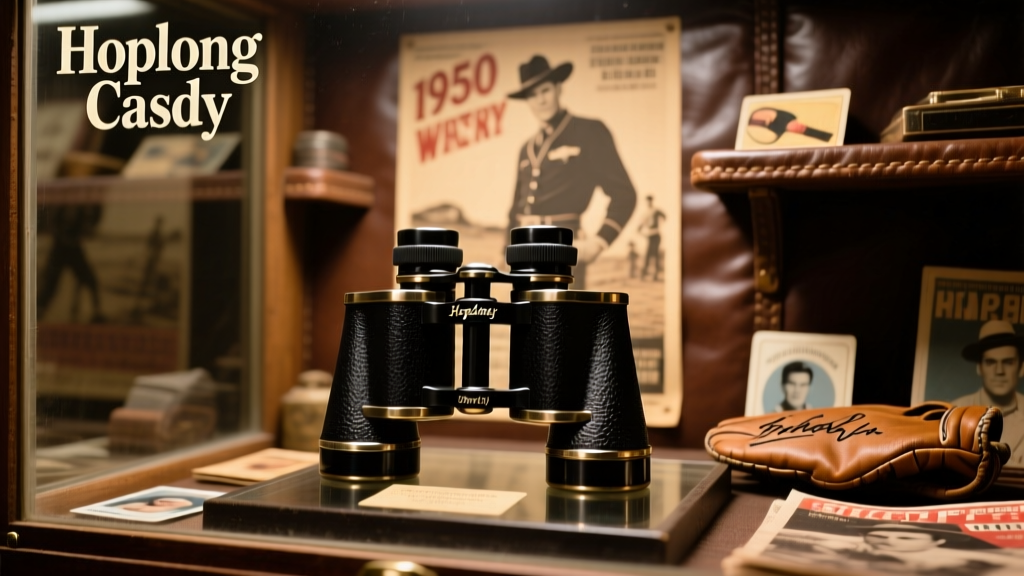
Hopalong Cassidy Binoculars: Authenticating the Iconic Black Metal Vintage Pair
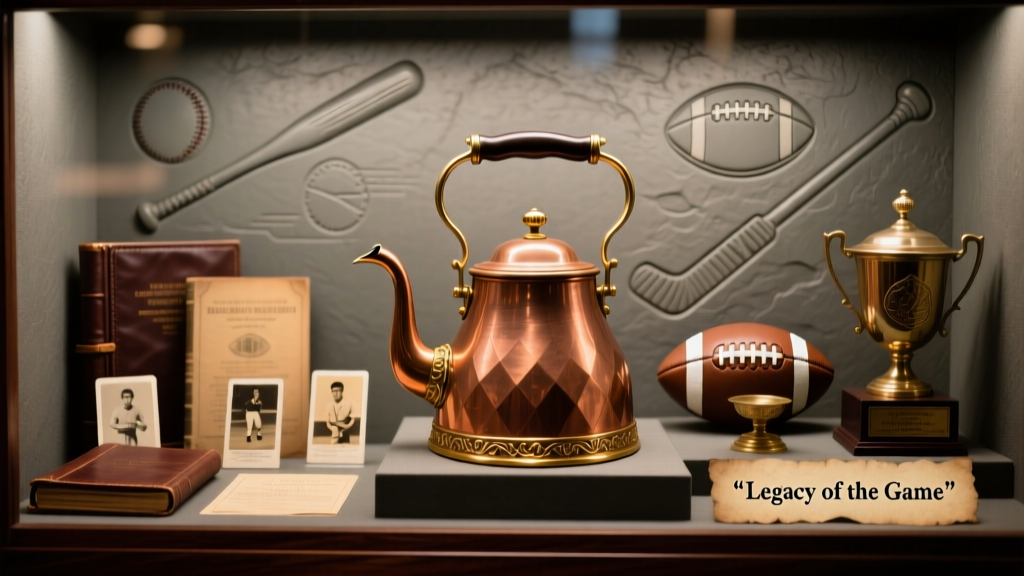
Copper Teakettle with Dovetailed Gooseneck Spout, Fixed Handle & Brass Trim — A Collector’s Deep Dive into the 11-Inch Artisanal Classic
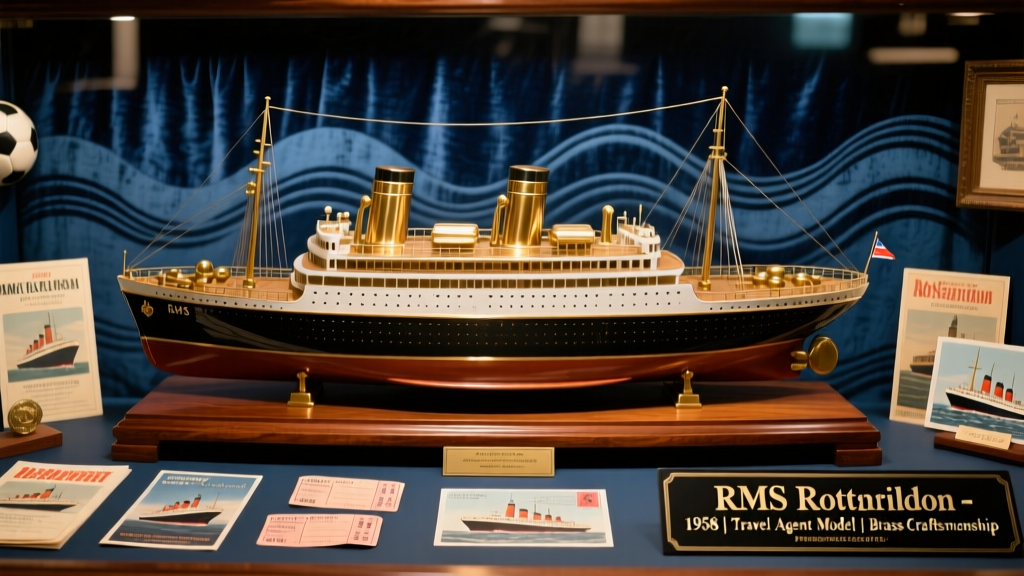
Toy Boat Ocean Liner Rotterdam: Authenticating the 51-Inch Brass Travel Agent Model

Frankart Bookends Horsehead No. 2: Authentication, Design History, and Market Value Analysis
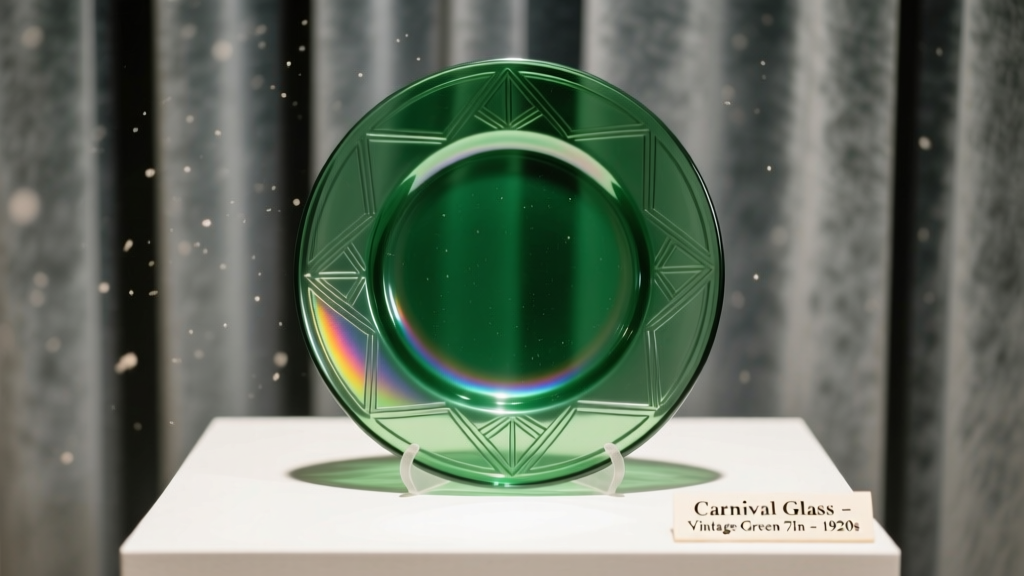
Carnival Glass Vintage Plate: Green 7-Inch '4' Pattern – Identification, Value, and Authentication Guide

The 1760 Revolving Two-Tier Dumbwaiter: A Masterpiece of Georgian Domestic Engineering
Majolica Platter Basket Flower Rustic 12-Inch: Identification, Provenance, and Market Value for Collectors