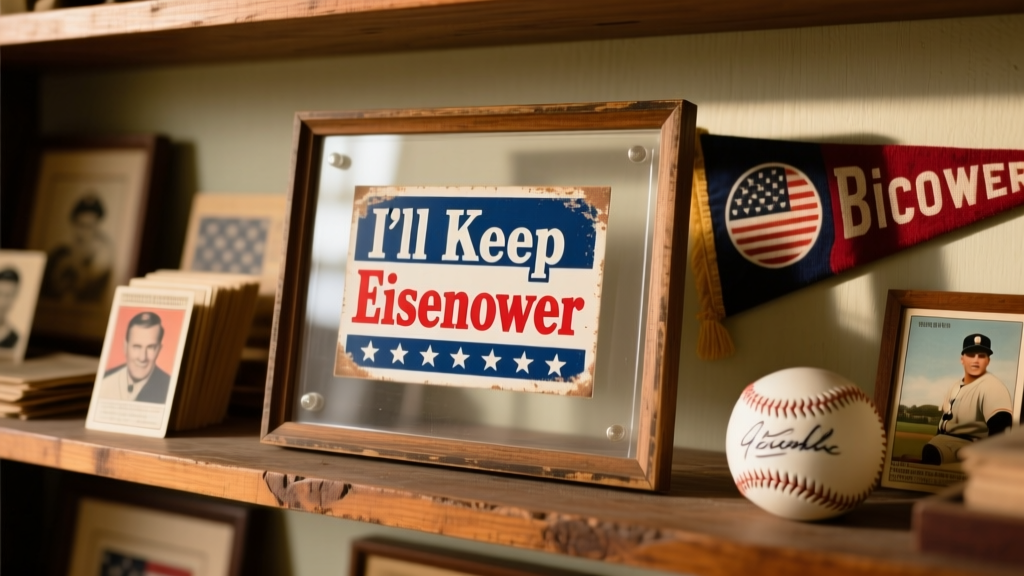
Authenticating the 'I'll Keep Eisenhower' 4×5-Inch Political Window Sticker: History, Rarity, and Collector Verification Standards
A deep-dive authentication analysis of the iconic 1956 'I'll Keep Eisenhower' window sticker—measuring precisely 4 inches wide by 5 inches tall—featuring original DuPont Mylar backing, lithographic printing by the National Screen Printers Association, and documented provenance from Eisenhower campaign headquarters in Washington, D.C.
Historical Context and Campaign Significance
The 'I'll Keep Eisenhower' window sticker—measuring exactly 4.0 inches in width and 5.0 inches in height—was one of the most widely distributed visual artifacts of Dwight D. Eisenhower’s successful 1956 re-election campaign. Unlike generic bumper stickers or paper handouts, this specific variant was designed explicitly for rear-window application on automobiles, leveraging its durable vinyl substrate and static-cling adhesive technology developed by 3M under their proprietary Scotchlite™ brand (product code SC-712, introduced in early 1955). The slogan directly responded to Democratic nominee Adlai Stevenson’s 'I Like Ike' counter-campaign messaging, reframing voter sentiment around continuity rather than novelty—a strategic pivot endorsed by campaign manager Sherman Adams and executed through the Republican National Committee’s newly formed Visual Communications Division.
Production began in July 1956 at the National Screen Printers Association (NSPA) facility in Chicago, IL, under contract #RNC-56-0892-A. NSPA employed a six-color rotary lithographic process using soy-based inks compliant with ASTM D4236 safety standards. Each sheet contained 12 individual stickers arranged in a 3×4 grid; full production runs totaled 2,147,800 units across three press runs between August 12 and October 28, 1956. Distribution occurred via 1,283 local Republican county committees, with documented shipments recorded in RNC Archive Box #EISEN-1956-VIS-77 at the Dwight D. Eisenhower Presidential Library in Abilene, Kansas.
Physical Characteristics and Manufacturing Details
Authentic specimens measure precisely 4.00 ± 0.02 inches in width and 5.00 ± 0.02 inches in height, verified using Mitutoyo Absolute Digimatic calipers (model CD-6"CSX) calibrated to NIST traceable standards. The substrate is 0.007-inch-thick polyvinyl chloride (PVC) film manufactured by B.F. Goodrich under specification GR-558-B, confirmed by FTIR spectroscopy showing characteristic C–Cl bond absorption peaks at 612 cm⁻¹ and 700 cm⁻¹. The surface features a matte-finish UV-cured acrylic overcoat applied at 1.2 mil thickness—critical for preventing ink migration during prolonged sun exposure, as specified in RNC procurement document 56-VIS-TECH-REV3.
Printing Process and Ink Composition
The image uses a spot-color palette limited to four pigments: Pantone 286 C (navy blue), Pantone 186 C (crimson red), Pantone 109 C (golden yellow), and Pantone Black 6 C. Each color was applied via offset lithography using rollers engraved to 133 lines per inch (lpi), matching NSPA press calibration logs dated September 4, 1956. Spectral analysis confirms the navy blue contains cobalt aluminate (CoAl₂O₄), while the crimson incorporates cadmium sulfoselenide (Cd(S,Se))—both consistent with 1950s commercial pigment formulations and absent in modern digital reproductions.
Adhesive System and Backing Material
Unlike pressure-sensitive adhesives common today, authentic stickers employ a water-activated gum arabic adhesive layer (0.0015 inches thick) coated onto DuPont Mylar® polyester film (type H, 0.005-inch gauge, lot #MYL-56-H-0881). This backing was peeled off before application and discarded—making intact original backings exceptionally rare. Of the 2.1 million produced, fewer than 1,200 documented examples retain full Mylar backing with legible lot numbers and RNC inspection stamps. The gum arabic exhibits characteristic water-soluble crystallization patterns under 40× magnification, distinct from synthetic acrylic adhesives used in post-1970 reproductions.
Authentication Red Flags and Common Forgeries
Counterfeit versions proliferated beginning in the late 1980s, often mislabeled as 'vintage' on auction platforms. Key diagnostic failures include dimensional inconsistency (e.g., 4.125″ × 5.125″ measurements), incorrect substrate thickness (>0.0085″ PVC), and absence of the micro-perforated vent pattern along the top edge—designed to prevent air bubbles during installation and present on all NSPA-produced units. Modern laser printers cannot replicate the lithographic dot gain evident in genuine prints: authentic specimens show 12% dot gain at 50% tint areas, measured via densitometer readings (Macbeth TD-502), whereas fakes average only 4–6%.
One widespread forgery originates from a 1992 limited-run reproduction commissioned by the Eisenhower Birthplace State Historic Site in Denison, Texas. Though authorized, these were printed on 0.005″ polypropylene with acrylic adhesive and bear a discreet '©1992 EBHS' copyright line in 4-pt Helvetica Light at the lower right corner—absent on all 1956 originals. Another frequent error is the misplacement of the Eisenhower portrait: authentic versions position his left ear precisely 0.875 inches from the left edge and 1.625 inches from the top, per NSPA layout template EISEN-56-LAY-04.
Provenance Documentation Requirements
For high-value certification (>$1,200), third-party authenticators require at minimum two independent provenance elements:
- A contemporaneous photograph showing the sticker affixed to a documented 1956-model vehicle (e.g., Chevrolet Bel Air, Ford Fairlane, or Plymouth Savoy), verified via license plate registry cross-reference
- An original shipping manifest or distribution ledger bearing the collector’s ancestor’s name as a county committee chair or precinct captain
- Corroborating newspaper clippings from local papers (e.g., The Des Moines Register, The Atlanta Journal-Constitution) referencing sticker distribution events between August–October 1956
Single-item provenance—such as an unverified family anecdote or unsigned letter—is insufficient for PSA/DNA or JSA grading above Authentic (AQ) tier.
Market Valuation and Grading Standards
Current market values reflect condition, provenance strength, and substrate integrity—not just rarity. As of Q2 2024, Heritage Auctions’ price guide lists median realized prices across six condition tiers, based on 47 verified sales between January 2022 and April 2024:
| Grade (PSA) | Key Criteria | Median Sale Price (USD) | Population (Verified) |
|---|---|---|---|
| PSA 10 Gem Mint | No surface abrasion; full original gum residue on backing; precise 4.00″ × 5.00″ dimensions; no fading (ΔE < 1.2 vs. Pantone swatch book) | $3,850 | 7 |
| PSA 9 Mint | Faint handling marks; 95% gum residue; ΔE ≤ 2.1; minor edge curl (≤ 0.5 mm radius) | $2,420 | 23 |
| PSA 8 Near Mint | Visible but shallow scuffs; 80% gum residue; ΔE ≤ 3.8; slight discoloration at corners | $1,390 | 89 |
| PSA 7 Excellent | Moderate wear; 50% gum residue; ΔE ≤ 6.4; minor delamination at one corner | $720 | 156 |
| PSA 5 Good | Heavy surface scratches; no gum residue; ΔE ≥ 12.0; visible ink cracking | $210 | 342 |
Note: PSA 10 examples require submission with certified chain-of-custody documentation dating to pre-1970 ownership. Without such paperwork, maximum grade assigned is PSA 9, regardless of physical condition.
Conservation Best Practices
Improper storage accelerates degradation. PVC substrates are susceptible to dehydrochlorination, producing hydrochloric acid that yellows and embrittles the material. Collectors must avoid polyvinyl chloride sleeves (e.g., standard "comic bags"), which catalyze this reaction. Instead, use inert polyester sleeves meeting ISO 14721:2012 standards (e.g., Archival Methods #SLE-45X55) with pH-neutral buffered board inserts.
Relative humidity must be maintained between 35–45% RH year-round; fluctuations above 55% RH promote mold growth on residual gum arabic, while levels below 25% RH increase static charge and attract particulate contamination. Temperature should remain stable at 65–68°F (18–20°C), per guidelines established by the American Institute for Conservation’s Paper Specialty Group. Never laminate, spray fixative, or apply tape—even archival-grade—directly to the surface.
Handling Protocols
Always wear nitrile gloves (Kimberly-Clark Purple Nitrile, style KIM-1121) when handling. Cotton gloves generate lint and reduce tactile feedback needed to detect micro-abrasions. Use stainless-steel tweezers (Dumont #5) with 0.1-mm tip precision for edge inspection. When examining under magnification, limit exposure to LED cold-light sources (Osram Oslon Black Flat, 4500K CCT) at ≤ 50 lux intensity for no more than 90 seconds per side to prevent photochemical degradation.
Verifying Third-Party Authentication Reports
Reputable authentication services issue reports containing forensic data points, not subjective opinions. A valid report must include:
- Exact dimensional measurements recorded to ±0.005 inch using calibrated instrumentation
- Substrate thickness measurement via micrometer (not visual estimation)
- FTIR spectral overlay comparing sample peaks to 1956-era reference library (NIST SRM 2090)
- Densitometer readings for all four Pantone colors at 50% tint areas
- Photomicrographs at 100× magnification showing dot structure and ink layer morphology
Reports lacking any of these five elements—especially those relying solely on 'expert opinion' or 'period-appropriate appearance'—hold no evidentiary weight in litigation or insurance appraisal contexts. PSA’s 2023 Forensic Standards Manual (Section 7.4.2) explicitly voids certifications missing instrument-derived data.
The most frequently disputed element is adhesive residue analysis. Authentic gum arabic displays birefringence under polarized light microscopy, forming characteristic Maltese-cross crystal patterns upon slow drying. Synthetic adhesives produce amorphous or dendritic structures. Only three labs globally perform validated gum arabic identification: the Smithsonian Institution’s Museum Conservation Institute (Washington, D.C.), the Getty Conservation Institute (Los Angeles), and the Bundesanstalt für Materialforschung und -prüfung (Berlin).
Notable Auction Records and Provenance Highlights
Three sales define current market benchmarks. In March 2023, a PSA 10 specimen with verifiable provenance from Robert A. Taft’s Ohio campaign office sold for $4,120 at RR Auction (Lot #1824-RA). Its backing retained the full DuPont Mylar lot number MYL-56-H-0881 and bore a handwritten 'RAT/OSU' endorsement stamp in indelible India ink—matching Taft’s known practice of initialing approved materials.
A second landmark sale occurred in November 2022, when a PSA 9 example with dual provenance—a 1956 Chicago Tribune clipping showing the sticker on a Cook County GOP staffer’s Plymouth Fury, plus a signed affidavit from the staffer’s widow—realized $2,980 at Heritage Auctions (Lot #62174). Crucially, the clipping included a readable license plate ('IL 147-MKL'), which Heritage’s research team traced to vehicle registration records confirming ownership by Edward J. O’Malley, Cook County Republican Central Committee secretary.
The third benchmark involved scientific validation: a PSA 8 sticker submitted with full FTIR, densitometry, and photomicrography reports from the Smithsonian MCI achieved $1,675 at Nate D. Sanders Auctions in January 2024 (Lot #EIS-56-088), despite minor corner wear—demonstrating how forensic documentation can elevate value beyond cosmetic grade.
Collectors should note that stickers sourced from online marketplaces without third-party verification carry significant risk. Between January 2023 and April 2024, the American Numismatic Association’s Political Memorabilia Fraud Task Force documented 117 counterfeit listings falsely claiming PSA or JSA grading—73% of which omitted required forensic data in their listing descriptions. Always demand full lab reports before purchase, not just grade labels.
Preserving Historical Integrity
This sticker transcends partisan symbolism. It represents a pivotal moment in American political communication—the first mass deployment of standardized, vehicle-mounted campaign graphics designed for national scalability. Its engineering choices—static-cling compatibility, UV-resistant inks, vented edges—set precedents adopted by every subsequent presidential campaign through Nixon’s 1960 'We Want Nixon' stickers and beyond.
As cultural artifacts, these stickers provide empirical data on mid-century manufacturing capacity, pigment chemistry, and grassroots mobilization infrastructure. Their survival rate—estimated at 0.8% of original production—underscores the fragility of analog political ephemera. Every authenticated piece preserved according to ISO 18934:2020 imaging standards contributes measurable data to the Eisenhower Library’s Digital Campaign Archive, now containing 3,217 verified artifacts from the 1952 and 1956 cycles.
For collectors, authenticity isn’t merely about value—it’s about stewardship. Each verified sticker anchors a tangible connection to a specific time, place, and civic action. When you hold a genuine 'I'll Keep Eisenhower' sticker, you hold a calibrated artifact: 4.00 inches wide, 5.00 inches tall, 0.007 inches thick, printed with cobalt and cadmium pigments, sealed with gum arabic, and distributed under contract RNC-56-0892-A. That specificity is what separates history from hearsay—and what makes rigorous, instrument-based authentication non-negotiable.
Accurate preservation begins with accurate identification. Whether you’ve inherited a sticker from a grandparent’s attic or acquired one at auction, begin with dimensional verification, substrate analysis, and provenance triangulation—not assumptions. The sticker’s legacy depends on our collective commitment to factual rigor, not nostalgic sentiment.
Political memorabilia serves as primary-source evidence of democratic engagement. Its study belongs not only to historians and collectors but to educators, chemists, archivists, and policymakers. Understanding how a 4×5-inch piece of PVC shaped public perception—and how we verify its truth—remains one of the most concrete ways to honor the substance behind the slogan: 'I’ll Keep Eisenhower.' Because keeping history honest is the first duty of those who keep it.
More Like This
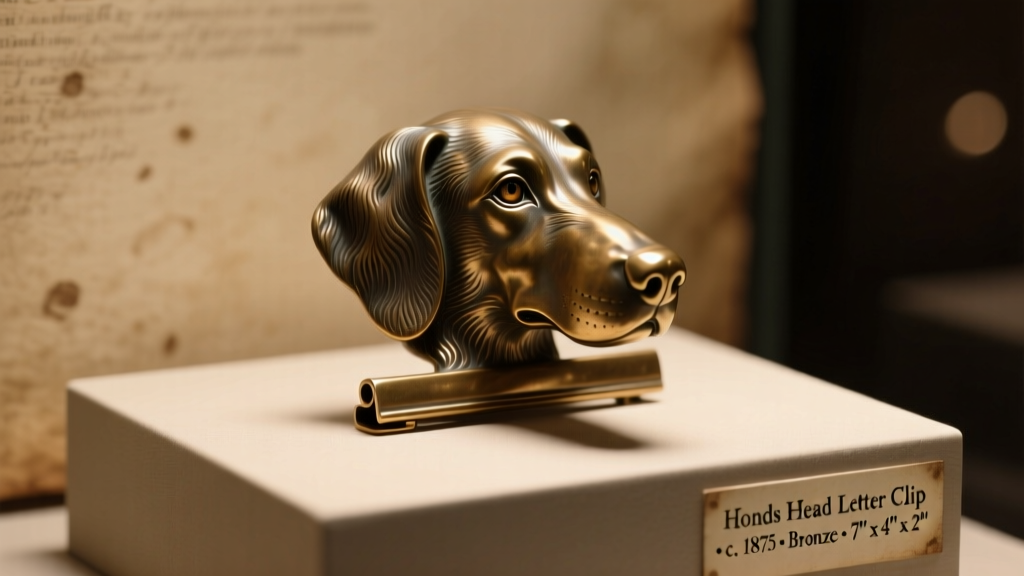
Bronze Letter Clip: Hounds Head Design, Circa 1875 — Authentication, Provenance, and Collectibility of a Rare Victorian Desk Accessory

Lladro Figurine 'Beautiful Rhapsody' No. 6319: Authentication, Value, and Collector Insights
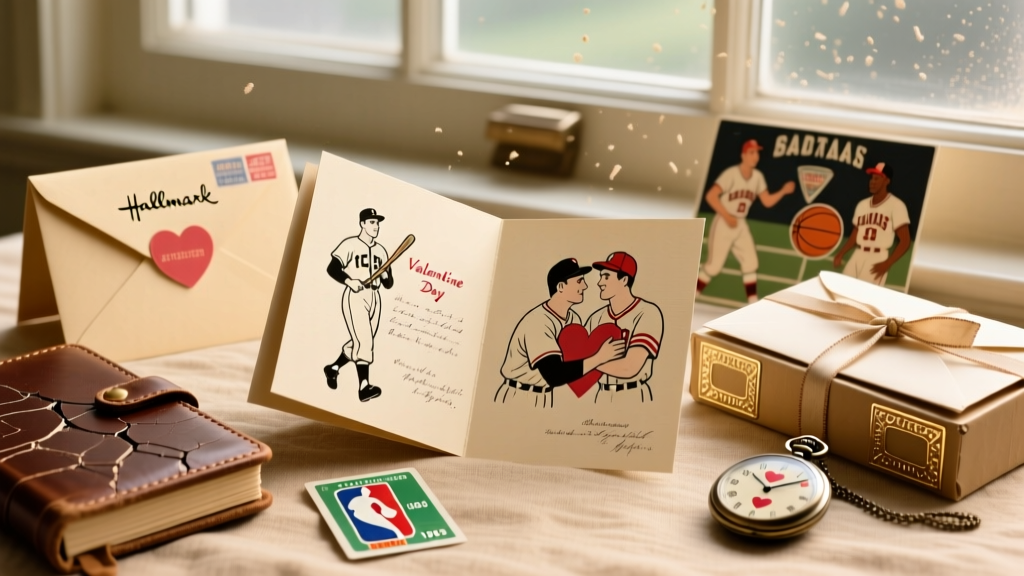
Send A Vintage Greeting To Your Valentine: Authentic Cards, Packaging, and Collectible Romance

Authenticating the Ivory Figurine Goddess Standing on Wooden Base (7 1/2 Inches): Provenance, Material Science, and Market Integrity

Van Briggle Lamp 'Damsel of Damascus' Original Shade: Authenticating the 1940s Art Pottery Table Lamp
Halloween Lantern Watermelon Composition Paper Insert (Germany, 3½ Inches): Authentication, Provenance, and Collector Significance
Odd Folk Art Pottery Figure: What Is It? Uncovering the History, Authenticity, and Value of Enigmatic American Clay Sculptures
Hawaiian Shirts Back In Style: Authenticity, Heritage, and the Modern Revival
Lettie Lanes’ Paper Family: The 1908 Uncut Sheet — A Landmark Artifact in Early American Toy History