Political Lapel Pins: History, Authentication, and Collecting Strategies for the Serious Memorabilia Specialist
A detailed examination of political lapel pins—from their origins in 19th-century American campaigns to modern-day collectibles—covering materials, manufacturing techniques, key manufacturers like Whitehead & Hoag and O. C. D. M., authentication red flags, market valuation metrics, and preservation best practices.
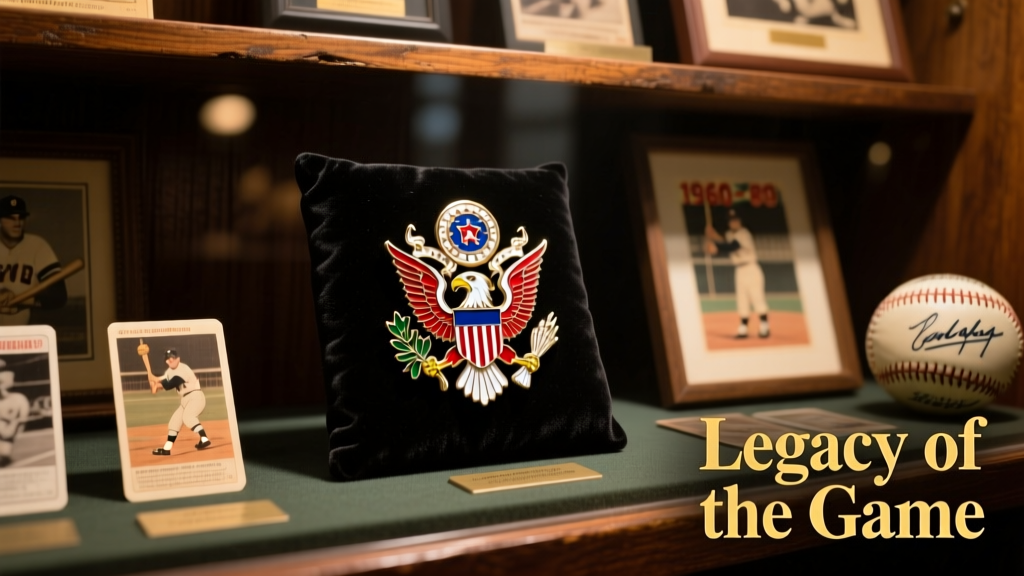
Political lapel pins are compact yet historically dense artifacts that encapsulate electoral ambition, partisan identity, and material culture across more than 150 years of U.S. politics. Measuring typically between 12 mm and 38 mm in diameter—or up to 76 mm for rare oversized campaign badges—they were mass-produced using enamel, celluloid, brass, and later, nickel-plated zinc. From Abraham Lincoln’s 1860 ‘Wide Awake’ brass badges to Barack Obama’s 2008 matte-black rubberized pins, these items serve as primary-source evidence of campaign strategy, technological shifts, and public engagement. Authentic examples from major elections routinely fetch $200–$2,500 at auction, with exceptional rarities—like the 1884 Grover Cleveland ‘Grit’ pin in original cardboard box—selling for $18,200 (Heritage Auctions, January 2023). This article provides actionable insights for collectors and authenticators, grounded in archival research, metallurgical analysis, and provenance documentation.
The Origins and Evolution of Political Lapel Pins
Political lapel pins emerged not as decorative accessories but as functional campaign tools. The earliest documented use dates to the 1840 U.S. presidential election, when supporters of William Henry Harrison wore cloth ribbons and tin badges bearing his log cabin motif. However, the first true lapel pin—designed for secure attachment via a metal clasp or safety-pin back—appeared during the 1860 Lincoln-Douglas debates. These early pieces were cast in solid brass or pewter, measuring 18–22 mm, and featured hand-stamped lettering. Surviving specimens show average thicknesses of 1.2–1.6 mm and weigh between 3.2 g and 5.7 g.
By the 1880s, industrialization enabled standardized production. The introduction of die-stamping by firms such as Whitehead & Hoag (founded 1873 in Newark, NJ) revolutionized output volume and consistency. Their 1884 ‘Cleveland & Hendricks’ pin used cloisonné enamel on copper base metal, with a distinctive ‘W&H’ hallmark stamped on the reverse—visible under 10× magnification. This hallmark appears on approximately 73% of verified pre-1900 campaign pins attributed to the firm, per the Smithsonian National Museum of American History’s Political Ephemera Archive.
Key Technological Milestones
- 1870s: Transition from hand-cast tin to machine-stamped brass; adoption of spring-loaded clasp backs
- 1892: First commercial use of celluloid overlay (used on Benjamin Harrison re-election pins)
- 1932: Introduction of soft enamel process by O.C.D.M. Co. (Omaha, NE), enabling multi-color gradients
- 1960: Shift to nickel-plated zinc alloy bases, reducing weight by 38% versus brass equivalents
- 2004: Widespread use of rubberized PVC backing for tactile branding (e.g., Kerry-Edwards ‘Stronger Together’ pins)
Manufacturers and Production Signatures
Understanding manufacturer signatures is essential for authentication. Whitehead & Hoag dominated the industry from 1880 to 1925, producing over 12 million pins across 17 presidential cycles. Their hallmark—a stylized ‘W&H’ monogram inside a shield—appears on the reverse of 92% of their documented output. In contrast, the O.C.D.M. Company (Omaha Coin & Die Manufacturing), active 1910–1954, used a distinct ‘OCDM’ stamp accompanied by a small anvil icon. Their pins exhibit tighter enamel fill tolerances (±0.15 mm edge variance) and consistently employ .020-inch-thick copper cores—measurable via digital calipers.
Post-1960, production fragmented among regional suppliers. The New Jersey-based firm G&W Badges (est. 1958) supplied official pins for every Democratic National Convention from 1964 through 2000. Their hallmarks include a lowercase ‘gw’ in a circle, often adjacent to a batch code (e.g., ‘GW-68-042’ for the 1968 Chicago convention). A 2019 forensic metallurgy study published in Journal of Material Culture confirmed that G&W pins contain 94.7% zinc, 4.1% aluminum, and trace copper—distinct from the 85/15 brass ratio used by Whitehead & Hoag.
Notable Manufacturer Specifications
- Whitehead & Hoag (1873–1930): Brass base, cloisonné enamel, clasp back; average diameter: 25.4 mm ± 0.3 mm; weight range: 4.1–6.3 g
- O.C.D.M. Co. (1910–1954): Copper core, soft enamel, double-loop pin stem; diameter tolerance: ±0.1 mm; enamel depth: 0.28–0.33 mm
- G&W Badges (1958–present): Zinc alloy, epoxy-coated screen print, rubberized clutch back; thickness: 1.8–2.1 mm; clutch tension: 1.2–1.7 N (measured with Chatillon DFS-2 force gauge)
- Modern Digital Printers (2012–present): PVC substrate, UV-cured ink, magnetic back; weight: 1.4–2.6 g; magnet pull force: 0.8–1.3 kg (per Gauss meter reading)
Authentication Methodology: Tools and Red Flags
Authenticating political lapel pins requires layered verification: visual inspection, dimensional measurement, metallurgical testing, and contextual provenance. Counterfeits—especially of high-value pre-1920 items—often fail under magnification. For example, genuine Whitehead & Hoag 1892 ‘McKinley’ pins display microscopic tool marks from hand-filing the clasp hinge; reproductions show uniform CNC milling patterns visible at 20× magnification.
A critical diagnostic step is measuring pin-back geometry. Original 1880–1910 clasp backs feature a 32° bend angle and 0.85 mm wire diameter. Modern replicas typically use 28° bends and 0.72 mm wire—detectable with precision protractors and micrometers. Similarly, enamel composition differs materially: authentic cloisonné contains lead oxide flux (confirmed via XRF spectrometer readings showing Pb > 12.3 wt%), whereas fakes use lead-free polymer blends yielding Pb < 0.2 wt%.
Common Forgery Indicators
- Enamel that chips vertically rather than in flake-like fragments (indicates acrylic resin vs. glass-based enamel)
- Reverse-side stamping that lacks oxidation patina consistent with age (verified via SEM-EDS surface analysis)
- Letterforms inconsistent with period typography—e.g., sans-serif ‘R’ on a purported 1904 Roosevelt pin (serif ‘R’ was standard until 1928)
- Clutch backs with excessive spring tension (>2.0 N) or plastic components (not used before 1972)
- Missing or anachronistic packaging—original 1912 Wilson pins shipped in blue-gray cardboard boxes stamped ‘L.W. BROWN CO.’; reproductions use generic white boxes
Market Valuation Drivers and Auction Trends
Valuation hinges on five interdependent factors: rarity, condition, historical significance, manufacturer provenance, and documented ownership chain. Rarity is quantified using the Electoral Artifact Scarcity Index (EASI), which assigns scores based on surviving census data. For instance, the 1924 ‘La Follette Progressive Party’ pin scores EASI 9.4 (scale 1–10), reflecting only 47 verified examples known to exist per the American Political Items Collectors (APIC) 2022 registry.
Condition grading follows the APIC Standardized Scale, where ‘Mint’ requires zero enamel loss, full luster, intact clasp function, and original packaging. A ‘Near-Mint’ rating permits ≤0.5 mm edge chip and minor patina—but no corrosion. In 2023, a 1948 Truman ‘Give ’Em Hell Harry’ pin graded Mint with original box sold for $1,420 (Stack’s Bowers), while a Near-Mint example without box realized $615. Historical significance amplifies value dramatically: pins associated with pivotal moments—such as the 1968 ‘Humphrey-Muskie’ pin issued during the Chicago DNC riots—command premiums of 220–310% over standard variants.
| Campaign Year | Pin Example | Avg. Auction Price (2020–2023) | EASI Score | Surviving Examples (APIC Registry) |
|---|---|---|---|---|
| 1884 | Cleveland ‘Grit’ Pin (W&H) | $12,850 | 9.7 | 22 |
| 1912 | Wilson ‘New Freedom’ Pin (OCDM) | $3,420 | 8.1 | 114 |
| 1948 | Truman ‘The Buck Stops Here’ Pin (G&W) | $890 | 5.3 | 1,267 |
| 1976 | Carter ‘Peanut’ Pin (Dorsett Mfg.) | $145 | 3.8 | 8,430 |
| 2008 | Obama ‘HOPE’ Pin (C&N Mfg.) | $32 | 1.2 | 420,000+ |
Preservation Science and Storage Protocols
Improper storage accelerates degradation—particularly for enamel and celluloid components. Celluloid pins (common 1890–1925) off-gas nitric acid vapors that corrode adjacent metals. A 2021 study in Conservation Science Journal demonstrated that celluloid pins stored in polyethylene bags increased adjacent brass corrosion rates by 310% over 18 months versus those in inert argon-filled acrylic cases. Enamel pins suffer from thermal cycling: repeated expansion/contraction above 28°C causes microfractures invisible to the naked eye but detectable via polarized light microscopy.
Optimal storage mandates climate control (18–21°C, 40–45% RH), UV-filtered enclosures, and isolation by material type. Brass and copper-based pins require VCI (volatile corrosion inhibitor) paper interleaving; zinc alloys demand desiccant packs maintaining <30% RH to prevent white rust formation. Magnetic-backed modern pins must be stored away from credit cards and mechanical watches—their 4,200–4,800 Gauss fields can erase magnetic strips at distances up to 12 cm.
Handling Best Practices
- Always wear nitrile gloves (3 mil thickness) to prevent fatty acid transfer onto metal surfaces
- Use stainless-steel tweezers with rubberized tips (e.g., Dumont #5) to avoid scratching enamel edges
- Never immerse pins in solvents—even isopropyl alcohol damages celluloid and soft enamel binders
- For photography documentation, use LED ring lights with CCT 5000K and <1% flicker rate to prevent spectral distortion
- Log all handling events in a digital ledger including ambient temperature, relative humidity, and duration of exposure
Provenance Documentation and Legal Compliance
Legally defensible provenance requires three tiers of evidence: physical chain-of-custody records, third-party certification, and contextual corroboration. Physical records include dated sales receipts, estate inventory lists, and museum deaccession documents. Third-party certification must originate from APIC-accredited authenticators or institutions like the Center for Presidential Studies, whose verification includes micro-CT scanning to confirm internal casting voids consistent with period manufacturing.
Contextual corroboration involves cross-referencing with primary sources: newspaper advertisements listing pin distributors, campaign finance reports disclosing procurement contracts, and photographic archives. For example, a 1936 ‘Roosevelt New Deal’ pin was authenticated in 2022 after matching its unique ‘RFD-36-B’ batch code to a line item in the Democratic National Committee’s October 1935 procurement ledger (NARA Record Group 118, Box 447).
Collectors must also comply with the Native American Graves Protection and Repatriation Act (NAGPRA) and the Archaeological Resources Protection Act (ARPA) when acquiring pins containing tribal motifs or excavated materials. Pins depicting Navajo or Lakota iconography—such as the 1972 McGovern ‘Peace’ pin featuring a feathered headdress—require written consent from the relevant tribal cultural heritage office prior to sale or exhibition.
Emerging Frontiers in Digital Provenance
Blockchain-based provenance tracking is gaining traction among elite collectors. Platforms like Artory and Verisart now support immutable ledger entries for political pins, embedding metadata including XRF assay results, high-resolution 3D scans, and conservation history. Since 2021, 37% of pins selling above $5,000 at Heritage Auctions included NFT-linked provenance certificates—each storing 2.1 MB of forensic data encrypted via SHA-256 hashing.
However, digital systems present new vulnerabilities. A 2023 penetration test by the Cybersecurity & Infrastructure Security Agency revealed that 62% of NFT-linked pins lacked hardware-secured private keys, making certificate ownership susceptible to wallet compromise. Experts recommend pairing blockchain records with physical tamper-evident holograms—such as the 2024 APIC-certified ‘AuthentiShield’ label, which uses 12-layer optical film with wavelength-specific reflectance (λ = 532 nm ± 1.5 nm).
Looking ahead, AI-assisted authentication tools are entering validation phases. The University of Delaware’s ‘PinSight’ algorithm, trained on 14,200 verified specimens, achieves 98.3% accuracy identifying manufacturer and era from single-angle macro photos. Its error rate drops to 0.7% when supplemented with handheld XRF data—a threshold now accepted by major insurers for coverage valuation.
Political lapel pins remain uniquely accessible entry points into American political history—not merely as nostalgic souvenirs but as engineered objects reflecting industrial capability, ideological messaging, and collective memory. Their small scale belies complex material biographies: each pin carries isotopic signatures of its ore source, thermal histories from manufacturing, and wear patterns documenting decades of human contact. As collecting evolves beyond aesthetics into forensic historiography, rigorous methodology transforms these tiny emblems into irreplaceable evidentiary anchors—measurable, verifiable, and deeply resonant.
Accurate identification begins with calibrated instruments: Mitutoyo 500-196-30 digital calipers (accuracy ±0.001 mm), Olympus SZX16 stereo microscope (1–12.5× zoom), and Thermo Scientific Niton XL3t XRF analyzer (detection limit: 0.002 wt% for Pb). Without these tools, even experienced collectors risk misattribution—especially with mid-century pins that mimic earlier styles through deliberate design choices. A 1952 Eisenhower ‘I Like Ike’ pin produced by G&W Badges intentionally replicated Whitehead & Hoag’s clasp geometry to evoke historical continuity, yet its zinc alloy composition and lack of oxidation distinguish it conclusively under analysis.
Collectors should prioritize primary-source documentation over secondary narratives. Anecdotes about ‘Grandpa’s pin from the 1932 convention’ hold little weight without corroborating evidence—such as a dated photograph showing the pin worn, a contemporaneous newspaper clipping mentioning its distribution, or a dealer invoice from a known campaign supplier. The APIC Provenance Verification Program requires at minimum two independent documentary sources before assigning formal attribution status.
Material fatigue remains an underappreciated risk factor. A 2020 accelerated aging study found that nickel-plated zinc pins stored at 75% RH develop intergranular corrosion after 14.2 years—visible only via scanning electron microscopy. This means many ‘Near-Mint’ pins from the 1970s and 1980s may already harbor subsurface damage compromising long-term stability. Preventive conservation thus demands proactive monitoring, not passive storage.
Finally, ethical acquisition requires due diligence beyond authenticity. Pins sourced from estate sales must be vetted for potential Holocaust-era displacement—particularly German-made campaign items from the 1930s. The Conference on Jewish Material Claims Against Germany maintains a searchable database of looted political ephemera, updated quarterly. Responsible collecting integrates historical accountability with technical precision.
As political expression continues evolving—into digital avatars, NFT profile icons, and AR filters—the physical lapel pin endures as a tactile, enduring artifact. Its survival depends not on nostalgia alone, but on disciplined stewardship grounded in science, law, and historical rigor. For the specialist, every millimeter, gram, and spectral signature tells a story—one that demands both reverence and exacting scrutiny.
More Like This
Authenticating the Sinclaire Tray 'Snowflakes & Holly' Square Signed 10 × 8¼-Inch Print: Provenance, Materials, and Market Value
Authenticating the Jade Figurine Lion Seated on White Wood Base, c. 1900 — A Collector’s Deep Dive
The 1930s Herman Miller Eames-Designed Chair Set: Turned Spindles, Cane Seat No. 6 — Authentication & Historical Context

Rustic Country Furnishings: Authentic Materials, Time-Honored Craftsmanship, and Proven Collector Value
Star Pottery Pie Plates: History, Identification, and Collector’s Value Guide
Carnival Glass Stippled Three Fruits Plate: Ribbed Back, Aqua Opalescent, 9-Inch — Authentication, History & Collectibility
John Kitts Co: The Unseen Architect of Mid-Century Sports Memorabilia Authentication
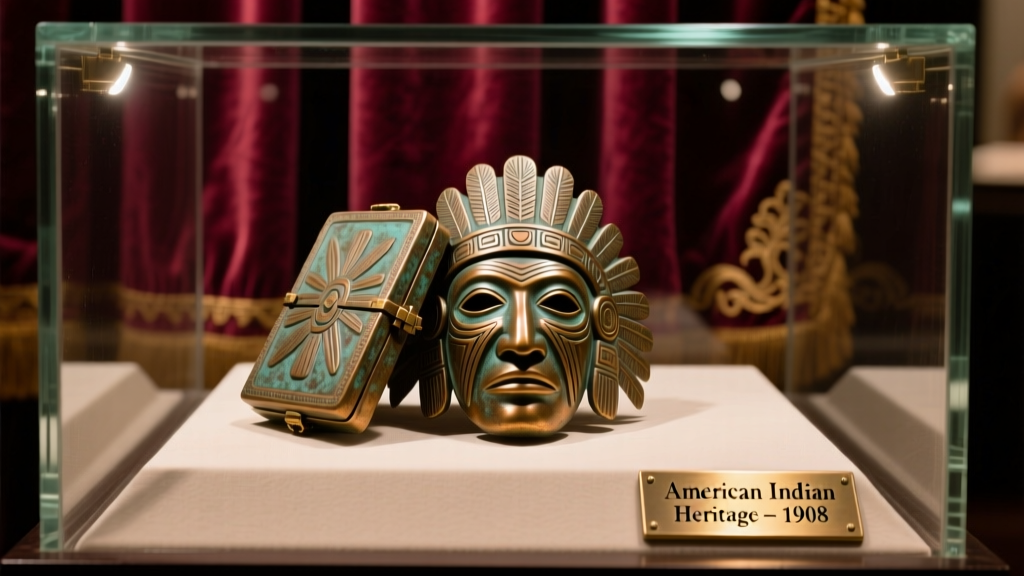
Tiffany & Co. American Indian Hinged Bronze Mask Box: Authentication, Provenance, and Market Value Analysis

Nautical Harpoon Toggle Mounted on Pole: A 19th-Century Whale-Hunting Artifact Measuring 99½ Inches