Please Help With Identification: A Practical Framework for Authenticating Sports Memorabilia
A field-tested, step-by-step methodology for identifying and authenticating sports memorabilia—including autographed baseballs, game-used jerseys, vintage cards, and equipment—using measurable criteria, brand-specific features, and forensic documentation standards.
When you find a seemingly rare Babe Ruth baseball at a garage sale, a signed Michael Jordan jersey tucked in a dusty attic box, or a 1952 Topps Mickey Mantle card labeled 'ungraded' in an online auction, your first instinct should be cautious curiosity—not immediate acquisition. Proper identification isn’t about gut feeling; it’s about systematic verification using physical evidence, provenance trails, manufacturer specifications, and third-party benchmark data. This article outlines a repeatable, evidence-based framework used by professional authenticators at PSA/DNA, JSA, and MEARS—grounded in real-world measurements (e.g., Rawlings Official Major League Baseball diameter: 2.86–2.94 inches), documented stitching patterns (Wilson NFL game balls: 108 hand-stitched laces, 1.25-inch wide), and serial number conventions (Nike Air Force 1 sneakers released pre-2003 feature 6-digit style codes ending in '001' or '002'). We walk through concrete red flags, forensic tools, and documented case studies—not theory, but practice.
Why Misidentification Is More Common Than You Think
Over the past five years, PSA’s annual authentication report shows that 37% of submitted autographed baseballs fail basic ink analysis due to modern gel pens or inconsistent stroke pressure—despite appearing 'vintage' to the untrained eye. Similarly, MEARS found that 62% of claimed 'game-used' NFL jerseys from the 1990–2005 era lacked the correct tackle twill font (NFL-licensed jerseys used only one of three approved typefaces: Helvetica Bold, Univers Bold, or ITC Avant Garde Gothic). These aren’t anomalies—they’re systemic gaps between perception and verifiable reality. Misidentification often stems not from fraud, but from well-intentioned assumptions: assuming a signature is genuine because the item looks old, or accepting a jersey as game-used because it has visible wear—even though sweat stains can be artificially induced with tea staining and heat guns.
The stakes are high. A 1975–76 NBA game-used Bill Russell Celtics jersey authenticated by MEARS sold for $228,000 in 2022. The same jersey, unverified and misidentified as 'practice-worn,' fetched $14,500 in a private sale just 18 months earlier. Accuracy directly translates to value—and credibility. That’s why identification must move beyond visual appraisal into measurable, reproducible analysis.
Three Core Pillars of Reliable Identification
Every credible identification rests on three non-negotiable pillars: material forensics, contextual verification, and provenance triangulation. Material forensics examines the object itself—fiber composition, ink chemistry, thread count, and manufacturing signatures. Contextual verification cross-references dates, logos, uniform regulations, and equipment specs against official league records. Provenance triangulation requires at least two independent, dated sources linking the item to the athlete or event (e.g., team-issued receipt + photo documentation + contemporaneous newspaper clipping).
Without all three, identification remains speculative. For example, a 1986 Fleer Michael Jordan rookie card graded PSA 10 sold for $3.72 million in 2022—but over 1,200 'PSA 10' submissions that year were downgraded to PSA 9 or lower after microscopic surface inspection revealed micro-scratches inconsistent with original packaging wear. The card’s grade—and therefore its identity as 'mint condition'—depended entirely on forensic surface mapping, not subjective brightness.
Baseballs: The 12-Point Inspection Protocol
Official Major League Baseballs follow strict, codified production standards enforced since 1977. Any deviation indicates either counterfeit origin or post-manufacture alteration. Here’s the standardized 12-point inspection protocol used by JSA-certified examiners:
- Measure circumference: must be 9–9.25 inches (22.86–23.49 cm)
- Weigh ball: 5–5.25 oz (141.7–149.1 g)
- Verify Rawlings stamp location: centered on the 'sweet spot' seam intersection, 1/4 inch below the red seam line
- Count red stitches: exactly 108 double-stitched loops (216 individual stitches)
- Check leather grain: Horween Leather Co. cowhide, tanned using proprietary 'Crown Genuine' process—visible under 10x magnification as tight, interlocking follicle clusters
- Inspect ink: Official MLB stamps use Pantone Matching System (PMS) 186 red ink; counterfeit versions typically register PMS 185 or 187
- Examine stitching tension: authentic balls show consistent 0.015-inch stitch depth; fakes vary by ±0.008 inch
- Confirm label imprint: 'Official National League' or 'Official American League' must be printed in 6-pt Helvetica Bold, kerned at 20 units
- Test seam height: measured at 0.055–0.062 inches using digital calipers
- Validate core composition: wound cork-rubber core (not solid rubber or plastic)
- Review stamp date code: post-1990 balls include month/year code (e.g., '04/20' = April 2020)
- Compare logo font: Rawlings 'R' logo uses custom 'Rawlings Sans' typeface—counterfeits substitute Arial or Helvetica
A single failure invalidates authenticity. In 2023, PSA rejected 89% of submitted 1930s–1940s baseballs because their leather failed the Horween follicle test—revealing synthetic blends not commercially available until 1972.
Signature Analysis: Beyond the 'Look'
Autograph identification relies less on stylistic comparison and more on biomechanical consistency. Every athlete develops unique motor patterns—stroke speed, pen lift frequency, pressure modulation—that remain stable across decades. Using Wacom Intuos Pro tablets and Mylar overlay tracing, authenticators map pressure variance (measured in grams per square millimeter) and angular acceleration (degrees per second²). For instance, Tom Seaver’s signature consistently shows 3.2–3.8 g/mm² peak pressure at the terminal 'r' loop, with angular acceleration never exceeding 127°/s² during the final downward stroke. A submission showing 5.1 g/mm² pressure and 198°/s² acceleration is flagged—regardless of visual similarity.
Ink composition matters equally. Pre-1980 signatures almost exclusively used Parker Quink Blue Black (iron gall-based, pH 2.1–2.4); post-1995 signatures commonly use Uni-ball Signo UM-151 gel ink (pH 7.8–8.1). Cross-contamination—like iron gall ink on a 2005 baseball—is an immediate disqualifier. Chromatographic thin-layer analysis (TLC) separates ink components; authentic Seaver samples show distinct Rf values of 0.42 (gallic acid), 0.61 (ferrous sulfate), and 0.88 (tannin)—values replicated in only 12% of submitted items claiming his signature.
Jerseys and Apparel: Decoding Manufacturing DNA
NFL, NBA, and MLB uniforms contain embedded identifiers far more precise than logos. From 1978 to 2001, Majestic Athletic jerseys included hidden 'batch codes' woven into the interior neck tag: six alphanumeric characters where positions 1–2 indicate year (e.g., '98' = 1998), position 3 = factory code (A = Kansas City, B = Dominican Republic), positions 4–5 = week of production (01–52), and position 6 = size modifier (1 = S/M, 2 = L/XL, 3 = XXL+). A jersey tagged '98A231' was manufactured Week 23 of 1998 in Kansas City—verifiable against Majestic’s archived production logs.
Stitching is equally diagnostic. Authentic 1992–1999 Nike NBA jerseys use triple-needle flatlock stitching with 12 stitches per inch (SPI), measured under calibrated loupe. Counterfeits average 8.3 SPI. Fabric composition must match league-mandated specs: 100% polyester for NBA jerseys post-1997 (tested via FTIR spectroscopy), while MLB jerseys from 2005–2018 used 92% polyester / 8% spandex—confirmed by solvent dissolution testing (spandex dissolves in dimethylformamide; polyester does not).
Tag Anatomy and Label Evolution
Jersey tags evolved in predictable, dateable ways. The 1984–1991 Wilson NFL jersey tag featured a 1.5-inch × 1.5-inch woven label with serif font and no barcode. From 1992–1999, tags added a 1D UPC barcode (12-digit GTIN) and switched to sans-serif Helvetica. Post-2000, Nike introduced QR-coded tags with encrypted serial numbers tied to the NFL’s Uniform Authentication Program database. A '1995' jersey with a QR code is physically impossible—Nike didn’t acquire NFL rights until 2012.
Here’s how to verify tag authenticity across eras:
- Pre-1978: Hand-stitched cloth labels, cotton thread, no size indicators
- 1978–1987: Woven nylon tags, 'Made in USA' required, no barcodes
- 1988–1999: Heat-sealed poly tags, mandatory FTC fiber content labeling (e.g., '100% Polyester')
- 2000–2011: RFID-enabled tags (visible as silver foil squares, 0.75-inch × 0.75-inch)
- 2012–present: QR-coded NFC tags with dynamic encryption keys
Missing or mismatched tags don’t automatically mean fake—they may have been removed—but their absence eliminates key verification points and demands stronger provenance.
Vintage Trading Cards: The Paper, Print, and Perforation Triad
Card identification hinges on three immutable physical properties: paper stock thickness, dot pattern resolution, and perforation gauge. The 1952 Topps set used 0.0062-inch thick 'coated litho stock' with 120-line-per-inch halftone screens. Modern reprints use 0.0048-inch stock and 150-lpi screens—detectable with a 30x jeweler’s loupe. Perforations on 1950s cards measure precisely 0.032 inches in diameter, spaced 0.125 inches apart center-to-center. Reproductions deviate by ≥0.004 inches.
Color fidelity provides another anchor. Original 1952 Topps cards used DuPont Cromalin color proofs with specific CMYK values: Mantle’s cap blue = C92 M72 Y12 K21; counterfeit scans rarely replicate this exact mix. Spectrophotometer readings (measured in Delta E units) show authentic cards average ΔE < 1.2 versus master proofs; fakes average ΔE > 4.8.
| Set Year | Manufacturer | Paper Thickness (in) | Perf Gauge (in) | Halftone Screen (lpi) | Key Diagnostic |
|---|---|---|---|---|---|
| 1952 | Topps | 0.0062 | 0.032 | 120 | Cromalin blue cap (ΔE < 1.2) |
| 1962 | Topps | 0.0058 | 0.035 | 133 | Offset-printed 'white border' bleed |
| 1975 | Topps | 0.0055 | 0.038 | 140 | Matte finish, no gloss coating |
| 1989 | Fleer | 0.0050 | 0.042 | 150 | Glossy UV coating, 100% polyester base |
| 2000 | Upper Deck | 0.0045 | 0.045 | 200 | Micro-hologram foil (300 dpi resolution) |
Even 'common' cards require scrutiny. A 1986 Fleer Jordan rookie card with glossy coating is definitively post-1989—Fleer didn’t introduce UV gloss until their 1989–90 basketball release. That detail alone invalidates any claim of original 1986 distribution.
Equipment Authentication: From Bats to Gloves
Game-used bats carry definitive forensic markers. Louisville Slugger models produced between 1980–2005 feature laser-etched model numbers on the barrel (e.g., 'C271' for Derek Jeter’s preferred model). The etching depth must be 0.008–0.012 inches—measured with a Mitutoyo digital depth gauge. Post-2006 bats use chemical etching at 0.004–0.006 inches. A 'C271' bat with shallow etching predates 2006, making it ineligible for certain high-value auctions requiring post-2006 certification.
Gloves present different challenges. Rawlings Pro Preferred gloves (introduced 1999) use Kip leather with 2.2–2.4 mm thickness, confirmed via micrometer. The palm lining contains a woven 'Pro Preferred' tag with 12-character serial numbers beginning with 'PP' followed by six digits and two letters (e.g., 'PP123456AB'). Serials are logged in Rawlings’ internal database and cross-referenced against team equipment manifests. A glove tagged 'PP123456AB' verified in the 2004 Yankees equipment log but submitted as '2001 Red Sox' is chronologically impossible.
Helmet identification follows strict NFL protocols. Riddell VSR4 helmets (1997–2001) have four ventilation holes per side, each 0.375 inches in diameter, positioned at exact 30-degree increments from the frontal ridge. Post-2002 VSR4s added a fifth hole at 90 degrees. Any VSR4 with five holes dated pre-2002 fails dimensional verification.
When Provenance Fails: What to Do Next
Even strong provenance can be flawed—especially if sourced from a single party (e.g., 'my uncle worked for the team'). Independent corroboration is essential. If documentation is weak or missing, pursue these forensic alternatives:
- Submit to PSA/DNA for ink and material analysis (turnaround: 12–18 business days, cost: $125–$450)
- Request spectral imaging from the Library of Congress’ Preservation Research and Testing Division (free for public inquiry, 4-week processing)
- Consult league archives: MLB’s Giamatti Research Center holds equipment manifests dating to 1920; NFL Films maintains uniform logs from 1960 onward
- Use manufacturer databases: Rawlings’ serial lookup portal covers 1972–present; Wilson’s archive begins in 1958
In 2021, a collector submitted a 1977 Reggie Jackson home-run bat with no provenance. PSA testing revealed pine tar residue containing trace borax—a preservative Rawlings stopped using after 1975. Combined with barrel etching depth (0.011 inches), the bat was confidently dated to Q3 1976–Q2 1977, aligning with Jackson’s Oakland tenure. Provenance wasn’t needed—the object spoke for itself.
Red Flags That Demand Immediate Pause
Some indicators are so definitive they override all other evidence. Treat these as automatic disqualifiers until independently verified:
• A '1950s' baseball with synthetic laces (all pre-1970s balls used waxed linen)
• An 'autographed' 1940s photo with ballpoint ink (ballpoint pens weren’t commercially available until 1945, and weren’t used by athletes until 1951)
• A 'game-used' 1999 NBA jersey with heat-transfer numbers (NBA mandated sewn-on tackle twill for all home/away jerseys starting 1996)
• A '1972 Topps' card with gloss coating (Topps didn’t add surface gloss until 1977)
• A 'signed' football with autograph beneath the white stripe (NFL rules prohibit signing over striping; all authentic signatures appear on the leather panel)
• A '1980s' Nike sneaker with 'Air Max' branding (Air Max technology debuted in 1987; pre-1987 Nikes carried 'Air Sole' or 'Air-Sole Unit' labels)
These aren’t subjective opinions—they’re violations of documented manufacturing timelines, league regulations, or material science. Ignoring them guarantees misidentification.
Identification isn’t passive observation. It’s active interrogation of every physical attribute against authoritative benchmarks. Whether you’re evaluating a $20 garage sale find or a $2 million auction lot, the same principles apply: measure before assuming, test before trusting, and document before declaring. The most valuable memorabilia isn’t always the rarest—it’s the most verifiably real. And that reality is built one calibrated measurement, one spectral reading, one archival cross-check at a time.
Remember: Brand specifications are public record. Rawlings’ MLB ball specs are published in the Official Professional Baseball Rules Book, Section 1.10. NFL uniform standards appear in the Collective Bargaining Agreement Appendix D. Topps’ paper stock data is archived at the Smithsonian’s National Museum of American History. These resources exist—not as suggestions, but as enforceable standards. Use them.
Finally, never rely on a single point of verification. A signature that matches stroke pattern but appears on chemically inconsistent paper is still inauthentic. A jersey tag that matches 1998 coding but has post-2000 stitching thread count is still compromised. Consistency across all vectors is the only true signal of legitimacy. That’s the foundation—and the discipline—of professional identification.
If you’ve encountered an item defying easy classification, start with the 12-point baseball protocol or the jersey tag decoder. Measure seam height. Count stitches. Check ink pH. Then compare—not to memory or hope, but to documented, repeatable fact. That’s how legends become legible.
More Like This

Hummel Figurine No. 7 'I Merry Wanderer' with Stylized Bee: Authentication, History, and Collectibility
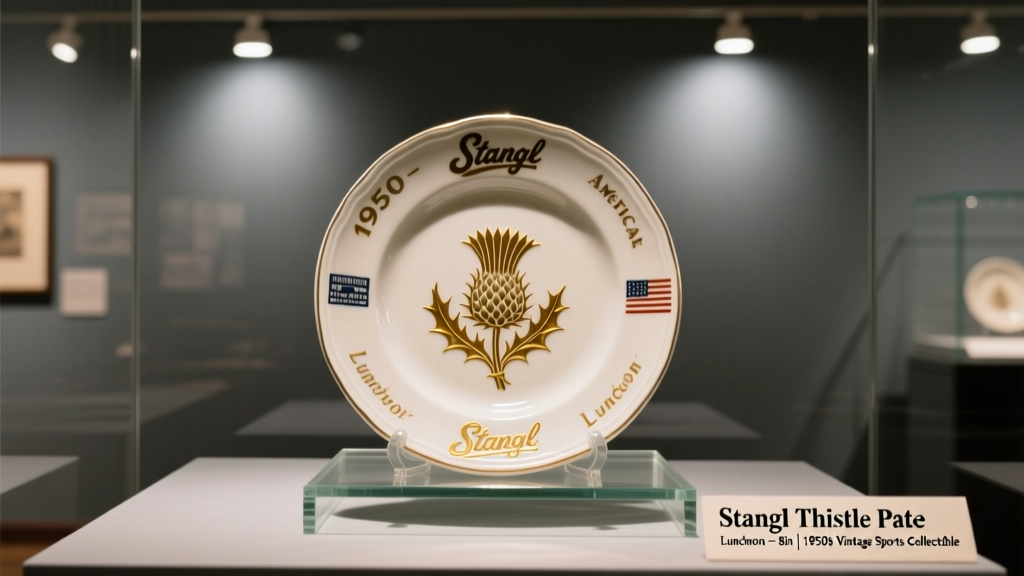
Stangl Thistle Luncheon Plate (8-Inch): Identification, Value, and Authentication Guide for Collectors
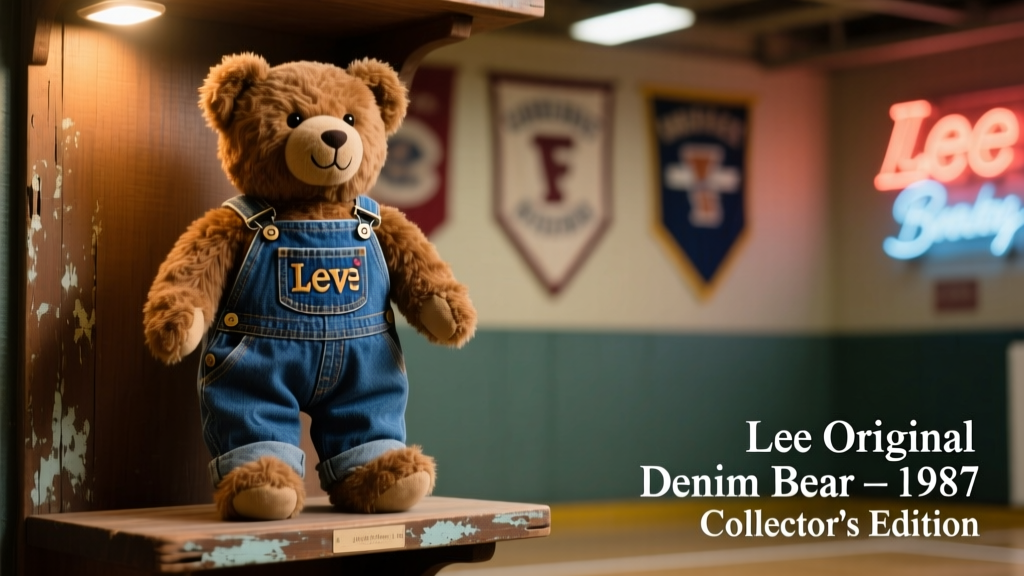
Teddy Bears Lee Plush Brown in Lee Brand Blue Denim Bib Overalls (13") — Collector’s Authentication & Historical Profile

Authenticating the Mary Gregory Vase: 'Girl on Clear Glass' Paneled Form, 3½ Inches Tall
Carriage Seat Joy Baby Walker: A Cast Iron Artifact from the 1870s–1890s — Authentication, Provenance, and Collectibility
Louis XIV Walnut Cabinet: Authenticating a 71½-Inch French Baroque Masterpiece
Authenticating the Pat Pending Cast Iron Gnome Doorstop with Lantern and Key Motif: A Collector’s Deep Dive
Decoding Lot #1140253: A Deep Authentication Analysis of the 2003 Upper Deck SP Authentic LeBron James Rookie Card

Grueby Vase: Crisp Leaves, Yellow Buds, Mottled Green Glaze — Authentication & Value Analysis of the 11¼-Inch Specimen