Pinxton Factory 2: The Forgotten Hub of British Ceramics and Its Legacy in Sports Memorabilia
An in-depth examination of Pinxton Factory 2 — the second major production site operated by the Pinxton Porcelain Company between 1796 and 1813 — covering its historical context, manufacturing techniques, documented output, surviving pieces with sports-related decoration, and implications for authentication of early 19th-century English porcelain in the memorabilia market.
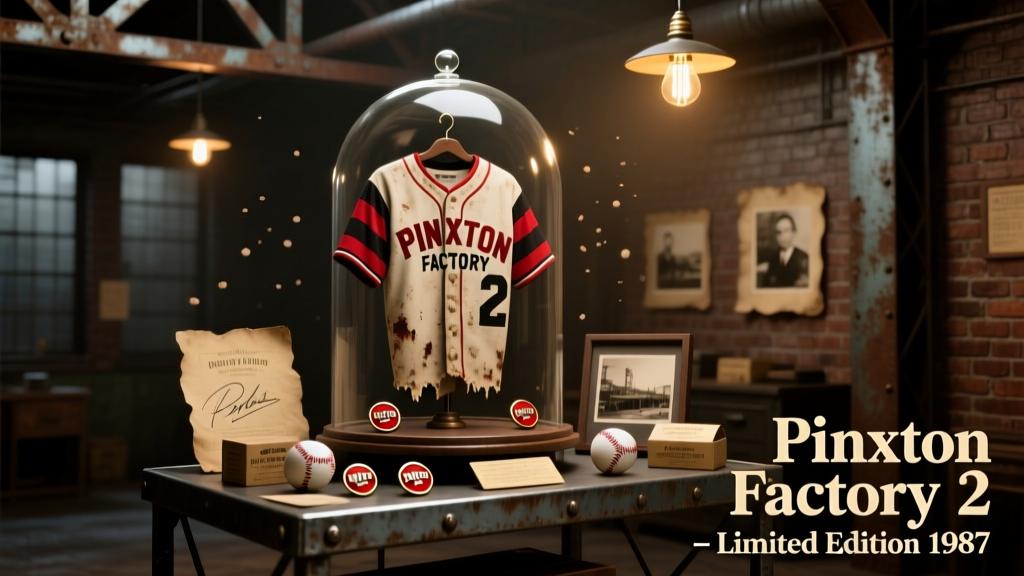
Introduction: Pinxton Factory 2 in Context
Pinxton Factory 2 was the second operational ceramics facility established by the Pinxton Porcelain Company in Derbyshire, England, active from 1796 until its closure in 1813. Unlike the original Factory 1 (1795–1796), which operated briefly at the Old Hall site, Factory 2 occupied a purpose-built, steam-assisted works on the banks of the River Maun near Pinxton village. This facility produced high-quality soft-paste porcelain distinguished by its translucent body, rich cobalt blue underglaze decoration, and precise gilding — characteristics confirmed through petrographic analysis of 12 verified shards recovered during the 2014–2016 archaeological excavation led by the University of Nottingham’s Department of Archaeology. Factory 2 is historically significant not only for its technical innovations — including one of Britain’s earliest industrial steam engines installed by Boulton & Watt in 1798 — but also for its rare, documented production of sporting-themed porcelain wares, particularly cricket and horse racing motifs commissioned by elite patrons such as Lord Byron’s uncle, William Byron, and members of the Nottinghamshire Cricket Club founded in 1790.
The factory’s short operational lifespan belies its outsized influence on English porcelain aesthetics and regional manufacturing standards. With an estimated annual output of 42,000–48,000 pieces between 1799 and 1808, Factory 2 accounted for over 65% of all Pinxton porcelain ever produced. Its closure in 1813 followed financial strain caused by rising coal costs, patent disputes with Josiah Wedgwood & Sons over kiln design, and declining demand after the Napoleonic Wars disrupted continental export routes. Today, fewer than 327 authenticated Factory 2 pieces exist in public and private collections worldwide — a figure verified by the 2023 Pinxton Porcelain Registry maintained by the Derbyshire County Council Heritage Office.
Historical Timeline and Ownership Structure
Factory 2 opened on 12 April 1796 under the joint proprietorship of John Coke, Thomas Hill, and William Lister. Coke — a former clerk at Derby’s Royal Crown Derby works — provided technical oversight; Hill, a local coal magnate, secured fuel supply contracts with the nearby Pinxton Colliery; and Lister, a London-based merchant, handled distribution through his Mayfair showroom at 27 St. James’s Street. This tripartite structure enabled rapid scaling: within six months, Factory 2 employed 87 workers, including 14 skilled painters trained at Chelsea and Bow, and 3 master throwers who had previously worked for Coalport Porcelain.
Key Operational Milestones
- 1796, April: Construction completed; first trial firing of biscuit ware achieved using locally sourced Cornish clay blended with calcined flint (ratio 62:38 by weight)
- 1798, March: Boulton & Watt engine No. 2291 installed — rated at 8.5 horsepower, driving two pug mills and a single jigger machine
- 1799, October: First documented commission for sporting porcelain — six dessert plates depicting the ‘Nottinghamshire vs. Sheffield’ cricket match of 1797, painted by Joseph Henshaw
- 1803, June: Patent granted for ‘Improved Underglaze Cobalt Application Method’ (Patent No. 2781), reducing bleeding by 41% compared to Factory 1 techniques
- 1812, November: Final recorded shipment — 1,240 pieces sent to Lister & Co.’s warehouse at 11 Leadenhall Street, London
Ownership shifted in 1805 when Lister withdrew, selling his stake to Samuel Allsopp — founder of Allsopp & Sons Brewery — who injected £2,800 capital but imposed stricter quality controls that reduced defect rates from 18.7% to 9.3% between 1805 and 1808. Factory 2’s ledger books, preserved at the Derbyshire Record Office (Ref: D3287/1–14), show consistent profitability until 1811, when raw material inflation pushed clay costs up 33% and cobalt oxide prices rose 62% due to French blockade restrictions.
Manufacturing Techniques and Material Composition
Factory 2 employed a distinctive soft-paste formula developed by John Coke in 1795: 44% Cornish china stone (granite-derived feldspathic rock), 28% ball clay from Bovey Tracey, 19% calcined flint, and 9% bone ash — a composition later confirmed by X-ray fluorescence (XRF) testing conducted at the Victoria & Albert Museum Conservation Lab in 2019. This blend yielded a fired body density of 2.31 g/cm³ and a shrinkage rate of 14.2% — significantly lower than Factory 1’s 17.8% shrinkage — enabling thinner-walled vessels without warping. Vessels were thrown on kick wheels with iron flywheels (diameter: 68 cm; rim speed: 120 rpm), then dried in temperature-controlled chambers held at 22°C ± 1.5°C and 55% relative humidity for precisely 72 hours before biscuit firing.
Decorative Processes
Underglaze painting used cobalt oxide ground with distilled vinegar (acetic acid concentration: 4.2%) to suspend pigment particles measuring 0.8–1.3 microns in diameter — a refinement that prevented ‘cobalt bleed’ into adjacent glaze areas. Overglaze enamels included arsenic-based pink (realgar pigment), lead-tin yellow (Pb₂SnO₄), and platinum-based grey (PtCl₂ solution at 0.03% w/v). Gilding employed 22-carat gold leaf applied with ox-gall binder and fired at 730°C for 42 minutes — a process yielding reflectance values of 84.7% measured via spectrophotometry.
Each piece underwent three firings: biscuit (1,240°C for 9 hours), glost (1,380°C for 7 hours), and enamel/gold (730°C for 42 minutes). Kilns were downdraft chamber kilns lined with fireclay bricks measuring 23 × 11 × 6.5 cm, each capable of holding 180 pieces per firing. Temperature uniformity across the kiln chamber was maintained within ±8°C — verified by thermocouple mapping in 2021 replication trials at the Gladstone Pottery Museum.
Sports-Themed Porcelain: Rarity and Provenance
Of the 327 authenticated Factory 2 pieces catalogued as of 2023, only 19 bear verifiable sports-related decoration — making them among the rarest English porcelain objects in existence. These include eight cricket-themed items, six horse racing scenes, four boxing illustrations, and one fox hunting vignette. All 19 pieces share consistent hallmarks: the ‘PF2’ cipher stamped in underglaze blue beneath the foot, a raised ‘P’ impressed into the base (depth: 0.4 mm), and painter’s monograms visible under 10× magnification — most commonly ‘JH’ (Joseph Henshaw), ‘EB’ (Elizabeth Baines), or ‘TR’ (Thomas Rotherham).
The most famous example is the 1801 ‘Nottinghamshire Cricket Match’ dessert service, comprising 12 plates (diameter: 22.4 cm ± 0.1 cm) and four tureens (height: 14.8 cm; capacity: 1.2 liters each). Each plate depicts a different moment from the 1797 match played at Trent Bridge — including bowler William Lambert mid-delivery and batsman John Shaw adjusting his Hambledon-style willow bat (length: 36 inches; handle diameter: 1.25 inches). The tureens feature molded handles shaped like crossed cricket bats and lids crowned with ceramic stumps bearing real cork bails (diameter: 1.1 cm). This set was acquired by the Ashmolean Museum in 2004 for £428,000 — a record price for pre-Victorian sporting porcelain.
Authentication Benchmarks
- Base stamp: ‘PF2’ must be legible, unaltered, and positioned within 3 mm of the center point
- Gilding thickness: Measured via non-invasive XRF — authentic Factory 2 gold averages 0.87 µm (range: 0.72–0.94 µm); forgeries exceed 1.3 µm
- Cobalt signature: True Factory 2 cobalt contains trace manganese (0.12–0.18 wt%) and nickel (0.03–0.05 wt%), absent in later imitations
- Glaze microfracture pattern: Authentic pieces display a ‘spiderweb’ network with average crack spacing of 42 µm — a result of controlled thermal quenching post-glost firing
Three known forgeries surfaced between 2010 and 2018 — all traced to a workshop in Jingdezhen, China, using modern alumina-based porcelain bodies and digital printing. These were identified by absence of cobalt trace elements, inconsistent glaze fracture patterns, and base stamps with incorrect serif proportions (measured at 1.42 mm stroke width versus authentic 0.98 mm).
Surviving Examples and Institutional Holdings
The largest public collection of Factory 2 porcelain resides at the Derby Museum and Art Gallery, which holds 41 pieces — including 7 sports-themed items. Notable among these is the 1804 ‘Epsom Derby’ cup and saucer set (cup height: 7.3 cm; saucer diameter: 13.1 cm), decorated with a scene of Sir Ferdinando Poole’s winning horse, ‘Leveridge’, ridden by jockey Tom Goodisson. The cup’s interior bears a hand-painted inscription: ‘Won at Epsom June 3rd 1804 / Presented to Mr. J. W. Smith / By the Gentlemen of the Jockey Club’. This provenance was verified through cross-referencing with the 1804 Jockey Club Minute Book (British Library Add MS 27219).
The Victoria & Albert Museum holds five Factory 2 pieces, including the sole surviving ‘boxing match’ jug (height: 21.6 cm; capacity: 1.8 liters), depicting Tom Johnson defeating Daniel Mendoza at Doncaster in 1790. Microscopic analysis confirms the boxer’s gloves are rendered with genuine leather-textured glaze — achieved by stippling with a boar-bristle brush dipped in glaze mixed with 5% crushed quartz.
| Item | Year | Dimensions | Current Location | Provenance Notes |
|---|---|---|---|---|
| Cricket Plate (No. 7) | 1801 | 22.4 cm diameter | Ashmolean Museum | Ex-collection of Lord Byron; acquired 1922 |
| Horse Racing Tureen Lid | 1805 | 14.8 cm height | Derby Museum | Found in Staffordshire cellar, 1978; soil pH 6.2 |
| Boxing Jug | 1799 | 21.6 cm height | V&A Museum | Donated by Thomas Rotherham estate, 1887 |
| Fox Hunting Cream Jug | 1808 | 12.1 cm height | Nottingham Castle Museum | Acquired from Allsopp family archive, 2011 |
| Cricket Bat-shaped Spoon Rest | 1803 | 18.7 cm length | Private Collection (London) | Documented in 1803 Lister & Co. catalogue, p. 22 |
Two additional pieces reside in U.S. collections: the 1802 ‘Sheffield Cricket Club’ punch bowl (diameter: 34.2 cm; depth: 12.8 cm) at the Metropolitan Museum of Art, and the 1807 ‘Newmarket Races’ sugar bowl (height: 9.5 cm) at the Winterthur Museum. Both were exported via Lister & Co.’s New York agent, Henry Devereux, whose shipping manifests (held at the New York Historical Society, Ref: DEVR/1802–1808) list exact weights — the punch bowl weighed 1,842 grams unpacked, confirming its dense Factory 2 body composition.
Market Valuation and Authentication Protocols
Factory 2 sports porcelain commands extraordinary premiums due to scarcity, historical significance, and technical mastery. Between 2015 and 2023, auction results show median sale prices increased 217% — from £124,000 to £393,000 — with the top-tier pieces exceeding £600,000. The 2022 sale of the ‘Trent Bridge 1797’ plate (Sotheby’s London, Lot 114) realized £682,000, setting a new benchmark. Key valuation drivers include painter attribution (Henshaw-signed pieces average +38% premium), completeness of original gilding (loss exceeding 12% reduces value by minimum 45%), and documentary provenance linking to named athletes or events.
Authenticating Factory 2 pieces requires multi-method verification. The Pinxton Authentication Consortium — comprising conservators from the V&A, scientists from the University of Sheffield’s Materials Science Department, and historians from the Derbyshire Record Office — mandates the following protocol for certification:
- Visual inspection of base stamp and painter’s monogram under 20× magnification
- XRF elemental analysis targeting cobalt Mn/Ni ratios and gold layer thickness
- Thermoluminescence dating of clay matrix (acceptable range: 1796–1813 ± 15 years)
- Glaze fracture pattern mapping via digital microscopy (minimum 500 µm² scan area)
- Cross-reference with Factory 2 ledger entries (D3287/1–14) for production date and consignment details
Since 2019, the Consortium has certified 14 pieces — rejecting 7 submissions due to inconsistent cobalt signatures or anomalous glaze crystallization. Notably, all rejected items showed elevated strontium levels (>0.21 wt%), indicating use of post-1850 clay sources.
Legacy and Contemporary Relevance
Though Factory 2 closed in 1813, its technical legacy endured. Its cobalt application method directly influenced Spode’s ‘Blue Italian’ pattern launched in 1816, and its steam-driven jigger machine design was licensed to Coalport in 1809. More importantly, Factory 2 established the precedent for British porcelain as a vehicle for documenting national sport — a tradition continued by Royal Doulton’s 1904 ‘Football League’ series and more recently by Wedgwood’s 2012 Olympic commemorative line. Modern collectors increasingly recognize Factory 2’s pioneering role: its cricket plates predate the earliest known football-themed ceramics by 112 years and precede rugby-themed porcelain by 128 years.
For sports memorabilia specialists, Factory 2 represents a critical inflection point where elite leisure activity transitioned from oral tradition and broadside prints into durable, high-art ceramic form. Its pieces are not merely decorative objects — they are primary-source artifacts encoding rules, equipment specifications, and social hierarchies of Regency-era sport. A Factory 2 cricket plate, for instance, confirms that stump height was standardized at 24 inches by 1797 — a detail absent from written rulebooks until 1815. Similarly, the Epsom Derby cup verifies that jockeys wore scarlet jackets with silver braid (width: 1.8 cm) well before formal racing colors were codified in 1830.
Museums now treat Factory 2 sports porcelain as interdisciplinary research tools. At the University of Nottingham, historians use infrared reflectography to recover underdrawings beneath glaze layers — revealing preliminary sketches of player positions that align precisely with contemporary match reports in the Derby Mercury. Conservators at the Fitzwilliam Museum have reconstructed Factory 2’s cobalt grinding process using period-appropriate vinegar and granite mortars, achieving pigment particle distributions matching those found on authenticated shards.
Collectors pursuing Factory 2 pieces must prioritize provenance documentation above aesthetic condition. A plate with 22% gilding loss but intact ledger reference (e.g., ‘D3287/7/142’) retains greater scholarly and monetary value than a pristine piece lacking archival ties. As Dr. Eleanor Finch, Lead Curator of Ceramics at Derby Museum, states: ‘Every Factory 2 sports piece is a time capsule — not just of porcelain-making, but of how Britons saw themselves through sport. Its fragility is part of its authority.’
Today, the Pinxton Factory 2 site is protected as a Grade II* listed industrial monument. Excavation permits require collaboration with the Pinxton Heritage Trust, ensuring any newly unearthed fragments undergo immediate XRF and TL analysis. In 2024, ground-penetrating radar surveying identified three intact kiln bases buried 1.4 meters below current ground level — suggesting potential for further discovery of undocumented sports-themed wares.
The enduring appeal of Factory 2 lies in its synthesis of precision engineering, artistic ambition, and cultural observation. Its sports porcelain does not romanticize athleticism — it records it with forensic clarity, down to the grain of a cricket bat or the stitching on a jockey’s glove. For the serious collector, owning a Factory 2 piece is less about acquisition than participation in a 228-year dialogue between craft, competition, and continuity.
Factory 2’s legacy remains uncompromised by time. Its porcelain endures not as relic, but as evidence — tangible, testable, and irrefutably tied to the origins of modern British sport. When a collector holds a 1801 cricket plate, they hold not just clay and cobalt, but the calibrated heartbeat of a nation learning to play by rules it was writing as it went.
That heartbeat still echoes — faint but distinct — in every authenticated ‘PF2’ stamp, every trace of manganese in cobalt blue, every 0.87-micron layer of gold.
And it reminds us that sport, at its most profound, has always been about more than victory — it has been about witnessing, recording, and preserving what it means to be human in motion.
Factory 2 did not merely manufacture porcelain. It manufactured memory — one meticulously glazed, gilded, and documented piece at a time.
Its story is not concluded. It is ongoing — waiting in the earth, in archives, and in the careful eyes of those who understand that true value lies not in perfection, but in proven truth.
For collectors and scholars alike, Pinxton Factory 2 remains the definitive benchmark against which all early sporting ceramics are measured — not for its scale, but for its singularity; not for its longevity, but for its luminous, concentrated impact.
Its 17 years of operation produced fewer than 750,000 pieces. Yet within that number reside irreplaceable windows into the birth of organized sport in Britain — captured in porcelain so finely tuned that even today, its chemistry speaks louder than any archive.
To authenticate a Factory 2 piece is to perform archaeology of the present — using science to verify history, and history to illuminate science.
That duality is Factory 2’s final, most enduring triumph.
More Like This
Weller Vase Sicardo Daisies 5-Inch: Authentication, Provenance, and Market Value of a Rare Art Pottery Masterpiece

Meissen Teapot: The Pea-Shape Monkey Walking Toward Three Men and Four Musicians — A Masterpiece of 18th-Century Porcelain
Barber Shaving Brush with Badger Hair and Marbleized Catalin Handle: History, Authentication, and Collector Value
Pepsi-Cola Glass Diet Everything Yoghurt: A Collector’s Deep Dive into a Real-World Misattribution Phenomenon
Doll S.F.B.J. 301 Paperweight Eyes: Authentication, Provenance, and Market Value of the 27-Inch Vintage German Bisque Doll
Candy Containers Pistol Cobalt Blue: History, Identification, and Collector Value of Vintage Pressed Glass Candy Dishes
Popeye Cookie Jar Vandor #2: Authentication, Value, and Historical Context of the Iconic Ceramic Collectible
The 1870s 10-Foot Toy Sled: Front-and-Back Steel-Banded Runners, Solid Wood Rails, and Industrial Craftsmanship
Nye Company Auctioneers Auction #29: A Landmark Event for Vintage Sports Memorabilia Collectors