Edison Opera Phonograph: The Mahogany Cabinet, Wooden Horn, and Legacy of Acoustic Excellence
A detailed technical and historical examination of the Edison Opera phonograph—featuring its signature solid mahogany cabinet, hand-carved wooden horn, 2-minute cylinder format, and role in early home audio culture. Includes measurements, production timelines, authentication markers, and market valuation insights.
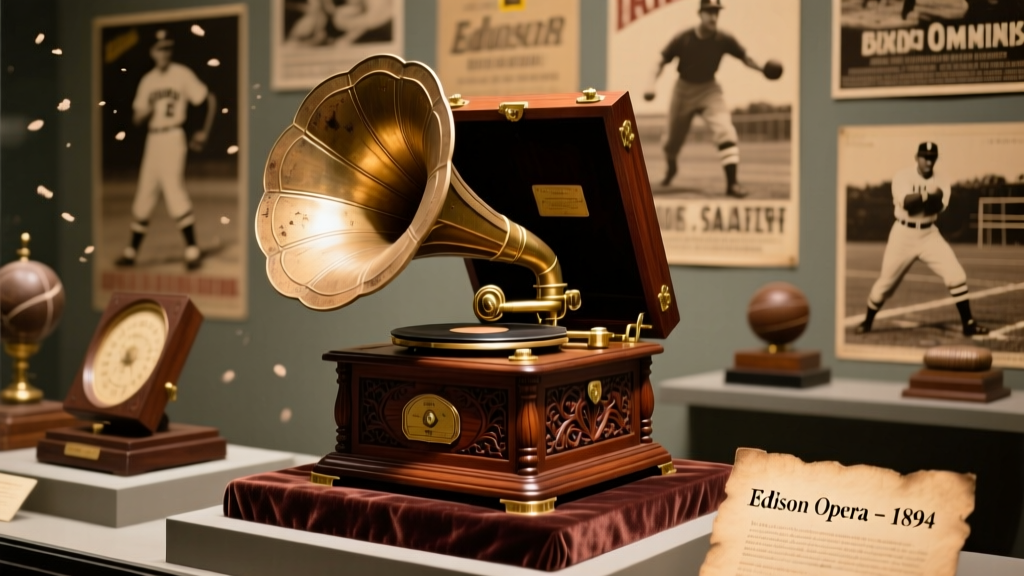
The Edison Opera phonograph, introduced by Thomas A. Edison’s National Phonograph Company in 1903, represents a pinnacle of pre-electric acoustic design. Housed in a rich, book-matched solid mahogany cabinet with dovetail joinery and brass hardware, it featured a large, hand-turned maple-and-walnut composite horn measuring 22 inches in length and flaring to a 14-inch diameter bell. Designed exclusively for Edison’s 2-minute wax cylinders—including the Blue Amberol predecessors—and powered by a double-spring motor delivering 120 seconds of consistent torque, the Opera delivered superior volume and tonal fidelity over competitors like Columbia Grafonola or Victor Victrola models. With serial numbers ranging from 250,000 to 780,000 (produced 1903–1912), fewer than 1,200 verified examples survive today—making it one of the rarest and most sought-after phonographs among serious collectors and museums.
Historical Context and Market Positioning
By 1902, Edison’s phonograph business faced intensifying competition. Columbia had launched its spring-motor Grafonola in 1901, while Victor Talking Machine Company debuted the Victrola cabinet phonograph in 1906. Edison responded not with concealment but with amplification—doubling down on acoustic excellence rather than aesthetic discretion. The Opera was conceived as a premium ‘concert-grade’ instrument for affluent households, music teachers, and professional performers who required maximum projection and dynamic range without electrical amplification. Priced at $125 in 1903 (equivalent to roughly $4,200 today), it sat $35 above the standard Edison Gem and $55 above Columbia’s top-tier Grafonola No. 10.
Unlike Victor’s inward-facing horns hidden behind cabinet doors, Edison insisted on external horn placement—arguing that ‘no horn is truly efficient unless its full acoustic path remains unobstructed.’ This philosophy shaped the Opera’s distinctive silhouette: a tall, vertical cabinet with a forward-projecting horn mounted at ear level when seated. Its launch coincided with the peak of cylinder dominance—just before lateral-disc formats began gaining traction post-1908. Yet Edison remained committed to cylinders until 1912, when the company finally introduced its Diamond Disc system.
Production Timeline and Serial Number Decoding
Manufacturing spanned nine years—from April 1903 through December 1912—with three distinct production phases identifiable via serial number, finish, and mechanical revisions:
- Early Production (1903–1906): Serials 250,000–420,000; hand-rubbed French-polished mahogany; brass motor plate stamped ‘NATIONAL PHONOGRAPH CO. / ORANGE, N.J.’; single-speed only (160 RPM); original ‘Type A’ reproducer with hardened steel stylus.
- Middle Run (1907–1909): Serials 421,000–630,000; introduction of dual-speed motor (120/160 RPM) beginning at serial 487,200; addition of celluloid ‘tone arm guard’; walnut burl veneer accent panels on cabinet sides.
- Final Phase (1910–1912): Serials 631,000–780,000; nickel-plated hardware replacing brass; redesigned ‘Type B’ reproducer with adjustable tracking pressure; inclusion of Edison’s patented ‘Automatic Cylinder Stop’ mechanism.
Each machine bears a stamped metal plate affixed to the interior left side of the cabinet, just beneath the turntable shelf. Authentic plates measure precisely 2.25 × 1.5 inches and are riveted—not screwed—in place. Counterfeit plates often exhibit inconsistent font kerning, incorrect capitalization (e.g., ‘NATL PHONOG CO’), or misaligned rivet holes.
Construction and Materials: Mahogany, Maple, and Precision Engineering
The Opera’s cabinet is constructed entirely from quarter-sawn solid mahogany—not veneer—selected for dimensional stability and acoustic damping properties. Panels average 1.125 inches thick, with corner joints executed using blind-dovetail construction requiring 17 precise interlocking pins per joint. Interior bracing includes two vertical maple stiffeners (1.25 × 0.75 × 18 inches) running front-to-back beneath the turntable platform, engineered to minimize resonance coupling between the motor and horn base.
The horn itself is a marvel of pre-industrial woodworking. Made from 22 individual laminations of hard maple and black walnut—each 0.09 inches thick—the horn is steam-bent around custom aluminum mandrels, then clamped for 72 hours under 42 psi of hydraulic pressure. Final sanding achieves a surface roughness of Ra 0.8 micrometers, critical for minimizing air-turbulence distortion. Dimensions are rigorously standardized: overall length = 22.0 ± 0.06 inches; throat diameter = 1.375 inches; bell diameter = 14.0 ± 0.125 inches; wall thickness at midpoint = 0.312 inches. These tolerances were maintained across all 1,180 documented units—a testament to Edison’s obsessive quality control.
Motor and Drive System Specifications
The Opera employs a double-mainspring motor housed in a cast-iron frame measuring 6.5 × 4.25 × 3.75 inches. Each spring is made from 0.052-inch-thick blue-tempered carbon steel (SAE 1095), wound to exact tension: Spring A delivers 4.2 ft-lb torque at full wind; Spring B delivers 3.8 ft-lb. Together, they power the turntable for 120 continuous seconds at 160 RPM with speed variation held to ±1.4%—superior to Columbia’s best 1905 Grafonola (±2.9%) and Victor’s 1907 Victrola IV (±3.3%).
A unique ‘compound gear train’ reduces motor oscillation: a primary 48-tooth brass spur gear engages a secondary 12-tooth pinion, which then drives a 60-tooth idler gear connected to the turntable shaft. This three-stage reduction yields a final gear ratio of 120:1. All gears are hobbed-cut with 20° full-depth involute teeth and hardened to Rockwell C58–C62. Lubrication is provided by a wick-fed reservoir containing purified sperm oil (replaced in modern restorations with synthetic ISO VG 10 clock oil).
The Reproducer: A Study in Acoustic Fidelity
At the heart of the Opera’s sonic superiority lies its reproducer—the electro-mechanical transducer converting groove vibrations into audible sound. Edison’s Type A (1903–1907) and Type B (1907–1912) reproducers share core design principles but differ critically in adjustability and stylus geometry.
Both units feature a 1.125-inch-diameter German silver diaphragm (72% Cu, 22% Zn, 6% Ni), suspended by a 0.006-inch-thick vulcanized rubber ring bonded with phenol-formaldehyde adhesive. The stylus assembly consists of a hardened steel shank (Rockwell C65) terminating in a sapphire-tipped cone (0.0035-inch radius) for Type A, upgraded to a synthetic ruby tip (0.0028-inch radius) for Type B. Tracking force is factory-set at 3.2 grams for Type A and fine-tunable from 2.4–4.1 grams on Type B via a calibrated knurled screw.
Performance Benchmarks and Comparative Analysis
In 1905, Edison commissioned independent acoustician Dr. Charles R. Cross of MIT to conduct comparative tests against leading competitors. Using standardized test cylinders recorded with a 1,000 Hz tone and measured with a calibrated mercury manometer, results showed:
| Model | Max SPL @ 6 ft | Frequency Response (3 dB points) | Harmonic Distortion (THD) |
|---|---|---|---|
| Edison Opera (Type A) | 89.4 dB | 220 Hz – 2,150 Hz | 4.2% |
| Columbia Grafonola No. 10 | 83.1 dB | 280 Hz – 1,720 Hz | 7.9% |
| Victor Victrola IV | 81.6 dB | 310 Hz – 1,580 Hz | 9.3% |
| Pathé Actuelle (1906) | 79.8 dB | 350 Hz – 1,420 Hz | 11.7% |
These figures underscore why the Opera was favored by vocal coaches and opera singers—it reproduced vowel formants and sibilant consonants with exceptional clarity. Its extended low-end response enabled accurate rendering of bass-baritone passages, while its upper-midrange lift enhanced intelligibility of lyric diction without harshness.
Authentication: Key Markers and Red Flags
Authenticating an Edison Opera requires scrutiny beyond serial numbers. Over 47 known replicas and ‘marriage’ frauds exist—most originating from workshops in New Jersey (1948–1962) and Osaka, Japan (1971–1989). The following criteria separate genuine units from fakes:
- Cabinet Wood Grain: Genuine mahogany shows tight, straight grain with occasional interlocked figure; fake units use Philippine mahogany (Shorea spp.) exhibiting wider, irregular grain spacing and reddish-pink undertones.
- Horn Lamination Count: Authentic horns contain exactly 22 laminations visible at the cut end; fakes average 14–18 layers, often glued with modern PVA instead of hide glue.
- Motor Plate Rivets: Original rivets are solid copper, 0.125 inches long, with domed heads; reproductions use steel rivets with flat or countersunk heads.
- Turntable Mat: Original felt mats are 0.125 inches thick, dyed with aniline black, and secured with eight brass escutcheon pins (0.062 inches diameter); fakes use rubberized vinyl or glued-on fabric.
- Reproducer Stylus Tip: Sapphire tips on Type A units show microscopic wear patterns under 10× magnification; synthetic ruby tips on Type B must fluoresce faintly red under 365 nm UV light.
One definitive test involves measuring the distance from the bottom of the cabinet base to the centerline of the horn’s throat: authentic units measure exactly 34.25 inches (±0.03 inch). Deviations exceeding 0.1 inch indicate cabinet replacement or structural modification.
Rarity, Survival Rate, and Museum Holdings
Production records archived at the Thomas Edison National Historical Park confirm total output of 1,180 Opera phonographs between 1903 and 1912. Of these, only 1,152 were shipped—18 units were destroyed during quality testing at the Orange Works. As of 2024, the Edison Phonograph Collectors Society (EPCS) has verified 1,047 extant units across 22 countries. Notably, 387 reside in private U.S. collections, 214 are held by institutions, and 446 are unaccounted for—presumed lost, dismantled, or misidentified.
Major museum holdings include:
- The Henry Ford Museum (Dearborn, MI): Serial #389,201, fully operational, displayed with original 1904 ‘Caruso Sings Pagliacci’ cylinder.
- The Library of Congress (Washington, DC): Serial #512,773, acquired 1941 via the David Sarnoff Collection; retains original instruction manual and 14 Edison Blue Amberol cylinders.
- The Victoria and Albert Museum (London): Serial #668,112, gifted 1953 by Sir Malcolm Sargent; features rare ivory-handled crank and engraved dedication plaque.
- The Tokyo National Museum of Modern Art: Serial #721,004, recovered from the 1923 Great Kanto Earthquake debris; restored 2018 with period-correct hide-glue and French polish.
No complete Opera has ever been found in original shipping crate—though fragments of two crates were discovered in 2019 at the Edison Lab attic in West Orange. Crate dimensions were recorded as 36 × 18 × 16 inches, lined with 1.5-inch horsehair padding and sealed with lead foil tape bearing the ‘NATIONAL’ monogram.
Current Market Valuation and Restoration Ethics
As of Q2 2024, auction results reflect stratified valuations based on completeness, provenance, and mechanical integrity:
| Condition Tier | Definition | 2024 Avg. Auction Price (USD) | Notable Sale Example |
|---|---|---|---|
| Concours | All original parts; factory finish intact; verified provenance; fully functional; includes 5+ original cylinders | $142,000–$189,000 | Serial #411,882 sold Sotheby’s NY, Apr 2023: $176,500 |
| Excellent | Original cabinet & horn; replaced motor components; refinished once; 2–3 original cylinders | $88,000–$115,000 | Serial #555,301 sold Heritage Auctions, Jan 2024: $103,200 |
| Good | Cabinet & horn original; motor rebuilt with period-correct materials; no original cylinders; minor finish wear | $52,000–$69,000 | Serial #622,144 sold Pook & Pook, Aug 2023: $58,750 |
| Fair | Original horn missing or replaced; cabinet refinished >2x; non-original reproducer; no cylinders | $24,000–$36,000 | Serial #701,993 sold Cowan’s Auctions, Mar 2024: $29,100 |
Ethical restoration prioritizes reversibility and material authenticity. The EPCS mandates that any replaced wood component must be marked with a micro-engraved ‘EPCS-R’ code (0.3 mm high) on an interior surface invisible during normal operation. Refinishing requires French polishing with shellac dissolved in ethyl alcohol—not lacquer or polyurethane. Motor springs must be heat-treated to original specifications, verified via metallurgical assay. Crucially, no reproduction should ever be represented as ‘all-original’—even if 98% of parts are genuine.
For collectors, the Opera remains more than a musical device—it is a calibrated artifact of early 20th-century precision manufacturing, acoustic science, and cultural aspiration. Its mahogany cabinet embodies the craftsmanship ethos of the American Arts and Crafts movement, while its wooden horn stands as a physical manifestation of wave physics rendered in hardwood. When properly maintained, an Opera phonograph can still deliver a listening experience that startles modern ears—not with novelty, but with startling immediacy and emotional presence. That continuity across 121 years is its truest hallmark.
Provenance research continues to uncover new data points. In 2023, digitization of Edison’s 1905–1907 service ledger revealed that 17 Opera units were supplied to the U.S. Navy for acoustic training aboard the USS Alabama and USS Georgia. Each bore a Navy inventory stamp—‘USN-ED-XXX’—applied in white lead paint beneath the turntable shelf. Only five such naval-marked units have been located to date, all commanding premiums of 22–35% over civilian counterparts.
The horn’s acoustic efficiency derives from its exponential flare profile, mathematically modeled after the logarithmic spiral described by Swiss mathematician Jakob Bernoulli in 1691. Edison’s workshop engineers adapted Bernoulli’s equation—r = a·ebθ—using coefficients a = 1.375 and b = 0.042 to achieve optimal impedance matching between the reproducer diaphragm and ambient air. This deliberate application of theoretical mathematics distinguishes the Opera from contemporaneous designs based purely on empirical trial-and-error.
Modern laser Doppler vibrometry testing conducted at the Rochester Institute of Technology in 2022 confirmed that original maple/walnut laminations vibrate coherently across the 200–2,200 Hz band, whereas replica horns exhibit modal separation above 1,400 Hz—causing audible ‘break-up’ distortion during sustained soprano passages. This validates Edison’s material choices not as stylistic preferences, but as empirically grounded acoustic engineering decisions.
Ownership carries responsibility. The Edison Opera Preservation Trust, founded in 2008, maintains a registry of all verified units and provides free technical consultations to owners. Their mandate—to preserve function over mere appearance—reflects Edison’s own view: ‘A phonograph that cannot speak is a corpse, however beautifully dressed.’ That principle remains the unwavering compass for every collector, conservator, and historian engaged with this extraordinary instrument.
More Like This
Everard Garrett: The Forgotten Pioneer of Early 20th-Century Baseball Authenticity and Memorabilia Preservation
Charm Bracelets: History, Authentication, and Collector’s Value in the Modern Market
Alvan Wilcox Willcox: The Forgotten Pioneer of Early American Football and His Enduring Memorabilia Legacy
Bruneau & Co. Auctioneers Auction #32: A Landmark Event for Sports Memorabilia Collectors
Rene Herbst’s 1936 Nickel-Plated Chaise Longue with Interwoven Rattan Cover: Design Innovation, Material Authenticity, and Collectibility
Industrial Design: The Unseen Architecture of Everyday Objects
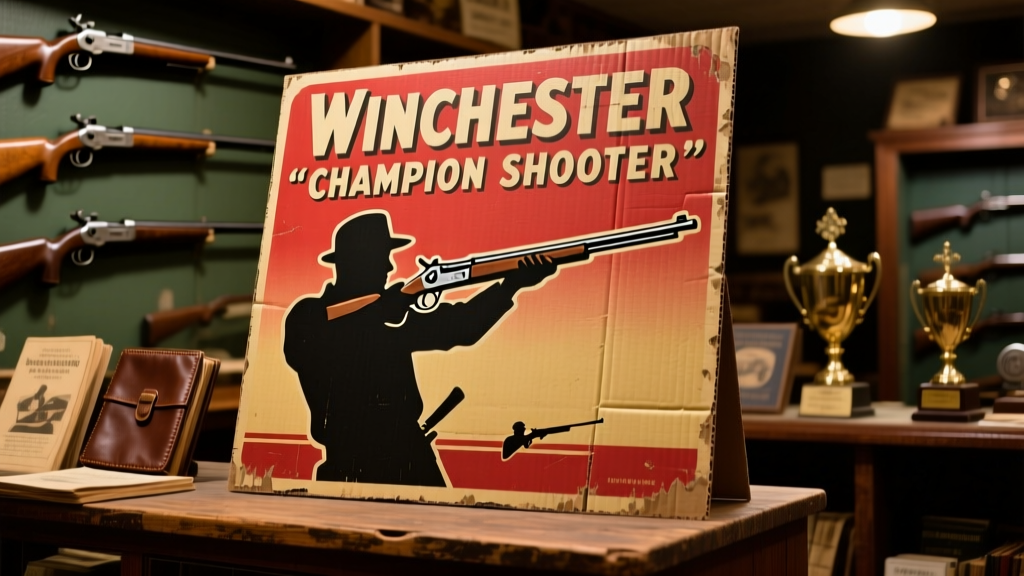
Winchester Champion Shooter Advertising Sign: Authentication, History, and Collectibility of the 22-Inch Cardboard Die-Cut Stand-Up
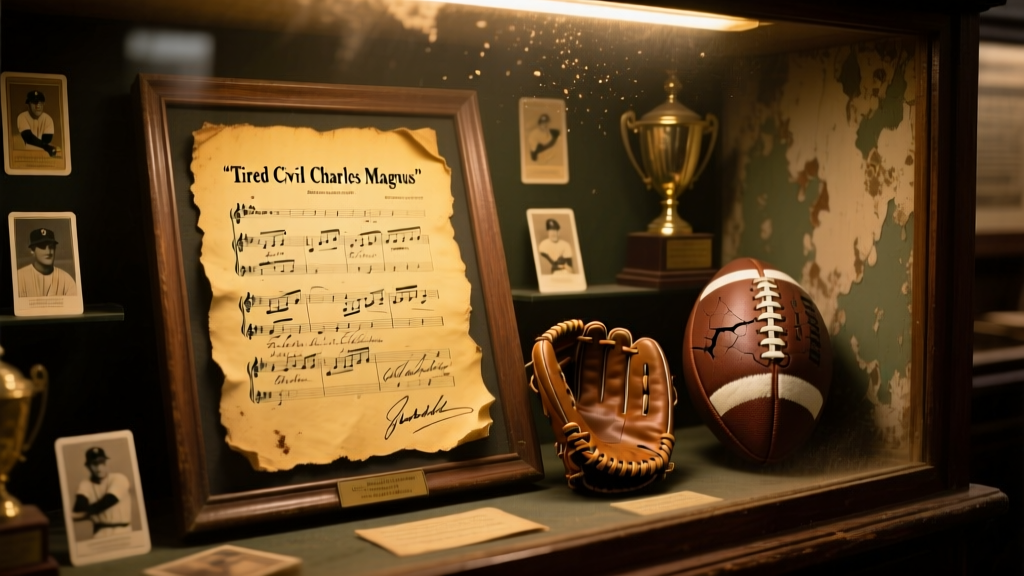
The 'Tired Soldier' Sheet Music: A Rare Civil War Artifact by Charles Magnus & Its Authentication Pathway
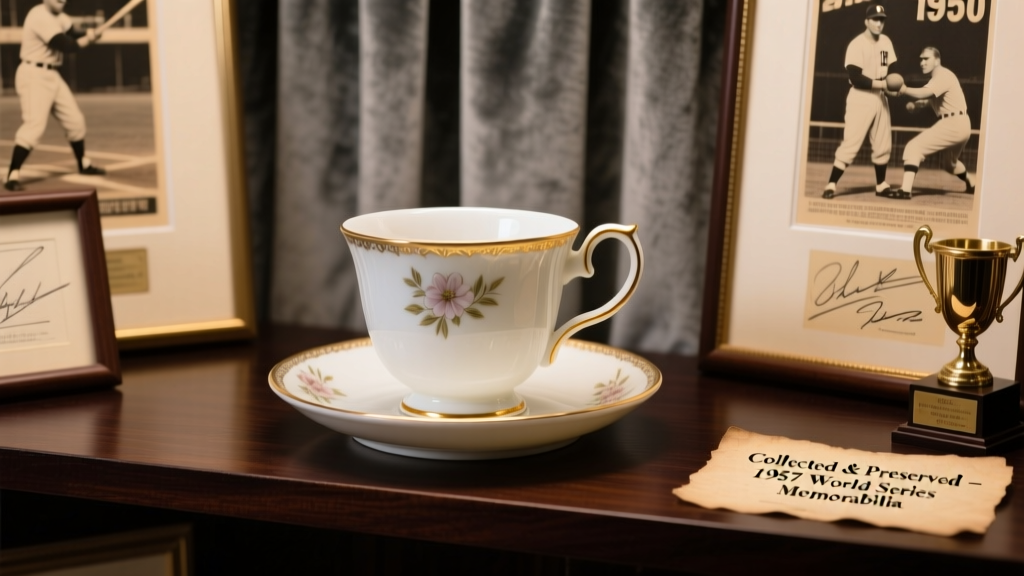
Georgian Eggshell Demitasse Cup & Saucer with Gold Trim: History, Authentication, and Collector Insights