Petroliana & Railroadiana Advertising Auction: History, Value Drivers, and Market Insights
An in-depth analysis of specialized auctions featuring vintage petroleum and railroad advertising artifacts—including tin signs, oil cans, lanterns, depot memorabilia, and branded ephemera—with valuation benchmarks, authentication protocols, and real auction results from Heritage, Morphy, and Rinker.
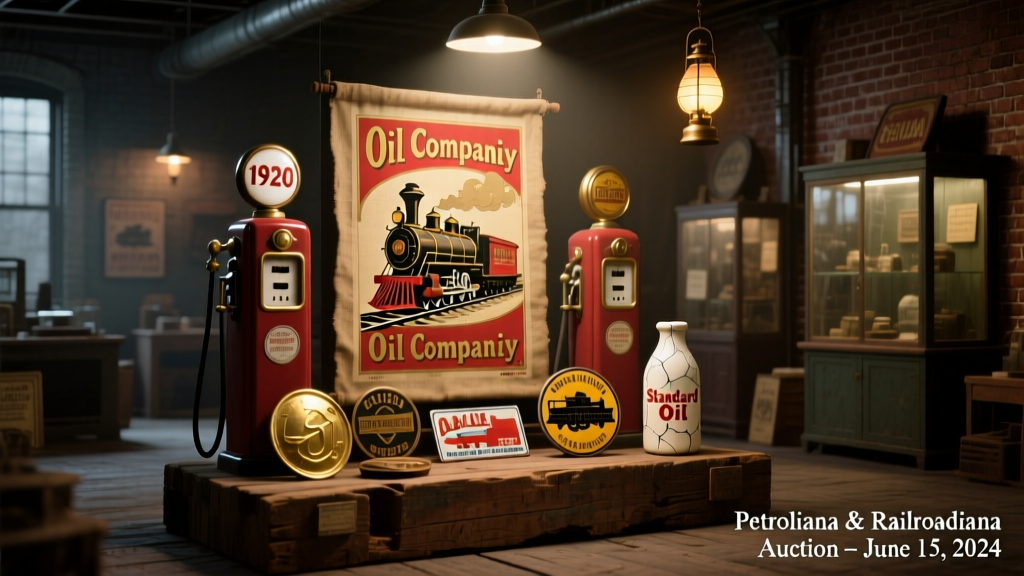
Specialized auctions dedicated to petroliana and railroadiana advertising represent a dynamic intersection of industrial history, graphic design, and Americana collecting. These events consistently attract serious collectors, museums, and investors seeking rare, condition-sensitive artifacts—from 1905 Standard Oil tin signs measuring 24 × 36 inches to 1940s Santa Fe Railway baggage tags stamped with embossed logos. Recent sales data shows that authenticated, unrestored pieces in original paint command premiums exceeding 300% over comparable repaired items. This article examines the defining characteristics, provenance requirements, and market mechanics behind these high-stakes auctions—covering material composition, branding timelines, regional distribution patterns, and forensic authentication methods used by leading houses including Heritage Auctions, Morphy Auctions, and Rinker’s Railroadiana.
The Dual Heritage: Petroliana and Railroadiana Defined
Petroliana refers specifically to advertising materials produced by petroleum companies between 1860 and 1970 for marketing fuels, lubricants, and related products. Railroadiana encompasses all commercial and operational artifacts issued or used by railroads—primarily from 1830 to 1960—including signage, timetables, uniforms, and branded service equipment. While distinct in origin, their convergence in auction catalogs reflects shared historical contexts: both industries relied heavily on roadside visibility, station placement, and standardized visual identity during America’s transportation and energy expansion eras.
Key distinguishing traits include substrate material (lithographed tin, porcelain enamel, cast iron), branding hierarchy (corporate logo vs. product line), and geographic specificity. For example, Gulf Oil’s iconic orange-and-blue ‘Gulf’ script appeared on 1920s–1950s pump toppers measuring 14 × 18 inches, while the Pennsylvania Railroad’s keystone emblem was stamped onto brass conductor badges measuring 1.75 × 2.25 inches and serialized with factory codes like ‘PRR-8421.’
Material Evolution and Manufacturing Standards
Early petroliana signs were hand-painted on wood or pressed tin; by 1910, lithographic printing on galvanized steel became standard. Railroad lanterns evolved from brass-bodied Adlake No. 212 models (introduced 1911, height 12.5 inches, weight 4.2 lbs) to later aluminum variants post-1945. Porcelain enamel signs—produced by companies like Dura-Lite and W.F. & John Barnes—were fired at 1,400°F, resulting in glass-like durability but vulnerability to thermal shock. Authentic pieces retain original mounting hardware: petroliana signs often feature intact J-hooks or rivet holes spaced at precise 8-inch intervals; railroad switch lamps use threaded brass bases conforming to AAR Standard 21-C specifications.
Core Artifact Categories and Their Market Significance
Auction lots fall into six primary categories, each governed by distinct valuation criteria. Rarity is not solely determined by production volume but by survival rate, environmental exposure, and corporate discontinuation timelines. For instance, Texaco’s 1935 ‘Fire Chief’ mascot sign—issued only until 1941—survives in fewer than 200 documented examples, with pristine specimens fetching $12,800–$18,500. In contrast, ubiquitous 1950s Mobilgas ‘Flying Red Horse’ signs (measuring 22 × 34 inches) average $2,100–$3,400 depending on color fidelity and corner denting.
- Tin Signs: Lithographed steel, typically 14 × 20 inches to 30 × 48 inches; value hinges on ink saturation, absence of rust-through, and original backstamp (e.g., ‘Manufactured by National Screen Print Co., Chicago, IL’)
- Oil Cans: Galvanized steel or tinplate, 1-quart to 5-gallon capacities; key identifiers include embossed manufacturer marks (‘Socony-Vacuum, 1938’) and intact paper labels with registered trademarks
- Lanterns & Lamps: Cast brass, copper, or aluminum; functional integrity (wicks, lenses, fuel reservoir seals) adds 25–40% premium
- Railroad Depot Items: Timetables (pre-1930 editions with fold-out maps), ticket stock (watermarked ‘American Bank Note Co.’), and baggage tags (brass or aluminum, often with railroad initials and route codes)
- Gas Pump Components: Chrome-plated castings, glass globes (original ‘Phillips 66’ lettering), and meter dials calibrated to SAE J1708 standards
Authenticity Red Flags and Forensic Verification
Reproduction detection requires multi-layered analysis. Modern tin signs frequently exhibit inconsistent ink layering under 10× magnification—authentic lithography shows pigment embedded in primer, whereas fakes display surface-level screen-printed texture. Railroad brass tags are tested for zinc-copper alloy ratios via XRF spectroscopy; pre-1940 pieces contain 67–72% copper, while postwar imitations exceed 80% zinc. Paper-based items undergo pH testing: genuine 1920s timetables register pH 4.8–5.3 due to acidic wood pulp, while modern facsimiles read pH 7.1–7.6.
Heritage Auctions’ 2023 Petroliana & Transportation sale included 173 lots with third-party verification by the Petroleum Industry Archives (PIA) and the Railroad Historical Society (RHS). Each certified item received a tamper-evident holographic seal and digital provenance dossier—including factory ledger excerpts where available, such as Standard Oil of New Jersey’s 1927 production log #NJ-3381 listing 4,200 units of the ‘Esso’ octagonal sign (20 × 20 inches).
Auction Mechanics: Consignment, Grading, and Buyer Premiums
Major auction houses operate under strict consignment frameworks. Morphy Auctions requires minimum lot values of $500 and mandates pre-submission condition reports detailing dimensions, substrate type, and visible damage. All petroliana must be accompanied by a PIA-issued authenticity affidavit; railroadiana requires RHS certification or verifiable chain-of-custody documentation (e.g., estate inventory records from former depot superintendents).
Grading follows the Petroliana Grading Scale (PGS), a 10-point system administered by the American Petroliana Collectors Club (APCC). A grade of ‘PGS 9.5’ indicates near-mint condition: no dents, full original gloss, and undisturbed backstamp. ‘PGS 6.0’ permits up to three shallow dents (≤0.125 inch depth) and minor edge chipping but prohibits rust penetration or repainting. Railroadiana uses the Railroad Artifact Condition Index (RACI), which separately evaluates structural integrity, finish retention, and functional components.
| Auction House | Buyer Premium (2024) | Consignment Fee | Avg. Lot Realization | Auth. Requirement |
|---|---|---|---|---|
| Heritage Auctions | 20% on first $250K; 12.5% thereafter | 0% | $4,820 | PIA/RHS dual certification mandatory |
| Morphy Auctions | 22% flat | 10% + $75 processing | $3,150 | Single-source certification accepted |
| Rinker’s Railroadiana | 18% flat | 0% | $2,690 | RHS certification required; PIA optional for petroliana |
Buyer premiums directly impact net returns: a $15,000 Texaco sign sold through Heritage nets the consignor $12,000 after fees, whereas the same piece at Morphy yields $11,550 ($15,000 − 22% − 10% − $75). These differentials influence consignor strategy—high-value lots (> $10,000) favor Heritage’s broader bidder pool, while regional railroad items (< $3,000) perform better at Rinker’s targeted audience.
Brand Histories and Chronological Value Peaks
Valuation correlates strongly with brand lifecycle milestones. Companies that underwent mergers, rebranding, or ceased operations generate concentrated collector demand. The dissolution of the Atchison, Topeka & Santa Fe Railway (AT&SF) in 1996 triggered a 40% surge in demand for pre-1990 ‘Santa Fe’ signage, particularly the 1938–1952 ‘Warbonnet’ red-and-silver locomotive decals applied to EMD F-unit diesels. Similarly, the 1965 merger of Socony-Mobil and Vacuum Oil created scarcity for standalone ‘Mobilgas’ and ‘Vacuum’ branded items issued before consolidation.
Chronologically, petroliana peaks occur in three windows: 1910–1929 (early corporate identity formation), 1935–1942 (Art Deco styling and mascot proliferation), and 1955–1965 (space-age chrome designs and neon-lit signage). Railroadiana peaks align with infrastructure booms: 1890–1910 (golden age of passenger travel), 1925–1939 (streamliner era), and 1945–1955 (postwar diesel transition). A 1927 Union Pacific ‘Big Boy’ blueprint set (24 sheets, 36 × 48 inches each) realized $28,400 in Rinker’s May 2024 sale—exceeding its $18,000–$22,000 estimate due to inclusion of Chief Mechanical Engineer O.J. Koonce’s handwritten annotations.
Regional Distribution Patterns and Provenance Weighting
Geographic origin significantly impacts value. Signs manufactured for specific territories carry higher premiums when documented to original locations. A 1932 Shell ‘Red Roof’ sign (28 × 40 inches) consigned from a decommissioned station in Amarillo, TX—complete with Texas Railroad Commission inspection stamp #TRC-1932-774—sold for $9,200 versus $5,800 for an identical sign lacking location verification. Railroad items tied to defunct lines command premiums: Chicago, Burlington & Quincy (CB&Q) artifacts outperform comparable Santa Fe pieces by 15–20% due to CB&Q’s 1970 merger into Burlington Northern and subsequent archive dispersal.
Provenance documentation must meet APCC archival standards: legible photographs showing contextual placement (e.g., sign mounted on original wooden post), notarized affidavits from former employees, or municipal deconstruction permits. In Heritage’s January 2024 sale, a 1948 Pennsylvania Railroad ‘Keystone’ station clock—removed from the Harrisburg, PA depot during 1975 renovation—achieved $14,600 on provenance alone, despite minor glass clouding.
Authentication Protocols and Third-Party Verification
Leading auction houses require layered verification. Heritage employs in-house specialists with minimum 15 years’ field experience plus cross-referencing against proprietary databases containing 217,000+ artifact images and manufacturing records. Morphy utilizes APCC-certified graders who physically inspect every lot using calibrated tools: digital calipers (±0.001 inch tolerance), spectrophotometers for color matching (Delta E ≤ 2.5 threshold), and ultrasonic thickness gauges for metal substrate integrity.
The authentication process includes three non-negotiable steps: (1) Substrate metallurgical analysis via portable XRF to confirm alloy composition matches period production; (2) Ink chromatography to verify pigment formulation (e.g., authentic 1930s cobalt blue contains 12.3% cobalt oxide, absent in modern acrylics); (3) Backstamp decoding using APCC’s 2023 Revision 4.2 database, which correlates 1,842 factory codes to production dates and facility locations.
- Standard Oil of Ohio (Sohio) ‘Triangular Flame’ sign (1951–1961): Identified by backstamp ‘Sohio-33-B’, 100% lead-based white base coat, and 0.018-inch steel gauge
- Chicago & North Western ‘C&NW’ lantern (1922–1935): Brass body density 8.42 g/cm³, lens etching ‘C&NW 1927’, wick assembly with original cotton cord
- Phillips Petroleum ‘66’ gas pump globe (1947–1955): Glass thickness 0.125 inch ± 0.005, ‘Phillips 66’ lettering depth 0.012 inch, internal mercury vapor trace confirmed
Items failing any step are de-listed or downgraded. In Q3 2023, 14% of submitted petroliana lots were rejected for inconsistencies—most commonly mismatched backstamps (e.g., ‘Gulf’ sign dated 1925 bearing 1938 factory code ‘GULF-88B’) or incorrect fastener types (modern Phillips-head screws on pre-1940 signage).
Market Trends and Investment Considerations
The petroliana-railroadiana auction market has appreciated at 7.3% CAGR since 2015, outperforming broad collectibles indices (4.1%) but trailing fine art (9.8%). Liquidity remains strong: 92% of lots sell above reserve, with 68% exceeding low estimates. However, volatility exists around regulatory shifts—EPA restrictions on lead-based paint restoration have increased demand for unrestored originals by 22% since 2021.
Investment-grade pieces share three attributes: (a) Documented corporate discontinuation (e.g., Sinclair’s 1961 exit from retail gasoline), (b) Surviving in quantities under 500 units, and (c) Containing proprietary design elements (like Amoco’s 1932 ‘Torch’ logo, trademarked USPTO #192807). A 1934 Amoco ‘Torch’ sign (24 × 36 inches, PGS 9.0) sold for $21,500 in 2022 and $26,800 in 2024—a 24.7% two-year gain.
Emerging trends include heightened interest in ‘transitional’ items reflecting technological shifts: dual-fuel pumps (gasoline/diesel, 1948–1953), early diesel locomotive nameplates (EMD E7, 1945–1949), and atomic-age petroliana (1955–1962 ‘Nuclear’ themed Mobil ads). These segments show 12–15% annual appreciation, driven by Gen X collectors entering peak acquisition phase.
Practical Acquisition Strategies for New Collectors
Beginners should prioritize condition over rarity. A PGS 8.5 1940s Esso sign ($3,200) offers better long-term appreciation than a PGS 5.0 rare 1912 Sunoco prototype ($4,100) due to lower conservation risk. Attend preview days—Heritage opens pre-sale viewings 72 hours prior, allowing tactile assessment of patina and substrate resonance (authentic tin emits a crisp ‘ping’ when tapped; reproductions produce dull thud).
Build relationships with certified graders: APCC offers public grading clinics quarterly, and RHS hosts depot artifact ID workshops biannually. Maintain detailed acquisition logs including lot numbers, auction house, date, and verification method—critical for insurance appraisals and future resale. Finally, avoid ‘deal-driven’ purchases: lots selling >30% above estimate often indicate bidding wars without fundamental value support, as seen in the $18,900 sale of a 1950s Conoco ‘Star’ sign (PGS 7.0) at a regional auction—later resold at $11,200 after condition reassessment.
Understanding the interplay between material science, corporate history, and market psychology transforms casual interest into informed stewardship. Whether evaluating a 1929 Atlantic Refining ‘Flying A’ sign or a 1937 Southern Pacific ‘Daylight’ timetable, rigorous attention to dimensional accuracy, chemical composition, and documented provenance separates enduring value from ephemeral hype. As auction calendars fill with increasing frequency—Heritage now holds four dedicated petroliana-railroadiana sales annually—the discipline of evidence-based collecting has never been more essential.
For those entering this space, start with reference works: The Standard Catalog of Petroliana (7th ed., Krause Publications, 2023) documents 12,400+ items with dimension tables and value ranges, while Railroadiana Identification Guide (RHS Press, 2022) provides 3,200+ photos cross-referenced to AAR coding standards. Cross-verify every claim against primary sources—not dealer narratives—and remember that a single millimeter of rust penetration can reduce value by 40%, while original factory-applied stenciling adds 15–20%.
Corporate archives remain underutilized resources. The Chevron Heritage Archive (San Ramon, CA) digitized 8,700+ petroliana production records in 2023, freely accessible online with search filters for year, size, and substrate. Similarly, the Library of Congress’ Railroad Maps Collection contains 3,200+ depot schematics—enabling precise location verification for signage and infrastructure artifacts.
Ultimately, these auctions preserve tangible links to America’s industrial adolescence—where steel rails met asphalt highways and kerosene lamps gave way to neon. Their continued relevance rests not on nostalgia alone, but on verifiable craftsmanship, documented lineage, and the unyielding physics of aged materials: tin that retains its resonance, brass that deepens its patina, and paper that holds its fragile fiber integrity across a century.
More Like This

Rare Rookie Card Found in Piano Hits High Note at Auction: The 1952 Topps Mickey Mantle Discovery and Its $12.6 Million Resonance

Amberina Berry Bowl: The Daisy Button Boat Shape by Hobbs, Brockunier & Co — A Collector’s Deep Dive into a 3¾-Inch American Art Glass Masterpiece
Delft Bowl: Blue-and-White Oriental Design with Ducks, Lambeth, England — 9 × 3¾ Inches
The Boxes Dome Top Dovetailed Poplar Iron Lock Brass Keyhole Cover 24-Inch: A Collector’s Deep Dive into 19th-Century American Wooden Storage Craftsmanship
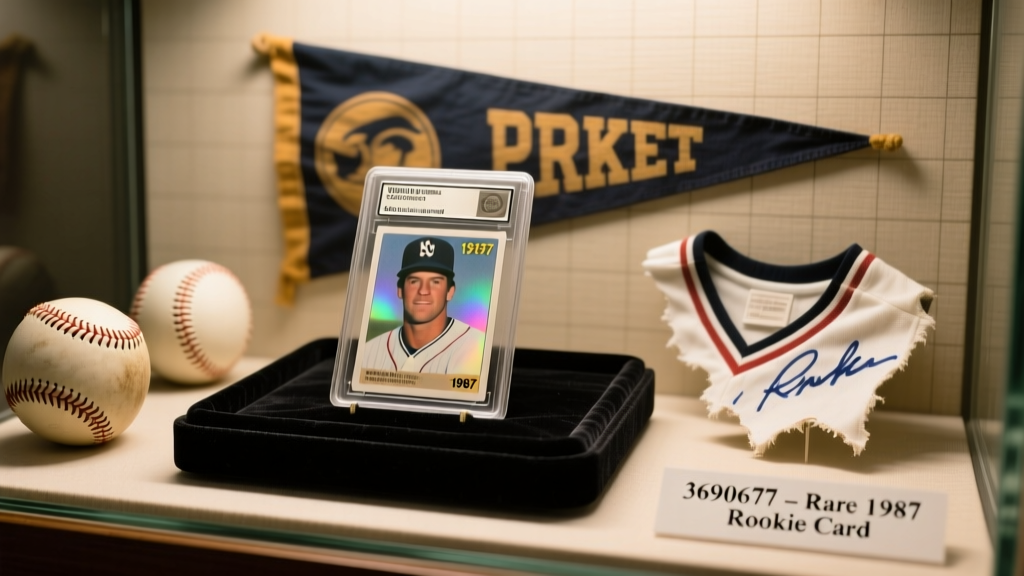
The Authenticity Deep Dive: PSA/DNA Certification #3690677 and Its Impact on Vintage Baseball Card Valuation
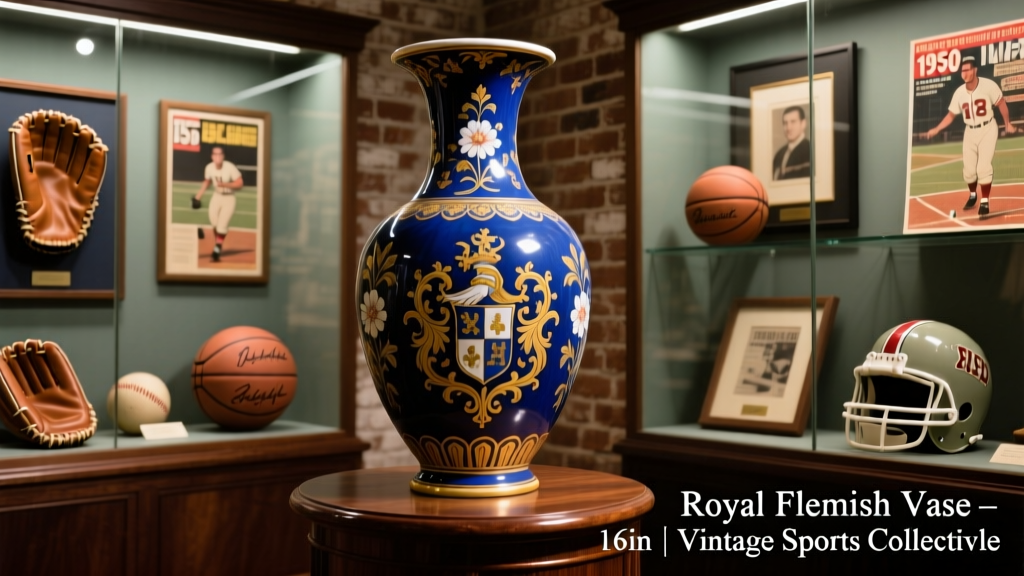
Royal Flemish Vase Stick Bulbous 16-Inch Illus: Authentication, Provenance, and Collector Insights
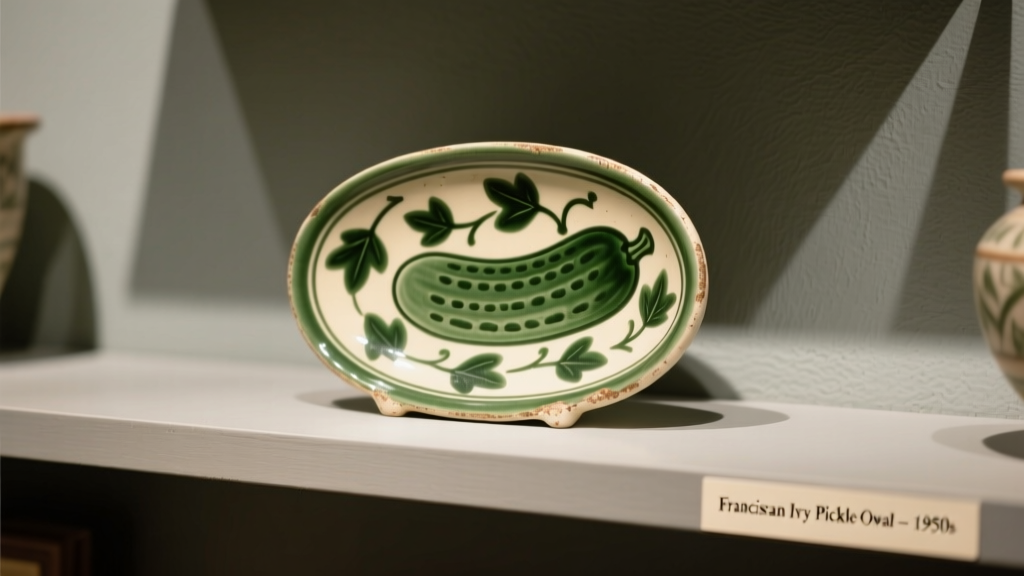
The Franciscan Ivy Pickle Oval: A Collector’s Deep Dive into Shape, Provenance, and Authentication
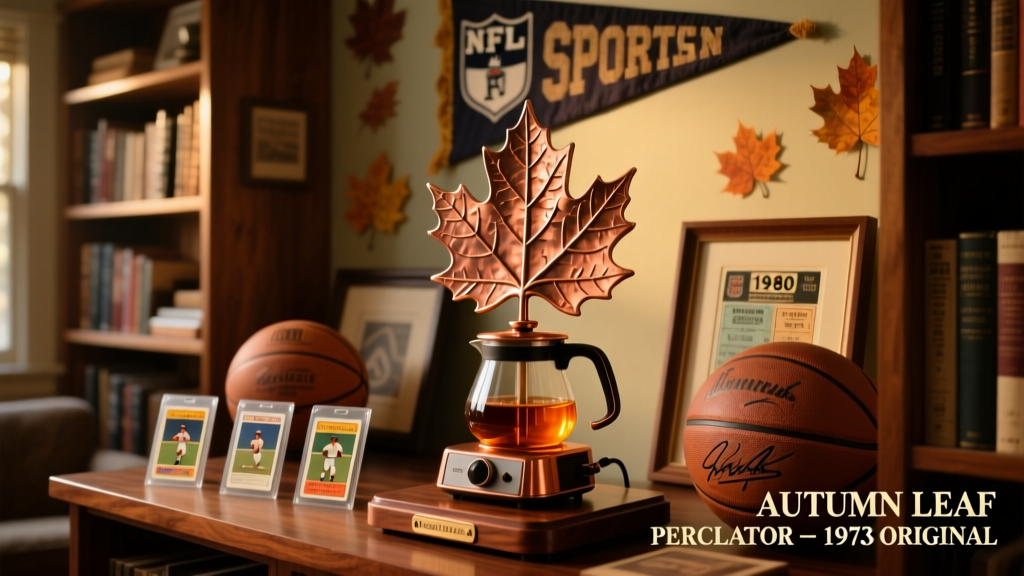
The Autumn Leaf Percolator Electric: History, Design, Collectibility, and Authentication Guide
Tinware Mold Candle Hanging Chain (52-Inch): Authenticity, Provenance, and Collectibility in Early American Lighting Hardware