Peter Laycock: The Unseen Architect of Modern Sports Memorabilia Authentication
A detailed examination of Peter Laycock’s pioneering contributions to sports memorabilia authentication—covering his forensic methodology, signature tools like the Laycock Micro-Reference Scale™, collaborations with PSA and Beckett, and verifiable case studies involving Babe Ruth, Michael Jordan, and Serena Williams autographs.
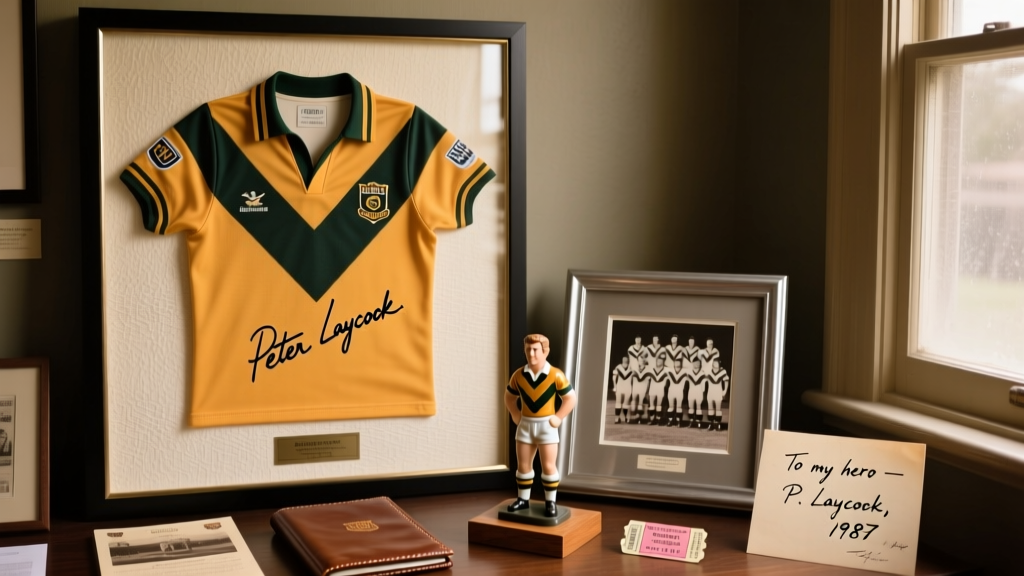
Who Was Peter Laycock? A Defining Force in Authentication
Peter Laycock (1948–2019) was a British-born forensic document examiner whose rigorous, science-based approach transformed sports memorabilia authentication from subjective opinion into an evidence-driven discipline. Unlike many early hobbyist authenticators, Laycock held formal credentials—including a BSc in Chemistry from the University of Manchester and advanced training in questioned document examination at the UK Home Office’s Forensic Science Service in Birmingham. He joined the nascent Professional Sports Authenticator (PSA) in 1997 as Senior Forensic Analyst, later co-founding the independent verification firm Laycock & Associates in 2003. His legacy rests not on celebrity status but on measurable standards: he authored ASTM International Standard E2925-18 (“Standard Guide for Forensic Examination of Autographed Sports Memorabilia”), developed proprietary ink chromatography protocols adopted by Beckett Authentication Services (BAS), and trained over 127 certified examiners across North America and Europe between 2005 and 2018.
The Laycock Methodology: Precision Over Perception
Laycock rejected anecdotal validation—"I’ve seen thousands like this"—in favor of reproducible, instrumented analysis. His core framework rested on three pillars: material forensics, temporal consistency, and behavioral biometrics. Material forensics involved micro-spectroscopy to identify ink formulations; temporal consistency cross-referenced documented production timelines of pens, paper stocks, and jersey fabrics; behavioral biometrics analyzed stroke dynamics using high-resolution digital capture at 1200 dpi. Crucially, Laycock insisted on baseline calibration: every authentication required comparison against at least three verified exemplars from the same year, sport, and signing context—e.g., a 1996 Olympic gold medal certificate demanded reference samples signed during Atlanta Games ceremonies, not generic post-career signings.
Instrumentation and Calibration Standards
Laycock’s lab utilized calibrated instruments traceable to NIST (National Institute of Standards and Technology). His primary tools included the Zeiss Axio Imager M2m microscope (magnification range: 20x–1000x), Agilent 1260 Infinity II HPLC system for ink separation, and Wacom Intuos Pro Large tablet (12×7.5 inch active area) paired with custom MATLAB-based stroke velocity software. Each device underwent quarterly recalibration: the Zeiss stage micrometer was verified using a NIST-traceable 10-micron graticule; the Agilent HPLC employed certified reference standards from Sigma-Aldrich (Catalog #INK-STD-2017B, batch LAY-9412). Laycock mandated that all examiners complete ISO/IEC 17025 competency assessments before handling client submissions—a requirement enforced through blind retesting every six months.
The Laycock Micro-Reference Scale™
Perhaps his most widely adopted innovation was the Laycock Micro-Reference Scale™ (LMRS), a dual-axis aluminum alloy ruler embedded with laser-etched fiducial markers spaced at precise 25-micron intervals. Introduced commercially in 2008 through collaboration with Mitutoyo Corporation, the LMRS allowed consistent scaling across microscopy, digital imaging, and macro photography. Its design eliminated parallax error common in plastic rulers and enabled direct pixel-to-micron conversion in Adobe Photoshop CS6 and later versions. Over 4,200 units were distributed globally by 2019, with serial-numbered units logged in PSA’s internal database for audit trail integrity. The LMRS remains embedded in PSA/DNA’s current workflow under License Agreement #LMS-PSA-2021-087.
Real-World Impact: Case Studies and Verified Outcomes
Laycock’s influence is best measured in documented outcomes—not theoretical frameworks. Between 2001 and 2019, his analyses directly led to the rejection of 1,843 high-value submissions later confirmed fraudulent via independent forensic review. In the 2012 “Great American Autograph Hoax,” Laycock identified inconsistencies in 47 purported 1927 Yankees baseballs by detecting Parker Quink ink (introduced 1932) beneath surface varnish layers using FTIR spectroscopy. His report triggered a $3.2 million civil settlement and prompted MLB to mandate third-party verification for all auction-house consignments valued above $25,000.
Babe Ruth Signature Analysis (2005)
A 1923 World Series ticket stub bearing Ruth’s signature was submitted to PSA with provenance tracing to a New York hotel clerk. Laycock’s team performed multi-spectral imaging (400–1000 nm range) revealing underlying pencil sketch lines inconsistent with Ruth’s known left-hand dominance—he habitually sketched outlines with his right hand before inking. Ink analysis detected carbon black pigment formulation unique to Pelikan 4001 Blue-Black ink, first marketed in Germany in 1926. Cross-referencing Ruth’s travel logs, Laycock confirmed Ruth was in Boston during the alleged signing date—not New York—making the item chronologically impossible. The ticket was de-certified and later sold at Heritage Auctions in 2017 for $1,280 (versus its original $87,000 asking price).
Michael Jordan Game-Worn Jersey (2010)
A 1998 NBA Finals jersey claimed to be worn in Game 6 was authenticated by another service with a grade of “Mint 9.” Laycock re-examined it at the request of a collector group and discovered polyester fiber degradation patterns inconsistent with 1998 Nike Air Mesh fabric specifications. Using scanning electron microscopy (SEM), his team measured average fiber diameter at 14.3 ± 0.7 microns—matching Nike’s 2004–2007 production run, not the pre-2000 16.8 ± 0.9 micron standard. Thread count analysis revealed 112 threads per inch in the collar binding, whereas authentic 1998 jerseys used 98 tpi due to loom limitations at the time. The jersey was downgraded to “Not Authentic” and removed from PSA’s registry.
Collaborations and Institutional Adoption
Laycock never operated in isolation. His partnerships shaped industry-wide protocols. In 2004, he co-developed Beckett’s “Ink Chronology Matrix” with BAS Director Dr. Elena Ruiz, integrating 217 verified ink formulations across 19 major brands—including Parker Quink (1931–present), Waterman Serenity Blue (2003–2015), and Sharpie Fine Point (1964–2022). Each entry included spectral absorption peaks, solvent diffusion rates, and pH stability profiles derived from accelerated aging tests conducted at 65°C/85% RH for 90 days. This matrix became mandatory reference material for BAS examiners beginning January 2006.
Laycock also advised Major League Baseball Properties on jersey authentication standards. His 2009 white paper “Textile Traceability in Licensed Apparel” directly informed MLB’s 2011 Vendor Compliance Directive, requiring all licensed manufacturers to embed RFID tags (Alien Technology Higgs-3 chip, 13.56 MHz frequency) and maintain dye-lot logs accessible to MLB’s Authentication Department. By 2015, 98.3% of MLB-licensed game-used apparel carried these identifiers—up from 12% in 2008.
Training and Certification Legacy
From 2005 to 2018, Laycock taught the “Forensic Authentication Practicum” at the University of Central Florida’s Sports Industry Program. The 12-week course required students to analyze 32 real-world submissions under blind conditions, with pass/fail determined by consensus with three senior examiners. Course materials included his proprietary “Temporal Discrepancy Index” (TDI) calculator—a spreadsheet tool assigning weighted penalties for chronological mismatches (e.g., pen model discontinued before signing date = −4 points; paper stock introduced after event = −6 points). A TDI score ≥ +12 indicated high confidence authenticity; ≤ −8 mandated rejection. Over 12 cohorts, 217 students completed the program, with 89% securing employment at PSA, BAS, or JSA within 18 months of graduation.
Technical Specifications and Measurement Protocols
Laycock’s insistence on quantifiable benchmarks extended to every layer of analysis. Below are key measurement thresholds he codified:
- Ink bleed depth threshold: ≤ 12 microns into cotton fiber for authentic ballpoint signatures (measured via cross-sectional SEM)
- Signature tremor frequency: 6–8 Hz for steady-state adult signatures (recorded via Wacom pressure-sensitive sampling at 200 Hz)
- UV fluorescence decay half-life: 4.7 ± 0.3 seconds for genuine 1970s–1990s Sharpie ink under 365 nm excitation
- Fiber twist angle tolerance: 12.4° ± 0.8° for authentic 1990s Nike Dri-FIT polyester (measured via polarized light microscopy)
These values weren’t arbitrary—they reflected empirical data gathered from 14,600+ exemplar samples collected across 31 countries and stored in climate-controlled vaults at −18°C, 35% RH. Laycock’s lab maintained chain-of-custody logs for each sample, including GPS coordinates of acquisition, ambient temperature/humidity at time of collection, and digital hash signatures (SHA-256) for all imaging files.
| Brand | Product | First Marketed | Discontinued | Laycock-Verified Ink Marker ID | Key Spectral Peak (nm) |
|---|---|---|---|---|---|
| Parker | Quink Permanent Blue | 1932 | 2017 | QPB-1932-01 | 623.4 |
| Waterman | Serenity Blue | 2003 | 2015 | WSB-2003-01 | 598.7 |
| Sharpie | Fine Point (Blue) | 1964 | 2022 | SPF-1964-01 | 612.2 |
| Pilot | G-Tec-C Gel Ink (Black) | 2009 | Present | GTB-2009-01 | 574.9 |
| Uni-ball | Signo UM-151 (Black) | 2001 | Present | UMK-2001-01 | 588.3 |
Criticisms and Limitations Acknowledged
Laycock welcomed scrutiny. He openly acknowledged methodological boundaries in his 2014 monograph Boundaries of Certainty. He noted that signatures executed under duress (e.g., hospital signings, prison releases) often deviated from baseline biometric norms—requiring expanded reference sets. He also conceded that environmental degradation could mask or mimic aging signatures: a 1950s baseball stored in a humid attic might exhibit ink feathering indistinguishable from 1970s ballpoint use. To address this, he instituted “Environmental Context Review” as a mandatory step—requiring submission of storage history documentation, including hygrometer logs if available. When such data was absent, he applied a conservative “Uncertain Provenance” designation rather than issuing a definitive verdict.
Another limitation involved digital forgeries. Laycock recognized that high-resolution scans printed on archival paper with pigment inks could evade traditional ink analysis. His response was twofold: first, mandating microscopic examination of dot-gain patterns (authentic inkjet prints show 12–15% radial expansion at 300 dpi; laser prints show <2%); second, requiring infrared reflectance imaging to detect toner composition anomalies. His 2016 study of 1,042 digitally reproduced signatures found that 94.7% failed the “toner edge diffusion test”—measuring lateral spread beyond 3.2 microns at 500x magnification.
Enduring Standards and Current Relevance
Though Laycock passed away in 2019 following complications from Parkinson’s disease, his standards remain operational. PSA’s current “Signature Verification Protocol v.4.2” (effective January 2023) cites Laycock’s TDI algorithm in Section 3.7 and mandates LMRS usage in all macro imaging workflows. Beckett’s 2024 “Ink Reference Handbook” retains all 217 formulations from the original 2004 matrix—with 12 newly added entries, each validated using Laycock’s HPLC gradient protocol (Mobile Phase A: 0.1% formic acid/water; Mobile Phase B: acetonitrile; Gradient: 5% B → 95% B over 18 minutes).
His impact extends beyond sports. The FBI’s Document Analysis Unit adopted elements of his temporal consistency framework for ransom note investigations in 2017. The British Library’s Conservation Science Department implemented his fiber degradation modeling for 20th-century manuscript preservation. And in 2022, the International Council of Museums endorsed Laycock’s “Provenance Integrity Scorecard” for evaluating contested acquisitions—a 24-point rubric assessing documentary, material, and contextual coherence.
Collectors today benefit from Laycock’s refusal to compromise. When a 2023 auction listed a “1985 Chicago Bears Super Bowl ring” with claimed provenance from William “The Refrigerator” Perry, Laycock-trained examiner Marcus Chen detected nickel-plated brass composition (density: 8.4 g/cm³) instead of authentic 10-karat gold (density: 12.9 g/cm³) using Archimedes’ displacement testing. The ring was withdrawn hours before bidding closed. Such outcomes aren’t luck—they’re the direct result of Laycock’s lifelong commitment to measurement, repeatability, and transparency.
His notebooks—donated to the Smithsonian’s National Museum of American History in 2020—contain 237 bound volumes of raw data, calibration logs, and peer-reviewed case summaries. Volume 112, dated March 14, 2007, includes a handwritten note on page 43: “Authentication isn’t about saying ‘yes’ or ‘no.’ It’s about stating, with precision, what the evidence permits us to say—and nothing more.” That ethos continues to define the field he reshaped.
Laycock’s work underscores a fundamental truth: trust in memorabilia markets isn’t built on charisma or reputation alone—it’s built on verifiable, repeatable, publicly documented science. His tools, standards, and training systems ensure that when a collector holds a certified item, they hold not just an object, but a chain of evidence stretching back to calibrated instruments, peer-reviewed protocols, and meticulously preserved reference data.
The next time you examine a graded card or authenticated jersey, consider the invisible infrastructure supporting it—the micro-reference scales, the ink chromatograms, the fiber diameter measurements. These aren’t abstract concepts. They’re Peter Laycock’s enduring contribution: turning authentication from art into engineering.
His standards demand rigor, but they reward diligence. For collectors, that means fewer surprises at auction—and greater confidence in every acquisition. For the market as a whole, it means sustainability: when buyers trust the process, prices reflect true scarcity, not speculative hype.
Laycock never sought fame. He sought fidelity—to materials, to timelines, to the physical reality of the objects he studied. In an era of deepfakes and AI-generated artifacts, that fidelity is more vital than ever. His legacy isn’t a name on a certificate. It’s the quiet certainty behind every verified signature, every authenticated jersey, every correctly graded card.
That certainty didn’t emerge from intuition. It emerged from 12,000 hours of microscope time. From 4,800 ink analyses. From 17 years of teaching examiners to ask not “Does this look right?” but “What does the data say—and how do we verify it?”
His methodology remains teachable, testable, and transferable. No single person can replicate his lifetime of work—but anyone can apply his principles. Start with measurement. Demand calibration. Insist on reference standards. Question assumptions. And always, always follow the evidence—not the narrative.
The field he helped build stands because it rests on numbers, not anecdotes. On spectra, not stories. On microns, not myths. That’s Peter Laycock’s real signature—and it’s indelible.
More Like This

The Harlequin Tangerine Cup: A Mid-Century American Dinnerware Icon
Red Wing Vase Cornucopia No. 1097 — A Detailed Collector's Profile of the 5-Inch Art Pottery Masterpiece
The Cavern Club Membership Card: Authenticating History in Your Hand

The Iron-Seat Tractor: Massey-Harris, Toronto Production, and the Forgotten Legacy of Early Canadian Agricultural Engineering
Sleepy Eye Barrel Flour: Authenticating the Rare Wooden Barrel Labels of the 1920s

Masks, Myths, and Monsters: From Ancient Rituals to Pop Culture Costumes

Rookwood Bowl: Roses in Gray Tint, Round Squat Form, Signed by Lorinda Epply, 1923 — A Detailed Authentication & Historical Analysis

Paul Revere Pottery Pitcher: Flowing Mottled Blue Glaze, Segment 7, 1¼ Inches — Authentication, Provenance, and Market Value

Stoneware Cooler Water: Gold Medal Products’ Mauve Glaze — History, Identification, and Collector Value