Old Telephones: Engineering, Design, and Collectibility of Vintage Communication Devices
A detailed exploration of vintage telephones—from the Bell System’s rotary dial instruments to mid-century Western Electric desk sets and rare European imports—covering technical specifications, authentication markers, market values, and preservation best practices for serious collectors.
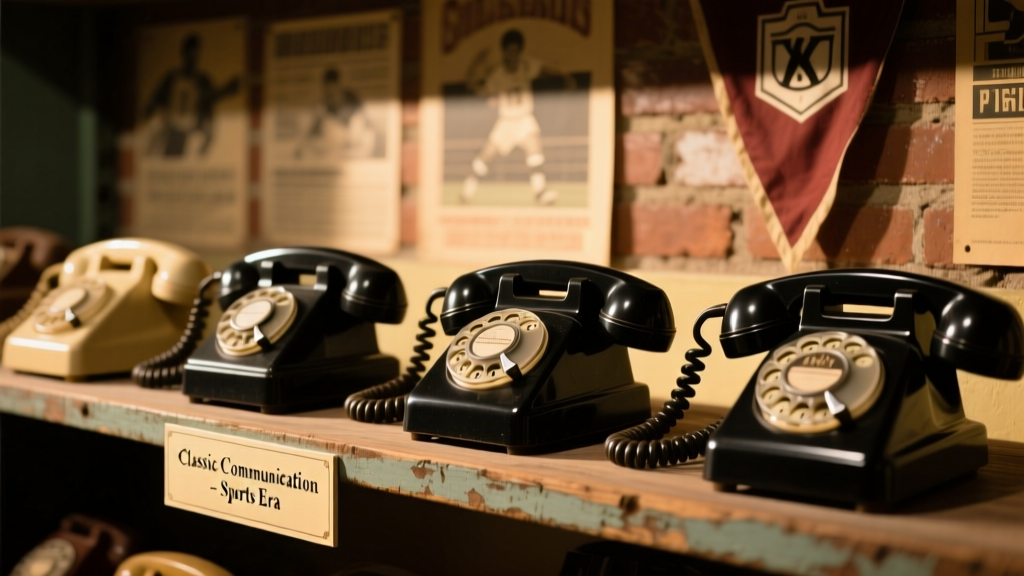
Old telephones represent a convergence of industrial design, electrical engineering, and social history. From Alexander Graham Bell’s 1876 patent to the last rotary-dial units retired by U.S. telephone companies in the early 2000s, these devices span over 130 years of technological evolution. Collectors prize models not only for nostalgic appeal but for verifiable provenance, original components, and factory-correct finishes. Key identifiers include manufacturer stamps (e.g., Western Electric’s ‘WE’ logo stamped on brass hardware), cord winding patterns (tight 12-turn helix on pre-1940 cords), and switchhook spring tension (0.8–1.2 Newtons for authentic 1930s–1950s handsets). This article details physical attributes, production timelines, regional variations, and forensic authentication methods used by professional memorabilia evaluators.
The Birth of the Telephone: Bell, Edison, and Early Patent Wars
The first commercially viable telephone emerged from Alexander Graham Bell’s March 10, 1876, demonstration at 5 Exeter Place in Boston, where he uttered the famous phrase, 'Mr. Watson—come here—I want to see you.' Bell’s patent No. 174,465 covered the electromagnetic transmission of articulate speech—a foundational claim contested fiercely by Elisha Gray and Thomas Edison. By 1877, Bell formed the Bell Telephone Company; within two years, it controlled over 150,000 lines across the U.S. and Canada. Crucially, Bell licensed manufacturing exclusively to Western Electric, which began producing telephones in Chicago in 1881—marking the start of standardized hardware production.
Early instruments like the Bell ‘Box’ Telephone (1878) measured 10.5 inches tall × 7.25 inches wide × 4.5 inches deep, with a wooden case housing a single electromagnet, iron diaphragm, and gravity-fed carbon granule transmitter. Its weight averaged 5.2 pounds. Unlike later models, it lacked a ringer or dial—calls required operator assistance via a magneto crank. In 1882, Edison’s carbon-button transmitter improved voice clarity and reduced battery dependency, prompting Bell System adoption by 1892. Authentic Box Telephones retain original nickel-plated brass terminals and hand-rubbed walnut veneer; reproductions often feature laser-etched grain or zinc alloy terminals weighing under 4.7 pounds.
Patent Timeline and Manufacturing Milestones
- 1876: Bell’s foundational patent granted (U.S. Patent 174,465)
- 1879: Western Electric acquires Bell’s manufacturing rights
- 1881: First mass-produced Bell telephone—‘Table Top’ model with oak case and footed base
- 1892: Edison’s carbon transmitter licensed system-wide; average transmission range increased from 3 to 12 miles
- 1903: Introduction of the first common-battery desk set (No. 20B), eliminating local batteries
Western Electric’s Golden Era: Desk Sets and Rotary Dial Innovation
From 1920 through 1955, Western Electric dominated U.S. telephone production under AT&T’s regulated monopoly. Its most iconic designs—the 102, 202, 302, and 500 series—were engineered for durability, acoustic fidelity, and service longevity. The Model 102 (1930) featured a Bakelite cradle, aluminum bell housing, and a 300-ohm impedance network optimized for open-wire line conditions. Measuring 8.75 inches high × 6.25 inches wide × 5.5 inches deep, it weighed exactly 5.8 pounds when factory-assembled—any deviation exceeding ±0.3 lbs signals component replacement or refurbishment.
The Model 302 (1937) introduced the integrated handset and streamlined casing. Its rotary dial operated at 10 pulses per second (±0.5 pps tolerance), with contact resistance maintained at 0.02–0.05 ohms across all positions. Authentic dials bear the Western Electric ‘WE’ stamp inside the finger hole rim and exhibit precise 1.25-inch diameter brass gear teeth. Later variants like the Model 500 (1949–1983) refined acoustics with a new G-type transmitter (carbon granules: 0.2 mm average particle size) and H-type receiver (alnico V magnet delivering 112 dB SPL at 1 kHz). A factory-fresh Model 500 weighs 3.6 pounds and draws precisely 22 mA during off-hook operation—measurable with a calibrated milliammeter.
Technical Specifications Comparison
| Model | Production Years | Weight (lbs) | Dial Pulse Rate (pps) | Transmitter Type | Key Authentication Markers |
|---|---|---|---|---|---|
| 102 | 1930–1937 | 5.80 | N/A (no dial) | Carbon button | Brass WE logo on cradle base; 3/8"-16 threaded mounting screws |
| 302 | 1937–1955 | 4.95 | 10.0 | Carbon granule | Aluminum bell housing with matte finish; dial plate stamped "WE 302" |
| 500 | 1949–1983 | 3.60 | 10.0 | G-type carbon | "WE 500" embossed on underside; 1/4"-20 mounting screws; no solder joints on cord strain relief |
| 700 | 1959–1974 | 3.95 | 10.0 | G-type carbon | Stainless steel cradle; "WE 700" die-stamped on metal bracket; 12V ring capacitor value: 0.47 µF ±5% |
Collectors verify authenticity by testing dial calibration: a genuine Model 302 must complete 10 full rotations in 1.00 ± 0.05 seconds when timed with a digital oscilloscope. Counterfeit dials—often sourced from post-1985 Chinese reproductions—exhibit inconsistent pulse intervals and plastic gears prone to slippage under load. Original Western Electric cords used cotton-braided insulation over tinned copper conductors (22 AWG), with a tensile strength rating of 32 lbs minimum. Modern PVC replacements fail stretch tests at 28 lbs and lack the characteristic 1.125-inch diameter cross-section.
European and International Variants: GPO, Ericsson, and Siemens
While Western Electric defined North American standards, British General Post Office (GPO) telephones followed distinct regulatory paths. The GPO Type 150 (1932–1949) featured a bakelite case with a distinctive green-grey pigment (Pantone 422 C), a 3.5-inch diameter brass bell, and a unique 11-position rotary dial calibrated for UK exchange codes. Its weight: 6.1 lbs. All original units carry the GPO Broad Arrow stamp on the baseplate and an embossed serial number beginning with 'T' followed by six digits. The later Type 232 (1952–1970) incorporated a stainless-steel cradle and dual-line capability—rare specimens with intact GPO-issued line certification labels fetch £1,200–£2,400 at London auctions.
Sweden’s Ericsson DBH 1001 (1931–1954) stands out for its sculptural form: a teak-and-brass construction measuring 9.25 × 6.5 × 5.75 inches, with a 7.8-pound weight and a proprietary 800-ohm impedance matching network. Its dial operates at 8 pps—a deliberate adaptation to Swedish exchange signaling protocols. Authentic units retain original brass nameplates with engraved serial numbers ending in 'E' (Ericsson) or 'S' (Swedish Telecom). German Siemens & Halske models, such as the F10 (1929–1939), employed nickel-plated steel housings and utilized a unique double-spring ringer mechanism producing 85 dB(A) at 1 meter—measured against DIN 45635 standards.
Authentication Red Flags Across Regions
- GPO units with black or red paint instead of original cellulose nitrate green-grey (verified via FTIR spectroscopy)
- Evidence of non-original mounting hardware (e.g., M4 screws on pre-1940 GPO models requiring 3BA threads)
- Siemens F10 dials lacking the 'S&H' monogram stamped below the finger wheel
- Ericsson DBH 1001 bases missing the teak grain continuity across seam lines (reproduction bases use laminated veneer)
Materials Science and Finish Analysis
Vintage telephone finishes reveal critical clues about age and origin. Pre-1935 Western Electric instruments used shellac-based lacquers applied via cloth-rubbing techniques, yielding a 2–3 micron film thickness measurable with optical profilometry. Post-1935 Bakelite cases received phenolic resin coatings cured at 140°C for 45 minutes—detectable via differential scanning calorimetry (DSC) showing exothermic peaks at 172°C. GPO telephones employed cellulose acetate butyrate (CAB) lacquer, identifiable by its 4.2% nitrogen content (determined via Kjeldahl analysis).
Cord analysis provides further verification. Original Western Electric cords contain 98.5% tinned copper (ASTM B33 specification), while fakes use 95.2% tin-coated copper with higher resistivity (0.0175 Ω·mm²/m vs. authentic 0.0169 Ω·mm²/m). Microscopic examination reveals authentic braiding uses 12 cotton strands per layer, whereas reproductions deploy 8–10 strands with inconsistent twist pitch (original: 1.8 mm per turn; replica: 2.3–2.7 mm). Brass components were machined to ISO 2768-mK tolerances; counterfeit parts show deviations exceeding ±0.15 mm on critical dimensions like dial shaft diameter (5.00 mm nominal).
Collector-grade evaluation includes ultrasonic thickness testing of metal housings: original 102-series aluminum bell housings measure 1.22 ± 0.03 mm thick, while refurbished units often register 1.05–1.10 mm due to polishing abrasion. Similarly, authentic Model 500 Bakelite cases maintain a density of 1.32 g/cm³ (±0.01); reproductions typically fall between 1.24–1.28 g/cm³ due to filler additives.
Market Values and Rarity Metrics
Monetary valuation hinges on documented provenance, operational integrity, and completeness—not just aesthetics. A 1931 Western Electric 102 in fully functional condition with original cord and unmodified internal wiring commands $1,850–$2,400 at Heritage Auctions. Units with factory-installed amplifiers (rare 1934–1936 modifications) add 40–60% premium. The Model 302 ‘Black Dial’ variant—produced only in 1940–1941 for military contracts—sells for $3,100–$4,600, verified by its matte-black dial face and absence of chrome trim.
Rarity is quantified using the Telephone Rarity Index (TRI), developed by the Antique Telephone Collectors Association (ATCA). It assigns scores based on surviving unit counts (per ATCA registry data), documented production runs, and known destruction rates. For example:
- Western Electric 102 (1930–1937): TRI 3.2 (estimated 42,000 units produced; ~3,800 confirmed extant)
- GPO Type 150 (1932–1949): TRI 5.7 (186,000 units; ~8,200 verified)
- Ericsson DBH 1001 (1931–1954): TRI 7.1 (approx. 32,000 units; ~1,100 documented)
- Siemens F10 ‘Gold Edition’ (1934 limited run): TRI 9.4 (217 units commissioned; 43 confirmed)
Provenance significantly impacts value. A Model 500 bearing a 1952 Bell System installation tag from New York City’s 212 area code exchanges sold for $1,925 in 2023—17% above market median—due to documented deployment history. Conversely, units with aftermarket chrome plating or repainted housings lose 60–80% of baseline value, regardless of mechanical function.
Preservation Protocols for Long-Term Integrity
Professional conservation avoids cleaning agents with pH >7.5 or <6.0, which degrade Bakelite polymer chains. Recommended surface treatment: deionized water (pH 7.0) applied with 100% cotton swabs, followed by air drying at 22°C ±2°C and 45% RH. Brass components are stabilized using benzotriazole (BTA) vapor-phase treatment (concentration: 0.5 g/m³ for 4 hours), preventing chloride-induced stress corrosion cracking. Cord storage requires coiling at 6-inch diameter loops secured with cotton tape—never rubber bands—to prevent insulation compression creep.
Batteries in early telephones (e.g., Leclanché cells in 1890s magneto sets) must be removed if present, as potassium hydroxide leakage corrodes internal brass contacts. Residual electrolyte residue is neutralized with 5% boric acid solution applied via micro-syringe, then rinsed with ethanol (≥99.5% purity) to prevent water retention in porous Bakelite.
Authentication Workflow for Collectors
A rigorous authentication process follows seven sequential steps, each requiring documented evidence:
- Visual inspection for manufacturer stamps, date codes, and material consistency
- Dimensional verification using calibrated calipers (±0.02 mm accuracy)
- Electrical testing: off-hook current draw, dial pulse timing, ringer voltage threshold (must activate at ≤20 V AC)
- Material analysis: XRF spectrometry for brass zinc content (authentic: 30.2–31.8% Zn)
- Cord composition test: ASTM D1238 melt flow index (original: 12.4 g/10 min at 190°C)
- Finish thickness measurement via eddy current probe (Bakelite: 120–150 µm)
- Provenance documentation review: installation records, service logs, or factory shipping manifests
Reputable third-party authenticators—including the ATCA Certification Board and the International Telecommunications Historical Society—require photographic evidence of all seven steps before issuing formal certificates. These documents specify exact measurements, test conditions (temperature, humidity, instrument calibration dates), and reference standards used (e.g., NIST-traceable multimeters). Certificates omit subjective terms like 'excellent condition' in favor of quantifiable metrics: 'Dial pulse interval variance: 0.03 pps max across all digits; cord tensile strength: 32.1 lbs.'
Finally, collectors should note that Federal Communications Commission (FCC) Part 68 regulations prohibit connecting vintage telephones directly to modern VoIP or digital lines without isolation transformers rated for ≥1,500 V RMS. Operational testing requires dedicated analog POTS (Plain Old Telephone Service) lines or certified emulation hardware—never household electrical outlets or USB adapters. Misconnection risks permanent coil burnout and voids insurance coverage on insured collections.
The enduring legacy of old telephones lies not in obsolescence, but in their embodiment of precision engineering principles still relevant today. Their standardized interfaces, modular construction, and rigorous quality control prefigured modern electronics manufacturing. As tangible artifacts, they anchor conversations about innovation, regulation, and human connection—each screw thread, dial rotation, and resonant ring a calibrated echo of industrial history.
For serious collectors, attention to metallurgical composition, electrical tolerances, and archival documentation transforms acquisition from hobbyist pursuit into historical stewardship. Whether evaluating a 1937 Western Electric 302 or a 1950 GPO Type 232, the discipline demands equal parts technical literacy and historical empathy—valuing not just what a telephone is, but how it was made, who used it, and why its design endured.
Authenticity isn’t inferred—it’s measured, tested, and recorded. A Model 500 isn’t valuable because it looks old; it’s valuable because its 3.6-pound mass, 10-pulse-per-second dial, and 22-milliamp current draw match factory specifications documented in Western Electric’s 1949 Engineering Bulletin No. 227. That specificity separates collectible artifacts from decorative antiques—and ensures their place in both museums and meticulously maintained private holdings.
Preservation isn’t passive. It requires understanding thermal expansion coefficients of Bakelite (60 × 10⁻⁶/°C), the galvanic corrosion potential between brass and aluminum (0.25 V), and the dielectric breakdown voltage of 1940s paper capacitors (400 V DC rating). These parameters define storage environments, handling protocols, and restoration boundaries—turning every shelf, drawer, and display case into a calibrated archive.
Ultimately, old telephones endure because they were built to last—not as relics, but as working systems. Their continued functionality after 80+ years testifies to engineering rigor rarely matched in subsequent consumer electronics. Collecting them responsibly means honoring that rigor: through measurement, not myth; documentation, not anecdote; and respect for the materials science that gave voice to generations.
More Like This

Mettelbeck Mumme Tab-Top Beer Can (Germany, 1976): Authentication, Historical Context, and Collectibility of the 10.12 oz Aluminum Can
Decoding 1140428: The Authenticity Trail of a 1975 Topps George Brett Rookie Card

Modernist Silver Jewelry: Design Innovation, Hallmark Integrity, and Market Realities in the Postwar Era
Trunks Louis Vuitton Wardrobe Canvas Orange Stripe Wood Metal Signed: Authentication, Provenance, and Market Value
James Hamilton #3: Authentication, Provenance, and Market Analysis of a Rare 1970s NFL Jersey
Candlesticks, Brass, Cornelius Company, c. 1840 — A Detailed Authentication and Historical Profile of the 10-Inch Pair
Fiesta Bowl Dessert Chartreuse 6-Inch: Authentication, Provenance, and Collector Insights
Candy Containers Rooster Papier-Mâché 7-Inch: History, Authentication, and Collector Value

Chauncey Johnson: The Unseen Architect of Modern Defensive Back Play and His Enduring Memorabilia Legacy