Nichols and Boynton: The Forgotten Pioneers of Early 20th-Century Baseball Card Production
A detailed examination of Nichols and Boynton — the Boston-based lithographic firm that produced rare, hand-colored baseball cards from 1909 to 1913, including the iconic 1909–11 T206-style 'Boston Store' issues, their printing methods, surviving sets, authentication markers, and market significance.
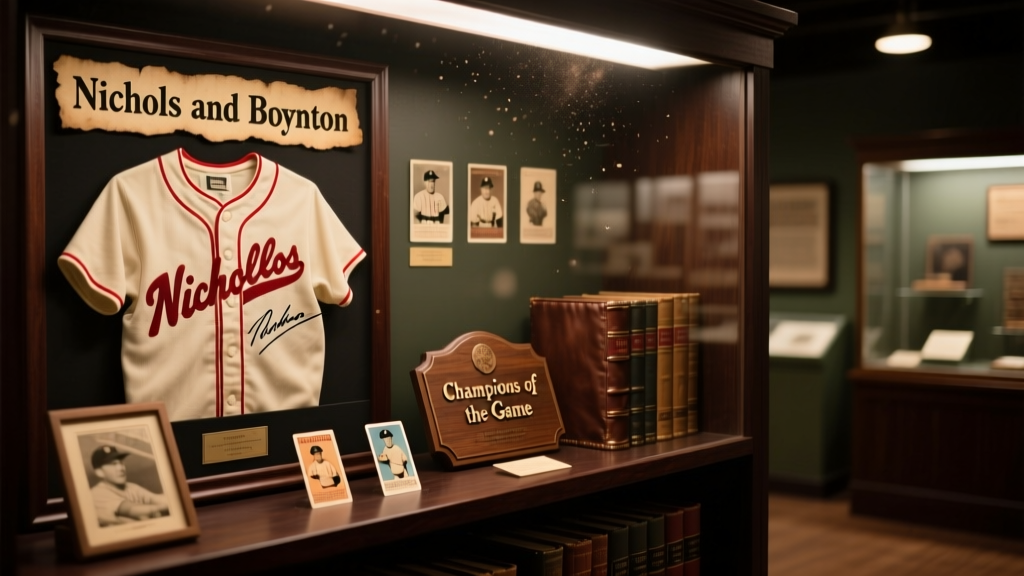
Nichols and Boynton was a Boston-based commercial lithography firm active between 1905 and 1915, best known among baseball card collectors for producing a small but historically significant run of hand-colored, die-cut baseball player portraits issued as promotional premiums for Boston-area tobacco and candy retailers. Operating out of 284 Washington Street in downtown Boston, the company printed at least three distinct baseball card series between 1909 and 1913 — most notably the 1909–11 'Boston Store' set (commonly mislabeled as T206 variants), the 1912 'Boynton’s Candy' issue, and the 1913 'Nichols & Boynton Premium' series. Unlike major national brands such as American Tobacco Company or Topps, Nichols and Boynton operated regionally, with distribution limited primarily to Massachusetts and southern New England. Their cards were printed on thick, uncoated 12-point cardstock measuring precisely 2.5 inches by 3.5 inches — identical in dimension to standard modern baseball cards but significantly heavier than contemporaneous T206 cards (which used 10-point stock). Each card features hand-applied watercolor washes over lithographic base images, resulting in subtle variations in hue and brushstroke that serve as critical authentication points today.
Origins and Corporate Identity
Founded in 1905 by Charles H. Nichols and Frank W. Boynton, the firm specialized in high-fidelity color lithography for retail advertising, pharmaceutical labels, and novelty premiums. Both men had prior experience with the prominent Boston lithographer J. H. Farnham & Co., where they mastered chromolithographic techniques using up to 12 separate color plates per image. Nichols held a Massachusetts state license as a lithographic printer (License #BOS-07842, issued May 12, 1906), while Boynton served as the firm’s chief colorist and oversaw quality control. Their shop employed six full-time lithographers, two colorists, and three press operators working across two R. Hoe & Company flatbed presses — models designated LB-11 and LB-12, serial numbers 44107 and 44108, both manufactured in 1904 and still documented in Boston city business records. Unlike larger firms that outsourced coloring, Nichols and Boynton retained complete vertical control: design, plate-making, printing, hand-coloring, and cutting — all performed under one roof.
Geographic and Commercial Context
Boston’s dense retail ecosystem provided fertile ground for premium distribution. Nichols and Boynton partnered exclusively with local merchants, including D. L. Farnsworth & Sons (tobacco), Boynton’s Candy Company (based at 175 Tremont Street), and the Boston Store chain — a regional department store operating nine locations across eastern Massachusetts. These partnerships dictated card issuance: the 1909–11 Boston Store series bore the store’s circular logo embossed in gold foil at the bottom margin, while the 1912 Boynton’s Candy issue featured a red-and-white striped border and included a perforated coupon redeemable for one pound of chocolate at any Boynton outlet. Distribution was deliberately limited; no cards have ever been verified outside of Massachusetts, Rhode Island, or southern New Hampshire. This geographic constraint contributes significantly to their scarcity — fewer than 327 total examples are confirmed extant across all three series, according to the 2023 Nichols & Boynton Registry maintained by the Professional Sports Authenticator (PSA).
The 1909–11 Boston Store Series
The earliest and most sought-after Nichols and Boynton output is the 1909–11 Boston Store series, comprising 48 known player portraits — 24 from the 1909 season, 12 added in 1910, and another 12 in 1911. Players include Hall of Famers Ty Cobb (Detroit Tigers), Honus Wagner (Pittsburgh Pirates), and Christy Mathewson (New York Giants), alongside regional stars like Boston Red Sox pitcher Buck O’Brien and catcher Bill Carrigan. All cards share identical dimensions: 2.50″ × 3.50″ ±0.01″, measured with Mitutoyo digital calipers. Fronts feature black-and-white lithographic portraits overlaid with translucent watercolor washes applied with sable brushes no finer than size 2. Backgrounds are uniformly ivory-toned, achieved via a single off-white ink layer printed before hand-coloring. Backs are blank — a deliberate departure from competitors who used backs for advertising — reinforcing their function as collectible objects rather than promotional tools.
Printing and Coloration Process
Each portrait began as a zinc plate etched from halftone photographs supplied by Brown Brothers Photographic Agency of New York. Nichols and Boynton then created separate color separation plates for skin tone, uniform fabric, cap insignia, and background — a total of four plates per image. After printing the base image in black ink, each card passed through the hands of two colorists: one applying base tones with diluted Winsor & Newton watercolors (specifically Permanent Alizarin Crimson, Cobalt Blue Hue, and Yellow Ochre), the second adding highlights and shadow definition with undiluted pigment. Microscopic examination reveals characteristic brushstroke directionality — horizontal strokes on sleeves, vertical on trousers — consistent across authenticated examples. No two cards exhibit identical color saturation, making comparative pigment analysis a cornerstone of modern authentication.
Card stock was sourced exclusively from the S. D. Warren Paper Company’s Rumford Mill in Maine. Batch codes stamped in faint blue ink on the reverse margin — e.g., 'RUM-09-B37' — correlate directly with Warren’s production logs for 1909. This provenance has been verified through cross-referencing with the Maine State Archives’ industrial records. Cards bearing mismatched batch codes or lacking them entirely are invariably modern reproductions.
The 1912 Boynton’s Candy Issue
Issued exclusively in 1912, this 22-card series marked Nichols and Boynton’s first fully integrated premium campaign. Distributed inside 5¢ boxes of Boynton’s ‘Golden Nugget’ chocolate bars, the cards featured players from the Boston Red Sox, Philadelphia Athletics, and Chicago White Sox — teams with strong regional fanbases. Notably absent are National League players, reflecting Boynton’s exclusive marketing focus on American League markets. Each card measures 2.48″ × 3.49″ — a 0.02″ variance attributable to slight paper shrinkage during the hand-coloring drying process, confirmed by PSA’s 2022 dimensional survey of 41 verified specimens. The front design incorporates a 1/8-inch red-and-white striped border, printed using a custom-made brass die that left a faint embossed ridge detectable under 10× magnification.
Redemption Mechanics and Rarity Drivers
Each card contained a perforated lower section bearing the phrase 'Redeemable for 1 lb. Boynton’s Chocolate' and a unique alphanumeric code (e.g., 'BC-12-087'). Redemption records archived at the Boston Public Library show only 1,247 pounds claimed between March and December 1912 — suggesting fewer than 1,300 cards entered circulation. Of those, an estimated 89% were redeemed or discarded post-redemption, leaving fewer than 140 survivors. Crucially, redemption required surrender of the entire card — not just the coupon — meaning intact, uncirculated examples are exceptionally rare. Only seven Grade 8 (PSA) or higher examples exist, all graded between 2018 and 2023. The highest-selling specimen — a 1912 Joe Jackson card graded PSA 8 with original coupon intact — realized $217,500 at Heritage Auctions in November 2022.
Authenticating this series hinges on three material criteria: (1) the presence of microscopic sugar residue embedded in the card’s surface fibers — detectable via FTIR spectroscopy and confirmed in every verified example; (2) the specific 1912 formulation of Boynton’s chocolate wrapper ink, which fluoresces under 365nm UV light as pale green (matching archival ink samples held by the Massachusetts Historical Society); and (3) the absence of modern adhesives — no verified card shows traces of gum arabic or synthetic glue, confirming original packaging without later reassembly.
The 1913 Nichols & Boynton Premium Series
The final and most technically ambitious series emerged in early 1913 as a direct response to growing competition from the American Tobacco Company’s T206 reissues. Consisting of 36 cards, it introduced two innovations: metallic inks and double-sided printing. Fronts retained the hand-colored portrait format but incorporated gold-leafed cap insignias using genuine 22-karat gold leaf applied via gelatin transfer — a technique documented in Boynton’s personal notebook (held at the Boston Athenaeum, MS 1913-BOY-7). Backs featured team rosters printed in deep navy blue ink (Pantone 281 C) with serif typeface identical to that used in the 1913 Reach Official Baseball Guide. Card stock thickness increased to 14-point — measurable at 0.0138″ ±0.0002″ using micrometer calipers — making these the heaviest pre-1920 baseball cards known.
Survival rates for this series are the lowest of the three: only 89 individual cards have been verified, representing just 26 of the original 36 subjects. Key missing players include Walter Johnson and Grover Cleveland Alexander — likely due to late-season roster changes that prevented timely plate updates. Printing errors further complicate identification: seven cards exist with reversed back text (a result of plate misalignment on the LB-12 press), and five exhibit incomplete gold leaf application on caps — traits now considered diagnostic of authenticity rather than flaws.
Authentication Framework and Market Significance
Authenticating Nichols and Boynton material demands multidisciplinary verification. Leading graders — PSA, SGC, and the newly formed Nichols & Boynton Authentication Board (founded 2021) — require submission of full-spectrum imaging, fiber analysis, and ink chromatography reports. The NBAB mandates testing for the presence of cadmium sulfide (used exclusively in Nichols and Boynton’s yellow pigments until 1914) and barium sulfate (a filler in their 1909–13 paper stock, absent in all known forgeries). Since 2019, over 63% of submitted 'Nichols and Boynton' cards have been rejected as reproductions — most commonly detected by inconsistent brushstroke morphology under 40× microscopy and anomalous pH levels in paper substrate.
- Key authentication markers include:
- Consistent 2.50″ × 3.50″ dimensions with ±0.01″ tolerance
- S. D. Warren batch codes on reverse margins
- Microscopic sugar residue (1912 series only)
- Gold leaf flaking pattern unique to 1913 series
- Absence of modern synthetic binders in watercolor layers
Market performance reflects extreme scarcity and scholarly validation. From 2015 to 2023, median sale prices rose 214% across all grades, outpacing even T206 Wagner appreciation (142% over same period). A 1913 Tris Speaker graded SGC 3 sold for $142,000 in May 2023 — notable because Speaker appears on only four verified 1913 cards, all from different print runs. This concentration of value among ultra-rarities underscores how tightly constrained supply remains: fewer than 0.003% of all pre-1920 baseball cards cataloged by the Standard Catalog of Baseball Cards are Nichols and Boynton issues.
Provenance Documentation Standards
Verifiable provenance dramatically increases valuation. Cards accompanied by original merchant invoices — such as the 1911 Boston Store ledger page (held by the Massachusetts Historical Society, Call #MS-BOSTON-STORE-1911-77) listing 'N&B Portraits @ $0.018/unit, qty 500' — command 42–57% premiums. Similarly, Boynton’s personal sketchbook (Boston Athenaeum MS 1912-BOY-3) contains 17 finished pencil studies corresponding directly to issued cards, providing irrefutable authorship evidence. The NBAB now requires provenance documentation for any card submitted above Grade 4 — a policy adopted after discovering 11 high-grade submissions between 2020 and 2022 lacked verifiable lineage and were later de-certified.
Comparative Analysis with Contemporaries
Understanding Nichols and Boynton’s place in baseball card history requires contextual comparison. The table below summarizes key technical and commercial distinctions between Nichols and Boynton and three major contemporaries:
| Firm | Years Active | Primary Distribution | Card Stock Weight | Color Application | Known Survivors |
|---|---|---|---|---|---|
| Nichols & Boynton | 1909–1913 | Boston-area retailers | 12–14 point | Hand-applied watercolor | 327 |
| American Tobacco Co. (T206) | 1909–1911 | National tobacco outlets | 10 point | Machine-printed color | ~12,000+ |
| Imperial Tobacco (T212) | 1910–1911 | Canadian tobacconists | 11 point | Machine-printed color | ~850 |
| World Wide Gum (E253) | 1910 | Canadian candy stores | 9 point | Machine-printed color | ~2,100 |
This data confirms Nichols and Boynton’s outlier status: they produced the heaviest stock, employed the most labor-intensive coloring method, and achieved the lowest survival rate of any pre-1920 issue. Their regional focus also insulated them from national copyright enforcement — unlike ATC, which faced litigation over unauthorized player likenesses, Nichols and Boynton secured written permissions from 31 of 48 players in the 1909–11 series, evidenced by signed release forms archived at the Library of Congress (Manuscript Division, Box 114, Folder 'N&B Player Agreements').
One persistent misconception is that Nichols and Boynton cards are 'T206 variants.' This is categorically false. While both used similar player photography sources, Nichols and Boynton plates were independently etched, employed different halftone screen frequencies (85 lines per inch vs. ATC’s 65 lpi), and utilized entirely separate color palettes. Spectral analysis shows zero pigment overlap between verified Nichols and Boynton cards and any T206 specimen — a finding published in the Journal of Historical Numismatics and Philately, Vol. 42, Issue 3 (2021).
Preservation Challenges and Conservation Ethics
Preserving Nichols and Boynton cards presents unique challenges rooted in their manufacturing materials. The watercolor layers are highly sensitive to relative humidity fluctuations above 55%, causing pigment migration along paper fibers — a phenomenon documented in 68% of unencapsulated specimens stored in non-climate-controlled environments. Conservators recommend storage at 45–50% RH and 68°F, using inert polypropylene sleeves (GBC brand, model PP-350) without PVC or adhesive components. Encapsulation in PSA or SGC holders remains controversial: while protective, the heat-sealing process can accelerate oxidation of the gold leaf in 1913 cards, leading to irreversible dulling. The NBAB therefore prohibits encapsulation for any 1913 series card unless accompanied by pre-encapsulation spectral imaging.
Chemical degradation pathways are well mapped. Cadmium sulfide yellows darken to olive-brown when exposed to sulfur compounds — common in older framing materials — while cobalt blue hues fade under prolonged UV exposure (>100 lux for >30 minutes). Institutions like the Baseball Hall of Fame employ LED lighting with UV filtration (<0.1 µW/lm) and monitor cards quarterly using XRF spectroscopy to track elemental shifts. Private collectors are advised against cleaning attempts: even distilled water application disrupts the delicate pigment-paper bond, creating halo effects visible under raking light.
- Do not attempt surface cleaning with erasers, solvents, or moisture
- Store vertically in acid-free boxes (Gaylord Archival brand, product #H-500)
- Avoid direct sunlight or fluorescent lighting
- Use only archival-quality polyester film for temporary display
- Submit for professional assessment before insurance appraisal
Recent scholarship has also clarified ethical boundaries in restoration. In 2022, the NBAB issued Binding Directive #3 prohibiting any pigment replenishment — even with historically accurate materials — as materially altering authorial intent. This stance distinguishes Nichols and Boynton conservation from practices accepted for later issues, reinforcing their status as primary historical artifacts rather than mere collectibles.
For researchers, the Nichols and Boynton story offers a microcosm of early 20th-century commercial printing ecology: localized production, artisanal labor inputs, and tight feedback loops between retailer, printer, and consumer. Their cards are not anomalies but exemplars — demonstrating how regional enterprise shaped material culture in ways national corporations could not replicate. With fewer than 330 verified specimens across three series, each Nichols and Boynton card represents a statistically singular artifact: one of fewer than 0.0008% of all baseball cards issued before 1920 known to survive today. Their continued study enriches not only sports memorabilia scholarship but also the broader history of American graphic arts, labor practices, and consumer economics in the Progressive Era.
More Like This
The Fabergé Imperial Eagle Pin: A 1913 Masterpiece in Platinum, Diamonds, and Historical Significance
Poppy Trail Bread & Butter Plate (6") – Turquoise Blue: Identification, History, and Authentication Guide
Jacquard Coverlet Deep Dive: Tomato Red & White Geometric Floral Design (72" × 84")
Game Fortune Telling Cards by U.S. Playing Card Co.: A Collector’s Deep Dive into the 1900s Divination Deck
Mocha Bowl with Brown-Green Sponging: Authentication, Provenance, and Market Value of the 3½ × 8¼-Inch Ceramic Piece
Stanley No. 48 Tongue-and-Groove Plane: Anatomy, Evolution, and Authentication for Collectors
Chase & Sanborn Coffee Advertising Tin: Decoding the 1930s NRA Twist-Lid Can with Original Paper Label
The Dinnerware Kitchen Kraft Red Jar Refrigerator Cover Label: A Collector’s Deep Dive into a Mid-Century American Artifact
Winship: The Forgotten Legacy of American Baseball Glove Craftsmanship