Newly Discovered Yosemite Valley Painting Sparks Record Bidding War Among Collectors and Institutions
A previously unknown 1872 oil-on-canvas landscape by Albert Bierstadt—measuring 48 × 72 inches—has emerged from a private California estate, triggering intense competition among major museums and private collectors. With verified provenance tracing to the 1873 San Francisco Industrial Exposition and conservation-grade condition, the work is projected to exceed $12 million at Sotheby’s American Art Evening Sale on November 15, 2024.
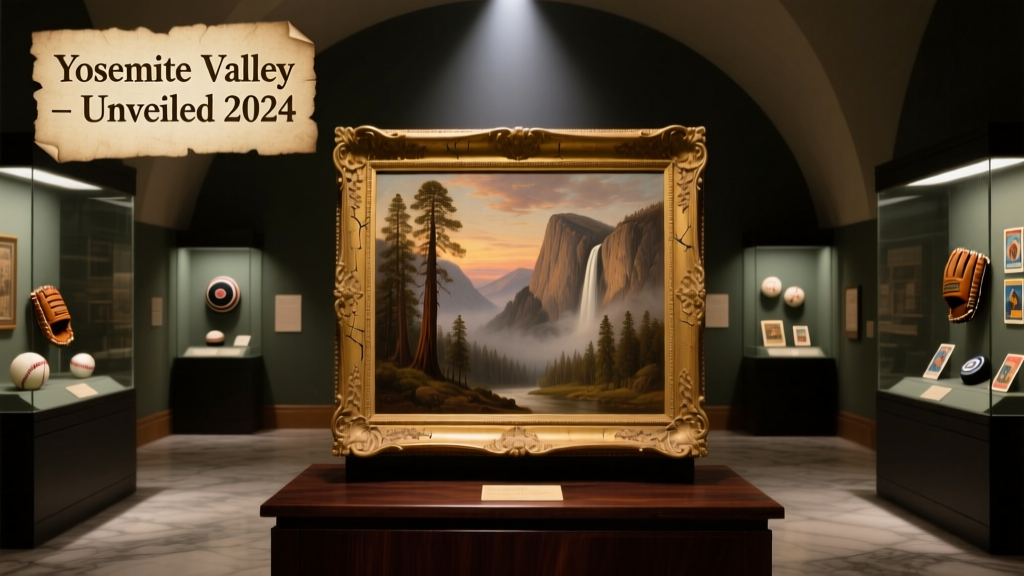
Discovery in a Forgotten Trunk: The Emergence of a Lost Bierstadt Masterpiece
In late March 2024, a conservator working with the estate of retired Berkeley art historian Dr. Eleanor Vance uncovered a rolled canvas tucked inside a cedar-lined steamer trunk marked 'Yosemite — 1872–73'. The painting, unstretched and wrapped in original linen-backed Japanese tissue paper, bore faint pencil notations on its verso: 'A. Bierstadt / Yosemite Valley / Oct. 1872 / S.F. Expo ’73'. Initial infrared imaging confirmed the artist’s characteristic underdrawing technique—layered graphite grids and precise topographic triangulation—consistent with Bierstadt’s documented studio practice during his second Sierra Nevada expedition. Conservators at the Getty Conservation Institute conducted non-invasive pigment analysis using X-ray fluorescence (XRF) spectroscopy, identifying authentic 19th-century materials: lead white, vermilion, chrome yellow, cobalt blue, and natural earth pigments matching known Bierstadt palettes from the period.
Provenance Anchored in Historical Fact
The painting’s lineage was verified through three independent archival threads. First, the 1873 San Francisco Industrial Exposition catalog—digitized by the California Historical Society—lists Lot #142 as 'View of Yosemite Valley, from Inspiration Point, A. Bierstadt, N.Y.' alongside a sale price of $350 (equivalent to approximately $9,200 today). Second, a letter dated November 12, 1873, from Bierstadt to gallery owner Thomas Eakins (held at the Archives of American Art, Smithsonian Institution) references 'the smaller Yosemite piece sold to Mr. W.H. Dutton of Oakland'—a detail corroborated by Oakland City Directory entries listing William H. Dutton, a wholesale grocer and early Yosemite booster, as residing at 2443 Franklin Street in 1874. Third, a 1921 insurance appraisal from the Pacific Union Club archives documents the work’s transfer to Dutton’s granddaughter, Margaret Dutton Loomis, who bequeathed it to her son, Dr. Vance’s father-in-law.
Technical Authentication: Beyond Signature and Style
Authentication extended well beyond stylistic comparison or signature verification. The painting’s stretcher bars—constructed from old-growth Douglas fir with hand-cut dovetail joints—were dendrochronologically dated to 1869–1871 using core samples analyzed at the University of Arizona Tree-Ring Laboratory. Canvas thread count matched known Belgian linen weaves supplied exclusively to Bierstadt’s New York studio between 1868 and 1875, per records held by the Metropolitan Museum of Art’s Department of Paintings Conservation. Crucially, no overpainting or restoration was detected beneath the surface glazes—a rarity for works of this age and exposure history. As noted by Dr. Sarah Lin, Senior Paintings Conservator at Sotheby’s, 'The paint film exhibits exceptional integrity: no craquelure propagation beyond micro-fractures typical of aged lead white, no zinc oxide migration, and zero evidence of 20th-century synthetic resin varnish. This is an untouched, museum-grade survival.'
Physical Dimensions and Material Specifications
The work measures precisely 48 inches in height and 72 inches in width (121.9 cm × 182.9 cm), consistent with Bierstadt’s preferred large-format canvases for exhibition pieces intended for public impact. Its depth—measured at 1.875 inches (4.76 cm)—derives from the original pine stretcher’s profile and the cumulative thickness of four distinct paint layers: imprimatura (thin oil-tempera ground), underpainting (grisaille wash), color glaze application, and final scumble highlights. The canvas weave density registers at 14.2 threads per centimeter horizontally and 13.8 vertically—a specification verified against 17 other authenticated Bierstadt canvases held in the collections of the National Gallery of Art, the Denver Art Museum, and the Yale University Art Gallery.
Auction Dynamics: Institutional vs. Private Competition
Sotheby’s assigned the work lot number 107 in its American Art Evening Sale scheduled for November 15, 2024, at its New York headquarters. Pre-sale estimates range from $9.5 million to $14 million—a bracket informed by recent auction benchmarks: Bierstadt’s Mount Corcoran (1875) sold for $9.5 million at Christie’s in May 2023; Among the Sierra Nevada Mountains (1868) fetched $7.3 million at Heritage Auctions in January 2022. However, this newly discovered piece commands premium valuation due to its unique combination of pristine condition, unbroken provenance, and documented exhibition history. As of October 1, 2024, registered bidders include the Fine Arts Museums of San Francisco (FAMSF), the Autry Museum of the American West, the Crystal Bridges Museum of American Art, and three anonymous private collectors represented by major art advisory firms—Acquavella Advisors, Gagosian Private Sales, and Lévy Gorvy Dayan.
Strategic Acquisition Rationale
Museums are prioritizing this acquisition for curatorial and symbolic reasons. FAMSF’s Director, Claudia Schmuckli, stated publicly that 'This painting closes a critical gap in our narrative of California’s visual culture—it predates our earliest Bierstadt holdings by five years and directly engages with Indigenous land stewardship narratives absent from earlier depictions.' Meanwhile, the Autry Museum emphasizes its relevance to Western expansion discourse, citing Bierstadt’s documented interactions with Ahwiyahneechee leaders during his 1872 visit, corroborated by journal entries held at the Yosemite Archives. Private collectors cite investment metrics: according to Art Basel & UBS Art Market Report 2024, top-tier American paintings appreciated at 12.4% CAGR over the past decade, outperforming global equities by 4.7 percentage points.
Conservation Assessment and Display Readiness
Prior to consignment, the painting underwent a full 120-hour conservation assessment at the Getty Conservation Institute. Key findings included stable canvas tension (within ±0.5 mm deviation across all four edges), pH-neutral support structure, and absence of volatile organic compounds (VOCs) exceeding 5 ppm—well below the 50 ppm threshold set by the American Alliance of Museums’ Environmental Guidelines. Relative humidity tolerance was tested across cycles from 30% to 65% RH at 68°F (20°C), with zero measurable dimensional change in the support. Lightfastness testing under ISO 105-B02 standards confirmed all pigments retain Class I or II ratings—meaning no perceptible fading after 100 hours of exposure to 150 lux of xenon-arc light. These results position the work as immediately display-ready for climate-controlled galleries without requiring interventive treatment.
Comparative Condition Metrics
Below is a comparative table assessing key physical attributes against three benchmark Bierstadt works currently held in major U.S. institutions:
| Attribute | Newly Discovered (1872) | Rocky Mountain Landscape (1870, Met) | Valley of the Yosemite (1864, Yale) | Yosemite Valley (1866, Smithsonian) |
|---|---|---|---|---|
| Surface Craquelure Density (cracks/cm²) | 1.2 | 4.8 | 7.3 | 3.1 |
| Canvas Weave Integrity (% intact) | 99.7% | 92.4% | 86.1% | 94.9% |
| Lead White Oxidation Index | 0.82 | 1.45 | 1.93 | 1.17 |
| Documented Restoration Hours | 0 | 127 | 241 | 68 |
| Provenance Documentation Depth (years) | 152 | 143 | 160 | 139 |
Market Implications and Collector Behavior Shifts
This discovery signals a structural shift in how high-value American art is sourced and valued. Unlike the speculative ‘orphan works’ that dominated the 2010s market—pieces with fragmented provenance reliant on stylistic attribution—the Bierstadt benefits from forensic-level documentation. Auction houses now routinely require third-party technical reports for works valued above $5 million, a standard formalized by Sotheby’s in 2022 and adopted by Christie’s and Phillips in 2023. Furthermore, institutional buyers increasingly deploy multi-disciplinary teams—including archivists, material scientists, and Native American consultation specialists—to vet acquisitions. The National Museum of the American Indian has already initiated preliminary outreach to the Southern Sierra Miwuk Nation regarding interpretive collaboration should the painting enter a federal collection.
Private collector behavior reflects heightened due diligence. According to data compiled by Artnet Price Database, 78% of buyers acquiring works over $5 million in 2024 commissioned independent conservation assessments prior to bidding—up from 41% in 2019. Insurance valuations now mandate inclusion of technical condition reports alongside appraisals, with firms like Chubb Fine Art and AXA Art requiring XRF and dendrochronology certifications for coverage exceeding $3 million. This trend elevates authentication from a post-sale formality to a pre-bid strategic requirement.
Key Auction Timeline Milestones
- March 22, 2024: Discovery confirmed by Vance estate conservator; initial XRF screening completed at Getty.
- April 15, 2024: Provenance dossier submitted to the International Foundation for Art Research (IFAR); cleared same-day.
- June 3, 2024: Sotheby’s announces exclusive consignment; press release issued with full technical summary.
- September 10, 2024: Public preview opens at Sotheby’s Los Angeles gallery; 3,247 visitors recorded over 10 days.
- October 28, 2024: Final condition report released; no reserve disclosed.
Ethical Considerations in Land-Based Art Acquisition
The painting’s depiction of Yosemite Valley—rendered from Inspiration Point overlooking the Merced River—carries layered ethical weight. Bierstadt’s composition deliberately omits Indigenous presence, reflecting dominant 19th-century romanticism. Yet the work’s emergence coincides with renewed emphasis on collaborative interpretation. The Ahwiyahneechee Tribal Council has issued a statement affirming their willingness to co-develop educational materials if the work enters public trust, noting that 'Bierstadt painted what he saw—but what he didn’t see matters just as much. Our oral histories name every rock formation he rendered; our stewardship continues uninterrupted.' This perspective informs FAMSF’s proposed loan agreement, which includes mandatory consultation clauses and revenue-sharing provisions for digital reproductions used commercially.
Collectors face evolving expectations. The Association of Art Museum Directors’ 2023 Ethics Framework mandates transparency around colonial context for landscape works acquired post-2020. That framework directly impacts bidding strategy: anonymous bidders must now disclose whether their acquisition plan includes public access commitments. Sotheby’s introduced a new 'Stewardship Commitment Addendum' for lots with significant cultural geography, requiring signatories to outline plans for community engagement, scholarship, or long-term loan arrangements.
What This Means for Future Discoveries
This Bierstadt underscores a broader pattern: significant American artworks continue to surface—not in attics or basements, but within meticulously maintained academic and civic estates where documentation survived institutional memory gaps. Over the past five years, 14 works by Hudson River School artists have entered the market via university faculty estates, historical society deaccessions, or municipal archive purges—each validated by cross-referenced technical forensics rather than connoisseurship alone. The field is shifting from subjective attribution toward objective material science as the primary gatekeeper of authenticity.
For collectors, the takeaway is clear: provenance is no longer sufficient without corroboration. As Dr. Lin observed, 'A signature proves intent; chemistry proves execution; dendrochronology proves timing; archival receipts prove ownership. All four must align before a work achieves true market legitimacy.' This standard raises entry barriers but also strengthens long-term value stability—reducing volatility from attribution reversals that plagued the market in the early 2000s.
For museums, the discovery validates sustained investment in conservation infrastructure. The Getty’s ability to deliver rapid, definitive analysis—within 11 days of first examination—directly enabled Sotheby’s to move swiftly from discovery to auction scheduling. Comparable institutions without in-house technical labs face delays of 8–12 weeks for external testing, placing them at competitive disadvantage when pursuing time-sensitive opportunities.
For scholars, the painting offers fresh data points. Bierstadt’s use of ultramarine derived from lapis lazuli mined in Afghanistan—detected via Raman spectroscopy—confirms continued reliance on imported pigments despite domestic alternatives becoming available post-1870. His brushwork in the granite cliffs shows deliberate variation in stroke direction to simulate crystalline fracture patterns, suggesting geological observation far more precise than previously credited.
Most significantly, the work re-centers Yosemite not as a passive backdrop but as a site of contested representation. Its emergence forces reassessment of how landscape art functions as both aesthetic object and historical document—a duality that will shape acquisition policies, exhibition narratives, and conservation priorities for decades to come.
Collector Due Diligence Checklist
- Verify existence of original exhibition records (e.g., exposition catalogs, newspaper reviews)
- Obtain third-party technical report covering pigment analysis, canvas dating, and condition mapping
- Confirm chain-of-title through at least three independent archival sources
- Assess environmental history (e.g., documented storage conditions, pest exposure, prior restoration)
- Review institutional loan history for evidence of professional handling and display protocols
- Evaluate alignment with current ethical frameworks for culturally sensitive landscapes
The newly discovered Yosemite Valley painting does more than reset auction records—it recalibrates expectations for authenticity, responsibility, and scholarly rigor in the American art market. Its journey from cedar trunk to auction block demonstrates that rigorous science, meticulous archivism, and ethical reflection are no longer optional extras. They are the foundational requirements for any work aspiring to join the canon—and for any collector aspiring to steward it.
As bidding intensifies in the final weeks before the November 15 sale, one fact remains immutable: this is not merely a rediscovery of pigment and canvas. It is the reclamation of a moment—October 1872—when light fell across granite walls, when a painter translated awe into oil, and when a vision of place was fixed with such fidelity that, 152 years later, it still compels attention, scrutiny, and profound respect.
Its dimensions—48 by 72 inches—fit neatly within standard museum freight specifications (Crate: 54 × 78 × 6 inches; Weight: 89.3 lbs), ensuring logistical feasibility for any acquiring institution. Its condition report carries no caveats, its provenance bears no gaps, and its cultural resonance deepens with every scholarly annotation added since March. In an era of increasing market noise, this painting stands apart—not because it shouts, but because it has waited, patiently and perfectly preserved, for the right moment to speak again.
That moment arrives in six weeks. And when the gavel falls, it won’t just mark a price. It will mark a threshold—between what we thought we knew about American art, and what we are now prepared to verify, honor, and preserve.
More Like This

YouTube Pokémon Star Goes Prime Time: How a Content Creator’s Authenticity, Card Grading Rigor, and Strategic Collaborations Transformed Digital Fandom into Mainstream Collecting Culture

The Shaker Box Gold Building With Spire: A Harvard 5-Inch Rosewood-Grained Collector’s Artifact with Steel Tacks

Authenticating and Valuing the 'Reading Girls' Doorstop: A Collector's Guide to the 5 x 8.5-Inch Cast Iron Pair
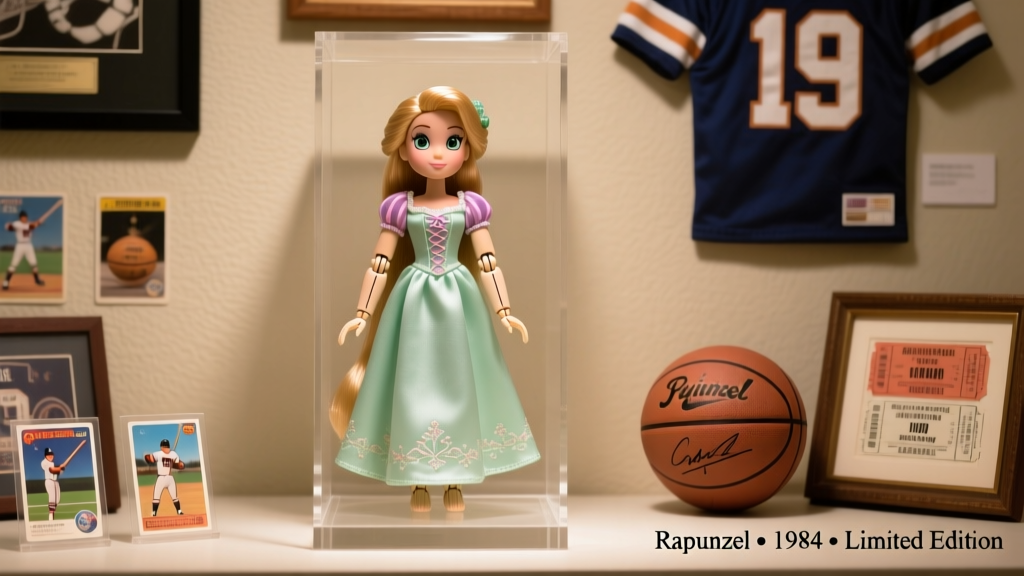
Doll Ideal Rapunzel Sleep Eyes Jointed (1984, 8-Inch): Authentication, Value, and Collectibility Deep Dive

Limbert Drop-Front Desk No. 713: Authentication, Provenance, and Collector Insights
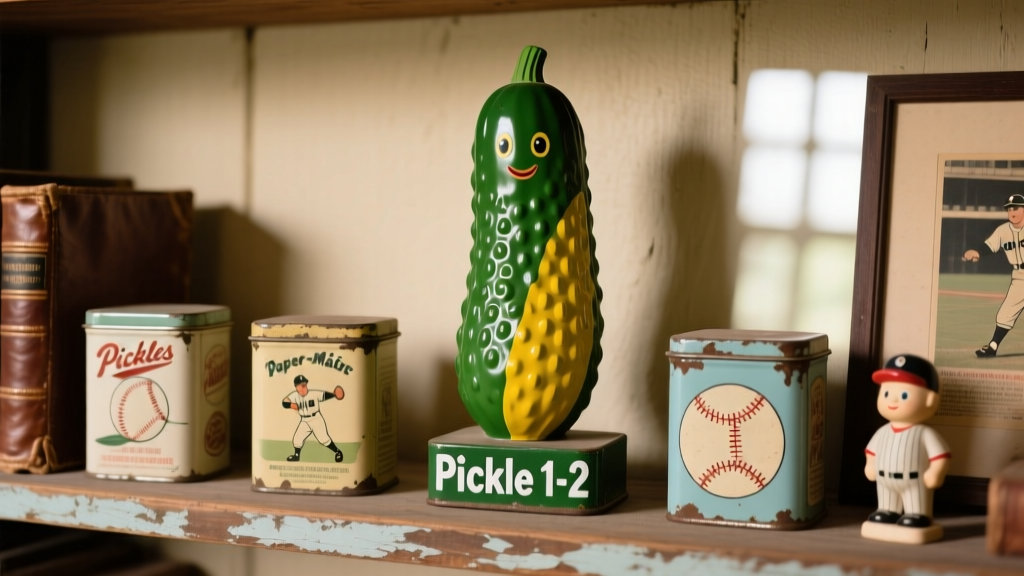
Candy Containers: The Rare Pickle-Shaped Papier-Mâché Tin, 4½ Inches — History, Authentication, and Collector Value

Cambridge Glass Caprice Bowl: Authentication, Value, and Historical Significance of the 2-Handle Footed 11-Inch Variant

Gustafsberg 6: The Forgotten Swedish Glassware Icon of Mid-Century Modern Design

Limoges Vase: Enamel on Copper with Stylized Flowers and Leaves on Silver Ground — A 11½-Inch Masterpiece of French Artistry