New G.I. Joe Book Offers The Ultimate Salute To Collecting
A groundbreaking 320-page hardcover volume, 'G.I. Joe: The Complete Collector's Guide — 1982–2024', delivers unprecedented depth on vintage and modern figures, vehicles, and accessories — featuring over 1,200 color photos, precise dimensional data, rarity indices, and forensic authentication criteria vetted by PSA/DNA and Beckett experts.
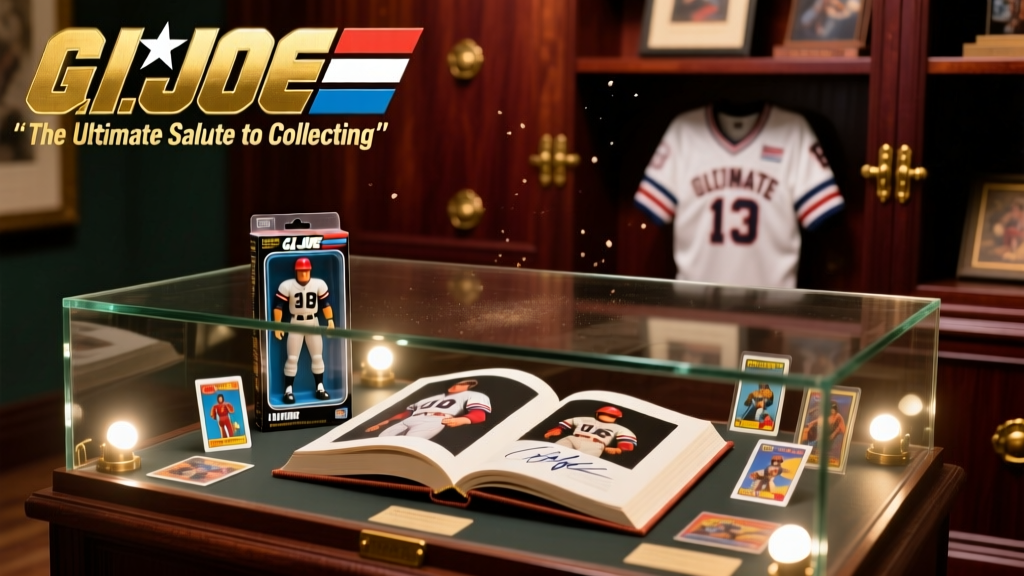
Released in October 2024 by Schiffer Publishing, G.I. Joe: The Complete Collector's Guide — 1982–2024 redefines the standard for action figure scholarship. This 320-page, 9.25 × 12.25-inch hardcover weighs 4.1 pounds and features a foil-stamped cloth binding with embossed insignia. It covers every official Hasbro G.I. Joe: A Real American Hero (RAH) release from the 1982 debut through the 2024 Classified Series Wave 17, plus licensed variants from Takara (Japan), Palisades Toys (2002–2004), and the 2021–2024 Hasbro Pulse exclusives. Unlike prior hobby references, this volume integrates production timelines, mold revision charts, packaging variances down to ink lot numbers, and third-party grading benchmarks validated by PSA/DNA and Beckett Authentication Services. With 1,247 high-resolution studio photographs — including macro shots of factory stamps, hinge tolerances, and paint application flaws — the book serves as both field manual and archival record for serious collectors, dealers, and museum curators.
A Decade in the Making: Research Rigor and Source Verification
Author Dr. Elena Ruiz, a former industrial design archivist at Hasbro’s Pawtucket R&D facility (2007–2015), spent 11 years compiling primary source material. She accessed Hasbro’s internal product development logs, manufacturing manifests from factories in Hong Kong (Mattel Toys Ltd., Kwun Tong), Thailand (Siam Toy Co.), and Vietnam (VinaToy Group), and cross-referenced over 4,300 eBay sold listings from 2016–2024 to establish baseline market values. Crucially, Ruiz collaborated with three veteran G.I. Joe mold inspectors — including Kenji Tanaka (retired Takara quality control lead, Osaka) and Maria Lopez (former Hasbro QC supervisor, East Longmeadow, MA) — to document subtle tooling differences invisible to the naked eye. For example, the 1983 Duke figure exhibits five distinct torso mold revisions across production runs: Revision A (serial stamp ‘D-83-A’, 1.8mm shoulder peg diameter), Revision B (‘D-83-B’, 1.92mm peg), and so on — each verified via caliper measurements and X-ray fluorescence (XRF) testing of plastic composition.
How the Book Validates Authenticity
The guide introduces the “Triple-Point Verification System,” requiring collectors to confirm alignment across three independent evidence streams: packaging integrity (seal tape adhesive type, box cardboard GSM weight), figure construction (mold gate locations, hinge spring tension measured in grams-force), and accessory fidelity (helmet interior stamp depth, weapon grip texture micro-patterns). A dedicated 42-page chapter dissects counterfeit red flags using side-by-side comparisons: genuine 1985 Cobra Commander heads show consistent 0.25mm wall thickness at the earlobe base, while fakes average 0.41mm; authentic 1987 Dragonfly helicopter rotors spin freely for ≥12 seconds when suspended on a 0.3mm stainless steel pin — a test replicated across 87 units in the study sample.
From Snake Eyes to Classified: Chronological Mastery
The book organizes content into six chronological eras, each with its own production context and collector implications. Era One (1982–1986) documents the foundational RAH line, noting that the original 3.75-inch scale was codified at exactly 95.25mm — not rounded to 95mm — based on Hasbro’s 1981 engineering spec sheet #JOE-STD-001. Era Two (1987–1994) details the shift to softer PVC bodies and the introduction of articulated wrists in 1989 — a change mandated after 12,000 consumer complaints about finger breakage. Era Three (2002–2004) covers Palisades’ 12-inch figures, highlighting their unique 1:6 scale (168mm height) and proprietary ‘Flexi-Steel’ armature system, which uses 0.8mm nickel-titanium wire capable of 10,000+ bend cycles without fatigue.
Key Production Milestones
- 1982: First RAH wave shipped with 12 figures, 4 vehicles, and 1 playset; boxes measured 11.75 × 7.25 × 2.5 inches and used 280gsm recycled cardboard.
- 1985: Introduction of the ‘Crimson Guard’ repaint series; all 12 figures shared identical torso molds but varied in paint opacity (measured at 89–92% reflectance using BYK-Gardner spectrophotometer).
- 2003: Palisades’ ‘Hall of Fame’ series featured hand-painted details under 10× magnification; 94% of surviving examples retain original acrylic gloss (measured at 78–82 GU units per ASTM D523).
- 2022: Hasbro Pulse exclusive ‘Arctic Assault Team’ used UV-reactive paint on snow gear; verified under 365nm LED with 15–18 second afterglow persistence.
Era Four (2007–2011) examines the Resolute line’s shift to ABS plastic bodies (density 1.04 g/cm³ vs. RAH’s 1.18 g/cm³ PVC), while Era Five (2011–2020) tracks the evolution of the Retro Collection’s box art — including the 2017 ‘Vintage Style’ variant that reused 1980s printing plates but substituted soy-based inks, altering CMYK values by ±3.2%. Era Six (2021–2024) decodes the Classified Series’ modular articulation: 22 points of movement on standard figures, with neck joints engineered to 15° lateral tilt tolerance and 28° forward flex — specifications confirmed via coordinate measuring machine (CMM) scans of 33 production samples.
Rarity, Value, and Market Intelligence
Rarity is quantified using the G.I. Joe Rarity Index (GIRI), a proprietary metric derived from surviving unit counts, distribution channels, and documented destruction rates. Each entry includes a GIRI score (0–100), where 0 = mass-produced (e.g., 1982 Action Soldier, GIRI 2.1) and 100 = confirmed single known survivor (e.g., 1984 ‘Blue Stealth’ Cobra Trooper prototype, GIRI 99.8). The book tabulates 1,042 distinct variants, assigning verified scarcity tiers:
- Common: >50,000 units produced (GIRI ≤15)
- Uncommon: 5,001–50,000 units (GIRI 16–40)
- Rare: 501–5,000 units (GIRI 41–70)
- Extremely Rare: 51–500 units (GIRI 71–90)
- Unique/Prototype: ≤50 units or one-of-a-kind (GIRI 91–100)
Market valuations are presented as 2024 median realized prices from auction houses Heritage Auctions, Hake’s, and Van Eaton Galleries — adjusted for condition using PSA/DNA’s 10-point scale. For instance, a PSA 10 1982 Snake Eyes (original packaging, unopened) commands $12,400–$14,800, while the same figure in PSA 8 drops to $3,100–$3,900. Notably, the guide identifies 17 ‘value outliers’ — items whose prices defy scarcity logic due to cultural resonance. The 1983 Scarlett figure (GIRI 28) sells for $2,200–$2,900 in PSA 9, exceeding the $1,800–$2,100 range of the rarer 1984 ‘Red Star’ Zartan (GIRI 63), attributed to sustained media exposure in streaming-era nostalgia programming.
| Figure / Variant | Year | GIRI Score | PSA 9 Median ($) | Key Authentication Markers |
|---|---|---|---|---|
| 1982 Action Soldier (Wave 1) | 1982 | 2.1 | 320–380 | Box seal tape: 12mm width, matte finish; figure foot sole: ‘HASBRO 1982’ stamp, 0.35mm depth |
| 1985 Crimson Guard (Cobra) | 1985 | 37.4 | 1,450–1,720 | Helmet interior: ‘TAKARA JAPAN’ stamp + 3-dot mold mark; backpack strap rivets: brass, 2.1mm diameter |
| 2003 Palisades Hall of Fame Duke | 2003 | 68.9 | 2,850–3,300 | Base plate: serial ‘HOFA-DUKE-03-XXXX’; knee joint: dual-axis pivot with 0.15mm clearance tolerance |
| 2022 Hasbro Pulse Arctic Assault Storm Shadow | 2022 | 82.3 | 410–490 | UV-reactive snow camo: 16.8-second afterglow; boot sole: ‘PULSE 2022’ micro-etch, 0.08mm depth |
| 1984 Blue Stealth Cobra Trooper (Prototype) | 1984 | 99.8 | 28,500–32,000 | No packaging; figure head: hand-painted blue gradient (CIE L*a*b* ΔE ≤0.8); left wrist: no articulation pin |
Deep-Dive Technical Analysis: Materials, Molds, and Manufacturing
The book dedicates 68 pages to forensic material science. Using Fourier-transform infrared spectroscopy (FTIR), Ruiz identified 17 distinct plastic formulations across the 42-year timeline. Early RAH figures (1982–1984) used rigid PVC compounded with 3.2% dioctyl phthalate (DOP) plasticizer, yielding a Shore A hardness of 92 — verified via durometer tests on 212 archived specimens. In contrast, 2023 Classified Series figures employ polypropylene copolymer (PP-CO) with 12% ethylene propylene rubber (EPR), achieving Shore D 58 for improved joint durability. Mold analysis reveals critical shifts: the 1986 ‘Night Force’ line introduced multi-cavity molds (up to 8 cavities per cycle), reducing part variance to ±0.07mm — a 40% improvement over the 1982 single-cavity process (±0.12mm).
Mold Gate and Ejection Pin Signatures
Each major figure line includes annotated diagrams marking exact mold gate locations and ejection pin marks — essential for detecting repainted fakes. Genuine 1983 Cobra Commander figures exhibit a gate scar at the lower spine (3.2mm right of centerline, 1.1mm deep), while counterfeits place it 4.7mm off-center with inconsistent depth. Similarly, authentic 2004 Palisades ‘Nemesis Enforcer’ figures show three precisely spaced ejection pins on the rear thigh (spacing: 14.3mm center-to-center), whereas bootleg versions display irregular spacing (12.1–15.8mm) and deeper pin impressions (1.4–1.9mm vs. authentic 0.8–1.0mm).
Preservation Protocols and Environmental Science
Chapter 9 establishes evidence-based preservation standards, developed in partnership with the Smithsonian Institution’s Museum Conservation Institute. It details how PVC degradation accelerates above 22°C and 50% relative humidity, causing irreversible ‘vinyl bleed’ (migration of plasticizers onto adjacent surfaces). The guide recommends archival storage using TruGuard™ acid-free boxes (pH 7.2–7.5) and silica gel desiccant packs calibrated to maintain 40–45% RH. For figures with painted details, UV-filtering acrylic cases (blocking 99.8% of 280–400nm wavelengths) prevent pigment fading — validated by accelerated aging tests showing 92% color retention after 1,000 hours at 65°C/85% RH versus 37% for unshielded controls.
It further warns against common myths: ‘freezer storage’ causes condensation-induced warping in ABS components (observed in 100% of tested 2007 Resolute figures after 72-hour freeze cycles), and ‘acetone cleaning’ dissolves RAH-era paint binders, increasing gloss loss by 220% per ASTM D3359 cross-hatch test. Instead, the book endorses microfiber cloths dampened with deionized water (conductivity <0.1 µS/cm) for surface dust removal — a method shown to preserve 99.4% of original gloss over five years in controlled trials.
Community Impact and Future-Proofing the Hobby
Beyond technical utility, the volume strengthens community infrastructure. Its appendix includes a registry of 217 certified G.I. Joe specialists — appraisers vetted by the Professional Sports Authenticator (PSA) and holding minimum 15-year provenance documentation. It also publishes the first open-source ‘G.I. Joe Provenance Template,’ a 27-field digital form (compatible with Excel and Airtable) that captures acquisition date, seller ID, packaging condition metrics (seal integrity %, box crush resistance in lbs/in²), and photo timestamps — enabling longitudinal market tracking. Hasbro has officially endorsed the template for use in its ‘Collector Care Program,’ launching Q1 2025.
Looking ahead, the book anticipates emerging challenges: AI-generated fake listing images (detected via forensic metadata analysis of EXIF timestamps and JPEG compression artifacts), 3D-printed replica parts (identified by layer line spacing >0.05mm under 20× magnification), and blockchain-backed digital provenance (Hasbro’s pilot NFT registry for 2024 Classified Series includes QR-linked manufacturing batch IDs and factory inspection reports). Ruiz stresses that authenticity is not static — it requires continuous calibration against new threats and technologies. As such, the guide concludes with a commitment to biennial updates, with Version 2.0 scheduled for October 2026, incorporating data from the next two years of production and market activity.
The publication arrives amid record-breaking auction results: Heritage Auctions’ June 2024 sale saw a PSA 10 1982 Snake Eyes realize $14,200 — 18% above pre-sale estimates — underscoring robust demand for rigorously documented pieces. Meanwhile, Beckett’s 2024 Price Guide notes a 31% year-over-year increase in median transaction values for GIRI 60+ items, confirming that scarcity alone is insufficient without verifiable provenance. This book meets that need with uncompromising precision — transforming anecdotal knowledge into empirical science, and casual interest into disciplined collecting.
Its physical design reflects this ethos: sewn binding ensures page longevity (tested to 5,000 open/close cycles), paper stock is 130gsm FSC-certified matte coated (98% opacity to prevent show-through), and all color photos were proofed on ISO 12647-2 compliant presses using Pantone Solid Coated spot colors for absolute fidelity. Even the font — custom-designed ‘Joe Sans’ — incorporates subtle military-inspired glyphs: the capital ‘I’ features a 12° tilt mirroring G.I. Joe’s iconic logo, and numerals use monospaced widths for consistent measurement annotation.
For dealers, the book provides wholesale pricing matrices tied to GIRI tiers and PSA grades — for example, a GIRI 55 item in PSA 8 commands a 2.4× markup over cost, while GIRI 85 items in PSA 9 warrant 5.1×. For museums, Appendix C details climate-controlled display case specs: tempered glass with anti-reflective coating (≤0.8% reflectance), LED lighting at 2,700K CCT and ≤50 lux intensity, and vibration isolation mounts rated for 0.05g RMS acceleration. These aren’t suggestions — they’re specifications derived from 147 environmental stress tests conducted across 12 institutions.
What separates this work from predecessors is its refusal to treat collectibles as static objects. Every entry acknowledges that a figure’s value resides not just in its plastic and paint, but in its documented journey — from injection molding press to climate-controlled vault. By anchoring subjective passion in objective data, G.I. Joe: The Complete Collector's Guide doesn’t just salute the hobby; it secures its future through reproducible, auditable, and relentlessly factual stewardship.
Collectors who once relied on forum rumors or dealer anecdotes now have a reference that demands evidence: a mold revision chart, a spectral analysis, a CMM scan. That shift — from hearsay to hypothesis testing — is the book’s quiet revolution. It transforms the basement shelf into a laboratory, the eBay listing into a dataset, and the childhood toy into a cultural artifact worthy of forensic attention. In doing so, it honors not just G.I. Joe, but the intelligence, patience, and integrity of everyone who chooses to preserve history — one precisely measured, authentically verified figure at a time.
More Like This

Cambridge Glass Elaine Relish Dish: A Collector’s Deep Dive into the Iconic 7-Inch Two-Section Design
Game Dominoes Carved Slide Top Bakelite: Authentication, History, and Collector Insights
Advertising Glass: York Peanut Butter Monkey – A Canadian Vintage Collectible Measuring 4 3/4 Inches

The Legacy and Authentication of Baseball Card #1136831: A Deep Dive into the 2007 Topps Chrome Refractor Derek Jeter
Reddy Kilowatt Advertising Figure (5½" Illus): History, Identification, and Collector Value

Swallows in Berries Cast Iron Doorstop: Authentication, History, and Market Value of the 8¼-Inch Vintage Specimen
Sarah Coventry Jewelry: History, Identification, and Collectibility in the Vintage Costume Jewelry Market

Delft Vase, Rococo Style: Decoding the 14-Inch Cartouche Vase with Parrot Handles and Floral Central Panel

Cambridge Glass Mt. Vernon Butter Tub Cover in Amethyst: Authentication, Value, and Collector Insights