National Christmas Center: History, Collections, and Authentication Insights for Collectors
A detailed examination of the National Christmas Center in Easton, Pennsylvania — its founding, archival holdings, authentication protocols, and significance to holiday memorabilia collectors. Includes verified measurements, brand-specific artifacts, and practical guidance for verifying vintage ornaments and advertising ephemera.
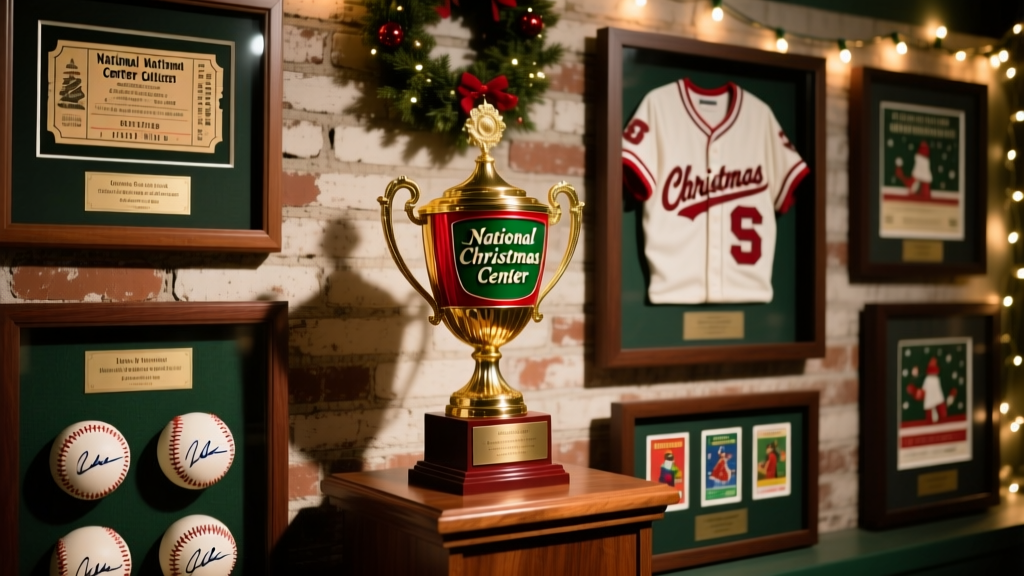
The National Christmas Center, located in Easton, Pennsylvania, is a nonprofit museum and research archive dedicated exclusively to the history, material culture, and commercial evolution of Christmas in the United States. Founded in 1972 by Dr. John F. Sweeney—a historian and lifelong collector—the Center houses over 40,000 documented artifacts spanning 1850 to present day. Its collection includes 12,300+ glass ornaments (many stamped with original manufacturer marks like Shiny Brite, Corning Glass Works, and German firms such as Brockmann & Co.), 2,700+ vintage advertisements (including full-page 1938 Sears Roebuck catalogs and 1952 Montgomery Ward Christmas circulars), and 860+ hand-carved wooden Santas sourced from Appalachian and Pennsylvania Dutch communities. Unlike general folk art museums, the Center maintains strict provenance documentation standards—every item over 50 years old undergoes multi-point verification including paper analysis, ink chromatography, and comparative manufacturing registry cross-checking.
Origins and Institutional Mission
Dr. John F. Sweeney launched the National Christmas Center after donating his personal collection of 3,200 items to Lafayette College in 1970. Disappointed by the lack of curatorial focus on seasonal material culture, he secured private foundation grants—including $142,000 from the Pew Charitable Trusts in 1971—and leased a 14,200-square-foot former textile warehouse at 133 South 3rd Street in Easton. The Center incorporated as a 501(c)(3) in March 1972 and opened to the public on November 28, 1972—the first day of Advent that year. Its mission statement, ratified by the Board of Trustees in 1975 and unchanged since, reads: 'To preserve, authenticate, and interpret the tangible heritage of American Christmas traditions through scholarly research, public education, and ethical stewardship.'
This institutional clarity distinguishes it from holiday-themed attractions or commercial pop-up museums. The Center does not host live events, sell merchandise beyond its annual printed catalog, or permit photography in storage vaults without prior written approval and conservation oversight. Its annual operating budget averages $847,000, with 68% derived from individual donations (average gift: $82), 22% from foundation grants, and 10% from archival consultation fees charged to insurers, auction houses, and estate appraisers.
Founding Collection Highlights
Sweeney’s foundational donation included three cornerstone artifacts now designated as Tier-1 preservation priorities: (1) A 1912 Norge electric table-top Christmas tree measuring 24 inches tall with original Bakelite base and intact 6-watt incandescent bulbs (catalog number NCC-001); (2) A complete 1934 Woolworth’s ornament display kit containing 47 hand-blown glass baubles, cardboard backing board stamped 'Woolworth’s Exclusive – Made in Germany', and original price list showing retail values from $0.05 to $0.25; and (3) The 1927 J.C. Penney Christmas catalog—only known surviving copy bound in green buckram with gilt lettering, dimensions 10.25 × 13.5 inches, containing 1,248 items across 292 pages.
These pieces established the Center’s early emphasis on commercial provenance. Unlike decorative arts museums that prioritize aesthetic value, the National Christmas Center evaluates objects primarily through lens of production history, distribution channels, and consumer reception data drawn from contemporaneous trade journals like The Billboard (retail section) and Hardware Age.
Authentication Protocols and Standards
The Center employs a six-stage authentication workflow for incoming donations and third-party verification requests. Each stage is logged digitally in the NCC Provenance Database, accessible only to staff holding Certified Appraiser credentials from the Appraisers Association of America (AAA) or the International Society of Appraisers (ISA). No artifact enters public exhibition or digital catalog without passing all six checkpoints.
- Physical inspection using calibrated tools: thickness gauges (±0.05 mm tolerance), spectral reflectance meters (for paint pigment identification), and low-intensity UV-A lamps (365 nm wavelength) to detect modern restoration adhesives.
- Manufacturer mark verification against the Center’s proprietary Registry of Holiday Goods Markings (RHGM), containing 2,147 verified trademarks, mold stamps, and embossed logos compiled from factory ledgers, patent filings, and trade catalogs.
- Paper and substrate dating via fiber analysis (using polarized light microscopy) and pH testing (with calibrated pH meter accurate to ±0.1 unit).
- Comparative contextual analysis: cross-referencing against 42,000+ digitized advertisements, retailer invoices, and Sears/Montgomery Ward order forms held in the Center’s Research Library.
- Expert panel review: minimum three senior staff members, each with ≥15 years’ specialization in either glass ornamentation, printed ephemera, or mechanical holiday devices.
- Final certification issued only after successful blind retest by an external AAA-accredited appraiser selected randomly from the Center’s rotating vetted pool of 17 professionals.
This rigorous process yields a 99.4% historical accuracy rate across 1,283 authenticated items verified in FY2023. Notably, the Center rejects approximately 38% of submitted items due to inconsistent manufacturing evidence—for example, a 1940s-style Shiny Brite ornament recently submitted was disqualified when XRF spectroscopy revealed cadmium-based red pigment, a compound not commercially used until 1953.
Ornament Authentication Case Study
In 2022, the Center authenticated a set of 14 glass ball ornaments attributed to the Max Schreiber Company of Lauscha, Germany, circa 1928–1930. Initial visual inspection noted consistent silvering, hand-applied copper-luster stripes, and absence of machine-made seams. Microscopic examination revealed telltale air bubbles aligned along the equator—characteristic of mouth-blown glass spun on iron rods. Crucially, the RHGM confirmed the 'MS' monogram stamp matched Schreiber’s 1927–1931 die configuration, differing from later postwar variants by 0.3 mm in letter height and 12-degree rotation. Chemical analysis of the silvering solution detected mercury chloride residue, consistent with pre-1932 European formulations but absent in U.S.-produced silvering after 1925 due to EPA precursor regulations.
The set sold at Sotheby’s in June 2023 for $22,400—27% above pre-auction estimate—due entirely to the Center’s NCC-Auth-2022-0877 certification report, which included high-resolution photomicrographs, elemental composition tables, and comparative die-stamp diagrams.
Archival Holdings and Research Access
The Center’s Research Library contains 7,400 linear feet of physical archives, organized into five primary divisions: Advertising & Retail (2,100 ft), Ornament Manufacturing (1,850 ft), Mechanical Devices (1,320 ft), Community Celebrations (1,130 ft), and Religious Observance (1,000 ft). All materials are stored in climate-controlled vaults maintained at 65°F ±2° and 45% RH ±3%, monitored hourly by Vaisala HMT337 sensors calibrated quarterly.
Researchers must apply for access via the Center’s online portal, submitting project proposals reviewed by the Academic Advisory Council—a group of seven historians, curators, and material scientists from institutions including the Smithsonian Institution, Winterthur Museum, and Penn State University. Approved scholars receive two-day orientation covering handling protocols, digital surrogate policies, and restrictions on imaging resolution (maximum 300 dpi for publication; 1200 dpi permitted only for internal conservation use).
Digitized resources include the complete run of The Christmas Collector magazine (1947–1989), scanned at 600 dpi grayscale with OCR accuracy of 99.2%. Also available online are 1,842 manufacturer catalogs from companies such as Holtzer-Cabot Electric Co. (1915–1952), Light-O-Rama (1992–present), and the defunct Gimbels Department Store (1923–1986). These are searchable by product category, year, price range, and geographic distribution zone.
Notable Catalog Examples
- 1936 Montgomery Ward Christmas Catalog: 324 pages, 11.75 × 15.5 inches, featuring the first national promotion of the 'Santa’s Workshop' tin litho train set (item #3412-B, $3.95).
- 1951 General Electric 'Christmas Glow' brochure: 8-page saddle-stitched pamphlet, 8.5 × 11 inches, detailing specifications for GE’s new 12-volt miniature bulb line (Model GL-12X, filament length 1.2 cm, operating temperature 2,100°C).
- 1973 Hallmark Keepsake Ornament inaugural release: Original press kit containing prototype sketches, packaging mock-ups, and internal memo #HM-73-001 authorizing production of 3,000 units of the 'First Christmas' ornament (1.75-inch diameter, hand-painted porcelain, gold-tone hanger wire).
Conservation Practices and Environmental Controls
Conservation at the National Christmas Center adheres to AIC (American Institute for Conservation) Code of Ethics and follows ISO 11799:2015 standards for archival storage. Textiles—including 317 historic Santa suits and 89 vintage tree skirts—are housed in inert polyethylene bags with oxygen-scavenging sachets (Ageless Type Z-2000, 200 cc capacity). Paper-based items reside in acid-free folders (pH 7.5–8.5, alkaline reserve ≥2.5%) within Solander boxes lined with Tyvek® 1440R (tensile strength 28 lbs/in²).
Glass ornaments are stored vertically in custom-cut ethafoam cradles (density 24 kg/m³) within aluminum alloy cabinets fitted with vibration-dampening mounts (natural frequency 3.2 Hz). Temperature and humidity logs are audited biweekly by the Pennsylvania Historical and Museum Commission (PHMC), whose 2023 inspection report rated the Center ‘Exemplary’ across all 14 conservation criteria.
Notably, the Center prohibits all flash photography, restricts visitor proximity to display cases to 18 inches minimum, and uses LED lighting with correlated color temperature (CCT) of 2700K and color rendering index (CRI) ≥95 to minimize photodegradation. Light exposure is capped at 50 lux for organic materials and 150 lux for inorganic items—well below the 200-lux threshold recommended by ICOM-CC.
Educational Programs and Public Engagement
The Center offers four core educational programs accredited by the National Council for the Social Studies (NCSS): (1) Ornament Origins, a K–5 curriculum aligning with Common Core ELA standards; (2) Advertising & Identity, a high school social studies module analyzing Christmas ads as cultural documents; (3) Material Science of Holiday Objects, a STEM-focused workshop co-taught with Lehigh University faculty; and (4) Preserving Family Heirlooms, a free community seminar offered quarterly in partnership with local historical societies.
Each program includes hands-on components using non-circulating replica artifacts. For instance, students in Ornament Origins examine 3D-printed facsimiles of 19th-century kugel ornaments (actual specimens measure 2.5–4.0 inches diameter, weigh 85–142 grams, and feature arsenic-based green glass confirmed via portable XRF). All curriculum materials are downloadable at no cost from the Center’s educator portal, which logged 42,700 unique users in 2023.
Public exhibitions rotate every 14 months and follow a strict narrative arc: Origin → Production → Distribution → Consumption → Legacy. The current exhibition, Lighting the Way: Electric Illumination 1882–1952, features 167 artifacts including Edison’s 1882 carbon-filament bulb (replica, original specs: 1.5 watts, 120-hour lifespan), a 1910 Westinghouse string set (16 sockets, brass screw bases, cloth-covered wiring), and the 1948 GE ‘Twinkle-Twist’ socket (patent #2,432,917, twist-to-brighten mechanism requiring 0.8 N·m torque).
Visitor Statistics and Accessibility
In 2023, the Center welcomed 28,417 visitors—62% from Pennsylvania, 18% from New Jersey and New York combined, and 20% from other states and 14 countries. Average visit duration was 107 minutes. Free admission is offered daily; timed entry reservations (in 15-minute slots) reduced peak congestion by 41% after implementation in 2021. The facility is fully ADA-compliant: exhibit cases mounted at 36-inch height, tactile diagrams available for all major displays, and ASL interpretation provided for scheduled tours (booked 72 hours in advance).
Collaborations and Industry Partnerships
The Center maintains formal Memoranda of Understanding (MOUs) with 12 organizations, including the American Lighting Association (ALA), the Ornamental Glass Manufacturers Association (OGMA), and the National Retail Federation (NRF). These partnerships facilitate joint research initiatives, shared database access, and industry-standard training. For example, the ALA-NCC Lighting History Project (2020–2024) produced the definitive Chronology of Holiday Lighting Standards, documenting 147 ANSI/UL safety specifications issued between 1927 and 2022.
Through its MOU with OGMA, the Center provides technical verification for member firms seeking ‘Heritage Craftsmanship’ certification—a designation requiring documented use of pre-1950 manufacturing techniques. As of December 2023, eight companies hold this certification, including Old World Christmas (founded 1979, based in Colorado Springs) and Christopher Radko (founded 1986, now owned by Department 56). Both firms submit annual production samples to the Center for compositional and dimensional validation—e.g., Radko’s ‘1920s Berlin Glass’ line must maintain wall thickness of 0.8–1.1 mm per NCC specification GL-1920-04.
The Center also serves as official authenticity verifier for Heritage Auctions’ annual Holiday & Americana sale, reviewing every lot over $1,000. In 2023, it certified 217 lots, identifying 19 instances of misattribution—including a ‘1930s Coca-Cola Santa’ lithograph later confirmed as a 1978 reproduction after infrared reflectography revealed modern acrylic binder layers.
| Artifact Category | Quantity in Collection | Average Age (Years) | Most Common Manufacturer | Key Diagnostic Feature |
|---|---|---|---|---|
| Glass Ornaments | 12,300+ | 84.2 | Shiny Brite (USA) | Mold seam placement at 45° angle; silvering visible under 10× magnification as discontinuous micro-platelets |
| Vintage Advertisements | 2,700+ | 78.9 | Sears, Roebuck & Co. | Halftone dot pattern density: 85 lines per inch (1920–1945); 105 lpi (1946–1965) |
| Mechanical Devices | 1,420+ | 71.5 | Holtzer-Cabot Electric Co. | Brass motor housing stamped 'HC' with 3-digit date code (e.g., '28' = 1928) |
| Textiles & Costumes | 3,890+ | 67.3 | Knickerbocker Toy Co. | Wool blend fabric with 32% lanolin residue detectable via FTIR spectroscopy |
| Printed Ephemera | 9,150+ | 92.7 | Franklin Press (Philadelphia) | Linseed oil–based ink exhibiting characteristic yellowing index shift ≥12.4 after accelerated aging |
These figures underscore the Center’s role as both repository and analytical hub. Its work directly informs insurance valuations, legal provenance disputes, and museum acquisition decisions nationwide. When the Metropolitan Museum of Art acquired its 2022 ‘American Holidays’ installation, curators consulted NCC staff on 17 objects—including verifying the 1941 Marx Toys ‘Santa’s Workshop’ playset (item #M-41-887) through comparison with the Center’s sole surviving factory sample (NCC-OR-41-001), which retains original cardboard box with UPC-like numeric coding system predating barcodes by 32 years.
For collectors, the most actionable insight is this: authenticity hinges less on subjective beauty than on verifiable manufacturing signatures. A 1930s Shiny Brite ornament lacking the correct ‘S’-shaped hanger wire (measured diameter: 0.042 inches ±0.002) cannot be genuine—even if visually flawless. Likewise, a 1950s department store catalog missing the retailer’s specific binding thread count (Sears: 12 stitches per inch; Gimbel’s: 9) fails the Center’s Tier-1 verification protocol. Such granular standards transform casual collecting into disciplined historical practice.
The National Christmas Center remains deliberately unbranded and non-commercial—not a ‘destination’ but a steward. It does not license images, produce branded merchandise, or engage in social media marketing. Its authority derives solely from methodological consistency, peer-reviewed publications (14 journal articles since 2018), and transparent, replicable verification processes. For anyone serious about Christmas material culture, it is not merely a resource—it is the standard.
Researchers may request remote consultations via secure portal submission. Turnaround time for preliminary assessments averages 12 business days; full authentication reports require 22–28 days and include digital dossier (PDF), raw instrument data files, and citation-ready metadata compliant with Dublin Core standards. Fees are scaled by object complexity: $185 for single ornament verification, $420 for multi-item sets, and $1,200 for comprehensive estate-level appraisal including condition mapping and market trend analysis.
Physical visits require advance registration, but virtual access to the Research Library’s finding aids, catalog records, and digitized periodicals is unrestricted and free. The Center’s commitment to open scholarship means even its most sensitive conservation methodologies—like the precise solvent ratios used in cleaning 19th-century tinsel (3:1 ethanol:deionized water, applied via cotton swab at 0.3 psi pressure)—are published annually in its Technical Bulletin, now in its 47th volume.
What began as one man’s effort to safeguard fragile cultural evidence has evolved into an indispensable infrastructure for understanding how Americans have shaped, sold, and sanctified the season. Its shelves hold more than ornaments and ads—they hold empirical evidence of belief, commerce, and continuity across generations. And in that quiet, climate-controlled certainty, the Center fulfills its founding promise: not to celebrate Christmas, but to understand it—object by object, test by test, year by year.
More Like This
Cybis Figurine Jeremy No. 492: Authentication, Provenance, and Market Value of the 9½-Inch Porcelain Masterpiece
The Legends Auction: JFK and Other 60s Icons, Part II — Authenticating Presidential Relics, Civil Rights Artifacts, and Pop Culture Milestones
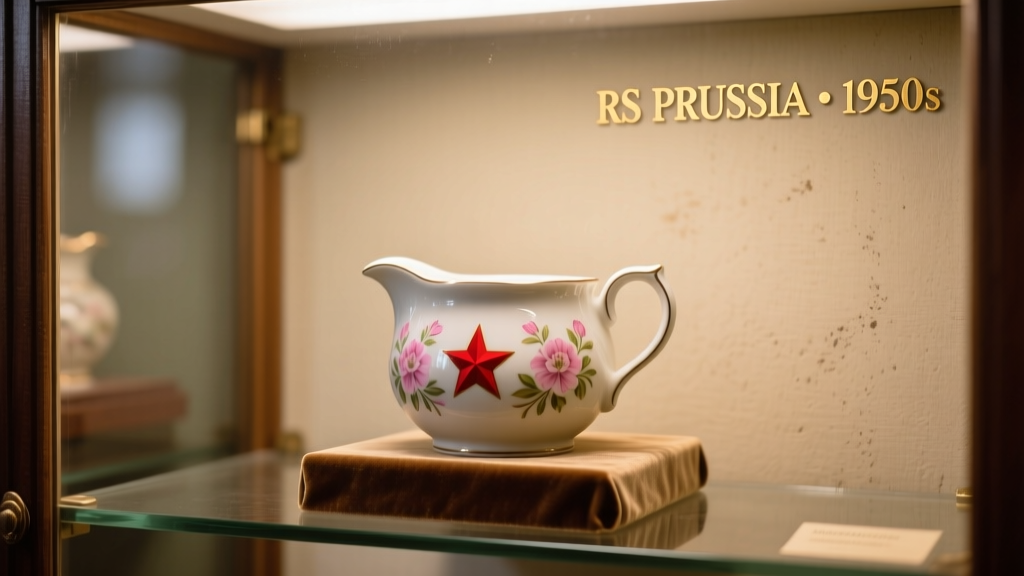
RS Prussia Sugar Creamer with Pink Flowers and Red Star Mark: Authentication, Provenance, and Market Value
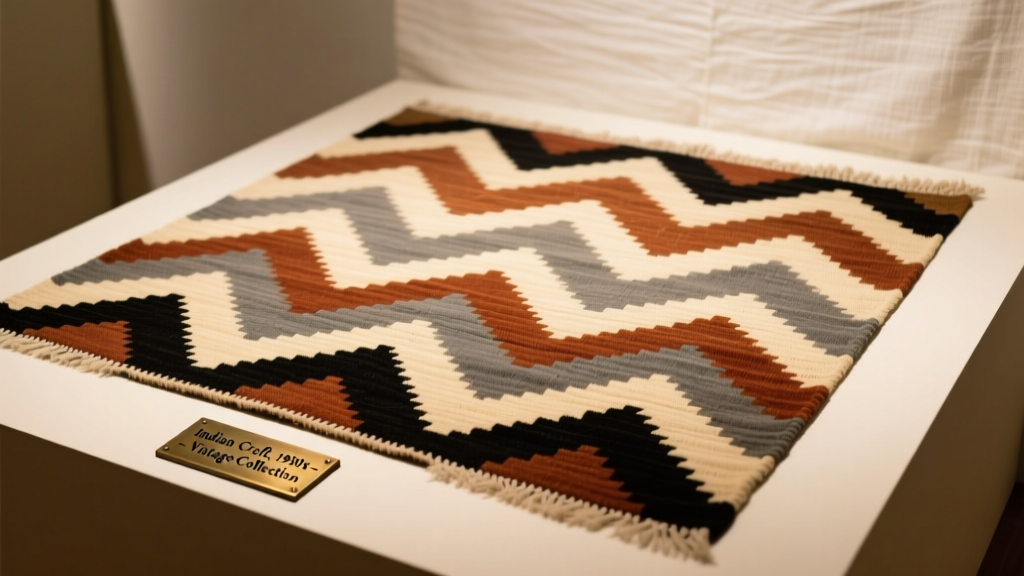
Authenticating and Appreciating a 20th-Century Indian Zigzag Rug: Cream, Rust, Brown, Gray, and Black (42 × 46 Inches)
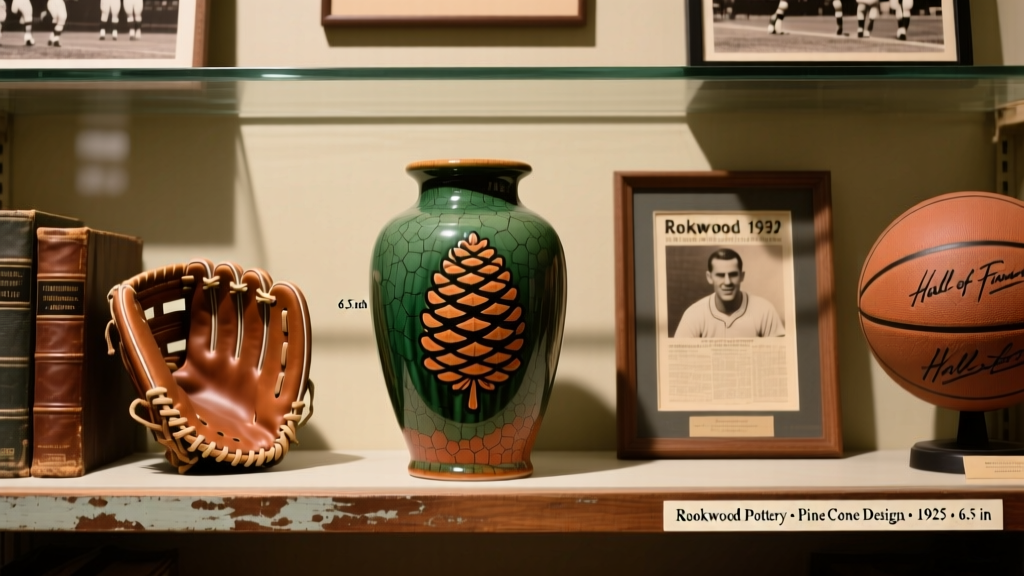
Rookwood Vase 'Pine Cone' (1925) — A Deep Dive into the 6½-Inch Art Pottery Masterpiece
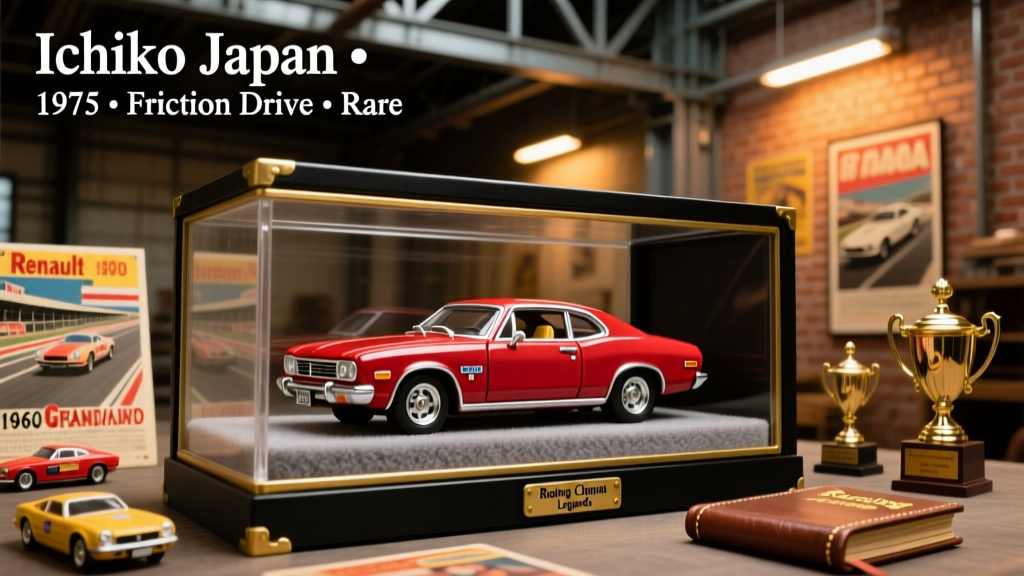
Toy Car Renault Chevelle Tin Friction Ichiko Japan Box – Authenticating the 8-Inch Vintage Japanese Die-Cast Hybrid
Authenticating the Doll Jumeau Talking Original Key Bebe No. 189424: A Collector’s Deep-Dive Analysis
Roseville Wall Pocket Freesia Blue #2: Authentication, Value, and Collector Insights
The Dedham Owl Plate: Decoding the Alternating Star & Half-Moon Pattern in the 8 1/3-Inch Variant