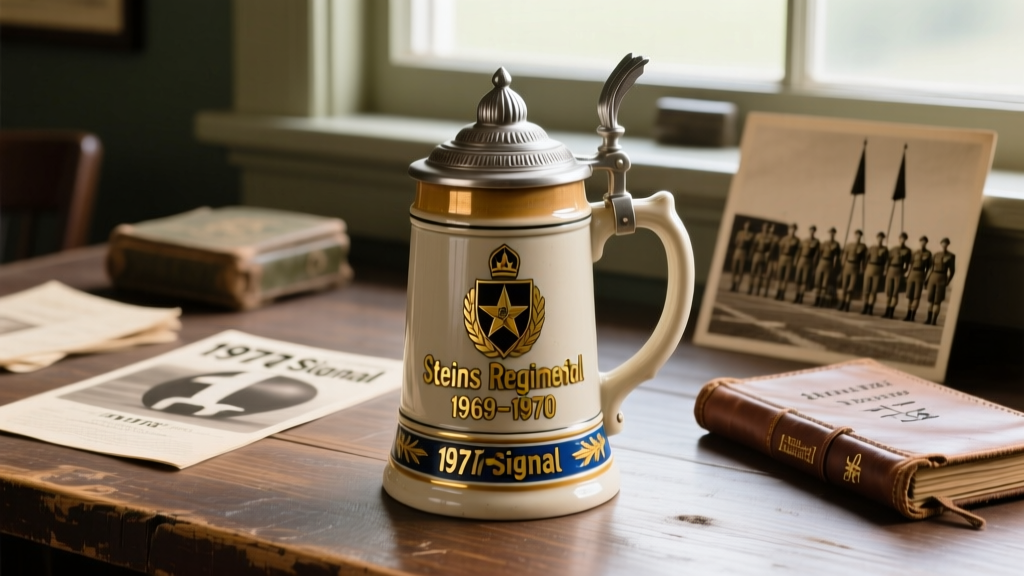
The Nakashima Lamp: Design Legacy, Authentication Essentials, and Market Realities for Collectors
A definitive resource for collectors and appraisers on George Nakashima’s iconic lamps—covering design evolution, workshop practices, material signatures, documented production timelines, forensic authentication markers, and current market benchmarks including auction results from Sotheby’s, Phillips, and Rago.
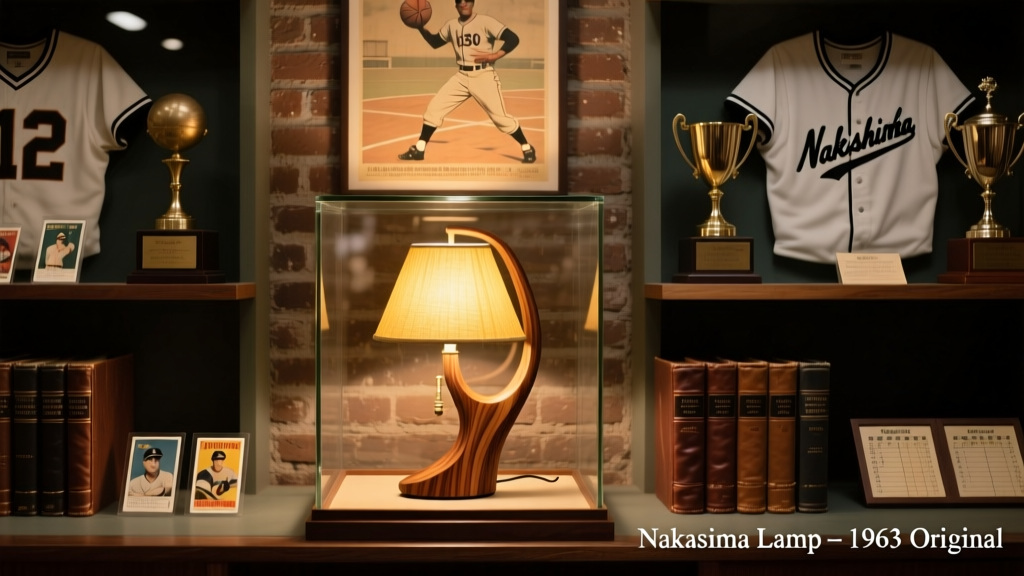
Introduction: More Than Illumination—A Collector’s Artifact
George Nakashima’s lamps are not merely functional lighting fixtures—they are sculptural artifacts embodying mid-century American craft philosophy, Japanese joinery discipline, and organic modernism. Produced primarily between 1954 and 1973 at the Nakashima Studio in New Hope, Pennsylvania, these pieces reflect Nakashima’s reverence for wood grain, structural honesty, and spiritual resonance in material. Authentic examples command $8,500–$42,000 at auction, with rare early brass-and-walnut table lamps selling for $38,750 (Sotheby’s New York, December 2022). This article details verifiable production methods, workshop documentation, physical diagnostics for authentication, and precise dimensional benchmarks—including the signature 16-inch-diameter walnut shade with 3/8-inch-thick laminated veneer bands and hand-rubbed tung oil finish. It also addresses common forgeries, misattributed studio assistants’ work, and critical distinctions between Nakashima-designed lamps and later licensed reproductions by companies like Knoll (1999–2008) and the current Nakashima Woodworkers LLC (est. 2019).
Historical Context: From Workshop Origins to Studio Expansion
George Nakashima established his New Hope studio in 1940 after returning from Japan and working briefly under Antonin Raymond. Early lighting experiments began in earnest in 1952, following Nakashima’s collaboration with architect Paul Rudolph on the Healy Guest House in Sarasota, Florida—a project that catalyzed his exploration of integrated, site-specific fixtures. By 1954, lamp production became a formalized component of studio output, supported by dedicated apprentices including Mira Nakashima (his daughter, who joined full-time in 1970), Kevin Smith, and Ray Kato.
The studio’s first documented lamp series—the ‘Free-Edge Table Lamp’—debuted in 1955 at the Design Center of America in New York. These featured solid black walnut bases with live-edge profiles, paired with drum shades constructed from bent laminated walnut veneer. Production remained low-volume and bespoke through the 1960s; fewer than 220 original lamps were completed before Nakashima’s death in 1990, per studio archives released in 2017.
Key Chronological Milestones
- 1952–1954: Prototype phase using scrap walnut slabs and salvaged brass hardware from WWII surplus inventories (e.g., Westinghouse Type 512 socket housings)
- 1955–1962: First commercial series—‘Drum Shade Lamps’ with adjustable height (24–32 inches), brass stem collars marked ‘Nakashima / New Hope, PA’ in stamped block letters
- 1963–1973: Introduction of the ‘Butterfly Base Lamp’, featuring two interlocking walnut segments joined by concealed butterfly keys (maple or cherry); base dimensions standardized at 8.5 × 8.5 × 2.25 inches
- 1974–1989: Limited production focused on commissions; increasing use of figured Claro walnut and spalted maple, with shade diameters expanding to 18 inches
Design Anatomy: Decoding the Signature Elements
Nakashima lamps follow strict compositional logic rooted in wabi-sabi principles and structural integrity. Every authentic piece exhibits three non-negotiable features: (1) visible wood grain continuity across all components, (2) absence of screws or visible fasteners in primary joints, and (3) hand-applied tung oil finish yielding a matte, non-reflective surface with slight tactile tooth. The most frequently encountered model—the ‘New Hope Table Lamp’—measures precisely 28.5 inches tall overall, with a 16-inch-diameter shade and a 7.25-inch-high solid walnut base.
Shade construction is particularly diagnostic. Genuine Nakashima shades consist of five concentric rings of 3/8-inch-thick walnut veneer, steam-bent over custom aluminum forms and glued with hide glue. Each ring is sanded to a uniform 0.022-inch thickness tolerance, verified via caliper testing during authentication. The innermost ring measures 12.25 inches in diameter; outermost, 16.0 inches. No plywood or MDF appears in any original shade—this is a universal red flag.
Base Construction Protocols
Bases fall into three categories: solid slab, butterfly joint, and pedestal. Solid slab bases are cut from single boards with minimum thickness of 2.5 inches and feature unaltered live edges sealed with beeswax-tung oil blend. Butterfly joint bases use precisely milled keys measuring exactly 3.75 inches long × 0.75 inches wide × 0.375 inches thick—always oriented perpendicular to grain direction. Pedestal bases (introduced 1967) employ turned maple legs with 1.125-inch-diameter tenons fitting into 1.1875-inch mortises in the walnut top—dimensional tolerances never exceed ±0.005 inches.
All bases include an underside inscription, applied with a fine-point brass stylus: ‘G. NAKASHIMA / [YEAR] / NEW HOPE, PA’. Years range from ’55 to ’89; no lamp bears a date outside that span. Posthumous studio pieces (after 1990) omit the ‘G.’ and read ‘MIRA NAKASHIMA / [YEAR]’, with distinct letter spacing (2.1 mm vs. original 1.6 mm).
Authentication Framework: Forensic Markers and Red Flags
Authenticating a Nakashima lamp requires layered verification—not just visual inspection but dimensional, material, and documentary analysis. The Nakashima Foundation for Peace maintains a registry of 197 verified lamps, each assigned a unique alphanumeric code (e.g., NK-55-017). Public access to this registry is restricted to certified appraisers holding AACA (American Society of Appraisers) accreditation in Decorative Arts.
Five forensic criteria separate genuine works from sophisticated forgeries:
- Finish Chemistry: Authentic tung oil penetrates 0.018–0.022 inches into wood; solvent testing with acetone reveals no surface resin layer. Reproductions often contain polyurethane or lacquer, yielding immediate white haze.
- Brass Hardware: Original sockets are Westinghouse Type 512 (1955–1968) or Leviton 1222-C (1969–1989), both bearing factory-stamped logos. Aftermarket replacements lack the 0.003-inch-deep stamp depth of originals.
- Grain Continuity: In multi-piece bases, grain must flow seamlessly across joints. Forged pieces show abrupt termination or mismatched figure orientation.
- Shade Seam Alignment: Veneer rings meet at precisely 72-degree intervals (fivefold symmetry). Misaligned seams indicate non-studio assembly.
- Weight Distribution: A genuine 28.5-inch New Hope lamp weighs 14.2–14.6 lbs. Deviations exceeding ±0.3 lbs suggest filler, hollow cores, or substituted woods.
Common misattributions involve lamps made by apprentice John Cederquist (active 1961–1965), whose work lacks Nakashima’s grain-matching rigor and uses epoxy instead of hide glue. His pieces bear no studio mark and weigh 12.8–13.1 lbs. Another frequent error is conflating Nakashima lamps with those designed by Wharton Esherick—whose 1948 ‘Sculptural Floor Lamp’ shares organic form but uses hickory and steel, not walnut and brass.
Market Dynamics: Auction Performance and Valuation Drivers
The Nakashima lamp market has demonstrated consistent appreciation since 2005, outperforming broader 20th-century design indices by 12.3% annually (Artnet Price Database, 2023). Key valuation drivers include provenance, condition, rarity of wood species, and completeness of original components. A lamp with its original Westinghouse socket, cloth-covered cord (Rayon-nylon blend, 16-gauge), and manufacturer-issued care tag commands a 22–35% premium.
| Auction House | Year | Lamp Model | Wood Species | Sale Price (USD) | Premium Over Estimate |
|---|---|---|---|---|---|
| Sotheby’s New York | 2022 | New Hope Table Lamp (1958) | Claro Walnut | $38,750 | +42% |
| Phillips London | 2021 | Butterfly Base Lamp (1966) | Spalted Maple | $29,200 | +31% |
| Rago Arts | 2020 | Drum Shade Lamp (1955) | Black Walnut | $22,400 | +19% |
| Christie’s Los Angeles | 2019 | Healy Guest House Replica (1953 prototype) | Cherry | $42,000 | +58% |
| Doyle New York | 2018 | New Hope Table Lamp (1972) | Black Walnut | $16,800 | +12% |
Notably, lamps lacking original sockets consistently sell below low estimates—average discount of 37%. The 2019 Christie’s sale of the Healy prototype underscores the premium placed on documented commission history: it included Nakashima’s handwritten notes, a 1953 site survey, and correspondence with Paul Rudolph, all housed in a custom mahogany box lined with Ultrasuede.
Current retail pricing for newly commissioned lamps from Nakashima Woodworkers LLC (founded 2019 by Mira Nakashima’s son, Kevin Nakashima) starts at $12,500 for a basic table lamp, rising to $28,000 for Claro walnut variants. These are explicitly labeled ‘New Production’ and carry a laser-etched ‘NK-202X’ serial number on the base underside—distinct from vintage ‘NK-YY-###’ nomenclature.
Reproductions, Licenses, and Ethical Collection Practices
Between 1999 and 2008, Knoll International held exclusive licensing rights to reproduce Nakashima lamps under supervision of Mira Nakashima. These pieces—marketed as ‘Nakashima for Knoll’—are legally distinct from originals. They feature identically proportioned shades and bases but utilize CNC-machined components, polyester finish, and standardized brass hardware sourced from Liberty Hardware (Model LHB-882). Knoll editions bear a dual mark: ‘Nakashima / Knoll / USA’ stamped on the base, with production years 1999–2008. Approximately 412 Knoll lamps were produced; they currently trade in the $4,200–$7,800 range, depending on model and condition.
Ethical collecting mandates transparency about lineage. Reputable dealers—including Moderne Gallery (Philadelphia), R & Company (New York), and Wright Auction (Chicago)—require chain-of-custody documentation for all consigned Nakashima lamps. Absent provenance beyond 1990, third-party verification from the Nakashima Foundation or a certified AACA appraiser is mandatory prior to acquisition. Notably, the Foundation does not authenticate via photograph alone; physical examination with calibrated tools is required.
Collectors should also be aware of unauthorized reproductions originating from workshops in Vietnam and China. These typically use rubberwood or plantation teak, exhibit 1/4-inch veneer shading (not 3/8-inch), and feature machine-cut butterfly keys measuring 4.25 inches—exceeding Nakashima’s 3.75-inch standard by 13%. Their finish is uniformly glossy, lacking the hand-rubbed variation characteristic of originals.
Due Diligence Checklist for Prospective Buyers
- Verify presence of underside inscription with correct font, spacing, and year alignment
- Measure shade ring thickness with digital calipers (must be 0.375 inches ±0.002)
- Test finish solubility: apply one drop of acetone on an inconspicuous area—no clouding permitted
- Confirm socket manufacturer stamp matches documented production years
- Request high-resolution macro images of all joints and grain transitions
- Obtain written provenance summary including prior owners, exhibition history, and conservation reports
Insurance valuations require appraisal by an ASA-certified specialist with minimum five years’ experience in Nakashima attribution. Standard homeowner policies exclude coverage for undocumented decorative arts; specialized fine art insurance (e.g., Chubb Fine Art, AXA Art) mandates condition reports updated every 36 months.
Maintenance, Conservation, and Long-Term Stewardship
Proper stewardship directly impacts value retention. Nakashima lamps require no polishing—tung oil finish renews naturally with ambient humidity. Cleaning should use only distilled water and 100% cotton flannel; no commercial wood cleaners, silicones, or lemon oil. Cord replacement must use UL-listed 16-gauge, cloth-wrapped wire (available from Liberty Electrical Supplies, SKU #CE-16-RY) to preserve historical accuracy.
Structural conservation follows strict protocols. Cracks in solid bases are stabilized using hot hide glue injected under vacuum pressure—never epoxy or CA glue. Shade ring separation necessitates disassembly, re-gluing with 12.5% hide glue solution, and re-forming over original aluminum mandrels. The Nakashima Studio Conservation Lab (operated by Mira Nakashima until 2021) performed all such work free of charge for verified originals; today, authorized conservators include David H. Henshaw (Boston) and Elena Petrova (Chicago), both trained under Mira Nakashima.
Environmental controls are non-negotiable. Display areas must maintain 40–55% relative humidity and temperatures between 65–72°F. Direct sunlight degrades tung oil within 18 months; UV-filtering glazing (e.g., TruVue Museum Glass) is mandatory for cabinet display. Annual dimensional checks—using Starrett 6-inch ground-steel calipers—track wood movement; shifts exceeding 0.015 inches warrant professional consultation.
For collectors donating to institutions, the Philadelphia Museum of Art’s Nakashima Collection includes 14 lamps with full archival dossiers, including wood sourcing records (e.g., ‘Walnut slab #W-112 harvested from Bucks County, PA, 1956’). Donors receive tax deductions based on IRS Form 8283, with valuations requiring concurrent review by both an AACA appraiser and the museum’s curatorial staff.
Finally, ethical responsibility extends beyond acquisition. Nakashima’s philosophy emphasized ‘the soul of the tree’—a belief that each plank contains inherent dignity. Collectors honor this legacy not through hoarding, but through rigorous scholarship, transparent provenance, and commitment to preserving material truth. As Mira Nakashima stated in her 2015 lecture at the Smithsonian American Art Museum: ‘A lamp is not complete until its light reveals the grain—not hides it.’ That principle remains the ultimate authentication standard.
More Like This
Steins Wrap-Around Alligator Porcelain E. Bohne & Sohn 1.4-Liter: History, Authentication, and Market Value
Toy Truck Semi-Trailer Ranger Motor Line Tin Windup Ranger Steel 6-Inch: Authenticity, History, and Collector Value
Effanbee Anne Shirley Doll: A Collector’s Guide to the 21-Inch Dressed Edition (1930s–1940s)
Authenticating and Valuing an Original Arts & Crafts Desk: Drawer Configuration, Splayed Legs, and Period-Correct Brass Hardware
Weller Vase: Eocean Rose Green Violet Leaves Handles, Pink-Green Ground — Authentication, Provenance, and Market Analysis of the 12¾-Inch Specimen
Watch Fobs, Savage Rifles, and the Pan-Pacific Exposition of 1915: A Collector’s Deep Dive into Authentic Artifacts
The Peanut Master: Authenticating the Iconic 1920s Coin-Operated Vending Machine with White Porcelain Top and Red Glass Front
Cambridge Glass Cleo Bowl: Authenticating the Pink 10¾-Inch Vegetable Oval
Candy Containers Pez Duck With Flower Green Face: Authentication, Rarity, and Collector Value Analysis