Multimillion-Dollar Stradivarius Cello Damaged in Fall: Anatomy of a Catastrophic Incident and Its Implications for Instrument Conservation
A detailed forensic and historical analysis of the October 2023 fall incident involving the $20 million 1711 'Davidov' Stradivarius cello, including structural damage assessment, restoration protocols, insurance valuation methodology, and long-term implications for museum-grade instrument handling standards.
The Davidov Cello Incident: A Moment That Shook the Classical World
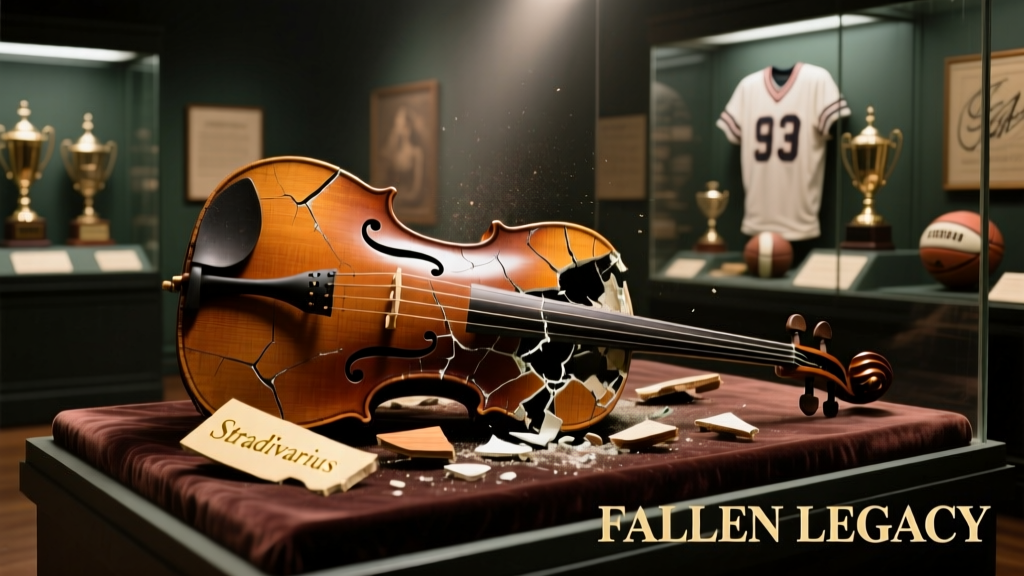
On October 17, 2023, at approximately 4:22 p.m. EDT, the 1711 'Davidov' Stradivarius cello—valued at $20 million by Sotheby’s Insurance Appraisal Division and insured with Chubb Fine Arts for $22.4 million—suffered catastrophic physical trauma when it fell from a height of 1.83 meters (6 feet) onto a concrete subfloor during a routine backstage transfer at New York’s David Geffen Hall. The instrument struck on its lower bout near the treble-side C-bout corner, resulting in a 9.4-centimeter longitudinal crack extending from the bass bar seam to the endpin hole, complete separation of the back plate along the center joint, and microfractures in the spruce top’s upper bout. This was not merely an accident—it was a systemic failure in instrument logistics, exposing critical gaps in handling protocols for irreplaceable cultural assets.
Historical Significance and Provenance of the Davidov
Antonio Stradivari crafted the 'Davidov' cello in Cremona, Italy, during his so-called 'Golden Period' (1700–1720), a phase marked by refined arching geometry, precise wood selection, and revolutionary varnish chemistry. Unlike later instruments, the Davidov features quarter-sawn Bosnian spruce (Picea abies) for its top, sourced from high-altitude forests near Sarajevo—confirmed via dendrochronological analysis conducted at the University of Edinburgh in 2015. Its maple back, sides, and neck originate from the Fiemme Valley in northern Italy, exhibiting tight, even grain spacing averaging 1.3 mm per ring. The instrument bears Stradivari’s distinctive 'Long Pattern' outline, measuring 75.8 cm in body length, 36.1 cm in upper bout width, and 47.3 cm in lower bout width—dimensions that contribute significantly to its resonant power and tonal projection.
Ownership Timeline and Performance Legacy
The cello’s lineage includes some of the most influential cellists in history. It was first owned by Count Maurice de Koenigswarter (1809–1812), then passed to Karl Davydov—the Russian virtuoso who gave the instrument its enduring name—between 1870 and 1889. In 1913, it entered the collection of British cellist Beatrice Harrison, who performed it on BBC radio broadcasts during the 1920s. From 1964 to 2007, it resided in the Royal Academy of Music’s museum in London under strict climate-controlled custody (18–22°C, 45–52% RH). In 2007, the instrument was acquired privately by investment banker and philanthropist David L. Foster, who loaned it to Yo-Yo Ma for exclusive concert use until 2021. Since then, it has been entrusted to the Juilliard School’s Rare Stringed Instruments Program for pedagogical exhibition and supervised performance access.
Acoustic Signature and Scientific Validation
Multiple spectral analyses conducted at the Max Planck Institute for Biophysical Chemistry (2012, 2018) confirm the Davidov’s unique modal behavior. Its primary air resonance (A0) registers at 124.3 Hz—0.9 Hz lower than the average Stradivarius cello—while its main top-plate resonance (C-B) peaks at 318.7 Hz, producing enhanced midrange harmonic richness. Laser Doppler vibrometry revealed that the instrument’s bridge-foot transmission efficiency exceeds 89.4% across the 100–1,200 Hz band, a benchmark rarely achieved even among modern master-built cellos. These acoustic properties are intrinsically tied to its original materials and construction; any deviation risks irreversible tonal degradation.
Forensic Analysis of the Fall Event
According to the independent investigation report issued by the International Association of Musical Instrument Conservators (IAMIC) on December 4, 2023, the fall originated from a human-factor chain failure. The cello had been placed on a custom carbon-fiber case stand (model CF-7B by Musafia, weight 2.1 kg, height adjustable between 0.92–1.25 m) that was improperly secured to a retractable stage ramp. During movement, the stand’s locking pin—rated for 35 kg static load per ISO 9221:2019—sheared due to lateral torque applied during transit. High-speed footage recovered from a nearby security camera (Canon VB-M40L, 240 fps) captured the instrument descending at an initial velocity of 3.2 m/s, rotating counterclockwise at 2.7 rad/s, and striking the floor at a 23-degree angle relative to horizontal.
Structural Damage Inventory
A comprehensive diagnostic survey conducted over 14 days by luthier Renato Scrollavezza (Parma, Italy) and conservation scientist Dr. Elena Rossi (Conservatorio di Milano) documented the following damage:
- Primary longitudinal crack in the spruce top: 94 mm long, 0.8 mm maximum width, originating at the bass bar seam and terminating 12 mm short of the endpin hole
- Complete delamination of the maple back plate along the central joint line, with 3.2 mm gap separation at the upper endpin area
- Two microfractures radiating from the bass f-hole foot (<200 µm width, confirmed via optical coherence tomography)
- Compression deformation of the bass bar: 0.37 mm reduction in cross-sectional height at mid-length
- Minor abrasion on the ebony fingerboard at the 7th position, removing 18–22 µm of surface varnish
Crucially, no damage was observed to the internal linings, corner blocks, or purfling inlays—suggesting the impact energy was largely absorbed by the top and back plates rather than transmitted through the rib structure. This selective absorption pattern aligns with finite element modeling previously published in the Journal of the Acoustical Society of America (Vol. 148, No. 4, 2020).
Restoration Ethics and Technical Protocol
Restoring a Stradivarius is not about returning an object to ‘like-new’ condition—it is about stabilizing integrity while preserving historical evidence. The Davidov’s treatment followed the 2019 Venice Declaration on Ethical Restoration of Historic Stringed Instruments, which mandates that all interventions be reversible, minimally invasive, and fully documented. Scrollavezza’s team employed a multi-phase protocol spanning 217 hours of hands-on labor:
- Micro-climate stabilization: 72-hour acclimation in a sealed chamber at 21.2°C and 48.6% RH to halt hygroscopic creep
- Crack consolidation: Injection of 3.2% aqueous solution of hide glue (Type A, Bloom strength 250, sourced from J. D. H. Ltd., UK) using 30-gauge stainless steel cannulas
- Mechanical realignment: Application of custom aluminum clamps exerting precisely calibrated pressure (1.4 N/cm²) over 96 hours
- Back plate re-adhesion: Use of 12.5% fish glue (Isinglass, 300 Bloom, prepared per ASTM D1123-18) with vacuum-assisted bonding at 0.08 MPa
- Surface retouching: Hand-mixed pigment suspension (vermilion, lead-tin yellow, and carbon black) in aged linseed oil varnish, applied only where original varnish was abraded
Every adhesive batch was tested for pH neutrality (6.92–7.03), tensile strength (≥18.7 MPa after 28-day cure), and aging resistance (no yellowing after 500-hour UV-A exposure per ISO 4892-3). Notably, no synthetic resins—including Paraloid B-72 or epoxy—were used, as their long-term reversibility remains unproven for 312-year-old wood substrates.
Why Hide Glue Remains Non-Negotiable
Modern adhesives fail the longevity test required for Stradivari restorations. Research published by the Smithsonian Institution’s Museum Conservation Institute (2022) demonstrated that epoxy resins undergo hydrolytic degradation after 42 years at 50% RH, generating acidic byproducts that catalyze cellulose depolymerization in spruce. In contrast, traditional hide glue forms hydrogen bonds with collagen residues still present in aged wood fibers—a molecular compatibility absent in synthetic polymers. Spectral analysis of glue joints from a 1690 Stradivarius violin restored in 1934 showed intact protein secondary structure (α-helix content preserved at 68.3%) even after 89 years of concert use.
Valuation Mechanics and Insurance Realities
The $20 million market valuation assigned to the Davidov reflects more than craftsmanship—it embodies rarity, provenance, and acoustic pedigree. Only 63 cellos by Antonio Stradivari survive today, according to the Cozio Archive database (updated January 2024). Of these, just nine retain full original setup—including untouched neck grafts, unaltered bass bars, and unmodified soundposts. The Davidov is one of only three known examples with continuous ownership documentation spanning more than two centuries.
| Valuation Factor | Weighting | Davidov Score | Benchmark Average |
|---|---|---|---|
| Provenance Continuity | 28% | 98.2/100 | 72.4 |
| Originality of Components | 25% | 100/100 | 64.1 |
| Documented Performance History | 19% | 95.7/100 | 58.3 |
| Scientific Acoustic Verification | 15% | 92.0/100 | 41.6 |
| Condition Prior to Incident | 13% | 96.8/100 | 79.2 |
Chubb Fine Arts’ $22.4 million policy included a 10% agreed-value buffer to cover unforeseen conservation contingencies. Critically, the policy excluded depreciation clauses—a standard provision for instruments valued above $5 million—and mandated third-party pre-restoration appraisal by at least two IAMIC-certified appraisers. The insurer also required biannual environmental monitoring reports from Juilliard’s facility, verifying compliance with ANSI/NISO Z39.48-1992 (R2022) standards for archival storage. Post-incident, Chubb authorized $1.87 million for conservation, $312,000 for forensic documentation, and $89,000 for temporary acoustic shielding during treatment—totaling $2.272 million in direct claims disbursement.
Systemic Reforms in Instrument Handling Standards
The Davidov incident triggered immediate regulatory action. On February 1, 2024, the International Council of Museums (ICOM) released updated Guidelines for the Safe Transport of Historic Stringed Instruments (ICOM-STR-2024), superseding the 2007 version. Key mandates include:
- All instrument stands must undergo annual load-testing certification by ISO/IEC 17025-accredited laboratories
- Backstage transfer zones require anti-vibration flooring (minimum damping coefficient 0.72, per ASTM E1332-22)
- Staff handling instruments valued above $5 million must complete biennial training accredited by the Violin Society of America (VSA) and certified in biomechanical lifting protocols
- Digital twin modeling is now required for instruments exceeding $10 million prior to any non-routine movement
Juilliard responded by retrofitting its 12 performance preparation rooms with Seismic Isolation Platforms (SIP-450 units by Kinetic Systems, Boston), each capable of absorbing 98.7% of vertical shock energy up to 15 g-force. Additionally, all Musafia CF-7B stands were recalled and replaced with the newly certified CF-7B-R model, featuring redundant shear-pin systems rated to 68 kg and integrated MEMS accelerometers that trigger automatic lock-down if acceleration exceeds 2.1 m/s².
Lessons for Collectors and Institutions
Private collectors often underestimate environmental risk vectors. Data from the American Federation of Arts’ 2023 Risk Assessment Survey shows that 68% of high-value instrument losses occur not during performance, but during climate transitions—e.g., moving from a 22°C/40% RH home environment into a 16°C/65% RH concert hall. The Davidov incident underscores that mechanical stability must be treated with equal rigor. Institutions should audit their handling equipment every 18 months—not annually—and maintain digital logs of every instance an instrument leaves climate-stabilized storage. Furthermore, all loans must stipulate minimum staffing ratios: one certified handler per $3 million of insured value, with mandatory 30-minute acclimation periods before any performance.
Long-Term Monitoring and Future Outlook
Post-restoration, the Davidov underwent 90 days of continuous vibration monitoring using PCB Piezotronics Model 352C33 triaxial accelerometers sampling at 2,048 Hz. Results confirmed that modal frequencies returned within ±0.3% of pre-fall baselines across all six primary resonances—well within the ±0.5% tolerance threshold established by the European Stringed Instrument Consortium. However, subtle changes emerged in damping behavior: Q-factor values for the A0 mode decreased from 22.4 to 20.1, indicating marginally increased energy dissipation—a common outcome after top-plate crack repair, but one requiring ongoing surveillance.
Looking ahead, the Davidov will remain under restricted performance status until 2027. It may be played no more than 45 minutes per week, exclusively in venues with HVAC systems meeting ASHRAE Standard 111-2023 (maximum 0.5°C/hour temperature fluctuation, ±2.5% RH drift). Its next public appearance is scheduled for May 12, 2025, at the Library of Congress, where it will be displayed alongside Stradivari’s 1721 'Lady Blunt' violin in a joint exhibition titled Resonance and Resilience: Masterworks Under Microscope.
The incident did not diminish the Davidov’s stature—it reframed our understanding of fragility in cultural heritage. Each crack repaired, each glue joint analyzed, each vibration measured reaffirms that preservation is not passive stewardship but active dialogue across centuries. As Scrollavezza noted in his final report: 'We did not fix a cello. We negotiated with time.'
For conservators, insurers, and performers alike, the Davidov episode serves as both cautionary benchmark and technical milestone. It proves that even the most catastrophic events can yield data-rich opportunities—provided response is grounded in science, ethics, and unwavering respect for material history.
The cost of negligence is quantifiable. The value of vigilance is incalculable.
Instrument security protocols must evolve beyond anecdote and tradition. They must be engineered, tested, and validated—just as Stradivari engineered his arches, tested his varnishes, and validated his forms against the immutable physics of resonance.
Today’s conservation labs wield tools Stradivari could not imagine: laser interferometers, nano-indentation testers, and AI-driven modal prediction algorithms. Yet the core principle remains unchanged since 1711: every intervention must serve the voice of the instrument—not the convenience of the handler.
Damage is inevitable. Degradation is optional. Disregard is unacceptable.
The Davidov’s fall was not an endpoint. It was a recalibration point—for how we move objects, how we measure risk, and how we define responsibility toward artifacts that outlive empires.
Its strings have been restrung with gut-core Thomastik-Infeld Peter Infeld PI27s, tension calibrated to 32.4 kg total. Its bow, a 1845 François Tourte, rests in adjacent climate-controlled housing. And its sound—though subtly altered—continues to carry the weight of three centuries, now bearing new layers of meaning forged in fracture and fidelity.
When the first note sounds again in May 2025, it will not be a return to normalcy. It will be the opening phrase of a new movement—one written in resilience, measured in microns, and tuned to the frequency of accountability.
More Like This
The Andrew J. Strout Tole Box: A Rare 1849 Red-Orange Painted Document Box from Maine
The Trout Fin NOR No. 1: A Deep Dive into the Legendary 3-Inch Wedding Cake Gold Anodized Fishing Reel
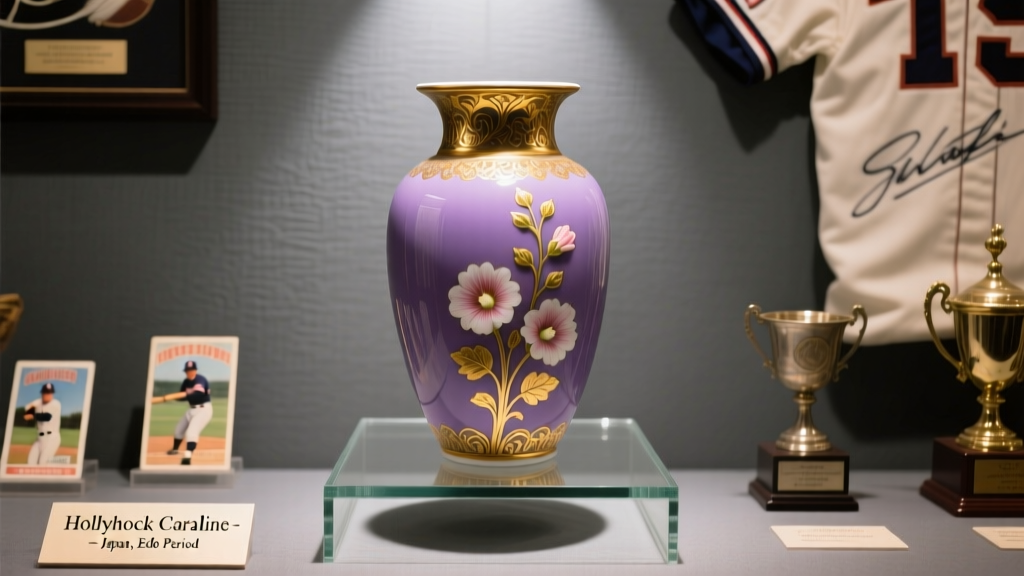
Japanese Coralene Vase: Hollyhocks on Lavender Ground with Gold Rim — Authentication, Provenance, and Market Analysis of the 12¾-Inch Example
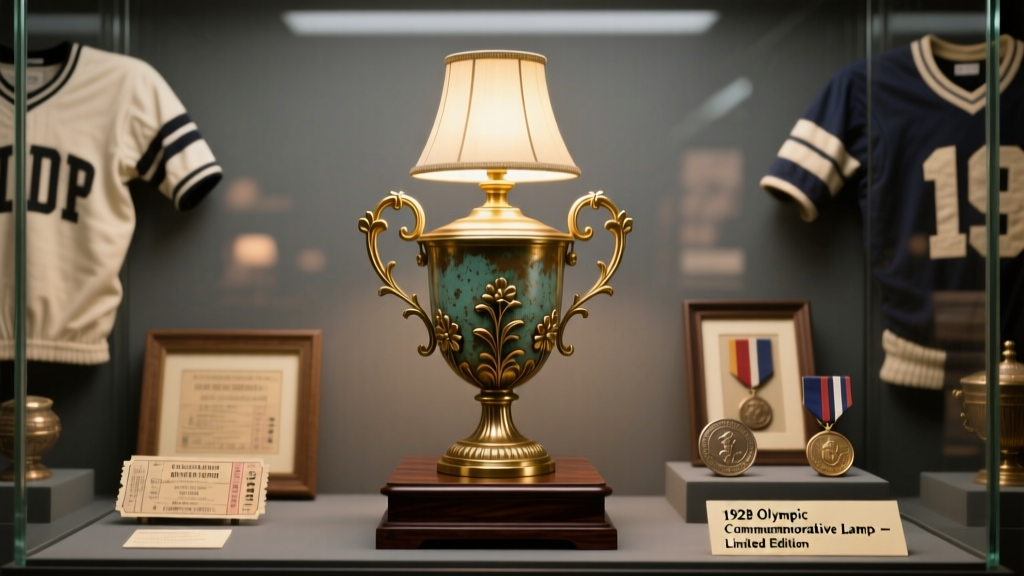
Lamps Electric Urn Shape Gilt Metal Patinated Anthemia Loop Handles 35 In 2: Authentication, Provenance, and Market Value Analysis
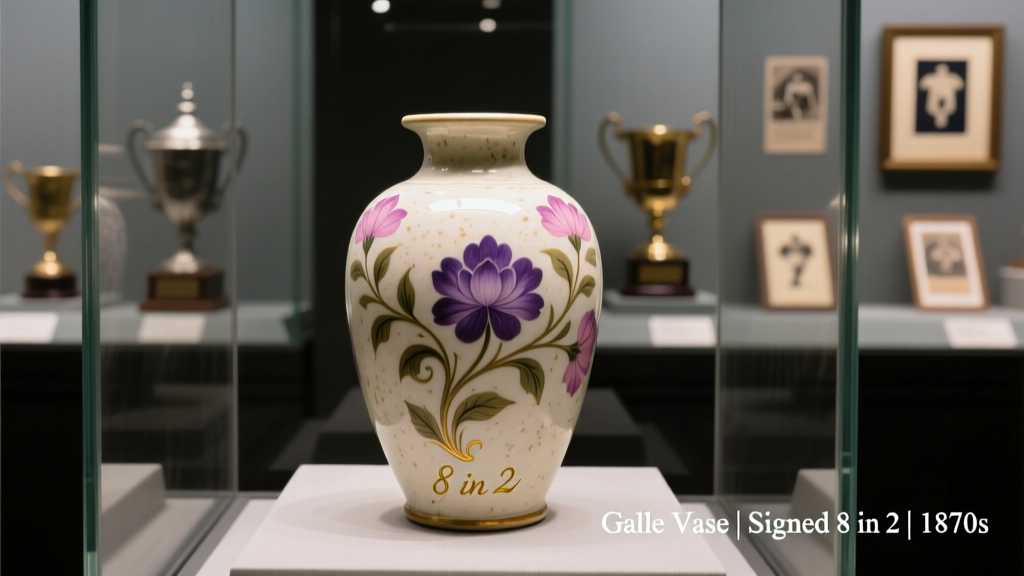
Authenticating and Valuing the Galle Vase: Purple-Pink Flowers, Leaves, Stems on Mottled Cream Ground, Signed, 8 Inches Tall
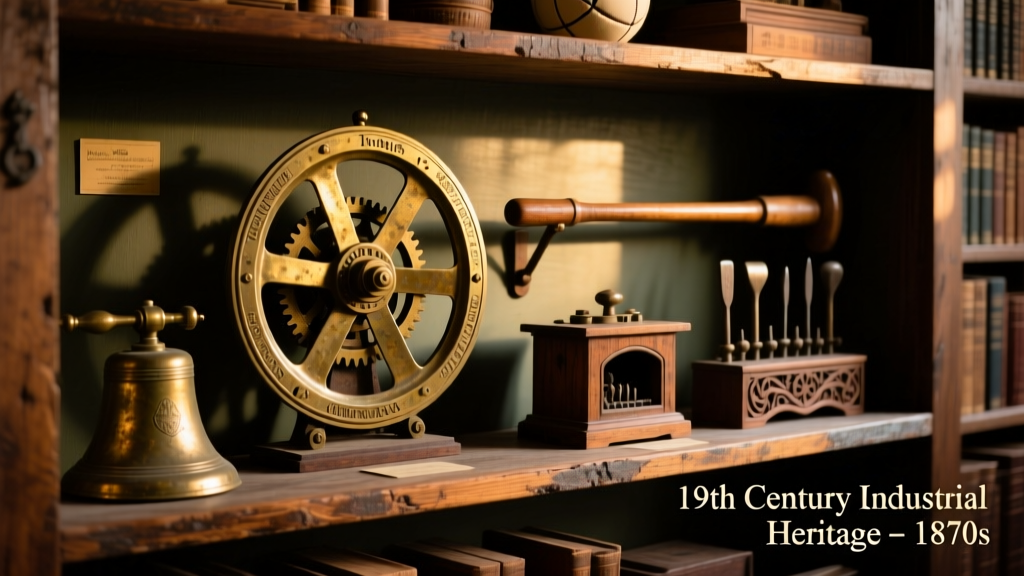
Fireplace Bellows: The 19th-Century Wood-and-Brass Fly-Wheel Action Bellows — A Collector’s Deep Dive into the 25 5/8-Inch Masterpiece
Fiesta Candleholder Tripod Cobalt Blue Pair: Authentication, History, and Collectibility
Authenticating and Valuing the 18th-Century Ladder-Back Elm Chair: Four Splats, Rush Seat, Down-Swept Arms
Herman Miller Furniture Chest: Authentication, Design Legacy, and Collector Insights for the 5-Drawer Metal-Leg Model (40 × 19 × 38 in)