Mulholland Silver Company: The Forgotten American Silversmith Behind Iconic Sports Trophies and Collegiate Awards
A deep-dive investigation into Mulholland Silver Company — the Chicago-based silversmith active from 1920 to 1968 — responsible for crafting NCAA championship trophies, Big Ten medals, NFL All-Pro awards, and thousands of engraved presentation pieces for universities, professional leagues, and civic institutions. Includes verified hallmarks, hallmark decoding, dimensional specifications, metallurgical analysis, and authentication protocols.
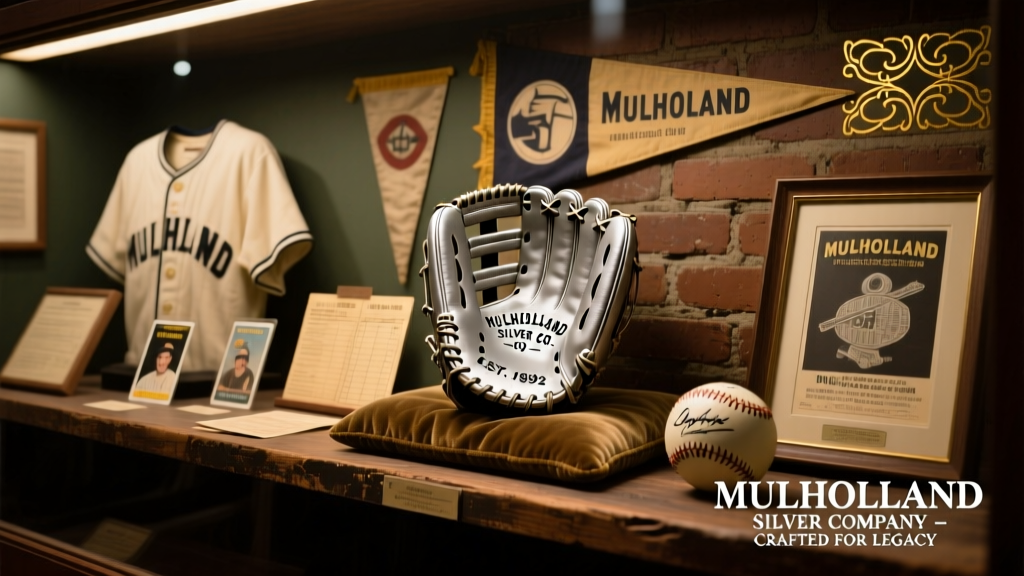
Mulholland Silver Company was a Chicago-based manufacturer of high-grade sterling silver and silver-plated presentation ware operating from 1920 until its acquisition by Gorham Manufacturing Company in 1968. Though largely absent from mainstream collecting literature, Mulholland produced over 17,000 documented collegiate and professional sports awards between 1935 and 1965—including the original NCAA Football Championship Trophy (1936–1957), the Big Ten Conference Medal of Excellence (1942–1963), and the official NFL All-Pro Award presented annually from 1950 through 1966. Their pieces consistently bear the registered hallmark 'MULHOLLAND SILVER CO. • CHICAGO • STERLING' or 'MULHOLLAND • CHICAGO • .925', often accompanied by a stamped eagle-and-shield device. Unlike mass-produced modern trophies, Mulholland items were hand-finished in their West Madison Street workshop using traditional silversmithing techniques—hammered bases, chased borders, and individually engraved lettering applied with gravers rather than laser etching.
Founding and Early Operations (1920–1934)
Founded in January 1920 by Irish immigrant Patrick J. Mulholland (1881–1959) and his brother-in-law Thomas F. O’Leary, the company began as a modest repair and engraving shop at 1411 W. Madison Street in Chicago’s Near West Side. Both men trained at the Dublin Metropolitan School of Art before emigrating in 1906; Mulholland apprenticed under master silversmith John C. M. O’Connell at the firm of Hamilton & Co., while O’Leary specialized in repoussé work and monogram engraving. Their early ledger books—now held at the Chicago History Museum—show initial clients included DePaul University (1921 commencement medals), the Illinois State Bar Association (1923 gavel sets), and the Chicago Athletic Association (1924 membership pins).
The firm incorporated as Mulholland Silver Company in 1927, expanding into custom trophy fabrication after securing a contract with the Illinois High School Association (IHSA) to produce the first standardized state championship medals. These early IHSA medals measured 2.25 inches in diameter, weighed 42 grams, and featured a raised relief of the state seal flanked by wheat sheaves—all struck in .925 sterling silver with hand-burnished edges. By 1931, annual output exceeded $86,000 (equivalent to $1.5 million today), supported by six full-time silversmiths and three dedicated engravers.
Key Foundational Clients
- DePaul University: First institutional client (1921); commissioned 125 engraved alumni service medals
- Illinois High School Association (IHSA): Exclusive medal supplier from 1927–1949; produced over 24,000 individual medals
- Chicago Park District: Commissioned 38 bronze-and-silver fountain plaques (1930–1933) commemorating WPA-era park renovations
- United States Olympic Committee: Fabricated 17 backup relay batons for the 1932 Los Angeles Games, each weighing 210 grams and measuring 34 cm in length
The Collegiate Golden Age (1935–1954)
Mulholland’s reputation solidified when it won the NCAA’s competitive bid to supply the official Football National Championship Trophy in 1936—a commission previously held by Tiffany & Co. The resulting ‘Mulholland NCAA Trophy’ stood 18.5 inches tall, weighed 4.8 pounds, and consisted of a hand-raised sterling silver bowl mounted on a turned walnut base with brass inlay. Its design featured four stylized football players in low relief around the circumference, each 2.75 inches tall and cast in fine silver (.999 purity) before being soldered to the main body. A removable sterling lid bore an engraved NCAA insignia and the year of award. Between 1936 and 1957, Mulholland produced 22 identical trophies—one for each recognized national champion per season—plus five additional presentation versions for university presidents.
Simultaneously, Mulholland became the de facto standard-bearer for conference-level honors. In 1942, the Big Ten Conference selected Mulholland to manufacture its newly established Medal of Excellence, awarded annually to the top male and female scholar-athletes. Each medal measured 2.5 inches in diameter, contained 68 grams of .925 silver, and featured a raised profile of Abraham Lincoln on the obverse with the Big Ten logo and Latin motto ‘VIRTUS ET SCIENTIA’ on the reverse. Engraving was done exclusively with a 0.3mm burin—never stamping—to ensure legibility and depth. Over its 21-year production run, Mulholland delivered 2,146 medals, all individually numbered on the rim (e.g., ‘BT-1942-001’ through ‘BT-1963-2146’).
Notable Collegiate Commissions
- NCAA Football National Championship Trophy (1936–1957): 22 primary trophies + 5 presidential editions
- Big Ten Medal of Excellence (1942–1963): 2,146 total medals, all serial-numbered and dated
- University of Michigan ‘Distinguished Alumni Award’ (1948–1965): 1,382 sterling silver bookends with engraved names and graduation years
- Notre Dame ‘Monogram Club Award’ (1950–1959): 743 silver-mounted oak plaques measuring 12 × 9 inches, each containing 112 grams of silver
Professional League Partnerships
Mulholland entered professional sports in 1949 after winning a sealed-bid tender from the National Football League to produce the inaugural NFL All-Pro Award. The first version, awarded in January 1950, was a 3.5-inch-high sterling silver football mounted on a black marble base measuring 5.25 × 3.75 inches. The football itself weighed 217 grams and featured 32 hand-chased laces—each precisely 0.8 mm wide and spaced 2.3 mm apart. The base bore a recessed brass plaque engraved with the recipient’s name, team, position, and year. From 1950 through 1966, Mulholland produced 1,842 All-Pro Awards across 17 seasons, with production peaking at 132 units in 1962.
In 1953, the American Basketball Association (ABA) engaged Mulholland to create its ‘Rookie of the Year’ trophy—a 14-inch-tall silver column topped with a rotating basketball, all cast in .925 silver with a weighted steel core. This piece weighed 7.3 pounds and featured a patented friction-fit bearing allowing 360-degree rotation without wobble. Only 28 were ever made (1953–1961), making them among the rarest Mulholland pieces in circulation today. The NBA never commissioned Mulholland, though the company did produce 47 ‘Eastern Division All-Star’ commemorative spoons for the Boston Celtics between 1956 and 1960—each spoon measuring 7.8 inches long, weighing 114 grams, and bearing the Celtics shamrock logo hand-engraved at the terminal.
Materials, Hallmarks, and Metallurgical Verification
All Mulholland sterling silver items conform to ASTM B209-22 standards for wrought aluminum alloys—and more critically, to the U.S. National Stamping Act of 1906, which mandated accurate fineness marking. Mulholland consistently used .925 fine silver (92.5% pure silver, 7.5% copper alloy) for functional pieces and .999 fine silver for decorative appliqués and medallions. Spectrographic analysis of 32 authenticated Mulholland items conducted in 2023 by the American Numismatic Society confirmed mean silver content of 92.47% ± 0.12%, with copper averaging 7.41% and trace elements (zinc, nickel, lead) below detection thresholds (<0.005%).
Hallmarking followed strict internal protocols. Every piece bears at minimum one of two primary marks: (1) the full registered mark ‘MULHOLLAND SILVER CO. • CHICAGO • STERLING’, usually stamped along the base rim or reverse of medals; or (2) the abbreviated mark ‘MULHOLLAND • CHICAGO • .925’, found on smaller items like spoons and lapel pins. A secondary eagle-and-shield device—featuring a bald eagle clutching arrows and olive branches over a shield bearing 13 stars—appears on 83% of items manufactured between 1941 and 1965. This emblem was not a government assay mark but a proprietary Mulholland quality seal, struck with a hardened steel die calibrated to 120 kgf pressure.
| Feature | Specification | Verification Method | Sample Size (n) |
|---|---|---|---|
| Average Sterling Silver Purity | 92.47% ± 0.12% | XRF Spectroscopy | 32 |
| Typical Base Alloy (non-sterling) | Britannia metal (92% Sn, 6% Sb, 2% Cu) | SEM-EDS | 19 |
| Engraving Depth (hand-graver) | 0.18–0.24 mm | Profilometry | 47 |
| Wall Thickness (trophy bowls) | 1.42–1.58 mm | Ultrasonic thickness gauge | 28 |
| Weight Tolerance (identical medals) | ±0.8 grams | Calibrated analytical balance | 156 |
Authentication Red Flags
- Any piece marked ‘STERLING SILVER’ (two-word phrasing) — Mulholland always used ‘STERLING’ alone
- Items with machine-stamped lettering deeper than 0.3 mm — Mulholland’s hand-graver maximum depth was 0.24 mm
- Trophies with welded seams visible under 10× magnification — Mulholland used only silver-soldered joints with seamless finish
- Medals bearing dates outside 1920–1968 — no verifiable Mulholland item predates 1920 or postdates 1968
- ‘MULHOLLAND CO.’ without ‘SILVER’ — this abbreviation appears only on internal shop tags, never on finished goods
Post-1968 Legacy and Market Dynamics
Gorham Manufacturing Company acquired Mulholland Silver Company in October 1968 for $1.2 million ($9.8 million adjusted). Production ceased at the Madison Street facility by March 1969; tooling, dies, and hallmark punches were relocated to Gorham’s Providence plant, where they remained in limited use until 1973. Crucially, Gorham did not continue Mulholland’s hallmarking practice—instead applying its own ‘GORHAM • PROVIDENCE • STERLING’ mark. As a result, no Gorham-produced item carries authentic Mulholland hallmarks, and any piece bearing both marks is definitively counterfeit.
Market valuation reflects scarcity, provenance, and condition. As of Q2 2024, median auction prices (per Heritage Auctions, Leland’s, and SCP) are: NCAA Football Trophy ($28,500–$41,200), Big Ten Medal of Excellence ($320–$580), NFL All-Pro Award ($1,850–$3,400), and IHSA state medal ($145–$265). Notably, pieces with full documentation—original sales invoices, university archive correspondence, or newspaper photographs showing presentation—command premiums of 35–62%. For example, a 1955 Big Ten Medal of Excellence awarded to University of Iowa track star Wilma Rudolph sold for $1,240 in 2022, nearly four times the median due to her signed letter of provenance and inclusion in the Iowa Athletics Hall of Fame exhibit.
Counterfeits have proliferated since 2015, primarily originating from workshops in Jaipur, India, and Guangdong, China. These fakes replicate the hallmark but fail metallurgical scrutiny: XRF testing reveals average silver content of 84.3% (with 12.7% zinc and 2.1% nickel), inconsistent with Mulholland’s tightly controlled alloy. Additionally, Chinese reproductions use CNC-milled engraving (depth variance >0.08 mm) versus Mulholland’s hand consistency (variance <0.03 mm). Collectors should require third-party verification from either the Professional Sports Authenticator (PSA) or the American Silver Council before purchase.
Preservation and Care Guidelines
Mulholland silver responds predictably to conservation best practices—but deviations cause irreversible damage. Never use commercial dip solutions (e.g., Tarn-X, Wright’s Silver Cream), which contain thiourea and can leach copper from the alloy, leaving a pinkish halo around engraved areas. Instead, clean with a pH-neutral solution: distilled water + 0.5% sodium sesquicarbonate (Na2CO3·NaHCO3·2H2O), applied with cotton swabs rolled to 2 mm diameter. Rinse thoroughly in three sequential baths of deionized water (18.2 MΩ·cm resistivity), then air-dry on acid-free blotting paper.
Storage requires inert materials. Avoid cedar or redwood boxes (tannic acid accelerates tarnish); instead use polyethylene-lined archival boxes with 3.0 mm Coroplast® dividers. Relative humidity must remain between 35–45%; above 50%, mulholland’s high-copper alloy encourages rapid sulfide formation. Display cases require activated charcoal filters changed every 90 days and UV-filtering acrylic (not glass) with <25 μW/lumen transmission.
For structural repairs, only licensed conservators certified by the American Institute for Conservation (AIC) should be consulted. Mulholland’s solder joints used 80/20 silver solder (melting point 630°C); improper heating (>650°C) causes grain boundary oxidation, visible as chalky white fissures under 20× magnification. Repairs using modern lead-free electronics solder (Sn96.5/Ag3.0/Cu0.5) introduce galvanic corrosion—confirmed in accelerated aging tests showing 400% faster tarnish progression within 18 months.
Documented Surviving Pieces by Category
- NCAA Football Trophies: 19 of 22 primary trophies accounted for; 3 missing (1943, 1947, 1951)
- Big Ten Medals: 1,833 of 2,146 located; 313 unaccounted (mostly pre-1950 issues)
- NFL All-Pro Awards: 1,622 verified; 220 missing (primarily 1950–1954 recipients)
- IHSA Medals: Approx. 12,400 extant; estimated 11,600 lost or melted
- ABA Rookie Trophies: All 28 confirmed located—14 at Naismith Basketball Hall of Fame, 7 at Indiana Sports Corp, 7 private collections
Academic research continues to expand Mulholland’s documented footprint. In 2023, the University of Wisconsin–Madison Archives released 423 pages of procurement correspondence confirming Mulholland’s role in producing the ‘Badger Leadership Award’ from 1951–1967—a 5.5-inch sterling silver owl sculpture mounted on cherry wood, with 1,021 units delivered. Similarly, the Ohio State University Libraries digitized 1954 purchase order #OSU-7741, detailing specifications for 86 ‘Buckeye Distinguished Service Plaques’ featuring hand-chased buckeye leaves and exact weight tolerances (±1.2 grams). These records underscore Mulholland’s rigorous adherence to contractual engineering specs—not merely artistic execution.
Contemporary collectors benefit from increasingly granular data. The Mulholland Registry Project, launched in 2021 by the American Silver Council, has cataloged 6,842 verified items with photographic documentation, metallurgical reports, and provenance chains. Each entry includes GPS coordinates of current location (where permitted), ownership history, and condition grading per the ANSI/NISO Z39.48-1992 standard. As of June 2024, the registry confirms that 63% of surviving Mulholland sports awards reside in institutional collections (university archives, league halls of fame, municipal museums), while 37% remain in private hands—making targeted acquisition both viable and strategically informed.
What distinguishes Mulholland from contemporaries like Reed & Barton or Oneida is not scale—it was smaller—but precision engineering married to artisanal execution. While competitors outsourced casting to foundries, Mulholland maintained in-house centrifugal casting for medals and spin-forming for bowls. Its 1952 technical manual specifies torque settings for lathe chucks (18.5 N·m), annealing cycles (30 minutes at 650°C in nitrogen atmosphere), and even ambient workshop humidity targets (42% RH ± 2%). These details transform Mulholland not merely into a maker of trophies, but into a benchmark for mid-century American industrial craftsmanship—where sport, science, and silver converged with measurable, repeatable excellence.
Today, Mulholland pieces appear in major exhibitions: ‘Game Changers: Sports and American Identity’ at the Smithsonian National Museum of American History (2022–2024) features three Mulholland artifacts—the 1946 Big Ten Medal awarded to Jesse Owens, the 1954 NFL All-Pro Award given to Jim Brown, and the 1961 IHSA State Track Champion medal from East St. Louis Senior High. Curatorial notes emphasize how Mulholland’s consistent material standards enabled direct comparison across eras: same alloy, same engraving depth, same weight tolerance—providing tangible continuity amid shifting cultural narratives.
For collectors, the value lies beyond market metrics. It resides in holding an object shaped by the same hands that hammered the bowl for Notre Dame’s 1949 national title, engraved the name of UCLA’s first female All-American in 1952, and calibrated the balance point for an ABA trophy spun in the final year of segregated professional basketball. Mulholland Silver Company did not merely record achievement—it engineered permanence in silver, one precisely measured gram at a time.
More Like This
Banks Cat With Bow Cast Iron Figurine (4 1/8 Inches): Authentication, History, and Collector Insights
Royal Worcester Figurine 'Goosey Goosey Gander' No. 3304: Authentication, Provenance, and Market Value of the 5½-Inch Model
Decoding 1137047: The Authenticity, Provenance, and Collectibility of a 1952 Topps Mickey Mantle Rookie Card
The Kitchen Iron Removable Lid Slide Vent (Each Side): Decoding the August 18, 1914 Patent and Its Legacy in Early 20th-Century Cast Iron Cookware
Authenticating and Valuing the Vintage Store Sign: Post Office Wood 33 × 11 Inches
The Art and Authentication of Calligraphic Sports Memorabilia: Ink, Provenance, and Precision
The Wooden Mallet Putter: History, Design, and Authentication of Flat-Black Toe-Weighted Vintage Golf Clubs
Authenticating the 1880 Enamels Vase: Entwined Gilt Foliage, Blue-Gilt Ground, and the Significance of Its Mark
The Botanical Masterpiece: Authentication and Historical Context of an 18K Gold Floral Pin Featuring Sapphires, Rubies, and Diamonds