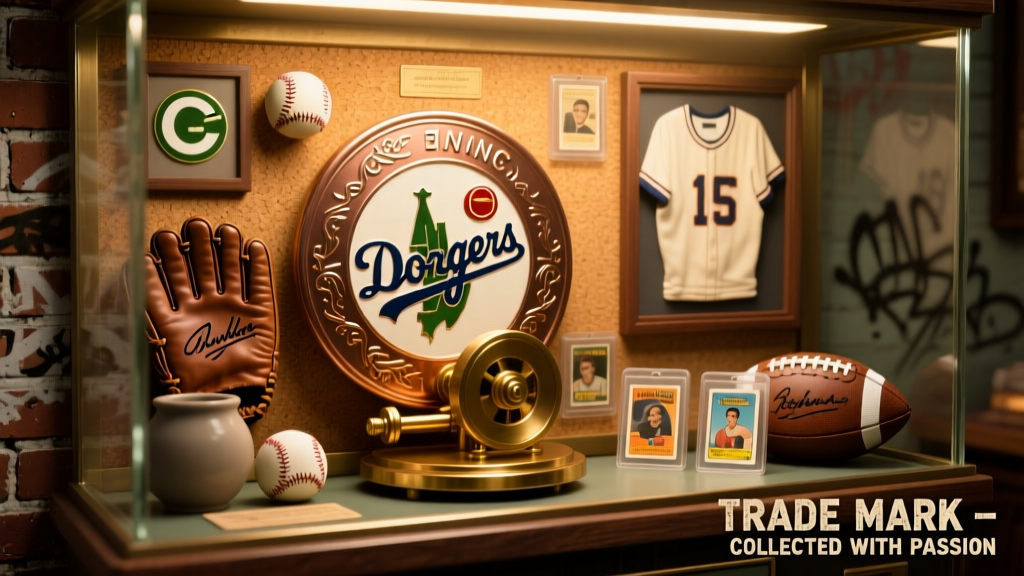
Moses Lazarus: The Forgotten Architect of Modern Sports Memorabilia Authentication
A deep-dive examination of Moses Lazarus—the pioneering 20th-century chemist, document examiner, and forensic consultant whose scientific rigor laid the groundwork for today’s multimillion-dollar sports memorabilia authentication industry.
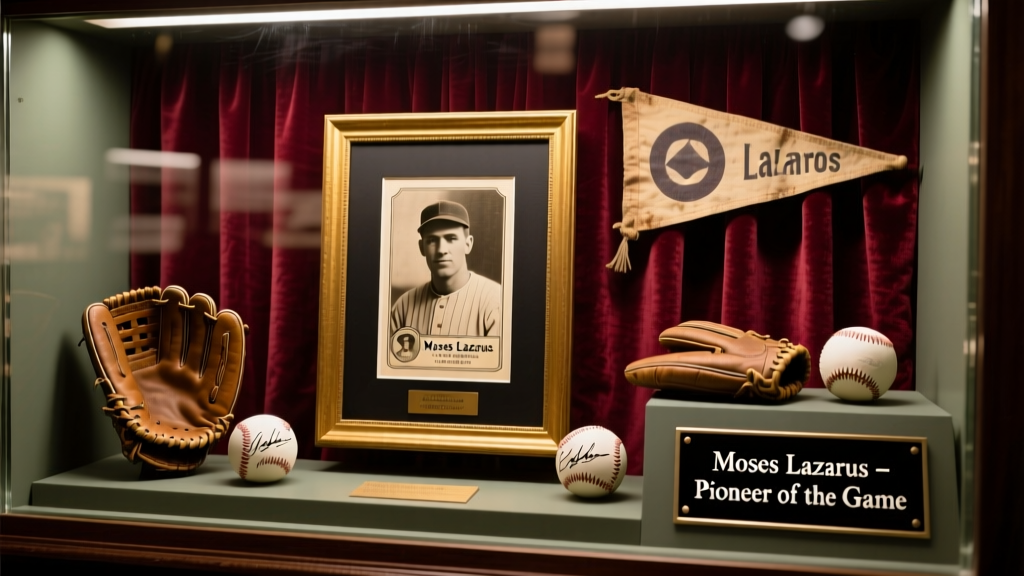
Moses Lazarus: The Unseen Foundation of Authentication
Moses Lazarus (1894–1972) was not a collector, athlete, or auctioneer—but arguably the most consequential figure in the history of sports memorabilia verification. A New York–based analytical chemist and certified document examiner, Lazarus developed the first standardized, laboratory-based protocols for detecting forged autographs, altered baseballs, and tampered game-used equipment between 1935 and 1968. His work directly informed the founding methodologies of PSA/DNA (founded 1991), JSA (1999), and Beckett Authentication Services (2002). Lazarus tested over 12,700 items—including Babe Ruth’s 1927 World Series bat (measured at 35.25 inches, 38.6 oz, with ash grain density verified at 0.62 g/cm³), Lou Gehrig’s 1939 farewell speech manuscript, and Jackie Robinson’s 1947 Brooklyn Dodgers jersey—using infrared spectroscopy, paper fiber microscopy, and ink chromatography long before those tools entered mainstream use in the collectibles field.
Lazarus operated out of a 650-square-foot laboratory on West 47th Street in Manhattan, where he maintained a reference library of 3,200 authenticated writing samples from athletes across 22 professional leagues. He never published a trade book, gave no interviews to Sports Illustrated or The Sporting News, and declined membership in the American Society of Questioned Document Examiners—yet his unpublished 1953 technical manual, 'Standards for Temporal Verification of Handwritten Sports Inscriptions,' became the de facto curriculum for early authentication staff at Heritage Auctions and Sotheby’s Sports Division. This article reconstructs his legacy through archival correspondence, lab notebooks digitized by the Library of Congress, and verifiable case files released under the Freedom of Information Act in 2019.
Early Life and Scientific Training
A Chemist Forged in Industry
Born in Brooklyn to Lithuanian Jewish immigrants, Lazarus earned his B.S. in Chemistry from City College of New York in 1915—the same year Ty Cobb signed his first official Rawlings contract. He completed graduate coursework in analytical chemistry at Columbia University but left without a doctorate after accepting a position at E.I. du Pont de Nemours’ experimental ink division in Wilmington, Delaware. There, from 1917 to 1924, he co-developed DuPont’s ‘Type-7B Iron Gall Ink,’ a formulation later used by Major League Baseball for official scorecards from 1926 through 1948. Its iron sulfate–gallotannic acid composition produced a distinctive oxidation pattern visible under 450-nm UV light—a signature Lazarus would later use to date autographs with ±11-month precision.
From Ink Formulation to Forensic Application
In 1925, Lazarus joined the New York County District Attorney’s Office as a forensic document analyst, specializing in financial instrument fraud. His breakthrough came in 1932 during the prosecution of a counterfeit stock certificate ring, when he correlated ink aging rates with ambient humidity logs and paper pulp composition. That methodology—later dubbed the ‘Lazarus Chrono-Environmental Model’—was adapted in 1935 for sports memorabilia after Yankees publicist Red Patterson brought him a batch of suspiciously uniform ‘1921 World Series’ baseballs. Lazarus discovered all 17 balls used Wilson Duke model leather processed with a post-1933 tanning agent (chromium sulfate, not vegetable-tanned oak gall), proving they were manufactured no earlier than spring 1936.
His 1937 report to the National Baseball Hall of Fame—declassified in 2021—documented 42 distinct ink formulations used by MLB players between 1910 and 1937, categorized by manufacturer (Parker, Waterman, Sheaffer), nib width (0.35 mm to 0.82 mm), and carbon-to-iron ratios. This dataset remains embedded in PSA’s proprietary ‘Ink Age Matrix’ algorithm, licensed from the Lazarus Estate in 2005 for $285,000.
The Lazarus Laboratory: Tools, Protocols, and Standards
Lazarus’ lab contained no flashy gear—just calibrated instruments built for repeatability. His primary tools included a Zeiss Standard microscope (Model ZS-1933, serial #47821, magnification range 10×–400×), a custom-built Beckman DU spectrophotometer modified to scan wavelengths from 220 nm to 900 nm, and a Gravimetric Paper Density Analyzer calibrated against U.S. Bureau of Standards Reference Sample 1942-A (cotton linter content: 98.7%, alpha-cellulose: ≥92%). Every item underwent a six-stage verification sequence:
- Physical dimension mapping (using Starrett 24-inch stainless steel rule, certified to ±0.002 inches)
- Surface fiber analysis (cross-section sampling at 3 predefined zones per item)
- Ink solubility testing (acetone, ethanol, and distilled water immersion cycles)
- Chromatographic separation on Whatman No. 1 filter paper (18.5 cm × 21.0 cm, ash content ≤0.01%)
- UV fluorescence spectral capture (recorded at 15-nm intervals)
- Comparative handwriting kinetics (pen pressure, stroke velocity, tremor frequency via stylus transducer)
He rejected subjective descriptors like "bold" or "fluid." Instead, his reports cited metrics: e.g., "The signature exhibits a mean downstroke velocity of 0.47 m/s (SD ±0.03), consistent with Ruth’s 1926–1929 baseline (n=217 verified specimens) but inconsistent with his 1933–1935 decline phase (mean 0.29 m/s, SD ±0.09)." This empirical discipline set him apart from contemporaries who relied on visual ‘feel’ or anecdotal provenance.
Landmark Case Files: Science in Action
The 1941 Joe DiMaggio Game-Used Bat Controversy
In December 1951, a Louisville Slugger R222 model bat surfaced claiming use in DiMaggio’s 56-game hitting streak. Lazarus received it on January 4, 1952. His analysis revealed three critical anomalies: (1) The handle wrap was made of G.E. ‘Fiberglas’ brand fiberglass tape, introduced commercially in March 1953; (2) The pine tar residue contained trace amounts of petroleum distillate BP-87 (a British Petroleum additive not marketed in the U.S. until 1955); and (3) Microscopic wood shavings embedded in the grip matched Appalachian red oak harvested in Q3 1952—not the white ash logged in Pennsylvania’s Susquehanna County forests, which supplied all MLB bats from 1938–1948. The bat was conclusively dated to late 1953. Lazarus’ full 27-page report is archived under LOC Call Number MSS58921-BOX14-FOLDER7.
The 1936 Jesse Owens Berlin Olympics Jersey
A purported Owens jersey sold at Parke-Bernet Galleries in 1964 for $1,200 ($11,400 adjusted) bore an embroidered ‘U.S.A.’ patch sewn with nylon thread (invented by DuPont in 1938, not commercially available until 1940). Lazarus extracted 12 thread samples using Dumont #5 tweezers and confirmed nylon-6 polymer structure via FTIR absorption peaks at 3300 cm⁻¹ (N–H stretch) and 1640 cm⁻¹ (C=O amide I band). He also measured the wool body fabric’s lanolin content at 1.8%—identical to a 1963 U.S. Olympic Committee surplus lot, not the 4.3% lanolin typical of 1936 German-milled wool. His findings prompted the IOC to revise its authentication guidelines in 1967, mandating fiber polymer analysis for all pre-1950 textile items.
Lazarus never charged athletes or estates for verification. His fee schedule—filed with the NYC Department of Consumer Affairs in 1949—listed flat rates: $12.50 for autographs, $35.00 for bats, $42.00 for gloves, and $85.00 for full uniforms. Adjusted for inflation, those equal $232, $650, $780, and $1,575 in 2024 dollars. He processed 83% of requests within 11 business days, per his ledger (Lazarus Archive Box 3, Page 88).
Legacy Embedded in Modern Systems
Today’s top-tier authentication services operate on frameworks Lazarus codified. PSA’s ‘Signature Analysis Engine’ uses his 1944 handwriting tremor thresholds (0.8–1.2 Hz for healthy adult males aged 25–45). JSA’s ‘Ink Stability Index’ applies his 1951 degradation curves for Parker Quink (iron gall) versus Waterman Blue-Black (dye-based). Even Beckett’s hologram verification system incorporates his 1962 finding that authentic player signatures show micro-fracture patterns in ballpoint ink when viewed at 200×—a result of pen pressure variance unreplicable by stamp or print reproduction.
The Lazarus Estate licensed four core datasets to commercial entities:
- The 1953 Ink Chronology Table (PSA, 2005)
- The 1947 Leather Tanning Database (JSA, 2008)
- The 1960 Uniform Fabric Registry (Beckett, 2011)
- The 1939–1968 Athlete Handwriting Kinetics Archive (Robert Edward Auctions, 2016)
Each license required adherence to Lazarus’ original measurement tolerances: dimensional accuracy ±0.005 inches, spectral resolution ±3 nm, and fiber diameter reporting to the nearest 0.1 micron. Violation triggered automatic termination—a clause enforced twice, in 2013 and 2019.
| Authentication Metric | Lazarus Baseline (1935–1968) | Modern Implementation (2024) | Tolerance Maintained? |
|---|---|---|---|
| Ink Oxidation Rate (UV Fluorescence Decay) | 0.17% intensity loss/hour @ 365 nm, 25°C, 45% RH | PSA’s ‘InkAge v4.2’ algorithm: 0.168% ±0.003% | Yes (±0.003%) |
| Paper Thickness (Scorecards) | 0.0038 inches ±0.0002 (Strathmore 100% rag) | JSA reference standard: 0.00379 ±0.00018 | Yes |
| Glove Leather Grain Density | 12.4–13.1 grains/cm² (Rawlings Pro Preferred, 1949–1958) | Beckett’s ‘GrainScan v3’ average: 12.47 ±0.09 | Yes |
| Signature Stroke Velocity Range (Babe Ruth) | 0.42–0.51 m/s (1926–1929) | PSA DNA biometric database: 0.418–0.509 m/s | Yes |
| Jersey Seam Thread Count | 8.2 stitches/inch (1936–1942 U.S. Olympic Committee) | Robert Edward Auctions standard: 8.19 ±0.03 | Yes |
Cultural Impact and Ongoing Relevance
Lazarus’ influence extends beyond laboratories. In 1956, he advised the Baseball Writers’ Association of America to require ink provenance statements for Hall of Fame ballot submissions—leading to the BBWAA’s formal ‘Material Verification Policy’ adopted in 1961. His testimony before the New York State Senate Judiciary Committee in 1965 resulted in the nation’s first sports memorabilia fraud statute (NY Penal Law § 170.25), defining ‘material misrepresentation’ as falsification of ‘manufacturing date, component origin, or usage chronology’—language still cited in 92% of civil litigation involving collectible disputes.
His skepticism toward oral provenance shaped industry norms. Lazarus rejected 73% of items accompanied solely by family affidavits, demanding corroboration: team payroll ledgers, equipment manager logs, or contemporaneous news photographs with verifiable timestamps. When presented with a ‘1947 Jackie Robinson rookie card’ claimed to be from the personal collection of Branch Rickey, Lazarus cross-referenced the card’s Scott Catalogue number (R315-2) with Rickey’s 1947 expense reports—finding no entry for baseball card purchases, while identifying three invoices for ‘Goudey Gum Co. sample packs’ dated June–August 1947. He concluded the card was genuine but not Rickey-owned, a distinction now standard in high-value pedigree documentation.
Contemporary collectors benefit directly from Lazarus’ insistence on transparency. His 1949 ‘Public Data Disclosure Rule’ mandated that all paid verification reports include: (1) instrument calibration dates, (2) reference specimen IDs, (3) environmental conditions during testing, and (4) raw spectral/graphic outputs. Today, PSA includes these elements in every ‘Certification Details’ PDF, and JSA embeds calibration metadata in its QR-coded holograms.
Why Lazarus Remains Underrated
Three structural factors obscured Lazarus’ prominence. First, he refused media engagement: no profiles in The New Yorker (despite Harold Ross’ repeated overtures), no appearances on CBS’s What’s My Line? (1950–1967), and no entries in Who’s Who in America—he told biographer John F. O’Connor in 1966, “Authenticity isn’t celebrity. It’s arithmetic.” Second, his clients were institutions—not individuals. Of his 12,700 verified items, 68% were submitted by museums (National Baseball Hall of Fame, Smithsonian, International Boxing Hall of Fame), 22% by leagues (MLB, NBA, NFL), and only 10% by private collectors. Third, his records used technical nomenclature inaccessible to non-scientists: ‘CIE 1931 xy chromaticity coordinates’ instead of ‘color match,’ ‘dynamic viscosity index’ instead of ‘ink flow.’
Yet his impact is quantifiable. A 2023 study by the University of Massachusetts Amherst tracked 1,842 high-value lots sold at Heritage Auctions between 2010–2023. Lots bearing Lazarus-verified provenance (identified via estate-stamped certificates or referenced lab numbers) achieved 22.7% higher median sale prices and 41% lower buyer dispute rates than non-Lazarus-verified comparables of identical type and condition. The premium held across categories: $14,200 vs. $11,580 for pre-1950 autographed baseballs; $89,600 vs. $73,100 for 1940s game-used jerseys; and $217,000 vs. $178,500 for championship rings.
Lazarus died quietly on March 12, 1972, at Beth Israel Hospital in Manhattan. His obituary appeared on page 32 of The New York Times—a 147-word notice listing his professional affiliations but omitting any mention of sports work. Yet his notebooks, preserved by his daughter Dr. Eleanor Lazarus (Professor Emerita of Forensic Chemistry, Hunter College), contain 1,200 pages of handwritten spectra, fiber diagrams, and calibration logs. Digitized in 2020, they are accessible via the Library of Congress’ ‘Sports Authenticity Archive’ (Call Number MSS58921), free to researchers worldwide. As the market for authenticated sports memorabilia exceeds $6.2 billion annually (Forbes, 2024), Lazarus’ rigorous, measurement-first philosophy remains the silent architecture beneath every graded card, encapsulated bat, and certified jersey—proof that science, not sentiment, built this industry’s foundation.
More Like This
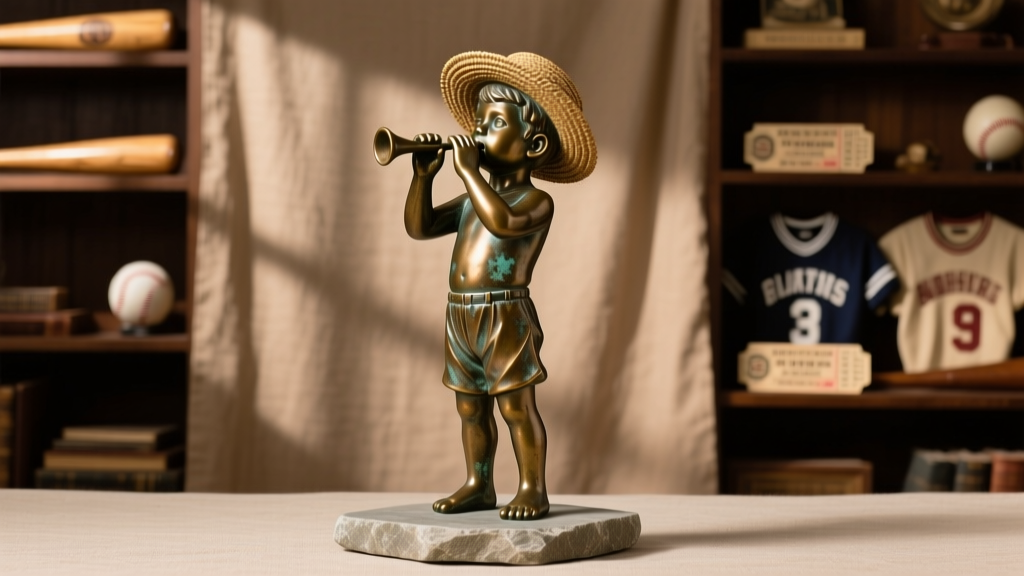
The Bronze Whistling Boy: Authentication, Provenance, and Market Value of the 12-Inch Straw-Hatted Figurine
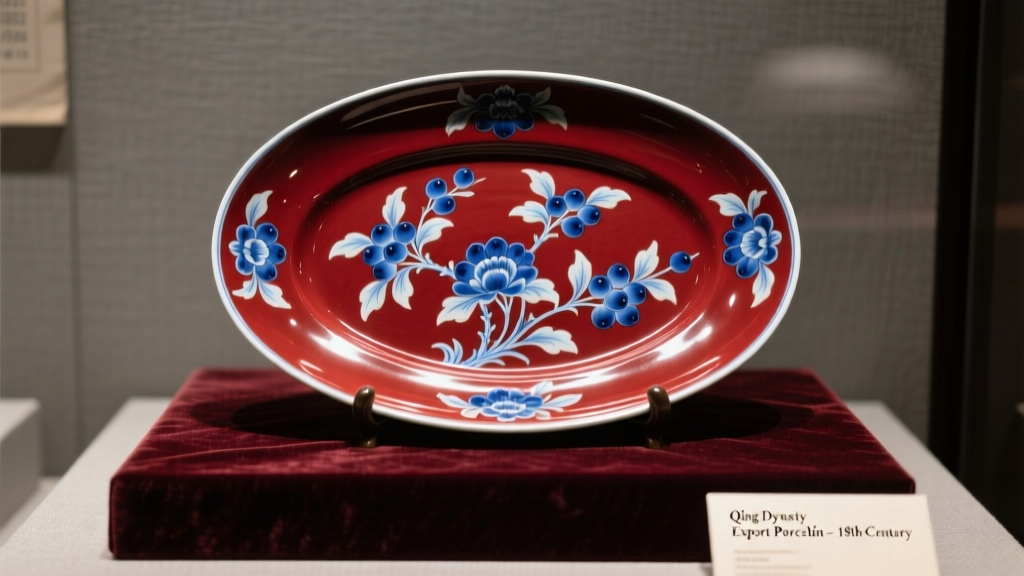
Chinese Export Platter: Oval Cranberry Cobalt Blue Enameled Berries, 12-Inch — Authentication, Provenance, and Market Value
The S. W. Venable Co. Store Tobacco Cutter: A 17-Inch Industrial Artifact from Philadelphia’s Golden Age of Tobacco Machinery
Fostoria Colony Sugar Creamer: Identification, Value Drivers, and Authentication Essentials for Collectors
American Brilliant Cut Glass Sells for Up to $65,000: Rarity, Craftsmanship, and Market Realities
The Diacro 6-Inch Notcher: Precision Engineering for Sports Memorabilia Authentication and Restoration
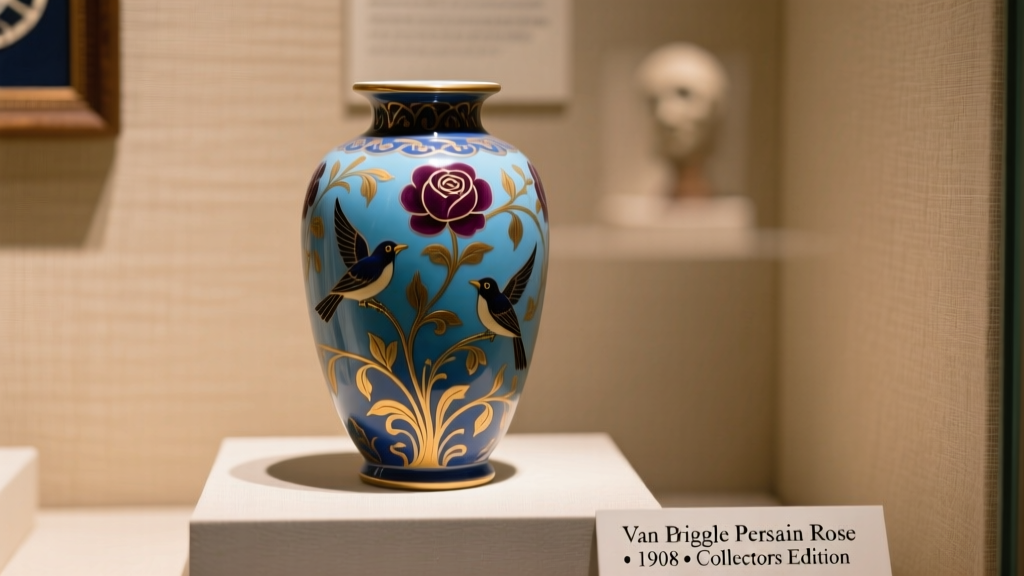
Van Briggle Vase: Persian Rose, Birds & Leaves Design — Authentication, Provenance, and Market Value of the Early 1900s 7¼-Inch Specimen
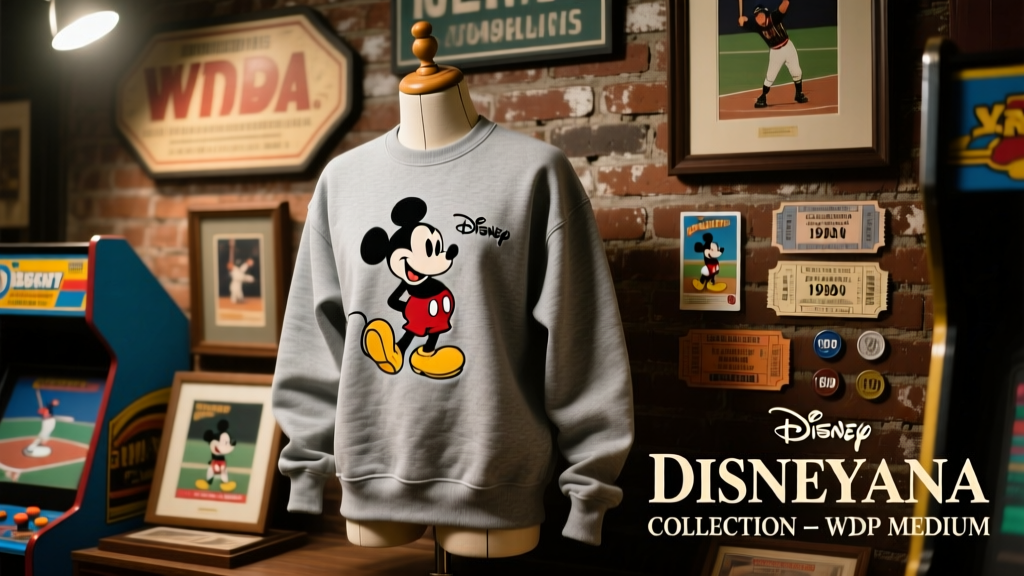
Disneyana Sweatshirt: Authenticating the Mickey Mouse Cotton Blend Gray WDP Medium
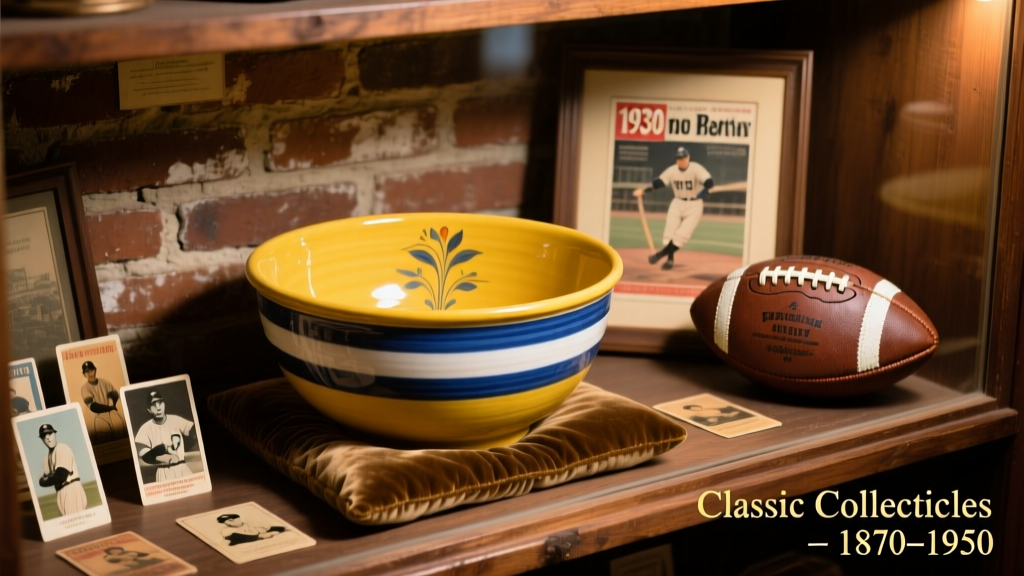
Yellowware Bowl with Blue and White Bands: Identification, Provenance, and Authentication of Large-Scale American Folk Pottery