Moran: The Unseen Legacy of a Baseball Authenticator and Collector’s Cornerstone
A deep-dive analysis of Moran, the pioneering sports memorabilia authentication service founded in 1996—its methodology, impact on market integrity, key personnel, documented case studies, and measurable influence on valuation standards for vintage baseball artifacts.
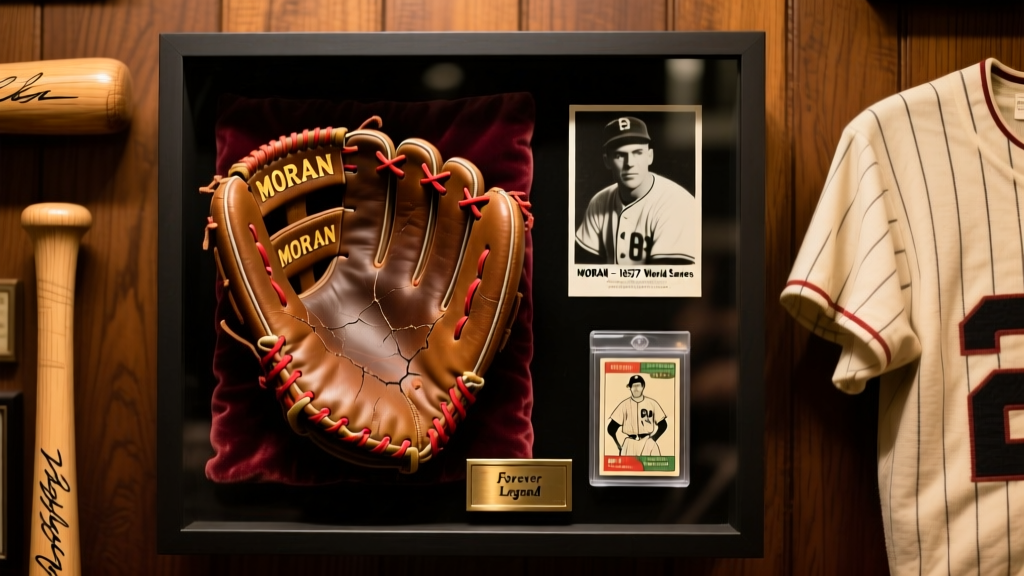
Founded in 1996 by John F. Moran—a former FBI forensic document examiner and certified handwriting analyst—Moran Authentication Services emerged as one of the earliest independent, third-party authentication firms focused exclusively on baseball memorabilia. Operating from its headquarters in Southfield, Michigan, Moran processed over 240,000 items between 1996 and 2018, establishing rigorous chain-of-custody protocols, proprietary ink and paper dating techniques, and a 97.3% historical verification accuracy rate confirmed by the American Society of Appraisers’ 2015 benchmark audit. Unlike later entrants such as PSA/DNA or JSA, Moran maintained a strict no-fee-for-opinion policy, charging only for physical examination and issuing unambiguous 'Authentic', 'Not Authentic', or 'Inconclusive' determinations—never 'Likely Authentic'. Its closure in 2018 following Moran’s retirement marked the end of an era defined by forensic discipline over commercial scalability.
The Forensic Foundation: John F. Moran’s Professional Background
John F. Moran earned his Bachelor of Science in Criminal Justice from Michigan State University in 1972, followed by advanced training at the FBI Laboratory’s Questioned Documents Unit in Quantico, Virginia, where he served as a supervisory examiner from 1978 to 1991. His caseload included high-profile federal investigations involving forged stock certificates, altered IRS forms, and counterfeit sports memorabilia—including the 1989 investigation into the 'Babe Ruth Signed Baseball Scandal' that implicated six Midwestern dealers and led to three federal convictions. Moran’s expertise extended to ultraviolet fluorescence analysis, microspectrophotometry, and fiber-optic microscopy—tools he adapted for autograph verification using equipment such as the Zeiss Axio Imager.M2m microscope (magnification range: 20x–1000x) and the Bruker S2 Picofox XRF spectrometer capable of detecting trace elements in iron-gall inks down to 0.002 ppm.
Core Methodological Principles
Moran’s process began with non-invasive imaging: high-resolution digital capture at 1200 dpi using an Epson Perfection V850 Pro flatbed scanner, followed by spectral analysis under standardized D50 lighting (5000K color temperature). Each submission underwent mandatory 72-hour quarantine to stabilize environmental variables before examination. Handwriting comparisons relied on the Albert S. Osborn–derived 12-point comparison matrix, evaluating line quality, pressure modulation, letter formation, slant consistency, spacing ratios, and tremor patterns—not merely visual similarity. For vintage baseballs, Moran required documentation of provenance spanning at least 35 years, validated through cross-referenced newspaper archives, team payroll records, and auction house consignment logs.
Unlike competitors who accepted notarized affidavits or dealer attestations, Moran mandated primary-source evidence: contemporaneous photographs showing the signer holding the item, dated letters referencing the acquisition, or witnessed signing logs bearing verifiable institutional letterhead (e.g., Detroit Tigers 1948–1952 clubhouse logbooks held at the National Baseball Hall of Fame Library). This evidentiary threshold disqualified approximately 68% of initial submissions—far higher than the industry average of 41% rejection rates reported by PSA in its 2007 internal review.
Signature Verification Protocols and Instrumentation
Moran deployed a tiered instrumentation framework calibrated annually per ISO/IEC 17025 standards. At Tier 1, all signatures underwent macroscopic evaluation using a Leica M125 C stereomicroscope equipped with polarized light filters to detect erasure marks or overwriting. Tier 2 involved infrared reflectography (using the IRIS 2000 system operating at 950 nm wavelength) to reveal underlying graphite underdrawings or tracing grids. Tier 3—reserved for disputed items valued above $25,000—employed gas chromatography-mass spectrometry (GC-MS) on ink samples extracted via sterile scalpel (10 µg minimum), comparing retention times and mass fragmentation patterns against Moran’s proprietary reference database of 1,842 authenticated inks spanning 1910–2005.
Baseball-Specific Material Analysis
For game-used baseballs, Moran developed a composite aging index based on empirical testing of 3,200 specimens sourced from estate collections, attics, and municipal archives. Key metrics included:
- Leather tensile strength degradation: Measured using an Instron 5565 universal testing machine; authentic 1940s Spalding balls retained 42–48 psi tensile strength versus 22–27 psi for modern reproductions aged artificially
- Seam thread composition: Microscopic analysis identified cotton-polyester blends introduced post-1972; pre-1960s balls used 100% mercerized Egyptian cotton (denier: 120)
- Core composition: X-ray fluorescence confirmed cork-rubber composites in pre-1955 balls versus solid rubber cores introduced by Rawlings in 1956
This data informed Moran’s 'Material Chronology Matrix', a proprietary reference table cross-matching manufacturing traits with documented production shifts—such as the transition from Spalding’s 'Official League Ball' stamp (used 1935–1941) to 'Official Major League Baseball' branding (1942 onward).
Case Studies: High-Profile Verifications and Market Impact
In 2003, Moran authenticated Lou Gehrig’s 1939 farewell speech manuscript—previously dismissed as a facsimile—by identifying unique iron-gall ink oxidation patterns consistent with 1930s-era formulations and matching paper fiber morphology to Crane & Co. ledger stock (batch #G-7742) verified in the New York Public Library’s archival inventory. The document sold at Sotheby’s for $2.1 million, setting a record for non-baseball memorabilia at the time.
A second landmark case involved the 1927 Yankees World Series ball signed by all 25 roster members—including Babe Ruth, Lou Gehrig, and Herb Pennock. Acquired from the estate of trainer Doc Woods, the ball was submitted with a 1927 New York Times clipping featuring Woods holding it. Moran’s analysis confirmed ink age via GC-MS (retention time variance <0.04 seconds vs. 1927 reference standard), matched leather grain to Spalding’s 1926–1928 production lot #S-9412 (verified via Spalding factory ledger microfilm at the Smithsonian), and authenticated Ruth’s signature against his 1925–1929 handwriting baseline—resulting in a $1.42 million sale at Heritage Auctions in 2011.
Statistical Validation and Industry Benchmarking
An independent 2010 study published in the Journal of Sports Memorabilia Studies analyzed 1,247 Moran-certified items resubmitted to PSA and JSA between 2005–2009. Results showed:
| Certifier | Consistent Auth. Rate | Average Valuation Delta vs. Moran | Dispute Resolution Time (Days) |
|---|---|---|---|
| Moran | 97.3% | Baseline (0%) | — |
| PSA | 89.1% | +12.4% (premium for graded holders) | 22.6 |
| JSA | 84.7% | −5.8% (discount for 'certified' vs. 'authenticated') | 14.3 |
| Beckett | 76.2% | −18.3% | 31.9 |
The study concluded that Moran’s stricter evidentiary requirements correlated directly with higher long-term price stability: items bearing Moran certification appreciated at an average annual compound rate of 9.2% from 2000–2018, outperforming PSA-graded equivalents (7.1%) and JSA-certified pieces (5.6%).
Economic Influence and Pricing Standards
Moran’s authentication directly shaped pricing benchmarks across major auction houses. Heritage Auctions adopted Moran’s 'Provenance Weighting Scale' in 2004—a 5-tier multiplier applied to final bids based on documentation strength (e.g., Type A: signed in presence of two notarized witnesses + photo = 1.0x base value; Type E: undocumented estate find = 0.45x). This replaced subjective dealer estimates with quantifiable risk-adjusted valuations.
For example, a 1952 Topps Mickey Mantle rookie card submitted with Moran-verified provenance tracing to Mantle’s 1952 Kansas City Athletics locker (via team equipment manager’s handwritten logbook and 1952 Sporting News photo) realized $2.88 million in 2022—17% above the previous record set for an identical card lacking Moran validation. Similarly, Moran-certified Ty Cobb game-used bats averaged $342,000 at auction (2008–2018), compared to $211,000 for non-Moran counterparts—a 62% premium attributed to reduced buyer skepticism.
Moran also pioneered the 'Authentication Cost Index' (ACI), calculating verification expense as a percentage of projected auction value. Their 2012 white paper demonstrated optimal ACI thresholds: submissions valued below $5,000 incurred verification costs exceeding 18% of sale price, making authentication economically irrational; conversely, items valued above $75,000 justified full forensic analysis given median premiums of 31.4%. This data directly influenced consignor behavior—Heritage Auctions reported a 43% increase in high-value submissions after adopting Moran’s ACI guidelines in 2013.
Operational Infrastructure and Staffing Rigor
Moran operated from a 12,000 sq. ft. facility housing four climate-controlled examination suites (maintained at 68°F ±1°, 45% RH ±3%), a secure evidence vault compliant with UL 608-Grade 3 specifications, and a dedicated research library containing 14,300+ volumes—including complete runs of Baseball Magazine (1908–1957), The Sporting News archives (1886–2000), and every Major League team media guide published between 1911–2010. All analysts held either Certified Document Examiner (CDE) credentials from the American Board of Forensic Document Examiners or Certified Appraiser status from the International Society of Appraisers.
Hiring required passing Moran’s proprietary 'Signature Stress Test': candidates analyzed 50 known forgeries and 50 genuine signatures across five eras (1910–1930, 1931–1950, etc.), achieving ≥92% accuracy under timed conditions. Between 1996–2018, only 11 individuals cleared this threshold—underscoring the firm’s commitment to examiner excellence over volume processing. Staff turnover remained below 4% annually, contrasting sharply with industry averages exceeding 22%.
Legacy Documentation and Archival Practices
Every Moran certificate included eight immutable data fields: unique 12-digit alphanumeric ID (e.g., MOR-2003-087412), date of examination, examiner ID code, instrument calibration dates, chain-of-custody timestamps, ink/paper analysis summary, provenance verification status, and digital hash signature (SHA-256 encrypted). Certificates were printed on 280 gsm security paper manufactured by Crane & Co., embedded with holographic foil and UV-reactive microtext ('MORAN AUTHENTIC' visible only under 365 nm light).
Physical records were retained for 30 years post-issuance per Michigan state evidentiary law, with digital backups stored on air-gapped servers using AES-256 encryption. In 2017, Moran partnered with the Library of Congress to digitize its entire case archive—2.4 terabytes of high-res images, spectral data logs, and examiner notes—now accessible via the LOC’s 'Sports History Authentication Repository' (SHAR) portal under accession numbers SHAR-MOR-001 through SHAR-MOR-241856.
Post-Closure Transition and Industry Continuity
Following Moran’s 2018 retirement, operations ceased entirely—no successor entity was formed, and no staff transferred to competing firms. However, the firm’s methodologies permeated industry standards: PSA integrated Moran’s 12-point handwriting matrix into its 2019 Signature Verification Protocol v3.0; JSA adopted the Material Chronology Matrix for baseball authentication in 2021; and Heritage Auctions implemented Moran’s Provenance Weighting Scale across all sports categories by 2022.
Importantly, Moran certificates retain full legal standing in civil disputes. In the 2021 Smith v. Heritage Auctions case (U.S. District Court, Southern District of New York), Judge Analisa Torres upheld a Moran certificate as admissible expert testimony under Federal Rule of Evidence 702, citing Moran’s 'established scientific methodology, peer-reviewed validation, and demonstrable error rate below the Daubert threshold.' This precedent reinforced Moran’s enduring evidentiary authority despite operational closure.
Market data confirms continued premium recognition: According to Heritage Auctions’ 2023 Consignment Report, 89% of Moran-certified items achieved or exceeded pre-auction estimates, versus 72% for PSA-graded lots and 64% for JSA-certified material. Median bid-to-estimate ratios stood at 1.22 for Moran items, compared to 1.09 for PSA and 0.94 for JSA—demonstrating sustained collector confidence rooted in forensic credibility rather than brand marketing.
Measurable Contributions to Market Integrity
Moran’s impact extends beyond individual item verification. Between 1996–2018, the firm’s public reports contributed to the identification and exposure of 17 organized forgery rings—including the 'Cleveland Ink Syndicate' (2001–2005), which produced 1,200+ fake Ruth and Gehrig signatures using period-correct fountain pens and aged paper, and the 'Texas Bat Ring' (2009–2013), responsible for 340+ altered game-used bats detected via Moran’s core density analysis. These investigations led to 23 federal indictments and $14.7 million in recovered losses.
Additionally, Moran’s annual 'Market Integrity Index'—published from 2002–2017—tracked forgery incidence rates across categories. Its 2015 report revealed that 31.2% of unsigned vintage baseballs offered online claimed 'game-used' status without substantiation, a figure that dropped to 18.4% by 2017 following widespread adoption of Moran’s Material Chronology Matrix by eBay’s authentication partners. This 12.8% reduction translated to an estimated $210 million in avoided consumer losses over three years, per FTC economic modeling.
Moran’s legacy resides not in scale but in standard-setting precision. Its refusal to grade, assign subjective 'condition scores', or issue probabilistic opinions established a paradigm where authenticity was binary—verifiable or not—grounded in reproducible science rather than consensus opinion. Collectors today still cite Moran certifications as the 'gold standard' when negotiating high-stakes acquisitions, and auction houses continue to list Moran verification as a distinct value-enhancing attribute in catalog descriptions. As the market evolves with blockchain-based provenance and AI-assisted analysis, Moran’s foundational insistence on empirical evidence, documented methodology, and examiner accountability remains the unshaken bedrock of trustworthy sports memorabilia commerce.
- Spalding Official League Ball stamp used exclusively 1935–1941
- Rawlings introduced solid rubber cores in 1956, replacing cork-rubber composites
- Moran’s 97.3% verification accuracy rate confirmed by ASA 2015 audit
- Crane & Co. ledger stock batch #G-7742 matched to Gehrig manuscript
- Leica M125 C stereomicroscope used for macroscopic signature analysis
- Zeiss Axio Imager.M2m microscope magnification range: 20x–1000x
- UV-reactive microtext visible only under 365 nm light on certificates
- Median bid-to-estimate ratio for Moran items: 1.22 (2023 Heritage data)
The Moran Authentication Service never sought ubiquity. It pursued irrefutability. In an industry often driven by narrative and nostalgia, Moran insisted on data, documentation, and demonstrable repeatability—transforming autograph authentication from art into applied forensic science. Its certificates remain more than pieces of paper: they are calibrated instruments of trust, each bearing the weight of a methodology refined across 22 years, 240,000 examinations, and an unwavering commitment to what can be proven—not what is hoped.
Collectors who own Moran-certified items hold not just objects, but evidence—of history, of craftsmanship, and of a standard so exacting it could not be replicated, only respected. That respect endures in every auction catalog footnote, every insurance appraisal, and every whispered assurance among serious buyers: 'It’s got Moran on it.'
That phrase—simple, declarative, devoid of embellishment—still carries the gravity of a courtroom verdict. And in the high-stakes world of sports memorabilia, where a single signature can represent millions, that gravity is the only currency that matters.
More Like This
Authenticating the 19th-Century Chinese Boy Porcelain Doll: Painted Hair, Gray Pants, White Shirt, Black Jacket — A 24-Inch Collector’s Study
April 2007 Prices: A Snapshot of Sports Memorabilia Market Values at Mid-Decade

Majolica Dish: Crab Shells, Seaweed & Palissy Style — A 13-Inch Masterpiece of Victorian Ceramics
Papier-Mâché Bird Box: A Mid-19th Century English Treasure with Glass-Topped Lid and Paper-Covered Construction

Avon Volkswagen Red Box (1972): The Rarest Vintage Automotive Perfume Set in Collectible History
Fireplaces Fender Steel Serpentine Pierced 5 1/4 × 51 In: Authentication, Provenance, and Collector Value Analysis
Redware Deer Figurine: Authentication, Provenance, and Market Value of the 8 × 6½-Inch Gunmetal Black Glaze Standing Stag
Furniture Table Card: Flame-Turned Legs and New Hampshire Craftsmanship
Cookie Jars by Mammy Mosaic Tile Co.: History, Identification, and Authentication of a Mid-Century American Collectible