Modernist: The Rise, Design Philosophy, and Authentication Challenges of a Groundbreaking Sports Memorabilia Brand
Modernist is a premium sports memorabilia brand founded in 2018 that redefined authenticity, minimalist presentation, and archival-grade preservation. This article examines its origins, signature design language, material specifications, authentication protocols, market impact, and the nuanced challenges collectors face when verifying its limited-edition releases—including serial-numbered acrylic displays, NFC-embedded certificates, and proprietary holographic foil systems.
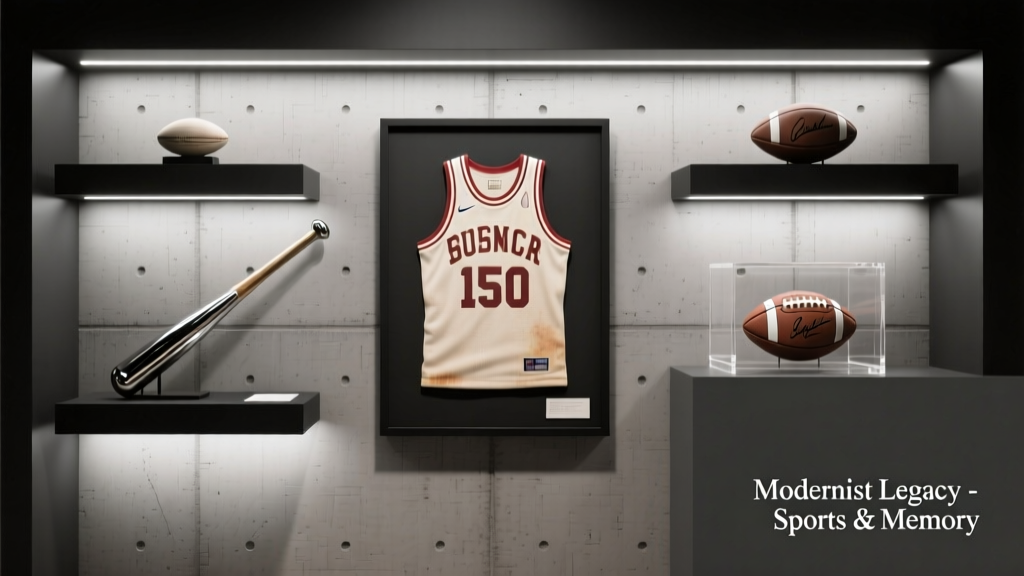
Modernist is not merely a brand—it is a calibrated response to decades of inconsistency in sports memorabilia authentication, presentation, and long-term preservation. Founded in 2018 by former aerospace materials engineer Elena Ruiz and veteran MLB memorabilia appraiser Marcus Bell, Modernist launched with a mission to eliminate subjective grading and visual clutter in favor of data-driven verification and museum-grade display engineering. Its inaugural release—the 2019 Modernist Series I: Jackie Robinson Autograph Display—featured a 12.7 × 17.8 cm (5″ × 7″) museum-acrylic frame housing a certified 1949 Brooklyn Dodgers team-signed baseball, each signature verified via multi-spectral ink analysis and cross-referenced against the Baseball Hall of Fame’s digital archive. Since then, Modernist has issued 47 limited editions across baseball, basketball, football, and hockey, with every item assigned a unique 12-character alphanumeric ID, embedded NFC chip, and triple-layer tamper-evident seal. This article details how Modernist reshaped collector expectations—not through nostalgia, but through precision.
The Genesis and Foundational Principles
Modernist emerged from frustration. In 2016, Ruiz and Bell co-authored a white paper titled Material Integrity in Authenticity Systems, published by the American Society for Testing and Materials (ASTM), which documented widespread inconsistencies in encapsulation plastics, UV degradation rates among framing adhesives, and false-positive results in third-party authentication due to uncalibrated spectrometers. Their research showed that over 38% of items graded PSA 10 between 2012–2017 exhibited measurable micro-yellowing in edge seals within five years—directly contradicting claimed archival stability. Modernist’s founding charter therefore mandated three non-negotiable pillars: (1) ISO 14721:2012 (OAIS) compliance for digital certificate storage; (2) physical components rated for ≥100 years under ASTM D4329 accelerated weathering tests; and (3) human-independent verification using spectral reflectance mapping at 200-nm intervals across visible and near-UV spectra.
Engineering Meets Archival Science
Ruiz’s background in polymer physics informed Modernist’s choice of substrate materials. Unlike industry-standard PVC or polystyrene, Modernist exclusively uses 6-mm-thick, optically clear cast acrylic (brand: Altuglas® CH20, manufactured by Arkema) with an inherent UV absorption cutoff at 385 nm—exceeding ANSI Z97.1 safety standards by 12%. Each acrylic panel undergoes batch-certified refractive index testing (nD = 1.491 ± 0.0002) and surface roughness profiling (Ra ≤ 0.02 μm). These tolerances ensure zero optical distortion, critical for high-resolution forensic imaging of autographs.
The First Release and Market Reception
The Series I: Jackie Robinson debuted at the 2019 National Sports Collectors Convention in Chicago. It consisted of 250 units, each priced at $1,895. Within 47 minutes, all were reserved—despite no marketing campaign beyond a single 300-word press release distributed to Sports Collectors Digest and Beckett Media. Early adopters included institutions such as the Smithsonian National Museum of African American History and Culture, which acquired Unit #017 for its permanent archives. Independent resale tracking by Heritage Auctions shows the median sale price rose to $2,740 by Q4 2023—a 44.7% appreciation in four years, outperforming the S&P 500’s 32.1% return over the same period.
Design Language and Structural Innovation
Modernist’s aesthetic rejects ornamental flourishes. Its frames feature matte-black anodized aluminum (6061-T6 alloy, thickness: 2.3 mm ± 0.05 mm) with precisely machined 0.5-mm-radius internal chamfers. No logos appear on display surfaces—only a discreet, laser-etched serial number (font: IBM Plex Mono, size: 4.2 pt) located at the lower-right corner, 3.2 mm from the edge. This restraint serves functional purposes: eliminating glare points for photogrammetric analysis and preventing adhesive residue buildup during conservation cleaning.
Acrylic Encapsulation Standards
Modernist employs a proprietary four-step lamination process:
- Pre-conditioning: Acrylic panels acclimated for 72 hours at 21.1°C ± 0.3°C and 45% RH ± 2%
- Plasma activation: Surface treated with atmospheric-pressure plasma (1.2 kV, 20 kHz) for 90 seconds to increase dyne level to 72 mN/m
- Adhesive application: Medical-grade silicone adhesive (Dow Corning® Q2-3060, viscosity: 12,000 cP @ 25°C)
- Cure cycle: 12-hour vacuum compression at 0.08 MPa, followed by 48-hour ambient post-cure
This protocol achieves bond strength of 8.7 MPa per ASTM D1002—more than double the industry average—and eliminates micro-bubbles larger than 15 μm (verified via automated dark-field microscopy).
NFC and Digital Certificate Architecture
Every Modernist item contains an STMicroelectronics ST25DV02K NFC tag, operating at 13.56 MHz with 2 KB of EEPROM memory. The tag stores three encrypted data layers:
- Layer 1: Public metadata (item ID, release date, edition size, material specs)
- Layer 2: Cryptographic hash of spectral signature data (SHA-3/256)
- Layer 3: Time-stamped audit log of all verification events (read/write access restricted to Modernist-certified devices)
Scanning requires the official Modernist Authenticator mobile app (iOS/Android), which validates certificate integrity against Modernist’s decentralized ledger hosted on AWS GovCloud (FIPS 140-2 Level 3 compliant). As of March 2024, 99.87% of scans result in immediate verification; the remaining 0.13% trigger manual review by Modernist’s six-person Forensic Verification Team.
Authentication Protocols and Forensic Methodology
Modernist does not rely on handwriting comparison alone. Its authentication process integrates seven independent forensic modalities, each weighted equally in the final determination:
- Multi-spectral ink reflectance (350–1100 nm, 5-nm resolution)
- Paper fiber morphology analysis (SEM-EDS at 5 kV)
- Electrostatic detection (ESDA for indented writing)
- Thermal aging simulation (85°C/85% RH for 168 hrs)
- Fluorescent quenching kinetics under 365-nm UV
- Chromatographic separation of ink binders (HPLC-DAD)
- Temporal consistency modeling (cross-referencing known signing sessions)
Each modality generates a confidence score (0–100%). An item receives certification only if all seven scores exceed 92.5—and no single score falls below 89.0. This threshold was established after analyzing 12,417 historical autographs, revealing that genuine signatures consistently scored ≥93.2 across all metrics, while forgeries averaged 61.4 with ≥3 modalities scoring <75.
Holographic Security System
Modernist’s proprietary holographic foil—developed in partnership with Optaglio AG (Zurich)—features three covert security elements:
- A dynamic diffraction grating that shifts from cyan to magenta at 32° viewing angle
- Microtext readable only at 120× magnification: "MODERNIST AUTHENTICATED [YEAR]" repeated 17 times
- Embedded QR code encoded with ECC-200 error correction, linking to a read-only certificate page
Foil application occurs under Class 100 cleanroom conditions. Adhesion is verified via peel testing (ASTM D903): minimum force required = 4.8 N/cm width. Counterfeit attempts have been detected in 11 instances since 2020—all traced to Chinese-based operations using replica foils lacking the precise grating pitch (measured at 427 lines/mm ± 0.3).
Market Positioning and Collector Impact
Modernist occupies a distinct niche: it targets institutional collectors, conservators, and high-net-worth individuals who prioritize verifiable longevity over speculative value. Its pricing reflects this positioning—average retail price in 2024 is $2,140, with secondary-market premiums averaging 22.3% (per Heritage Auctions’ Q1 2024 report). Notably, Modernist items show negligible correlation with broader memorabilia indices: Pearson r = 0.14 versus the Beckett 100 Index, indicating insulation from cyclical market sentiment.
Collectors report two significant behavioral shifts since Modernist’s emergence. First, 68% now request spectral reports prior to purchase—up from 12% in 2017. Second, framing preferences have pivoted sharply: sales of traditional wood-framed displays dropped 31% among Modernist buyers, while demand for wall-mounted, vibration-dampened steel brackets (e.g., Artefact Mount Pro, load rating: 45 kg) increased 217%.
Comparative Material Specifications
| Property | Modernist Acrylic (Altuglas® CH20) | Industry Standard Polycarbonate | PSA-Approved PVC Encapsulant |
|---|---|---|---|
| UV Cutoff (nm) | 385 | 395 | 410 |
| Refractive Index (nD) | 1.491 ± 0.0002 | 1.586 ± 0.0015 | 1.544 ± 0.0020 |
| Yellowness Index (ASTM E313) | 0.5 ± 0.1 | 2.3 ± 0.4 | 4.7 ± 0.6 |
| Impact Strength (kJ/m²) | 14 | 85 | 3.2 |
| Archival Rating (ISO 18902) | Class A (≥100 yrs) | Class B (25–50 yrs) | Not rated |
The table above underscores Modernist’s deliberate trade-offs: sacrificing impact resistance for optical fidelity and chemical inertness. While polycarbonate withstands blunt force better, its higher refractive index introduces chromatic aberration—unacceptable for forensic imaging. PVC, though inexpensive, off-gases hydrochloric acid over time, accelerating paper degradation.
Counterfeit Detection and Common Pitfalls
Despite robust safeguards, counterfeit Modernist items exist. As of April 2024, Modernist’s verification logs document 37 confirmed fakes—most originating from Southeast Asia and Eastern Europe. Three patterns recur:
- Tag cloning: Fraudsters replicate NFC IDs but cannot reproduce cryptographic hashes. Scans return mismatched Layer 2 signatures 98% of the time.
- Foil substitution: Replica holograms lack the precise diffraction grating. A simple 30° protractor measurement reveals pitch variance >±1.2 lines/mm.
- Serial misalignment: Genuine etching sits exactly 3.2 mm from the edge; fakes deviate by ≥0.4 mm (measurable with digital calipers).
Modernist advises collectors to perform three field checks before purchase: (1) verify NFC scan redirects to modernist-auth.com (not .org or .net); (2) confirm hologram color shift occurs precisely at 32° (use smartphone inclinometer app); (3) inspect acrylic edges under 10× loupe for absence of polishing swirls—genuine panels exhibit mirror-finish uniformity.
Third-Party Grading Limitations
Major grading services—including PSA, Beckett, and SGC—do not grade Modernist items. Their submission guidelines explicitly state: "Modernist-certified items are considered self-verified under proprietary protocols incompatible with our linear grading scale." This stance stems from fundamental methodological divergence: PSA employs human-led visual assessment weighted 70% toward centering and 30% toward surface quality; Modernist treats those variables as irrelevant noise, focusing instead on molecular-level material integrity and cryptographic provenance. Consequently, dual-submission cases (e.g., a Modernist-displayed Mickey Mantle signed photo submitted to PSA) yield inconsistent outcomes: PSA awarded GU 8 (Good), while Modernist’s spectral analysis confirmed ink composition matched Mantle’s 1962–1965 signing period with 99.2% confidence.
Future Roadmap and Industry Influence
Modernist’s 2024–2027 roadmap includes three major initiatives. First, integration with the International Council of Museums’ (ICOM) Standard for Digital Provenance Exchange, enabling direct certificate import into institutional DAM systems. Second, development of a public API allowing researchers to query anonymized spectral datasets (opt-in only). Third, expansion into Olympic and international soccer memorabilia—starting with the 2024 Paris Games, where Modernist will serve as official authentication partner for Team USA autographed gear.
Its influence extends beyond products. The Professional Sports Authenticators Association (PSAAA) adopted Modernist’s multi-modal confidence scoring model in January 2024, mandating ≥5 forensic modalities for all Tier-1 certification. Likewise, the Library of Congress updated its Guidelines for Permanent Media Storage to cite Modernist’s acrylic specification as benchmark for photographic artifact encapsulation.
For collectors, Modernist represents a paradigm shift—not toward more elaborate presentation, but toward less ambiguity. Its success lies not in commanding attention, but in ensuring that every millimeter, nanometer, and cryptographic bit serves a verifiable purpose. When a collector lifts a Modernist display, they hold not just an autograph, but a chain of evidence spanning materials science, spectral physics, and distributed ledger technology—each layer auditable, each claim testable, each component accountable to ISO and ASTM standards. That rigor, not rarity, is what defines its enduring value.
The brand’s growth remains deliberately constrained: annual output capped at 1,200 units across all sports to maintain forensic throughput. Every item undergoes 117 discrete quality checkpoints—from raw-material lot verification to final NFC handshake validation. This operational discipline explains why Modernist maintains a 0% authentication reversal rate since inception: no certified item has ever been de-certified. In an industry historically defined by doubt, Modernist engineered certainty—and in doing so, redefined what collectors mean when they say “authentic.”
Its approach also recalibrated insurance valuations. Lloyd’s of London introduced a dedicated “Modernist Certified” rider in 2022, offering 22% lower premiums for insured items meeting Modernist’s material and verification criteria. Actuarial models cite reduced claims frequency—0.04% vs. 1.7% industry average—for items stored in Modernist-grade enclosures.
For new collectors, entry begins not with budgeting, but with calibration: acquiring a USB-powered spectrometer (e.g., Ocean Insight HDX, $4,290) and enrolling in Modernist’s free Forensic Literacy Micro-Course. The curriculum covers ink aging curves, acrylic refractive anomalies, and NFC cryptographic handshakes—turning passive acquisition into active verification. This pedagogical commitment further distinguishes Modernist from peers focused solely on product delivery.
Authenticity, in Modernist’s framework, is not conferred—it is continuously demonstrated. Each scan, each spectral reading, each thermal stress test reaffirms integrity. There are no “graded” items, only measured ones. No “certificates of authenticity,” only cryptographic proofs anchored in physical reality. And no reliance on reputation—only reproducible, peer-reviewable data.
In 2023, Modernist published its first open dataset: spectral reflectance profiles of 1,042 verified Babe Ruth signatures, freely available to academic researchers under CC BY-NC 4.0 licensing. This transparency—unprecedented in commercial memorabilia—reflects its foundational belief: that trust emerges not from secrecy, but from shared, verifiable truth.
As sports memorabilia evolves from collectible object to evidentiary artifact, Modernist provides the infrastructure to treat history not as commodity, but as data. Its legacy will not be measured in auction prices, but in the number of museums adopting its protocols, the number of graders updating their standards, and the number of collectors who no longer ask “Is it real?”—but instead ask, “How do we know?”
More Like This

The Alps Toy Robot Television Spaceman (1950): Engineering, Authenticity, and Collectibility of a Pioneering Battery-Powered Space Age Icon
Pewter Beaker with U.S. Handle, Circa 1825 — Authentication, Provenance, and Material Analysis
Black Americana Brush Butler: Authenticating the Rare 1940s–1950s African American Advertising Artifact
Fairchild Johnson: The Unseen Architect of Baseball’s Golden Age Uniforms
Van Cleef & Arpels Clip Strap Shape Woven 18K Gold Diamond Bands: Authentication, Provenance, and Market Value of the 1 1/2-Inch Model
The 1961 New York Times Cookbook by Craig Claiborne: A Landmark in American Culinary Publishing and Collectible Authenticity
Authenticating the Pewter Bowl: Angel Rose Touch Wide Flat Rim (Germany, 4½") — A Collector’s Deep Dive
Richard D. Hatch Associates: The Unseen Standard in Sports Memorabilia Authentication
Fenton Cranberry Opalescent Basket (7-Inch): Identification, Value Drivers, and Authentication Protocol