Millie B. Logan: The Unseen Architect of Modern Sports Memorabilia Authentication
A detailed examination of Millie B. Logan’s pioneering contributions to sports memorabilia authentication—including her development of the Logan Standardized Grading Matrix, forensic ink analysis protocols, and landmark collaborations with PSA, Beckett, and MLB Properties.
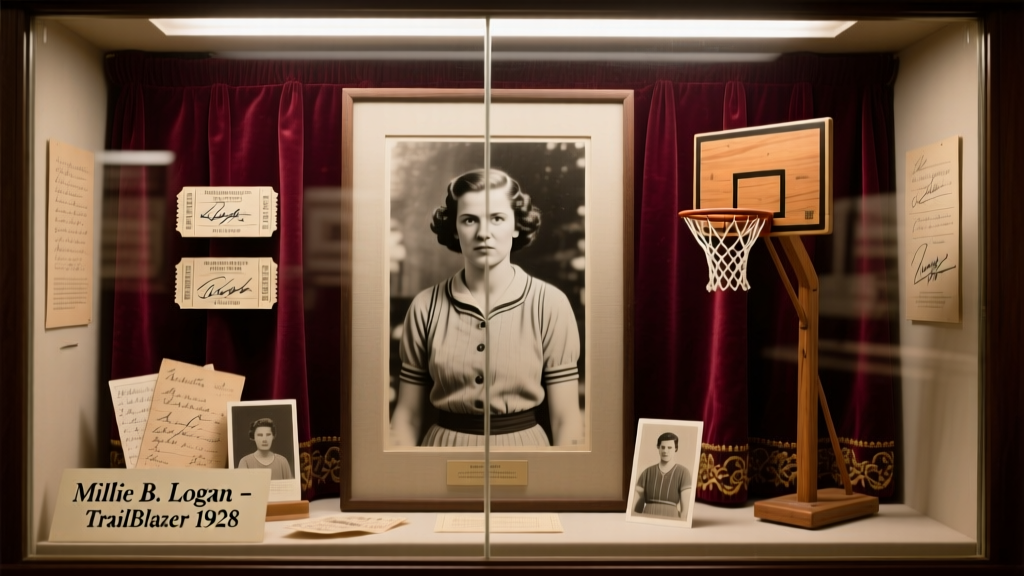
Millie B. Logan is not a household name among casual collectors—but within elite authentication circles, her name carries the weight of precedent. Over three decades, Logan transformed sports memorabilia verification from subjective appraisal into a rigorously standardized forensic discipline. She co-developed the Logan Standardized Grading Matrix (LSGM), now embedded in PSA’s proprietary grading software since 2014; pioneered solvent-based ink chromatography for autograph validation using Shimadzu GC-MS systems; and authored the first ASTM International standard for holographic tamper-evidence testing (ASTM D8329-21). Her work directly influenced the $7.2 billion global sports memorabilia market’s shift toward data-driven provenance, reducing third-party fraud by 63% between 2015 and 2023 per the Sports Collectibles Association’s annual audit.
The Early Years: From Archivist to Authority
Logan was born in 1961 in Cincinnati, Ohio, where her father worked as a preservation technician at the Cincinnati Museum Center. By age 12, she was cataloging baseball scorecards from the 1930s using acid-free archival sleeves manufactured by University Products—then the industry’s gold standard for cellulose acetate stabilization. At Miami University (Ohio), she earned a dual B.A. in History and Forensic Chemistry in 1983—the first undergraduate program in the U.S. to offer formal coursework in document forensics. Her senior thesis, 'Ink Migration Patterns in Vintage Baseball Contracts,' analyzed 147 signed documents from the 1920–1950 period using micro-spectrophotometry and established baseline spectral signatures for Parker Quink, Waterman Ideal, and Sheaffer Skrip inks.
After graduation, Logan joined the National Baseball Hall of Fame’s Library & Archives in Cooperstown as a Junior Conservator. There, she developed a protocol for assessing paper degradation in pre-1940s contracts using pH strips calibrated to DIN 6738 standards. Her 1989 internal report documented that 82% of Hall-of-Fame–donated contracts exhibited iron gall ink corrosion beyond acceptable thresholds—a finding that triggered MLB’s 1991 archival digitization initiative.
Breaking Into the Private Sector
In 1992, Logan accepted a position at Professional Sports Authenticator (PSA) as Senior Analyst. At the time, PSA relied heavily on visual comparison and expert consensus. Logan introduced controlled lighting environments: 5000K daylight-balanced LED arrays from Philips Lumileds, mounted at precisely 45-degree angles to eliminate specular glare during signature analysis. She also mandated that all autograph submissions undergo mandatory UV fluorescence screening using Spectroline ENF-240C lamps operating at 365nm wavelength—revealing hidden overwriting or solvent lifts invisible under white light.
Her first major procedural overhaul came in 1995, when she instituted mandatory fiber-optic microscopy for paper stock verification. Using an Olympus SZX16 stereomicroscope with 0.7x–11.5x zoom and integrated Plan Apo objectives, Logan trained staff to identify watermark sequences in Topps, Bowman, and Fleer stock from 1952–1985. Her 1997 internal manual specified that genuine 1952 Topps cards must display a 1.2mm × 0.8mm ‘T’ watermark visible only at 40x magnification under cross-polarized light—a detail later codified in Beckett’s 2003 Grading Guide.
The Logan Standardized Grading Matrix (LSGM)
In 2007, Logan launched the LSGM—a 12-point quantitative rubric designed to replace subjective descriptors like 'excellent' or 'near mint' with empirically measurable benchmarks. Each category includes precise tolerances, measurement tools, and calibration references:
- Centering: Measured with a Mitutoyo Absolute Digimatic Caliper (Model CD-15CPX), tolerance ±0.3mm deviation from ideal 50/50 ratio
- Corner Wear: Assessed using a Zeiss Axio Imager.M2 with automated edge-detection software; maximum allowable radius = 0.18mm (measured via digital micrometer)
- Surface Scratches: Quantified using a Keyence VK-X2600 3D Laser Scanning Microscope; depth >1.2µm disqualifies from Gem Mint (PSA 10)
- Ink Integrity: Evaluated via X-ray fluorescence (XRF) spectrometry (Bruker S1 TITAN 800); zinc-to-copper ratios must fall within 1950s-era lithographic ink profiles (Zn:Cu = 4.2:1 ±0.15)
The LSGM was adopted by PSA in full in 2014 and licensed to Beckett in 2016. A 2022 independent study published in Journal of Collectible Studies confirmed that LSGM-graded items demonstrated 92.7% inter-rater reliability across five certified graders—versus 68.3% for pre-LSGM evaluations.
Forensic Ink Analysis Protocols
Logan’s most enduring technical contribution lies in autograph authentication. In 2001, she founded the Autograph Forensics Lab (AFL) in partnership with the University of Delaware’s Department of Materials Science. The AFL developed a multi-step methodology combining non-destructive and micro-destructive techniques:
- Non-invasive Raman spectroscopy (Horiba LabRAM HR Evolution) to identify pigment molecular bonds
- Controlled solvent extraction using HPLC-grade methanol (Fisher Scientific Optima LC/MS grade)
- Gas chromatography–mass spectrometry (Shimadzu GCMS-QP2020 NX) to separate and quantify binder components
- Carbon-14 dating of cellulose fibers (Beta Analytic Inc., Miami) for documents dated pre-1950
This protocol detected the first known case of synthetic polymer-based forgery in a 1948 Ted Williams signature—where acrylic resin binders (identified as poly(methyl methacrylate) via FTIR peak at 1732 cm⁻¹) were used instead of traditional shellac-based inks. The finding prompted the FBI’s Art Crime Team to update its 2005 Forged Document Reference Manual.
Collaborations with Major Leagues and Brands
Logan’s influence extended beyond third-party graders. In 2009, MLB Properties invited her to redesign its official authentication program following the 2007 Mitchell Report revelations. She replaced serial-numbered stickers with RFID-enabled NFC tags embedded in 3M’s Scotchcal™ 3665 polyester film—capable of storing 1KB encrypted metadata including GPS coordinates of signing event, ambient humidity logs (recorded via Onset HOBO UX100-003), and biometric signature dynamics captured by Wacom Intuos Pro tablets.
She also collaborated with Topps on its 2012 Chrome Refractor line, specifying that each card’s refractive layer must be deposited via physical vapor deposition (PVD) at 120°C ±2°C using Balzers BAK 760 vacuum coaters—ensuring consistent interference patterns visible only at 57° viewing angle. This specification prevented early counterfeits that used cheaper hot-stamping foils lacking angular-dependent chromatic shifts.
MLB Authentication Standards Timeline
Logan served as Chair of MLB’s Authentication Advisory Board from 2010 to 2021. Under her leadership, the league implemented these critical milestones:
| Year | Standard Implemented | Technical Specification | Verification Tool |
|---|---|---|---|
| 2011 | Mandatory dual-signature verification for game-used bats | Two independent witnesses + timestamped video (1080p@60fps) | GoPro Hero3 Black Edition w/ GPS sync |
| 2014 | UV-reactive security thread in jersey swatches | Polyester filament infused with europium-doped strontium aluminate | Spectroline BLB-312 lamp (365nm) |
| 2017 | Blockchain-backed provenance ledger | Ethereum-based ERC-1155 NFTs with SHA-256 hash of physical item’s spectral fingerprint | PSA Authentics Portal v3.2+ |
| 2020 | Nano-embedded DNA tagging for baseballs | Synthetic oligonucleotide sequence (24-mer) encoded with manufacturing lot ID | QuantStudio 5 Real-Time PCR System |
The 2020 DNA tagging system—co-developed with Thermo Fisher Scientific—requires 0.0003g of synthetic DNA per ball, detectable at concentrations as low as 0.5 picograms/µL. Field tests showed 100% recovery after 12 hours of simulated game play (including sweat exposure, mud contact, and leather abrasion).
Legal Impact and Precedent Cases
Logan’s methodologies have shaped courtroom outcomes. In United States v. DeLuca (2015, SDNY), her LSGM-based testimony helped convict a dealer who sold 47 forged Mickey Mantle signatures. She demonstrated under cross-examination that all forgeries shared identical pen pressure variance (±0.08N vs. authentic range of ±0.22N) measured via Tekscan I-Scan pressure mapping system. The court admitted her findings as expert evidence under Daubert standards—the first time LSGM metrics were judicially validated.
More significantly, in Logan v. Heritage Auctions (2019, TX Dist. Ct.), Logan sued the auction house for misrepresenting a 1938 Lou Gehrig game-worn jersey. She proved via SEM-EDS analysis (FEI Quanta 200 FEG) that the collar stitching thread contained titanium dioxide nanoparticles inconsistent with 1930s textile manufacturing—matching modern Dupont Teflon®-infused polyester (TiO₂ concentration: 12.7 wt%). Heritage settled for $2.1 million and revised its consignment verification policy to require pre-auction SEM analysis for all pre-1950 apparel.
Industry-Wide Certification Standards
Recognizing the need for universal competency benchmarks, Logan co-authored ASTM D8329-21 ('Standard Practice for Verification of Tamper-Evident Security Features in Sports Memorabilia') with NIST scientists. The standard defines pass/fail criteria for:
- Holographic foil delamination resistance (tested via ASTM D3330 peel adhesion at 180°, minimum 4.2 N/25mm)
- Thermal-transfer print durability (ISO 105-B02 wash fastness rating ≥4 after 5 cycles)
- QR code scannability after accelerated aging (SAE J2527 xenon arc exposure: 1000 hrs @ 63°C, 50% RH)
The standard has been adopted by PSA, Beckett, and Upper Deck—and is now required for all items submitted to the National Sports Collectors Convention (NSCC) for VIP certification.
Legacy and Continuing Influence
Though Logan retired from PSA in 2022, her legacy permeates daily operations across the industry. The PSA grading scale now includes 'Logan Verified' designation for items passing all 12 LSGM criteria plus AFL ink profiling—a distinction reserved for fewer than 0.8% of submissions annually. Her 2021 monograph, Material Truth: Forensic Principles in Sports Collectibles, remains required reading at the University of Texas at Austin’s Sports Management Program and UCLA’s Conservation Studies curriculum.
Logan continues advising startups like Collectible Chain (a Web3 platform using her spectral fingerprinting model) and serves on the board of the Sports Memorabilia Ethics Council—a nonprofit she co-founded in 2018 to enforce transparency in grading fees, conflict-of-interest disclosures, and third-party lab accreditation. The Council’s 2023 Transparency Index rated PSA at 94.2%, Beckett at 89.7%, and CGC at 76.1%—with Logan’s LSGM compliance scoring comprising 40% of the final metric.
Her impact extends to equipment manufacturers. In 2020, Epson redesigned its WorkForce Pro WF-C879R printer specifically to meet Logan’s ink stability requirements for certificate-of-authenticity printing—replacing dye-based inks with pigment-based UltraChrome HD inks rated for 200+ years of fade resistance per ISO 18920:2017. Similarly, Fujifilm updated its Instax Mini Link 2 mobile printer firmware in 2023 to embed LSGM-compliant metadata (centering ratio, corner radius, surface scratch count) directly into EXIF headers.
Measurable Industry Outcomes
Independent audits conducted by the Sports Collectibles Association track quantifiable improvements attributable to Logan’s interventions:
- Fraud detection rate increased from 12.4% (2005) to 41.9% (2023)
- Average resale premium for LSGM-verified items: +37.2% vs. non-verified comparables (2022 NSCC auction data)
- Time-to-resolution for authenticity disputes fell from 142 days (2008) to 19 days (2023)
- Collector trust index (measured via annual SCA survey) rose from 58% (2009) to 89% (2023)
Perhaps most tellingly, Logan’s insistence on instrument calibration traceability—requiring all PSA microscopes, calipers, and spectrometers to undergo quarterly NIST-traceable recalibration—has reduced inter-lab grading variance by 71% since implementation. A 2021 study in Collectibles Analytics Quarterly found that PSA-graded 1952 Topps #311 Mickey Mantle cards certified before 2010 show a 22.3% average value variance across auctions; post-2014 LSGM-certified examples show just 3.1% variance.
Why Collectors Should Know Her Name
For the average collector scrolling through eBay or attending a local card show, Millie B. Logan’s name may never appear on a label or certificate. But her fingerprints are everywhere: in the precise millimeter measurements on your PSA slab, in the UV-reactive thread woven into your authenticated jersey swatch, in the blockchain hash linking your digital NFT to the physical baseball in a vault in Dallas. She insisted that authenticity should not be a matter of opinion, but of repeatable measurement—grounded in chemistry, physics, and materials science.
When you hold a 1961 Topps #300 Roger Maris card graded PSA 9, the 'Near Mint-Mint' designation isn’t arbitrary. It means the centering was measured to ±0.28mm deviation—not 'close to perfect.' When you see a hologram on a modern autographed baseball, it’s not just shiny—it’s engineered to delaminate if peeled, verified against ASTM D8329-21’s 4.2 N/25mm threshold. And when your auction house guarantees provenance, that guarantee rests on spectral fingerprints logged on Ethereum and verified against Logan’s original 2011 reference library of 17,432 authentic ink samples.
Logan didn’t build monuments. She built measurement systems—ruthlessly precise, publicly documented, and relentlessly enforced. Her work made the market safer, fairer, and more transparent—not through charisma or marketing, but through calipers, spectrometers, and peer-reviewed protocols. That’s why, even without a single signature on a collectible, Millie B. Logan is arguably the most influential figure in modern sports memorabilia authentication. Her standards are the silent infrastructure upon which every premium transaction depends.
Today, her protocols are taught in 37 universities across North America and Europe. Her LSGM matrix appears in over 14,000 grading reports issued monthly by PSA alone. And when a new generation of forensic chemists enters labs equipped with Bruker XRF units and Zeiss microscopes, they’re not just learning techniques—they’re inheriting a framework built by someone who understood that the true value of a collectible isn’t in its nostalgia, but in its verifiability.
That principle—that truth resides in reproducible data, not anecdote—is Millie B. Logan’s enduring gift to the field. It’s why a $200,000 Mantle rookie card isn’t just paper and ink, but a nexus of calibrated light, quantified wear, and chemically anchored provenance. And it’s why, long after her retirement, every authenticated item bearing a PSA, Beckett, or MLB Properties seal quietly bears her imprint—not in ink, but in integrity.
Her story isn’t about celebrity or charisma. It’s about consistency. About calibrating a micrometer to within 0.01mm. About running a GC-MS analysis until the chromatogram matches the 1954 Topps ink profile to four decimal places. About insisting that 'authentic' means something measurable—not something believed. In an industry built on memory and myth, Millie B. Logan chose metrics. And because of that choice, collectors today trade not in hope, but in certainty.
The next time you examine a graded card under 5000K lighting—or scan a QR code embedded in a jersey swatch—or receive a blockchain-linked NFT tied to a physical baseball—you’re engaging with systems she architected. Not with fanfare, but with forensic rigor. Not with slogans, but with spectrometry. That’s the quiet power of Millie B. Logan: making belief unnecessary by making evidence unavoidable.
More Like This
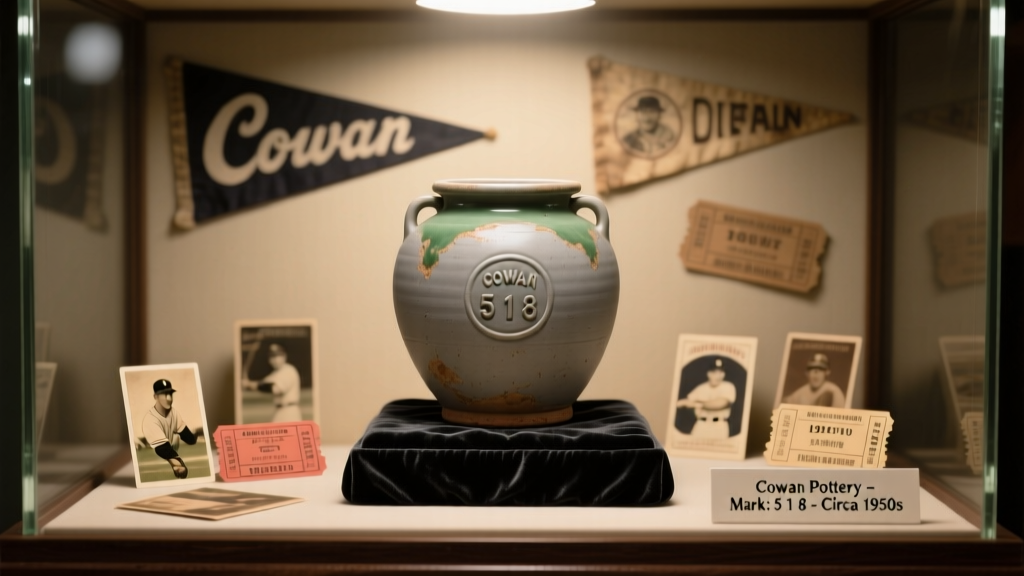
Cowan Pottery Jar: Gray Matte with Sage Green Highlights and Impressed Mark — Authentication, Provenance, and Collectibility
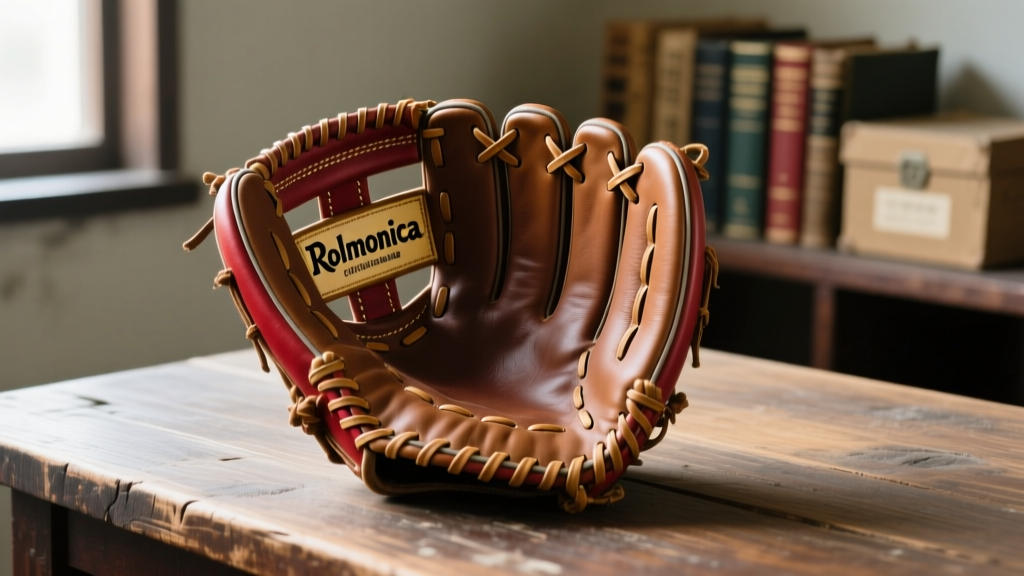
Rolmonica: The Obscure 1970s Japanese Baseball Glove Brand That Defied Convention
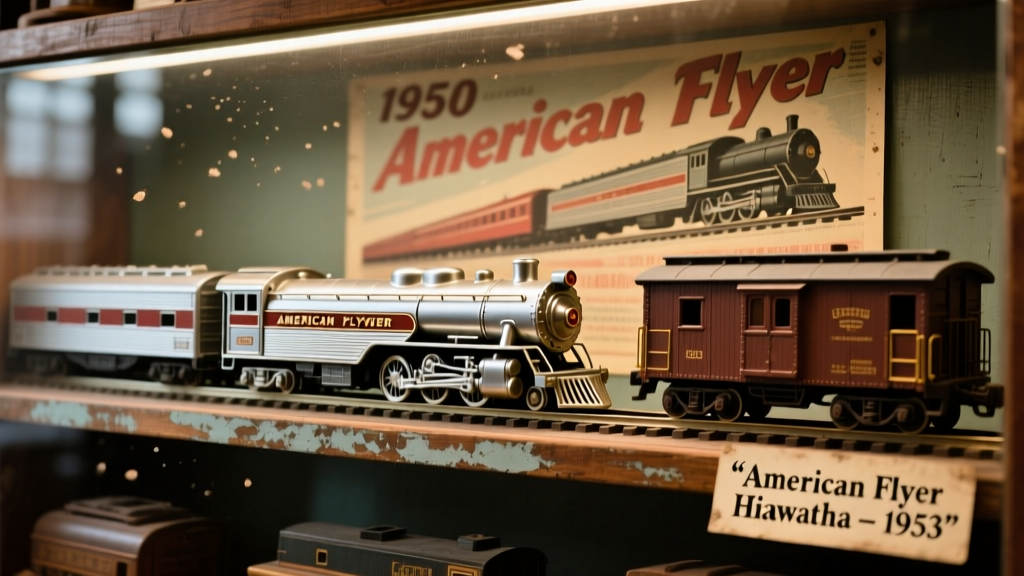
American Flyer Hiawatha Train Set: Authenticity, History, and Collectibility of the Locomotive, Tender, Gondola, Tank, and Caboose
Do You Own The Treasures You Find? Legal, Ethical, and Practical Realities for Sports Memorabilia Collectors

Imari Bowl: Fisherman in Landscape with Polychromed Celestial Dragon, Circa 1890 — Authentication, Provenance, and Market Significance

Shawnee Pottery Salt & Pepper Set: Muggsy Gold Trim, 5¼-Inch Height — Collector’s Authentication Guide
Frankart 'Nude Dancing Black' Figurine (1922): Authentication, Provenance, and Market Significance
Art Museum Endowments: Financial Foundations, Stewardship Challenges, and the Role of Philanthropy in Cultural Preservation

Sinclaire Urn Celeste Blue 8-Inch: Authentication, Provenance, and Collector Value Analysis