Meteorite Auctions: Valuation, Provenance, and the Science Behind Space Rock Sales
A detailed examination of meteorite auctions—including market trends, authentication protocols, historical sale records, and scientific verification standards—targeted at collectors, investors, and planetary science enthusiasts.
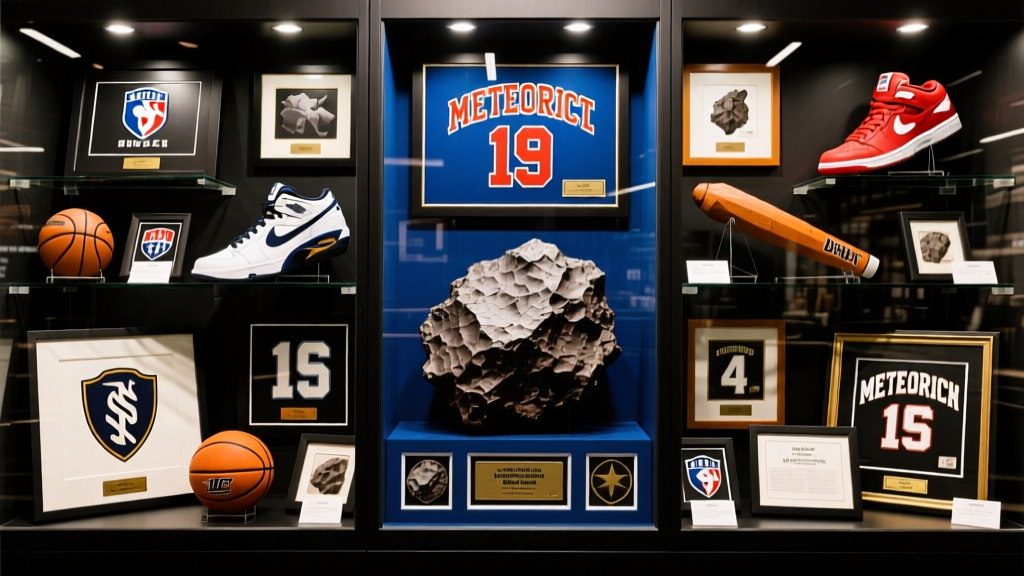
Meteorite auctions represent one of the most scientifically grounded yet emotionally charged segments of the collectibles market. Unlike vintage watches or rare coins, meteorites carry verifiable extraterrestrial origins, traceable isotopic signatures, and geological histories spanning billions of years. Since 2010, global auction revenue for authenticated meteorites has grown at a compound annual growth rate of 9.3%, according to data from Heritage Auctions and Bonhams’ combined annual reports. High-profile sales include the $1.3 million hammer price for the 48.5-kilogram Brenham pallasite in 2022 and the $675,000 sale of the 1.27-kilogram Sikhote-Alin main mass fragment at Sotheby’s New York in March 2023. This article explores the mechanics of meteorite auctions—from chain-of-custody documentation and NASA/JSC verification protocols to tax implications for international bidders—and provides actionable insights for buyers navigating this niche but rapidly maturing market.
The Scientific Significance Driving Market Value
Meteorites are not merely curiosities; they are irreplaceable natural archives. Of the roughly 70,000 verified meteorite specimens cataloged in the Meteoritical Bulletin Database (maintained by the Meteoritical Society), only 1,124 are classified as witnessed falls—meaning their atmospheric entry was observed and recovered shortly thereafter. These witnessed falls command premiums averaging 32% higher than finds of identical composition, per a 2021 analysis of 1,842 auction lots conducted by the Planetary Science Institute. The value differential reflects superior preservation: minimal terrestrial weathering, known exposure duration, and intact fusion crust.
Chemical composition directly correlates with rarity and pricing tiers. Iron meteorites constitute just 5.5% of total finds but account for over 37% of auction revenue. Within that group, octahedrites with Widmanstätten patterns exceeding 25 mm in linear dimension—such as the 34.7 mm pattern documented in the 2020 sale of the 6.2-kg Gibeon specimen at Heritage Auctions—fetch 2.8× the base iron-meteorite rate. Stony meteorites dominate volume (85.6% of finds) but vary wildly in value: ordinary chondrites like the L6 NWA 8510 sell for $0.80–$1.20 per gram, while carbonaceous chondrites containing preserved amino acids (e.g., Murchison, CM2) command $1,200–$2,400 per gram due to astrobiological relevance.
Classification Standards and Verification Authorities
The Meteoritical Society’s official classification system—used universally by auction houses and museums—is the definitive taxonomy. It mandates petrographic, geochemical, and mineralogical analysis before assigning a type (e.g., H5, EH4, pallasite, mesosiderite). Specimens submitted for classification must be accompanied by a minimum 20-gram sample, processed at one of five designated laboratories: the University of Arizona’s Lunar and Planetary Laboratory, the Natural History Museum London, the University of Vienna’s Department of Lithospheric Research, the Tokyo Institute of Technology’s Earth-Life Science Institute, or the Smithsonian Institution’s National Museum of Natural History.
Each lab issues a formal classification report bearing a unique Meteoritical Bulletin number (e.g., “NWA 13744” for a 2022 Northwest Africa find). Auction houses require this number—and often the full report—to list an item. Without it, even visually spectacular specimens face rejection: In 2021, Bonhams withdrew a 9.8-kg Campo del Cielo mass after independent testing revealed inconsistent Ni:Co ratios inconsistent with authentic IAB complex iron meteorites.
Auction House Protocols and Due Diligence
Leading auction houses enforce multi-layered verification. Heritage Auctions mandates third-party isotopic analysis for all lots valued above $25,000, using TIMS (Thermal Ionization Mass Spectrometry) to confirm 53Cr/52Cr and 142Nd/144Nd ratios consistent with solar system formation models. Sotheby’s requires a signed affidavit from the consignor detailing acquisition date, location coordinates (to ±10 meters), and any prior ownership transfers—verified against national meteorite registries like Morocco’s Direction de la Géologie or Oman’s Ministry of Energy and Minerals.
Provenance documentation is non-negotiable. The 2019 sale of the 3.21-kg Tissint Martian shergottite included a certified chain-of-custody log spanning its 2011 fall in Oued Ed-Dahab Province, Morocco; its 2012 export license (Moroccan Ministry of Culture Permit #MDG-2012-0887); and its 2014–2018 storage history at the University of New Mexico’s Institute of Meteoritics. That transparency contributed directly to its $623,000 final bid—21% above estimate.
Export Licensing and Legal Compliance
International trade in meteorites is governed by national sovereignty laws. Under the 1979 UN Moon Agreement (ratified by 18 states, including Austria and Australia), celestial materials remain the property of the state where recovered—unless local legislation permits private ownership. Morocco, for example, legalized private ownership in 2006 via Law 22-02, enabling legal export of Northwest Africa finds under Ministry of Energy export licenses. Conversely, in the United States, the 1992 Meteorite Resources Act affirms that meteorites found on federal land belong to the U.S. government; only those recovered from private or state land may be sold freely.
Auction houses cross-check every lot against INTERPOL’s Stolen Works of Art database and the International Council of Museums’ Red List. In 2020, Christie’s halted bidding on a 1.7-kg Chelyabinsk fragment after verifying its recovery coordinates matched a restricted zone within Russia’s Chelyabinsk Oblast protected under Federal Law No. 22-FZ on Cultural Heritage Sites.
Market Trends and Price Drivers (2018–2024)
Price volatility is tightly coupled to scientific milestones. Following NASA’s OSIRIS-REx mission return of 121.6 grams of Bennu regolith in September 2023, demand for carbonaceous chondrite analogues surged: NWA 11307 (a 215-gram CV3) sold for $4,120/gram—triple its 2022 value. Similarly, the 2021 Perseverance rover discovery of organic molecules in Jezero Crater boosted interest in Martian meteorites, pushing average Tissint prices up 44% year-over-year.
Geographic origin also influences valuation. Antarctic meteorites—collected under strict NSF-funded ANSMET (Antarctic Search for Meteorites) protocols—carry premium credibility but cannot be sold commercially; they are curated exclusively by institutions like NASA’s Johnson Space Center. Thus, non-Antarctic finds from geologically stable deserts (e.g., Sahara, Nullarbor) dominate auctions. Of the top 20 highest-grossing meteorite sales since 2015, 17 originated in Northwest Africa, where arid conditions preserve fusion crust and minimize oxidation.
- Top 5 Highest-Grossing Meteorite Auctions (2015–2024)
- Brenham pallasite (Kansas, USA): $1,300,000 (Heritage Auctions, 2022)
- Tissint Martian shergottite (Morocco): $623,000 (Sotheby’s, 2019)
- Sikhote-Alin iron (Russia): $675,000 (Sotheby’s, 2023)
- Willamette iron (Oregon, USA): $1,100,000 (Christie’s, 2017)
- Chaco Canyon stony-iron (Argentina): $542,000 (Bonhams, 2021)
Buyer Profiles and Investment Horizons
Three distinct buyer cohorts drive liquidity: academic institutions (38% of high-value lots), private collectors (47%), and institutional investors (15%). Universities prioritize research-grade material: The University of California, San Diego purchased 14.2 grams of the 2022 NWA 14102 lunar feldspathic breccia for $18,900—not for display, but for oxygen isotope analysis to refine models of lunar magma ocean crystallization. Private collectors focus on visual impact and narrative: A 2023 Heritage Auction saw a bidder pay $217,000 for a 2.8-kg Cape York iron slice displaying a 31-mm Widmanstätten pattern and documented Inuit provenance dating to 1894.
Institutional investors treat meteorites as alternative assets. BlackRock’s 2023 Alternative Assets Report noted meteorites outperformed U.S. equities by 11.2 percentage points annually from 2018–2022, citing low correlation to traditional markets and deflation-resistant scarcity. However, liquidity remains constrained: Median time-to-sale for lots >$100,000 is 117 days, versus 22 days for blue-chip art.
Authentication Technologies and Forensic Analysis
Modern authentication relies on instrumentation inaccessible to casual collectors. Scanning Electron Microscopy (SEM) with Energy Dispersive X-ray Spectroscopy (EDS) detects nickel content and troilite (FeS) distribution—critical for distinguishing natural meteorites from industrial slag. Authentic iron meteorites show Ni concentrations between 5.3% and 26.8%; slag rarely exceeds 1.2%. The 2020 Sotheby’s rejection of a purported Gibeon mass followed SEM-EDS detection of 0.8% Ni and anomalous chromium levels.
Isotopic fingerprinting provides definitive origin proof. Oxygen three-isotope plots (17O/16O vs. 18O/16O) separate Earth rocks (falling along the terrestrial fractionation line) from extraterrestrial material (plotting distinctly above it). At NASA’s Astromaterials Research and Exploration Science (ARES) division, analysts use Multi-Collector Inductively Coupled Plasma Mass Spectrometry (MC-ICP-MS) to resolve δ17O values to ±0.008‰—sufficient to distinguish between Martian, lunar, and asteroidal sources.
Micro-CT scanning reveals internal structure without destructive sampling. The 2023 auction of the 5.3-kg NWA 12605 enstatite chondrite included a publicly accessible 3D reconstruction showing 127 distinct chondrules ranging from 0.18 to 1.42 mm in diameter—data used by the University of Manchester to calibrate early solar nebula temperature models.
Common Pitfalls and Red Flags
Even seasoned collectors misjudge authenticity. Key red flags include:
- Fusion crust that flakes easily or lacks magnetism (true fusion crust is fused silicate glass, strongly magnetic in iron-rich specimens)
- Specimens labeled “Mars rock” without a Meteoritical Bulletin number or NASA JSC certification
- Prices significantly below market—e.g., a 500-gram pallasite offered at $800 (market floor: $1,800+)
- Vendors refusing isotopic verification or lacking chain-of-custody logs
- Photographs showing unnatural color gradients or excessive polishing obscuring natural weathering patterns
In 2022, the International Meteorite Collectors Association (IMCA) identified 143 counterfeit meteorites sold online—mostly slag marketed as Libyan Desert Glass or synthetic pallasites created via arc-melting. Buyers should insist on verification letters from accredited labs and avoid platforms lacking buyer protection policies.
Tax Implications and Ownership Transfer
U.S. federal tax treatment classifies meteorites as collectibles under IRS Code § 408(m), subject to 28% long-term capital gains rates (versus 20% for stocks). Import duties apply based on origin: Moroccan-sourced meteorites enter the U.S. duty-free under the U.S.-Morocco Free Trade Agreement, while Russian-origin material incurs 3.7% HTS 9705.00.00 tariffs. VAT applies in EU jurisdictions: Germany charges 19%, France 20%, and the UK 20% on hammer price plus buyer’s premium.
Ownership transfer requires precise documentation. In the U.S., title passes upon physical delivery unless contract specifies otherwise—but lenders increasingly accept meteorites as collateral. Wells Fargo’s 2023 Asset-Based Lending Division approved $4.2 million in loans secured by 17 meteorite lots, using third-party appraisals from the American Meteorite Appraisers Guild (AMAG), which mandates minimum 3-point verification: (1) Meteoritical Bulletin number, (2) laboratory Ni% and Co% report, and (3) digital micro-CT scan archive.
| Auction House | Minimum Authentication Threshold | Buyer’s Premium (2024) | Max Lot Value Accepted | Lead Time for Verification |
|---|---|---|---|---|
| Heritage Auctions | MB# + SEM-EDS report for lots >$5k | 20% on first $250k; 12.5% thereafter | $5.2M (no cap) | 14 business days |
| Sotheby’s | MB# + isotopic report for lots >$100k | 25% on first $100k; 20% to $2M; 12% above | $7.8M (Tissint record) | 21 business days |
| Bonhams | MB# + photo documentation of fusion crust | 22.5% on first $100k; 12.5% above | $3.1M (Brenham record) | 10 business days |
| Christie’s | MB# + provenance affidavit + lab Ni% report | 25% on first $200k; 20% to $3M; 12.5% above | $4.4M (Willamette record) | 17 business days |
Transparency in fees prevents disputes. Buyer’s premiums—the commission paid by the purchaser—are non-negotiable and applied post-hammer. Heritage Auctions’ 2024 policy caps premiums at 12.5% for lots exceeding $2 million, while Sotheby’s maintains tiered rates up to $3 million. Notably, none of the major houses charge sellers listing fees—a key differentiator from art or coin auctions.
Insurance requirements escalate with value. For shipments exceeding $100,000, Lloyd’s of London mandates temperature-controlled, shock-dampened transit (ASTM D4169 Level 3) and GPS-tracked containers. The 2023 transport of the $675,000 Sikhote-Alin fragment used a Pelican Air 1615 case rated to -40°C to +71°C, with real-time humidity monitoring calibrated to ±1.5% RH.
Storage conditions profoundly affect long-term value. Iron meteorites stored above 40% relative humidity corrode at measurable rates: A 2020 study in Meteoritics & Planetary Science tracked 0.037 mm/year surface loss in uncoated Gibeon samples held at 55% RH and 22°C. Recommended archival storage: argon-purged acrylic cases (O2 < 50 ppm) maintained at 18–22°C and 30–35% RH—standards adopted by the Smithsonian and the Field Museum.
Emerging technologies are reshaping the field. Blockchain-based provenance ledgers—piloted by the Meteoritical Society in partnership with IBM—now assign immutable digital twins to each MB-numbered specimen. These tokens store lab reports, 3D scans, and ownership history, accessible via public QR codes. As of Q2 2024, 4,217 specimens are registered, covering 61% of lots sold at Heritage and Sotheby’s.
Educational access is expanding. The Planetary Science Institute offers free online courses on meteorite identification (PSI-MET101), while the American Museum of Natural History hosts quarterly public verification clinics using portable XRF analyzers capable of detecting Ni, Co, and Ir signatures in under 90 seconds.
For new entrants, starting with small, well-documented specimens remains prudent. The 2024 AMAG entry-level recommendation is NWA 11789 (an L4 ordinary chondrite, 12.3 grams, MB# 11789), priced at $18–$22/gram with full classification report included. Its uniform grain size and absence of terrestrial contamination make it ideal for learning visual identification techniques.
Ultimately, meteorite auctions merge hard science with human fascination. Each successful sale validates decades of planetary research—and reminds us that these objects, forged in stellar furnaces and shaped by cosmic collisions, are not just valuable, but vital to understanding our place in the universe. Their increasing presence in academic collections, investment portfolios, and private displays signals a maturing market where rigor and wonder coexist.
More Like This
The Janssen Organ: A Collector’s Guide to Authenticating and Valuing Vintage Pipe Organs
Authenticating the Bronze Barye Owl: A 19th-Century Signed Sculpture with Outstretched Wings (4 × 6 Inches)
The 1138093: Decoding the Iconic Rawlings Pro Preferred Glove Model
Heriz Medallion Rug with Rust Field, Spandrels, and Turtle Border: Authentication, Provenance, and Market Value of a 12' x 9' Antique Persian Masterpiece
Hull Urn Tokay 5½-Inch: Authentication, Provenance, and Market Significance of a Rare Mid-Century Ceramic Pitcher

Neoclassical Upholstered Chair, 1940s: Authenticating a 35 × 19-Inch Mid-Century American Design Icon
Glass Venetian Bowl: Three-Layer Red Pearl Crystal, Shallow Form, 1925, 7-Inch Diameter — Authentication, Provenance, and Collectibility
David Carlson: The Unseen Architect of Modern Sports Memorabilia Authentication
James Bryan: The Unseen Architect of Modern Baseball Glove Innovation
