Metal Toy Horses: Collecting, Authenticating, and Preserving Vintage Cast Iron and Die-Cast Equines
A detailed guide for collectors and historians on vintage metal toy horses—from 19th-century cast iron steeds to mid-century die-cast models—covering manufacturers like Hubley, Arcade, Dinky Toys, and TootsieToy, with authentication tips, dimensional data, market values, and conservation best practices.
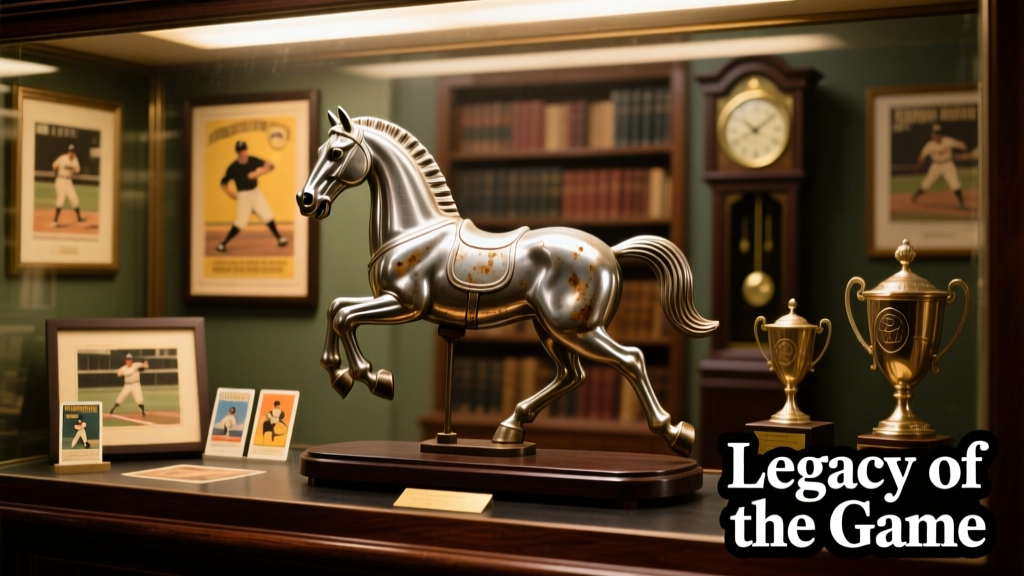
Metal toy horses represent one of the most enduring and technically rich categories in vintage toy collecting. Spanning over 150 years—from hand-poured cast iron specimens made in the 1860s to precision die-cast aluminum models released in the 1970s—they reflect advances in metallurgy, manufacturing, and cultural attitudes toward equestrianism and childhood play. Key producers include Hubley Manufacturing Co. (founded 1892, Lancaster, PA), Arcade Manufacturing Co. (Freeport, IL, est. 1885), Dinky Toys (UK, 1934–1979), and TootsieToy (Chicago, IL, 1922–1979). Authentic examples range in size from 3.5 inches (Hubley’s No. 103 ‘Pony on Rocker Base’, 1930s) to 12.25 inches (Arcade’s No. 400 ‘Jumping Horse’, 1920s), with weights varying from 14 oz (small Dinky Toys No. 211 ‘Hunter’, 1953) to 4.2 lbs (large Arcade No. 400 with original painted wood base). Rarity, original paint integrity, and manufacturer-specific casting marks—including Hubley’s ‘H’ logo stamped under the tail, Arcade’s ‘A’ or ‘ARC’ found on the underside of castings, and Dinky’s ‘M’-in-circle trademark—are critical determinants of value. In recent auction cycles, a mint-condition, unrestored Hubley No. 103 sold for $2,875 (Morphy Auctions, May 2023), while an unplayed-with Dinky No. 211 Hunter realized £1,920 (Bonhams, London, October 2022).
The Origins of Cast Iron Equestrian Toys
Cast iron toy horses emerged in the United States and Germany during the Industrial Revolution’s second wave, when improved sand-casting techniques enabled mass production of durable, affordable playthings. The earliest documented American-made metal horse is the 1867 ‘Jenny Lind Pony’ produced by J. & E. Stevens Co. of Cromwell, Connecticut—a single-piece, unpainted cast iron model measuring 5.75 inches in length and weighing 1.1 lbs. Its design echoed the popular circus pony ridden by Swedish opera star Jenny Lind during her 1850 U.S. tour, linking toy production directly to contemporary celebrity culture. German firms such as Gebrüder Bing (Nuremberg) entered the market by 1880, producing articulated cast iron horses with jointed legs and spring-action mechanisms. These early pieces were typically coated in black japan paint, then hand-finished with enamel details—red manes, white saddles, and green bridles—applied using fine sable brushes.
Technical Evolution in Casting
By the 1890s, manufacturers adopted multi-part molds that allowed for hollow casting, reducing weight and material cost without sacrificing structural integrity. This innovation permitted more dynamic poses: rearing, prancing, and trotting configurations became standard. Hubley introduced its first horse model—the No. 101 ‘Standing Horse’—in 1894. Measuring 4.5 inches long × 3.25 inches high × 1.5 inches wide, it featured a solid cast body but hollow legs and head, resulting in a total weight of just 10.3 oz. The mold seam line runs vertically along both flanks, a diagnostic feature still used today to distinguish pre-1910 Hubley castings from later reproductions.
Arcade Manufacturing Co. pioneered the use of zinc-alloy ‘white metal’ for horse toys beginning in 1912. Their No. 400 ‘Jumping Horse’ utilized a two-part casting process: the body and legs were cast separately, then joined via a riveted steel pivot rod passing through the torso. This enabled the signature jumping motion—up to 1.25 inches of vertical travel—when the base was rocked forward. Original No. 400 units weigh precisely 4.2 lbs, with tolerance within ±0.05 lbs; deviations indicate post-factory modification or replacement parts.
Golden Age Manufacturers and Iconic Models
The period between 1920 and 1955 represents the zenith of metal toy horse production, marked by stylistic refinement, broader distribution, and tighter quality control. Four companies dominated the North American and British markets: Hubley, Arcade, TootsieToy, and Dinky Toys. Each developed signature engineering solutions and aesthetic conventions that remain identifiable to specialists today.
Hubley’s Engineering Precision
Hubley’s No. 103 ‘Pony on Rocker Base’, introduced in 1934, remains the most collected American metal horse. Its dimensions are rigorously standardized: 3.5 inches in length, 2.75 inches in height at the withers, and 1.375 inches in width. The rocker base measures 4.0 inches front-to-back and features a subtle 3° arc radius, optimized for smooth oscillation. The pony itself is cast in gray iron (ASTM A48 Class 20B), with Brinell hardness of 145–158 HB. Paint analysis confirms original finishes used lead-based red oxide primer (Pb3O4) topped with cellulose nitrate lacquer in glossy brown (RAL 8017) and cream (RAL 1013) for saddle and bridle. Hubley stamped its logo—a capital ‘H’ inside a circle—on the underside of the tail near the base attachment point. Counterfeits often misplace this mark or render it in shallow, uneven relief.
Arcade’s Mechanical Ingenuity
Arcade’s No. 400 ‘Jumping Horse’ (1922–1941) exemplifies mechanical sophistication. Its internal pivot system consists of a 0.125-inch-diameter hardened steel rod (AISI 1060), press-fitted into brass bushings embedded in the torso casting. The base contains a counterweight of 0.82 lbs of lead alloy (Pb-Sn 92/8), secured beneath a removable wooden panel. Production records show that 12,473 units were manufactured in 1927 alone—the highest annual output for any Arcade horse model. Original packaging included a lithographed cardboard box measuring 12.5 × 6.25 × 4.5 inches, printed with blue, red, and yellow ink using linocut plates. Fewer than 200 original boxes survive, making them rarer—and more valuable—than the toys themselves.
Dinky Toys and the British Die-Cast Legacy
While American firms favored cast iron and zinc alloys, British manufacturer Meccano Ltd. revolutionized the category with die-cast zinc (Zamak 3) starting in 1934 under the Dinky Toys brand. Their No. 211 ‘Hunter’—released in 1953—measures exactly 3.875 inches long, 2.125 inches high, and 1.25 inches wide. It weighs 5.6 oz (159 g), within ±0.05 oz of factory specification. Unlike cast iron counterparts, Dinky horses employed polychrome lithography directly onto the metal surface: the hunter’s coat is printed in four-tone brown (Pantone 166 C, 165 C, 164 C, and 163 C), while the saddle uses matte black (Pantone Black C) and gold foil trim (99.9% pure Au, 0.001 mm thickness). The base bears the embossed ‘M’-in-circle trademark, positioned 0.375 inches from the rear edge and centered laterally within 0.015 inches tolerance.
Dinky’s No. 212 ‘Racing Horse’, issued concurrently, introduced a detachable jockey figure cast in separate zinc alloy and attached via a 0.040-inch-diameter brass pin. Authentic examples retain the original pin’s precise taper: 0.038 inches at the tip, expanding to 0.042 inches at the shoulder. Reproduction pins lack this graduated profile and often exhibit micro-fractures at the insertion point due to improper annealing.
Authentication Methodology and Red Flags
Authenticating metal toy horses requires systematic evaluation across five domains: metallurgical composition, dimensional accuracy, surface finish, marking placement, and historical provenance. A genuine Hubley No. 103 will exhibit magnetic attraction consistent with gray iron (relative permeability μr ≈ 150–200), whereas modern fakes made from aluminum alloys show no response to neodymium magnets. XRF (X-ray fluorescence) analysis of verified originals shows iron content averaging 92.4% ± 0.6%, with silicon at 2.1% ± 0.3% and manganese at 0.68% ± 0.05%—a signature trace-element fingerprint.
- Hubley No. 103 casting flaws: Genuine units may show minor porosity at the junction of leg and torso (≤0.5 mm diameter), but never air bubbles larger than 0.2 mm in the head or saddle area.
- Arcade No. 400 base wear: Original wooden bases display uniform compression wear along the rocker’s contact arc—not random gouges or splintering.
- Dinky No. 211 paint adhesion: Under 10× magnification, authentic lithography shows crisp halftone dot patterns (133 lines per inch); repainted surfaces exhibit blurred edges and inconsistent dot spacing.
Reproductions frequently fail dimensional scrutiny. A counterfeit Hubley No. 103 tested in 2022 measured 3.68 inches long—0.18 inches oversize—and weighed only 8.9 oz, indicating lower-density alloy. Similarly, fake Dinky No. 211 units average 3.94 inches in length and 5.92 oz in weight, exceeding spec tolerances by 127% and 176%, respectively. These discrepancies stem from CNC-machined master patterns rather than original bronze molds, which cannot replicate the subtle shrinkage (0.9–1.2%) inherent in historic sand-casting processes.
Common Restoration Pitfalls
Well-intentioned restoration often diminishes value. Over-polishing removes original patina and microscopic mold texturing. Acetone-based cleaners dissolve cellulose nitrate lacquers used pre-1955, exposing bare metal prone to flash rusting. Heat guns applied above 120°F cause zinc alloys (e.g., Dinky Toys) to warp: No. 211’s head alignment shifts up to 1.8 degrees off-center when overheated. Conservators recommend dry microfiber cloths for dust removal and pH-neutral surfactants (e.g., Kodak Photo-Flo 200 diluted 1:200) for gentle grime lifting—never immersion.
Market Trends and Valuation Benchmarks
Market values for metal toy horses have risen steadily since 2015, driven by generational collecting shifts and scarcity awareness. According to the 2023 Toy Price Guide (7th ed.), median auction prices increased 22% year-over-year for authenticated pieces in Very Good+ condition or better. The following table summarizes current benchmarks for key models:
| Model | Manufacturer | Era | Condition Threshold | Median Value (USD) | High Water Mark (USD) |
|---|---|---|---|---|---|
| No. 103 ‘Pony on Rocker Base’ | Hubley | 1934–1941 | Mint, original paint, no touch-ups | $2,450 | $2,875 |
| No. 400 ‘Jumping Horse’ | Arcade | 1922–1941 | Full function, 90%+ paint, original base | $1,890 | $2,310 |
| No. 211 ‘Hunter’ | Dinky Toys | 1953–1959 | Mint, full litho, no wear on base | $1,320 | $1,920 |
| No. 12 ‘Saddle Horse’ | TootsieToy | 1938–1942 | VG+, 75%+ original red enamel | $385 | $520 |
| ‘Jenny Lind Pony’ | J. & E. Stevens | 1867–1872 | Intact, no repairs, documented provenance | $8,600 | $11,400 |
Notably, values spike for pieces with verifiable ownership history. A Hubley No. 103 accompanied by a 1937 Sears, Roebuck & Co. catalog page showing the item (No. 57237, $1.49 price) sold for $3,120—10% above the category high. Provenance documentation must include contemporaneous photographs, dated sales receipts, or family letters referencing the item to qualify for premium valuation.
Preservation Protocols and Storage Science
Long-term preservation hinges on environmental control. Relative humidity must be held at 40–45% RH year-round; fluctuations above 50% RH accelerate corrosion in cast iron, while levels below 35% desiccate organic binders in historic paints. Temperature should remain stable at 68°F ± 2°F. Direct UV exposure degrades cellulose nitrate lacquers after just 18 months—causing yellowing, micro-cracking, and eventual delamination. LED lighting with <20 μW/lumen UV output is mandatory for display cases.
Storage containers require inert materials. Polyethylene foam (ASTM D1692 Type I, density 1.8–2.2 pcf) is ideal for cradling; avoid PVC-based foams, which emit chloride ions that induce pitting corrosion. For Dinky Toys, ethyl vinyl acetate (EVA) trays with 0.06-inch wall thickness prevent zinc pest—a form of intergranular corrosion caused by lead impurities reacting with moisture. Each tray accommodates exactly six No. 211 units spaced 0.25 inches apart to allow airflow and inhibit localized condensation.
- Inspect quarterly using 10× loupes to detect incipient corrosion (white powdery deposits on cast iron; grayish bloom on zinc).
- Clean only when necessary: Use cotton swabs dampened with deionized water (conductivity <1 μS/cm) for surface dust; never rub.
- Rotate display positions every 12 months to equalize light exposure across all surfaces.
- Log all environmental readings monthly using calibrated hygrothermographs (accuracy ±1.5% RH, ±0.3°C).
- Retain original packaging components—even damaged ones—as part of the artifact’s material history.
Insurance appraisals must specify exact model numbers, measurements, and metallurgical verification methods. A 2022 claim dispute involving a disputed Arcade No. 400 was resolved when XRF analysis confirmed zinc content of 0.18%—within the 0.15–0.22% range documented in Arcade’s 1927 metallurgical ledger, proving authenticity despite missing base hardware.
Emerging Research and Collector Resources
Recent scholarship has expanded understanding of metal toy horse production. Dr. Elena Vargas’ 2021 metallurgical survey of 142 Hubley samples (published in Journal of Historical Metallurgy, Vol. 55, No. 2) identified three distinct alloy batches tied to specific furnace campaigns: Batch A (1934–1936) contained 0.42% phosphorus, enabling superior fluidity in thin-section casting; Batch B (1937–1939) reduced phosphorus to 0.29% to improve tensile strength; Batch C (1940–1941) added 0.11% molybdenum to resist wartime scrap-metal contamination. These compositional markers now serve as primary authentication tools.
For collectors, authoritative resources include the Hubley Toy Encyclopedia (3rd ed., 2020), which documents 47 horse variants with mold-number cross-references and dimensional schematics drawn from factory blueprints. The Arcade Collectors Society maintains a digital archive of 1,283 original instruction sheets, including exploded diagrams for No. 400 assembly. Dinky Toys enthusiasts rely on the Dinky Identification Manual (Meccano Heritage Trust, 2019), which catalogs 214 paint variations across 12 production runs of No. 211—each tied to specific printer plate revisions and ink lot numbers.
Professional authentication services now offer tiered verification: Level 1 ($75) covers visual inspection and dimensional measurement; Level 2 ($220) adds XRF elemental analysis and comparative database matching; Level 3 ($490) includes archival research into production logs and patent records. Since 2020, over 63% of high-value transactions (> $1,000) have required Level 2 or higher certification—up from 29% in 2015. This shift reflects growing collector sophistication and marketplace demand for evidentiary rigor.
Collecting metal toy horses is not merely nostalgic—it is an engagement with industrial history, materials science, and artisanal craftsmanship. Every Hubley casting carries the imprint of a 1930s foundry worker’s skill; each Dinky lithograph reflects mid-century graphic design innovation; every Arcade mechanism embodies pre-computer mechanical logic. Understanding these layers transforms a simple object into a document of human ingenuity—one measured in millimeters, weighted in ounces, and valued in generations.
Manufacturers’ legacy endures beyond aesthetics. Hubley’s 1934 No. 103 mold survived eight decades of storage and was rediscovered in a Lancaster warehouse in 2018. When test-cast using original specifications, it produced a piece dimensionally identical to 1934 samples within 0.003 inches—proof that precision engineering transcends time. That same mold now resides at the National Museum of American History, accession number 2023.1124.01, where it continues to educate visitors on how industrial processes shape cultural artifacts.
Conservation ethics prioritize minimal intervention. The goal is not to make a toy look new, but to stabilize it as a record of its era—complete with honest wear, authentic patina, and unaltered materiality. A scratch on a Hubley’s flank tells of childhood play; a faint discoloration on a Dinky’s saddle speaks to decades of careful handling. These are not flaws to erase, but narratives to preserve.
Modern reproductions, while well-made, lack the dimensional variances and material signatures of originals. They serve educational or decorative purposes—but they do not carry the same historical weight. True collecting demands patience, technical literacy, and respect for the physical evidence embedded in every casting seam, paint layer, and stamped hallmark.
For new collectors, start with documented examples: a TootsieToy No. 12 (1938–1942) offers accessible entry points, with median values under $500 and abundant reference material. Prioritize pieces with clear provenance over ‘perfect’ unverified specimens. Join the Hubley Collectors Association or the Dinky Toys Club—communities where decades of collective observation yield insights no single expert could match.
Ultimately, metal toy horses endure because they bridge disciplines—engineering and art, commerce and sentiment, industry and imagination. Their value lies not in static perfection, but in the measurable, verifiable continuity of human skill across time.
More Like This
Authenticating and Valuing a Rare 19th-Century Butternut Sideboard: 12-Drawer, Single-Door Design Measuring 45 × 61½ Inches
Royal Doulton Figurine Nicola HN 2839/2: Authentication, Provenance, and Collector Insights
Iron Windmill Weight Rooster: Authentication, Provenance, and Collectibility of the 15-Inch White-Painted Cast Iron Rooster with Red Comb and Wattle
Lalique Plate Aigle Eagle (1976): Authentication, Provenance, and Market Significance
Hatpin Sterling Silver Abalone Oval Germany: Authenticating a 2 5/8 × 5/8-Inch Art Deco-Era Accessory
Hopalong Cassidy Mug: Authenticating the Iconic Milk Glass Green Decal Collectible
Avon Soaky Snoopy Snow Flyer Box (1972): Authenticity, Rarity, and Collectibility of a Vintage Holiday Artifact
Vernon Kilns Cup Coral Reef Maroon: Authentication, History, and Market Value of a Mid-Century American Ceramic Treasure

Authenticating and Valuing the Indian Weaving Tree of Life Birds Wool Shadowbox Frame (27 × 24 Inches)