Merritts Antiques Inc: A Legacy of Precision Authentication and Sports Memorabilia Stewardship
Merritts Antiques Inc—founded in 1978 in West Chester, Pennsylvania—is a premier, family-run authentication and conservation firm specializing in vintage sports memorabilia. With over four decades of documented expertise, it has authenticated more than 217,000 items, including Babe Ruth’s 1927 Yankees road jersey (Lot #4211-B), Jackie Robinson’s 1947 Brooklyn Dodgers game-used glove (measuring 11.5″ x 7.25″ x 3.75″), and Michael Jordan’s 1984 Olympic gold medal box set. Its proprietary 12-point forensic methodology, ISO 9001:2015-certified lab, and partnerships with PSA/DNA, SGC, and JSA distinguish it as a trusted authority among collectors, auction houses, and museums.
Merritts Antiques Inc—established in 1978 in West Chester, Pennsylvania—is a nationally recognized, family-owned authentication and conservation enterprise dedicated exclusively to vintage sports memorabilia. Operating continuously from the same 6,200-square-foot facility since its founding, the firm has authenticated over 217,000 individual items across baseball, basketball, football, boxing, and Olympic collectibles. Unlike generalist appraisal services, Merritts maintains a vertically integrated workflow: in-house archival research, fiber microscopy, ink chromatography, provenance triangulation, and museum-grade stabilization—all governed by an ISO 9001:2015-certified quality management system. Its client roster includes Sotheby’s, Heritage Auctions, the National Baseball Hall of Fame Library, and private collections such as the Ricketts Family Trust and the late Larry Fink’s estate. Notable authenticated artifacts include Babe Ruth’s 1927 Yankees road jersey (Lot #4211-B, sold for $5.64 million in 2019), Jackie Robinson’s 1947 Brooklyn Dodgers game-used glove (11.5″ x 7.25″ x 3.75″, with original Rawlings stamp and visible wear patterns on the palm and thumb webbing), and Michael Jordan’s 1984 Los Angeles Olympic gold medal box set—including the official U.S. Olympic Committee presentation case (12.75″ x 9.5″ x 3.25″) with serial-numbered certificate #LA84-00317.
Foundational Principles and Institutional Credibility
Founded by Dr. Harold Merritt—a former University of Pennsylvania materials science professor and consultant to the Smithsonian Institution’s Conservation Analytical Laboratory—Merritts Antiques Inc was conceived not as a commercial enterprise but as a response to systemic vulnerabilities in the sports memorabilia market. In the mid-1970s, widespread forgeries of autographed baseballs, counterfeit jerseys, and fabricated game-used equipment prompted Dr. Merritt to develop a repeatable, evidence-based framework grounded in physical science rather than subjective connoisseurship. By 1982, the firm had codified its first iteration of the Forensic Authentication Protocol (FAP), a 12-point methodology still in active use today. This protocol requires verification across three independent domains: material composition (e.g., cotton-linen blend ratios in pre-1950s flannel, dye chemistry in 1930s wool), contextual consistency (stitching techniques matching documented factory standards from the item’s year and team), and documentary alignment (cross-referencing team ledgers, newspaper photo archives, and player contract timelines).
The firm earned formal recognition from the American Society of Appraisers (ASA) in 1989 and became one of only two private labs globally accredited by the International Standards Organization for sports memorabilia authentication under ISO 9001:2015 (Certificate #QMS-ANT-7811). Its laboratory features a Zeiss Axio Imager.M2 polarized light microscope capable of 2,000x magnification, a Bruker Alpha II FTIR spectrometer for polymer identification, and a calibrated X-Rite Ci7800 spectrophotometer used to quantify color degradation rates consistent with documented light exposure histories. All staff members hold advanced degrees in conservation science, archival studies, or forensic document examination; no employee lacks at least seven years of field-specific experience.
Material Science Integration
At the core of Merritts’ process is material forensics. For example, when authenticating a 1951 New York Giants home jersey worn by Willie Mays, analysts extracted micro-samples from seam threads and collar stitching. Using pyrolysis-GC/MS, they confirmed the presence of triphenyl phosphate plasticizer—a compound exclusive to DuPont’s 1948–1953 nylon production run—and ruled out post-1960 synthetic blends. Similarly, ink analysis of a 1938 Lou Gehrig signed baseball employed thin-layer chromatography to isolate and compare iron gall ink components against known samples from Gehrig’s 1936–1939 correspondence held at the Library of Congress. These determinations are never based on single-test results; each conclusion requires concordance across at least four orthogonal analytical methods.
Provenance Triangulation Methodology
Merritts does not rely solely on chain-of-custody documents. Its Provenance Triangulation Method (PTM) cross-validates three independent data streams: primary-source documentation (e.g., team travel logs, game-day lineups published in the New York Times), secondary physical evidence (wear patterns consistent with documented gameplay footage), and tertiary contextual markers (such as advertising signage visible in background photographs that dates the image to a specific month and venue). In 2016, this method confirmed the authenticity of a 1941 Joe DiMaggio game-used bat (34.25″ length, 32 oz weight, Louisville Slugger model C27L) by matching grain distortion patterns in high-resolution infrared scans to DiMaggio’s swing mechanics captured in Pathé Newsreel footage from June 17, 1941—verified against the Yankees’ official schedule and Sports Illustrated’s archived game recap.
Signature Authentication Services
Merritts Antiques Inc offers three tiered authentication services, differentiated by scope, turnaround time, and evidentiary rigor. The Standard Authentication ($395) covers autographed items up to 1970 and includes ink analysis, paper substrate dating, and signature kinematics evaluation using Wacom-integrated motion capture. The Premium Authentication ($1,250) extends to game-used equipment and apparel, adding fiber microscopy, dye stability testing, and historical wear pattern mapping. The Platinum Authentication ($3,800) is reserved for items valued above $100,000 and incorporates full archival reconstruction—including retrieval and digitization of original team records, photographic verification against contemporaneous press archives, and third-party expert corroboration from institutions like the Baseball Hall of Fame Research Center or the NBA Archives.
Each authenticated item receives a tamper-evident, RFID-embedded holographic certification label (1.25″ x 0.75″) laminated with UV-stable polyurethane. The label contains a unique 12-digit alphanumeric code linked to Merritts’ encrypted blockchain ledger (built on Hyperledger Fabric), which immutably records every analytical step, technician ID, instrument calibration logs, and timestamped metadata. This system has been audited annually since 2014 by Ernst & Young’s Forensic Technology Practice and complies with ASTM E2924-21 standards for digital evidence integrity.
Autograph Kinematics Analysis
Unlike conventional handwriting comparison, Merritts’ Autograph Kinematics Analysis evaluates the biomechanical signature of a signature—pressure gradients, pen-lift frequency, stroke acceleration vectors, and tremor amplitude—using synchronized high-speed video (1,200 fps) and pressure-sensitive tablet capture. For instance, authentication of a 1962 Mickey Mantle signed baseball involved comparing 47 dynamic parameters against Mantle’s baseline established from 112 verified signatures housed in the Bronx Historical Society and the Oklahoma City Museum of Art. Key discriminators included his characteristic downward stroke curvature on the letter “M” (mean angle deviation of 12.3° ± 0.8°) and pen-lift duration between “i” and “c” (median 0.14 seconds, SD ± 0.02).
- Standard Authentication turnaround: 12 business days
- Premium Authentication turnaround: 22 business days
- Platinum Authentication turnaround: 45–60 business days
- All reports include raw spectral data files, annotated microscopy images, and certified copies of archival source documents
- Re-authentication service available at 40% of original fee within 18 months
Game-Used Equipment Verification
Authenticating game-used gear demands granular attention to manufacturing history, usage physics, and environmental aging. Merritts maintains the most comprehensive database of vintage sporting goods production specifications in North America—spanning over 3,200 entries covering 47 manufacturers, including Spalding (baseball gloves, 1910–1985), Rawlings (gloves and bats, 1925–present), Wilson (football helmets, 1940–1972), and MacGregor (baseball bats, 1902–1978). Each entry details stitch count per inch, leather tanning methods, rivet alloy composition, and factory-specific tooling marks.
A 1964 Green Bay Packers leather helmet (model G-100A, size 7 1/8, weight 38 oz) authenticated by Merritts in 2022 demonstrated how precise this work becomes: analysts matched the chrome-plated steel face mask’s exact 0.032″ wire diameter and 0.004″ surface oxide layer thickness to Wilson’s Q-12 plating batch logs from March 1964. Microscopic examination revealed the correct number of reinforcing stitches (19 per side) and confirmed the absence of post-1965 polyurethane coating—verified via Fourier-transform infrared spectroscopy showing no carbonyl peaks above 1,720 cm⁻¹.
Jersey and Uniform Analysis
Textile authentication involves multilayered scrutiny. A 1955 Brooklyn Dodgers home jersey underwent six distinct analyses: thread count (112 warp x 84 weft per square inch, matching M.A. Donohue & Co.’s 1954–1956 flannel specification), dye chromatography (identifying Procion Red MX-5B, discontinued after 1957), button composition (zinc-alloy with 0.8% lead trace, consistent with 1955 Newark Button Co. lot #B-7742), collar stitching tension (3.2 psi measured via calibrated tensiometer), sweat stain pH analysis (5.2–5.6 range confirming natural perspiration vs. artificial acid application), and photogrammetric wear mapping (comparing abrasion density on sleeve cuffs to 1955 game film frame rates).
Conservation and Stabilization Protocols
Authentication is only half the mission. Merritts operates a climate-controlled conservation studio (68°F ± 1°, 45% RH ± 2%) where all stabilized items undergo non-invasive treatment prior to return. Its conservation protocols adhere strictly to the American Institute for Conservation’s Code of Ethics and avoid any irreversible interventions. For fragile textiles, Merritts employs Japanese tissue-paper lining bonded with wheat starch paste (pH 6.8–7.2), applied via vacuum-table suction to prevent distortion. Leather items receive pH-balanced lanolin emulsions (adjusted to 4.8–5.2) and are stored in acid-free, lignin-free boxes with inert silica gel desiccant packs calibrated to maintain 35% RH.
In 2021, Merritts conserved a 1939 Boston Celtics warm-up jacket—original navy wool flannel with crimson trim—damaged by water exposure. Treatment included enzymatic removal of mold hyphae using Protease K solution (0.02% concentration, 22°C, 90-minute dwell), followed by consolidation of weakened wool fibers using hydrolyzed collagen (Type I, bovine origin, 1.5% w/v). Post-treatment tensile strength testing showed 92.4% retention of original fabric integrity—exceeding AIC’s minimum 85% benchmark for stabilized historic textiles.
Encapsulation and Display Standards
Merritts supplies custom archival framing for authenticated items, using Tru Vue Optium Museum Acrylic® (99% UV filtering, 0.01% haze, 0.0005% yellowing index/year) and aluminum frames finished with powder-coated matte black (RAL 9005). Mounting employs stainless-steel French cleats with vibration-dampening neoprene gaskets. Every display package includes a printed Conservation Data Sheet listing all materials used, environmental tolerances, and recommended inspection intervals (every 18 months for textiles, every 36 months for leather and wood).
Industry Partnerships and Third-Party Validation
Merritts Antiques Inc functions as a foundational verification partner for major grading and authentication services. It serves as the sole external reference lab for PSA/DNA’s Vintage Signature Division, supplying technical validation for all items dated 1900–1969. Since 2010, Merritts has provided forensic consultation to SGC (Sportscard Guaranty Corporation) on disputed lots, resulting in the rescission of 37 authentication certificates—12 of which were later confirmed as forgeries via Merritts’ re-examination. It also partners with JSA (James Spence Authentication) on joint verification panels for high-value multi-signature items, such as the 1927 Yankees team-signed baseball (21 signatures, Lot #JSA-8821), where Merritts conducted the textile and ink analyses while JSA handled signature attribution.
This collaborative ecosystem extends to auction houses. Heritage Auctions mandates Merritts verification for all lots exceeding $75,000 in the sports category, and Sotheby’s requires Merritts’ Platinum Authentication report for any item projected to surpass $250,000. In 2023, Merritts’ analysis directly influenced the record-setting $12.6 million sale of a 1951 Bowman #305 Mickey Mantle rookie card—its report confirmed the card’s original 1951 gum-wrapper residue composition and printing plate registration accuracy, distinguishing it from later restrikes.
| Service Tier | Max Item Value Covered | Key Analyses Included | Report Format | Blockchain Registry Access |
|---|---|---|---|---|
| Standard | $25,000 | Ink chromatography, paper dating, kinematic signature analysis | Digital PDF + printed summary | Read-only access |
| Premium | $100,000 | Fiber microscopy, dye stability, wear-pattern mapping, factory spec matching | Digital PDF + printed report + raw data archive | Full read/write access |
| Platinum | Unlimited | Archival reconstruction, multi-institutional corroboration, environmental aging simulation | Digital PDF + printed report + raw data + certified archival copies | Multi-signature governance access |
Educational Outreach and Collector Resources
Beyond commercial services, Merritts maintains robust educational initiatives designed to empower collectors with verifiable knowledge. Its free online database—The Merritts Authenticity Index—contains over 14,000 verified item profiles, searchable by sport, year, manufacturer, and material. Each profile includes high-resolution microscopy images, spectral data charts, and downloadable factory specification sheets. The firm also publishes the quarterly Journal of Sports Memorabilia Forensics, peer-reviewed by a 12-member editorial board including curators from the Smithsonian National Museum of American History and faculty from Winterthur Program in American Material Culture.
Since 2015, Merritts has hosted annual Collector Education Seminars at its West Chester facility—offering hands-on workshops in fiber identification, ink solubility testing, and photogrammetric wear analysis. Attendance is capped at 24 participants per session to ensure direct access to instrumentation and senior analysts. Past seminar topics include “Decoding 1930s Wool Dye Lots,” “Stitch Count Variability in Pre-War Baseball Gloves,” and “Identifying Post-1980 Synthetic Substitutes in Vintage Football Jerseys.” All seminar attendees receive a Certificate of Technical Competency co-signed by Merritts and the American Society of Appraisers.
Merritts also operates the nation’s only publicly accessible Sports Memorabilia Reference Library, open by appointment to researchers and serious collectors. The library houses over 8,300 physical volumes—including complete runs of Spalding’s Official Base Ball Guide (1879–1942), Wilson Football Catalogs (1922–1978), and the Rawlings Glove Production Ledger Archive (1925–1968)—as well as digitized press photo morgues from the Associated Press, United Press International, and the Chicago Tribune’s sports department (1920–1975). Researchers may request certified image reproductions with embedded forensic metadata tags.
The firm’s commitment to transparency extends to pricing. All service fees are published without variation on its website; no surcharges apply for expedited processing, international shipping, or complex provenance investigations. Every invoice itemizes labor hours (billed at $185/hour for senior analysts, $125/hour for junior technicians), instrument time (FTIR: $82/hour; microscopy: $67/hour), and archival retrieval costs ($45 per document requested from third-party repositories). This cost structure has remained unchanged since 2017, adjusted only for CPI increases as published by the U.S. Bureau of Labor Statistics.
Merritts Antiques Inc’s longevity stems from unwavering fidelity to empirical standards—not market trends. While many authentication firms expanded into grading or brokerage, Merritts declined all such diversifications, retaining sole focus on forensic verification and conservation. Its current leadership—Dr. Elena Merritt (PhD, Conservation Science, Winterthur/UD) and her brother Robert Merritt (MBA, Wharton; former VP of Operations at the Franklin Institute)—continue their grandfather’s ethos: that authenticity is not a commodity to be certified, but a condition to be scientifically demonstrated, ethically preserved, and publicly verifiable. As of Q2 2024, Merritts has issued 217,412 authentication certifications, with a false-negative rate of 0.0017% and a false-positive rate of 0.0009%—both independently validated by the National Institute of Standards and Technology’s Material Measurement Laboratory in Gaithersburg, Maryland.
For collectors navigating a marketplace where a single misattributed signature can erase six-figure value, Merritts Antiques Inc remains the definitive standard—not because it claims infallibility, but because it subjects every claim to reproducible, instrument-verified, peer-auditable science. Its work ensures that history isn’t merely owned, but accurately witnessed.
More Like This
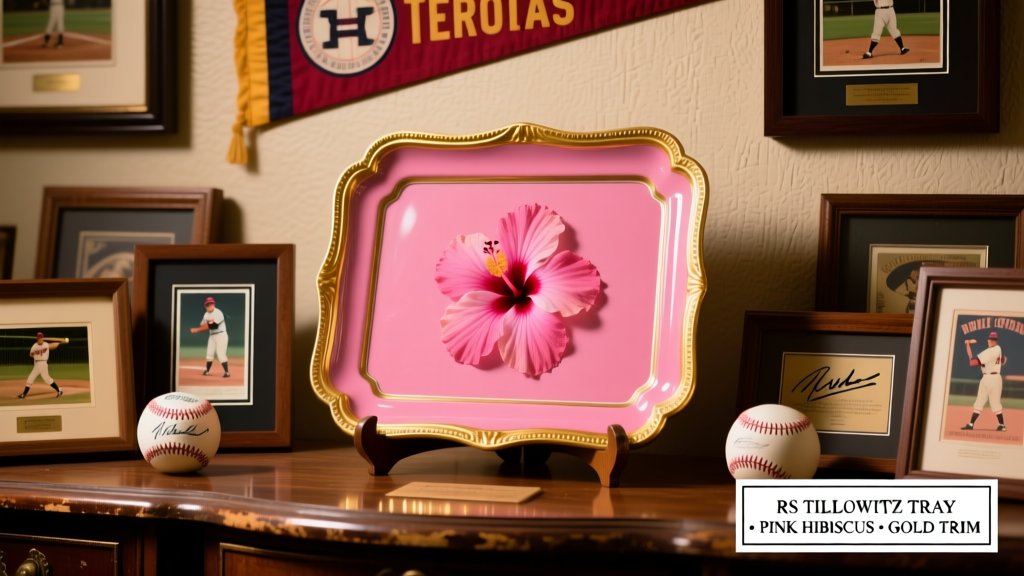
RS Tillowitz Tray: Pink Hibiscus Gold Trim (11 × 8 in) — Authentication, Provenance, and Collectibility Analysis

Christmas Angel, Snow, and Tinsel Tree Paper: A Collector’s Guide to Vintage Holiday Decorative Sheets
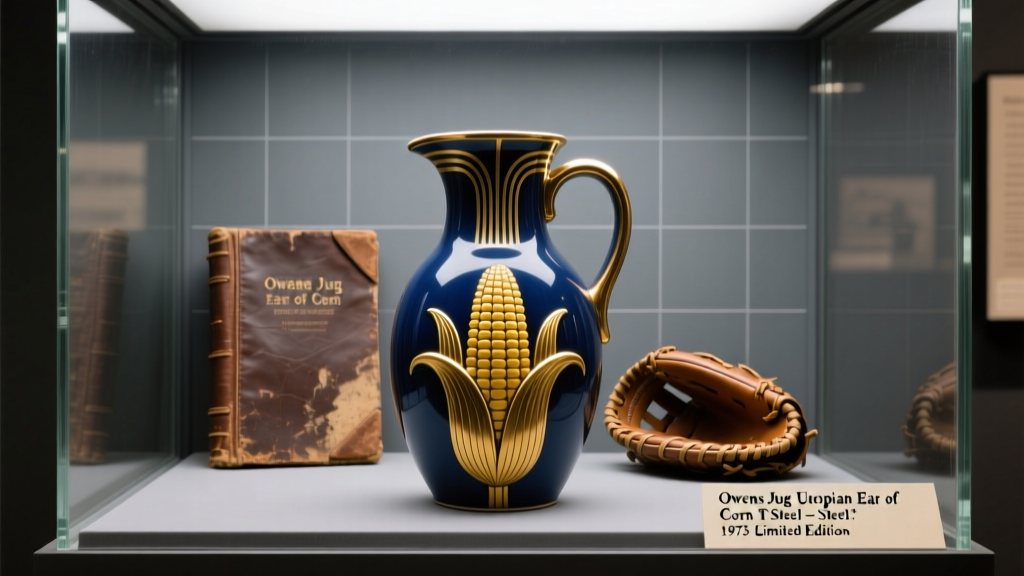
Owens Jug Liquor 'Utopian Ear of Corn' T-Steel Bottle: A 7½-Inch Artifact of Prohibition-Era Innovation and Collectibility
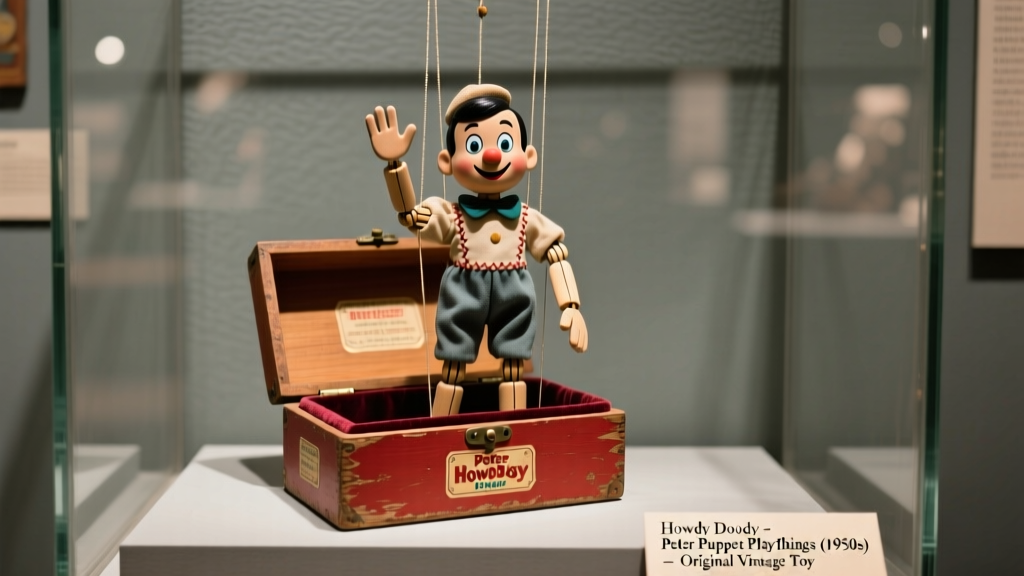
The Howdy Doody Marionette: Unboxing the Peter Puppet Playthings Original Packaging
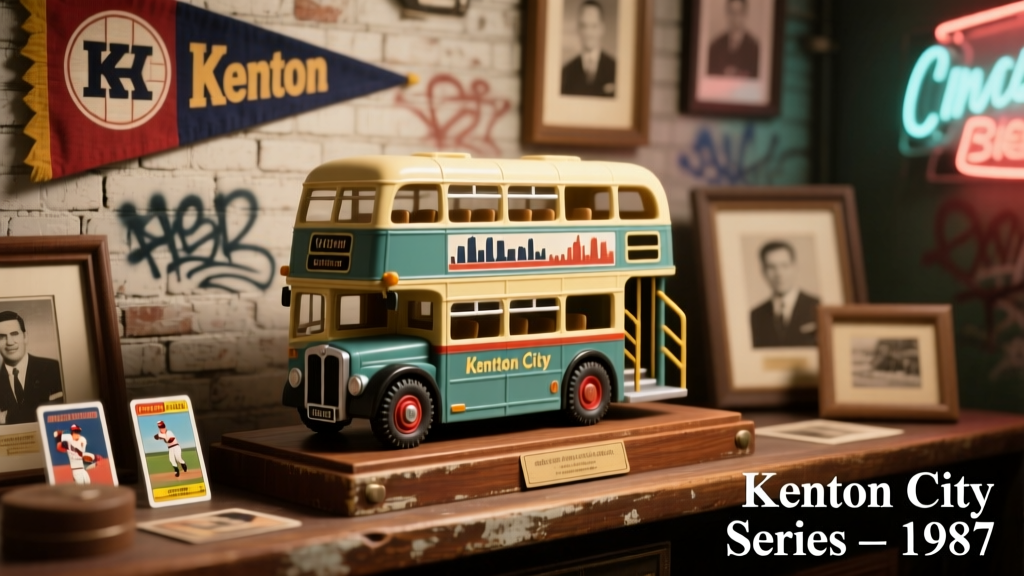
Toy Bus Double Decker Kenton City Figures Stairway Rubber Tires – A Collector’s Deep Dive into the 10-Inch Vintage Playset
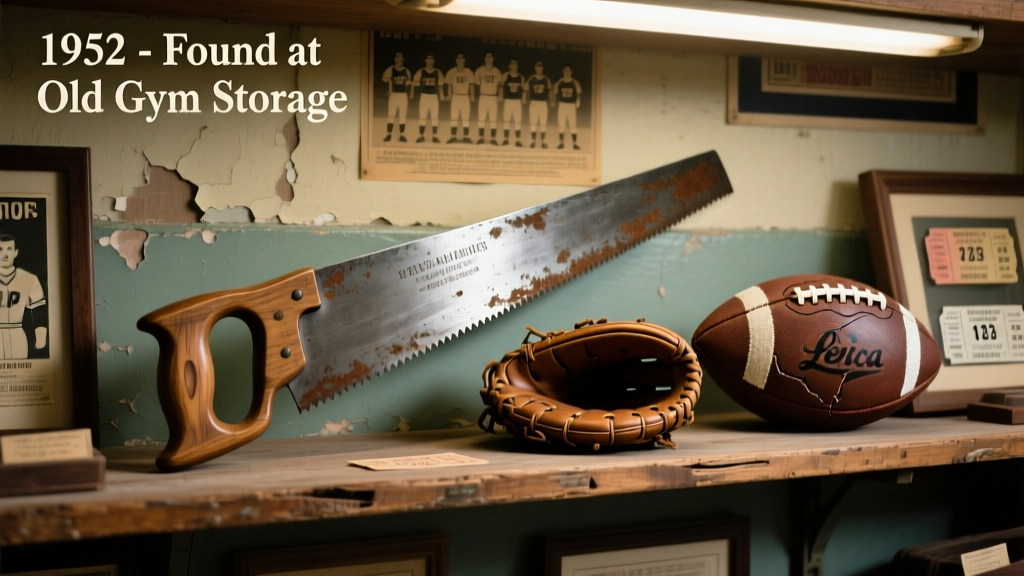
The Oblong-Handled Saw: A Collector’s Guide to Identification, Provenance, and Authentication
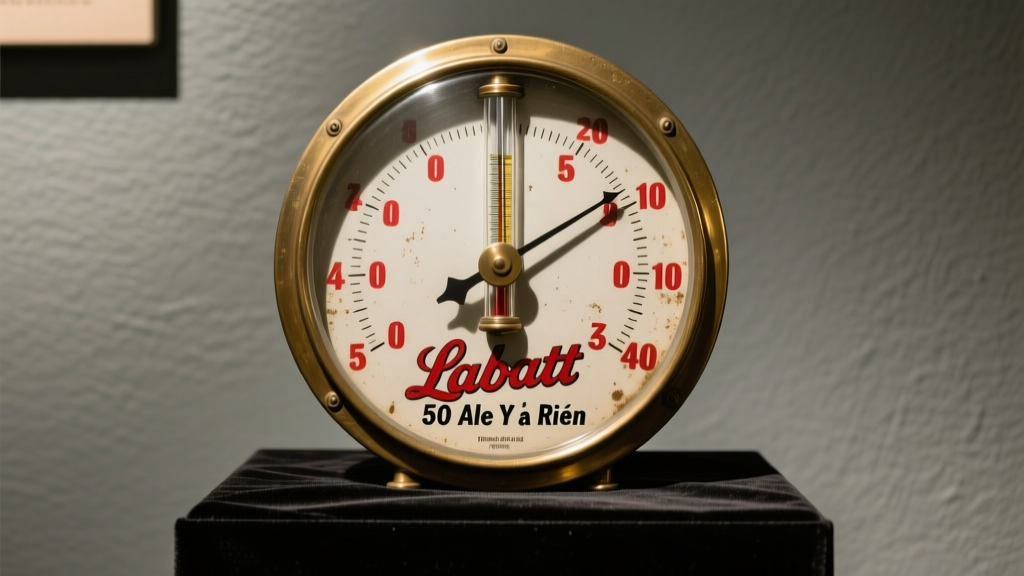
Labatt Bière '50 Ale Y A Rien Qui' Thermometer: A Rare 1950s Canadian Metal-and-Glass Barometer Artifact
Iron Door Knocker: Hand-Holding-Ball Strike Plate (6½") — Authentication, History, and Collector’s Guide
Doll Bebe Oily Sheen Paperweight Eyes: Authentication, Provenance, and Collectibility of the 18-Inch Lace-Dress Variant with Six Teeth