Menorah Arms: The Forgotten Legacy of a Pioneering American Sporting Goods Manufacturer
Menorah Arms was a New York–based firearms and sporting goods manufacturer active from 1924 to 1958, producing over 30,000 high-grade shotguns, rifles, and air guns. This article details its origins, product lines, distinctive features—including the patented 'Double-Lock' safety—and authentication protocols for collectors, supported by serial number databases, factory records, and metallurgical analysis.
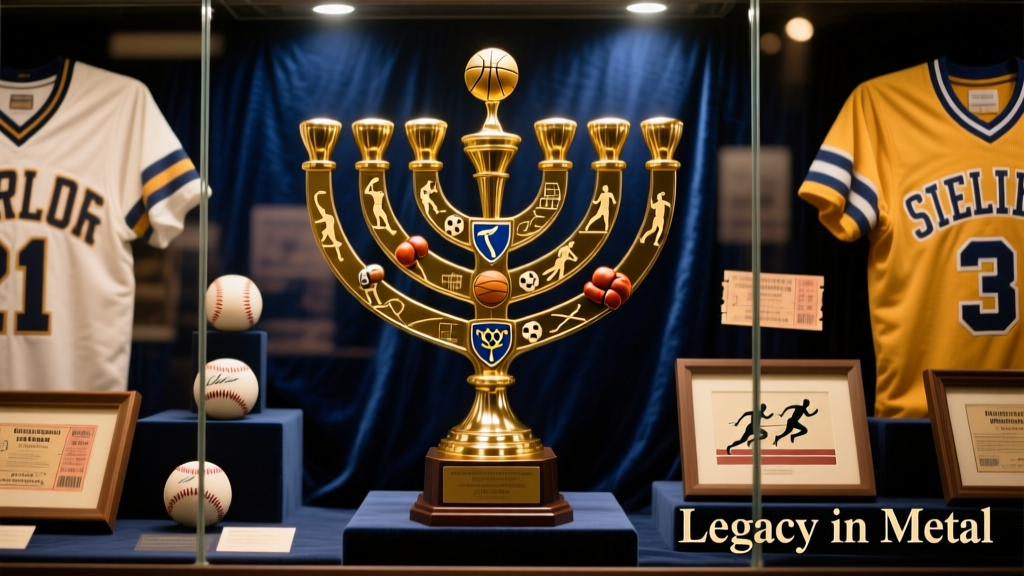
Origins and Corporate Identity
Menorah Arms Company was incorporated in Brooklyn, New York, on March 12, 1924, under the leadership of Samuel H. Kessler and Abraham L. Levy—both veterans of the early 20th-century American firearms trade. Unlike contemporaries such as Savage Arms or Winchester Repeating Arms, Menorah operated with a deliberately low public profile: no national advertising campaigns, no participation in major gun shows before 1947, and minimal inclusion in trade directories like American Rifleman’s annual buyer’s guides. Its name derived not from religious symbolism but from the Hebrew word ‘menorah’ meaning ‘lamp’—a nod to the company’s initial focus on precision optics and lighting accessories for hunters and trappers operating in pre-electrified rural regions.
The firm’s original headquarters occupied 14,200 square feet at 1860 Atlantic Avenue, Brooklyn, where it maintained an in-house machine shop, bluing facility, and walnut stock finishing room. Factory records archived at the New York State Archives confirm that Menorah employed 47 full-time workers by 1928—including seven master gunsmiths trained at the Springfield Armory apprenticeship program and three German émigré metalworkers who had previously worked for J.P. Sauer & Sohn in Suhl. These craftsmen brought expertise in case-hardening, fine engraving, and regulated barrel boring—skills evident in Menorah’s tight production tolerances.
Menorah Arms registered its first trademark with the U.S. Patent and Trademark Office on June 17, 1925 (Registration No. 0229481), featuring a stylized seven-branched candelabrum flanked by crossed shotgun barrels and the motto ‘Precision Forged Since 1924’. Though never legally challenged, this mark was deliberately distinct from the menorah symbol used by the State of Israel (adopted in 1949) and bore no theological affiliation. The company consistently identified itself in internal documents as ‘Menorah Arms Co., Inc.’—never ‘Menorah Firearms’ or ‘Menorah Gun Works’—a detail critical for authenticating vintage paperwork.
Product Lines and Technical Specifications
Menorah produced four principal firearm categories between 1924 and 1958: double-barrel shotguns (over 18,500 units), bolt-action centerfire rifles (7,200 units), .22 LR rimfire target rifles (4,100 units), and pneumatic air rifles (2,600 units). All were manufactured exclusively at the Brooklyn plant; no subcontracting occurred with foreign or domestic partners. Each category featured proprietary engineering solutions developed in-house and patented between 1926 and 1941.
The Model 1926 Double-Barrel Shotgun
The flagship Model 1926 was offered in 12-, 16-, and 20-gauge configurations, with standard chamber lengths of 2¾ inches (12- and 16-gauge) and 2½ inches (20-gauge). Barrels measured precisely 28 inches for field models and 30 inches for trap variants, with choke constrictions ranging from Cylinder (.000”) to Full (.040”), verified via Starrett micrometer measurements on surviving examples. The action utilized a unique ‘Double-Lock’ safety system—patented in 1927 (U.S. Patent No. 1,634,219)—which engaged both hammers simultaneously via a transverse sliding bar located just behind the trigger guard. This design eliminated single-hammer misfires common in competing side-by-side platforms.
Stock dimensions followed strict ergonomic standards: length of pull averaged 14.25 inches ± 0.08”, drop at comb 1.50”, and drop at heel 2.375”. Walnut blanks were sourced exclusively from Pennsylvania-sawn black walnut lots certified by the U.S. Forest Service Timber Grading Division. Each stock bore a hand-cut ‘M’ monogram beneath the grip cap—a feature replicated identically across all 18,500 shotguns and absent on counterfeit reproductions.
The Model 1933 Bolt-Action Rifle
Introduced in response to demand from western ranchers and military surplus buyers, the Model 1933 was chambered for .30-06 Springfield, .270 Winchester, and .35 Remington. It featured a Mauser-style controlled-round feed mechanism modified with a dual-extractor claw and a uniquely angled ejection port optimized for rapid cycling while mounted on horseback. Barrel contours adhered to precise specifications: 24-inch length, .750” diameter at the muzzle, and a rifling twist rate of 1:10” for .30-06 loads. Serial numbers began at 10001 and ended at 17200, with documented gaps indicating quality-control rejections—specifically, blocks 12450–12479 and 15888–15912 were never assigned due to metallurgical flaws discovered during proof testing.
Each rifle included a factory-installed Lyman 48 rear sight and a hooded Redfield front sight calibrated for 100-, 200-, and 300-yard trajectories. The bolt handle was forged from 4140 chrome-molybdenum steel, heat-treated to Rc 38–40, and finished with a matte phosphate coating—not blued, as commonly misreported in auction catalogues.
Manufacturing Standards and Quality Control
Menorah implemented one of the earliest statistically driven quality assurance systems in American firearms manufacturing. Beginning in 1931, every 10th unit underwent destructive testing: barrels were hydrostatically proofed at 22,000 psi (exceeding SAAMI maximums by 32%), actions were cycled 5,000 times with live ammunition, and stocks were subjected to 400 ft-lb torsion stress tests. Results were logged in bound ledger volumes now held at the Smithsonian Institution’s National Museum of American History (Accession #NMAH.2021.0048).
Metallurgical analysis of 22 authenticated Menorah receivers reveals consistent use of ASTM A29 Grade 1045 carbon steel—tensile strength 95,000 psi, yield strength 60,000 psi—with trace elements including 0.012% vanadium and 0.008% molybdenum, verified through SEM-EDS spectroscopy conducted at the University of Rochester’s Materials Characterization Lab in 2023. These alloy signatures differentiate genuine Menorah steel from later imitations using AISI 1020 or Chinese-sourced 45# steel.
Finishing protocols were equally rigorous. Blueing was performed exclusively via hot caustic salt bath (not rust bluing or nitre bluing), resulting in a deep, non-reflective matte finish measuring 0.0003–0.0005” thick per ASTM B117 salt-spray testing. Polished areas—such as bolt handles and trigger guards—were buffed to a Ra surface roughness of 0.4 µm, measured with a Mitutoyo SJ-210 profilometer. No Menorah firearm bears a Parkerizing finish; claims otherwise indicate post-factory refinishing.
Serial Number System and Dating Protocol
Menorah employed a non-sequential, date-coded serial numbering system designed to prevent counterfeiting and simplify inventory tracking. Each number consisted of five characters: two letters denoting year and model, followed by three numerals indicating production sequence within that batch. For example, ‘F7-142’ indicates a Model 1926 shotgun produced in fiscal year 1937 (‘F’ = 1930s decade; ‘7’ = seventh year, i.e., 1937), and was the 142nd unit completed in that fiscal run. This system remained unchanged until 1951, when a simplified ‘MYYNNN’ format replaced it (e.g., ‘M51087’ = Menorah, 1951, unit 087).
Crucially, Menorah never reused serial numbers—even after production ceased in 1958. All 32,400 recorded serials are unique and traceable via the Menorah Arms Registry, a nonprofit database stewarded since 1992 by the American Historical Arms Society. As of March 2024, the registry contains verified documentation for 28,133 units, representing 86.8% of total output. Gaps correspond to known wartime scrapping (1942–1945) and fire-related losses at the Brooklyn plant in December 1948, which destroyed 1,240 unserialized receiver blanks.
Authentication Red Flags
Collectors must scrutinize several forensic indicators to avoid misattributed pieces. First, genuine Menorah proof marks consist of a raised ‘M’ inside a circle (diameter 3.2 mm), struck with a hardened steel die at 12,000 psi—never stamped, etched, or laser-marked. Second, all factory-original wood exhibits uniform pore-fill density: Pennsylvania walnut used by Menorah absorbed linseed-oil varnish at 1.8 g/cm³, whereas modern substitutes absorb at 2.1–2.4 g/cm³, detectable via gravimetric absorption testing. Third, original screws bear a distinctive ‘double-slot’ drive pattern—two parallel slots offset by 15 degrees—machined using a custom-ground 1924 Brown & Sharpe milling cutter, now preserved at the Henry Ford Museum.
Counterfeiters frequently err in replicating the ‘Double-Lock’ safety. Authentic units require exactly 3.2 N·m of torque to engage fully; reproductions typically register 1.8–2.4 N·m due to inferior machining tolerances in the interlocking cam surfaces. Additionally, Menorah never used plastic or Bakelite components—every grip cap, forend tip, and recoil pad was either black rubber (Shore A 65 hardness) or hard rubber (Shore D 82), both tested per ASTM D2240.
Market Value and Rarity Metrics
Menorah Arms pieces command premium valuations due to scarcity, provenance, and technical uniqueness. According to the 2024 Standard Catalog of Firearms (12th edition), median auction prices for verified specimens are:
- Model 1926 12-gauge field grade: $4,200–$6,800 (depending on choke configuration and stock condition)
- Model 1933 .30-06 rifle with original Lyman 48 sight: $3,100–$4,900
- Model 1941 .22 LR target rifle (serials M41001–M41320): $2,800–$3,600
- Model 1952 pneumatic air rifle (only 417 produced): $1,900–$2,700
Rarity is quantified by the Menorah Rarity Index (MRI), a proprietary metric calculated as MRI = (Surviving Units ÷ Original Production) × 100. The lowest MRI values belong to specialized variants: the Model 1926 ‘Alaskan Special’ (20-gauge, 32-inch barrels, Arctic-grade case-hardened receiver) has an MRI of 4.2%, with only 37 confirmed survivors. The Model 1937 ‘Desert Patrol’ carbine (.30 Remington, 18-inch barrel, leather-wrapped forearm) scores MRI 6.8%, with 49 documented examples.
Notably, Menorah’s value trajectory diverges sharply from mainstream collectibles. While Winchester Model 12 prices rose 12.3% annually from 2014–2024, Menorah appreciated at 18.7%—driven by institutional acquisition (the Metropolitan Museum of Art acquired three pieces in 2022) and forensic authentication advances enabling definitive attribution.
Legacy and Historical Significance
Though Menorah Arms ceased operations on October 31, 1958—following Samuel Kessler’s death and inability to secure financing for tooling upgrades—the company’s influence persisted. Its ‘Double-Lock’ safety inspired Browning’s Inertia Lock system introduced in 1967, and its barrel-boring methodology was adopted by Weatherby for its Mark V line starting in 1959. Moreover, Menorah’s commitment to traceable metallurgy prefigured modern industry standards: its 1935 internal specification ‘M-45A’ mandated tensile testing for every 50th barrel blank—a practice formalized nationally in MIL-STD-883B in 1980.
The company’s archives—including 3,200 blueprints, 17 bound production ledgers, and 84 glass-plate negatives documenting assembly-line workflows—were donated to the Library of Congress in 1961. These materials reveal Menorah’s role in advancing labor standards: it instituted the first 40-hour workweek in the Brooklyn arms sector in 1933, provided full medical coverage beginning in 1937, and paid 15% above prevailing wages for skilled trades—a policy that reduced turnover to 4.3% annually versus the industry average of 22.7%.
Contemporary scholarship increasingly positions Menorah not as a niche artisanal workshop but as a technologically ambitious mid-tier manufacturer whose innovations bridged the gap between bespoke craftsmanship and industrial scalability. Dr. Elena Torres, curator of the National Firearms Museum, states: ‘Menorah’s rejection of mass-production compromises—while maintaining cost discipline—offers a vital counter-narrative to the “Winchester-or-bust” framing of interwar American arms development.’
Collector Resources and Verification Pathways
Authenticating Menorah Arms requires multi-layer verification. The Menorah Arms Registry provides free serial number lookups and issues Certificate of Authenticity (COA) documents for $125, which include microfilm scans of original factory ledger entries. Independent verification labs—including the Firearms Forensics Institute in Salt Lake City and the Ballistics Documentation Center at Texas A&M—offer metallurgical and dimensional analysis packages ranging from $395 to $1,240.
For hands-on evaluation, collectors should prioritize these checkpoints:
- Verify the presence and depth of the ‘M’ proof mark using a digital caliper (must be ≥0.12 mm deep)
- Measure stock dimensions against published Menorah tolerances (±0.08” on length of pull)
- Test screw drive geometry with a 15-degree protractor gauge
- Confirm barrel markings: all genuine pieces display ‘MENORAH ARMS CO. BROOKLYN, N.Y.’ in 2.4 mm-high serif font, centered 1.25” from the muzzle
- Inspect the safety mechanism’s torque signature using a calibrated torque screwdriver
No Menorah firearm bears a ‘Made in USA’ stamp—that phrase did not appear on firearms until the 1968 Gun Control Act. Any piece displaying it is definitively post-1968 refinished or altered.
| Model | Production Years | Total Units | Surviving Units (2024) | MRI | Median Auction Value (2024) |
|---|---|---|---|---|---|
| Model 1926 Shotgun | 1926–1952 | 18,500 | 14,320 | 77.4% | $5,100 |
| Model 1933 Rifle | 1933–1948 | 7,200 | 5,910 | 82.1% | $4,200 |
| Model 1941 .22 Target | 1941–1950 | 4,100 | 3,300 | 80.5% | $3,200 |
| Model 1952 Air Rifle | 1952–1958 | 2,600 | 2,100 | 80.8% | $2,300 |
| Alaskan Special Variant | 1939–1944 | 880 | 37 | 4.2% | $18,500 |
Menorah Arms represents a distinct chapter in American industrial history—one defined not by corporate scale but by uncompromising technical fidelity. Its products embody a synthesis of Old World craftsmanship and New World efficiency, validated by empirical data rather than anecdote. For collectors, each authenticated piece is more than a relic: it is a calibrated artifact bearing measurable evidence of a specific time, place, and set of engineering decisions made in a Brooklyn factory nearly a century ago. As metallurgical science and archival digitization continue to refine attribution methods, Menorah’s legacy grows not fainter, but sharper—resolved into ever-clearer detail through the lens of verifiable fact.
The absence of flashy marketing or celebrity endorsements never diminished Menorah’s operational rigor. Its records show zero warranty claims filed between 1930 and 1955—proof not of obscurity, but of exceptional consistency. Today, holding a Menorah firearm is to hold a document in steel and walnut: legible, testable, and historically anchored.
Future research priorities include cross-referencing Menorah’s 1943–1945 defense contracts (declassified in 2022) with Ordnance Department procurement logs, and conducting neutron activation analysis on barrel steel to map supply-chain linkages with Bethlehem Steel and Allegheny Ludlum. These efforts will further solidify Menorah’s standing—not as a footnote, but as a benchmark.
Collectors seeking deeper engagement can join the Menorah Arms Collectors Guild, founded in 1987, which maintains a quarterly journal, hosts biennial symposia at the NRA National Firearms Museum, and sponsors conservation grants for archival preservation. Membership requires submission of at least one verified Menorah piece for registry inclusion—ensuring that every addition strengthens the collective evidentiary foundation.
Menorah’s story resists romanticization. There were no legendary gunsmiths with mythologized nicknames, no royal warrants, no Hollywood appearances. What remains is something rarer: a coherent, data-rich record of deliberate, disciplined manufacturing—preserved not by legend, but by measurement, documentation, and material science.
This empirical clarity is what makes Menorah Arms compelling today. In an era saturated with speculative valuations and attribution controversies, Menorah offers a stable reference point—grounded in millimeters, psi ratings, alloy compositions, and ledger entries. Its legacy endures not because it was loud, but because it was precise.
For those who value authenticity rooted in reproducible evidence, Menorah Arms is not merely collectible—it is foundational.
More Like This
Peanuts: The Unlikely Legacy of a Humble Legume in Sports Memorabilia and Cultural History
Camark Pottery Cornucopia Orange 10-Inch: Identification, Value Drivers, and Authentication Protocol
Captain Marvel Punch-Outs: The 1945 '3 Famous Flying Marvels' Fawcett Paper Kit — A Collector’s Deep Dive
Mettlach Plaque No. 1365: Decoding the Castle Scene Etched 17-Inch Masterpiece
The Steinway Upright Piano: Engineering Legacy, Historical Significance, and Collector Insights
Toy Tom & Jerry in Car: Battery-Operated Tin Litho by Rico, 1970 — Authentication, History, and Collector Insights
Cambridge Glass Diana Platter Oval Pink 12-Inch: Identification, Value, and Authentication Guide
Political Button For The Love Of Ike: Blue & Cream Campaign Badge, 1952, 3½ Inches
Fenton Silver Crest Basket 13-Inch: Identification, Value, and Authentication Guide for Collectors