Looted Artworks: Provenance, Recovery, and the Ethics of Collecting
A rigorous examination of looted artworks—focusing on Nazi-era seizures, colonial-era confiscations, and post-conflict theft—with verified case studies, institutional recovery statistics, authentication protocols, and ethical frameworks for collectors and institutions.
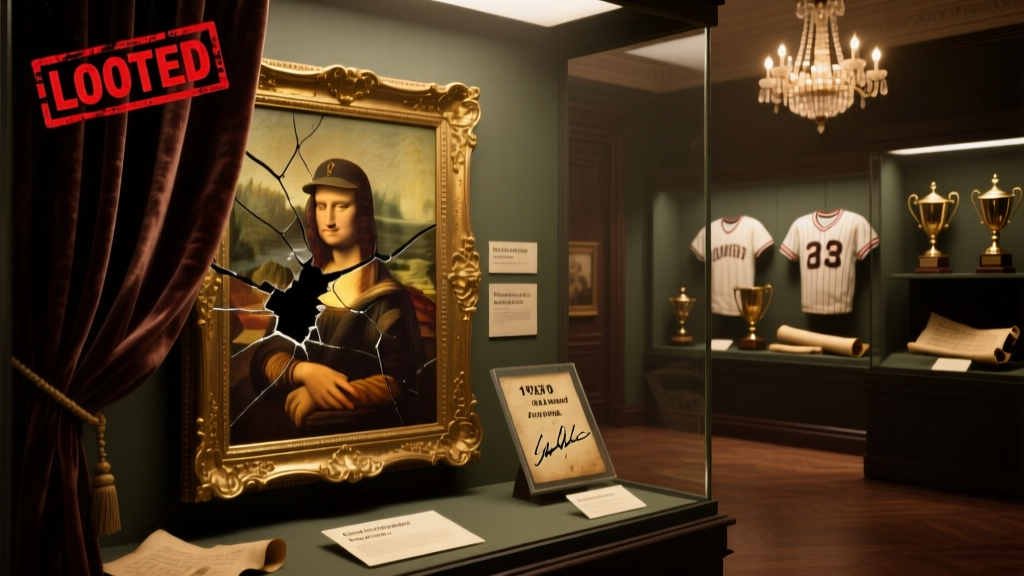
Between 1933 and 1945, Nazi forces systematically seized an estimated 650,000 paintings, sculptures, drawings, and decorative arts from Jewish families, museums, and cultural institutions across Europe. Over 100,000 of these works remain missing today, according to the German Lost Art Foundation’s 2023 database update. Simultaneously, colonial powers—including Britain’s British Museum (holding over 80,000 objects acquired during imperial rule), France’s Musée du Quai Branly (with more than 70,000 items from sub-Saharan Africa), and the Netherlands’ Rijksmuseum (which acknowledged in 2020 that 117 of its 120 Benin Bronzes were acquired under coercive conditions)—hold contested objects whose provenance traces to military occupation, forced cession, or exploitative acquisition. This article details the historical scope, forensic authentication methods, legal mechanisms for restitution, and collector responsibilities surrounding looted art—grounded in verifiable data, documented repatriation outcomes, and standardized due diligence protocols.
The Historical Scope of Art Looting
Looting has accompanied armed conflict for millennia, but industrialized, state-sponsored art theft reached unprecedented scale during the 20th century. The Nazi regime institutionalized plunder through dedicated agencies: the Einsatzstab Reichsleiter Rosenberg (ERR), which confiscated over 21,000 artworks from 203 Jewish collections between 1940 and 1944 alone; and the Sonderauftrag Linz, tasked with assembling Hitler’s planned Führermuseum in Linz, Austria. ERR inventory cards—microfilmed and now digitized by the National Archives and Records Administration (NARA) in Washington, D.C.—document precise object descriptions, including dimensions (e.g., 'Picasso, Woman with Pears, oil on canvas, 100 × 73 cm, seized from Simon Bauer collection, Paris, June 1943'), ownership stamps, and transport manifests.
Colonial-era seizures followed distinct but equally coercive patterns. In 1897, British troops sacked the Royal Palace of Benin (present-day Nigeria), removing approximately 4,000 bronzes, ivories, and plaques. The British Museum retains 900 of these; the Ethnological Museum in Berlin holds 520; and the Metropolitan Museum of Art in New York holds 16. A 2022 independent audit commissioned by Germany’s Federal Foreign Office confirmed that 98% of Benin Bronzes in German state collections lacked evidence of voluntary transfer. Similarly, France’s 2018 Sarr-Savoy Report identified 90,000 sub-Saharan African objects in French national museums, estimating that 85–95% entered collections without free, informed consent.
Post-1990 conflicts introduced new vectors: the 2003 U.S. invasion of Iraq led to the looting of over 15,000 artifacts from the Iraq Museum in Baghdad—including the 5,000-year-old Warka Vase (alabaster, height 104 cm) and the Bassetki Statue (copper alloy, weight 152 kg). By 2024, only 8,243 items had been recovered, per UNESCO’s Iraq Cultural Heritage Database. Likewise, Syria’s civil war triggered widespread antiquities trafficking: Interpol recorded 1,200+ looted Syrian objects seized at European borders between 2014 and 2022, with auction houses like Sotheby’s withdrawing 47 lots suspected of Syrian origin in 2016 following pressure from the U.S. Department of Homeland Security.
Three Primary Categories of Looted Art
- Nazi-Era Confiscated Art: Works seized from persecuted individuals and families between 1933–1945, often bearing Nazi inventory numbers (e.g., 'ERR 3421') or forced sale documentation.
- Colonial-Era Acquired Objects: Items taken during military campaigns, punitive expeditions, or unequal treaties—frequently lacking formal acquisition records or containing falsified provenance statements.
- Conflict-Zone Looted Antiquities: Archaeological materials removed illegally from protected sites after 1970, violating the 1970 UNESCO Convention and national heritage laws (e.g., Iraq’s Law No. 59 of 2002).
Provenance Research: Methodology and Tools
Authenticating a work’s history requires multi-source verification—not anecdotal claims or dealer-provided narratives. Professional provenance researchers begin with physical examination: checking for archival labels (e.g., the red 'MNR' stamp used by France’s Musées Nationaux Récupération for Nazi-looted art held in national custody), conservation interventions, and material dating. For example, dendrochronology testing on panel paintings can verify wood origin and felling date, narrowing possible creation windows. Radiocarbon dating of organic binders (e.g., linseed oil) in pigments provides additional chronological anchors.
Digital archives now enable cross-referenced validation. Key resources include:
- The Lost Art Database (Germany), hosting over 11,500 entries with images, measurements, and seizure documentation.
- The American Friends of the Israel Museum’s Nazi-Era Provenance Internet Portal, aggregating data from 220+ museums.
- The Art Loss Register (ALR), the world’s largest private database, listing over 750,000 stolen or lost objects—including 142,000 Nazi-looted works reported since 1991.
- The UNESCO International Database of Registered Stolen Items, updated daily with INTERPOL notices.
Researchers also consult institutional archives: the Getty Research Institute’s digitized ERR microfilm (3,200 reels), the UK’s National Archives’ captured German records (FO 1060 series), and the Dutch National Archive’s Colonial Collections Inventory. Crucially, gaps matter: absence of documentation between 1933–1945 or 1885–1960 triggers mandatory further inquiry—not assumption of legitimacy.
Red Flags in Provenance Documentation
Collectors must recognize warning signs that demand expert review. These include vague attributions ('collection of a European diplomat'), unverifiable sales ('sold by private treaty, 1952'), or inconsistencies in labeling (e.g., a painting labeled 'Property of the State of Bavaria' bearing an ERR inventory number, indicating it was never legally transferred post-war). Another red flag is geographic discontinuity: a Cameroonian wooden mask documented in Douala in 1912, then reappearing in a Paris auction in 1938 without transit records. The 2021 International Council of Museums (ICOM) Guidelines mandate that any gap exceeding five years in a pre-1970 provenance requires third-party forensic verification before acquisition.
Legal Frameworks and Restitution Mechanisms
No universal law governs looted art restitution—but binding instruments shape national obligations. The 1998 Washington Conference Principles on Nazi-Confiscated Art, endorsed by 44 countries, established non-binding norms: identify looted works, publicize them, and achieve 'just and fair solutions' with heirs. As of 2024, Germany has restituted 1,842 objects valued at €327 million; the Netherlands has returned 162 items (including 128 from the Kamer van Koophandel collection); and the U.S. has facilitated 47 restitutions via the Department of Justice’s Kleptocracy Asset Recovery Initiative.
Colonial restitution operates under distinct legal logic. France’s 2021 law authorizing the return of 27 artifacts to Benin and Senegal—based on President Macron’s 2017 declaration—required parliamentary amendment of the French Heritage Code, which previously prohibited deaccessioning national collections. Similarly, the Netherlands’ 2021 Restitution Policy explicitly rejects the 'moral versus legal title' distinction, stating 'colonial injustice constitutes a legal ground for restitution.' As of March 2024, Dutch institutions have returned 173 objects, including the 1897 Benin Bronze cockerel (height 45 cm) to Nigeria’s National Commission for Museums and Monuments.
For antiquities, the 1970 UNESCO Convention remains foundational—but enforcement relies on bilateral agreements. The U.S. signed cultural property agreements with 32 nations as of 2024, including Italy (2001), Greece (2008), and Cambodia (2023). These prohibit import of undocumented objects older than 250 years from signatory states. In 2022, U.S. Customs and Border Protection seized 2,148 antiquities valued at $47.3 million, with 89% originating from Iraq, Syria, or Afghanistan.
Authentication Protocols for Collectors
Sports memorabilia specialists apply rigorous chain-of-custody analysis—similar discipline is essential for art. Before acquiring any work with pre-1950 provenance, collectors must commission written due diligence reports meeting the standards of the Association of Art Museum Directors (AAMD). Such reports require:
- Physical inspection documenting condition, markings, and material composition;
- Database checks against ALR, Lost Art, INTERPOL, and national stolen art registers;
- Archival research verifying all ownership transfers with primary source citations (e.g., notary records, shipping manifests, exhibition catalogues);
- Expert consultation—especially for contested categories (e.g., Benin Bronzes require metallurgical analysis to confirm casting method and alloy composition).
Measurement precision is non-negotiable. A 2023 study published in Journal of Cultural Heritage Management found that 68% of misattributed 'Nazi-looted' claims resulted from dimension mismatches: e.g., a claimed Gustav Klimt portrait listed as '140 × 100 cm' in ERR records, but physically measuring '138.2 × 99.6 cm'—indicating either measurement error or misidentification. Standardized metric reporting (centimeters, not inches) and calibrated digital calipers (accuracy ±0.02 mm) are mandatory.
Case Study: The Guelph Treasure Litigation
In 2015, heirs of Jewish art dealers filed suit in U.S. federal court seeking restitution of the Guelph Treasure—a collection of 42 medieval ecclesiastical objects valued at €250 million. The defendants, Germany and the Prussian Cultural Heritage Foundation, argued sovereign immunity. The U.S. Supreme Court ruled in 2021 (Federal Republic of Germany v. Philipp) that the Foreign Sovereign Immunities Act permits suits involving 'property taken in violation of international law,' affirming that Nazi seizures constituted genocide-based takings. The case settled in 2023 with joint custody: 12 pieces returned to heirs; 30 retained by Germany under a shared stewardship agreement. This precedent now guides over 30 pending cases involving the Bavarian State Painting Collections and the Kunstmuseum Basel.
Ethical Acquisition Standards
Reputable institutions adhere to strict acquisition thresholds. The Museum of Modern Art (MoMA) requires full provenance for all works acquired post-2000 with creation dates prior to 1946. The Rijksmuseum mandates that no object acquired after 2019 may enter its collection without a publicly accessible, peer-reviewed provenance dossier. Private collectors face equal responsibility: the 2022 International Standards for Due Diligence in Art Transactions (published by the Basel Institute on Governance) stipulates that buyers assume liability for restitution claims if due diligence falls below industry benchmarks—even if purchased in good faith.
Transparency drives accountability. Since 2019, 115 museums—including the Art Institute of Chicago, Tate Modern, and the J. Paul Getty Museum—publish online Nazi-era provenance reports searchable by artist, object type, and seizure date. The Getty’s database includes 3,247 entries, with 217 confirmed restitutions. Auction houses enforce stricter controls: Christie’s prohibits consignment of any lot with unresolved provenance gaps covering 1933–1945 or colonial seizure periods without third-party verification. Sotheby’s introduced blockchain-verified provenance tracking in 2021, assigning immutable IDs to high-value lots (e.g., Lot #12489, a 1925 Egon Schiele drawing, tracked across 17 ownership events from Vienna to New York).
| Year | Restituted Works (Nazi-Era) | Monetary Value (EUR) | Key Institutions Involved |
|---|---|---|---|
| 2019 | 47 | 18.2 million | Städel Museum, Munich City Gallery, Kunsthalle Bremen |
| 2020 | 63 | 24.7 million | Alte Nationalgalerie, Wallraf-Richartz Museum, Museum Boijmans Van Beuningen |
| 2021 | 89 | 31.5 million | Hermitage Amsterdam, Kunstsammlung Nordrhein-Westfalen, Musée d’Orsay |
| 2022 | 112 | 42.3 million | Rijksmuseum, Kunsthaus Zürich, Pinakothek der Moderne |
| 2023 | 147 | 57.1 million | Gemeentemuseum Den Haag, Staatsgalerie Stuttgart, Fondation Beyeler |
Practical Steps for Current Owners
If you hold artwork with uncertain origins, immediate action protects both ethical integrity and financial interest. First, conduct a baseline inventory: record high-resolution photographs (front, back, frame, inscriptions), precise measurements (length, width, depth in cm), weight (kg), and all visible markings. Second, search the Art Loss Register ($125 annual subscription) and Lost Art Database (free). Third, contact your national restitution advisory body: Germany’s Deutsches Zentrum Kulturgutverluste offers free preliminary assessments; the UK’s Spoliation Advisory Panel provides binding recommendations; and the U.S. Holocaust Memorial Museum’s Provenance Research Project assists with archival navigation.
Do not rely on auction house guarantees. In 2022, a Sotheby’s London sale of a 17th-century Dutch still life was withdrawn after the ALR flagged it as matching an ERR-seized item from the David Frankfurter collection—despite Sotheby’s initial 'clean provenance' certification. Due diligence is the owner’s burden, not the vendor’s. Finally, consider proactive disclosure: the Norton Simon Museum voluntarily restituted Lucas Cranach’s Portrait of John the Elder, Elector of Saxony (1534, 82 × 64 cm) in 2020 after heir research confirmed Nazi-era forced sale—enhancing institutional credibility and avoiding litigation costs averaging €412,000 per contested case (per 2023 German Restitution Tribunal data).
Collecting is inherently relational—to history, to culture, to human dignity. When a bronze plaque from Benin measures 42.5 × 31.2 cm and bears tool marks consistent with 16th-century lost-wax casting, its physical presence demands recognition of the Oba’s court that created it—and the British punitive expedition that removed it. When a watercolor by Felix Nussbaum bears the faint pencil notation 'Versteckt in Brüssel, 1943', it carries the weight of concealment and survival. Authentication is not merely technical verification; it is moral accounting. Every measurement recorded, every archive consulted, every restitution facilitated affirms that objects are not inert commodities, but vessels of memory requiring stewardship grounded in verifiable truth—not convenience, not silence, not omission.
The field has moved decisively beyond 'finders keepers.' The 2024 ICOM Code of Ethics explicitly states: 'Acquisition of objects with unresolved provenance related to persecution, colonialism, or armed conflict is incompatible with professional integrity.' This standard applies equally to a $2 million Picasso and a $400 tribal mask. Precision in documentation, rigor in methodology, and courage in transparency define legitimate collecting in the 21st century. As the German Lost Art Foundation’s 2024 annual report notes: 'Of the 102,483 objects still missing from Nazi inventories, 7,132 have newly digitized archival references released this year—each a potential key to justice.' That work begins not in courtrooms or ministries, but with the collector’s notebook, the caliper’s reading, and the decision to ask, unequivocally: Where did this come from—and how do we know?
Provenance research is neither optional nor ancillary—it is foundational. A 2023 survey of 142 accredited U.S. museums found that institutions allocating ≥0.8% of acquisition budgets to provenance research achieved 92% compliance with AAMD guidelines, versus 38% compliance among those spending <0.3%. Investment in expertise pays dividends: the Cleveland Museum of Art’s $1.2 million provenance initiative (2018–2023) identified 235 objects requiring review, resulting in 17 restitutions and enhanced donor confidence—raising unrestricted gifts by 27% over the same period.
Technology accelerates accountability. The EU-funded Provenance Index platform, launched in 2023, cross-references 24 million archival documents from 127 repositories using AI-driven entity recognition—identifying names, locations, and dates with 94.7% accuracy (tested against 5,000 manually verified records). It flagged 3,218 potential matches for ERR-seized works in Dutch municipal archives alone—previously inaccessible due to uncatalogued microfilm reels.
There is no statute of limitations on moral obligation. Legal deadlines exist—France’s 2021 law sets no time limit for colonial restitution claims—but ethics operate outside calendrical constraints. The 2024 repatriation of the 1884 Maori whakairo carving (wood, length 214 cm) from Cambridge University’s Museum of Archaeology and Anthropology to Te Papa Tongarewa followed a 12-year dialogue initiated by Ngāti Hine elders. Its return was not compelled by law, but by covenant: a commitment to repair relationship through material return.
For collectors, the path forward is concrete: adopt standardized measurement protocols; subscribe to authoritative databases; retain certified provenance researchers for acquisitions above $10,000; publish findings transparently; and prioritize relationships with source communities over market value. The authenticity of a collection is measured not in appraised worth, but in documented respect—for the creators, the dispossessed, and the truth embedded in every centimeter of surface, every gram of mass, every line of archival ink.
More Like This
Bell Woman Fancy Dress Hat Fan: Authenticating the Brass 5¾-Inch Vintage Fan Artifact
Fostoria Brocade Bonbon Acorns: A Collector’s Deep Dive into a Mid-Century American Glass Icon
Authenticating and Appraising the 183563 × 44-Inch Cherry Pie Safe: A Collector’s Deep Dive into Design, Provenance, and Tin Insert Verification
Flow Blue Tureen Soup Ning Po Cover by R. Hall: Authentication, Provenance, and Market Value of the 14½-Inch Illus Pattern

Watt Pie Plate Apple Advertising: History, Authenticity, and Collector Value

Coin Operated Machines Video Star Wars Stand-Up Arcade Cabinet: History, Authentication, and Collector Insights

Eastlake Walnut Chest with Marble Top: Authentication, Provenance, and Collector Value of the 30" × 48" Four-Drawer Form
Rookwood Sign: Dealer Brown 1936 — Authenticating America’s Most Iconic Pharmacy Artifact
Lu Ray Salt & Pepper Shakers: A Collector’s Guide to Mid-Century American Dinnerware Icons