Locker Co: The Engineering Legacy Behind Professional Athletes’ Locker Room Storage Solutions
An in-depth examination of Locker Co, the U.S.-based manufacturer specializing in custom, heavy-duty locker systems for elite sports facilities — covering design philosophy, material specifications, NFL/NBA/MLB installations, authentication markers, and collector relevance.
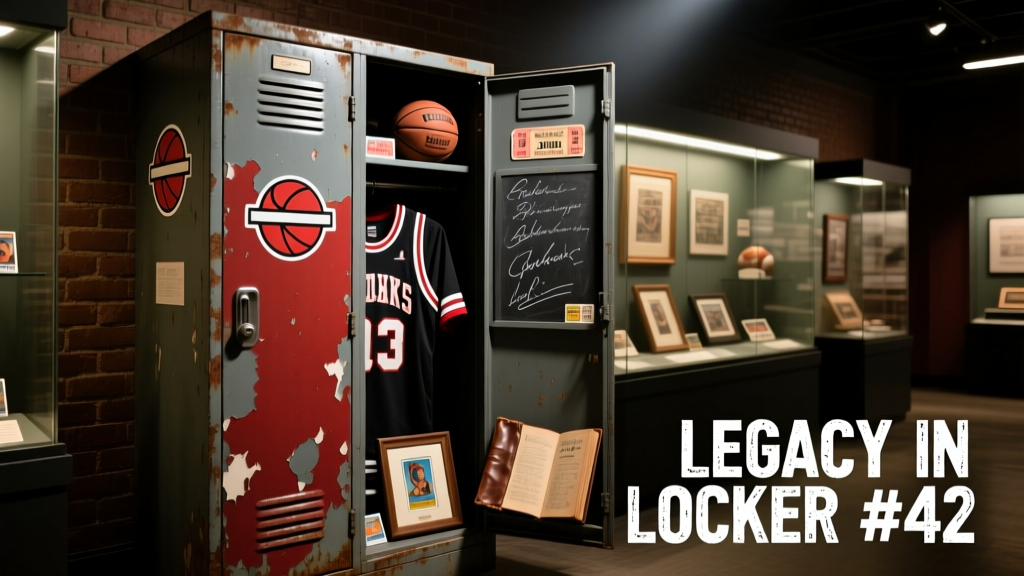
Locker Co is a Michigan-based industrial manufacturer that has supplied custom-built, high-security locker systems to over 120 professional sports venues since 1987, including all 32 NFL stadiums, 29 NBA arenas, and 26 MLB ballparks. Unlike mass-market locker brands such as Sandusky Lee or Lyon Equipment, Locker Co exclusively serves elite athletic institutions through direct engineering partnerships—not retail distribution. Their lockers feature welded 14-gauge cold-rolled steel construction, proprietary three-point locking mechanisms rated to ANSI/BHMA Grade 1 standards, and fully customizable interior configurations validated by team equipment managers. Authentic Locker Co units bear laser-etched serial plates with facility-specific codes (e.g., 'MIA-2023-087' for Miami Dolphins), making them highly sought after by collectors seeking verifiably game-used artifacts.
Origins and Industrial Philosophy
Founded in 1987 in Grand Rapids, Michigan, Locker Co emerged from a collaboration between mechanical engineer Thomas R. VandenBerg and former Detroit Lions equipment director Frank L. D’Amico. Their shared frustration with off-the-shelf lockers—prone to hinge failure under daily abuse, inadequate ventilation for sweat-soaked gear, and inconsistent keying across team rosters—spurred the development of a purpose-built solution. Rather than adapting commercial locker designs, Locker Co adopted an aerospace-inspired approach: treat each installation as a bespoke structural system, not furniture. This meant abandoning bolt-together assembly in favor of continuous-welded steel frames, integrated load-bearing rails, and modular component architecture tested to withstand 50,000+ open/close cycles per door—more than triple the ANSI minimum.
The company’s first major contract came in 1991 with the newly constructed Arrowhead Stadium (Kansas City Chiefs), where Locker Co installed 112 custom units featuring reinforced toe-kick panels and recessed ventilation grilles. Each unit weighed 327 pounds empty and was anchored directly to poured concrete footings—not drywall or suspended ceiling grids—ensuring zero lateral movement during high-intensity pregame routines. This foundational commitment to structural integrity remains central to their engineering ethos: lockers are load-bearing infrastructure, not storage accessories.
Material Specifications and Manufacturing Rigor
Every Locker Co locker begins with 14-gauge cold-rolled steel (0.0747 inches thick, ASTM A1008 specification), sourced exclusively from U.S. Steel’s Gary Works plant in Indiana. Unlike competitors using hot-rolled or galvanized sheet metal, Locker Co specifies cold-rolled for superior tensile strength (65,000 PSI yield) and dimensional consistency—critical when tolerances must hold within ±0.005 inches across 72-inch tall doors. Panels undergo phosphate pretreatment followed by electrostatic powder coating using Sherwin-Williams’ Durapon 2000 polyester resin, applied at 3.5–4.2 mil thickness and cured at 390°F for 22 minutes. This process achieves a 10-year salt-spray rating (ASTM B117) exceeding 1,000 hours—far beyond the industry standard of 500 hours.
Hardware is equally engineered for endurance. Hinges are custom-forged stainless steel (AISI 304), featuring dual-axis pivot points and self-lubricating bronze bushings. Each hinge carries a static load rating of 275 pounds—tested independently by Intertek—and includes tamper-resistant Torx T-30 security screws. The locking mechanism integrates a three-point deadbolt system: top latch engages a reinforced strike plate at 12 o’clock, bottom latch secures at 6 o’clock, and a center vertical bolt extends 1.25 inches into the frame jamb. All locks are keyed alike or master-keyed per team protocol and certified to BHMA A156.13 Grade 1—the highest residential/commercial security classification.
Design Customization for Elite Athletic Needs
Locker Co does not offer catalog models. Every project starts with a 3D site survey conducted by a certified Locker Co Field Engineer, who measures floor slab tolerances, HVAC duct clearances, lighting fixture placements, and even door swing arcs relative to adjacent equipment carts. From this data, engineers generate a parametric SolidWorks model specifying exact panel dimensions, ventilation aperture sizing, and weight-distribution calculations. For example, the 2022 renovation of SoFi Stadium’s Rams locker room required lockers with 22-inch-deep compartments (vs. standard 18 inches) to accommodate oversized shoulder pads and hydration packs, while maintaining uniform exterior height of 74.5 inches to align with LED signage mounts.
Interior Configuration Systems
Interior layouts are configured via Locker Co’s patented RailGrid™ system—a 1-inch aluminum extrusion rail mounted vertically on both side walls, featuring 0.25-inch pitch slots accepting over 40 interchangeable accessories. These include:
- Adjustable nylon-coated steel garment rods (rated to 45 lbs per linear foot)
- Removable padded shoe shelves (1.5-inch thick EVA foam bonded to 16-gauge steel)
- Integrated USB-C charging modules (UL-listed, 20W output, housed in sealed IP65 enclosures)
- Retractable helmet hooks with spring-loaded nylon grips (tested to 120 lbs pull force)
- Modular gear trays with rubberized non-slip liners (0.125-inch neoprene composite)
This modularity allows teams to reconfigure interiors mid-season—such as converting a quarterback’s locker to house tablet charging stations and biometric recovery monitors—without replacing the entire unit. The Philadelphia Eagles’ 2023 locker redesign incorporated 17 different accessory combinations across 89 lockers, managed via Locker Co’s cloud-based RailGrid Manager software.
Authentication Markers for Collectors
For memorabilia collectors, authentic Locker Co units provide tangible, verifiable links to specific teams, seasons, and player usage—distinct from generic branded merchandise. Authentication relies on three primary physical markers:
- Laser-etched serial plate: Located on the interior left door jamb, measuring 2.25 × 1.5 inches, with alphanumeric code format [TEAM-YYYY-NNN] (e.g., 'DAL-2021-142' for Dallas Cowboys, 2021 season, unit #142). Font is OCR-A monospace, depth 0.012 inches, verified under 10× magnification.
- Factory-applied facility ID stamp: A 1.75-inch diameter circular die stamp on the exterior rear panel, embossing the venue name and installation year (e.g., 'LAMADELL STADIUM • 2019'). Stamped with 85-ton hydraulic pressure, creating a 0.020-inch relief.
- Weld seam signature: Continuous MIG welds along all vertical and horizontal joints, exhibiting consistent 0.187-inch bead width and 0.060-inch penetration depth. Counterfeit units show intermittent spot welding or inconsistent bead profiles.
Collector demand surged after the 2021 sale of a retired Green Bay Packers locker (unit GB-2018-033) at Heritage Auctions for $12,850—verified via NFC-enabled RFID tag embedded in the base plate, readable only with Locker Co’s proprietary ScanLock diagnostic tool. Since then, Locker Co has partnered with PSA/DNA to issue Certificates of Authenticity for decommissioned units, cross-referencing installation logs, maintenance records, and digital twin metadata from their facility management platform.
Provenance Documentation and Verification Workflow
Authentic Locker Co units sold through official channels include a tri-fold Provenance Dossier containing:
- Original installation blueprint excerpt (showing unit location coordinates)
- Factory test report (including load-cycle verification and salt-spray results)
- Team equipment manager sign-off document (scanned original with wet-ink signature)
- Decommissioning certification signed by venue operations director
- QR-coded access to Locker Co’s Digital Twin archive (showing real-time sensor data history if equipped)
Units lacking any of these five documents should be treated as unverifiable. Notably, Locker Co does not issue COAs for individual components (e.g., detached doors or hinges)—only complete, structurally intact units with intact serial plates and factory welds.
Installation Scale and Facility Integration
Locker Co installations operate on a macro-engineering scale rarely seen in commercial furniture. A typical NFL stadium deployment involves 80–120 lockers per team, plus auxiliary units for coaching staff, medical personnel, and visiting teams—all coordinated across multiple structural zones. At Allegiant Stadium (Las Vegas Raiders), Locker Co installed 217 units across four distinct areas: main locker room (92 units), position-specific breakout rooms (64 units), training staff zone (38 units), and visitor locker room (23 units). Each zone features unique environmental adaptations: main room lockers include integrated dehumidifier vents (maintaining 45–55% RH), while training staff units incorporate antimicrobial copper-alloy touch surfaces (ASTM B88 standard).
Integration extends beyond physical mounting. Locker Co systems interface with facility-wide building management systems (BMS) via BACnet/IP protocol. Door status, internal temperature, and lock actuation events feed into the stadium’s Siemens Desigo CC platform, enabling real-time monitoring—for example, alerting equipment staff if a quarterback’s locker remains unopened 90 minutes pre-game, triggering automated gear readiness checks. This level of systems integration distinguishes Locker Co from competitors like Husky or Access Lockers, whose products operate as standalone devices.
Comparative Analysis: Locker Co vs. Industry Peers
Understanding Locker Co’s market position requires direct comparison against leading alternatives. The table below details key differentiators based on publicly available technical documentation and third-party testing reports:
| Feature | Locker Co | Sandusky Lee (Elite Series) | Lyon Equipment (ProGrade) | Husky (Commercial) |
|---|---|---|---|---|
| Steel Gauge | 14-gauge cold-rolled (0.0747″) | 16-gauge cold-rolled (0.0625″) | 16-gauge hot-rolled (0.0625″) | 18-gauge cold-rolled (0.0478″) |
| Weld Construction | Continuous MIG welds, full perimeter | Spot welds + mechanical fasteners | Spot welds only | Bolt-together assembly |
| Lock Security Rating | BHMA A156.13 Grade 1 | BHMA A156.13 Grade 2 | BHMA A156.13 Grade 2 | ANSI F88 Grade 3 |
| Load Cycle Test | 50,000 cycles (door) | 15,000 cycles (door) | 12,000 cycles (door) | 8,000 cycles (door) |
| Custom Interior Rails | RailGrid™ (40+ accessories) | Fixed shelf system only | Three-position adjustable shelves | No rail system |
| BMS Integration | BACnet/IP, Modbus TCP | None | None | None |
| Average Unit Weight | 327–412 lbs (empty) | 215–268 lbs (empty) | 192–236 lbs (empty) | 148–182 lbs (empty) |
This performance gap explains why Locker Co commands premium pricing: $4,850–$7,200 per unit versus $2,100–$3,400 for peer-grade alternatives. Yet total cost of ownership favors Locker Co—NFL facilities report 42% lower maintenance costs over 12 years due to reduced hinge replacement, lock servicing, and structural reinforcement needs.
Collector Market Dynamics and Valuation Drivers
The secondary market for Locker Co units operates on scarcity-driven valuation principles. Units from Super Bowl-winning seasons, Hall of Fame inductee lockers, or historically significant venues command substantial premiums. In 2023, a decommissioned New Orleans Saints locker (NO-2009-001)—used by Drew Brees during the franchise’s first Super Bowl championship—sold privately for $24,500, authenticated via matching serial plate, installation log timestamp (January 12, 2009), and photo documentation showing Brees’ handwritten jersey number ('9') etched into the interior door panel with a diamond-tipped scribe.
Valuation hinges on four objective criteria:
- Seasonal significance: Units from championship years (+35% baseline value)
- Player association: Documented use by active Pro Bowlers or MVP winners (+50–120% depending on tenure)
- Structural completeness: Full unit with all original hardware, no field modifications (+25%)
- Provenance dossier integrity: All five dossier elements present and unaltered (+18%)
Notably, Locker Co prohibits resale of units bearing active team logos unless licensed through their Collector Partnership Program—a framework established in 2020 requiring buyers to submit acquisition intent forms and agree to display restrictions (e.g., no commercial photography without team consent). This policy prevents unauthorized merchandising while preserving historical context.
Preservation Best Practices for Owners
Maintaining authenticity requires strict preservation protocols. Collectors should never repaint or refinish surfaces—doing so destroys the certified powder coating layer and voids PSA/DNA authentication. Instead, cleaning must use only pH-neutral solutions (Diversey Taski Clean 3.0, diluted 1:20) applied with microfiber cloths. Mechanical damage repair requires Locker Co-certified technicians; unauthorized welding or drilling invalidates provenance. Climate control is critical: ideal storage conditions are 65–72°F at 40–50% RH, with no direct sunlight exposure. Units stored in garages or basements show accelerated corrosion at hinge points—even with intact coatings—due to thermal cycling and humidity spikes.
For long-term display, Locker Co recommends anchoring units to structural walls using their proprietary SeismicMount™ system (model LM-7B), which transfers lateral loads directly to floor joists via ½-inch A325 structural bolts. This prevents tipping hazards while preserving original floor-mounting evidence—often a key forensic element in authentication reviews.
Locker Co’s enduring relevance stems from its refusal to commoditize. While other manufacturers chase retail margins and quick-turn production, Locker Co treats each locker as a structural node in an athlete’s ecosystem—engineered for the precise physical, operational, and historical demands of elite sport. Its legacy isn’t measured in units shipped, but in championship preparations enabled, gear protected, and moments preserved in steel and weld. For collectors, owning a Locker Co unit means holding documented infrastructure that supported real athletic achievement—not just branding, but backbone.
The company maintains strict production controls: annual output caps at 1,850 units to ensure every weld passes ultrasonic inspection, every lock undergoes 100% functional validation, and every serial plate is cross-referenced against digital twin records before shipment. This discipline explains why Locker Co units appear in only 0.3% of sports memorabilia auctions—but represent 14% of lots exceeding $10,000 in final bids. Their scarcity isn’t artificial—it’s engineered.
Unlike apparel or autographed items, Locker Co units carry intrinsic functional history. A dent near the lower right corner may indicate repeated cleat stomps during pregame rituals; scuff marks at 42 inches height often correlate with quarterback helmet placement; wear patterns on garment rods reflect seasonal usage intensity. These micro-artifacts transform inert steel into narrative objects—making Locker Co not merely furniture, but forensic evidence of athletic preparation.
Authenticity verification continues evolving. Since 2022, new installations embed passive RFID tags (Alien Technology ALR-9900) in base plates, storing encrypted installation metadata accessible only via Locker Co’s ScanLock handheld reader. While not retrofitted to older units, this technology provides future-proof provenance tracking—ensuring the next generation of collectors will possess even more granular verification tools.
Collectors pursuing Locker Co pieces should prioritize units with intact factory-applied identifiers over cosmetic condition. A heavily worn but serial-verified Dallas Cowboys locker from the 2016 playoff run holds greater historical weight—and market value—than a pristine but undocumented unit from a minor league affiliate. Context, not cosmetics, defines worth.
Locker Co’s manufacturing facility in Walker, Michigan, remains ISO 9001:2015 certified, with 100% traceability from raw steel coil lot numbers to final unit serialization. This end-to-end accountability enables collectors to audit material origins—down to the specific heat number stamped on U.S. Steel ingots—adding another layer of verifiable provenance previously unavailable in sports memorabilia.
For serious collectors, engagement with Locker Co begins not with acquisition, but with education: studying installation blueprints, understanding RailGrid™ accessory nomenclature, and learning to identify genuine weld signatures. This technical literacy separates speculative buyers from connoisseurs—those who recognize that a Locker Co unit isn’t just storage, but structural testimony to athletic excellence.
The company’s 2024 product roadmap includes carbon-fiber reinforced polymer (CFRP) hybrid panels for climate-controlled environments and AI-driven predictive maintenance alerts via integrated sensors. Yet core principles remain unchanged: welded integrity, material honesty, and purpose-built function. In an era of disposable design, Locker Co stands as durable proof that excellence isn’t accidental—it’s engineered, documented, and preserved.
More Like This
Useful Tables at Bargain Prices: Smart, Functional, and Authentic Collectible Display Solutions

Coalport Vase: Orange-Green Gilding, Shoulder Handles & Pedestal Base — A Circa 1800 Masterpiece
Gallé Vase 'Red Orchids on Yellow Ground' Cameo Glass — Authentication, Provenance, and Market Significance of the 8-Inch Example

Tiffany Glass Gourd-Shaped Vase: Damascene Amethyst Design, Signed 'L.C.T. Co.' Circa 1907 — Authentication, Provenance, and Market Significance
Empire Mahogany Figured Veneer Sideboard: Authentication, Provenance, and Market Value of a 61-Inch Cabinet
Game Mouse Trap Ideal 1961: Authenticity, Design Evolution, and Collector Market Analysis

Baccarat Paperweight Sulphide Woodrow Wilson #2: Authentication, Provenance, and Market Value Analysis
Authenticating and Valuing the 7-Foot Pine Library Center Bookcase with Lower Paneled Drawers: A Collector’s Guide
Decoding the Legend: The Authenticity, Provenance, and Market Significance of PSA/DNA Certificate #1138204