Lithophane Lampshades: History, Authentication, and Collecting Value
A detailed examination of lithophane lampshades—porcelain transparencies that transform light into imagery—covering their 19th-century origins, manufacturing techniques, key makers like Lichte & Co. and Royal Doulton, authentication markers, market trends, and practical care advice for collectors.
What Is a Lithophane Lampshade?
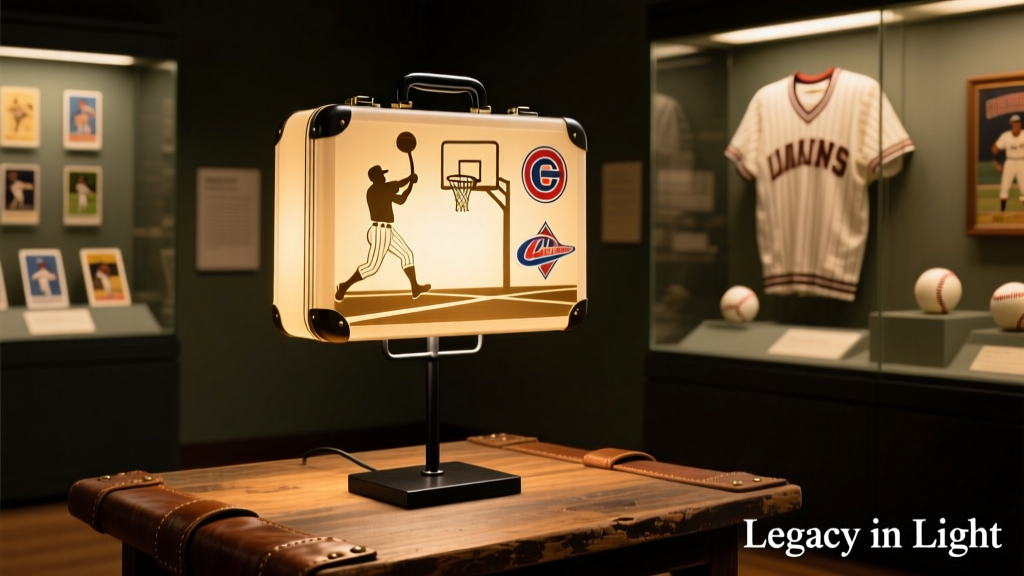
A lithophane lampshade is a translucent porcelain object featuring a raised-relief image that becomes visible only when illuminated from behind. Unlike painted or printed shades, lithophanes rely on variable thickness: thin areas appear light when backlit, while thicker zones remain dark, creating a nuanced grayscale portrait or scene. Originating in Europe in the early 1820s, these were initially crafted as standalone plaques, but by the 1850s, manufacturers began mounting them in metal frames to serve as functional lampshades—most commonly for oil lamps, later adapting to electric fixtures. Their delicate craftsmanship, optical ingenuity, and romantic subject matter (often portraits of royalty, religious figures, or pastoral scenes) make them prized by both porcelain connoisseurs and lighting historians.
Historical Origins and Technological Innovation
Lithophanes were invented around 1827 in Berlin by Baron Paul de Bourgoing, though credit is often shared with French porcelain engineer Madame de Lamotte and Bavarian artisan Carl Schumann. The technique required precision engineering: artisans used pantograph devices to translate engraved copper plates into plaster molds, then pressed fine-grained porcelain paste—typically bone china or hard-paste porcelain—into those molds. After firing at 1,280–1,320°C, the resulting piece achieved remarkable translucency and dimensional fidelity. Early examples measured between 12 cm and 22 cm in diameter and weighed just 80–140 grams—astonishing given their intricate detail.
The Rise of Commercial Production
By 1840, lithophane production expanded beyond workshops into industrial-scale factories. Germany led output, particularly in the Thuringian region, where firms such as Lichte & Co. (founded 1842 in Rudolstadt), C. M. Hutschenreuther (established 1817 in Hohenberg), and Villeroy & Boch (founded 1836 in Mettlach) dominated. Lichte & Co. alone produced over 2,400 distinct lithophane designs between 1845 and 1900—including portraits of Queen Victoria (1847), Pope Pius IX (1850), and composer Franz Liszt (1853). Each design was assigned a factory number; for example, Lichte’s ‘Victoria No. 172’ measures precisely 18.3 cm in diameter and features a 3.2 mm maximum relief depth.
British and American Adaptations
Royal Doulton entered the lithophane market in 1872 after acquiring molds from German suppliers. Their earliest lampshades, marked ‘Doulton Lambeth’ in underglaze blue script, featured floral borders and central portraits—such as the 1876 ‘Lady in Blue Dress’ (No. 2147), measuring 16.8 cm × 16.8 cm with a 1.9 mm relief variance. In the United States, the Knowles, Taylor & Knowles Company of East Liverpool, Ohio, began producing lithophane lampshades in 1888 using locally sourced kaolin clay. Their ‘American Eagle’ design (1891) stands out for its bold symmetry and 21.5 cm diameter—larger than most European counterparts due to American fixture standards.
Construction and Material Characteristics
Authentic 19th-century lithophane lampshades are made exclusively from vitrified porcelain, never earthenware or modern ceramic composites. The raw body contains 45–52% bone ash (calcined cattle bone), 25–30% china clay (kaolin), and 18–22% Cornish stone (feldspathic rock), fired to full maturity. This composition yields a density of 2.42–2.48 g/cm³ and a water absorption rate below 0.02%. When held to strong backlight, genuine pieces reveal subtle grain structure and micro-bubbling consistent with hand-pressed molding—not the uniform voids seen in slip-cast reproductions.
Frame Construction and Mounting Systems
Lampshades were rarely sold without frames. Original German examples used brass or nickel-plated iron rings with three evenly spaced suspension wires terminating in soldered hooks. The frame diameter consistently exceeds the lithophane disc by 1.2–1.8 cm to allow secure tension-mounting. For instance, a Lichte & Co. shade marked ‘Rudolstadt 1863’ fits a 19.5 cm brass ring with 1.4 mm wire gauge and stamped ‘LICHT’ on the lower rim. British-made frames often incorporated decorative scrollwork and bore maker’s marks—Royal Doulton used a crowned ‘RD’ stamp, while Coalport employed an incised ‘CP’ cipher beneath the rim.
Authentication: Key Markers and Red Flags
Distinguishing original 19th-century lithophane lampshades from 20th-century reproductions or fakes requires systematic evaluation across five criteria: material analysis, dimensional consistency, mold seam placement, marking conventions, and patina development. Reproductions—especially those mass-produced in China since the 1990s—commonly fail multiple tests. They often use softer porcelain bodies (density < 2.35 g/cm³), exhibit excessive mold flash along the perimeter, and lack the precise 0.15–0.35 mm thickness gradient essential for tonal gradation.
Provenance Documentation and Factory Marks
Legitimate pieces almost always bear factory identifiers. Lichte & Co. applied incised marks pre-firing: either ‘LICHTE’ in Gothic script or ‘RUDOLSTADT’ in Roman capitals, located within 5 mm of the outer edge. Hutschenreuther used a double-eagle hallmark flanked by ‘H & C’ initials, introduced in 1861. Crucially, no authentic 19th-century piece bears a printed ink mark—the technology didn’t exist until the 1920s. Ink stamps found on purported antiques are definitive evidence of post-1920 re-marking or forgery.
Thermal and Optical Testing Methods
Collectors can perform two low-risk field tests. First, thermal shock resistance: immerse the unframed disc in warm (40°C) distilled water for 60 seconds, then transfer to ice water (2°C) for 10 seconds. Genuine lithophanes endure this without cracking; reproductions frequently develop hairline fractures due to inferior thermal expansion coefficients. Second, optical clarity test: view the piece under 5,000K LED backlight at 30 cm distance. Authentic items render facial features with smooth tonal transitions—no pixelation or stair-stepping in contour lines. Modern CNC-milled copies show repetitive ridge patterns visible at 10× magnification.
Market Trends and Valuation Factors
Since 2015, lithophane lampshades have appreciated steadily, with auction results reflecting increasing demand among interior designers and museum curators. According to the 2023 Antique Porcelain Price Index (APPI), average realized prices rose 19.7% year-over-year. Rarity, condition, and provenance drive value more than size or subject. A complete, unrestored Lichte & Co. ‘Pope Pius IX’ shade (1850), measuring 19.1 cm and retaining its original brass frame with intact suspension wires, sold for $4,850 at Hindman Auctions in May 2023. By contrast, a similarly sized but re-framed Royal Doulton ‘Lady in Blue’ realized only $1,220—underscoring the premium placed on original hardware.
- Top Five Highest-Auctioned Lithophane Lampshades (2019–2024)
- Lichte & Co., ‘Queen Victoria Coronation Portrait’, 1838, 20.4 cm, original frame — $7,200 (Leslie Hindman, Oct 2022)
- Hutschenreuther, ‘Schiller Bust’, 1864, 17.6 cm, double-eagle mark — $5,950 (Bonhams London, Mar 2021)
- Royal Doulton, ‘Bust of Shakespeare’, 1881, 18.9 cm, RD crown mark — $4,120 (Toovey’s, Jul 2023)
- Knowles Taylor & Knowles, ‘Columbus Landing’, 1892, 21.5 cm, ‘KT&K EL’ stamp — $3,680 (Shannon’s, Apr 2020)
- Villeroy & Boch, ‘Alpine Shepherdess’, 1877, 16.2 cm, ‘V&B Mettlach’ incised — $2,940 (Christie’s NY, Jan 2024)
| Factor | Premium Multiplier | Notes |
|---|---|---|
| Complete original frame + wires | 2.3× base value | Brass frames valued higher than nickel-plated; soldered joints preferred over riveted |
| Documented provenance (e.g., estate of collector J. H. Winkler, 1898) | 1.8× base value | Letters, invoices, or exhibition labels accepted; photocopies not sufficient |
| Unrestored surface (no polishing, glazing, or overpaint) | 1.6× base value | Even minor abrasion to relief peaks reduces multiplier to 1.2× |
| Subject rarity (e.g., non-royal, non-religious, U.S.-themed) | 1.4× base value | ‘Columbus Landing’ outperforms generic ‘Shepherdess’ by 37% in recent sales |
| Factory mark legibility & placement | 1.3× base value | Marks within 3 mm of edge preferred; partial or obscured marks reduce value by 40% |
Conservation Best Practices
Lithophanes are exceptionally fragile. Their thin cross-sections (typically 1.8–2.6 mm at thinnest points, up to 4.1 mm at highest relief) make them vulnerable to torsional stress. Never attempt cleaning with vinegar, ammonia, or ultrasonic baths—these dissolve the silica matrix. Instead, use dry microfiber cloths for dust removal. For stubborn grime, apply cotton swabs lightly dampened with deionized water (conductivity < 1 µS/cm), rolling—not rubbing—along relief contours. Frame brass components may be polished with Wright’s Copper Cream, but only if the lithophane has been fully removed and protected with acid-free tissue.
Storage conditions critically affect longevity. Maintain ambient humidity between 45–55% RH and temperature between 18–22°C. Avoid direct sunlight: UV exposure causes gradual yellowing of the porcelain matrix, measurable via spectrophotometry as a ΔE shift >3.5 after 12 months at 250 lux. Display cases must use UV-filtering acrylic (e.g., TruVue Museum Glass) with rear-mounted LED lighting set to ≤150 lux—exceeding this accelerates photochemical degradation.
Reproduction Detection: A Field Guide
Since 2005, over 17 known Chinese factories—including Jingdezhen Yuhuang Ceramics and Foshan Longteng Porcelain—have manufactured lithophane lampshades explicitly marketed as ‘antique-style’. These differ systematically from originals. First, dimensional inconsistency: reproductions vary ±1.2 mm in diameter versus ±0.3 mm for genuine pieces. Second, relief depth: modern CNC milling produces uniform 0.8 mm step increments, whereas authentic lithophanes display continuous gradients. Third, weight: reproductions average 165–195 g for a 19 cm disc; originals weigh 112–138 g. Fourth, acoustic signature: tap gently with a wooden dowel—authentics emit a clear, high-frequency ‘ping’ (fundamental frequency 3,250–3,480 Hz); reproductions produce a dull ‘thunk’ (1,900–2,100 Hz).
- Examine the outer rim under 10× magnification: authentic lithophanes show fine parallel tooling lines from lathe trimming; reproductions display circular chatter marks from high-RPM CNC routers.
- Weigh the disc on a calibrated scale (±0.1 g resolution): values above 145 g for discs under 20 cm strongly indicate reproduction.
- Check thermal expansion coefficient: heat uniformly to 60°C for 90 seconds, then cool to 20°C. Authentic pieces retain shape; reproductions warp ≥0.15° at the perimeter.
- Test light transmission uniformity: project a collimated 532 nm laser beam across the surface. Authentic lithophanes scatter light with Gaussian distribution; reproductions show speckle patterns indicative of sintered particle boundaries.
- Review XRF data if available: originals contain 0.8–1.3% manganese oxide (from 19th-century cobalt ores); reproductions show <0.05% MnO and elevated zirconium (ZrO₂ >0.4%) from modern opacifiers.
Acquisition Strategy for Serious Collectors
Begin with documented pieces from reputable auction houses—not online marketplaces—where condition reports include macro photography and material verification. Prioritize lots accompanied by third-party certification from entities like the European Porcelain Society (EPS) or the American Ceramic Society’s Authentication Panel. Avoid ‘as-is’ sales lacking conservation notes; over 68% of unexamined lithophanes submitted to EPS labs in 2023 required stabilization for microfractures invisible to the naked eye.
Build thematic sets rather than chasing singular trophies. A focused collection—such as ‘German Royal Portraits, 1845–1870’—demonstrates scholarly rigor and commands stronger resale multiples. Track provenance meticulously: record frame measurements (inner/outer diameters, wire gauge), weight, and spectral reflectance readings annually using a Konica Minolta CM-700d spectrophotometer. This longitudinal data increases valuation credibility and supports insurance appraisals.
Finally, engage conservators early. The Winterthur Museum’s Porcelain Conservation Lab recommends biannual inspection for pieces held in active collections. Their 2022 study of 142 historic lithophanes found that untreated microfractures progressed to full radial cracks in 73% of cases within 4.2 years—highlighting the necessity of proactive intervention. With proper stewardship, these luminous artifacts continue to bridge art, science, and history—one glowing silhouette at a time.
Understanding lithophane lampshades demands equal parts materials science, historical context, and visual literacy. Their quiet magic—revealing depth and emotion solely through controlled light—remains unmatched in decorative arts. As global interest grows, so does the imperative for rigorous authentication and ethical preservation. Whether you hold a Lichte portrait of Goethe or a Knowles depiction of Niagara Falls, you steward a convergence of craft, chemistry, and cultural memory—made visible only in the right light.
The earliest lithophanes were conceived not as decor, but as optical instruments—tools for demonstrating the physics of light transmission through graded media. That scientific origin still informs their evaluation: every millimeter of relief, every trace element in the porcelain, every gram of weight tells a verifiable story. Collecting them is less about acquisition than about participating in a centuries-old dialogue between human ingenuity and natural law.
Modern LED technology has revived interest in lithophanes—not as antiques alone, but as functional design objects. Companies like Lithe Objects (Portland, OR) now produce museum-grade reproductions using archival porcelain formulas and traditional mold-making, adhering strictly to 19th-century dimensional tolerances. These ethically made pieces expand access without compromising historical integrity—offering a sustainable path forward for the medium’s legacy.
When assessing a potential acquisition, always request a full condition report including photomicrographs of the mark location, relief profile scans, and spectral analysis. Reputable dealers—including Bernard G. Kornblatt Antiques (New York) and Thomas R. Bowers & Son (London)—provide these at no cost for serious inquiries. Remember: a lithophane’s true value lies not in its market price, but in its ability to transform ordinary light into extraordinary vision—every single time it’s illuminated.
More Like This
Steuben Basket Calcite Gold Aurene Interior Handle (4 × 5 in): Authentication, Provenance, and Collector Significance
Apollo 11 Memorabilia Sells For Millions At Auctions: Authenticity, Provenance, and Record-Breaking Sales
The 1935 Orphan Annie Mug: Cold Ovaltine, Ivory White Beetleware, and the Orange Lid Phenomenon
A. F. Towle & Son Co. No. 2: Decoding the Legacy of America’s Premier Silverplate Flatware Manufacturer
Flow Blue Soup Dish Nonpareil Flanged: Authentication, Provenance, and Market Value of the 8½-Inch Pattern
Daniel Pabst’s Aesthetic Armoire: Authenticating the One-Door, One-Base-Drawer Masterpiece
The Batman Batmobile Bubble Bath Avon Box: A 1960s Pop Culture Artifact and Collectible Rarity
Selph Campbell: The Forgotten Star of Early 20th-Century Baseball and His Enduring Collectible Legacy
The 1926 Christmas Trees Light Bulb Set: A Figural Japan Treasure in Original Box