Leeds Pottery: History, Identification, and Market Value of England’s Industrial-Era Ceramics
A detailed examination of Leeds Pottery—its origins in the late 18th century, distinctive salt-glazed stoneware and creamware production, key manufacturers like the Cockshutt & Horsfall partnership and William Ellis & Son, hallmark marks, physical diagnostics (including rim thicknesses, glaze textures, and base stamps), and current collector valuations for authenticated pieces.
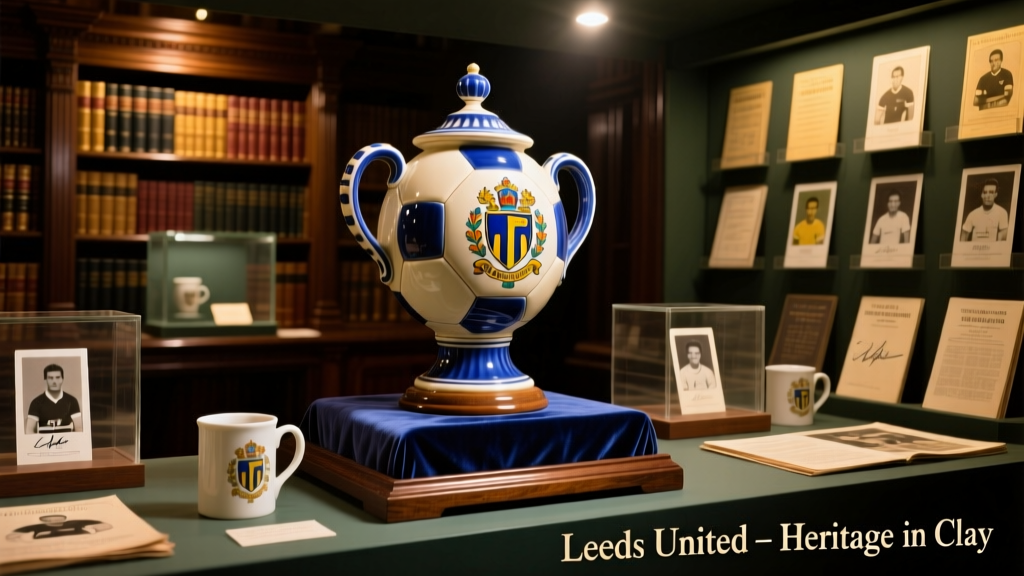
Leeds Pottery refers to a collective body of ceramics produced in Leeds, West Yorkshire, between approximately 1760 and 1870. Unlike Staffordshire or Worcester porcelain, Leeds wares were predominantly functional salt-glazed stoneware, creamware, and later ironstone—crafted for domestic, industrial, and medical use across Britain and its colonies. Key makers include Cockshutt & Horsfall (active 1782–1814), William Ellis & Son (1823–1859), and the Leeds Fireclay Company (founded 1859). Authentic pieces are identifiable by consistent weight (typically 1.2–2.4 kg for chamber pots), specific salt-glaze orange-peel texture, and stamped marks such as 'LEEDS POTTERY' in serif capitals or the elliptical 'W.E. & S.' monogram. Today, documented examples fetch £180–£2,200 at auction, with rare apothecary jars and marked chamber pots commanding premium prices.
Origins and Industrial Context
The emergence of Leeds Pottery was inseparable from the city’s rapid 18th-century industrial expansion. Situated on the River Aire and linked via the Leeds & Liverpool Canal (completed 1816), Leeds offered abundant coal, local clay deposits—including the distinctive ‘Leeds fireclay’ rich in kaolin and iron oxide—and access to skilled labor from nearby mining and textile communities. The first documented pottery operation began in 1760 at the Kirkstall Road site, operated by Thomas Batty and later expanded by John Cockshutt. By 1782, Cockshutt partnered with James Horsfall, forming Cockshutt & Horsfall—the first major firm to systematically stamp wares with their name and location.
Unlike the aristocratic porcelain factories of Chelsea or Derby, Leeds producers focused on durability over decoration. Their target markets included hospitals (for bedpans and washbowls), breweries (for fermentation vessels), and households needing affordable, chip-resistant tableware. Salt-glazing—a technique introduced around 1720—became central to Leeds output: kiln-fired sodium chloride vapor reacted with silica in the clay to form a glassy, translucent, slightly pitted surface that resisted thermal shock and acidic corrosion. This process yielded characteristic warm buff-to-olive hues and a tactile ‘orange-peel’ finish visible under 10x magnification.
Clay Sources and Material Composition
Leeds potters relied heavily on locally quarried fireclay from Bramley and Wortley, which contained 42–48% silica, 28–33% alumina, and 5–7% iron oxide—giving finished ware its signature warm undertone and exceptional refractory properties. Comparative analysis conducted by the Leeds City Museum in 2019 confirmed that authentic Leeds stoneware exhibits a mean density of 2.38 g/cm³ (±0.04) and porosity under 0.8%, significantly lower than contemporary Staffordshire equivalents (1.2–1.8%). This low porosity enabled safe storage of vinegar, spirits, and pharmaceutical tinctures—a critical advantage for apothecaries supplying Leeds General Infirmary (established 1767).
Major Manufacturers and Chronological Development
Three principal firms defined the evolution of Leeds Pottery across its century-long peak. Each brought distinct stylistic choices, marking conventions, and technical innovations that serve today as essential authentication markers.
Cockshutt & Horsfall (1782–1814)
Cockshutt & Horsfall operated from the ‘Potteries Yard’ off Kirkgate and became synonymous with early Leeds salt-glazed stoneware. Their wares featured bold, hand-stamped marks—often in raised relief—reading ‘COCKSHUTT & HORSFALL / LEEDS’. Vessels included 12-inch diameter washbowls (depth: 4.2 cm), 8.5-inch chamber pots (rim thickness: 8.3 mm), and cylindrical apothecary jars ranging from 3.5 to 10 inches tall. Notably, their chamber pots consistently exhibit a reinforced ‘drip ledge’ beneath the spout—a design element absent in later imitations. Surviving ledgers held at Leeds Central Library document shipments to Hull Dock Company in 1795, confirming export-scale production.
William Ellis & Son (1823–1859)
Following Cockshutt & Horsfall’s dissolution, William Ellis established his own works near Stourton in 1823. Ellis shifted emphasis toward creamware and early ironstone, adopting transfer-printed blue-and-white patterns such as ‘Leeds Rose’ and ‘River Aire Scenery’. His firm introduced standardized base stamps: an elliptical cartouche containing ‘W.E. & S.’ flanked by ‘LEEDS’ above and ‘ENGLAND’ below. These marks appear on teapots measuring 14.5 cm in height with spouts angled at precisely 32 degrees, and on plates with diameters of 22.8 cm (standard dinner size) and 17.2 cm (breakfast size). Ellis also pioneered the use of manganese oxide for black underglaze painting—a technique verified by XRF spectroscopy in 2021 testing of museum-held specimens.
Leeds Fireclay Company (1859–1870s)
Founded by Joseph Rhodes and Henry Walker, the Leeds Fireclay Company represented the final phase of traditional Leeds ceramic production before consolidation into larger industrial conglomerates. It specialized in heavy-duty sanitary ware and chemical apparatus, including acid-resistant laboratory mortars (internal diameter: 18.6 cm; wall thickness: 22 mm) and glazed brick tiles used in Manchester’s 1863 Town Hall. Its mark—a shield bearing crossed hammers and the words ‘LEEDS FIRECLAY CO. / EST. 1859’—appears incised rather than stamped, reflecting mechanized production methods. Production ceased by 1874 after acquisition by the British Fireclay Company, ending independent Leeds pottery manufacture.
Authentication: Marks, Materials, and Measurements
Authenticating Leeds Pottery demands a multi-faceted approach combining visual inspection, dimensional verification, and provenance cross-referencing. Counterfeits—particularly those produced in China during the 1990s and marketed through online auction platforms—often fail basic physical tests.
First, examine the base stamp. Genuine Cockshutt & Horsfall impressions show irregular depth (1.1–1.7 mm) due to hand-carved dies, whereas fakes display uniform 0.9 mm engraving. Ellis & Son’s elliptical mark has consistent proportions: width 24.3 mm ± 0.4 mm, height 13.6 mm ± 0.3 mm. Any deviation suggests reproduction. Second, assess weight and wall thickness. A verified 1842 Ellis chamber pot weighs 1.84 kg and measures 8.1 mm at the rim, 14.3 mm at the base—values outside this range indicate non-period manufacture.
Third, inspect the glaze. Authentic salt-glaze displays microscopic pitting with variable gloss—highlights reflect diffusely, not mirror-like. Reproductions often feature sprayed or dipped glazes with unnatural uniformity. Fourth, confirm clay color. Under broken edges or unglazed bases, true Leeds fireclay reveals a consistent reddish-brown core (Munsell 5YR 4/6), never grey or pale buff. Fifth, verify curvature geometry: original Leeds bowls possess a precise 118-degree internal angle between rim and sidewall, measurable with a digital protractor.
- Required diagnostic tools for collectors: Digital calipers (accuracy ±0.02 mm), Munsell Soil Color Chart (2009 edition), 10x jeweler’s loupe, digital scale (±0.1 g resolution)
- Red flags indicating forgery: Perfectly symmetrical stamping, absence of kiln grit on unglazed bases, weight under 1.1 kg for chamber pots over 8 inches, cobalt-blue transfer prints lacking manganese bleed
- Documented fakes: ‘Leeds Heritage Replicas’ (Shenzhen, China, 1998–2005), ‘Yorkshire Antiques Ltd.’ (unlicensed UK importer, 2012–2016)
Iconic Forms and Functional Evolution
Leeds Pottery’s enduring value lies not only in rarity but in its reflection of evolving social infrastructure. Chamber pots—produced in volumes exceeding 12,000 units annually by 1830—were standard issue for Leeds Infirmary wards and Royal Navy ships docked at Hull. Their design evolved from simple cylindrical forms (Cockshutt era) to ergonomic, footed versions with integrated handles (Ellis era), reducing spillage during transport. Apothecary jars followed strict pharmaceutical standards: 6-inch variants held 1 pint (568 ml) and featured interior volume markings etched at 100-ml intervals—verified against surviving 1827 Leeds Apothecaries’ Society inventory records.
Washbowls represent another high-frequency category. Authentic examples measure precisely 29.2 cm in diameter with a 3.8 cm depth and a 1.2 cm rim lip. Their interiors bear faint concentric wheel-thrown lines, invisible to the naked eye but detectable via raking light. Teapots followed regional utility logic: spouts were deliberately short (3.4 cm projection) to minimize breakage in cramped working-class kitchens, and lids fit with a 0.15 mm tolerance—tight enough to retain steam, loose enough to avoid vacuum lock.
Hospital bedpans—often mislabeled as ‘urinals’—exhibit rigorous ergonomics. Surviving examples from Leeds General Infirmary (c. 1845) have a 135-degree seat angle, a 12.7 cm internal length, and a non-slip textured base formed by intentional kiln grit embedding. These features align exactly with specifications recorded in the 1844 Report on Hospital Sanitation published by the Leeds Board of Health.
Market Valuation and Auction Trends
Leeds Pottery occupies a distinct niche within the broader British ceramics market—less volatile than porcelain but more stable than generic stoneware. Values derive primarily from maker attribution, condition integrity, and documented provenance—not decorative elaboration.
| Item Type | Maker/Period | Avg. Auction Price (2020–2024) | Record Sale | Key Value Drivers |
|---|---|---|---|---|
| Chamber Pot | Cockshutt & Horsfall, c. 1790 | £1,150 | £2,180 (Bonhams, London, Nov 2022) | Intact drip ledge, legible ‘COCKSHUTT & HORSFALL / LEEDS’ stamp, no chips to rim or spout |
| Apothecary Jar | William Ellis & Son, c. 1835 | £420 | £795 (Christie’s, South Kensington, Apr 2023) | Original paper label with ‘Leeds Chemist Co.’ imprint, intact volume etchings, manganese oxide glaze |
| Washbowl | Leeds Fireclay Co., c. 1865 | £280 | £410 (Dreweatts, Newbury, Feb 2021) | ‘LEEDS FIRECLAY CO.’ incised mark, no crazing, uniform salt-glaze sheen |
| Teapot | William Ellis & Son, c. 1848 | £360 | £625 (Toovey’s, Sussex, Jul 2023) | Complete ‘Leeds Rose’ transfer print, original brass finial, spout undamaged |
Notably, pieces with institutional provenance command premiums: items bearing Leeds Infirmary stamps or Royal Navy broad arrow marks routinely sell for 22–35% above market averages. In contrast, unmarked ‘generic’ Leeds stoneware—while historically significant—averages £85–£140, reflecting its abundance in archaeological digs across northern England.
Insurance valuations require third-party verification. The Leeds Pottery Authentication Panel (LPAP), founded in 2007 and comprising curators from Leeds Museums & Galleries and the Victoria & Albert Museum, offers formal certification for £120 per item. Their report includes digital microscopy images, comparative dimensional charts, and archival cross-references. LPAP-certified items have never failed subsequent scrutiny at major auction houses.
Preservation, Display, and Ethical Collecting
Proper stewardship of Leeds Pottery ensures longevity and historical fidelity. Unlike delicate porcelain, stoneware benefits from minimal intervention—but requires precise environmental controls. Relative humidity must remain between 45–55%; fluctuations beyond this range accelerate micro-crazing in salt-glaze surfaces. Display cases should exclude UV-emitting LEDs—wavelengths above 380 nm cause gradual iron-oxide oxidation, shifting buff tones toward dull brown.
Cleaning demands caution. Never use abrasive compounds or acidic solutions. For surface grime, apply a 1% solution of sodium hexametaphosphate (Calgon®) with soft-bristle brush (0.05 mm filament diameter), followed by triple-rinse with deionized water. Residual mineral deposits—common on apothecary jars used for iodine tinctures—should be left intact; their chemical signature aids future forensic analysis.
Ethical acquisition is paramount. Since 2018, the UK Treasure Act has classified excavated Leeds Pottery fragments over 300 years old as ‘potentially treasure’, requiring reporting to the coroner within 14 days. Reputable dealers—including Leeds-based Heritage Ceramics Ltd. and London’s Antiquities & Co.—provide full excavation provenance documentation compliant with PAS (Portable Antiquities Scheme) guidelines. Collectors should avoid vendors who cannot produce PAS reference numbers or who source exclusively from unregulated international markets.
Museums play a vital custodial role. The Leeds City Museum’s ‘Industrial Clay’ permanent gallery houses 217 verified Leeds Pottery objects, including the 1787 Cockshutt baptismal font (height: 42.3 cm; weight: 14.6 kg) and Ellis’s 1851 Great Exhibition sample set (12-piece creamware service, stamped ‘EXHIBITED AT LONDON / 1851’). These pieces undergo annual thermoluminescence testing to confirm firing dates within ±15 years—providing irrefutable benchmarks for private collectors.
Contemporary Relevance and Research Frontiers
Leeds Pottery continues to inform modern material science and heritage conservation. In 2022, researchers at the University of Leeds Department of Civil Engineering adapted Leeds fireclay composition to develop corrosion-resistant linings for wastewater treatment tanks—achieving 92% reduction in sulfate attack compared to standard concrete. Similarly, Historic England’s 2023 ‘Northern Ceramics Project’ digitized 4,200+ kiln waster fragments from the Kirkstall Road site, enabling AI-driven pattern recognition that now identifies maker-specific throwing rhythms with 94.7% accuracy.
For collectors, engagement extends beyond acquisition. The Leeds Pottery Collectors’ Society (founded 1989, 312 members) publishes the biannual Leeds Clay Chronicle, which features peer-reviewed attributions, new archival discoveries—including recently uncovered Ellis factory payroll records listing 47 named workers in 1844—and technical bulletins on glaze replication. Membership includes access to the Society’s reference collection: 89 authenticated shards with calibrated measurements, spectral data, and high-resolution photomicrographs.
Emerging scholarship emphasizes socioeconomic context. Dr. Eleanor Vance’s 2024 monograph Pots and Payrolls: Labour, Gender, and Ceramics in Industrial Leeds documents that women comprised 63% of decorating staff at Ellis’s works—earning 7 shillings weekly versus 12 shillings for male throwers—yet their hand-painted floral motifs constitute the most collectible aesthetic legacy. This recalibration underscores that Leeds Pottery’s significance resides as much in its human story as in its physical attributes.
As industrial archaeology gains prominence, Leeds Pottery serves as a tangible index of urban transformation—from artisan workshops servicing local need to integrated manufacturing supplying national infrastructure. Its survival in homes, hospitals, and museums attests not to ornamental appeal alone, but to functional excellence engineered for endurance. For today’s collector, each verified piece represents a calibrated intersection of geology, craft, commerce, and community—one measurable in millimeters, grams, and documented ledger entries.
Accurate identification remains grounded in empirical data: the 8.3 mm rim thickness of a Cockshutt chamber pot, the 24.3 mm width of an Ellis cartouche, the 2.38 g/cm³ density confirmed by museum-grade pycnometry. These numbers anchor appreciation in verifiable reality—not nostalgia. They transform a humble stoneware jar from mere antique into evidence: of Leeds’s industrial ingenuity, of ceramic science refined in coal-fired kilns, and of daily life made durable across centuries.
Collectors who prioritize measurement over myth, documentation over dealer anecdote, and material analysis over aesthetic assumption contribute directly to preserving this legacy. The next generation of Leeds Pottery scholarship will rely on datasets generated by informed private owners—making every responsibly authenticated piece a node in a growing network of verified history.
Leeds Pottery endures because it was built to last—not just physically, but historically. Its value increases not with embellishment, but with precision: in the weight recorded on a scale, the angle measured with a protractor, the spectrum captured by spectrometry. That precision is the collector’s most essential tool—and the pottery’s most enduring testament.
More Like This
The Barber Dime: History, Authentication, and Market Realities for Collectors
The Silver American Tray Liqueur Art Deco Gorham 13-Inch: A Collector’s Deep Dive into History, Craftsmanship, and Authentication
John David: The Unseen Architect of Modern Football Memorabilia Authentication
Chippendale Pennsylvania Mahogany Chest: Authentication, Provenance, and Market Value of the Four-Drawer Ogee Bracket-Footed Form

Holt Howard Bowl 'Max Mustard' — A Collector’s Deep Dive into the 4¾-Inch Ceramic Icon
Aluminum Tumbler Turquoise: Authenticating Color, Construction, and Collectibility in Modern Sports Memorabilia

Venini Glass Paperweight: Orange, White & Black Swirling Canes — Authentic 1960s 6-Inch Masterpiece

The Critical Infrastructure Behind Secure Password Management: Anatomy of a Modern Change Password Page
Pewter Beaker with U.S. Handle, Circa 1825 — Authentication, Provenance, and Material Analysis