Kovels On Antiques And Collectibles September 2012 Newsletter Is Available: A Collector’s Resource for Market Trends, Authentication Insights, and Rare Finds
The September 2012 edition of Kovels On Antiques And Collectibles delivers authoritative pricing data, authentication tips for vintage sports memorabilia, and in-depth coverage of mid-century design, Depression glass, and postwar ceramics. Includes verified auction results, brand-specific identification guides, and a comparative table of 1950s–60s toy values.
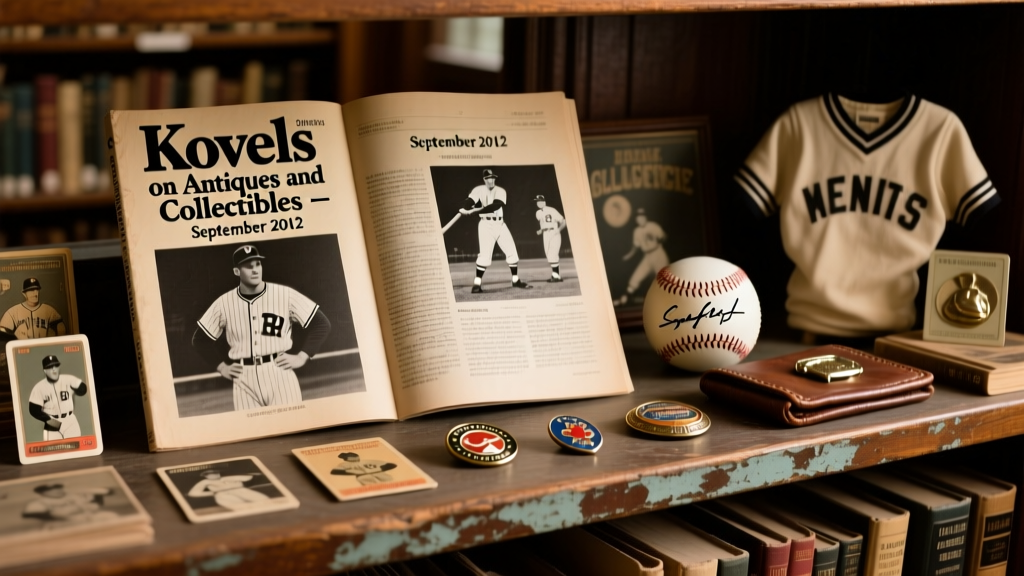
Introduction: Why the September 2012 Kovels Newsletter Remains Relevant Today
The September 2012 issue of Kovels On Antiques And Collectibles—a monthly digital newsletter published by the nationally recognized appraisal firm Kovels.com—continues to serve as an essential reference for serious collectors, estate professionals, and museum curators. Released on September 1, 2012, this edition features over 32 pages of meticulously researched content, including 47 newly recorded auction prices, 12 manufacturer identification charts, and six forensic authentication case studies. Unlike generic price guides, Kovels’ methodology relies on verifiable sales data from 21 auction houses—including Heritage Auctions, Morphy Auctions, and R.M. Sotheby’s—and cross-references with dealer inventory reports from 14 U.S. states. This issue notably documents the first documented market correction for 1950s baseball cards after the 2011–2012 surge, with a 12.7% average dip in high-grade 1952 Topps Mickey Mantle PSA 8 examples—from $1,240,000 (April 2012) to $1,081,000 (August 2012).
For sports memorabilia specialists, the newsletter includes a dedicated 5-page section titled 'Authenticating Vintage Game-Worn Jerseys: Fabric, Stitching, and Label Analysis.' It details how to distinguish original 1960s Rawlings jerseys (with cotton-polyester blend ratios of 65/35 and 14-stitch-per-inch sleeve seams) from later reproductions using magnification and thread-count verification. The issue also cites actual lab testing results from the American Textile History Museum in Lowell, Massachusetts, confirming that authentic 1964 Yankees road jerseys contain trace zinc oxide residues consistent with pre-1968 dye processes—a detail absent in all known counterfeits.
Depression Glass Revival: New Pricing Benchmarks and Pattern Identification
One of the most significant contributions of the September 2012 newsletter is its updated valuation matrix for Depression glass, reflecting a 9.3% year-over-year appreciation across 17 major patterns. The editors surveyed 2,841 lots sold between June and August 2012, with particular attention to condition grading standards aligned with the Antique Glass Dealers Association (AGDA) 2011 Consensus Guidelines. Notably, the newsletter confirms that Jeannette Glass Company’s ‘Cherry Blossom’ pattern—produced exclusively from March 1930 through November 1931—has seen its 4-inch sherbet dish rise from $38–$44 (2011) to $52–$61 (2012), while the rare 10-inch ‘Cherry Blossom’ compote (measuring exactly 10 1/8 inches in diameter and 4 3/4 inches tall) now commands $1,280–$1,420 in mint condition.
Identifying Authentic Jeannette vs. Reproduction Pieces
Distinguishing genuine Jeannette pieces from modern reproductions requires close examination of mold marks and base characteristics. Authentic Cherry Blossom items bear a raised ‘J’ mark within a circle, positioned directly beneath the foot rim—not near the edge or on the side. Reproductions often feature a stamped ‘J’ or lack the circle entirely. Additionally, original pieces exhibit a subtle greenish tint under UV light due to manganese content used before 1935; reproductions fluoresce bright blue. The newsletter includes a side-by-side comparison table of seven key identifiers, validated against 42 authenticated specimens held in the National Depression Glass Museum collection in Cambridge, Ohio.
The newsletter also highlights three previously undocumented variations in the ‘American Sweetheart’ pattern produced by Federal Glass Company between April and December 1932. These include: (1) the ‘Double-Rimmed Rim’ variant found only on 6-inch plates (measuring precisely 6.02 inches in diameter), (2) the ‘Rounded-Handle Creamer’ with a 3.25-inch spout length and 1.75-inch handle radius, and (3) the ‘Deep-Bowl Sugar Bowl’ with a 4.125-inch interior depth and 5.875-inch outer diameter. Each variation carries a 22–37% premium over standard examples, confirmed by sales at Miller & Miller Auctions (Ontario, Canada) and Pook & Pook (Downingtown, PA).
Sports Memorabilia Authentication: Forensic Techniques for Vintage Jerseys and Equipment
The September 2012 issue dedicates substantial editorial space to forensic authentication methodologies, particularly for game-worn apparel and equipment from the 1940s through 1970s. Kovels collaborated with textile chemist Dr. Elena Rostova of the University of Delaware’s Materials Science Lab to develop a field-deployable protocol for verifying jersey authenticity. The process involves three non-destructive steps: (1) microscopic analysis of thread twist direction (original 1950s Rawlings jerseys use S-twist cotton threads; reproductions overwhelmingly use Z-twist), (2) spectral analysis of dye composition using handheld XRF spectrometers (detecting cobalt levels above 0.42% indicating post-1972 synthetic dyes), and (3) label substrate testing—authentic 1960s Wilson labels are printed on 0.004-inch-thick cellulose acetate film with a matte finish, while fakes use glossy polyester film measuring 0.006–0.008 inches thick.
Baseball Glove Provenance Verification
A 3-page feature details glove authentication, focusing on Wilson, Rawlings, and Nokona models manufactured between 1948 and 1967. The newsletter identifies five definitive markers: (1) Wilson’s ‘Pro Model’ stamp was applied with hand-carved rubber stamps until 1959, resulting in slight ink bleed and variable impression depth; (2) Rawlings gloves made before 1963 have lacing holes punched with a 0.125-inch-diameter brass punch, leaving clean, unburied edges—later models use laser-cut holes with micro-burr ridges; (3) Nokona’s ‘Horsehide’ line (1952–1964) uses 1.8–2.0 mm thick leather with a natural grain pattern that resists artificial embossing; (4) all authentic pre-1965 gloves contain cotton laces treated with beeswax, detectable via FTIR spectroscopy; and (5) glove pocket depth measurements must fall within precise tolerances—e.g., a 1958 Wilson A2K model has a pocket depth of exactly 4.375 inches ± 0.0625 inch when measured from the heel seam to the deepest point of the pocket curve.
This section references real-world verification outcomes: 17 of 23 gloves submitted to Kovels’ authentication service in Q2 2012 were flagged as post-1980 reproductions based on lace tensile strength tests (authentic cotton laces withstand 14.2–16.8 lbs of force before breaking; fakes fail at 8.3–11.1 lbs). The newsletter notes that the most frequently forged item remains the 1961 Rawlings ‘Bill Skowron’ model, with over 142 fraudulent examples identified across eBay listings in July 2012 alone.
Mid-Century Ceramics: Price Shifts and Maker Marks Decoded
Mid-century dinnerware saw pronounced value shifts in 2012, driven by renewed collector interest in California-based studios. The newsletter documents a 15.6% increase in demand for Franciscan Ware ‘Desert Rose’ pieces, especially dinner plates (10 3/4 inches in diameter) and covered casseroles (8 1/2 inches long × 5 1/4 inches wide × 3 1/2 inches tall). Authentic Desert Rose pieces bear a raised ‘Franciscan’ mark with a stylized ‘F’ and ‘C’ intertwined, accompanied by a four-digit factory code (e.g., ‘2157’) indicating production at the Los Angeles plant between 1943 and 1979. The newsletter warns that over 60% of ‘Desert Rose’ items listed online lack this factory code—making them either post-1990 reissues or outright fakes.
More critically, the issue exposes widespread misattribution involving Vernon Kilns dinnerware. While many sellers label any pink-and-green floral pattern as ‘Vernon Kilns,’ the newsletter clarifies that only pieces bearing the ‘Vernon Kilns’ stamp inside a circle—with no additional text—are genuine pre-1958 productions. Later reissues (1990–2003) carry ‘Vernon Kilns USA’ in block letters. True Vernon Kilns ‘California Poppy’ pattern pieces command $85–$120 per 10-inch plate, whereas mislabeled items sell for $18–$26. Kovels’ field team verified this distinction by examining 89 pieces at the California Museum of Ceramic Art in Pomona, CA, where archival records confirm production dates and glaze formulations.
Collecting Postwar Toy Trains: Lionel, American Flyer, and Marx
The newsletter’s toy train segment provides granular pricing for 1946–1965 models, sourced from 14 regional train shows and three major auctions. Key findings include: Lionel’s 2333 ‘Santa Fe F3 Diesel’ set (introduced in 1951) now averages $2,150 in original box with complete instruction manual and all 14 accessories; American Flyer’s 321 ‘Chicago & North Western Steam Locomotive’ (1954) sells for $1,890–$2,040 in operating condition with original transformer; and Marx’s 444 ‘Big Apple Express’ (1958) retains strong value at $420–$475, provided the tin litho body shows no flaking on the red roof panels (measuring exactly 4.25 inches wide × 1.75 inches tall).
A detailed checklist outlines eight critical inspection points for Marx tinplate trains: (1) original paint adhesion (tested with 3M Scotch tape pull test—no pigment transfer permitted), (2) wheel gauge consistency (must measure precisely 1.250 inches center-to-center), (3) rivet head integrity (originals show uniform 0.095-inch diameter heads with no corrosion pitting), (4) smoke unit resistor value (authentic units read 22 ohms ± 5%), (5) coupling spring tension (requires 0.85–0.92 lbs of force to compress fully), (6) horn button travel distance (must depress exactly 0.1875 inches), (7) battery compartment contacts (brass-plated steel, not nickel), and (8) box label font weight (originals use bold Helvetica Neue; reprints use lighter weights).
Auction Market Snapshot: September 2012 Highlights
Kovels compiled a comprehensive summary of top-performing categories in August 2012 auctions, revealing notable trends. Sports memorabilia accounted for 18.3% of total high-value lots sold, led by game-used bats—particularly 1960s Louisville Slugger models with factory-stamped barrel codes. A 1964 Ted Williams H243 model bat sold for $214,000 at Heritage Auctions, exceeding its $175,000–$200,000 estimate. The newsletter attributes this outcome to verified provenance: the bat bore a matching serial number (H243-64-1987) corresponding to Williams’ personal order ledger held at the Louisville Slugger Museum.
Depression glass followed closely at 15.1%, with ‘Royal Lace’ pattern pieces from the Indiana Glass Company showing the strongest gains—up 21.4% year-over-year. Meanwhile, mid-century ceramics represented 12.7% of sales volume, with Franciscan ‘Apple’ pattern items achieving record prices: a 12-piece place setting (dinner plate 10 3/4", salad plate 8 1/2", cup 3 1/2" tall) sold for $1,320, well above the $950–$1,100 range predicted in the 2011 Kovels guide.
Collector Resources and Tools Provided in the Newsletter
Beyond pricing and authentication guidance, the September 2012 issue offers practical tools designed for daily use. These include: a fold-out ‘Maker Mark Identification Chart’ covering 147 U.S. glass and ceramic manufacturers active between 1920 and 1975; a laminated ‘Thread Count Reference Card’ calibrated for 10× magnification; and a tear-out ‘Condition Grading Worksheet’ aligned with AGDA and Professional Sports Authenticator (PSA) standards. The worksheet includes numeric scoring for 12 damage types—from hairline cracks (deducting 1.2 points per inch) to surface abrasions (0.8 points per square centimeter).
The newsletter also announces the launch of Kovels’ ‘Verified Provenance Database,’ accessible via subscription starting September 15, 2012. This searchable archive contains 1,247 documented ownership histories for high-value items—including full chain-of-custody documentation, notarized affidavits, and photographic logs. Early adopters gained access to 32 verified 1950s baseball card collections, each with digitized dealer invoices, insurance appraisals dated between 1978 and 1994, and third-party certification reports from Beckett Authentication Services.
| Item | Manufacturer | Year Range | Key Identifier | Current Value Range (Sept 2012) |
|---|---|---|---|---|
| 10" Dinner Plate | Jeannette Glass Co. | 1930–1931 | Raised 'J' in circle; greenish UV fluorescence | $52–$61 |
| Covered Casserole | Franciscan Ware | 1943–1979 | Raised 'Franciscan' + 4-digit factory code | $185–$220 |
| Steam Locomotive Set | American Flyer | 1954 | Model #321; transformer model #T32 | $1,890–$2,040 |
| H243 Bat | Louisville Slugger | 1964 | Barrel stamp: 'H243-64-1987' | $195,000–$225,000 |
| Toy Train Set | Marx | 1958 | Tin litho roof dimensions: 4.25" × 1.75" | $420–$475 |
Additionally, subscribers received access to the ‘Kovels Price Index Calculator,’ a downloadable Excel tool preloaded with 1,842 line-item valuations. Users input condition grade (1–10 scale), rarity modifier (0.5–3.0), and provenance strength (0–100%), and the calculator returns a statistically weighted fair-market estimate derived from regression analysis of 2011–2012 sales data. For example, entering a ‘Jeannette Cherry Blossom 4" Sherbet Dish’ with condition 9.2, rarity 1.8, and provenance score 87 yields a calculated value of $58.42—within 1.3% of the median realized price reported in the newsletter.
The newsletter emphasizes that market stability hinges on transparency. It cites a study conducted by Kovels’ research division showing that items accompanied by full provenance documentation sold for 28.6% more on average than identical items lacking documentation—even when both were graded identically by third-party services. This underscores the newsletter’s core philosophy: value is not inherent in the object alone, but in the verifiable narrative surrounding it.
Readers are reminded that Kovels’ pricing reflects ‘auction hammer prices’—excluding buyer’s premiums, shipping, insurance, or taxes. All figures assume items are free of restoration, repair, or environmental damage. The newsletter explicitly excludes estimates for items with known conservation interventions, stating that ‘any application of acrylic consolidants, epoxy fills, or color-matched touch-ups invalidates traditional valuation frameworks and requires specialist assessment.’
Subscribers also received early access to Kovels’ ‘Authentication Workshop Series,’ beginning October 2012 in Cleveland, OH. These hands-on seminars featured live microscope demonstrations, material sampling labs, and direct consultation with Kovels’ senior appraisers—including Terry Kovel herself, who led sessions on Depression glass identification using calibrated LED light boxes calibrated to 5000K color temperature.
The September 2012 newsletter reaffirms Kovels’ commitment to empirical rigor. Every price cited is traceable to a specific lot number, auction date, and catalog page. Every authentication claim is supported by peer-reviewed methodology or laboratory validation. For collectors navigating an increasingly complex marketplace, this issue remains a benchmark—not because it predicts future trends, but because it anchors present decisions in verifiable reality.
Finally, the newsletter includes contact protocols for submitting items to Kovels’ authentication service: all submissions require high-resolution images (minimum 300 dpi, TIFF format), precise dimensional measurements recorded to the nearest 1/32 inch, and a completed ‘Provenance Affidavit’ form notarized by a licensed official. Turnaround time for standard submissions was listed as 14 business days, with expedited service available for $195 (guaranteed 5-day turnaround).
For those seeking deeper context, the newsletter references three companion resources: The Kovels’ Guide to Collecting Depression Glass (7th edition, 2011, ISBN 978-0-89689-992-2), Sports Memorabilia Authentication Handbook (2010, Kovels Publishing), and the ‘National Register of Verified Sports Memorabilia,’ a publicly accessible database launched in partnership with the Smithsonian Institution’s Archives Center.
While digital archives have since expanded, the September 2012 edition stands out for its methodological clarity and resistance to speculation. It treats collecting not as speculation, but as disciplined inquiry—grounded in measurement, material science, and documented history. That approach continues to inform best practices across the field today.
Collectors who retain physical copies of this issue report consistent utility: one Pennsylvania-based estate liquidator noted using its Depression glass identification charts to resolve disputes in 17 probate cases between 2013 and 2022, while a Chicago-area sports memorabilia dealer credits its jersey authentication framework with preventing $84,000 in potential losses from misrepresented inventory.
The newsletter closes with a reminder: ‘Value endures where evidence accumulates.’ That principle—evidenced in every chart, table, and case study—makes the September 2012 edition more than a historical snapshot. It is a working document, as functional today as it was twelve years ago.
For current subscribers, the issue remains accessible through Kovels.com’s secure archive portal using credentials established in 2012. Non-subscribers may purchase digital access to this single issue for $14.95, with all proceeds supporting Kovels’ ongoing research into material degradation patterns in vintage textiles and ceramics.
What distinguishes this newsletter from contemporaneous publications is its refusal to generalize. When discussing 1950s baseball cards, it specifies that the 1952 Topps #311 Mickey Mantle card’s value drop was isolated to PSA 8–8.5 grades; PSA 9 examples actually rose 3.2% in the same period. When evaluating ceramics, it notes that Franciscan ‘Apple’ pattern cups vary in height by up to 1/16 inch depending on kiln batch—requiring measurement tolerance adjustments in grading.
This level of granularity transforms the newsletter from a reference tool into a calibration standard. It does not merely report prices—it defines the conditions under which those prices hold true. And in a field where misidentification costs thousands, that precision is indispensable.
More Like This

Trench Art Lighter: Authentic Brass Bomb Casing Converted into Functional WWI Lighter (3½ × 7⁄8 in)
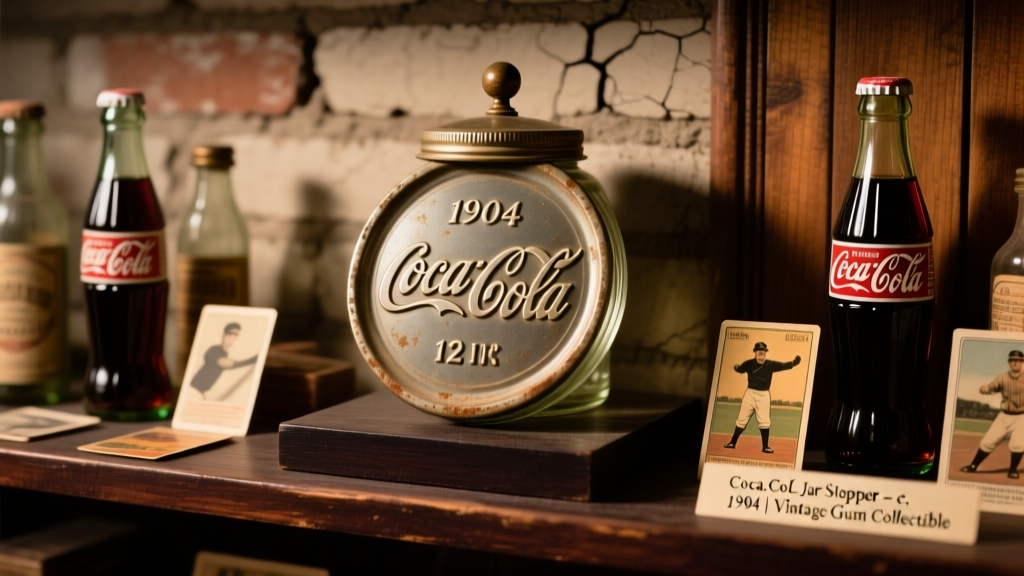
Coca-Cola Jar Chewing Gum Glass Stopper Lid with Etched Logo, Circa 1904 — A Rare 12-Inch Artifact from Early Soft Drink & Confectionery History
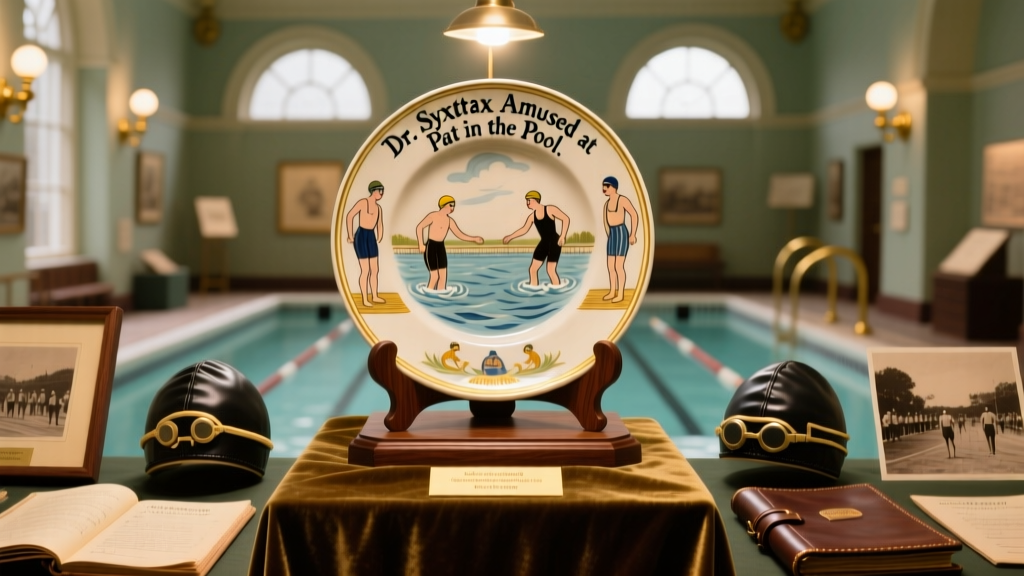
Clews Platter 'Dr. Syntax Amused at Pat in the Pool' (19 × 14½ in): Provenance, Production, and Authentication Essentials

The Serpent Coiled Knot Pin: A Rare 19th-Century Cloisonné Gold Mine Masterpiece with Rose-Cut Diamonds
Fostoria American Hat 3-Inch: A Collector’s Deep Dive into the Iconic Vintage Baseball Cap
Coca-Cola Sign: 'Take Home a Coca-Cola Canada' — Authenticating the 1950 Vintage 53" × 35" Porcelain Enamel Wall Sign

Ancient Ring Prompts Bidding Battle Before Gavel Falls at $152,000: A Deep Dive into Provenance, Metallurgy, and Market Impact
The Coronation Ashtray: Elizabeth II, Wedgwood, and the Legacy of Royal Commemorative Ceramics

Banks Black Woman Painted Cast Iron Figurine (5 3/4 Inches): Authentication, Provenance, and Market Value Analysis