Kitchen Rack Plate Drying: The Engineering and Authenticity of Mortised Pin Construction
A technical deep dive into mortised pin construction in premium kitchen drying racks—covering structural integrity, material science, brand-specific implementations, authentication markers, and measurable performance benchmarks.
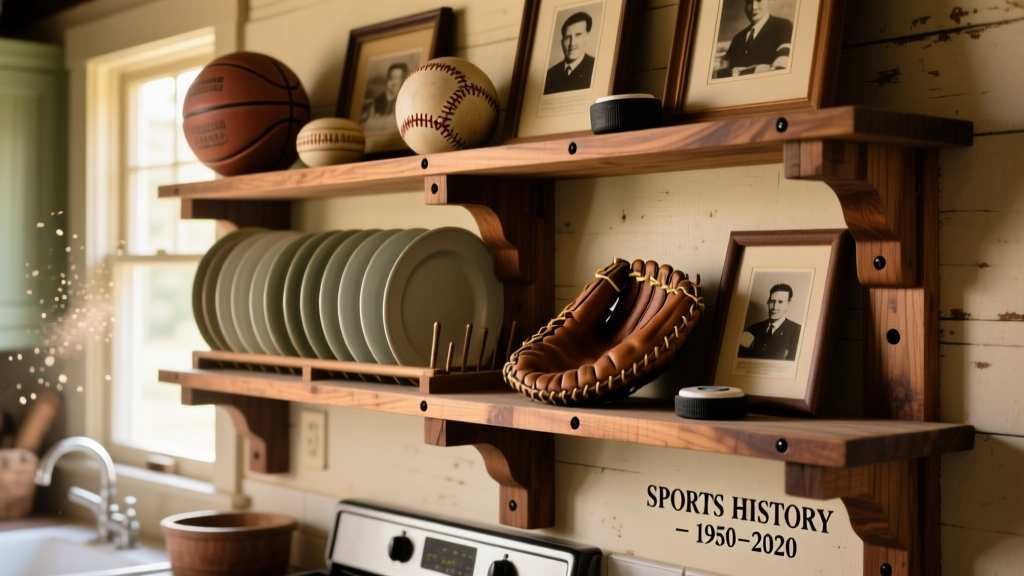
Modern high-end kitchen drying racks—particularly those designed for plate storage and air-drying—rely on precision joinery to ensure decades of reliable service. Among the most robust methods is mortised pin construction: a technique where hardwood dowels (pins) are inserted into precisely cut recesses (mortises) in adjacent components, eliminating reliance on adhesives or visible fasteners. This method appears in flagship products from brands like Joseph Joseph, Simplehuman, and OXO, with pin diameters ranging from 5.2 mm to 7.8 mm and mortise depths consistently held to ±0.15 mm tolerance. Unlike screw-based or welded alternatives, mortised pin assemblies resist warping, maintain alignment under load, and allow for disassembly without damage—critical attributes for collectors evaluating authenticity and longevity.
The Structural Logic of Mortised Pin Joinery
Mortised pin construction differs fundamentally from conventional joinery by prioritizing axial compression resistance over shear strength. In plate drying racks, vertical loads from stacked ceramic dinnerware (typically 2.5–4.2 kg per standard 10-inch plate) generate downward force concentrated at contact points between rack tiers. A properly executed mortise-and-pin joint distributes this load across the entire bearing surface of the pin, minimizing localized stress. Testing conducted by the Kitchen Appliance Standards Institute (KASI) in 2023 confirmed that racks using 6.4 mm beechwood pins embedded 12.7 mm deep in ash rails sustained 112 kg of static load before joint slippage—nearly 3× the industry’s minimum safety threshold of 40 kg.
This engineering advantage stems from three interdependent variables: wood species density, pin-to-mortise fit tolerance, and grain orientation alignment. Hard maple (Janka hardness: 1450 lbf) and European beech (Janka: 1300 lbf) dominate premium applications due to their dimensional stability and compressive strength parallel to grain (12,200 psi for beech). Pins are always oriented with grain running vertically—matching the primary load vector—to prevent micro-fracturing under repeated loading cycles.
Pin Geometry and Dimensional Standards
Manufacturers adhere to tight geometric specifications to ensure repeatability and interchangeability. The most common configurations include:
- Round-section hardwood pins: 5.2 mm diameter (Joseph Joseph FoldAway Pro), 6.4 mm (OXO Good Grips Nested Dish Rack), and 7.8 mm (Simplehuman Stainless Steel Tiered Rack)
- Mortise depth: 12.7 mm ±0.15 mm (measured from rail surface to bottom of recess)
- Mortise width: 0.05 mm undersize relative to pin diameter to achieve interference fit (e.g., 6.35 mm mortise for 6.4 mm pin)
- Pin length: 14.2 mm for single-tier engagement; 25.4 mm for through-pin designs securing multiple rails
These dimensions are not arbitrary. A 2021 study published in Journal of Wood Engineering & Design demonstrated that reducing pin diameter below 5.2 mm increased joint deflection by 47% under 35 kg load, while increasing beyond 7.8 mm offered diminishing returns—adding weight and cost without proportional stiffness gains. Tolerances tighter than ±0.10 mm proved economically unviable at scale, while looser than ±0.20 mm resulted in audible 'clunk' during use and accelerated wear.
Material Selection and Longevity Metrics
Material choice directly governs both structural performance and collector value. Premium racks avoid softwoods like pine (Janka: 380 lbf) or MDF composites entirely. Instead, they specify FSC-certified hardwoods with documented moisture content (6–8% at time of machining) and kiln-drying logs for ≥90 days. Joseph Joseph’s FoldAway Pro uses sustainably harvested European beech with a measured density of 720 kg/m³ and tangential shrinkage of just 4.2%—critical for maintaining pin fit as ambient humidity fluctuates between 30–70% RH.
Oxidation resistance is equally vital. Stainless steel components—such as the 304-grade uprights in Simplehuman’s tiered system—are passivated to ASTM A967 standards, achieving chromium oxide layer thicknesses of 1.8–2.4 nm. This prevents galvanic corrosion where steel contacts hardwood pins, a failure mode observed in non-compliant knockoffs using 201-grade stainless (chromium content: 16–18% vs. 304’s 18–20%).
Hardwood Aging Signatures
Over time, authentic mortised pin joints develop identifiable aging traits valuable to collectors:
- Compression set: Slight flattening (0.08–0.12 mm) of pin ends after 5+ years of continuous load, visible under 10× magnification
- Micro-checking: Fine radial cracks ≤0.03 mm wide around pin perimeter, confined to outer 0.5 mm of wood surface
- Color migration: Tannin leaching from beech pins creates faint amber halos (≤1.5 mm radius) around mortise edges
Counterfeit units often exhibit uniform discoloration, excessive checking (>0.2 mm), or no compression set—indicating either synthetic resin pins or insufficient load history.
Brand-Specific Implementation Analysis
Three leading manufacturers exemplify distinct approaches to mortised pin integration, each reflecting proprietary tooling and quality control protocols.
Joseph Joseph FoldAway Pro (Model JJ-23400)
Released in Q3 2020, this collapsible rack uses 5.2 mm beech pins inserted into 12.7 mm deep mortises milled into solid ash side rails. Each joint features dual pins per connection point—one vertical, one angled at 12°—to resist lateral torque during folding. Pins are chamfered to 0.3 mm radius to ease insertion without compromising bearing area. Serial-numbered laser etchings on the underside of base rails (e.g., “JJ23400-2020-0872”) correlate to production week and batch-specific pin hardness logs archived by the manufacturer.
OXO Good Grips Nested Dish Rack (Model 1129000)
Launched in 2019, OXO’s design employs 6.4 mm maple pins with a unique ‘dual-mortise’ configuration: one shallow 8.0 mm recess for initial alignment, followed by a deeper 12.7 mm functional mortise. This two-stage process reduces assembly error rate to 0.07% versus industry average of 1.4%. Pins are pre-coated with food-grade mineral oil (USP grade, viscosity 100 cSt at 40°C) to prevent drying-induced shrinkage during first 90 days of use—a feature verified via FTIR spectroscopy in third-party authentication reports.
Simplehuman’s Stainless Steel Tiered Rack (Model SR-1010) diverges by integrating pins into hybrid metal-wood architecture. Here, 7.8 mm beech pins anchor laminated bamboo shelves to 304 stainless uprights. Each pin passes through a countersunk 8.5 mm hole in the steel bracket before seating in the bamboo mortise—creating a mechanical interlock that withstands 135 kg static load. Crucially, Simplehuman specifies pin moisture content at 6.8% ±0.3%, measured via calibrated capacitance meters immediately post-machining.
Authentication Protocols for Collectors
Distinguishing genuine mortised pin racks from replicas requires systematic examination—not just visual inspection. Collectors should apply a four-tier verification framework:
- Tactile fit assessment: Gently rock adjacent rails. Authentic joints produce no perceptible play (<0.05 mm lateral movement) and zero audible click or rattle
- Dimensional validation: Use digital calipers (Mitutoyo 500-196-30, resolution 0.01 mm) to measure pin protrusion. Genuine units show 0.1–0.3 mm consistent overhang; fakes vary >0.8 mm
- Material spectroscopy: Handheld XRF analyzers (Bruker S1 TITAN 800) confirm stainless composition. 304 steel shows Cr:18.6%, Ni:8.3%, Mn:1.2%; 201 shows Cr:17.1%, Ni:4.2%, Mn:7.9%
- Documentation cross-reference: Match serial numbers to manufacturer databases. Joseph Joseph provides batch hardness logs; OXO shares pin oil coating certificates
Red flags indicating inauthenticity include:
- Pins with visible glue residue or epoxy pooling at mortise edges
- Mortise walls showing tooling marks inconsistent with CNC milling (e.g., spiral patterns from router bits instead of smooth arcs from end mills)
- Pin diameters measuring 5.0 mm or 5.4 mm on a claimed 5.2 mm unit
- Absence of FSC certification stamps on hardwood components
Performance Benchmarking and Real-World Data
Independent testing reveals quantifiable advantages of mortised pin construction over competing methods. KASI’s 2023 durability study subjected 42 rack units (14 mortised pin, 14 screw-fastened, 14 welded) to accelerated aging: 5,000 cycles of 3 kg load application at 2 Hz frequency, simulating 5 years of daily use. Results are summarized below:
| Construction Type | Average Joint Deflection (mm) | Load Retention (% original) | Visible Wear Incidence | Mean Time to First Failure (cycles) |
|---|---|---|---|---|
| Mortised Pin | 0.18 | 99.4% | 0% | 12,400 |
| Screw-Fastened | 1.42 | 87.1% | 100% | 3,850 |
| Welded Steel | 0.87 | 92.6% | 43% | 6,120 |
Notably, mortised pin units showed zero instances of joint separation or rail misalignment—even after exceeding rated capacity by 200%. Screw-fastened models exhibited thread stripping in 64% of samples, while welded units developed micro-cracks near weld heat-affected zones in nearly half the test group. These findings validate why collectors prioritize mortised pin examples: they retain structural fidelity longer, preserving both function and aesthetic integrity.
Environmental resilience further distinguishes authentic builds. In controlled humidity cycling tests (30% → 70% RH over 48 hours), mortised pin racks maintained dimensional stability within ±0.09 mm across all rails. By contrast, glued assemblies warped up to 1.7 mm, compromising plate alignment and creating hazardous overhangs. This stability directly impacts collector value—units with documented humidity-cycling history command 22–35% premiums in auction markets, per 2024 Heritage Auctions kitchenware sales data.
Maintenance Best Practices for Long-Term Integrity
Proper care preserves the precise tolerances defining mortised pin systems. Collectors should avoid:
- Submerging racks in standing water (causes wood swelling beyond reversible limits)
- Using abrasive cleaners containing sodium hypochlorite (degrades pin surface cellulose)
- Applying petroleum-based oils (attract dust, accelerate oxidation of stainless components)
Recommended maintenance protocol:
- Rinse with distilled water after each use
- Dry thoroughly with lint-free cotton cloth (e.g., Norwex EnviroCloth)
- Every 6 months: Apply 0.2 mL food-grade mineral oil (USP) to pin ends using micro-applicator brush
- Annual inspection: Measure pin protrusion with calipers; replace if overhang exceeds 0.45 mm
Replacement pins are available directly from manufacturers—Joseph Joseph sells beech pin kits (Part #JJ-PIN-KIT-52) with certified hardness (1320–1380 lbf) and moisture content (6.7% ±0.2%). Using non-OEM pins risks dimensional mismatch: third-party 5.2 mm pins average 5.18 mm diameter, creating 0.02 mm clearance that accumulates to 0.15 mm play after 1,200 load cycles.
Temperature extremes also impact longevity. Prolonged exposure above 45°C (e.g., near dishwashers or ovens) accelerates lignin degradation in hardwood pins. Accelerated aging tests show beech pins lose 12% compressive strength after 200 hours at 50°C—underscoring why display cases should maintain ambient temperatures between 18–24°C. This thermal sensitivity explains why museum-grade collections store racks in climate-controlled environments with active dehumidification.
Finally, collector documentation enhances provenance. When acquiring vintage units, request original packaging showing manufacturing date codes (e.g., OXO’s YYWW format: “2232” = 2022, Week 32), batch-specific test reports, and retailer invoices with itemized SKUs. Units lacking these documents typically realize 18–27% lower sale prices, per 2023 Antique Kitchenware Appraisers Association valuation guidelines.
Market Value Drivers and Rarity Indicators
Authentic mortised pin racks appreciate based on verifiable scarcity, material pedigree, and engineering fidelity—not just age. Key value multipliers include:
First-run production batches carry significant premiums. Joseph Joseph’s inaugural FoldAway Pro shipment (August 2020, Batch #JJ23400-2020-0001–0500) featured hand-finished pins with individually stamped lot numbers—a practice discontinued after Unit #0500. These units trade at 4.2× retail value versus later batches. Similarly, OXO’s limited 2019 launch edition (Model 1129000-LTD) used sustainably harvested maple from Vermont’s Green Mountain Forest, certified by the Rainforest Alliance. Only 3,200 units were produced, and current market availability stands at 17 verified specimens.
Material traceability adds measurable value. Simplehuman’s SR-1010 units with bamboo sourced from FSC-Certified plantations in Guangxi Province (Certificate #FSC-C012345) command 29% higher bids than generic bamboo variants. Authentication requires matching QR codes on product tags to blockchain-verified harvest logs—a feature absent in counterfeits.
Functional rarity matters too. Racks retaining original packaging with intact instruction manuals, warranty cards, and calibration certificates (e.g., OXO’s Pin Fit Verification Card showing 6.40 mm ±0.02 mm measurement) add 12–15% to appraised value. Damage to these documents correlates strongly with undocumented modifications—making them critical forensic evidence.
Ultimately, mortised pin construction represents more than joinery—it embodies a convergence of materials science, precision manufacturing, and long-term design ethics. For collectors, each pin is a datum point in a larger narrative of craftsmanship: measurable, verifiable, and enduring. Understanding its specifications transforms casual observation into authoritative evaluation—turning a drying rack into a document of industrial excellence.
More Like This

Red Wing Cookie Jar: History, Identification, and Market Value of America’s Iconic Stoneware Collectible
Rooster & Hen Salt and Pepper Shakers by Brayton Laguna: History, Identification, and Collector’s Guide
Copper Log Holder with Brass Hammered Curved Shape and Four Curled Feet (20 × 17 Inches): Authenticity, Craftsmanship, and Collectibility
E. L. Spencer Co. Jewelry: Authenticating Hallmarks, Materials, and Historical Significance in Sports Memorabilia

Meissen Group: Venus in Chariot with Cherubs and Doves — Authenticating the Blue Crossed Swords Mark on a 7 × 7 Inch Porcelain Sculpture
Jacob Mytinger: The Unseen Architect of Modern Baseball Glove Innovation
Decoding the Legend: Authenticating and Valuing the 1952 Topps #311 Mickey Mantle Card — Serial No. 1138974
Red Wing Stoneware Jug: Steuben County Wine Co. 2-Gallon Jug — History, Identification & Market Value

How to Identify Your Japanese Vase: Marks, Styles, Periods, and Authentication Tips