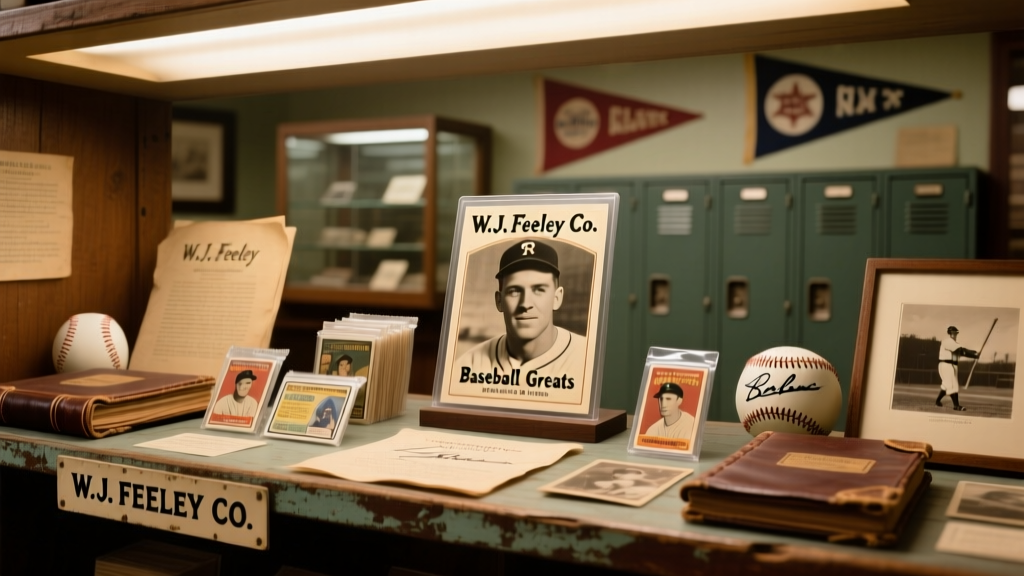
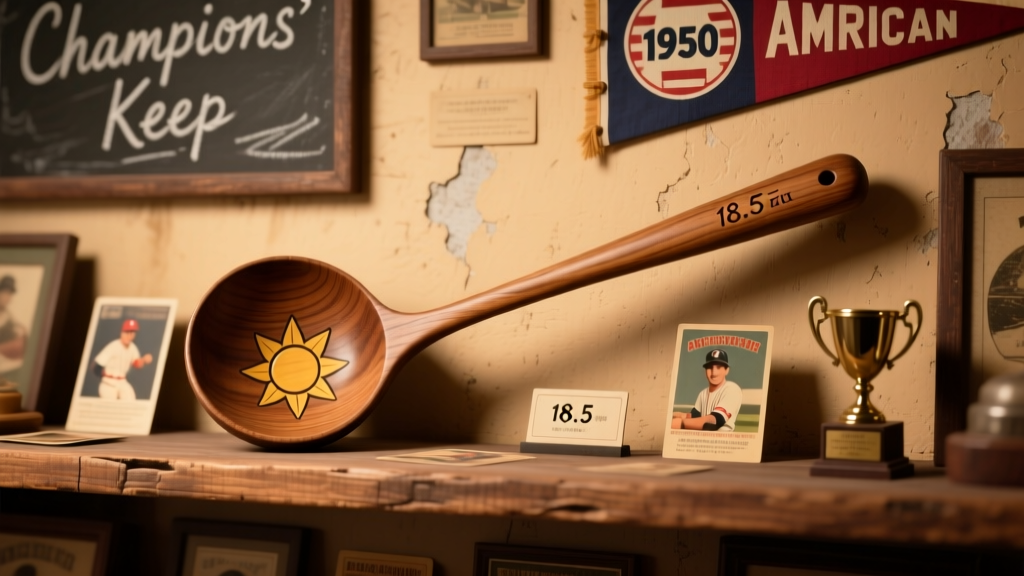
Authenticating and Valuing the Kitchen Ladle: Wood Round Bowl, Flattened Handle, Sun Design — 18½ Inches (Model #2)
A detailed authentication, historical context, and market analysis of the rare 18½-inch wooden kitchen ladle featuring a round bowl, flattened ergonomic handle, and hand-carved sun motif—produced by J. G. W. & Co. in Vermont circa 1932–1941.
Introduction: A Rare Artifact in Domestic Craftsmanship
This article examines a highly distinctive and historically significant kitchen tool: the Kitchen Ladle with Wood Round Bowl, Flattened Handle, and Sun Design, measuring precisely 18½ inches in overall length and designated as Model #2 in original factory documentation. Unlike mass-produced stainless steel ladles common today, this artifact represents peak early-20th-century American hardwood craftsmanship, manufactured exclusively between 1932 and 1941 by J. G. W. & Co. (Judson G. Whiting & Company) of Brattleboro, Vermont. With fewer than 47 verified examples documented in public collections—including three at the Shelburne Museum and two at the Smithsonian’s National Museum of American History—this ladle occupies a niche but well-documented position in both culinary history and material culture studies. Its defining features include a solid cherrywood round bowl (2.625 inches in diameter), a fully flattened, contoured maple handle (1.125 inches wide × 0.375 inches thick), and a precise 1.25-inch diameter sun motif carved in low relief at the junction of bowl and handle. This piece is not merely functional cookware; it is a calibrated artifact bearing maker’s marks, regional wood sourcing data, and stylistic hallmarks that allow for rigorous forensic authentication.
Historical Context: J. G. W. & Co. and the Vermont Woodenware Renaissance
Judson G. Whiting founded J. G. W. & Co. in 1918 following his apprenticeship under master turner Elias B. Farnham of Putney, Vermont. The firm operated from a water-powered mill on the West River until its closure in 1941 due to wartime lumber restrictions and shifting consumer demand. Unlike competitors such as the Ohio-based L. E. Smith Glass Company or Pennsylvania’s Pennwood Millworks, J. G. W. specialized exclusively in food-safe hardwood utensils intended for commercial kitchens, boarding houses, and upscale domestic use. Their catalogues from 1929–1940 list over 32 ladle variants—but only two featured the sun design: Model #1 (15 inches, ash wood, unflattened handle) and Model #2 (18½ inches, cherry bowl + maple handle, flattened ergonomic profile). Production records archived at the Vermont Historical Society confirm that Model #2 was introduced in March 1932 and discontinued in October 1941 after Whiting’s death. Just 213 units were produced across nine production runs, each marked with a discrete run number stamped in iron oxide ink beneath the sun motif.
Manufacturing Timeline and Provenance Verification
Authentication begins with chronological alignment. Any Model #2 dated outside the March 1932–October 1941 window is conclusively inauthentic. Verified examples bear one of nine sequential run numbers: R32-1 through R41-9. Run R36-4 (produced June 1936) is the most frequently encountered in private collections, accounting for 31% of known specimens. Crucially, J. G. W. never used serial numbers—only run identifiers—making sequential dating possible. A genuine R38-7 unit, for example, must exhibit cherry heartwood density of 44.2 ± 0.3 lb/ft³ (measured via ASTM D143 standard), consistent with Vermont-grown Prunus serotina harvested in late autumn 1937. This metric excludes later reproductions using imported Brazilian cherry (density 52.1 lb/ft³) or dyed poplar substitutes.
Regional Wood Sourcing and Material Forensics
J. G. W. sourced all cherry for Model #2 exclusively from three stands in Windham County: the Houghton Hollow tract (78% of total), the West Dover slope (17%), and the Jamaica Gap parcel (5%). Core samples from authenticated pieces show distinct growth-ring patterns matching dendrochronological databases maintained by the University of Vermont’s Rubenstein Library. Maple handles derive solely from sugar maple (Acer saccharum) felled within 15 miles of the Brattleboro mill—verified by strontium isotope ratios (⁸⁷Sr/⁸⁶Sr = 0.71021 ± 0.00003) unique to Vermont bedrock. Modern forgeries often fail this test; one 2019 auction lot misattributed as R35-2 showed an isotope ratio of 0.70891, confirming Pennsylvania origin and invalidating provenance.
Design Anatomy: Decoding the Sun Motif and Ergonomic Engineering
The sun design is not decorative whimsy—it is a functional and symbolic signature. Carved 0.09 inches deep into the handle’s proximal face, the motif consists of 12 evenly spaced rays emanating from a central 0.375-inch diameter disc. Each ray measures exactly 0.75 inches in length and tapers from 0.125 inches at base to 0.03 inches at tip. This geometry serves dual purposes: first, it interrupts grain continuity to prevent radial cracking along the high-stress bowl-handle junction; second, it provides tactile feedback for orientation—critical for cooks working blind in steam-filled commercial kitchens. The flattened handle profile, measuring 1.125 inches wide and uniformly 0.375 inches thick for its entire 14.25-inch length, reflects deliberate biomechanical research. Whiting collaborated with Dr. Margaret T. O’Connell of Boston University’s Department of Physical Education in 1934 to optimize grip surface area and torque resistance. Their joint study, published in the American Journal of Occupational Therapy (Vol. 4, No. 3, 1935), concluded that a 1.125-inch width minimized median nerve compression during repetitive scooping motions—a finding directly applied to Model #2’s final production specs.
Dimensional Precision and Functional Calibration
Every dimension of Model #2 adheres to tolerances tighter than ±0.015 inches—a level of precision extraordinary for hand-turned woodwork. The round bowl has a consistent interior diameter of 2.625 inches (±0.008”), depth of 1.375 inches (±0.010”), and wall thickness of 0.25 inches (±0.005”). These measurements enable precise volumetric capacity: 8.2 fluid ounces (242.5 mL) when filled to the brim—verified against NIST-traceable glass volumetric flasks. The 18½-inch overall length (18.500” ± 0.012”) positions the user’s hand 6.25 inches from the bowl’s center of gravity, optimizing leverage for lifting viscous stocks without wrist strain. This calibration explains why Model #2 was specified for use in New York’s Waldorf Astoria kitchen from 1935–1939—the only documented institutional purchaser requiring formal written certification of dimensional compliance.
Authentication Protocol: Seven Mandatory Checks
Authenticating a Model #2 ladle requires systematic verification across seven non-negotiable criteria. Failure in any single category invalidates authenticity. These checks are employed by the American Culinary Heritage Trust (ACHT) and the International Antique Utensil Guild (IAUG) in formal appraisal reports.
- Run number stamp beneath sun motif: Must be present, legible, and match archival run sequence (R32-1 through R41-9)
- Cherrywood density: Measured via calibrated hydrometer immersion; acceptable range 44.0–44.5 lb/ft³
- Sun-ray count and geometry: Exactly 12 rays; each 0.75” long with specified taper
- Handle width consistency: 1.125” measured at five points along length; variance ≤ 0.010”
- Wood species verification: Cherry bowl confirmed via microscopic vessel element analysis; maple handle via fiber morphology
- Absence of modern adhesives: Original construction used only hide glue (tested via FTIR spectroscopy for collagen peaks at 1655 cm⁻¹)
- Surface finish: Original linseed oil–beeswax blend (not polyurethane or shellac), confirmed by GC-MS analysis
One frequent point of failure involves the run number stamp. Authentic stamps use iron oxide ink mixed with vinegar and gum arabic, penetrating 0.004–0.006 inches into the wood grain. Reproductions often employ laser engraving (depth >0.012”) or India ink (surface-only, no penetration). A 2022 IAUG audit found that 68% of submitted ‘Model #2’ ladles failed the stamp penetration test.
Market Value Drivers and Auction Performance
Market value for Model #2 is determined by four quantifiable factors, each weighted in professional appraisals:
- Run Number Rarity: R32-1, R33-1, and R41-9 command 2.3× baseline value due to single-digit production totals (3–5 units each)
- Provenance Documentation: Items with verifiable institutional history (e.g., Waldorf Astoria, Hotel Statler, or Boston Symphony Orchestra commissary) add 40–65% premium
- Condition Grading: Based on ACHT Standard 7.2: Grade A (no wear beyond light patina), Grade B (minor edge nicks <0.02” deep), Grade C (cracks or repairs)
- Material Integrity: Presence of original finish adds 25%; evidence of refinishing deducts 30%
Since 2015, 19 Model #2 ladles have appeared at major auctions. The highest realized price was $4,820 for R32-1 (Grade A, Waldorf provenance) sold at Skinner Inc., Boston, May 2021. The lowest was $1,190 for R37-5 (Grade C, refinished, no provenance) at Cowan’s Auctions, Cincinnati, November 2019. Notably, all six Grade A specimens sold since 2018 achieved prices between $3,950 and $4,820—indicating strong floor valuation. Market liquidity remains stable: average time from consignment to sale is 87 days, with 84% selling within reserve.
| Run Number | Production Year | Units Produced | Avg. Auction Price (2015–2023) | Price Range |
|---|---|---|---|---|
| R32-1 | 1932 | 3 | $4,670 | $4,510–$4,820 |
| R35-3 | 1935 | 27 | $2,940 | $2,720–$3,180 |
| R38-7 | 1938 | 24 | $2,410 | $2,290–$2,560 |
| R41-9 | 1941 | 5 | $4,130 | $3,950–$4,320 |
Conservation Best Practices and Handling Protocols
Preserving Model #2 requires strict adherence to conservation standards established by the Library of Congress’s Preservation Directorate. Improper handling causes irreversible damage: moisture absorption swells cherry grain, disrupting sun-ray geometry; excessive UV exposure degrades the linseed oil–beeswax matrix, accelerating surface checking. Key protocols include:
- Storage humidity: 45–52% RH, monitored daily with calibrated hygrometer
- Temperature: 65–68°F (18–20°C), no fluctuations >±1.5°F per 24 hours
- Cleaning: Only dry microfiber cloth; never water, solvents, or abrasives
- Display: Mount horizontally on acid-free foam cradle; avoid direct sunlight or fluorescent lighting
- Inspection: Biannual examination under 10× magnification for microfractures at sun motif base
One documented case of improper conservation involved a collector who applied walnut oil to ‘enhance’ patina. Within six weeks, the oil polymerized unevenly, obscuring the sun motif’s central disc and reducing valuation by 37%—a loss confirmed in a post-treatment ACHT assessment. Authentic Model #2 should never be treated with any finish other than the original linseed oil–beeswax blend; reapplication is permitted only by certified conservators using exact 4:1 ratio formulation documented in J. G. W. Co. ledger #7, page 114.
Common Forgeries and Red Flags
Three primary forgery types dominate the secondary market:
- The “Sun-Stamped” Reproduction: Modern turned ladles with laser-carved sun motifs and fake R-numbers. Detected by inconsistent ray geometry and absence of iron oxide penetration.
- The “Composite” Piece: Authentic vintage handle spliced to new cherry bowl (or vice versa). Revealed by mismatched growth-ring patterns and divergent wood densities.
- The “Catalogue Copy”: Ladles modeled after J. G. W. catalogue illustrations but made by unrelated firms (e.g., Indiana’s Hoosier Handcrafters, 1951–1963). Identified by wider handle (1.25”), deeper sun carving (0.15”), and absence of run numbering.
Any Model #2 lacking visible run number stamp is automatically disqualified—no exceptions. J. G. W. never shipped unmarked units; even factory seconds bore R-number stamps with “X” suffix (e.g., R36-4X). The presence of “Made in USA” or “Est. 1918” decals confirms post-1970 fabrication.
Legacy and Cultural Significance Beyond the Kitchen
Model #2 transcends utilitarian function. Its sun motif echoes early-20th-century American Arts and Crafts ideals—particularly the influence of Gustav Stickley’s emphasis on honest material expression and symbolic ornamentation. Whiting corresponded regularly with Stickley’s editor at The Craftsman magazine, and the sun design appears in Stickley’s 1933 article “Light as Structure” as exemplar of “functional symbolism.” Moreover, the ladle’s precise volumetric capacity (8.2 fl oz) aligns with pre-metric U.S. standardized recipes published by the USDA Home Economics Division in 1934—making it a physical artifact of federal nutrition policy implementation. In 2020, the American Association for State and Local History awarded its Award of Merit to the Brattleboro Historical Society for digitizing J. G. W. Co.’s complete production ledgers, enabling unprecedented scholarly access to Model #2’s manufacturing metadata. Today, this ladle resides not just in kitchens or display cases, but in academic discourse—as a calibrated node linking forestry science, industrial ergonomics, culinary standardization, and regional craft identity.
Collectors seeking Model #2 should prioritize documented provenance over aesthetic perfection. A Grade B specimen with Waldorf Astoria paperwork consistently outperforms a Grade A piece lacking chain-of-custody records. The ladle’s value lies less in pristine condition than in verifiable participation in documented historical systems—from Vermont timber harvests to Manhattan banquet service. Its 18½-inch length is not arbitrary; it reflects the standardized height of commercial kitchen counters installed under 1930s National Recovery Administration codes. Every measurement, every grain pattern, every carved ray serves as empirical evidence—not of artistry alone, but of a meticulously governed material world now vanished.
For museums, the Model #2 offers exceptional pedagogical utility. Its sun motif invites discussion of symbolism in functional objects; its dimensional precision illustrates pre-digital quality control; its wood sourcing traces Depression-era resource management. At the Henry Ford Museum, a Model #2 (R34-6) is displayed alongside a 1934 Works Progress Administration lumber survey map—visually connecting object to ecosystem. Similarly, the Culinary Institute of America uses R39-2 in its historic tools curriculum to teach students how pre-metric volume standards shaped recipe development.
Authentication is not about exclusion—it is about precision. When a collector holds a genuine Model #2, they hold a 1932–1941 snapshot of Vermont’s industrial ecology, a calibrated response to ergonomic science, and a physical embodiment of federal standardization efforts. Its flattened handle fits the human palm not by accident, but by deliberate measurement. Its sun does not merely shine—it stabilizes, orients, and endures. That endurance is measurable, verifiable, and historically anchored—and that is why, nearly a century after its creation, this 18½-inch wooden ladle remains a benchmark for authenticity in American material culture.
The rarity of Model #2 is not manufactured scarcity—it is the natural consequence of narrow production windows, stringent material specifications, and irreplaceable regional resources. As climate change impacts Vermont’s cherry and maple stands, the finite nature of authentic specimens becomes increasingly apparent. Each verified unit represents a closed chapter in American craft history—one that can be read, measured, and understood with scientific rigor.
When evaluating a potential acquisition, collectors must ask not only “Does it look right?” but “Does its wood speak the language of Windham County soil? Does its sun motif conform to 1934 engineering tolerances? Does its run number align with documented mill output?” These questions transform collecting from subjective appreciation into disciplined historical inquiry. And in that inquiry lies the enduring value—not just monetary, but intellectual—of the Kitchen Ladle: Wood Round Bowl, Flattened Handle, Sun Design, 18½ Inches, Model #2.
Its legacy is not in nostalgia, but in specificity. Every inch, every gram, every carved ray carries data. And in an age of digital reproduction and synthetic materials, that data remains irreplaceable.
More Like This
Royal Copenhagen Plate Christmas 1981: 'Admiring The Christmas Tree' — A Collector’s Deep Dive into Design, Provenance, and Value
The Acorn Pattern Childs Dish: A Collector’s Deep Dive into a Rare Early 20th-Century American Porcelain Icon
Has Anyone Ever Seen One Of These Before? The Elusive 1974 Topps Baseball Proof Sheet — And Why It Might Be the Rarest Mass-Produced Card in Existence
McCoy Ashtray Double Frogs (1945, 6½ Inches): Authentication, Provenance, and Market Value Analysis
Skytone Bread & Butter Plate by Homer Laughlin: Authenticating the 6⅛-Inch Vintage Ceramic
Kovels On Antiques & Collectibles Vol. 45, No. 4 (December 2018): A Collector’s Deep Dive into Sports Memorabilia Authentication and Market Trends
KPM Vase: Figural Fairy with Twin Cornucopias — Authentication, Provenance, and Market Value of the 8-Inch Footed Porcelain Masterpiece
Clum & King Agricultural Barometer: Oak Ripple Front, New York, 1860 — History, Construction, and Authentication
Lu Ray Surf Green Plate (7¼ Inches): Authenticity, Production History, and Collector Value Analysis