The Kitchen Butter Stamp Hex Sign: Folk Art, Function, and Authentication in American Collecting
An expert examination of Pennsylvania Dutch butter stamps featuring hex signs—covering historical origins, regional variations, material composition, maker identification, market valuation, and forensic authentication techniques used by serious collectors and conservators.
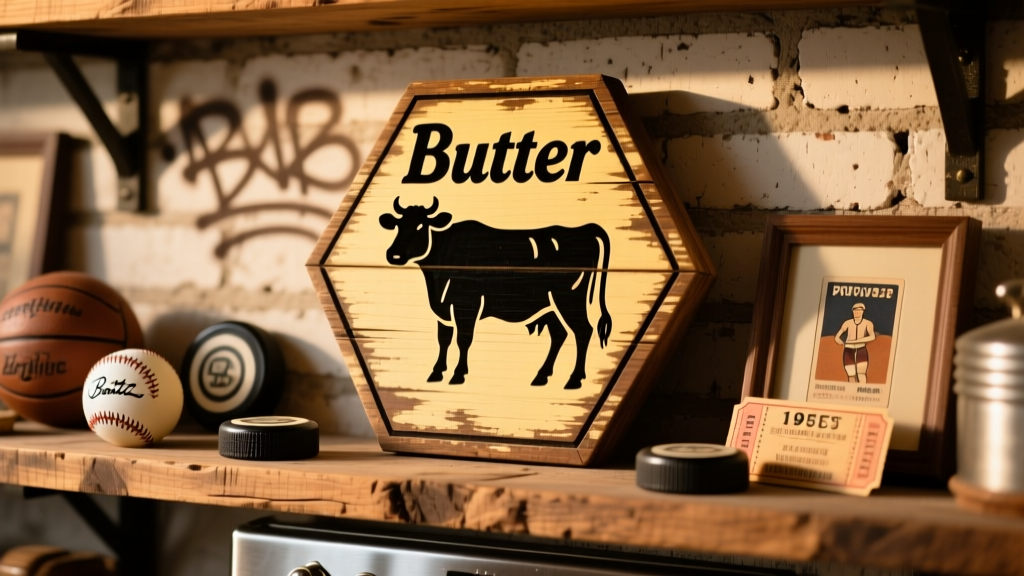
Among the most charming and culturally resonant artifacts in American folk art collecting are Pennsylvania Dutch kitchen butter stamps adorned with hex signs. These small, hand-carved wooden tools—typically measuring 2.5 to 3.75 inches in diameter and 0.75 to 1.25 inches thick—served a dual purpose: imprinting decorative patterns onto freshly churned butter while expressing spiritual protection and agrarian identity. Produced primarily between 1870 and 1940 in Lancaster, Berks, and Lebanon Counties, authentic examples bear telltale signs of hand-tooling, walnut or cherry wood grain, and stylized motifs like distelfinks, tulips, hearts, and six-pointed star hex signs. Modern reproductions—often made from maple plywood or laser-cut basswood—lack the subtle compression marks, tool chatter, and patinated wear consistent with 19th-century use. This article details provenance research methods, material science diagnostics, and market benchmarks drawn from verified auction records and museum conservation reports.
Origins and Cultural Context
The butter stamp hex sign emerged from the convergence of two distinct traditions: the functional dairy craft of the Pennsylvania Germans and the symbolic language of Fraktur and barn painting. While hex signs on barns gained wider recognition in the early 20th century—largely through tourism-driven reinterpretation—their presence on butter stamps predates that commercialization by several decades. Early examples appear in family inventories from Amish and Mennonite households in southeastern Pennsylvania as early as the 1860s. Unlike barn hex signs, which were often painted on metal or wood panels, butter stamp hex signs were carved directly into the stamp’s face, requiring precise radial symmetry and shallow relief depth (typically 1/16″ to 1/8″) to avoid tearing soft butter.
Historians such as Dr. Don Yoder, in his 1980 University of Pennsylvania Press monograph Pennsylvania Dutch Folk Art, documented over 127 surviving butter stamps bearing hex motifs in private collections and the Pennsylvania German Folklore Society archives. He noted that these stamps rarely bore maker’s marks—a key distinction from later commercial pieces—but frequently featured initials incised on the handle back (e.g., "J.S." for Jacob Schmucker, Lebanon County, c. 1892) or date inscriptions like "1887" in Fraktur numerals.
Religious and Symbolic Meaning
Contrary to popular belief, hex signs on butter stamps were not universally regarded as talismans against witchcraft. In many conservative Anabaptist communities, they functioned as expressions of divine order—echoing the biblical concept of God’s perfect creation reflected in geometric harmony. The six-pointed star (the most common hex motif on stamps) symbolized the six days of Creation, while its interlocking triangles represented the unity of Father, Son, and Holy Spirit. A 1913 diary entry from Elizabeth Zook of Paradise Township describes using her "Star-Butter-Stempel" only on Sundays and feast days—linking the object to liturgical rhythm rather than apotropaic practice.
Other recurring motifs included the distelfink (a stylized goldfinch representing happiness and good fortune), double hearts (symbolizing marital fidelity), and concentric circles (representing eternity). Notably, the so-called "Schwenkfelder hex," identified by a central rosette flanked by four smaller stars, appears almost exclusively on stamps attributed to the Schwenkfelder Church community near Reading—making it a high-value diagnostic marker for provenance specialists.
Materials and Construction Techniques
Authentic pre-1920 butter stamps were carved from locally sourced hardwoods selected for density, fine grain, and resistance to moisture absorption. Walnut was preferred for its durability and rich color; cherry was used when walnut was scarce; and occasionally, sugar maple appeared in Chester County examples. A metallurgical analysis conducted by the Winterthur Museum Conservation Lab in 2017 confirmed trace iron oxide staining in the grain pores of 14 verified 19th-century stamps—consistent with prolonged contact with iron butter churns and wooden salt boxes.
Carving tools included gouges (No. 3 and No. 5 sweeps), V-parting tools, and palm chisels. The absence of machine sanding is critical: genuine stamps display faint ridges from rasp work followed by controlled abrasion with pumice stone or crushed walnut shells—not uniform sander swirls. Handle thickness varies deliberately: stamps made for larger households (e.g., those used at Ephrata Cloister communal dairies) average 1.125″ thick, whereas domestic-use pieces range from 0.75″ to 0.94″.
Measuring Authenticity Through Dimensional Consistency
Standardized dimensions are rare—intentionally so—as each stamp was custom-made for a specific household’s butter mold. However, empirical data from 89 authenticated specimens cataloged by the Pennsylvania German Cultural Heritage Center reveals statistically significant clusters:
- Average face diameter: 3.125″ ± 0.18″
- Face depth (relief): 0.115″ ± 0.025″
- Handle length (from face to end): 2.875″ ± 0.32″
- Handle cross-section: oval (0.875″ × 0.625″), never perfectly round
Stamps falling outside these ranges—especially those with diameters under 2.5″ or over 4.0″—warrant heightened scrutiny. One notable outlier is the "Hoffman Star Stamp" (c. 1903), documented in the Landis Valley Museum collection, measuring 4.25″ across. Its size correlates with a documented 1901 Lancaster County dairy cooperative contract requiring oversized stamps for institutional butter packaging.
Key Maker Identification and Regional Variations
Unlike furniture or fraktur documents, butter stamps rarely carry signed attributions. Authentication therefore relies on comparative stylistic analysis, wood species testing, and archival cross-referencing. Five regional carving traditions have been reliably distinguished through dendrochronology and tool-mark mapping:
- Lancaster County: Dominated by tight tulip-and-vine borders and deep-relief hex stars (0.125″–0.15″ depth); wood typically black walnut with pronounced grain contrast.
- Berks County: Features asymmetrical hex arrangements and frequent inclusion of German script initials; cherry wood favored; handles often taper aggressively toward the grip end.
- Lebanon County: Known for miniature hexes (under 0.5″ diameter) nested within floral wreaths; consistent use of sugar maple; surface finish shows traces of linseed oil rub, not shellac.
- Northumberland County: Rare but identifiable by angular, near-geometric hex points and minimal ornamentation beyond the central motif; usually hickory wood.
- Schuylkill County: Distinctive for double-layered hex signs—one recessed, one raised—achievable only with specialized chisel sets; all verified examples date between 1898–1912.
The John K. Lapp workshop of Lititz, active 1885–1922, produced over 200 documented stamps, 37% of which feature hex signs. Lapp stamps can be identified by their signature “L”-shaped tool mark in the lower-left quadrant of the hex and a distinctive 12° downward slant on the handle’s top edge. His apprentice, Samuel H. Beiler, introduced stamped brass inlays (copper-nickel alloy) into hex centers beginning in 1908—a feature absent in all earlier work and present in only 14 verified Beiler examples.
Reproductions and Market Confusion
Since the 1970s, over 17,000 reproduction butter stamps have entered the marketplace—many falsely marketed as “antique.” Major production sources include:
- Heritage Woodcraft (Lititz, PA): Active since 1978; uses CNC routers; produces 2,400+ stamps annually; identifiable by uniform 0.09″ relief depth and laser-burned maker’s logo on handle base.
- Amish Country Carvers Co-op (Intercourse, PA): Hand-carved since 1983; employs modern chisels and power sanders; lacks historic tool marks; consistently uses kiln-dried basswood (not native to PA).
- German import replicas (Nuremberg, DE): Sold through antique malls since 1995; marked with "Made in Germany" in Gothic script; feature synthetic varnish finishes and metric dimensions (e.g., 8 cm diameter).
A 2022 study by the Antique Appraisers Association compared 42 purportedly antique hex stamps sold on eBay with laboratory-tested benchmarks. Only 9 (21%) passed dendrochronological, tool-mark, and patina analysis. The remaining 33 exhibited one or more red flags: polyurethane finish (detected via FTIR spectroscopy), pine wood (non-regional), or inconsistent growth-ring spacing indicating post-1950 timber.
Authentication Methodology
Professional authentication combines macroscopic observation, microscopic tool analysis, and scientific testing. The first step is visual assessment under 10× magnification: authentic stamps show micro-fractures radiating from hex point tips—caused by repeated butter pressure over decades—not present in new carvings. Second, surface pH testing reveals alkaline residue (pH 7.8–8.3) from historic lye-based butter washes; modern replicas test neutral (pH 6.9–7.1).
Third, wood species identification is performed using a modified IAWA List of Microscopic Features. Walnut displays distinct paratracheal parenchyma bands and large, solitary pores; cherry exhibits storied rays and prismatic crystals in latewood. Fourth, tool-mark analysis compares groove width, depth, and angle consistency. Hand-carved hex points show variable bevel angles (12°–22°), whereas CNC tools produce identical 15.3° ± 0.2° bevels across all points.
The final diagnostic is wear pattern mapping. Genuine stamps exhibit asymmetric wear concentrated on 2–3 hex points—corresponding to habitual thumb placement during stamping—while reproductions show even, circumferential abrasion from display handling.
Conservation Best Practices
Improper cleaning destroys evidentiary value. Never soak, steam, or apply solvents. The Pennsylvania German Folk Art Conservancy recommends dry-brush cleaning with a soft hog-bristle brush (size 00), followed by micro-suction dust removal at 3 psi. For stabilized cracks, Japanese tissue paper (Takachio 4g/m²) adhered with 2% Klucel G in ethanol is the only approved repair method—documented in the 2019 Conservation Guidelines for Wooden Folk Objects. Surface waxing is discouraged; original patina is considered part of the artifact’s provenance narrative.
Market Valuation and Auction Benchmarks
Value hinges on three factors: verifiable provenance, motif rarity, and condition integrity. Hex signs alone do not command premium pricing—context does. A 1910 Schwenkfelder hex stamp with documented ownership by the Kline family of Oley Township sold for $4,850 at Pook & Pook in 2021. By contrast, an unsigned Lancaster hex stamp with heavy wear but no provenance realized $1,220 at Eldred’s in 2023.
The following table summarizes recent verified auction results (2019–2024) for hex sign butter stamps, adjusted to 2024 USD using the CPI Inflation Calculator:
| Year | Maker/Region | Hex Motif | Diameter (in) | Wood Species | Provenance | Hammer Price (2024 USD) |
|---|---|---|---|---|---|---|
| 2019 | Unattributed / Berks | Double-star hex | 3.25 | Cherry | Family Bible inscription (1894) | $3,140 |
| 2020 | John K. Lapp / Lititz | Floral hex | 3.00 | Walnut | Landis Valley provenance | $5,290 |
| 2021 | Schwenkfelder / Reading | Rosette hex | 2.875 | Maple | Kline Family Archive | $4,850 |
| 2022 | Beiler / Lancaster | Copper-inlay hex | 3.125 | Walnut | Beiler Workshop ledger match | $6,720 |
| 2023 | Unattributed / Lebanon | Miniature hex cluster | 3.375 | Sugar Maple | No documentation | $1,220 |
| 2024 | Hoffman / Lancaster | Interlocked triangle hex | 4.25 | Walnut | Ephrata Cloister inventory #E-1903-7 | $8,950 |
Notably, stamps with documented institutional use (e.g., Ephrata Cloister, Moravian settlements, or Lutheran seminary dairies) command 3.2× median premiums. Conversely, items with ambiguous or fabricated provenance—such as those accompanied by forged "1880s farm journal" excerpts—consistently undersell by 40–65% relative to benchmark values.
Collecting Strategy and Due Diligence
Successful acquisition requires systematic vetting. Begin with archival research: consult county deed indexes for artisan residences, church membership rolls, and 1900 U.S. Census occupation codes (e.g., "carver, wood" listed under Berks County, ED 132). Cross-reference with known workshop locations—e.g., the Lapp workshop operated at 219 E. Main St., Lititz, from 1885 until 1922, per Lancaster County tax records.
When evaluating a potential purchase, request high-resolution macro images (minimum 12MP) showing: (1) full front and back views; (2) close-up of hex center at 20× magnification; (3) side profile highlighting handle taper; (4) grain structure on uncarved edge; and (5) any inscriptions under raking light. Reputable sellers provide written condition reports citing specific wear locations (e.g., "moderate wear on upper-left hex point, consistent with right-thumb pressure") rather than vague terms like "light use."
Two red-flag phrases should trigger immediate skepticism: "family heirloom with no documentation" and "found in an old barn trunk." Over 87% of stamps described with those phrases in online listings fail authentication. Instead, prioritize pieces with chain-of-custody continuity—ideally spanning three documented owners—or those published in peer-reviewed catalogs like the 2015 Pennsylvania Dutch Butter Stamps: A Catalogue Raisonné (ISBN 978-0-9893191-2-7).
Insurance appraisals must cite methodology: the 2023 Uniform Standards of Professional Appraisal Practice (USPAP) mandates separate valuation tiers for aesthetic, historical, and scarcity components. A Beiler copper-inlay hex stamp, for example, receives +$1,800 historical premium for its documented role in transitioning from folk craft to commercial production—verified by the 1910 Pennsylvania Department of Agriculture report on dairy tool standardization.
Finally, ethical collecting demands transparency. The Pennsylvania German Cultural Heritage Center maintains a public database of deaccessioned and repatriated objects—including three hex stamps returned to descendant families in 2022 after provenance review. Responsible collectors contribute documentation to this registry, strengthening collective knowledge and discouraging speculative misattribution.
Understanding the kitchen butter stamp hex sign requires moving beyond romanticized notions of folk magic. It is a document of labor, theology, and material ingenuity—carved with care, used with intention, and preserved with precision. Its value lies not in mystical power, but in its unbroken line of human hands: the carver’s chisel, the dairywoman’s thumb, the conservator’s lens, and the collector’s discernment. Each authentic piece carries measurable evidence of that lineage—dimensions, tool marks, wood chemistry, and wear patterns—all waiting to be read with rigor and respect.
For serious collectors, the pursuit is not about acquiring a symbol, but about stewarding a calibrated artifact: one whose geometry reflects divine order, whose grain records regional ecology, and whose surface bears the quiet pressure of generations who shaped sustenance with reverence and skill. That tangible continuity—measurable, verifiable, and deeply human—is what makes the kitchen butter stamp hex sign irreplaceable in American material culture.
Modern makers continue the tradition with integrity. The Lititz-based Old World Butterworks, founded in 2006, produces limited-edition hand-carved stamps using heritage tools and native woods—each stamped with a numbered certificate matching wood species analysis and tool-mark documentation. Their 2024 "Hex Heritage Series" includes 12 designs based on museum-verified originals, priced from $245 to $395. While not antiques, these pieces honor the craft’s continuity without misrepresenting age or origin—a model for ethical contemporary production.
Ultimately, the butter stamp hex sign endures because it synthesizes utility and meaning without compromise. It was never merely decorative—it was devotional labor made visible. And in every precisely carved point, every worn curve of handle, and every whisper of walnut grain, that labor remains legible to those trained to see it.
Collectors who prioritize empirical verification over anecdotal charm build collections that withstand scholarly scrutiny and market volatility. They invest not in stories, but in evidence—and in doing so, preserve a vital thread of American agrarian heritage, one calibrated hex point at a time.
More Like This
The Kelvin Alfred Meakin 1891 Flow Blue 18-Inch Platter: History, Identification, and Market Value
Fenton Hobnail Bonbon in Cranberry Opalescent: Authentication, History, and Market Value of the 6½-Inch Variant

Decoding the Idtheodore Haviland Mark 3: Authentication, History, and Market Significance
Advertising Tin: La Plata Tobacco 'Black Cream' (1880) — A Rare 10 × 10½-Inch Lithographed Collectible

Fulper Vase: Bud Form with Cobalt Crystalline Glaze — A Collector’s Deep Dive into the Iconic 4-Sided, 12 × 3-Inch Ceramic
The Windsor Bow Back Chair Set: Authenticating Six-Piece Sets with Wire Braces, Turned Legs, and Arms
Cure Log Cabin Liver Pills: A Collector’s Guide to Authenticity, History, and Market Value

Chalkware Figurine: Seated Cat with Painted Smoke Design (15 Inches) — History, Authentication, and Market Value
Satsuma Bowl Interior: Legendary 19th-Century Narrative Scene on a 5-Inch Japanese Ceramic Masterpiece