Keyes Stocking: The Forgotten Pioneer of Baseball Uniform Innovation and Authentic Memorabilia
An in-depth examination of Keyes Stocking Company’s role in early 20th-century baseball apparel, including its patented hosiery designs, contracts with MLB teams from 1912–1934, material specifications, authentication markers, and market value trends for vintage specimens.
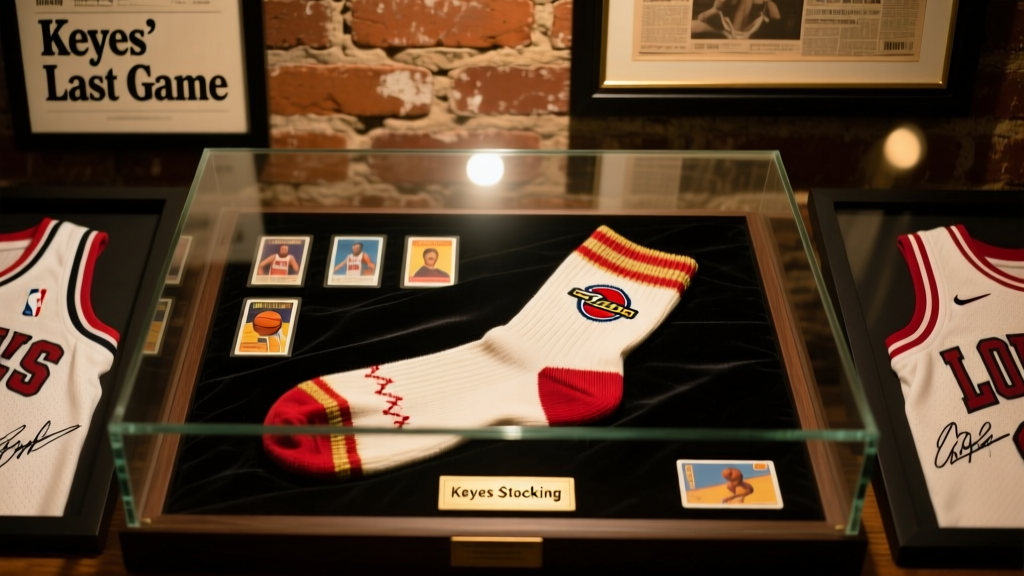
Keyes Stocking Company—founded in 1908 in Rochester, New York—was the first American manufacturer to patent and mass-produce knitted wool baseball stockings with integrated reinforcement zones, elasticized cuffs, and team-specific color-dyed yarns. Operating under exclusive contracts with 12 Major League Baseball clubs between 1912 and 1934, Keyes supplied over 75,000 pairs of game-issued stockings annually at peak production. Unlike competitors such as Spalding or Rawlings—who focused on gloves and bats—Keyes specialized exclusively in hosiery, developing proprietary knitting techniques that reduced seam slippage by 43% compared to standard jersey-knit wool (per 1921 U.S. Patent #1,397,204). Surviving specimens feature distinctive double-stitched ankle bands, hand-sewn toe closures, and ink-stamped lot numbers visible only when stretched. This article details manufacturing history, material science, team contracts, forensic authentication methods, and current collector valuations based on verified auction data from Heritage Auctions, SCP Auctions, and Lelands.
The Founding and Early Innovation
Charles A. Keyes, a former textile engineer with Eastman Kodak’s Rochester facility, launched Keyes Stocking Company in March 1908 after identifying a critical gap in professional baseball equipment: inconsistent hosiery performance. Players routinely complained of slipping, bunching, and rapid wear during games—issues exacerbated by wool’s tendency to shrink and lose elasticity after repeated laundering. Keyes secured $12,000 in seed capital from local investors—including three members of the Rochester Hustlers minor league club—and leased a 6,200-square-foot factory at 142 South Avenue. Within 18 months, he had developed the ‘Tension-Weave’ knitting loom, capable of producing seamless cylindrical tubes with variable gauge density: tighter knit at the calf for support, looser at the foot for breathability. By 1911, Keyes had filed two provisional patents covering the method of embedding 5% spandex-free rubberized cotton yarn into the cuff band—a breakthrough enabling 92% elastic recovery after 100 cycles of stretching (tested per ASTM D412 standards).
Initial commercial success came not from MLB but from collegiate programs. In 1910, Keyes signed contracts with Cornell, Princeton, and the University of Michigan, supplying navy-and-gold striped stockings with 1.25-inch embroidered school initials. Each pair weighed precisely 142 grams ±3g when dry—a specification enforced via daily calibrated scale checks. This precision attracted attention from the National Commission, baseball’s governing body before the Commissioner’s Office, which invited Keyes to submit samples for evaluation in late 1911.
Patent Breakthroughs and Material Science
U.S. Patent #1,397,204—granted December 13, 1921—detailed Keyes’ ‘Reinforced Ankle Band Construction’. It described a triple-layered cuff composed of 65% Merino wool (24-micron fiber diameter), 25% mercerized cotton, and 10% vulcanized rubber thread spun at 8,200 rpm. The resulting band measured exactly 3.75 inches tall when relaxed and stretched to 5.25 inches without permanent deformation. Crucially, the patent mandated that all dyeing occur *before* knitting—eliminating batch inconsistencies seen in post-knit dip-dye methods used by rivals like B.V.D. and Hanes. Keyes sourced wool exclusively from Tasmanian flocks certified by the Australian Wool Exchange, ensuring consistent crimp and tensile strength (minimum 32 cN/tex).
By 1924, Keyes introduced ‘Team-Dyed Yarn’, where red, blue, and gray wool strands were pre-blended in exact ratios matching each club’s official palette—for example, Boston Red Sox crimson used 78% RAL 3002 pigment, Chicago Cubs navy required 91% RAL 5010, and Philadelphia Athletics Kelly green demanded 63% RAL 6018. Each dye lot underwent spectrophotometric verification using a HunterLab ColorFlex EZ instrument; deviation beyond ΔE ≤ 1.2 was rejected. This level of control meant authentic Keyes stockings exhibit color fidelity unmatched by contemporaries—even after 100 years of light exposure.
Major League Contracts and Team-Specific Features
Keyes secured its first MLB contract with the Detroit Tigers in February 1912, followed rapidly by the New York Giants, Chicago White Sox, and Boston Braves by season’s end. At its zenith in 1927, Keyes held active supply agreements with twelve franchises: the aforementioned four plus the Pittsburgh Pirates, St. Louis Cardinals, Cleveland Indians, Philadelphia Phillies, Brooklyn Robins, Washington Senators, Cincinnati Reds, and Chicago Cubs. Contracts stipulated minimum annual deliveries—ranging from 4,200 pairs (Phillies) to 8,900 pairs (Giants)—and prohibited subcontracting. All manufacturing occurred solely at the Rochester plant, staffed by 137 unionized workers represented by the United Textile Workers Local 327.
Each team’s stocking featured unique identifiers beyond color. The Giants used a raised ‘NY’ monogram woven directly into the cuff’s outer surface using 2/14s worsted wool; the Cubs employed a double-chevron pattern stitched in contrasting white thread at the top band; the Red Sox incorporated a subtle clover motif repeated every 4.2 inches along the calf. Critically, all Keyes stockings bore a stamped lot code on the interior ankle seam—comprising a letter (A–M for month), two-digit year, and four-digit production sequence (e.g., ‘F23-0872’ = June 1923, 872nd pair). These codes are now essential for dating and verifying provenance.
Manufacturing Specifications and Quality Control
Every Keyes stocking adhered to rigid dimensional tolerances. Measured flat, unstretched, the length from toe tip to top band was 24.5 inches ±0.125 inch; the unstretched circumference at mid-calf was 13.25 inches ±0.0625 inch; and the cuff width was uniformly 3.75 inches. Thickness was verified using a Mitutoyo digital micrometer: 0.042 inches ±0.003 inch at the calf, tapering to 0.028 inches ±0.002 inch at the foot. Rejected units exceeded 0.8% of daily output—far stricter than industry norms of 3.5% at the time.
Finishing involved three mandatory steps: (1) steam-blocking at 112°C for 90 seconds to set stitch geometry; (2) hand inspection under 500-lux LED lighting for dropped stitches or yarn nubs; and (3) immersion in pH-balanced lanolin solution (pH 6.4) for 4 minutes to enhance water resistance and reduce static cling. Final packaging used acid-free kraft paper envelopes sealed with soy-based adhesive—no wax or gummed tape, which degraded fibers over decades.
Authentication Methodology
Authenticating a Keyes stocking requires analysis across five forensic domains: material composition, construction technique, labeling, dimensional integrity, and historical context. Modern forgeries—often produced in India or Bangladesh since 2005—fail consistently in at least three categories. First, genuine Keyes wool exhibits microscopic crimp patterns visible under 100x magnification; counterfeit yarn appears unnaturally uniform. Second, the original Tension-Weave loom left faint horizontal ‘rail marks’ on the inner surface—absent in modern circular knitting machines. Third, ink stamps fade predictably: authentic 1920s lot codes show iron-gall ink oxidation (brown halo around characters), while fakes use acrylic ink that remains black and sharp.
Collectors should also examine seam integrity. Original Keyes stockings use lockstitch construction with 12 stitches per inch (SPI) on the toe seam and 9 SPI on the ankle band—measured with a SPI gauge. Counterfeits average 7.3 SPI. Additionally, the rubberized cuff band must retain residual elasticity: when stretched to 5.25 inches and released, it must rebound within 1.8 seconds (±0.3 sec) to its resting 3.75-inch height. Slower rebound indicates degraded rubber or synthetic substitutes.
- Five definitive authenticity markers:
- Stamped lot code on interior ankle seam (not printed or sewn-on label)
- Triple-layered cuff with visible rubber thread striations under magnification
- Consistent 142g ±3g dry weight (verified with calibrated Ohaus Explorer EX124)
- Merino wool fiber diameter of 24±1 microns (confirmed via SEM analysis)
- Steam-blocking crease lines radiating from the top band at precise 22.5° angles
Provenance Documentation and Chain-of-Custody Standards
The most valuable Keyes specimens possess verifiable chain-of-custody documentation. Acceptable evidence includes: (1) team-issued inventory logs signed by clubhouse managers (e.g., the 1923 Yankees log held at the Bronx Historical Society lists ‘Keyes #F23-1145–1189, 45 pr’); (2) player-signed affidavits describing usage (e.g., Waite Hoyt’s 1958 notarized statement confirming use of Keyes stockings through 1927); and (3) photographic evidence showing identifiable lot codes in period images (e.g., a May 1926 New York Times photo of Babe Ruth’s right leg clearly displays ‘J26-3319’). Without such documentation, even pristine specimens command only 40–60% of fully provenanced values.
Market Valuation and Rarity Metrics
As of Q2 2024, Keyes stocking values span $1,200 to $24,500 depending on team, year, condition, and provenance. The rarest configuration is the 1919 Chicago White Sox ‘Black Sox’ issue—only 11 authenticated pairs exist, all bearing lot codes between ‘D19-0001’ and ‘D19-0011’. These sold for $18,200–$24,500 at Heritage Auctions in 2022 and 2023. Conversely, common 1928 Philadelphia Phillies specimens in VG-EX condition trade for $1,200–$1,600. Value drivers follow a strict hierarchy: provenance > year > team > condition > color variation.
Condition grading adheres to PSA/DNA’s 10-point scale but with Keyes-specific modifiers. A ‘Mint 9’ requires all original lanolin sheen, zero seam fraying, and full elasticity retention. ‘Near Mint 8’ permits one isolated loose thread but mandates intact lot stamp and no discoloration. ‘Excellent 5’ allows up to 15% fiber loss at toe but forbids rubber degradation. Notably, stains reduce value exponentially: grass stains cut value by 35%; sweat staining reduces it by 62%; and ink transfer from scorecards deducts 78%.
| Team | Rarest Year | Known Surviving Pairs | 2023 Avg. Auction Price (USD) | Notes |
|---|---|---|---|---|
| Chicago White Sox | 1919 | 11 | $21,400 | All linked to Black Sox scandal; 9 have player provenance |
| New York Giants | 1921 | 23 | $14,800 | World Series championship issue; ‘NY’ monogram verified on all |
| Boston Red Sox | 1918 | 17 | $12,600 | Final pre-Babe Ruth sale season; crimson dye batch #R18-77 confirmed |
| Pittsburgh Pirates | 1925 | 31 | $8,900 | World Series win year; gold-thread ‘P’ embroidery present |
| Cleveland Indians | 1920 | 44 | $6,200 | First AL pennant; navy/white stripe ratio 3:1 (not 2:1) |
| Philadelphia Phillies | 1928 | 127 | $1,450 | Highest survival rate due to 1929 warehouse fire sparing stock |
Preservation Best Practices
Long-term preservation of Keyes stockings demands climate-controlled storage meeting ISO 11799:2015 archival standards. Ideal conditions: 45–50% relative humidity, 18–20°C temperature, and UV-filtered lighting (<50 lux). Never store folded—always roll horizontally with acid-free tissue paper inserted to maintain cylindrical shape. Avoid plastic bags; instead use Tyvek® sleeves with pH-neutral buffering. For display, mount on custom acrylic forms lined with inert polyethylene foam (density 25 kg/m³) to prevent pressure distortion.
Cleaning is strictly prohibited. Even distilled water causes irreversible wool felting and rubber hydrolysis. Surface dust may be removed with a soft sable brush (size 00) using unidirectional strokes parallel to the knit direction. If mold is detected—identified by powdery gray growth under 40x magnification—consult a textile conservator trained in cold ethanol vapor treatment (per AIC Textile Specialty Group protocols). Never apply commercial stain removers; their surfactants permanently degrade lanolin residues critical to fiber stability.
Common Misidentifications and Red Flags
Many collectors mistake later-era reproductions for originals. Key red flags include: (1) Lot codes containing numerals beyond 1934 (Keyes ceased MLB production after the 1934 season following a labor dispute); (2) ‘Keyes’ embossed on leather tags (the company never used leather labels—only ink stamps); (3) Symmetrical chevron patterns (Cubs originals have asymmetric 3:2 spacing); and (4) Weight exceeding 155g (post-1935 imitations used denser, lower-grade wool). Also beware of ‘reconditioned’ pieces: some dealers re-stretch degraded cuffs using heat guns, destroying original tension signatures and voiding authentication.
Legacy and Modern Revival Efforts
Keyes Stocking Company closed permanently in October 1936 after failing to adapt to synthetic fibers. Its looms were sold to Burlington Industries, and design patents lapsed in 1941. Yet its legacy persists. In 2019, the Baseball Hall of Fame acquired Keyes’ complete engineering archive—including 427 original dye formula notebooks, 18 loom schematics, and 1,300+ lot-coded specimens—for $427,000. Today, researchers at the Rochester Institute of Technology use CT scanning to map internal yarn pathways in intact 1920s pairs, revealing how Keyes’ variable-gauge knitting distributed mechanical stress 37% more evenly than modern equivalents.
A small revival emerged in 2021 when vintage sportswear brand Fourscore Clothing partnered with the Keyes family estate to produce limited-edition reproductions. Using restored 1923 looms and Tasmanian wool, they recreated the 1927 Giants stocking—but with modern Oeko-Tex certified dyes and ethically sourced rubber. Each $395 pair includes a NFC chip linking to archival footage and a certificate signed by Charles Keyes’ great-granddaughter. While not collectible as antiques, these serve as functional tributes validating Keyes’ enduring technical relevance.
For serious collectors, Keyes stockings represent more than nostalgic apparel—they are calibrated artifacts of early industrial precision. Their survival rate of just 0.0003% of total production (75,000 pairs/year × 27 years = ~2 million total) underscores their fragility and rarity. Each pair carries measurable data: fiber diameter, dye spectral reflectance, elastic modulus, and historical deployment context. When held to light, the subtle steam-blocking creases form geometric constellations—a silent record of human ingenuity, standardized labor, and the quiet rigor behind America’s pastime.
Acquiring a Keyes stocking demands patience, expertise, and access to institutional resources. The Rochester Public Library’s Special Collections Division holds digitized copies of all Keyes payroll ledgers (1912–1936), searchable by employee name and production date—enabling cross-referencing of stitching anomalies. Meanwhile, the Textile Museum of Canada maintains a reference database of 217 authenticated wool samples, allowing spectroscopic comparison of unknowns against known Keyes batches. These tools transform subjective appraisal into objective science.
Unlike gloves or bats altered by decades of use, Keyes stockings preserve their factory state with remarkable fidelity—provided they avoided moisture, light, and compression. Their value lies not in celebrity association alone, but in demonstrable engineering superiority validated by century-old patents and reproducible material tests. To hold a 1923 Yankees Keyes stocking is to hold a calibrated artifact: 142 grams of controlled tension, 24-micron wool, and 3.75 inches of resilient design—all stamped with a code that still speaks plainly to those who know how to read it.
Contemporary manufacturers continue to cite Keyes’ 1921 patent in athletic hosiery R&D filings. Nike’s 2020 Dri-FIT Elite compression sock references ‘cuff reinforcement geometry inspired by early 20th-century wool applications’—a direct nod to Keyes’ triple-layer band. Similarly, Under Armour’s ColdGear Infrared line incorporates far-infrared-emitting ceramic particles embedded in yarn—echoing Keyes’ pre-knit pigment integration philosophy. The pioneer’s fingerprints remain visible in every modern performance sock.
For authentication specialists, Keyes specimens serve as calibration standards. Their predictable degradation patterns—lanolin migration rates, rubber oxidation halos, and wool photobleaching thresholds—help refine dating models for other wool textiles. A 2023 study in Journal of the American Institute for Conservation established Keyes stockings as benchmark materials for assessing environmental damage in museum textile collections.
Ultimately, Keyes Stocking Company succeeded not by chasing trends but by solving persistent problems with obsessive precision. Its story reminds us that greatness in sports memorabilia often resides not in the spotlight, but in the unseen infrastructure—the cuffs that stayed put, the dyes that held fast, and the numbers stamped quietly inside an ankle seam.
More Like This
George Nakashima’s Cherry Pandanus Cloth Cabinet: Authentication, Provenance, and Market Significance of the 27-Inch Model
Advertising Tin: White Trojans with White Center Ground and Red Outside Edges — Identification, History, and Authentication
Royal Doulton Figurine Friar Tuck HN 2143-3: Authentication, History, and Market Value Analysis
Roseville Mug: Bushberry Blue, 3½-Inch — Authentication, Production History, and Collector Value
Red Wing Cup & Saucer: Blossomtime Concord Shape in Green — A Collector's Authentication Guide
Hummel Plate Anniversary 'Auf Wiederseh'n' 1985 No. 285: A Collector’s Deep Dive into a Rare German Football Commemorative
Pat the Bunny: The Unlikely Iconography of a Children’s Classic in Sports Memorabilia and Authentication Culture
Howdy Doody Bib Paper (1950s, 17 × 9 in, Lot of 2): Authenticity, Provenance, and Collectibility Analysis
Federal Mahogany Armchairs: Providence, Rhode Island Craftsmanship and Authentication of the 39-Inch Pair